StatCounter

Wednesday, July 1, 2026

"Trinity’s Shadow"

"Trinity’s Shadow"
by Edward Curtin

"I sit here in the silence of the awakening dawn’s stillness stunned by the realization that I exist. I wonder why. It is my birthday. The first rays of the rising sun bleed crimson over the eastern hills as I imagine my birth. The house and my family sleep.

Someday I will die and I wonder why. This is the mystery I have been contemplating since I was young. That and the fact that I was born in a time of war and that when my parents and sisters were celebrating my first birthday, my country’s esteemed civilian and military leaders celebrated another birth: the detonation of the first atomic bomb code-named Trinity.

Trinity has shadowed my life, while the other Trinity has enkindled my days. Sick minds play sick word games as they inflict pain and death. They nicknamed this death bomb “the Gadget,” as if it were an innocent little toy. They took and blasphemed the Christian mystery of the Trinity as if they were mocking God, which they were. They thought they were gods. Now they are all dead gods, their fates sealed in their tombs.

Where are they now? Where are all their victims, the innocent dead of Hiroshima and Nagasaki? Where are the just and the unjust? Where are the living now, asleep or awake as Trinity’s progenitors in Washington, D.C. and the Pentagon prepare their doomsday machines for a rerun, the final first-strike run, the last lap in their race to annihilate all the living? Will they sing as they launch the missiles – “So long, farewell, auf Wiedersehen, good night?”

The wheel turns. We count the years. We wonder why.

Years ago I started my academic life by writing a thesis entitled “Dealing With Death or Death Dealing.” It was a study of the transformation of cultural symbol systems, death, and nuclear weapons. The last hundred years and more have brought a transformation and disintegration of the traditional religious symbol system – the sacred canopy – that once gave people comfort, meaning, and hope. Science, technology, and nuclear weapons have changed all that. Death has been socially relocated and we live under the nuclear umbrella, a sinister “safeguard” that is cold comfort. The ultimate power of death over all life has been transferred from God to men, those controlling the nuclear weapons. This subject has never left me. I suppose it has haunted me. It is not a jolly subject, but I think it has chosen me. Was I born in a normal time? Is war time our normal time? It is. I was.

But to be born at a time and place when your country’s leaders were denouncing their German and Japanese enemies as savage war criminals while execrably emulating them and then outdoing them is something else again. With Operation Paperclip following World War II, the United States government secretly brought 1,600 or more Nazi war criminals into the U.S. to run our government’s military, intelligence, space, chemical, and biological warfare programs. We became Nazis. Lewis Mumford put it this way in "The Pentagon of Power":

"By the curious dialectic of history, Hitler’s enlargement and the refurbishment of the Nazi megamachine gave rise to the conditions for creating those counter-instruments that would conquer it and temporarily wreck it. In short, in the very act of dying the Nazis transmitted their disease to their American opponents; not only the methods of compulsive organization or physical destruction, but the moral corruption that made it feasible to employ those methods without stirring opposition."

There are always excuses for such moral corruption. When during WW II the U.S. firebombed almost all Japanese cities, Dresden and Cologne in Germany, and then dropped atomic bombs on Hiroshima and Nagasaki killing hundreds of thousands of innocent civilians in gratuitously savage attacks, these were justified and even celebrated as necessary to defeat evil enemies. Just as Nazi war criminals were welcomed into the U.S. government under the aegis of Allen Dulles, who became the longest running CIA director and the key to JFK’s assassination and coverup, the diabolic war crimes of the U.S. were swept away as acts of a moral nation fighting a good war. What has followed are decades of U.S. war crimes from Korea through Vietnam and Iraq, etc. A very long list.

The English dramatist Harold Pinter, in his Nobel Address, put it bluntly: "It never happened. Nothing ever happened. Even while it was happening it wasn’t happening. It didn’t matter. It was of no interest. The crimes of the United States have been systematic, constant, vicious, remorseless, but very few people have actually talked about them. You have to hand it to America. It has exercised a quite clinical manipulation of power worldwide while masquerading as a force for universal good. It’s a brilliant, even witty, highly successful act of hypnosis."

Nothing could be truer. When in 2014 the U.S. engineered the coup in Ukraine (coups being an American specialty), it allied itself with neo-Nazi forces to oppose Russia. This alliance should have shocked no one; it is the American way. Back in the 1980s when the U.S. was supporting death squads in Central America, Ronald Reagan told the world that “The Contras are the moral equivalent of the Founding Fathers.” Now the Ukrainian president Zelensky is feted as a great hero, Biden telling him in an Oval Office visit that “it’s an honor to be by your side.” Such alliances are not anomalies but the crude reality of U. S. history.

But let me return to “Trinity,” the ultimate weapon of mass destruction since I was reading an article about it. Kai Bird, the coauthor of "American Prometheus: The Triumph and Tragedy of J. Robert Oppenheimer," the book that inspired the film "Oppenheimer" about J. Robert Oppenheimer, the scientist credited as “the father of the atomic bomb” and the man who named the first atomic bomb Trinity, has written an Op Ed piece in The New York Times titled, “The Tragedy of J. Robert Oppenheimer.” True in certain respects, this article is an example of how history can be slyly used to distort the present for political purposes. In typical NY Times fashion, Bird tells certain truths while concealing, distorting, and falsifying others.

I do not consider Oppenheimer a tragic figure, as does Bird. Complicated, yes; but he was essentially a hubristic scientist who lent his services to a demonic project, and afterwards, having let the cat out of the bag by creating the Bomb, guiltily urged the government that used it in massive war crimes to restrain itself in the future. Asking for such self-regulation is as absurd as asking the pharmaceutical or big tech industries to regulate themselves.

Bird rightly says that Oppenheimer did not regret his work inventing the atomic bomb, and he correctly points out the injustice of his being maligned and stripped of his security clearance in 1954 in a secret hearing by a vote of 2 to 1 of a security panel of The Atomic Energy Commission for having communist associations. “Celebrated in 1945 as the ‘father of the atomic bomb,’” Bird writes, “nine years later he would become the chief celebrity victim of the McCarthyite maelstrom.” A “victim,” I should add, who named names to save his own reputation.

But tucked within his article, Bird tells us: “Just look at what happened to our public health civil servants during the recent pandemic.” By which he means these officials like Anthony Fauci were maligned when they gave the public correct scientific information. This is absurd. Fauci – “attacks on me quite frankly are attacks on science” – and other government “civil servants” misinformed the public and lied over and over again, but Bird implies they too were tragic figures like Oppenheimer.

He writes: "We stand on the cusp of another technological revolution in which artificial intelligence will transform how we live and work, and yet we are not yet having the kind of informed civil discourse with its innovators that could help us to make wise policy decisions on its regulation. Our politicians need to listen more to technology innovators like Sam Altman and quantum physicists like Kip Thorne and Michio Kaku."

Here too he urges “us” to listen to the very people responsible for Artificial Intelligence, just as “we” should have listened to Oppenheimer after he brought us the atomic bomb. Implicit here is the belief that science just marches progressively on and there’s no stopping it, and when dangerous technologies emerge from scientists’ work, we should trust them to control them.

Nowhere does Bird suggest that scientists have a moral obligation before the fact to not pursue a certain line of research because of its grave possible consequences. Maybe he has never read Mary Shelley’s "Frankenstein", only written over two hundred years ago.

Finally, and most importantly, Bird begins his concluding paragraph with these words: "Today, Vladimir Putin’s not-so-veiled threats to deploy tactical nuclear weapons in the war in Ukraine are a stark reminder that we can never be complacent about living with nuclear weapons This is simply U.S. propaganda. The U.S. has provoked and fueled the war in Ukraine, broken all nuclear weapon treaties, surrounded Russia with military bases, stationed nuclear weapons in Europe, engaged in nuclear blackmail with its first strike policy and threats, etc. Putin has said in response that if – and only if – the very existence of the Russian state and land is threatened with extinction would the use of nuclear weapons be considered."

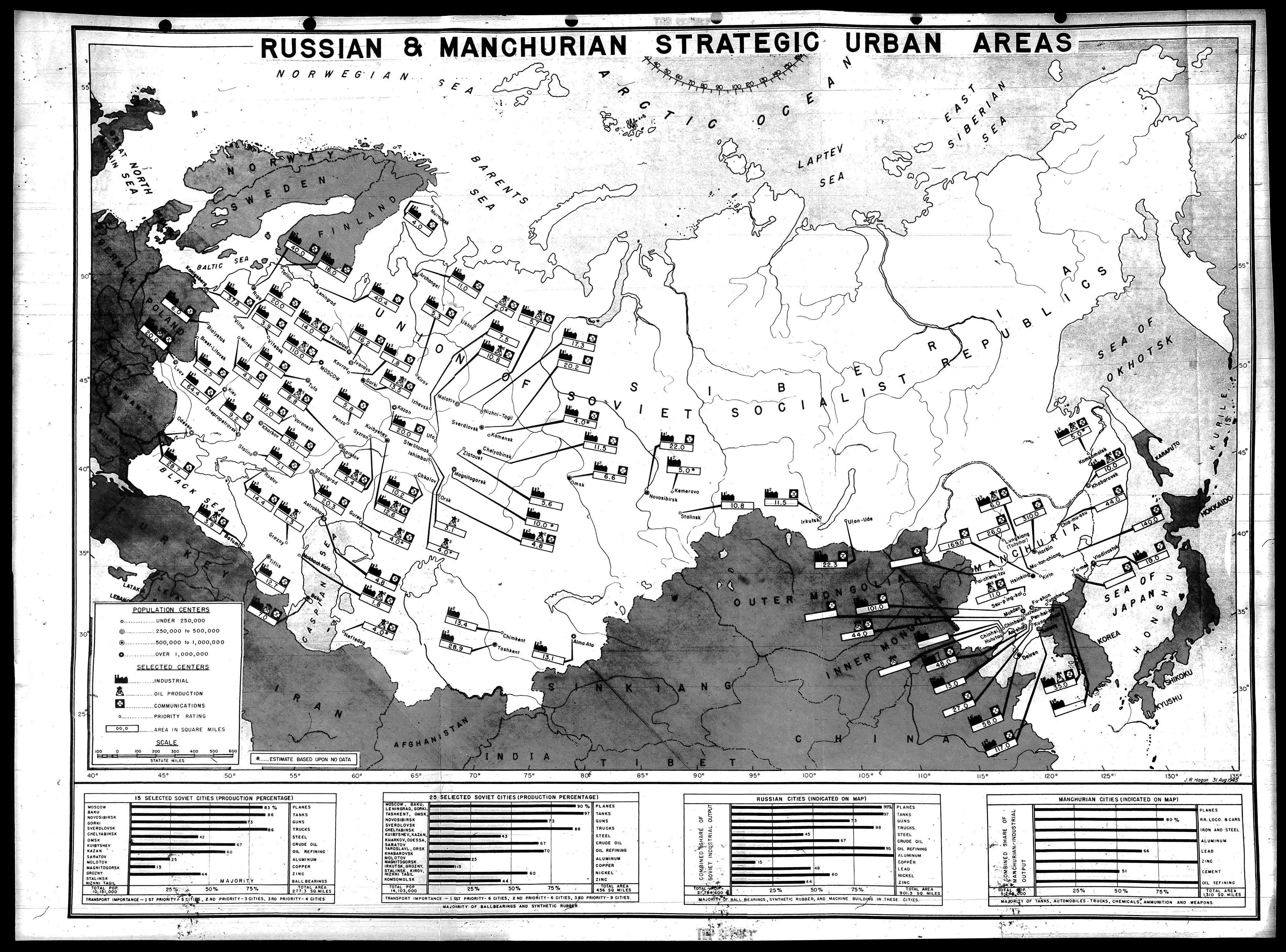
A little history is informative. “Barely six weeks after the Hiroshima-Nagsaki bombings,” Michel Chossudovsky tells us, “the US War Department [Pentagon] issued a blueprint (September 15, 1945) to ‘Wipe the Soviet Union off the Map’ (66 cities with 204 atomic bombs), when the US and the USSR were allies. This infamous project is confirmed by declassified documents.” (For further details see Chossudovsky, 2017)

Below is the image of the 66 cities of the Soviet Union which had been envisaged as targets by the US War Department. 


But back to Bird, who, in writing a piece about Oppenheimer’s “tragedy” and defending science, has also subtly defended a trinity of other matters: the government “science” on Covid, the transformative power coming from AI, and the U.S. propaganda about Russia and nuclear weapons. There is no mention of JFK’s call to abolish nuclear weapons. This is how the “paper of record” does its job.

I sit here now at the end of the day. Shadows are falling and I contemplate such trinities. I am stunned by the fact that we exist, but under a terrifying Shadow that many wish to ignore. Jung saw this shadow side as not just personal but social, and when it is ignored, the collective evils of modern societies can autonomously erupt. Bird argues that nuclear weapons are the result of a scientific quest that is unstoppable. He writes that Oppenheimer “understood that you cannot stop curious human beings from discovering the physical world around them [and then making nuclear bombs or designer babies].”

This is the ideology of progress that brooks no opposition since it is declared inevitable. It is a philosophy that believes there should be no limits to human knowledge, which would include the knowledge of good and evil, but which can then be ignored since it and all thought and beliefs are considered a priori to be relative. The modern premise that everything is relative is of course a contradiction since it is an absolute statement. Many share this philosophy of despair disguised as progress as it has crept into everything today. It is tragic, for if people accept it, we are doomed to follow a Faustian pact with the devil and all hell will follow. I think of Bob Dylan singing : 
"I just don’t see why I should even care,
          It’s not dark yet, but it’s gettin’ there..."             

But I do care, and I wonder why. As night comes on, I sit here and wonder."

"The AI Jobs Apocalypse Has Begun: We Are Witnessing An Unprecedented Wave Of AI-Related Layoffs In 2026"

"The AI Jobs Apocalypse Has Begun: We Are Witnessing
 An Unprecedented Wave Of AI-Related Layoffs In 2026"
by Michael Snyder

"We all knew that this would be coming. In 2026, the rate of AI-related layoffs has greatly accelerated, and that means that large numbers of good paying jobs are suddenly disappearing from the economy. This is occurring when we are already facing one major crisis after another, and so the timing could not be worse. Many young people specifically chose a major in college that would prepare them for positions in the tech industry because those were supposed to be the jobs of the future. Unfortunately, the AI jobs apocalypse is wiping out those jobs the fastest.

Let me give you some cold, hard numbers that will clearly demonstrate what I am talking about. According to Challenger, Gray & Christmas, the number of announced job cuts in the United States last month was the highest that we have seen during the month of May since the peak of the last pandemic…"U.S.-based employers announced 97,006 job cuts in May, up 16% from the 83,387 job cuts recorded in April, and up 3% from the 93,816 announced in the same month last year, according to a report released Thursday from global outplacement and executive coaching firm Challenger, Gray & Christmas.

May’s total is the highest for the month since 2020, when 397,016 job cuts were recorded in May at the height of the pandemic. It also marks the third straight month that cuts have risen, climbing from 48,307 in February to 97,006 in May."

There is no way to spin those numbers to make them look good. And for the third month in a row, artificial intelligence accounted for more layoffs than any other reason…"In May, Artificial Intelligence (AI) led all reasons for job cuts for the third month in a row, with 38,579 announced cuts. It is the highest monthly total ever recorded for the reason since Challenger began tracking it in 2023, and it accounted for 40% of all cuts announced in May - up from just 7% in January, 25% in March, and 26% in April. For the year, AI has been cited in 87,714 cuts, or 22% of all 2026 layoffs, already far surpassing the 54,836 attributed to the reason in all of 2025."

Read that last sentence again. The number of AI-related layoffs in 2026 has already surpassed the grand total of AI-related layoffs for the entire year of 2025. That is how fast things are now moving. Needless to say, the tech industry is being hit the hardest.

At this point, tech layoffs are running 44 percent faster than last year…"So far this year, there have been an estimated 363 layoffs at tech companies this year, affecting nearly 150,000 people - a pace of about 974 people per day, 44% faster than last year - according to TrueUp, a tech job board and recruiting platform that also runs one of the most widely cited tech layoff trackers."

The trend appears to be accelerating. Tech layoffs hit their highest single month in two years last month, with nearly 40,000 cuts, and AI was the most-cited reason for layoffs across every industry for the third month running, according to outplacement firm Challenger, Gray & Christmas.

There is no long-term loyalty in the tech industry anymore. The moment that AI can do your work more efficiently than you can, you are in danger of being let go. Some of you out there have personally experienced this. During the past six months, we have seen some of the biggest names in tech radically transform their workforces…Several major tech companies have announced significant workforce reductions this year while simultaneously ramping up investments in artificial intelligence.

Oracle disclosed recently that it has reduced its workforce by roughly 21,000 employees (4) over the past year. Meanwhile, Google has continued trimming staff (5) through performance reviews, buyout programs and reorganizations, with outside estimates suggesting between 1,500 and 3,000 engineering roles have been eliminated in 2026.

Meta also laid off roughly 8,000 employees earlier this year while shifting about 7,000 workers into AI-focused roles, highlighting how some companies are cutting jobs in certain areas while continuing to invest heavily in artificial intelligence.

This is just the beginning. And it is going to spread to every industry. If you can believe it, a major tobacco company just announced that it is planning to “cut about 20% of its workforce as it pursues an AI-driven ‌overhaul”…"British American Tobacco (BATS.L), opens new tab plans to cut about 20% of its workforce as it pursues an AI-driven ‌overhaul to lower costs and lift profits amid regulatory challenges and delayed launches. The maker of Lucky Strike and Dunhill cigarettes said on Monday it would cut around 5,500 jobs and move roughly 3,500 roles to third-party firms, including Accenture. The restructuring would affect around 9,000 employees in total, but excludes the U.S., the company’s biggest ​market."

BitGo is another firm that is ruthlessly firing employees for AI-related reasons…"BitGo has joined the growing ranks of crypto firms slashing staff numbers as part of a pivot to AI. The crypto custody and infrastructure company is cutting nearly 15% of its workforce, co-founder and CEO Mike Belshe said Thursday in a tweet that BitGo also filed with the U.S. Securities and Exchange Commission."

A lot of the workers that are hitting the bricks are relatively young. In the past, it was fairly easy to find another tech industry job, but now that has completely changed. In fact, it has become so difficult to find a tech job these days that many job seekers have resorted to “spraying and praying”…"To survive this nightmarish job market, candidates are now “spraying and praying,” as one career coach described it — or paying resume services to blast out thousands of CVs per day to game the system and land a gig. However, according to experts in the tech industry who spoke with SFGATE, this is only creating a vicious cycle of inefficiency that hurts both workers and companies.

According to a recent survey conducted by Robert Half, a Bay Area talent and business solutions firm, over 50% of hiring managers said that AI-generated resumes are “flooding the market,” making it difficult to weed out candidates who are actually qualified for roles. To combat this torrent of resumes, 33% of hiring managers are now using AI-detection tools and spending more time training employees on how to spot ones that feel authentic.

“Many hiring managers tell us it’s becoming harder to distinguish between applicants because AI-generated resumes often use similar language, formatting and keywords,” Terah Brossart Daniels, a technology jobs expert with Robert Half, said. “Another issue is authenticity. A resume may look impressive on paper, but employers are spending more time validating whether a candidate’s experience, accomplishments and technical skills hold up throughout the interview process.”

If conditions are this bad now, what will the employment market look like once things really start falling apart in this country? We were promised that AI would unleash a new golden age of peace and prosperity for our society. Obviously that is not what is actually happening. AI technology will continue to advance at an exponential rate, and soon millions more human workers will become obsolete. This story is not going to end well, but most of you have already figured that out."
o
Full screen recommended.
The Unfolded States, 7/1/26
"Mass Layoffs Are Coming for 
White Collar Jobs in 2026"
"Why are so many profitable companies laying off white-collar workers in 2026? Mass layoffs, slowing hiring, falling salary offers, AI-driven automation, outsourcing, and rising corporate pressure are quietly reshaping the labor market. But are these layoffs really about artificial intelligence, or is something much bigger happening beneath the surface? Here's the thing... many workers have noticed that something feels different, even if they cannot fully explain it. From sudden layoffs at major tech companies to shrinking salary offers for experienced professionals, the market is shifting in ways that go far beyond job cuts. What looks like a normal layoff cycle may actually be the beginning of a much deeper reset. What most people do not realize is that these changes are not random. They are being driven by a combination of AI adoption, wage compression, labor oversupply, offshoring, shareholder pressure, and corporate restructuring. 

As companies push for higher efficiency and lower labor costs, the balance of power between employers and workers is changing fast. The reality is this: the biggest risk in 2026 may not be unemployment alone. It may be a labor market where millions remain employed, but at lower pay, with weaker negotiating power and far less security than just a few years ago. Watch till the end and share your opinion. Is AI truly replacing jobs, or are companies using it to justify a much larger white-collar reset?"
Comments here:

Bill Bonner, "Shooting the Generals"

"Shooting the Generals"
by Bill Bonner

"Fools names and fool's faces always show up in public places."
- Folk Wisdom

Youghal, Ireland - "We have grandchildren visiting us here in Ireland. So, we’re going to do even less thinking than we do normally. For the next two weeks, we’ll try to keep up with the news...but the dots will have to connect themselves.

No president has done as much as Donald Trump to leave his footprints in the sands of time. While still in the private sector, he embossed his family name on every enterprise he attempted - Trump University, Trump Shuttle, Trump Vodka, Trump Taj Mahal, etc. In the White House, the pattern continues - The Trump-Kennedy Center, Trump accounts, the Trump Ballroom...the Trump Arch of Triumph...the Trump $250 bill.

The $250 bill was in the news this week. The internet came to life when it was reported that ‘250’ has a special meaning in Chinese. Copilot on the story: In Mandarin Chinese, “250” is written as 二百五 and pronounced èrbÇŽiwÇ”, used as a slang term for an idiot or foolish person.

It is customary to put pictures of dead presidents on US currency. Putting a live president is, well, unpresidented. And maybe bad juju. Most of the Trump-named businesses failed. The public projects are shaky too. But who knows; Mr. Trump is much different from other POTI who came before him. But like them, he will soon cross the bourn from which no traveler returns. Then, his photo on the currency will not seem so vain. And a few years from now, you may be happy to have a Trump $250 bill...maybe you will use it to buy a cup of coffee.

Meanwhile, the farmers are getting more $250s. The Wall Street Journal reports: "The Agriculture Department earlier this year estimated that direct payments to farmers would hit $44 billion in 2026. That meant government payments could account for more than a quarter of projected net farm income, a broad measure of farmers’ profits." That was before President Trump on Wednesday asked Congress to approve $11 billion in funding, largely to help farmers deal with effects from the war with Iran. If approved, government payments to farmers this year could hit a record high.

These measures bring US farmers into an expanding group of federal dependents — along with geriatrics, employees, half-wits, cripples, contractors, consultants, grifters and chislers — and brings them more into line with Europe’s farmers. The farmers we know in France tell us that their subsidies are approximately equal to net farm revenue. Without the payments, many would be out of business.

In the past, the US spent much of its national surplus on its military; Europe spent on social welfare programs. But now, with rising Social Security, Medicaid, and farmer subsidies - along with a $1.5 trillion Pentagon budget - America will dissipate its fortune on both...guns and butter.

Over on Wall Street things have been mostly quiet. The Nasdaq is said to be rotating out of the very expensive AI stocks...and into more reasonably-priced equities. There’s an old Wall Street saying: ‘They’re shooting the generals.’ In this case, the generals are the Mag 7 stocks that led the market for the last few years. But those stocks - Nvidia, Apple, Alphabet, Meta, Microsoft, Amazon and Tesla - are down 3% this year.

The generalissimo supremo, however, is SpaceX, a company that investors believe is really set to go ‘to the moon.’ They may want to consider what happens to these go-go companies after they IPO. Charlie Bilello: "Every major IPO in the last 15 years traded below its first day close at some point in its first year.

Didi Global lost 90% of its value. Robinhood and Rivian each lost 80%...and so on. And now Space X, like Alibaba before it, is down 35%. And the insiders haven’t even begun to sell. Companies like SpaceX give out enormous quantities of stock to attract and reward early employees, lenders and investors. Typically, these shares are ‘locked up’ to reduce the ‘float’ - the number of shares actually trading - and support the price."

In the case of SpaceX only about 5% of the shares have been made available so far. Later, the locks come off, so that after 180 days nearly 60% of them will be floated. These shares are not in the hands of long-term investors. They are owned by employees. And venture capital funders. And speculators. All of them must be thinking the same thing we are... Better to sell; take the jackpot gains off the table before they disappear."

Dan, I Allegedly, "Something Doesn't Add Up'

Full screen recommended.
Dan, I Allegedly, 7/1/26
"Something Doesn't Add Up'
"The headlines say consumer confidence is rising, but millions of Americans are asking the same question: if the economy is so strong, why are layoffs increasing, businesses closing, and good-paying jobs becoming harder to find? In today's video, I break down the growing disconnect between the government's economic reports and what people are experiencing in their everyday lives. We'll discuss retail store closures, factory layoffs, the housing market, consumer spending, and why successful businesses are adapting while others continue to struggle. We'll also talk about taking control of your own financial future, making smarter decisions with your money, preparing for economic uncertainty, and why now is the time to evaluate your finances, career, and long-term goals. As always, I appreciate your thoughts and experiences in the comments. Let me know what you're seeing where you live and whether the economy matches the headlines you're hearing every day."
Comments here:

Adventures With Danno, "Strange Prices At Walmart"

Full screen recommended.
Adventures With Danno, 7/1/26
"Strange Prices At Walmart"
Comments here:

Tuesday, June 30, 2026

Jeremiah Babe, "Dopamine Addiction Is Destroying America"

Jeremiah Babe, 6/30/26
"Dopamine Addiction Is Destroying America"
Comments here:

Gerald Celente, "Free Speech Banned, Presstitutes Own Media, Reignite Brushfires of Freedom"

Strong language alert!
Gerald Celente, 6/30/26
"Free Speech Banned, Presstitutes Own Media,
 Reignite Brushfires of Freedom"
"As America approaches 250 years, is freedom thriving - or fading? From censorship and surveillance to endless wars, soaring debt, and the struggle for free speech, Gerald Celente discusses the critical trends shaping America's future."
Comments here:

Musical Interlude: Neil H., "Soulmates"

Neil H., "Soulmates"

"A Look to the Heavens"

“M13 is one of the most prominent and best known globular clusters. Visible with binoculars in the constellation of Hercules, M13 is frequently one of the first objects found by curious sky gazers seeking celestials wonders beyond normal human vision. 
M13 is a colossal home to over 100,000 stars, spans over 150 light years across, lies over 20,000 light years distant, and is over 12 billion years old. At the 1974 dedication of Arecibo Observatory, a radio message about Earth was sent in the direction of M13. The featured image in HDR, taken through a small telescope, spans an angular size just larger than a full Moon, whereas the inset image, taken by Hubble Space Telescope, zooms in on the central 0.04 degrees.”
http://apod.nasa.gov/apod/ap160727.html

"We Are Trapped In A Truman Show Directed By Psychopaths"

"We Are Trapped In A Truman Show
Directed By Psychopaths"
by Jim Quinn

Excerpt: “Whether in actual fact the policy of the boot-on-the-face can go on indefinitely seems doubtful. My own belief is that the ruling oligarchy will find less arduous and wasteful ways of governing and of satisfying its lust for power, and these ways will resemble those which I described in "Brave New World." Within the next generation I believe that the world’s rulers will discover that infant conditioning and narco-hypnosis are more efficient, as instruments of government, than clubs and prisons, and that the lust for power can be just as completely satisfied by suggesting people into loving their servitude as by flogging and kicking them into obedience.” - Aldous Huxley, letter to George Orwell about "1984" in 1949

“There will be, in the next generation or so, a pharmacological method of making people love their servitude, and producing dictatorship without tears, so to speak, producing a kind of painless concentration camp for entire societies, so that people will in fact have their liberties taken away from them, but will rather enjoy it, because they will be distracted from any desire to rebel by propaganda or brainwashing, or brainwashing enhanced by pharmacological methods. And this seems to be the final revolution” - Aldous Huxley

When I step back from the day-to-day minutia and trivialities flooding my senses from all directions and media devices, it almost appears as if I’m living in a highly scripted reality TV program where the characters and plots are designed to create passions and reactions to support whatever narrative is being weaved by those directing the show. Huxley really did foresee the future as clearly and concisely as anyone could, decades before his dystopian vision came to fruition.

Orwell’s boot on the face vision is only now being initiated because a few too many critical thinkers have awoken from their pharmaceutically induced stupor and begun to question the plotline of this spectacle masquerading as our reality. The mass formation psychosis infecting the weak-minded masses; relentless mass propaganda designed to mislead, misinform, and brainwash a dumbed down and government indoctrinated populace; and complete control of the story line through media manipulation, regulation, and censorship of the truth; has run its course. As Charles Mackay stated 180 years ago, the masses go mad as a herd, but only regain their senses slowly, and one by one.

My recognition that the world seems to be scripted and directed by Machiavellian managers, working behind a dark shroud, representing an invisible governing authority, molding our minds, suggesting our ideas, dictating our tastes, and creating fear, triggered a recollection of the 1998 Jim Carrey movie – "The Truman Show." The movie, directed by Peter Weir (Gallipoli, Witness, Dead Poet’s Society), had the surreal feel of Forest Gump, while beckoning the horrendous introduction of reality TV (Big Brother, Survivor), which poisons our shallow unserious society to this day. The plot of the movie focuses on individuality versus conformity, consumerism, voyeurism, reality versus manipulation, false narratives, the truth about the American Dream, and the dangers of surveillance in a technologically advanced society."
Read the complete, most highly recommended, article here:
o
Full screen recommended.
Free, full movie: "The Truman Show"
"He's the star of the show - but he doesn't know. Jim Carrey wowed critics and audiences alike as unwitting Truman Burbank in this marvel of a movie from director Peter Weir ("Witness", "Dead Poets Society") about a man whose life is a nonstop TV show. Truman doesn't realize that his quaint hometown is a giant studio set run by a visionary producer/director/creator (Ed Harris), that folks living and working there are Hollywood actors, that even his incessantly bubbly wife is a contract player. Gradually, Truman gets wise. And what he does about his discovery will have you laughing, crying and cheering like few film stories ever have."

"Walk With The Dreamers..."

"Walk with the dreamers, the believers, the courageous, the cheerful, the planners, the doers, the successful people with their heads in the clouds and their feet on the ground. Let their spirit ignite a fire within you to leave this world better than when you found it..."
 - Wilferd Peterson

The Poet: David Whyte, "The Sea"

“The Sea”

“The pull is so strong we will not believe
the drawing tide is meant for us,
I mean the gift, the sea,
the place where all the rivers meet.

Easy to forget,
how the great receiving depth
untamed by what we need
needs only what will flow its way.
Easy to feel so far away
and the body so old
it might not even stand the touch.

But what would that be like
feeling the tide rise
out of the numbness inside
toward the place to which we go
washing over our worries of money,
the illusion of being ahead,
the grief of being behind,
our limbs young
rising from such a depth?

What would that be like
even in this century
driving toward work with the others,
moving down the roads
among the thousands swimming upstream,
as if growing toward arrival,
feeling the currents of the great desire,
carrying time toward tomorrow?

Tomorrow seen today, for itself,
the sea where all the rivers meet, unbound,
unbroken for a thousand miles, the surface
of a great silence, the movement of a moment
left completely to itself, to find ourselves adrift,
safe in our unknowing, our very own,
our great tide, our great receiving, our
wordless, fiery, unspoken,
hardly remembered, gift of true longing.”

~ David Whyte,
“Where Many Rivers Meet”

“Hannah Arendt on Time, Space, and Where Our Thinking Ego Resides”

“Hannah Arendt on Time, Space,
and Where Our Thinking Ego Resides”
“The everywhere of thought is indeed a region of nowhere.”
by Maria Popova

“In Lewis Carroll’s ‘Through the Looking Glass,’ the White Queen remembers the future instead of the past. This seemingly nonsensical proposition, like so many elements of the beloved book, is a stroke of philosophical genius and prescience on behalf of Lewis Carroll, made half a century before Einstein and Gödel challenged our linear conception of time.

But no thinker has addressed how the disorienting nature of time shapes the human experience with more captivating lucidity than Hannah Arendt (October 14, 1906–December 4, 1975), who in 1973 became the first woman to speak at the prestigious Gifford Lectures. Her talk was eventually adapted into two long essays, published as ‘The Life of the Mind’ (public library) – the same ceaselessly rewarding volume that gave us Arendt on the crucial difference between truth and meaning.

In one of the most stimulating portions of the book, Arendt argues that thinking is our rebellion against the tyranny of time and a hedge against the terror of our finitude. Noting that cognition always removes us from the present and makes absences its raw material, she considers where the thinking ego is located if not in what is present and close at hand:

“Looked at from the perspective of the everyday world of appearances, the everywhere of the thinking ego – summoning into its presence whatever it pleases from any distance in time or space, which thought traverses with a velocity greater than light’s – is a nowhere. And since this nowhere is by no means identical with the twofold nowhere from which we suddenly appear at birth and into which almost as suddenly we disappear in death, it might be conceived only as the Void. And the absolute void can be a limiting boundary concept; though not inconceivable, it is unthinkable. Obviously, if there is absolutely nothing, there can be nothing to think about. That we are in possession of these limiting boundary concepts enclosing our thought within (insurmountable) walls – and the notion of an absolute beginning or an absolute end is among them – does not tell us more than that we are indeed finite beings.”

Echoing Thomas Mann’s assertion that “the perishableness of life… imparts value, dignity, interest to life,” Arendt adds: “Man’s finitude, irrevocably given by virtue of his own short time span set in an infinity of time stretching into both past and future, constitutes the infrastructure, as it were, of all mental activities: it manifests itself as the only reality of which thinking qua thinking is aware, when the thinking ego has withdrawn from the world of appearances and lost the sense of realness inherent in the sensus communis by which we orient ourselves in this world… The everywhere of thought is indeed a region of nowhere.”

T.S. Eliot captured this nowhereness in his exquisite phrase “the still point of the turning world.” But the spatial dimension of thought, Arendt argues, is intersected by a temporal one – thinking invariably forces us to recollect and anticipate, voyaging into the past and the future, thus creating the mental spacetime continuum through which our thought-trains travel. From this arises our sense of the sequential nature of time and its essential ongoingness. Arendt writes:

“The inner time sensation arises when we are not entirely absorbed by the absent non-visibles we are thinking about but begin to direct our attention onto the activity itself. In this situation past and future are equally present precisely because they are equally absent from our sense; thus the no-longer of the past is transformed by virtue of the spatial metaphor into something lying behind us and the not-yet of the future into something that approaches us from ahead.”
[…]
In other words, the time continuum, everlasting change, is broken up into the tenses past, present, future, whereby past and future are antagonistic to each other as the no-longer and the not-yet only because of the presence of man, who himself has an “origin,” his birth, and an end, his death, and therefore stands at any given moment between them; this in-between is called the present. It is the insertion of man with his limited life span that transforms the continuously flowing stream of sheer change – which we can conceive of cyclically as well as in the form of rectilinear motion without ever being able to conceive of an absolute beginning or an absolute end – into time as we know it.”

Once again, it is our finitude that mediates our experience of time: “Seen from the viewpoint of a continuously flowing everlasting stream, the insertion of man, fighting in both directions, produces a rupture which, by being defended in both directions, is extended to a gap, the present seen as the fighter’s battleground… Seen from the viewpoint of man, at each single moment inserted and caught in the middle between his past and his future, both aimed at the one who is creating his present, the battleground is an in-between, an extended Now on which he spends his life. The present, in ordinary life the most futile and slippery of the tenses – when I say “now” and point to it, it is already gone – is no more than the clash of a past, which is no more, with a future, which is approaching and not yet there. Man lives in this in-between, and what he calls the present is a life-long fight against the dead weight of the past, driving him forward with hope, and the fear of a future (whose only certainty is death), driving him backward toward “the quiet of the past” with nostalgia for and remembrance of the only reality he can be sure of.”

This fluid conception of time, Arendt points out, is quite different from its representation in ordinary life, where the calendar tells us that the present is contained in today, the past starts at yesterday, and the future at tomorrow. In a sentiment that calls to mind Patti Smith’s magnificent meditation on time and transformation, Arendt writes: "That we can shape the everlasting stream of sheer change into a time continuum we owe not to time itself but to the continuity of our business and our activities in the world, in which we continue what we started yesterday and hope to finish tomorrow. In other words, the time continuum depends on the continuity of our everyday life, and the business of everyday life, in contrast to the activity of the thinking ego – always independent of the spatial circumstances surrounding it – is always spatially determined and conditioned. It is due to this thoroughgoing spatiality of our ordinary life that we can speak plausibly of time in spatial categories, that the past can appear to us as something lying “behind” us and the future as lying “ahead.”
[…]
The gap between past and future opens only in reflection, whose subject matter is what is absent – either what has already disappeared or what has not yet appeared. Reflection draws these absent “regions” into the mind’s presence; from that perspective the activity of thinking can be understood as a fight against time itself.”

This elusive gap, Arendt argues, is where the thinking ego resides – and it is only by mentally inserting ourselves between the past and the future that they come to exist at all: Without [the thinker], there would be no difference between past and future, but only everlasting change. Or else these forces would clash head on and annihilate each other. But thanks to the insertion of a fighting presence, they meet at an angle, and the correct image would then have to be what the physicists call a parallelogram of forces.

These two forces, which have an indefinite origin and a definite end point in the present, converge into a third – a diagonal pull that, contrary to the past and the present, has a definite origin in the present and emanates out toward infinity. That diagonal force, Arendt observes, is the perfect metaphor for the activity of thought. She writes:

“This diagonal, though pointing to some infinity, is limited, enclosed, as it were, by the forces of past and future, and thus protected against the void; it remains bound to and is rooted in the present – an entirely human present though it is fully actualized only in the thinking process and lasts no longer than this process lasts. It is the quiet of the Now in the time-pressed, time-tossed existence of man; it is somehow, to change the metaphor, the quiet in the center of a storm which, though totally unlike the storm, still belongs to it. In this gap between past and future, we find our place in time when we think, that is, when we are sufficiently removed from past and future to be relied on to find out their meaning, to assume the position of “umpire,” of arbiter and judge over the manifold, never-ending affairs of human existence in the world, never arriving at a final solution to their riddles but ready with ever-new answers to the question of what it may be all about.”

“The Life of the Mind” is one of the most stimulating packets of thought ever published. Complement this particular portion with Virginia Woolf on the elasticity of time, Dan Falk on how our capacity for mental time travel made us human, and T.S. Eliot’s poetic ode to the nature of time.“

The Daily "Near You?"

Loveland, Colorado,USA. Thanks for stopping by!

"There Are Simply No Answers..."

“How is one to live a moral and compassionate existence when one is fully aware of the blood, the horror inherent in life, when one finds darkness not only in one’s culture but within oneself? If there is a stage at which an individual life becomes truly adult, it must be when one grasps the irony in its unfolding and accepts responsibility for a life lived in the midst of such paradox. One must live in the middle of contradiction, because if all contradiction were eliminated at once life would collapse. There are simply no answers to some of the great pressing questions. You continue to live them out, making your life a worthy expression of leaning into the light.”
- Barry Lopez

"He Delivered Letters Every Day… Until One Changed"

Full screen recommended.
"He Delivered Letters Every Day…
 Until One Changed"

Native Elder, "How to Walk Away From Everything That Stole Your Peace"

Full screen recommended.
Native Elder,
"How to Walk Away From 
Everything That Stole Your Peace"

"How Did I Get So Old So Fast"

Full screen recommended.
Delta King's Blues,
"How Did I Get So Old So Fast"
"One minute you’re running wild… next minute you’re wondering where the years went. “How Did I Get So Old So Fast” is a reflective Delta King’s Blues tune about time slipping by, memories stacking up, and the quiet shock of realizing life moved quicker than expected. A slow, nostalgic acoustic guitar carries the melody like footsteps down an old road you haven’t walked in years. The harmonica sighs long and thoughtful, echoing laughter from younger days and the lessons time left behind. The groove drifts easy and steady, built for late nights, old photographs, and stories that start with “I remember when…” This is blues about time catching up with you. For folks who blinked… and suddenly the mirror tells a different story. Life didn’t slow down - we just started noticing the miles."

"How It Really Is"

The greatest little whorehouse, well, anywhere...
o
"Congress consists of one-third, more or less, scoundrels; 
two-thirds, more or less, idiots; and three-thirds, more or less, poltroons."
– H.L. Mencken
o
"Suppose you were an idiot. And suppose you were a member of Congress.
But I repeat myself."

"All Congresses and Parliaments have a kindly feeling for idiots,
and a compassion for them, on account of personal experience and heredity."

"...the smallest minds and the selfishest souls and the cowardliest hearts that God makes."

"The lightning there is peculiar; it is so convincing, that when it strikes a
thing it doesn't leave enough of that thing behind for you to tell whether -
Well, you'd think it was something valuable, and a Congressman had been there."

"It could probably be shown by facts and figures that there is no distinctly
native American criminal class except Congress."

"Fleas can be taught nearly anything that a Congressman can."

- Mark Twain

"People Are Starting to Realize the America We Grew Up With Is Gone"

Full screen recommended.
"People Are Starting to Realize the America
 We Grew Up With Is Gone"
"For millions of Americans, something feels deeply off. The economy looks stable on paper, but everyday life tells a different story. Housing costs keep rising, groceries feel more expensive every week, debt is becoming harder to escape, and even people with steady jobs are struggling to stay afloat. Many are beginning to question whether the old promise of the American Dream still works the way it once did. In this video, we break down what is really happening behind the growing cost of living crisis in America. From rising mortgage payments and insurance costs to grocery inflation, wage stagnation, and household debt, this analysis explores why so many people feel like they are working harder while falling further behind. More importantly, we examine the deeper shift happening beneath the surface: the growing gap between wages and assets, and why financial stability feels increasingly difficult to achieve. Over the last five years, what changed the most where you live: housing costs, grocery prices, or wages? Share your experience in the comments."
Comments here:

"Something Is Seriously Wrong at Walmart... And Customers Are Fed Up"

Full screen recommended.
Across The States, 6/30/26
"Something Is Seriously Wrong at Walmart... 
And Customers Are Fed Up"
"Why is Walmart changing so much in 2026? Locked shelves, rising prices, disappearing brands, AI-powered stores, self-checkout, and digital price tags are transforming the shopping experience. But are these changes making Walmart better - or simply more profitable? In this video, we break down what's really happening inside the world's largest retailer. Here's the thing... many shoppers have noticed that something feels different, even if they can't explain it. 

From private-label expansion to advanced AI inventory systems, Walmart is quietly reshaping how millions of people shop every week. What most people don't realize is that these changes aren't random. They're part of a larger retail strategy focused on automation, operational efficiency, and attracting a broader customer base. We also explore how inflation, retail theft, labor shifts, and technology are influencing Walmart's future. The reality is... Walmart remains one of the strongest retailers in the world, but its evolution raises important questions about customer experience, pricing, convenience, and trust. Watch till the end and share your opinion - has Walmart improved, or has it lost what made it special?"
Comments here:

Dan, I Allegedly, "You Will Work Until You Die"

Full screen recommended.
Dan, I Allegedly, 6/30/26
"You Will Work Until You Die"
"Retirement is becoming more difficult for millions of Americans. A recent survey found that 42% of adults over 60 believe they will never be able to retire, a dramatic increase from just a few years ago. In this video, I break down why inflation, rising housing costs, Social Security concerns, disappearing pensions, healthcare expenses, and the cost of living are forcing more people to work far longer than they ever expected. We also discuss why retirement has become a luxury instead of something many Americans can count on. We also cover the latest business news and economic headlines, including restaurant closures, changes in the job market, AI in the workplace, housing affordability, retirement planning, and consumer finance. If you're concerned about your financial future, retirement savings, Social Security, or where the economy is headed, this is a conversation you won't want to miss. Be sure to leave a comment and let us know: Do you think you'll ever be able to retire?"
Comments here:

Bill Bonner, "Mission Creeps"

"Mission Creeps"
by Bill Bonner

"We want a revolution,
And we want it now."
- The persecution and assassination of Jean-Paul Marat as performed by 
the inmates of the asylum at Charenton and directed by the Marquis de Sade.

Youghal, Ireland - "Yesterday we peeked ahead at what wickedness this way comes. Today we lift our heads to take in a broader view. The notion is plain enough. The one feat Donald Trump genuinely brought off - the only one, some would grumble - was to enlarge, vastly and lastingly, the sum of mischief a President may get away with. And now the next regime, be it Republican or Democrat, will lay its hands upon that swollen new power.

We saw yesterday how the Democrats, like Madame Defarge knitting the names of the doomed into her endless wool, are already drawing up their lists: of those to be prosecuted, of those to be cashiered, of bureaus to be raised from the dead or buried, of budgets and taxes to be heaped higher, and of free this and free that.

It is not beyond all possibility that such authority might fall to an American Javier Milei, the Argentine, who is actually balancing his books and paring down the bulk of the state. But one would be a fool to wager on it. Nations cast off their parasitic elites only when they have no choice  - that is, when they are whipped in war or have run out of money. Far likelier, the Democrats, the Republicans, the Deep Staters, and the whole grinning regiment of opportunists and world improvers will go on making a bad business worse. How so? And why?

Here is our hypothesis. As the federal machine spends more, squanders more, hatches more agencies, and scribbles more rules, the economy bends under the load. The United States, saddled with nearly $40 trillion of public debt, can scarcely drag itself forward. At present rates it shells out close to $1.6 trillion a year in interest alone; ten years hence the tribute will likely run to $3 trillion a year. The military budget already blubbers toward a trillion and a half. Reckon the guns and the butter together and you have better than $3 trillion - near a tenth of the whole GDP - torn each year out of the real, productive economy.

That drag is the spawn of political self-aggrandizement - mission creep - wedded to a counterfeit-money system that makes the whole swindle possible. It is the foundational fraud of modern government: the solemn pretense that the citizen grows better off as the feds boss him around and spend more of his money.

We have shown before that it is actually a sort of Ponzi scheme - or a Cantillon Effect - wherein the first generations empty their glasses from debt-financed partying and the generations following are handed the bill. We are now well into the “generations following.” And with the sins of the fathers piled upon their backs, it grows ever harder for ordinary people to wring what they want out of the government, or out of the economy itself.

Discontent swells. And as it swells, the people go casting about for more “radical” champions. The old mumbly-fumbly will no longer work. Right and left alike, they bawl for action. They behold a china shop; they clamor for a bull.

That is the meaning of the late elections in New York City, where all three congressional candidates blessed by Mayor Mamdani came home winners, dealing the establishment Democrats a thumping. More mainstream aspirants, such as young Jack Schlossberg, grandson of the martyred Kennedy clan, were sent home.

“New Yorkers are hungry for a new kind of politics,” quoth Mamdani. And so, it appears, are the Californians - and the voters of Louisiana, of Maryland, of Maine. From the corn belt to the shrimp boats, the moderate, the temperate, the middle-of-the-roader is being shouldered off the highway into the ditch.

The people crave change. They feel the malaise in their bones but cannot name its cause. They want a revolution. So, they turn to the Big Man and the radical, mistaking brassy manners and bold fronts for genuine understanding and a settled plan.

The Democratic slate in New York - Mamdani at its head - has neither the faintest grasp of what ails the city nor any serious elixir to cure it. In place of both, it peddles nostrums tried a hundred times before and failed every time: a four-year freeze on the rents of a million stabilized flats; free childcare from the age of six weeks; buses without fare; a $30/hour minimum wage by 2030; municipal grocery stores hawking produce at wholesale; and a brand-new Department of Community Safety at a tidy $1.1 billion a year. To foot this banquet, Mamdani would lay a fresh two percent tax upon every New Yorker earning above a million, and hoist the city’s corporate levy besides.

Whether the sheep will sit meekly still for the shearing remains to be seen. Already, we read, Goldman Sachs is shifting yet more of its New York flock to Dallas. In the cities of America, you can still vote with your feet. It will not be half so easy when the “new kind of politics” has got its grip upon the whole country."

Monday, June 29, 2026

"San Andreas: The Big One That Could Destroy California"

A Terrifying Must-view!
Full screen recommended.
"San Andreas: 
The Big One That Could Destroy California"

"California sits on a clock that has been running for three hundred and forty-six years. The southern section of the San Andreas Fault last ruptured in 1680. Since that moment, two tectonic plates have been pressing against each other at nearly two inches per year - accumulating twenty feet of slip deficit that has nowhere to go. When that energy releases, it will release in a single motion. This is the story of the most studied locked fault on the planet. Eight hundred miles of fractured rock running from the Salton Sea to Cape Mendocino. Forty million people living above it. Three sections, three rupture cycles, three different stages of accumulated strain. And one number that science cannot produce - the year. 

In January 1857, the central section opened for two hundred and twenty miles in ninety seconds. In April 1906, the northern section burned San Francisco for three days. In 1680, the southern section spoke for the last time. Three dates. Three sets of accumulated slip. Three eventual ruptures, in some order, separated by some interval. The arrivals are not predictable. The arrivals are guaranteed. This documentary follows the work of the scientists who counted the past in mud. Kerry Sieh, spending thirteen years in trenches at Pallett Creek, reading earthquakes from peat layers stretching back fifteen hundred years. Lucy Jones, leading three hundred specialists at the United States Geological Survey to model what happens in the first month of a magnitude 7.8 rupture - eighteen hundred dead, sixteen hundred fires burning simultaneously, six months without restored water service. 

Hiroo Kanamori at the California Institute of Technology, building the magnitude 8.2 model that no public agency wants to discuss. Thomas Jordan at the Southern California Earthquake Center, calculating the slip deficit that has been building since before California had a name. Andrew Lawson, walking the entire trace of the fault on foot in 1895, predicting that the cycle would repeat. It has. Los Angeles weighs approximately four billion tons. It sits on the Pacific Plate. The plate is moving northwest at the speed of a human fingernail growing. The friction holding it in place has held for three hundred and forty-six years on the southern section. The plates do not consult retrofit inventories. They do not wait for emergency preparedness drills. They are governed by the conservation of momentum, the friction coefficient of granitic rock against itself, and the temperature of the lower crust. Every one of those parameters has been measured. None of them favors delay."
Comments here: