StatCounter

Saturday, November 29, 2025

"America Becoming A 3rd World Country; Terror At Westfield Mall Last Night; Millions Of Fake Jobs"

Jeremiah Babe, 11/29/25
"America Becoming A 3rd World Country; 
Terror At Westfield Mall Last Night; Millions Of Fake Jobs"
Comments here:

"Russian Typical (Brand New) Hardware Store: Petrovich"

Meanwhile, elsewhere...
Full screen recommended.
Travelling with Russell, 11/29/25
"Russian Typical (Brand New)
 Hardware Store: Petrovich"
"What does a brand-new Russian Hardware store look like inside? Join me on a tour of the newest Hardware store in Russia. "Petrovich" opened only days ago in Moscow, Russia. With a store size of 3,500 sq meters, and 35,000sq meters of storage."
Comments here:

"Americans Extremely Upset, This Is The Start Of A Disaster"

Full screen recommended.
Snyder Reports, 11/29/25
"Americans Extremely Upset, 
This Is The Start Of A Disaster"
Comments here:

"The Job Losses Have Been Much Worse Than We've Been Told

Full screen recommended.
Michael Bordenaro, 11/29/25
"The Job Losses Have Been 
Much Worse Than We've Been Told"
Comments here:

Dan, I Allegedly, "What is Unaffordable? Everything!"

Full screen recommended.
Dan, I Allegedly, 11/29/25
"What is Unaffordable? Everything!"
"Why is everything becoming so unaffordable today? From skyrocketing electricity bills to subprime mortgages making a comeback, it's clear we're facing a financial storm. In this video, I dive into the challenges impacting affordability - from rising energy prices to student loan debt - and what it means for everyday life. We discuss how inflation, the housing market, ongoing foreclosures, and even auto loans are affecting everyone. It's a tough time out there, but smart financial planning and frugal living can make a difference."
Comments here:

Musical Interlude: Deuter, "Abendschatten (Evening Shadow)"

Full screen recommended.
Deuter, "Abendschatten (Evening Shadow)"

Deuter creates music for meditation, relaxation and healing. He has been a 
pioneer in the new age / meditative music space for over 40 years. 
Stream more of his music here: - https://ffm.to/deuter

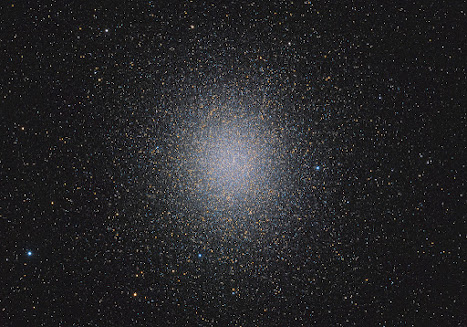
"A Look to the Heavens"

"Globular star cluster Omega Centauri, also known as NGC 5139, is some 15,000 light-years away. The cluster is packed with about 10 million stars much older than the Sun within a volume about 150 light-years in diameter. It's the largest and brightest of 200 or so known globular clusters that roam the halo of our Milky Way galaxy. 
Though most star clusters consist of stars with the same age and composition, the enigmatic Omega Cen exhibits the presence of different stellar populations with a spread of ages and chemical abundances. In fact, Omega Cen may be the remnant core of a small galaxy merging with the Milky Way. Omega Centauri's red giant stars (with a yellowish hue) are easy to pick out in this sharp, color telescopic view."

"Butterflies..."

"We are like butterflies who flutter for a day and think it's forever."
- Carl Sagan

Free Download: Nevil Shute, “On The Beach”

“On The Beach”
by Nevil Shute

“Nevil Shute’s 1959 novel “On the Beach” is set in what was then the near future (1963, approximately a year following World War III). The conflict has devastated the northern hemisphere, polluting the atmosphere with nuclear fallout and killing all animal life. While the nuclear bombs were confined to the northern hemisphere, global air currents are slowly carrying the fallout to the southern hemisphere. The only part of the planet still habitable is the far south of the globe, specifically Australia and New Zealand, South Africa, and the southern parts of South America.

From Australia, survivors detect a mysterious and incomprehensible Morse code radio signal originating from the United States. With hope that some life has remained in the contaminated regions, one of the last American nuclear submarines, the USS Scorpion, placed by its captain under Australian naval command, is ordered to sail north from its port of refuge in Melbourne (Australia’s southernmost major mainland city) to try to contact whoever is sending the signal. In preparation for this long journey the submarine first makes a shorter trip to some port cities in northern Australia including Cairns, Queensland and Darwin, Northern Territory, finding no survivors.

The Australian government makes arrangements to provide its citizens with free suicide pills and injections, so that they will be able to avoid prolonged suffering from radiation sickness. One of the novel’s poignant dilemmas is that of Australian naval officer Peter Holmes, who has a baby daughter and a naive and childish wife, Mary, who is in denial about the impending disaster. Because he has been assigned to travel north with the Americans, Peter must try to explain to Mary how to euthanize their baby and kill herself with the pill should he be killed on the ocean voyage.

The characters make their best efforts to enjoy what time and pleasures remain to them before dying from radiation poisoning, speaking of small pleasures and continuing their customary activities, allowing their awareness of the coming end to impinge on their minds only long enough to plan ahead for their final hours. The Holmeses plant a garden that they will never see; Moira takes classes in typing and shorthand; scientist John Osborne and others organize a dangerous motor race that results in the violent deaths of several participants. In the end, Captain Towers chooses not to remain with Moira but rather to lead his crew on a final mission to scuttle their submarine beyond the twelve-mile (22 km) limit, so that she will not rattle about, unsecured, in a foreign port, refusing to allow his coming demise to turn him aside from his duty and acting as a pillar of strength to his crew.

Typically for a Shute novel, the characters avoid the expression of intense emotions and do not mope or indulge in self-pity. They do not, for the most part, flee southward as refugees but rather accept their fate once the lethal radiation levels reach the latitudes at which they live. Finally, most of the Australians do opt for the government-promoted alternative of suicide when the symptoms of radiation-sickness appear.”
Freely download “On the Beach”, by Nevil Shute, here:
"On The Beach", full movie.
Full screen recommended.

"The Universe as Pool Hall"

"The Universe as Pool Hall"
by Fred Reed

"We will start this magisterial explanation of everything with the time-honored approach of the philosopher, beginning with the things we know beyond doubt and then reasoning from them to suitably astonishing truths. As we know, Descartes began by saying, “Cogito ergo sum,” I think therefore I am.” (Ambrose Bierce, a more profound thinker, said, “Cogito cogito, ergo cogito sum. Cogito.” But this way lies madness.) So with what certain knowledge can we begin our quest?

Our only certain knowledge is that we don’t have any. Acceptance of this condition will diminish the world’s output of philosophy, or so we may hope, but this column faces reality with a brave front. We may now list our certainties: We don’t know where we came from, where we are, why, what if anything we should do while we are here, and where if anywhere we go when we die.

On this bedrock we shall construct our philosophy of everything. However, before we begin thinking about these profound matters, we need to take into account one more certainty: Thinking is impossible. I will explain. But what it comes to is that while we know nothing about which to think, it doesn’t matter because we couldn’t think about it if we did know something.

Why? Consider the brain. It is an electrochemical mechanism, blindly obeying the laws of physics and chemistry (chemistry being the physics of the interactions of atoms). For example, consider a nerve impulse propagating along a neural fiber, depolarizing, sodium in, potassium out. Pure chemistry and physics. When the impulse comes to a synapse, a neurotransmitter diffuses across the gap, pure chemistry and physics. It can’t do anything else. Even chemicals with long, imposing names cannot make choices. The neurotransmitter then binds to receptor sites, because it has to. Textbooks of neurophysiology state it thus: “A brain has less free will than a wind-up clock.” Or at least if it were so stated, it would be. This is close enough for philosophy.

Putting it precisely, the state of a physical system is determined entirely by its previous state. This establishes beyond doubt that we have no free will, and that what we think are thoughts were determined at the time of the Big Bang, if any.

Now, no philosophical essay can be held in repute unless it contains words ending “ism.” The reigning creed today is materialism, the philosophy of the wantonly inattentive. Many who believe in materialism are of high intelligence, and so can only be sufficiently inattentive by great effort. Anyway, a materialist believes than nothing exists but space, time, matter, and energy, however hyphenated. That is, physics. As the physicist Joe Friday said, “The physics, ma’am, just the physics, and nothing but the physics.”

This means that the Big Bang, if any, was set up, or I suppose I should say, set itself up, like one of those billiard-table trick shots. You know the kind: The balls seem randomly placed on the table but bounce around a lot before miraculously running into the pockets like birds returning to their nests. In the Bang, if any, all those subatomic whatsamajigggers erupted forth at exactly the right angles and velocities so that, billions of years later, they formed Elvis, San Francisco, and Hillary. (This had to be by chance, since no one in his right mind would form Hillary on purpose. QED.)

Next, consider plane geometry as taught in high school. (You may wonder why we have to consider it. Well, we just do.) Plane geometry deals with planes, lines, points, angles, and nothing else. It is useful and interesting, but it cannot explain a cheeseburger, Formula One race, or political hysteria. Why? Because cheeseburgers exist in three dimensions, which plane geometry doesn’t have. Formula One races involve matter, energy, and motion, which plane geometry also doesn’t have. Hysteria is an emotional state associated with liberal co-eds in pricey northern colleges who, thank God, do not exist in mathematics.

What it comes to is that a logical system is defined by its premises, and all downstream results are mere elaboration. (Of course, as established in the beginning of this luminous essay, we have no premises except the lack of premises, but philosophy readily overlooks such minor hindrances.) Plane geometry is not wrong. It is just incomplete. To state it in mathematical terms, you cannot flatten a cheeseburger enough to fit into a plane.

Physics, the foundation of the current official story of everything, also depends on its premises. Physics is just mathematical materialism. From its equations one may derive all manner of fascinating and useful things, such as planetary motion, npn transistors, smartphones, nerve gas, and hydrogen bombs. (Some of these may be more useful than others.)

But, just as you cannot get strawberry milkshakes from plane geometry, because they are not implicit in it, there are things you cannot derive from the equations of physics: Consciousness, free will, beauty, morality, or curiosity – the whiches there just ain’t in physics. This would not worry a rational thinker. He (or, assuredly, she) would simply state the obvious: Physics is not wrong, but incomplete. It does what it does, and doesn’t do what it can’t. Not too mysterious, that.

However, the true-believing physics-is-all Neo-Darwinian matter-monger cannot admit that anything – anything at all – exists outside of physics. Since some things obviously do, the only-physics enthusiasts have to resort to contorted logic. I think of kite string in a ceiling fan. Or simple denial.

For example, sometimes they say that consciousness is merely an “epiphenomenon.” Oh. And what does that mean? Nothing. (Actually it means, “I don’t know, but if I use a polysyllabic Greek word, maybe nobody will notice.”) Epiphenomenon of what?

Sometimes they will say, “Well, consciousness is just a by-product of complexity.” But if consciousness is a byproduct what is the primary product? A computer is somewhat complex, so is it somewhat conscious? Is a mouse less conscious than a human or just, in some cases, less intelligent? A materialist ignoring consciousness is exactly equivalent to a geometer ignoring cheeseburgers.

We will now examine the question, where did we come from? The answer is ready to hand: We don’t have a clue. We make up stories. The physics-only folk say, see, there was the Big Bang and all these electrons and protons and things flew out and just by chance formed Taiwan Semiconductor Manufacturing Company in the most motingator a-stonishing pool-table trick shot ever set up. Just by accident. Damn! Who would have thought it?

Of course any sane person, to include materialists when they are thinking of something else, would say that TSMC was designed by hordes of Chinese engineers. But of course designing anything requires mind and intelligence (or a computer designed to simulate these things), But Mind cannot be derived from the equations of physics. Therefore we are all mindless. In general human behavior supports this.

Of course other stories exist. Yahweh created the world, or maybe Shiva, or Allah, and I think some remote tribes believe that it just appeared on the back of a giant turtle. I have no information on the matter, though frankly I incline to the turtle story, but will let the reader know the instant I find out.

The weakness of creation myths from Bang to Turtle is the question of the five-year-old, “But Mommy, where did God come from?” or “Who made God?” Fifteen years later in dorm-room bull sessions he will phrase it differently, “Well, what came before the Big Bang?” Same question.

A sort of second-echelon creation myth now in vogue is Darwinian evolution, also a subset of physics and therefore completely determined. Mutations are chemical events following the laws of chemistry. Thus trilobites had no choice but to form, and so they did. Metabolism is physical from the level of ATP to animals eating each other.

There is of course no such thing as a sex drive, teenagers notwithstanding, since no sort of drive can be derived from physics. (This will no doubt devastate Pornhub.) From this the inevitable conclusion, proven by physics, A that we cannot reproduce. Therefore we either have always existed or do not exist at all.

To give oneself an aura of overwelling wisdom, one may say things like ontology, epistemology, entelechy, and teleology, but these do not detract from mankind’s underlying and perfect ignorance. It’s all a trick shot, I tell you."

“There Is No Safety You Dumb Bit*h”

Strong language alert.
“There Is No Safety You Dumb Bit*h” 
By Joe Jarvis

"Take heed of The Hound’s warning, and let it free you. There is no guarantee of a job or safety net, there is no absolute security from evil doers, and there is only so much you can do to prevent accidents and illness. The silver lining is that recognizing this is the best way to cushion yourself from the vulnerabilities of an unpredictable world.

Brienne of Tarth, in "Game of Thrones", nobly intends to uphold an oath she swore to Lady Stark to keep her children safe. But she is also a bit naive about the nature of the world in which she lives. Brienne thinks she can bring Arya to a safe place, wherever that is. But as The Hound so eloquently reminds her: “There is no safety you dumb bit*h. And if you don’t know that by now, you’re the wrong one to watch over her.”

If Brienne thinks she can ever let her guard down, or relax, she will never be safe. There is no destination at which point she and Arya will be ultimately secure. It just does not exist. And Sandor Clegane - The Hound - is right; if Brienne of Tarth cannot understand this basic fact about the world, she is the wrong person to be watching over Arya.

The Hound’s negative view on the danger in the world actually leaves him less vulnerable. He never expects to be safe, and is therefore safer because he is alert to danger.

As rough as the Hound is, Arya was in fact safe the entire time she was with him. This was no guarantee, it’s just how it happened, mostly due to the fact that The Hound knows is being constantly vigilant against danger. And although Brienne’s goal is to make Arya even safer, she instead severely wounds the person protecting Arya. Brienne incorrectly judges The Hound to be a danger to Arya, and then fails to secure Arya, leaving her more defenseless than she had been previously.

Brienne’s actions actually prove The Hound’s point. Brienne’s belief that she could bring Arya to safety created a dangerous situation that could have been avoided if she only realized that safety is a constant effort, and not a destination.

But Should We Really Apply a Lesson From a Fake Story in a Mythical Setting? In the modern world we are much safer than humans were in the middle ages. And in the real world there are certain things we don’t have to worry about, like white-walkers and dragons. But unfortunately we do still have to contend with the likes of Cersi and the Lannisters, the Ramsy Boltons, and the treacherous Freys all playing their part in our world’s own “Game of Thrones”. In our lives, they are usually less murdery and slightly more subtle in their elitist desire for domination.

The lesson however remains: there is no guarantee of safety (you dumb bit*h). But before you think I am being gloomy and pessimistic, consider the gift of understanding this. In the pursuit of the ultimate goal of “safety” we expose ourselves and society to all sorts of dangers.

For instance, even assuming the US government had the best intentions over last two decades of drone bombing the Middle East, to supposedly make us more safe, all it really did was create more terrorists. When innocent civilians get murdered by the USA’s bombs, their friends and family become radicalized. Would there still be terrorists and crazy people without all that provocation? Yes, I’m sure. But the numbers would most likely be lower, and we could focus on actual defense.

And even if we assume, for example, that the PATRIOT Act and indefinite detainment clause in the NDAA were passed with the best intentions of targeting terrorists, they has made our own government a much greater threat with the powers they granted. The people who advocate gun control, strict Covid lockdowns, or a government safety net are like Brienne of Tarth, making us less safe because they misunderstand the inherent danger that life carries with it.

If other people take away our agency to respond decide what are the biggest threats facing us, or force us to respond to those threats in a particular way, they will inevitably put us in more danger. That is especially true if they suffer no consequences for their decisions. For example if the people who ban guns can afford to hire private security, then what difference does it make to them if you can’t protect yourself when your home is invaded?

We like to imagine a perfect society in which we are secure, safe, comfortable, and just generally all set, happily ever after. But the desire for a finish line is elusive. We can make ourselves robust against threats, or even anti-fragile so that we could gain from disorder, as Nicholas Nassim Taleb says. But even this requires maintenance and vigilance. You always have to be understanding new threats, and preparing more options which you can choose to exercise, depending on what happens next.

And this goes as much for economics as for physical safety. Don’t expect Social Security to be there for you, have a backup plan. There is no guarantee that any one currency will always stay stable, valuable, or even continue to exist. Don’t put all your eggs in one basket, including streams of income, and the skills you have to earn a living.

At the end of the day, safety comes down to vigilance. Unless you are constantly on alert to those things which threaten your safety, you will be taken by surprise. It doesn’t really matter if the person making you less safe is the well meaning but naive Brienne of Tarth or the calculating power hungry Cersi Lannister.

Cersi, in a sense, is safer to be around, because you understand that she is dangerous, and can protect yourself. But how can you protect yourself from someone who thinks they have your best interests at heart, whether you like it or not?

Some people will have noble goals and try to force you into their “safe” world that they have flawlessly designed for security. Their ignorance makes you just as vulnerable as Cersi’s malevolence. Others will offer us safety, utopia, and ultimate security that we can just accept and then forget about. This will lead us down a path of vulnerability.

Whether those who lure you into the false sense of security are doing so because their goals are noble, or because their motives are nefarious hardly matters. We must each be at liberty to look after our own safety.

Arya, for example, had chosen to stick around The Hound and benefit from the safety he provided. When he was incapacitated, she could have chosen to be protected by Brienne, but instead she chose to go it alone, and protect herself. She ultimately became much more capable for it. And that is essentially the option we all need if we hope to make the world a safer place."

The Daily "Near You?"

Bath, Maine, USA. Thanks for stopping by!

"Humanity's Search for Cosmic Truth and Poetic Beauty"

Full screen recommended.
Maria Popova, TED, 2002
"Humanity's Search for Cosmic Truth and Poetic Beauty"
"Linking together the histories of Henrietta Swan Leavitt, Edwin Hubble and Tracy K. Smith, poet and thinker Maria Popova crafts an astonishing story of how humanity came to see the edge of the observable universe. (Followed by an animated excerpt of "My God, It's Full of Stars," by Tracy K. Smith)"
Comments here:

"Surely..."

"It's 3:23 A.M.
And I'm awake because my great great grandchildren won't let me sleep.
They ask me in dreams,
 What did you do while the planet was plundered?
What did you do when the earth was unraveling?
Surely you did something when the seasons started flailing?
As the mammals, reptiles and birds were all dying?
Did you fill the streets with protest?
When democracy was stolen, what did you do once you knew?
Surely, you did something..."  

- Drew Dellinger

The Poet: Mark Strand, "The End"

"When the Sky Is No More Than Remembered Light:
Mark Strand Reads His Poignant Poem 'The End'”
- by Maria Popova

“Not every man knows what is waiting for him, or what he shall sing, 
when the ship he is on slips into darkness, there at the end.”

“It’s such a lucky accident, having been born, that we’re almost obliged to pay attention,” the Pulitzer-winning poet Mark Strand (April 11, 1934–November 29, 2014) observed in contemplating the artist’s task to bear witness to the universe. And yet this universe in which we live is predicated on impermanence, and the lucky accident of our existence is crowned with the certitude of its end from the start. Why, then, are we always so shocked by the finitude of all we hold dear and, above all, by our own mortality? Few are those who can say with sincerity, like Rilke did an exquisite 1923 letter, that “death is our friend precisely because it brings us into absolute and passionate presence with all that is here, that is natural, that is love.” Instead, we spend our lives shuddering at any reminder of our inevitable end, unsalved by the miracle of having lived at all.

Montaigne articulated the central paradox of being perfectly in 16th-century meditation on death and the art of living: “To lament that we shall not be alive a hundred years hence, is the same folly as to be sorry we were not alive a hundred years ago.” Still, lament we do, and some of our greatest art gives voice to that lamentation.

That paradox is what Strand explores with transcendent courage and curiosity in his poem “The End,” found in his "Collected Poems" (public library) - the trove of truth and beauty that gave us Strand’s love letter to dreams.

In this hauntingly beautiful recording, courtesy of The New York Public Library, an aged Strand reads his poignant poem shortly before he repaid his own debt to mortality:
"The End"
by Mark Strand

"Not every man knows what he shall sing at the end,
Watching the pier as the ship sails away, or what it will seem like
When he’s held by the sea’s roar, motionless, there at the end,
Or what he shall hope for once it is clear that he’ll never go back.

When the time has passed to prune the rose or caress the cat,
When the sunset torching the lawn and the full moon icing it down
No longer appear, not every man knows what he’ll discover instead.

When the weight of the past leans against nothing, and the sky
Is no more than remembered light, and the stories of cirrus
And cumulus come to a close, and all the birds are suspended in flight,
Not every man knows what is waiting for him, or what he shall sing
When the ship he is on slips into darkness, there at the end."

Complement with the lyrical "Duck, Death and the Tulip", Marcus Aurelius on mortality and the key to living fully, and the great Zen master Seung Sahn Soen-sa’s explanation of death and the life-force to a child, then revisit Strand’s celebration of clouds and everything they mean."

“9 Short Quotes That Changed My Life and Why”

“9 Short Quotes That Changed My Life and Why”
by Ryan Holiday

“Like a lot of people, I try to collect words to live by. Most of these words come from reading, but also from conversations, from teachers, and from everyday life. As Seneca, the philosopher and playwright, so eloquently put it: “We should hunt out the helpful pieces of teaching and the spirited and noble-minded sayings which are capable of immediate practical application – not far-fetched or archaic expressions or extravagant metaphors and figures of speech – and learn them so well that words become works.”

In my commonplace book, I keep these little sayings under the heading “Life.” That is, things that help me live better, more meaningfully, and with happiness and honesty. Below are 9 sayings, what they mean, and how they changed my life. Perhaps they will strike you and be of service. Hopefully the words might become works for you too.
“If you see fraud and do not say fraud, you are a fraud.” 
- Nassim Taleb
This little epigram from Nassim Taleb has been a driving force in my life. It fuels my writing, but mostly it has fueled difficult personal decisions. A few years ago, I was in the middle of a difficult personal situation in which my financial incentives were not necessarily aligned with the right thing. Speaking out would cost me money. I actually emailed Nassim. I asked: “What does ‘saying’ entail? To the person? To the public? At what cost? And how do you know where/when ego might be the influencing factor in determining where you decide to go on that public/private spectrum?” His response was simple: If it harms the collective, you speak up until it no longer does. There’s another line in Shakespeare’s ‘Julius Caesar.‘ Caesar, having returned from the conquest of Gaul, is reminded to tread lightly when speaking to the senators. He replies, “Have I accomplished so much in battle, but now I’m afraid to tell some old men the truth?” That is what I think about with Nassim’s quote. What’s the point of working hard and being successful if it means biting your tongue (or declining to act) when you see something unfair or untoward? What do you care what everyone else thinks?
“It can have meaning if it changes you for the better.” 
- Viktor Frankl
Viktor Frankl, who was imprisoned and survived three separate Nazi concentration camps, lost his wife, his parents, job, his home and the manuscript that his entire life’s work had gone into. Yet, he emerged from this horrific nightmare convinced that life was not meaningless and that suffering was not without purpose. His work in psychology – now known as logotherapy – is reminiscent of the Stoics: We don’t control what happens to us, only how we respond. Nothing deprives us of this ability to respond, even if only in the slightest way, even if that response is only acceptance. In bad moments, I think of this line. It reminds me that I can change for the better because of it and find meaning in everything – even if my “suffering” pales in comparison to what others have gone through.
“Thou knowest this man’s fall; 
but thou knowest not his wrassling.”
 - James Baldwin
As James Baldwin reflected on the death of his father, a man who he loved and hated, he realized that he only saw the man’s outsides. Yes, he had his problems but hidden behind those external manifestations was his own unique internal struggle which no other person is ever able to fully comprehend. The same is true for everyone – your parents, your boss, the person behind you in line. We can see their flaws but not their struggles. If we can focus on this, we’ll have so much more patience and so much less anger and resentment. It reminds me of another line that means a lot to me from Pascal: “To understand is to forgive.” You don’t have to fully understand or know, but it does help to try.
“This is not your responsibility, but it is your problem.” 
- Cheryl Strayed
Though I came to Cheryl Strayed late, the impact has been significant. In the letter this quote came from, she was speaking to someone who had something unfair done to them. But you see, life is unfair. Just because you should not have to deal with something doesn’t change whether you in fact need to. It reminds me of something my parents told me when I was learning to drive: It doesn’t matter that you had the right of way if you end up dying in an accident. Deal with the situation at hand, even if you don’t want to, even if someone else should have to, because you’re the one that’s being affected by it. End of story. Her quote is the best articulation I’ve found of that fact.
“Dogs bark at what they cannot understand.”
- Heraclitus
People are going to criticize you. They are going to resist or resent what you try to do. You’re going to face obstacles and a lot of those obstacles will be other human beings. Heraclitus is explaining why. People don’t like change. They don’t like to be confused. It’s also a fact that doing new things means forcing change and confusion on other people. So, if you’re looking for an explanation for all the barking you’re hearing, there it is. Let it go, keep working, do your job. My other favorite line from Heraclitus is: “Character is fate.” Who you are and what you stand for will determine who you are and what you do. Surely character makes ignoring the barking a bit easier.
“Life is short – the fruit of this life is a 
good character and acts for the common good.” 
- Marcus Aurelius
Marcus wrote this line at some point during the Antonine Plague – a global pandemic spanning the entirety of his reign. He could have fled Rome. Most people of means did. No one would have faulted him if he did too. Instead, Marcus stayed and braved the deadliest plague of Rome’s 900-year history. And we know that he didn’t even consider choosing his safety and fleeing over his responsibility and staying. He wrote repeatedly about the Stoic concept of sympatheia - the idea that all things are mutually woven together, that we were made for each other, that we are all one. 

It’s one of the lesser-known Stoic concepts because it’s easier to only think and care about the people immediately around you. It’s tempting to get consumed by your own problems. It’s natural to assume you have more in common and the same interests as the people who look like you or live like you do. But that is an insidious lie – one responsible for monstrous inhumanity and needless pain. When other people suffer, we suffer. When the world suffers, we suffer. What’s bad for the hive is bad for the bee, Marcus said. When we take actions, we have to always think: What would happen if everyone did this? What are the costs of my decisions for other people? What risks am I externalizing? Is this really what a person with good character and a concern for others would do? You have to care about others. It’s sometimes the hardest thing to do, but it’s the only thing that counts. As Heraclitus (one of Marcus’ favorites) said, character is fate. It’s the fruit of this life.
“Happiness does not come from the seeking,
 it is never ours by right.” 
- Eleanor Roosevelt
Eleanor Roosevelt was a remarkable woman. Her father killed himself. Her mother was verbally abusive. Her husband repeatedly betrayed her – even up to the moment he died. Yet she slowly but steadily became one of the most influential and important people in the world. I think you could argue that happiness and meaning came from this journey too. Her line here is reminiscent of something explained by both Aristotle and Viktor Frankl – happiness is not pursued, it ensues. It is the result of principles and the fulfillment of our potential. It is also transitory – we get glimpses of it. We don’t have it forever and we must continually re-engage with it. Whatever quote you need to understand this truth, use it. Because it will get you through bad times and to very good ones.
“You could leave life right now.
 Let that determine what you do and say and think.” 
- Marcus Aurelius
If there is better advice than this, it has yet to be written. For many civilizations, the first time that their citizens realize just how vulnerable they are is when they find out they’ve been conquered, or are at the mercy of some cruel tyrant, or some uncontainable disease. It’s when somebody famous – like Tom Hanks or Marcus Aurelius – falls ill that they get serious. The result of this delayed awakening is a critical realization: We are mortal and fragile, and fate can inflict horrible things on our tiny, powerless bodies. There is no amount of fleeing or quarantining we can do to insulate ourselves from the reality of human existence: memento mori – thou art mortal. No one, no country, no planet is as safe or as special as we like to think we are. We are all at the mercy of enormous events outside our control. You can go at any moment, Marcus was constantly reminding himself with each of the events swirling around him. He made sure this fact shaped every choice and action and thought.
“Some lack the fickleness to live as they wish
 and just live as they have begun.” 
- Seneca
After beginning with Seneca, let’s end with him. Inertia is a powerful force. The status quo – even if self-created – is comforting. So people find themselves on certain paths in life and cannot conceive of changing them, even if such a change would result in more personal happiness. We think that fickleness is a negative trait, but if it pushes you to be better and find and explore new, better things, it certainly isn’t. I’ve always been a proponent of dropping out, of quitting paths that have gotten stale. Seneca’s quote has helped me with that and I actually have it framed next to my desk so that I might look at it each day. It’s a constant reminder: Why am I still doing this? Is it for the right reasons? Or is it just because it’s been that way for a while?
The power of these quotes is that they say a lot with a little. They help guide us through the complexity of life with their unswerving directness. They make us better, keep us centered, give us something to rest on – a kind of backstop to prevent backsliding. That’s what these 9 quotes have done for me in my life. Borrow them or dig into history or religion or philosophy to find some to add to your own commonplace book. And then turn those words… into works.”

"How It Tragically Really Is, For Far, Far Too Many"


"Curiosity..."

"Curiosity is the essence of human existence.
'Who are we? Where are we? Where do we come from? Where are we going?'
I don't know. I don't have any answers to those questions.
I don't know what's over there around the corner. But I want to find out."
- Eugene Cernan

"The Illusion Of Freedom..."

“The illusion of freedom will continue as long as it’s profitable to continue the illusion. At the point where the illusion becomes too expensive to maintain, they will just take down the scenery, they will pull back the curtains, they will move the tables and chairs out of the way and you will see the brick wall at the back of the theater.”
- Frank Zappa

"It was strange, she thought, to obtain news by means of nothing but denials, as if existence had ceased, facts had vanished and only the frantic negatives uttered by officials and columnists gave any clue to the reality they were denying."
- "Atlas Shrugged," Ayn Rand, 1957

"The West That Was, Part 5"

"The West That Was, Part 5"
by Paul Rosenberg

"When law was sovereign. All of us in the modern West grew up believing that we were living under “the rule of law.” The truth, however, is that the rule of law – the sovereignty of law – ended a couple of centuries ago. And by losing it, we lost a primary driver of our civilization. The sovereignty of law was never perfect, of course… it had to be applied by actual human beings… but it engaged the better aspects of human nature and thrived along with them. The systems that replaced it, on the other hand, thrive mainly upon human weaknesses.

What “rule of law” means to people today is that a single set of rules applies to everyone equally. That’s not remotely true in practice, of course, but that failure doesn’t make the concept bad: implementation in the real world always introduces problems. What makes our “rule of law” deeply and even fatally flawed is the part that’s not included in the slogans: the fact that a small group of law-makers stand above the law, not below it. Unlike the rest of us, if the law-makers don’t like the way the law applies to them, they are free to change it, and can nearly always do so without consequences.

In the old days of Western civilization, no one was above justice. Law was sovereign over everyone. And that version of law was not made; rather, it was discovered. The judges of that era didn’t write edicts, they discovered and explained what was just or unjust in particular cases.

That sounds foreign and even wrong to many modern people, but it worked very well for more than a thousand years; in certain areas of modern legal systems it still functions. But to make this idea clear, there is one thing you must understand… something that strikes moderns as terribly foreign and even impossible, even though it founded Western civilization and maintained it over most of its run: Law, in those days, was not legislation. In fact there was no legislation of our kind over all those centuries. The law books that were published at the time were collections of the reasonings noted above, not edicts and threats of force.

And just to buttress this statement, consider that when English philosopher Jeremy Bentham died in 1832, he was hailed as “the founder of modern legislation.” Legislation, previously, was a collection of legal findings, put together into one group for convenience.

You should also bear in mind that from the founding of Western civilization until about 1800 AD, there were no democracies. In fact, if you check quotations from the American founders, you’ll find them saying that democracy had always failed and would always fail.

Having grown up within a culture that holds democracy and rule of law as untouchable and unquestionable gods, this may disturb you, but it’s true, and the old way was actually far better at organizing human affairs. The material advantages we have now (cars, medicine, etc.) didn’t come to us via democracy; they came to us through brave and dedicated individuals and the accumulation of hard-won knowledge.

Once Upon A Time… Our civilization formed in the vacuum left behind by Rome. There were few real rulers exercising power upon Europeans in those days. Very often, the “king” had no fixed court and traveled around with a collection of armed men; and where the king wasn’t, power wasn’t. Historian Robert Latouche, for example, noted that there was a “state of anarchy which prevailed in Gaul throughout the whole of the Merovingian period.” In another place he writes, “Never in our history has the conception of the state known so complete an eclipse.”

The Europeans of the 6th through the 10th centuries had to forge a new society by themselves, not at the urging of self-glorious leaders. And so they created their methods of attaining justice on a town-by-town basis, as historian R.H.C. Davis noted: "Even the law might change from village to village; a thirteenth-century judge pointed out that in the various counties, cities, boroughs, and townships of England he had always to ask what was the local customary law and how it was employed before he could successfully try a case."

Law, then, was built from the ground, up. It addressed actual disputes that arose among the people… after the fact. People sought judges to solve existing problems, not to solve future problems before they occurred. Even kings had to acknowledge this original model of law if they hoped to be taken seriously. A king was held to be a worthy ruler if he upheld the law, and unworthy if he did not. The law, then, was above the ruler; it was sovereign.

On top of that, the universal standard for justice in this era (and this was well noted among English jurists) was “the reasonable man.” So long as you were reasonable, and your actions defensible with reason, you really didn’t have to worry about legal problems.

And this is very important to understand: Under Western civilization’s original model, you faced a comprehensible world. That spawns a far healthier and more productive state of mind than the modern one, which revolves around hundreds of thousands of pages of law that not even a collection of the greatest judges and lawyers actually know… and thousands of armed enforcers standing ready to use violence for the breaking of any one of them.

Even through the 19th century, many people clung to the old model, as economist Friedrich Hayek recalled: "It used to be the boast of free men that, so long as they kept within the bounds of the known law, there was no need to ask anybody’s permission or to obey anybody’s orders. It is doubtful whether any of us can make this claim today." This is what life was like when legal systems were developed through decisions of courts and similar tribunals, rather than through legislative statutes or executive edicts.

In Our Time: Beginning in 1800 or so, a new model of governance was imposed upon the West. Under it, law became the edicts of the powerful, and it was called legislation. Supposedly the new system placed the people in control, but that was never actually true. For the most part it was just a flattering slogan. When law became legislation, the sovereignty of law was ruined. From that point on, rulers were no longer subject to the law – they created the law. And they could change the law however they saw fit. They were firmly above it.

For the past few centuries, “the law” has been under the control of smallish groups of rulers; thus it became something wholly different from what it had been. This change transferred sovereignty to the winners of popularity contests, aka, politicians.

And so our modern world hasn’t really been “Western civilization” for quite some time. It has been a hybrid civilization, missing one of its original pillars. As a result, the people of the West no longer have the confidence that their civilization once cultured. Rather, they’ve been made to feel inadequate. But when law was sovereign, people just like them – their direct ancestors – encountered a comprehensible world, in which they were fit participants."

"This Time They’ve Gone Too Far"

"This Time They’ve Gone Too Far"
by Sylvia Shawcross

"There is no fool like an old fool, I was thinking, standing on the deck in the cooling night air with a plate of cat food. I called out, and they came - the three of them - soft violet shadows emerging from the indigo dark.

There were once five. Two are gone now. I accept this with a sadness that is clean and uncomplicated. The wolves, the owls, the foxes - they take their measure of life here in the night. Their presence is neither cruel nor kind; it simply is. Loving these three raccoons does not grant them immunity from the wild, nor does it protect me from the hurts that come with caring. Love has always demanded a price. Life does, too.

Some people mend at the broken places, or so Hemingway said. Others - many of us - simply limp. We gather whatever tattered remnants remain and weave them into something that passes for a life. Some manage to stitch the holes closed, turning them into gentler memories with time. Others live in the shadows of those memories until the end, not with hope but with patience, not with pain but with a kind of stoic clarity. We don’t all get to choose which kind we become.

Tonight, their dark raccoon eyes catch the porch light, turning into tiny universes - stars in a black sky. And high above, a comet is passing through, dazzling us with its unfamiliarity. They call it 3I/Atlas: an object unlike what we believed a comet to be. Its light is strange. It's direction inexplicable. It's very existence reminds us how little we understand, and what gifts the unknown can be. The wild heart of the night. The deep song of uncharted universes. Even grief. Even death.

For we are human, and only human. We were never gods.

Except some now aspire to be. And that is why I’m writing this. There are poisonous spiders dancing behind the eyes of these would-be gods - something cold, something crawling - and I see it clearly now. Because this time, they have gone too far.

They have also told us who they are. That clarity is perhaps the only gift in the mess they’ve created. They are not like you or me. Not because of money or fame, but because something essential is missing. Something human.

I remember a day when I stood at the kitchen sink, glancing out the window to catch sight of the robin nesting in the cedar. A red sedan pulled into the driveway, covered in decals. Out stepped my husband, smiling, strong, alive. Radiant. My heart leapt.

“It was all a nightmare,” I thought. “None of it was true. He didn’t suffer. He didn’t die. And I didn’t live through the rubble of what followed.” I ran to the door - and woke up. The nightmare remained. It was called reality. I think it was the worst pain I have ever felt, believing for that brief flicker of a moment that the dream was real.

And something I saw recently - something monstrous - dragged that day back to me. It was an advertisement for a new AI app. One that lets you “bring back” your dead loved ones. You can chat with them. Hear their voices. Ask their advice. Introduce them to your newborn child. A young woman in the ad talks to a digital ghost of her relative on her phone. She smiles. The app glows softly. The implication is unmistakable: grief is now optional.
What a shame I didn’t have such a tool in those shattered days and nights after the funeral - when grief ravaged, numbed, clawed, and reshaped my heart. Had I owned such an app, my husband never truly would have died. Is that the idea? That we need never grieve again?

The monsters have conquered death, haven’t they? They imagine themselves gods - creating life in laboratories, now daring to abolish death altogether. They believe they are building a utopia. Except the thing on the phone would not be my husband. And the would-be gods, with their spider-filled eyes, do not understand what that means.

They took a trope from science fiction and packaged it as a product for people whose lives and losses they cannot begin to comprehend. A service, but only for those who can pay. A resurrection, but only in pixels. Why wouldn’t we be grateful? Only a psychopath could wonder that.

Or perhaps they are not monsters in the operatic sense - perhaps they are simply well-meaning idiots. Utopias, after all, are supposed to be happy places, free of pain or hardship. But these architects of bliss lack the most fundamental understanding of the human soul. Their ignorance alone is enough to make them monstrous.

Death, the great unknown, is not a glitch to be debugged. It is not a negative metric on a chart to be optimized away. It is not for them to toy with. Some boundaries exist for good reason. Monstrous idiots building utopias must be stopped. Now."