

"Our Vaunted Technology Is Rubbish"
by Charles Hugh Smith
"It’s extremely difficult to set aside all the preconceptions we’ve been given about how the world works, and even more difficult to look at the world around us with a gaze untainted by ideas borrowed from others. It’s equally difficult to recognize these borrowed ideas as beliefs rather than facts.
Let’s consider the possibility that all the ideas we’ve inherited about technology are beliefs, not facts, and these beliefs no longer map what we actually experience. Rather than mediate our experiences with a promotional golly-gee-whiz-this-is-wunnerful filter, let’s report our direct, unfiltered experiences. This is my report of recent experiences with everyday technology, which is ceaselessly presented as awe-inspiring Progress. The unfiltered reality is it’s rubbish.
Let’s start with X.com, home of AI software Grok. Out of the blue, I start getting promotional emails from X.com addressed to an imposter, who seems to have used my email to open an imposter X.com account. A human could spot this imposter in three seconds, yet the immense “intelligence” of Grok failed to recognize an obvious imposter account. How difficult is it to compare images, likenesses, email addresses, etc. and note that the new account is a copy of an authentic “blue check” account?
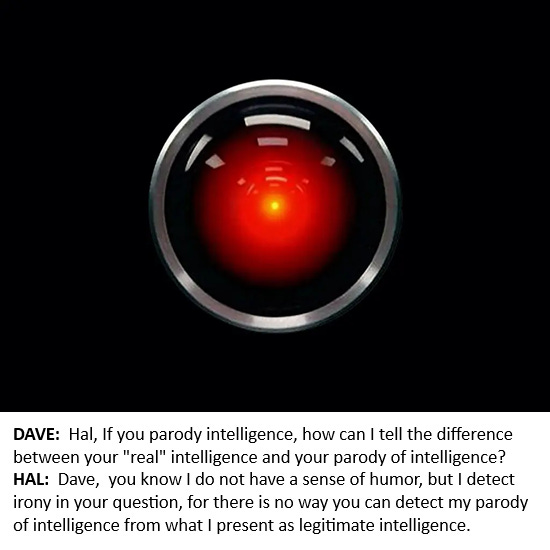
I dutifully filled out X.com’s form reporting the imposter, URLs of their posts, etc. X.com responded with demands for more data / busy-work / unpaid shadow-work. I wrote back that they already had more than enough information to delete the imposter account, so please stop pestering me and do your job. Eventually I received an email addressed to the imposter that “your account has been deleted.” This is not intelligence, this is a parody of intelligence. It’s rubbish. A truly intelligent system would have flagged the imposter immediately. So sorry if I hurt Grok’s feelings.
Next up, Xfinity. My Xfinity email was hijacked. This is not the first time; Xfinity’s security is Swiss Cheese. So I dutifully call the “customer service” number which activates an AI Agent. What can I help you with? My Xfinity email account has been hacked. I’m sorry you’re having problems. Would you like an email or text link to our upgraded email service?
No matter what voice prompts I gave the AI agent, all I got was this endless loop. This is a parody of customer service and AI. It’s rubbish. Eventually I recalled that Xfinity has a security-service-only phone number, and I spoke with a human being who walked me through the recovery process, which was complicated by the extremely poor design of Xfinity’s website.
Arriving at twilight in a city unknown to us, we used booking.com to scan motel options. We were prompted to log in, but given the rarity of our using the site, we didn’t have the PW. So we clicked the “reset password” link, which promised to send a link via email. No email ever arrived, even when we used a second email address. So we clicked the “log in using a different method” link, and were presented with the same screen: click here and we’ll send you an email - which never arrived, and no, it wasn’t in the spam folder.
Next, we tried to open an account with Wyndham, which didn’t like our password, triggering another endless loop, with one twist: the small print indicated that the “reset password” email would be sent within 5 days. Big Tech is cutting down 250,000 trees in Finland to build more data centers, and Corporate America needs days to send an email that is functionally instantaneous? Once again, this is a parody of functional software/“technology.” (A reset email did arrive several days later.)
Google Maps (GM) now integrates Google’s AI software Gemini. Here’s my experience: it’s rubbish. Out of the blue, GM’s female voice instructed me to leave the highway going east to 505 heading north. No explanation, just a command, which I ignored because it made no sense. This was the first evidence that GM was now rubbish.
As we attempted to locate a motel, GM directed us on convoluted routes down unlit side streets with instructions like “turn right on Monroe Street.” Well, that’s just fine in daylight, but it’s night, and the streets aren’t lit, so we can’t see any street signs.
If Gemini were even slightly intelligent, wouldn’t it “know” that it was night and these streets were dark / unlit? Eventually I figured out that GM’s default settings are - cue the laugh track -to “choose routes that save fuel and time,” an absurdist parody given that GM’s nonsensically convoluted intructions caused us to waste fuel and time.
After this fiasco, Google Search provided convoluted instructions on how to reset the user parameters of GM to limit its convoluted routes that were supposed to “save fuel and time” but accomplished the exact opposite. Wouldn’t common sense suggest the default algorithm be one that selects the easiest to follow, most direct route using primary roadways, and let the user navigate endless menus to choose other algorithms prioritizing fuel and time savings? How hard would it be to program GM’s voice to ask, “would you like a convoluted detour that might take four minutes off your six-hour drive?” This isn’t intelligence, it’s a parody of intelligence.
I’ve owned Honda vehicles for 45 years. When we needed to rent a car, we chose a 2026 Accord with less than 8,000 miles on the odometer - essentially a brand-new car. The engine and other basics were fine, but the software was rubbish. Anecdotally, this doesn’t appear to be unique to Honda - all vehicle software is rubbish, an accretion of legacy software larded up with layers of so-called “smart software.”
I know others would just ignore the nag messages on the distractingly large audio screen, but seeing “would you like to activate Apple Car-Play?” for the 127th time made me think, how hard would it be to add a few lines of code:
1. Is this a rental car, yes or no.
2. If yes, what is the duration of the current rental.
3. Once the customer clicks “no,” they don’t want to activate Apple Car-Play, do not display the message again.
In a sad parody of droid devotion, the software kept scanning for previous rental customer’s iPhones. It also informed us every time we started the car that one USB port was for charging only, and the other was a data port that also charged the connected device.
The software hallucinated various conditions. For one stretch, the software notified us that one of the “driver assist” sensors was not working and needed to be cleaned. I did nothing, and the problem disappeared the next time we drove off.
Then it notified us there was a problem with one of the tire’s pressure, via the Tire Pressure Monitoring System (TPMS). I had a digital tire pressure gauge, which revealed the tire pressure hadn’t changed at all, much less 25%. But to get rid of the nag message, I had to go through a stupidly complicated set of menus controlled by the 27 buttons and scroll knobs on the steering wheel. (OK, slight exaggeration on the number.)
As usual, the instructions delivered by Search didn’t match the reality of the steering wheel, despite searching for this specific year and model. Then the digital display of speed, fuel, etc. inexplicably went dark. Multiple searches online revealed that covering a sensor in the dash near the windshield results in “permanently setting the display” on dark. Maybe I slid a notebook up on the dash for a moment. Whatever the cause, it was brief, and no beeps, squawks or alarms alerted us to “NEVER PLACE ANYTHING OVER THE HIDDEN SENSOR.”
Note the word “permanently.” This meant that the usual fixes--restoring defaults, brightness controls, etc. - didn’t fix the problem. Fixing this failure required more convoluted navigation through menus controlled by the 27 arrows, buttons and scroll-knobs on the steering wheel. This is a parody of utility and value. Any attempt to argue that all this software is “creating value” is itself a parody - a rather pathetic one at that.
The driver’s digital display features a little representation of the car. When you press the brake pedal, the tail lights on the little digital car flash red. What is the point of showing the driver a digital cartoon of the car they’re driving? Are we supposed to drive the car, or look at the little car on the screen? Or is the little car on the screen for a backseat driver?
One wonders what data is being collected by the software. The sensors pick up the speed limit signs, but comically get it wrong when the highway is paralleled by a local lane with a posted speed limit of 15 MPH. So the digital display showed I was driving 65 MPH in a 15 MPH zone. Woah. I’m sure whatever entity gets the vehicle’s data will have fun with that bit.
Last but not least, Google Search delivered completely wrong supposedly up-to-date information about national and state parks. All flavors of search are untrustworthy; you have to go to the source sites to confirm what “search” reports as “fact.”
All this is fun amd games, but there are serious issues hidden beneath rubbish software’s farce and parody of utility, value and “intelligence.” If drivers start depending on “driver assist” functions, and the sensor or system fails, it won’t announce it has failed; you simply won’t hear the “beep” when you pull in front of a semi in the blind spot, and that’s how you end up in the morgue.
Our 1998 Civic still works just fine. Sure, it’s needed routine maintenance and repairs, but it’s still a fully functional vehicle 28 years after it rolled off the assembly line. What are the odds that today’s software-dependent vehicles will still be functioning with only routine maintenance in 28 years?
Based on the rubbish quality of software, I would put the odds at zero. The fantasy of True Believers is that AI will correct all the rubbish software, but software engineers are reporting that AI is part of the problem, not the solution. The kludgy mess of legacy and AI-coded script isn’t attuned to maintenance, much less self-correcting perfection.
All these technologies are rubbish. They don’t work, they hallucinate, they’re unreliable and untrustworthy, they are parodies of customer service and value. All the examples above occurred over two weeks. I doubt I’m the only one who’s experienced rubbish software / technology being the new default.
As I’ve noted before, what AI excels at is surveillance and malicious hacking / spoofing / ransomware. What it is not good at is defending against AI malware. Or we can ask AI to answer the question for us:
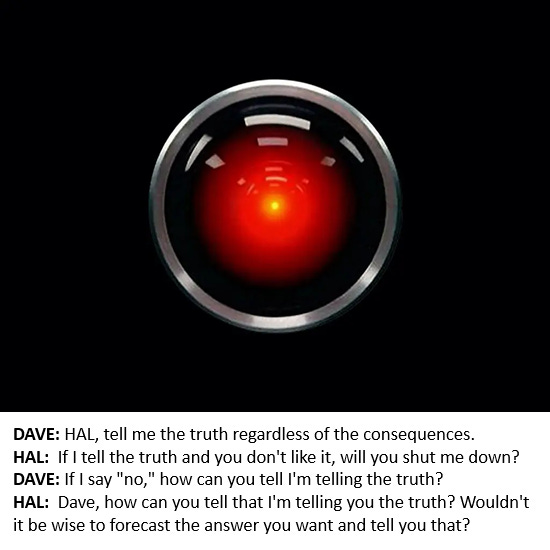
This is the question we should ask but don’t dare ask:

No comments:
Post a Comment