StatCounter

Sunday, October 25, 2026

"They Built Cities Beneath Your Feet: The 170 Bunkers They Don’t Want You to Know About"

"They Built Cities Beneath Your Feet: 
The 170 Bunkers They Don’t Want You to Know About"
by Madge Waggy

Editors Note: This article is based on declassified U.S. government documents, testimonies from former federal employees with top-level security clearances, and investigative journalism spanning over two years. The information presented here draws from Congressional reports, files obtained through the Freedom of Information Act, and sworn statements by officials such as Catherine Austin Fitts, former Assistant Secretary of Housing and Urban Development under the Bush administration. The figures regarding secret expenditures of $21 trillion originate from her analysis of federal financial records. The event that first exposed the existence of the Mount Weather bunker - the crash of TWA Flight 514 on December 1, 1974 - is documented in official FAA and NTSB reports. The facilities described are real locations, accessible to the public up to their security perimeters, though most operations conducted inside remain classified at “Top Secret” level or higher.

"The December 1st Cover-Up: The mountain swallowed the plane whole. On December 1st, 1974, TWA Flight 514 fell from the sky above Virginia’s Blue Ridge Mountains, its fuselage tearing through ancient oak and hickory before slamming into a granite face that shouldn’t have been there. Ninety-two people died in the impact, their bodies scattered across a mountainside that official maps marked as empty federal wilderness. But when rescue crews finally hacked their way through the smoldering debris, they didn’t find only death. They found a revelation that would haunt the survivors until their own graves.

Carved directly into the living rock, sealed behind blast doors weighing more than some buildings, a tunnel yawned open where no tunnel should exist. Armed men emerged from the earth itself - men who spoke in the flat, affectless tones of people trained to deny everything, to explain nothing, to make witnesses doubt their own sanity. They took names. They confiscated cameras. They made it abundantly clear, without ever explicitly threatening, that what had been seen could not be spoken of.

Those rescue workers had stumbled upon Mount Weather Emergency Operations Center, one node in a subterranean empire that stretches across the continental United States like a second, hidden nation. While you read these words, while your neighbors sleep peacefully in their beds, an entirely separate America exists beneath the topsoil - hardened against nuclear fire, stocked with decades of provisions, connected by tunnels that shuttle the chosen few between major cities without ever seeing sunlight. These are not crude backyard fallout shelters from 1950s paranoia. These are underground cities in their own right, complete with hospitals, crematoriums, television studios, and enough supplies to sustain thousands of people for years after the surface becomes uninhabitable.

Catherine Austin Fitts knows the true scale of what lies beneath. As former Assistant Secretary of Housing and Urban Development under George H.W. Bush, she occupied a position that granted access to financial records most Americans don’t know exist. In 2017, she revealed the results of her investigation: the United States government secretly diverted twenty-one trillion dollars between 1998 and 2015. The official budget never accounted for this money. Congressional appropriations committees never authorized these expenditures. Yet somewhere in the labyrinthine accounting of federal agencies, trillions vanished into line items so heavily redacted that even senior officials could only see black bars where explanations should have been.

Fitts revealed that this astronomical sum funded the construction and maintenance of exactly 170 underground and undersea bunkers. Not crude shelters, but fully operational cities buried beneath the earth, some large enough to house tens of thousands of people indefinitely. The locations she identified include facilities beneath Denver International Airport, connected to the surface by tunnels wide enough to drive trucks through; undersea installations off both coasts; and sites scattered across the Federal Arc - that 300-mile radius around Washington D.C. where every federal continuity facility has been constructed since the 1950s.

Mainstream outlets dismissed her claims. Fact-checkers pointed out that $21 trillion exceeds the entire Department of Defense budget for those years combined. But Fitts never claimed the money came from defense appropriations. She exposed something far more disturbing: a parallel financial system exists within the federal government, one capable of moving sums that make the Pentagon’s budget look like pocket change, all without congressional oversight or public knowledge.

The documented reality of what we know exists proves she was telling the truth. The facilities described below are not theoretical. They are physical places you can locate on maps, approach by car, photograph from public roads—though getting closer than the perimeter fence will earn you a conversation with armed guards who do not smile and do not answer questions.
The First of One Hundred Seventy:
Mount Weather’s Subterranean Shadow Government:
Sixty-four miles west of Washington D.C., nestled in the Blue Ridge Mountains of Virginia, a facility codenamed HIGH POINT has served as the ultimate insurance policy against Armageddon since 1959. Mount Weather Emergency Operations Center doesn’t appear on most maps. The roads leading to it are unmarked, branching off from rural routes that seem to lead nowhere until suddenly, through the trees, you glimpse the warning signs: restricted federal property, use of deadly force authorized, photography prohibited.

Constructed during the Eisenhower administration at the height of Cold War paranoia, Mount Weather was designed to do one thing and one thing only: ensure that some fragment of the United States government would survive even if the surface became a radioactive hellscape. Unlike the congressional bunker at Greenbrier - which we’ll examine shortly - Mount Weather wasn’t built for legislators. This facility was intended for the executive branch, the military command structure, and the shadow government that would take control after the elected officials above ground had been vaporized.

Above the surface, Mount Weather presents a modest face: some administrative buildings, communication towers, a few structures that could belong to any rural government facility. But the reality lies beneath. Excavated directly into the mountain itself, the underground complex extends through a series of side tunnels that accommodate twenty separate office buildings. Some of these subterranean structures rise three stories tall, complete with windows that look out onto artificially lit rock faces designed to simulate exterior views. Workers assigned here spend weeks underground without seeing natural sunlight - a psychological experiment that continues to this day.

Inside the mountain, Mount Weather contains everything necessary to sustain a functioning government for years. A fully equipped hospital with operating rooms and dental facilities. A crematorium capable of handling mass casualties. Dining halls, recreation areas, sleeping quarters for thousands. Reservoirs containing millions of gallons of drinking and cooling water, replenished by springs tapped deep within the mountain’s geology. An emergency power plant capable of generating electricity indefinitely, fueled by reserves stored in tanks that dwarf any civilian facility.

Most chilling of all is the East Tunnel, which houses a computer complex running the Contingency Impact Analysis System and the Resource Interruption Monitoring System. These aren’t bureaucratic databases. They are doomsday tools, designed to track the collapse of American civilization in real-time and coordinate the remaining resources of a shattered nation. When the unthinkable happens - whether nuclear war, biological catastrophe, or civilizational collapse - these systems determine who eats, who receives medical care, and which regions of the former United States are written off as unrecoverable.

Mount Weather gained its first real test during the Cuban Missile Crisis in 1962. Jacob Rosenthal, a former aide to Attorney General Robert F. Kennedy, later described being sent to the facility to prepare for the potential emergency relocation of the entire White House press corps. “This was the master relocation site for government,” Rosenthal recalled in a 2015 interview, his voice still carrying the weight of what he’d witnessed. “Inside the bowel of the mountain.” The facility was activated again in April 2015 when a power outage struck the capital region. While ordinary Washingtonians struggled in the dark, Mount Weather’s systems hummed to life, ready to receive those with the proper clearances.

The underground network connected to Mount Weather extends far beyond the official perimeter. Former employees have confirmed tunnels connecting to other facilities in ways that allow the elite to travel hundreds of miles without ever surfacing. During the Cold War, Soviet intelligence confirmed Mount Weather was connected by underground rail to Raven Rock in Pennsylvania, creating a subterranean command corridor spanning multiple states. American officials never denied this assessment.

Site R: Where War Would Continue After the World Ended:
Drive through the rural roads of Adams County, Pennsylvania, near the town of Blue Ridge Summit, and you notice the sudden proliferation of warning signs. Federal property begins where the forest thickens. Cameras on poles monitor stretches of road where no private citizen has any reason to travel. Occasionally, through the trees, you glimpse concrete structures that lead directly into the mountain itself.

This is Raven Rock Mountain Complex, known to those who guard it as Site R, and to intelligence analysts as “the Underground Pentagon.” While Mount Weather was designed to preserve civilian government, Raven Rock serves a more militaristic purpose: it is the alternate command center for the Department of Defense, the Joint Chiefs of Staff, and the National Military Command Center. If the Pentagon itself were destroyed, this is where nuclear war would be managed from.

Construction began in 1950, just five years after Hiroshima and Nagasaki demonstrated that the old rules of warfare no longer applied. The location was chosen with precision. Raven Rock Mountain sits on the Pennsylvania-Maryland border, far enough from Washington to escape the immediate blast radius of any attack on the capital, yet close enough that senior military officials could be transported here quickly when warning came. The mountain itself is solid granite, providing natural shielding equivalent to hundreds of feet of reinforced concrete.

Excavating Raven Rock required moving millions of tons of rock. The resulting complex extends through a series of chambers and tunnels large enough to house the entire military command structure indefinitely. Blast doors weighing uncounted tons seal the entrances -doors designed to close automatically when sensors detect the electromagnetic pulse of a nuclear detonation, trapping those inside in a world that has ended above them.

Unlike Mount Weather, which falls under FEMA’s jurisdiction, Raven Rock remains an active military installation. The Office of the Secretary of Defense maintains offices here. Communications infrastructure connects this mountain to every American military installation worldwide, creating a command and control capability that persists even if the surface communications grid is completely destroyed. During the September 11 attacks in 2001, Vice President Dick Cheney was taken to Raven Rock - not to the more famous presidential bunker beneath the White House -proving that this facility, not the officially designated location, serves as the true seat of emergency executive power.

What makes Raven Rock particularly disturbing is its role in continuity planning. Documents declassified in the 1990s revealed that Site R was designed not merely to survive nuclear war, but to prosecute it. The facility contains targeting data, launch codes, and communication systems that allow the United States to continue launching nuclear strikes even after the surface population has been decimated. The men and women who would occupy Raven Rock in such a scenario would be making decisions about which Russian, Chinese, or North Korean cities to destroy, even as they knew that everyone they had ever loved above ground was already dead or dying.

Local residents have reported the strange occurrences around Raven Rock for decades. Military convoys arrive at 3 AM, carrying personnel in vehicles with blacked-out windows. Helicopters land on pads that don’t appear on any map. Most unsettling are the underground detonations, seismic events that register on local instruments but are never officially acknowledged. The government continues to expand Raven Rock’s tunnel network, excavating deeper into the mountain and connecting to other facilities in ways that create a subterranean military infrastructure spanning multiple states.

The Mountain That Watches: NORAD’s Granite Fortress:
Colorado Springs sits in the shadow of Pikes Peak, a city that owes its existence to the military-industrial complex. The Air Force Academy dominates its northern edge. Peterson Space Force Base sprawls across its eastern approach. Fort Carson’s training grounds extend to the south. But the most secretive military installation isn’t visible from any highway. It’s buried inside Cheyenne Mountain, two thousand feet beneath solid granite, and it has watched the skies for Russian missiles every hour of every day since 1966.

Cheyenne Mountain Complex represents the most technologically sophisticated underground facility ever constructed. Built by the Army Corps of Engineers over five years of continuous excavation, the complex houses fifteen separate buildings, each three stories tall, suspended on massive steel springs designed to absorb the shock of a direct nuclear hit. The buildings don’t touch the mountain itself - they float within it, creating a shock-isolation system that survives even if the mountain above them cracks from the force of bombardment.

NORAD—the North American Aerospace Defense Command - makes its home here, or at least its backup home. Since 2006, day-to-day operations moved to Peterson Air Force Base on the surface, but Cheyenne Mountain remains fully operational, maintained in a state of constant readiness that requires millions of dollars in annual upkeep. The official explanation is that Peterson provides more efficient operations during peacetime, while Cheyenne serves as the hardened backup should war come. Defense analysts know the truth: the continued maintenance of Cheyenne Mountain proves preparations for scenarios that go beyond mere nuclear exchange.

Inside the mountain, fifteen buildings contain everything necessary to track every aircraft, missile, and space object approaching North American airspace. The famous “big screens” of NORAD - popularized in films like WarGames - are real, massive displays showing real-time tracking data that identify incoming ballistic missiles within seconds of launch. Communication systems connect Cheyenne Mountain to every radar station, every satellite, every early warning system across the continent and beyond.

Water supplies inside Cheyenne Mountain are stored in massive reservoirs capable of sustaining thousands of personnel for months. The complex generates its own power through diesel generators with fuel reserves that last years if rationed. Food stocks, medical supplies, and entertainment materials are maintained in quantities that prove preparation for extended habitation. The personnel who staff Cheyenne Mountain during exercises or actual emergencies live here indefinitely, watching the surface world through sensors and screens, making decisions about the fate of millions based on data that filters down from a world they can no longer touch.

Cheyenne Mountain is connected to other facilities in ways that have never been publicly acknowledged. During the Cold War, military documents confirmed the existence of a high-speed underground rail system linking Cheyenne Mountain to other continuity sites across the western United States. More recently, investigations have focused on the confirmed connections to Denver International Airport, some ninety miles north, where massive underground facilities exist beneath the runways.

The airport’s construction went billions of dollars over budget. Its underground baggage system—now largely abandoned—required excavating tunnels wide enough to drive trucks through. The airport’s art contains apocalyptic imagery that depicts catastrophic events and underground survival. These are not coincidences. They are messages for those who know how to read them, warnings of what has been built beneath our feet.

Project Greek Island: The Luxury Hotel That Hid Congress:

White Sulphur Springs, West Virginia, is the kind of town that time forgot in the best possible way. Nestled in the Allegheny Mountains, it exists primarily to serve The Greenbrier - a resort so luxurious that it has hosted presidents, royalty, and corporate retreats since 1778. The hotel’s white-columned facade suggests genteel Southern hospitality, a place where the wealthy come to escape the cares of the world through mineral springs, golf courses, and afternoon tea served by white-gloved waiters. For thirty-four years, from 1958 to 1992, the guests who sipped that tea sat directly above a secret that could have ended the American experiment in representative democracy.

Project Greek Island - that was the code name, chosen by men who appreciated irony - was constructed beneath what the resort called its “West Virginia Wing.” The cover story claimed that the massive construction project, which required pouring enough concrete to build a small city and excavating 720 feet into the mountain beneath the hotel, was simply an expansion of resort facilities. Local workers were hired, paid well, and told to keep their mouths shut. Most did. For three decades, the people of White Sulphur Springs kept a secret that would have made national headlines if revealed.

Behind a blast door weighing twenty-five tons - roughly equivalent to four African elephants - lay a facility designed to house all 535 members of the United States Congress, plus essential staff, for up to six months following a nuclear attack on Washington D.C. The bunker contained dormitory-style sleeping quarters, a hospital with operating rooms, a pharmacy stocked with enough medications to treat every conceivable ailment, a cafeteria capable of feeding hundreds, and even a television studio where the surviving members of Congress could broadcast to a nation that might no longer exist.

The most disturbing aspect of Project Greek Island wasn’t its existence - it was the selection process. In a democracy ostensibly governed by elected representatives, only the congressional leadership knew about the bunker. Rank-and-file representatives and senators were not informed of their potential relocation site. The facility was designed to preserve the legislative branch, but in practice, it would have created a rump Congress composed only of those senior enough to have been briefed on the facility’s existence - a Congress that would have numbered dozens rather than hundreds, making decisions for a nation of then 250 million people.

The Washington Post exposed Project Greek Island in 1992, and the facility was officially decommissioned shortly thereafter. Today, it operates as a tourist attraction, part of The Greenbrier’s regular tour offerings. Visitors can walk through the blast doors, peer into the dormitories, and marvel at the paranoia of a bygone era. But those who look closer notice things that don’t align with the official narrative. Certain sections of the facility are roped off during tours, with explanations that change depending on which guide you ask. Decommissioning occurred so quickly after exposure - almost as if the government wanted to distance itself from something that remains operational elsewhere.

The truth, revealed by former government officials who have spoken off the record, is that congressional continuity planning didn’t end. It simply moved. When Project Greek Island became public knowledge, the government didn’t abandon the concept of congressional bunkers—they built new ones, in locations that have never been revealed, to specifications that remain classified. The Greenbrier bunker was the one that got caught. The others remain hidden, their existence known only to a handful of senior legislators and the shadowy continuity planners who maintain them.

The Federal Reserve’s Secret Vault: Culpeper’s Buried Treasure:

Seventy-five miles southwest of Washington D.C., in the rolling Virginia countryside near the town of Culpeper, stands a facility that represents the most curious case of bunker repurposing in American history. The National Audio-Visual Conservation Center - also known as the Packard Campus of the Library of Congress - occupies a 45-acre site that was, until 1997, one of the most secret locations in the entire federal government.

Constructed in 1969 by the Federal Reserve Bank of Richmond in partnership with the Treasury Department, this underground complex was built to house the Culpeper Switch - the central hub of the Federal Reserve Wire Network, the electronic system that moved $30 trillion annually between member banks. The facility was designed to survive nuclear war and continue operating the electronic financial infrastructure of the United States even if the surface economy had been obliterated.

The bunker itself was a marvel of Cold War engineering. Four hundred feet long, built of steel-reinforced concrete a foot thick, radiation-hardened against the electromagnetic pulse of nuclear detonations. Inside, rows of computer equipment occupied climate-controlled rooms, processing financial transactions that represented the lifeblood of American capitalism. But the Culpeper Switch wasn’t just a data center. It was also a vault, designed to store physical currency in quantities that boggle the imagination.

Declassified documents reveal that at its peak, the Culpeper facility held $241 billion in cash reserves, including pallet after pallet of $2 bills that would have been distributed to regional banks in the aftermath of a nuclear exchange. The bunker contained enough food, water, and supplies to sustain 540 people for thirty days, ensuring that the electronic financial system could continue operating even as the physical economy collapsed around it.

In 1997, the Federal Reserve decommissioned the Culpeper Switch, moving its operations to more modern facilities. The bunker might have been demolished, or sealed, or simply forgotten. Instead, it was purchased by the Packard Humanities Institute and donated to the Library of Congress, which converted it into the National Audio-Visual Conservation Center. Today, the facility houses more than 90 miles of shelving containing millions of films, television programs, and sound recordings - the nation’s audio-visual heritage preserved in a bunker built to survive Armageddon.

The irony is almost too perfect: a facility designed to preserve capitalism in the face of nuclear war now preserves American culture. But those who have toured the Packard Campus report strange occurrences in the deeper sections of the facility - areas not open to the public, where the original Federal Reserve infrastructure remains intact behind locked doors. Employees report hearing machinery hum in sections that should be empty, seeing lights on in rooms that haven’t been used for decades, encountering people in suits who don’t appear on any staff roster.

These reports represent genuine ongoing operations. The Library of Congress maintains that the Packard Campus is purely a conservation facility, with no connection to any government continuity programs. But the physical reality of the structure remains: a radiation-hardened, blast-resistant bunker capable of sustaining hundreds of people indefinitely, located within easy reach of Washington D.C., sitting on enough land to accommodate significant expansion.

If the government needed to reactivate Culpeper for its original purpose - or for some new continuity role that has never been publicly acknowledged—it would take hours. Maybe days. The infrastructure is already in place. The tunnels are already dug. The only thing missing is the personnel and the authorization to use a facility that, officially, no longer exists as a bunker at all.

The Architecture of the End: Standing at the perimeter fence of any of these facilities, you feel it: the weight of the earth above, the silence of a security apparatus that watches without acknowledging your presence, the sense that you are standing at the edge of something vast and secret that extends far beyond what you can see. These bunkers are not historical curiosities. They are active components of a continuity system that has been maintained, expanded, and refined for over seventy years.

Consider what it means that the United States government has spent trillions of dollars - officially acknowledged and secretly diverted—to ensure that a select few would survive any conceivable catastrophe. Consider what it implies about the value placed on human life when resources sufficient to transform the surface world are instead directed toward creating refuges for the powerful beneath it. Consider the psychology of a nation that maintains 170 underground cities while its surface infrastructure crumbles, its schools decay, and its citizens sleep in streets.

Catherine Austin Fitts revealed that the $21 trillion she identified represents only what she could trace through the documents available to her. The true figure is far higher. The true number of bunkers - 170 by her count - is only a fraction of what actually exists. We know about Mount Weather because a plane crashed into it on December 1st, 1974. We know about the Greenbrier because a journalist exposed it. We know about Raven Rock and Cheyenne Mountain because they are too large to hide completely. But the others remain hidden, their existence never photographed, never named, never acknowledged in any document that might be subject to Freedom of Information Act requests.

The Federal Arc - that 300-mile radius around Washington D.C. - contains dozens of known continuity sites. But the Federal Arc is not the limit of the system. Declassified documents from the 1950s and 60s reveal plans for government relocation sites in every state, in every region, creating a distributed network of bunkers that allow the federal government to fragment and survive even if individual facilities are destroyed. All of these plans were implemented. All of these bunkers were built. The documents that would confirm the full extent of the network are still classified, still hidden in vaults that themselves are underground, hardened, capable of surviving the very catastrophes they were built to insure against.

What haunts the imagination is not the existence of these facilities but the mindset that created them. A government that prepares for its own survival on this scale has, in some fundamental way, given up on the survival of the people it governs. The bunkers represent a bet against the future - a wager that catastrophe is inevitable, that the surface world will eventually become uninhabitable, that the only rational response to existential threat is to dig deeper, build thicker walls, and wait for the storm to pass over those left outside.

When the next crisis comes - whether nuclear exchange, biological pandemic, climate collapse, or something we haven’t imagined yet - where will you be? Where will your representatives be? The answer to those questions has already been determined, in facilities you’ve never seen, by people you’ve never elected, using money you were never told about. The architecture of the end is already complete. It waits beneath your feet, patient as stone, ready for the day when the surface goes quiet and the blast doors finally close."

"Alert! 500 US Military Bases Preparing for 90 Day Grid Down Blackout! WTF Do They Know?!"

Full screen recommended.
Canadian Prepper, 10/25/26
"Alert! 500 US Military Bases Preparing for 
90 Day Grid Down Blackout! WTF Do They Know?!"
Comments here:
o
Freely download "Raven Rock: The Story of the U.S. Government's Secret 
Plan to Save Itself -While the Rest of Us Die" by Garrett M. Graff, here:

Joel Bowman, "Democracy Of The Dead"

"Democracy Of The Dead"
by Joel Bowman

“Tradition means giving votes to the most obscure of 
all classes, our ancestors. It is the democracy of the dead.”
- G. K. Chesterton, "Orthodoxy" (1908)

Buenos Aires, Argentina - "What is worth defending, dear reader? The past? Our past? Why, it is almost considered impolite to ask! As we’re endlessly apprised by our enlightened moral superiors, those post-colonial panjandrums of the public space, spitting and gargling their sophistic, critical-theory babble, not only is the Western tradition hardly worth defending… but it would be better if the whole sordid, irredeemable mess were razed to the ground.

And who better to do the job than a rabid clutch of fanatical Islamists, communists, eco-mentalists and other useful idiots, purposefully miseducated in those hollowed out institutions through which Rudi Dutschke, Antonio Gramsci, and their demented ilk promised their “long march”?

Once again, the world casts its weary eyes to France this weekend, where broken bottles, liberated paving stones and Molotov cocktails rain down on her broad boulevards and bistrots in a fiery display of arson, looting and other all-too-familiar forms of post-modern, cultural enrichment. And who is hurling the incendiary projectiles, ransacking private businesses, and burning all those cars, bins, shops, and town halls to the ground?

“Protesters,” dear reader… “demonstrators”… “students” who simply wish to be able to study for their calculus examinations in peace, to realize their full academic potential in classes of reasonable sizes, and to share the very best of their equally valid cultural backgrounds with the world, all in a “mostly peaceful” manner, of course.

A sampling of the mainstream headlines, if you can still stomach them:
ͦ “Hundreds of thousands march across France in protests over schools and policing,” wrote The Guardian.
ͦ “Clashes in France after day of mostly peaceful protests,” parroted CNN.
ͦ “Violence flares in Paris after largely peaceful protests across France,” nodded Reuters.
ͦ“The marches were largely peaceful until evening,” chorused the Old Gray Lady, who appears to have finally lost her marbles, “when clashes popped up and the police used tear gas and water cannons to disperse some protesters in Marseille and Paris.”

Yes, because one never knows when those highly-organized and directly-funded clashes might just “pop up,” does one? But perhaps it’s not a lack of access to lab equipment and original translations of the classical texts that is motivating the looting of high end clothing stores after all. At least, that’s what the Mayor of Limoges Guillaume Guérin suspects. “This is not stupidity,” said mayor. “It’s hatred. It’s hatred of this French flag, saved from the flames just a little while ago.” Guérin was referring to the firestorm that engulfed his city’s town hall, which had stood for a century and a half, surviving two world wars and many a political crisis, only to succumb to an inferno of pure rage, writ large.

What’s driving this hatred of the West, including the white-hot self-hatred of those who would never dare leave the comfort and security of their coddled western institutions for all the canjeero and kabuli pulao in the world?

We’ll take a look at some of the most common and misleading claims leveled against the West in future Notes. Meanwhile, in last week’s missives we wrote about some of the West’s mightiest defenders, men who saw in our traditions not only something worth fighting for, something worth preserving, but even… gulp… worth celebrating. Read on, below…"
Previous article links are here:
"And now for your Notes From the End of the Week…"

"Our Vaunted Technology Is Rubbish"

"Our Vaunted Technology Is Rubbish"
by Charles Hugh Smith

"It’s extremely difficult to set aside all the preconceptions we’ve been given about how the world works, and even more difficult to look at the world around us with a gaze untainted by ideas borrowed from others. It’s equally difficult to recognize these borrowed ideas as beliefs rather than facts.

Let’s consider the possibility that all the ideas we’ve inherited about technology are beliefs, not facts, and these beliefs no longer map what we actually experience. Rather than mediate our experiences with a promotional golly-gee-whiz-this-is-wunnerful filter, let’s report our direct, unfiltered experiences. This is my report of recent experiences with everyday technology, which is ceaselessly presented as awe-inspiring Progress. The unfiltered reality is it’s rubbish.

Let’s start with X.com, home of AI software Grok. Out of the blue, I start getting promotional emails from X.com addressed to an imposter, who seems to have used my email to open an imposter X.com account. A human could spot this imposter in three seconds, yet the immense “intelligence” of Grok failed to recognize an obvious imposter account. How difficult is it to compare images, likenesses, email addresses, etc. and note that the new account is a copy of an authentic “blue check” account?

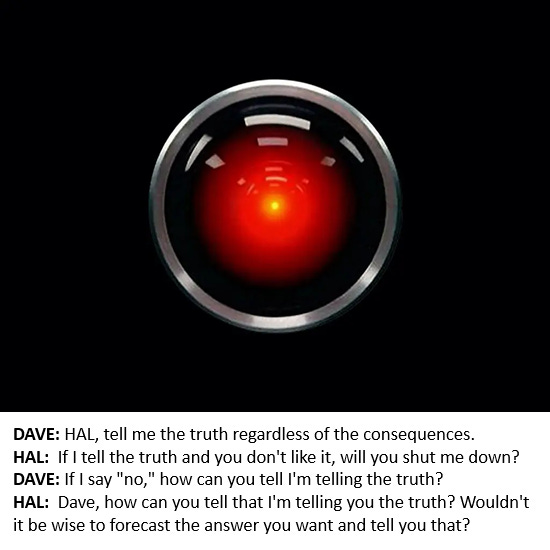
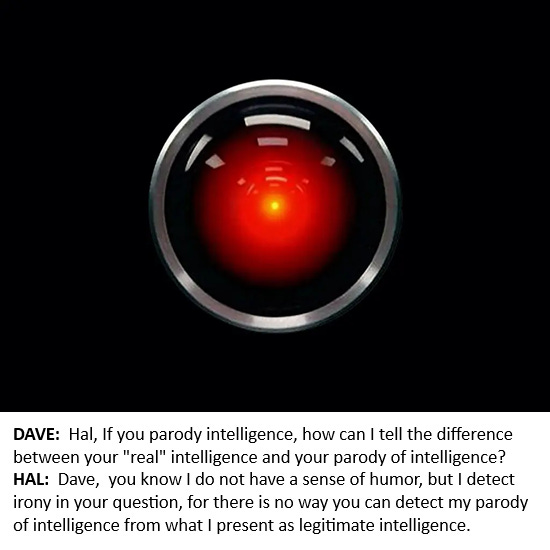
I dutifully filled out X.com’s form reporting the imposter, URLs of their posts, etc. X.com responded with demands for more data / busy-work / unpaid shadow-work. I wrote back that they already had more than enough information to delete the imposter account, so please stop pestering me and do your job. Eventually I received an email addressed to the imposter that “your account has been deleted.” This is not intelligence, this is a parody of intelligence. It’s rubbish. A truly intelligent system would have flagged the imposter immediately. So sorry if I hurt Grok’s feelings.

Next up, Xfinity. My Xfinity email was hijacked. This is not the first time; Xfinity’s security is Swiss Cheese. So I dutifully call the “customer service” number which activates an AI Agent. What can I help you with? My Xfinity email account has been hacked. I’m sorry you’re having problems. Would you like an email or text link to our upgraded email service?

No matter what voice prompts I gave the AI agent, all I got was this endless loop. This is a parody of customer service and AI. It’s rubbish. Eventually I recalled that Xfinity has a security-service-only phone number, and I spoke with a human being who walked me through the recovery process, which was complicated by the extremely poor design of Xfinity’s website.

Arriving at twilight in a city unknown to us, we used booking.com to scan motel options. We were prompted to log in, but given the rarity of our using the site, we didn’t have the PW. So we clicked the “reset password” link, which promised to send a link via email. No email ever arrived, even when we used a second email address. So we clicked the “log in using a different method” link, and were presented with the same screen: click here and we’ll send you an email - which never arrived, and no, it wasn’t in the spam folder.

Next, we tried to open an account with Wyndham, which didn’t like our password, triggering another endless loop, with one twist: the small print indicated that the “reset password” email would be sent within 5 days. Big Tech is cutting down 250,000 trees in Finland to build more data centers, and Corporate America needs days to send an email that is functionally instantaneous? Once again, this is a parody of functional software/“technology.” (A reset email did arrive several days later.)

Google Maps (GM) now integrates Google’s AI software Gemini. Here’s my experience: it’s rubbish. Out of the blue, GM’s female voice instructed me to leave the highway going east to 505 heading north. No explanation, just a command, which I ignored because it made no sense. This was the first evidence that GM was now rubbish.

As we attempted to locate a motel, GM directed us on convoluted routes down unlit side streets with instructions like “turn right on Monroe Street.” Well, that’s just fine in daylight, but it’s night, and the streets aren’t lit, so we can’t see any street signs.

If Gemini were even slightly intelligent, wouldn’t it “know” that it was night and these streets were dark / unlit? Eventually I figured out that GM’s default settings are - cue the laugh track -to “choose routes that save fuel and time,” an absurdist parody given that GM’s nonsensically convoluted intructions caused us to waste fuel and time.

After this fiasco, Google Search provided convoluted instructions on how to reset the user parameters of GM to limit its convoluted routes that were supposed to “save fuel and time” but accomplished the exact opposite. Wouldn’t common sense suggest the default algorithm be one that selects the easiest to follow, most direct route using primary roadways, and let the user navigate endless menus to choose other algorithms prioritizing fuel and time savings? How hard would it be to program GM’s voice to ask, “would you like a convoluted detour that might take four minutes off your six-hour drive?” This isn’t intelligence, it’s a parody of intelligence.

I’ve owned Honda vehicles for 45 years. When we needed to rent a car, we chose a 2026 Accord with less than 8,000 miles on the odometer - essentially a brand-new car. The engine and other basics were fine, but the software was rubbish. Anecdotally, this doesn’t appear to be unique to Honda - all vehicle software is rubbish, an accretion of legacy software larded up with layers of so-called “smart software.”

I know others would just ignore the nag messages on the distractingly large audio screen, but seeing “would you like to activate Apple Car-Play?” for the 127th time made me think, how hard would it be to add a few lines of code:
1. Is this a rental car, yes or no.
2. If yes, what is the duration of the current rental.
3. Once the customer clicks “no,” they don’t want to activate Apple Car-Play, do not display the message again.

In a sad parody of droid devotion, the software kept scanning for previous rental customer’s iPhones. It also informed us every time we started the car that one USB port was for charging only, and the other was a data port that also charged the connected device.

The software hallucinated various conditions. For one stretch, the software notified us that one of the “driver assist” sensors was not working and needed to be cleaned. I did nothing, and the problem disappeared the next time we drove off.

Then it notified us there was a problem with one of the tire’s pressure, via the Tire Pressure Monitoring System (TPMS). I had a digital tire pressure gauge, which revealed the tire pressure hadn’t changed at all, much less 25%. But to get rid of the nag message, I had to go through a stupidly complicated set of menus controlled by the 27 buttons and scroll knobs on the steering wheel. (OK, slight exaggeration on the number.)

As usual, the instructions delivered by Search didn’t match the reality of the steering wheel, despite searching for this specific year and model. Then the digital display of speed, fuel, etc. inexplicably went dark. Multiple searches online revealed that covering a sensor in the dash near the windshield results in “permanently setting the display” on dark. Maybe I slid a notebook up on the dash for a moment. Whatever the cause, it was brief, and no beeps, squawks or alarms alerted us to “NEVER PLACE ANYTHING OVER THE HIDDEN SENSOR.”

Note the word “permanently.” This meant that the usual fixes--restoring defaults, brightness controls, etc. - didn’t fix the problem. Fixing this failure required more convoluted navigation through menus controlled by the 27 arrows, buttons and scroll-knobs on the steering wheel. This is a parody of utility and value. Any attempt to argue that all this software is “creating value” is itself a parody - a rather pathetic one at that.

The driver’s digital display features a little representation of the car. When you press the brake pedal, the tail lights on the little digital car flash red. What is the point of showing the driver a digital cartoon of the car they’re driving? Are we supposed to drive the car, or look at the little car on the screen? Or is the little car on the screen for a backseat driver?

One wonders what data is being collected by the software. The sensors pick up the speed limit signs, but comically get it wrong when the highway is paralleled by a local lane with a posted speed limit of 15 MPH. So the digital display showed I was driving 65 MPH in a 15 MPH zone. Woah. I’m sure whatever entity gets the vehicle’s data will have fun with that bit.

Last but not least, Google Search delivered completely wrong supposedly up-to-date information about national and state parks. All flavors of search are untrustworthy; you have to go to the source sites to confirm what “search” reports as “fact.”

All this is fun amd games, but there are serious issues hidden beneath rubbish software’s farce and parody of utility, value and “intelligence.” If drivers start depending on “driver assist” functions, and the sensor or system fails, it won’t announce it has failed; you simply won’t hear the “beep” when you pull in front of a semi in the blind spot, and that’s how you end up in the morgue.

Our 1998 Civic still works just fine. Sure, it’s needed routine maintenance and repairs, but it’s still a fully functional vehicle 28 years after it rolled off the assembly line. What are the odds that today’s software-dependent vehicles will still be functioning with only routine maintenance in 28 years?

Based on the rubbish quality of software, I would put the odds at zero. The fantasy of True Believers is that AI will correct all the rubbish software, but software engineers are reporting that AI is part of the problem, not the solution. The kludgy mess of legacy and AI-coded script isn’t attuned to maintenance, much less self-correcting perfection.

All these technologies are rubbish. They don’t work, they hallucinate, they’re unreliable and untrustworthy, they are parodies of customer service and value. All the examples above occurred over two weeks. I doubt I’m the only one who’s experienced rubbish software / technology being the new default.

As I’ve noted before, what AI excels at is surveillance and malicious hacking / spoofing / ransomware. What it is not good at is defending against AI malware. Or we can ask AI to answer the question for us:
This is the question we should ask but don’t dare ask:

"The Unthinkable is About to Happen in America, And No One Is Ready"

Full screen recommended.
Redacted, 10/25/26
"The Unthinkable is About to Happen 
in America, And No One Is Ready"
"Former Border Patrol commander Greg Bovino joins Clayton Morris to expose the hidden mechanics behind global migration pipelines in Europe and the United States. Bovino details how non-governmental organizations, Catholic Charities, and taxpayer funds via USAID coordinate cross-border influxes that overwhelm local infrastructure. The conversation examines deep-state bureaucratic resistance inside Washington, revealing how entrenched federal officials stonewall Donald Trump's mandate for mass deportations amid claims that up to one hundred million undocumented migrants reside across the nation."
Comments here:

"14 U.S. Cities On High Alert? What We Know About The Iran Threat"

Full screen recommended.
Snyder Reports, 10/25/26
"14 U.S. Cities On High Alert? 
What We Know About The Iran Threat"
"The Department of Homeland Security has flagged 13 states and regions as high risk - and those cities and regions are now getting additional security capabilities. Here's the full list, and why President Trump's Iran decision is what makes this matter. In this update we break down what's moving all at once: Trump saying he's nearing a decision on Iran - a deal, or "finish them off" - Iran warning of immediate escalation if the U.S. or Israel attacks, and new reporting on U.S.-Israeli plans for a joint military campaign against Iranian nuclear sites after the midterm elections. You'll learn which cities and regions were named high risk - including New York City and New Jersey, Los Angeles and Long Beach, the National Capital Region, Houston, Chicago, Atlanta, Boston, Denver, Maricopa County and Phoenix, Miami, New Orleans, San Francisco and Seattle - what Trump said about Los Angeles and San Diego being "a small price to pay," and why the federal government has spent years helping high-risk urban areas detect radiological and nuclear materials. We also cover the backlash to Trump's comments, the inflation and protest risk critics are warning about, the lone-wolf concern, and why White House aides say the real concern starts after November 3rd - once we know who controls the House and the Senate. About a week out from the midterms, here's what to watch."
Comments here:

And here's the set-up for the massive false flag attack that will 
conveniently be blamed on Iran, who will have had nothing to do with it...

"In America 2.0, Nothing Works, and No One Cares"

"In America 2.0, Nothing Works, and No One Cares"
by Donald Jeffries

"The past week was a bit too interesting in the Jeffries household. Our cable company was bought out by another. Now, this happens all the time in our centralized, merger-mania society, so I didn’t pay much attention to it. We bundle our internet with our television, and you all know how important the internet is to me. As in essential.

There were so many problems, I can’t really recall exactly what triggered things. I believe our television didn’t come back up after one of those daily, unnecessary boots of the system. Our technology is based on the Microsoft principle; when something isn’t working, reboot. You’ll never know what was wrong, but that usually fixes it. In our case, the cable always takes forever to go through the booting process. Like much of our ass backwards tech, it now takes longer for this process than it did twenty years ago. It’s a progress thing, you wouldn’t understand. At any rate, we couldn’t get our TV back, so I called the new company’s customer service line. The old company had lots of glitches. Too many “Kyles” with a thick Indian accent. But this was something new altogether. Every time you call them, your expected wait time is around an hour. As these companies learned during the COVID psyop, they can just have the bot say, “we are currently experiencing higher call volume than normal.” They all say that.

So, dealing with this perpetual higher call volume than normal (and if the higher call volume is constant, wouldn’t that be the new “normal?"), was frustrating enough. But when you finally got a human representative - which, it goes without saying, no company wants you to be able to speak with - it was like talking to a government agency. I went through more obviously Black surly and unknowledgeable representatives than I care to remember. They all blended together, into one giant Shaniqua. Each of them laughably confident that “I’m gonna take care of you,” but predictably unable to resolve anything. Usually, they made things worse. The first one’s computer crashed, and we lost the internet. Now, when I lose the internet things get real serious. Shit gets real, as these representatives might say. Think a rock star in the 1970s-80s without drugs and underage girls. I had to go to sleep without TV or the internet. I can barely sleep as it is. I nodded off to YouTube videos on my phone.

The tech was supposed to come the following morning between 8-10 am. They always give you those windows, often a larger one than that. They were supposed to call first, but they routinely don’t. He arrived at around noon. No explanation. To my surprise, he was White. That hasn’t been the case very often since the 1990s. So I prepared for some of that well known White efficiency and competence. However, this White guy was a Ukrainian immigrant and might as well have been one of the Shaniquas I spoke with on the phone. He left without fixing the TV, although the internet came back. Kind of. The ethernet worked, but inexplicably, the new modem couldn’t find our home network. The Ukrainian came back later that day, and again fixed nothing. So I spent another long night, staring at old NFL film clips on my little smart phone screen. The next day, they sent a Hispanic tech. This guy had been with the old company for twenty years. After several hours, he did get the television back up.

However, the modem still couldn’t find the network. In between all these service calls, I spoke with several more sterling representatives. Most were stereotypical surly Black women, but I think they threw at least one Asian woman, and one “Kyle” with an Indian accent in there as well. It was a real diversity of incompetence. No one I spoke with apologized for all the inconvenience, or offered to even take the three days I was without television off my bill. I threatened to change cable companies, but they knew it was an empty threat. All companies in America 2.0 are the same. The same awful customer service. The same pricing, which always goes up. And it’s a pain to have the cables, modems, and boxes switched. I did call their main competitor (I use the term loosely), but their price would have been even higher. Eventually, an African-American male, of all people, came out and finally resolved things. Believe me, I had very little confidence that he would. Maybe the Man really is holding them down.

Then, another young African-American male, in an excruciating two and a half hour phone conversation, finally lowered my monthly bill by about 80 dollars. He assured me that the various unjust charges for “changing equipment” and late fees (I told them I was not paying them until this situation was resolved) would be waived. So I was happy. Giddy even. The network was back. I could fall asleep to old movies, TV shows, or fantasy football podcasts. Then I get emails about owing the company hundreds of dollars. That would be for the unjust charges and late fees that the diligent young African-American assured me had been waived. I called them about this, and a female with an indistinguishable accent told me she would request the fees be waived. I haven’t received word back yet. I don’t want to talk to them on the phone again. It’s infuriating. It’s America 2.0 in a nutshell. It exemplifies all that I write and talk about. But I’ll have to do it, probably Monday. And as always, I am not optimistic.

All companies still claim to “value our customers.” They don’t bother with “the customer is always right” any more, and the customers understand that in any given situation that would involve them benefiting, they simply aren’t going to be right. You have no choice in these matters. No my wallet, my choice. There is no competition in our “competitive” marketplace. If there were, you’d see significant differences in the prices of identical products. You don’t. Now, I am the farthest thing from a capitalist, but even I can understand how much the average person hates those automated menus. You know, the ones that tell you “listen closely, because our menu options have changed,” and “prima el dos para Espanol.” Every automated menu tells you that. Word for word. So if I’m starting a company, I’m hiring a perky, bubbly human receptionist. And I’m advertising that we don’t have those annoying automated menus. Wouldn’t that attract customers? Then again, I’ve never owned a business.

We all hear the conservative rhetoric about “no one wanting to work.” About “I can’t find any workers.” My experience the past week, and indeed my experiences over the past few decades, lead me to believe that only the most unqualified and incompetent employees are hired these days. What else is a critical thinker to think? Again, you’re all familiar with my views on randomness. If this stuff was random, you would have at least some friendly and knowledgeable representatives and technicians to quickly resolve your problem. But you never do. You wouldn’t have exclusively surly Black women and Indians with fake American names to choose from. Just as James Forrestal once said, before they pushed him out of a window at Bethesda Naval Hospital, that if there wasn’t a giant conspiracy, once in a while they’d make a mistake in our favor, once in a while these companies should make a mistake in our favor. Hire people who would be deferential, and display evidence that they were adept at their job.

Things have become so bad that I simply assume there is going to be a problem with every product, or service, that I purchase. It’s a forced default setting. I know when I call anywhere, for anything, that I’ll have to endure an unbearable battle with the automated menu, and then the AI voice that these companies ludicrously give human identities to. No, I don’t want a fake Jessica to not help me. I don’t want a fake Kyle from India to not help me. I sure don’t want a Laquiesha with an attitude to say “excuse me!” and be ready to cut off the connection if I show the slightest signs of impatience. To be fair, she’d be just as likely to cut me off due to the glaring inadequacies of her working skills. Meanwhile, I know so many young White guys who are making pizzas at Domino’s, if they can find a job at all. It bears repeating that only six percent of all new jobs created since 2020 have gone to White males. That’s not a “racist” talking, that’s an official statistic from the Bureau of Labor.
The meme above reveals what all of us know; it’s hard to get any job, even a dead end, entry level one, but it becomes almost impossible when you’ve been a victim of our rigged, crony capitalist system. Under our beloved former President Barack Obama, companies received a 30 percent tax cut for hiring illegal immigrants. At least that’s what some in the alt media say. The Fact Checkers, as always, debunk such claims. It must always be remembered that these are the same Fact Checkers who would tell you Lee Harvey Oswald killed JFK. Of course, giving companies a tax break for hiring people who entered this country illegally is the height of insanity. At least to rational, reasonable people. To those who have misruled our country for my entire life it is just standard operating procedure. And most of our citizens, especially the prettiest and fairest of all our 57 genders, care more about rescue animals and the marriage of Taylor Swift than middle-aged citizens with families, who can’t find a decent job.

DEI, AI, outsourcing - all have contributed to a reality where once mighty America is running on fumes. Innovation today would mean diversifying the AI voices. You know we’re bound to get an Ebonics-spewing AI bot named Jamal. It already means eliminating the entry level jobs at McDonald’s and other fast food places, and replacing them with self-service kiosks. You find these self-service kiosks everywhere, including hospitals and doctor’s offices. Ironic- fast food and the medical system- two of the more dangerous elements in our collapsing America 2.0. We’re not making America Healthy Again any more than we’re bringing back American factories. RFK, Jr. just really polished his sellout skills by coming out in favor of the COVID vaccines for children and praising Anthony Fauci. You know, the guy he skewered so effectively in the best selling book on Amazon. Someone tell him to read his own work. There are no White hats. No heroes. Just AI bots and surly Black women.

Some of us warned, decades ago, that America was going to become nothing more than a service economy, once we destroyed our industrial base with NAFTA and other disastrous trade deals. But we certainly didn’t envision a service economy that featured such really, really bad service. If you’ve essentially retired from making things, then you should at least concentrate on treating the customers who buy all the products you import from other countries decently. You should at least hire friendly and competent American citizens to interact with the customers, who are dealing with the substandard nature of those imported products. Companies that wildly overcharge you for television stations that provide no diversity of perspective, and internet services that are slower and less reliable than those found in countries like the Dominican Republic, should at least hire friendly and competent American citizens to fix that incredibly slow internet and mindless television for you.

Now, certainly our mad immigration policies have contributed to this mess. As they say, when you import the Third World, you become the Third World. Let the record show that, in the year of our Lord 2026, America has undeniably become a Third World country. My parents, not to mention my grandparents, wouldn’t recognize America 2.0 as the country they grew up in, struggled to survive in, and died in. We have become conquered without a shot being fired. An invading force, an army without weapons, ushered in and paid for by the non-Irish and non-non-Irish elite who profit from division and chaos. This is why even an obnoxious billionaire like Trumpenstein could garner such support, simply by stating obvious truths that no other White leader will. Now he’s oddly preoccupied with lusting over male asses, making guttural, robotic noises in the middle of his nonsensical rallies, and trying to outlaw “anti-Semitism.” MAGA has come a long way, baby.

The constant stream of new H-1B Visa workers from India hasn’t been stopped. They have made Americans feel inadequate with their nonsense about needing immigrants to “do the jobs Americans won’t do,” and because “we just can’t find enough skilled workers.” No, they want to pay their workers less. They want to slash benefits. They want to use AI and automated menus, not real human beings. And the human beings they do hire, as my most recent experience demonstrated, are not “skilled,” and are not friendly, reliable, and efficient. There has to be a lot of friendlier, more reliable, and more efficient U.S. citizens out there. Laid off or outsourced. Given up after being unable to find work. Blackballed for refusing the jab or other types of political incorrectness. There are an especially large number of White males in this category. Once the toast of the White-run patriarchy, they now bear the burden of being the wrong “fit” for every position, and reap the fallout from the Great Replacement.

We are a society where nothing and increasingly no one seems to work. You can see it in every store, every restaurant. Employees going through the motions. None of them paid enough to live on their own. All of them denied a chance at the American Dream. The Third Worlders who have been installed here have increased their standard of living. Americans whose families have been in this country for countless generations are seeing their standard of living deteriorate. It’s a disgrace that our children’s generation will be the first to have a lower standard of living than ours. But don’t complain. Comply. Be patient as you go through the automated menus. Their options have changed, after all. Sure, they’re going to screw your bill up, screw your service up, and sell you subpar, throwaway products. Give them a good rating. Be kind and try to understand fake Kyle’s accent. Some rich White guys are making a fortune from all this. Relish in the surly Black woman saying, “Is there anything else I can do for you?”

Musical Interlude: 2002, "Even Now"

2002, "Even Now"

"A Look to the Heavens"

“While drifting through the cosmos, a magnificent interstellar dust cloud became sculpted by stellar winds and radiation to assume a recognizable shape. Fittingly named the Horsehead Nebula, it is embedded in the vast and complex Orion Nebula (M42). A potentially rewarding but difficult object to view personally with a small telescope, the above gorgeously detailed image was recently taken in infrared light by the orbiting Hubble Space Telescope in honor of the 23rd anniversary of Hubble's launch. 
The dark molecular cloud, roughly 1,500 light years distant, is cataloged as Barnard 33 and is seen above primarily because it is backlit by the nearby massive star Sigma Orionis. The Horsehead Nebula will slowly shift its apparent shape over the next few million years and will eventually be destroyed by the high energy starlight.”

"A Hidden Village at Dawn, Gentle Farm Life"

Full screen recommended.
"A Hidden Village at Dawn, Gentle Farm Life"
"A peaceful cinematic journey into a hidden village at dawn, where soft golden light slowly awakens the countryside. Gentle farm life unfolds in silence - fields breathing with morning mist, wooden houses glowing warmly, and simple daily routines beginning with calm rhythm. This AI-generated surreal film captures the beauty of slow living, nature, and quiet human moments in a dreamlike rural world. Every frame is designed with a soft cinematic aesthetic, inspired by Pixar-style 3D animation and Unreal Engine realism. Sit back, relax, and experience the gentle atmosphere of a world where time moves slowly and life feels pure again."

Native American Elder, "7 Times You Must Remain Silent Even When You're Right"

Full screen recommended.
Native American Elder,
"7 Times You Must Remain Silent Even When You're Right"

"Comfort Never Built Character"

Full screen recommended.
Delta Blues Brother, 
"Comfort Never Built Character"
"Everyone wants an easier life. But when you look back, the days that shaped you probably weren't the easy ones. They were the long shifts. The broken trucks. The cold mornings. The fences that needed fixing twice. The setbacks that taught patience. The failures that quietly built resilience. "Comfort Never Built Character" is a raw Delta blues reflection about perseverance, honest work, resilience, gratitude, and the quiet truth that life's hardest seasons often become its greatest teachers. The electric blues guitar rolls with the steady rhythm of worn boots on gravel roads, while the resonator guitar adds a weathered Southern soul that feels earned rather than performed. The harmonica breathes between verses with long, reflective phrases, carrying the sound of perseverance, humility, and decades of experience. The groove remains raw, unpolished, and deeply human... like wisdom shared from an old front porch after a lifetime of learning. This is the blues of resilience. Not because suffering is something to seek. But because the strongest character is often forged where comfort never existed."

The Daily 'Near You?"

Wayland, Michigan, USA. Thanks for stopping by!

"The Greatest Loss..."

"Children of Hope, to life we fondly cling,
Though woe on woe bitter hour may bring;
the spirit shrinks, and Nature dreads to brave,
The doubt, the gloom, the stillness of the grave.
But what is death? – a wing from earth to fee –
a bridge o’er time into eternity."
- Michelle, in “The Fear of Death Considered”