StatCounter

Tuesday, September 29, 2026

"Armageddon & Iran'

"Armageddon & Iran'
by Martin Armstrong

"QUESTION: I was told that you had said the three wise men in the Nativity were Iranian and that they were the source of this final battle of Armageddon. Is that true?

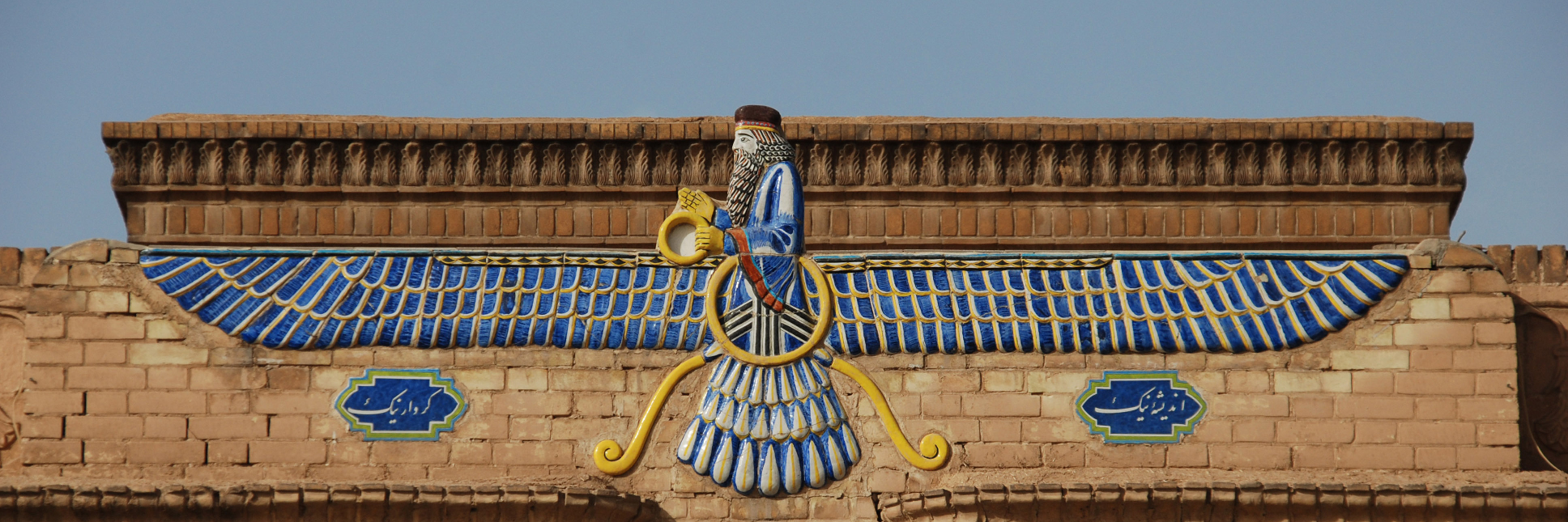
ANSWER: Yes, as far as the Nativity. The core concept of a final cosmic battle often known as Armageddon, also has ancient roots. Many historians trace this worldview back to the Persian prophet Zoroaster (around 1500 BC), who spoke of a cosmic struggle between good and evil ending in a perfect new world. This idea deeply influenced Jewish thought during times of great oppression, such as the Babylonian exile and the persecution by Greek rulers. The Book of Daniel (written around 167 BC) is a key text from this period, promising that God would soon overthrow the evil kingdoms oppressing the Jews. Early Christianity emerged from this same apocalyptic Jewish context, with followers believing Jesus’s return was imminent.
Zoroastrianism is significantly older than Christianity, and the “Three Wise Men” were most likely Zoroastrian priests. Zoroastrianism is one of the world’s oldest revealed religions. Its prophet, Zarathushtra (Zoroaster), is traditionally placed in the late 7th to early 6th centuries BC, though some scholars argue its origins stretch back even further into the 2nd millennium BC. This means it was already a well-established faith centuries before the birth of Jesus. It was the dominant religion of ancient Persia (modern-day Iran) until the 7th century AD.

The Gospel of Matthew calls them “Magi from the East” (Matthew 2:1). The Greek word magoi specifically referred to the priestly caste of ancient Persia, who were renowned for their knowledge of astrology and sacred texts. Most scholars agree these Magi were Zoroastrian priest-astrologers.

Several details support this, including their expertise in reading the stars, a core practice of Zoroastrian priests. The “East” points to Persia or Babylon, regions where Zoroastrianism was influential. The gold, frankincense, and myrrh they brought were traditional Persian royal gifts.

The familiar image of “three kings” comes from later Christian tradition, not the Bible itself. The number three comes from the three gifts, and the idea that they were kings was likely inspired by Old Testament prophecies. Totally shocking to most, is a train station in Tehran is dedicated to the Virgin Mary and Christianity that was opened recently in October 2025.
Many people do fear that a war with Iran could escalate into Armageddon, but the nature of that fear depends entirely on who you ask. A notable segment of the American population, especially among evangelical Christians, interprets a war with Iran as a step toward the biblical end times. For many others, the fear is not about biblical prophecy but about the real-world consequences of a wider war and the impact on energy, the cornerstone of modern civilization.

A June 2025 poll found that a slight majority of Americans (51%) feared the tensions between the U.S. and Iran could lead to a World War III. The fear of an “Armageddon” with Iran is real, but it is driven by two very different worldviews: one that sees it as a catastrophic failure of diplomacy, and another that sees it as the fulfillment of divine will.

We have zealot Jews and Christians who want to conspire to destroy the Dome of the Rock so they can rebuild the next Temple, ushering in Armageddon. According to the Book of Revelation in the New Testament of the Christian Bible, Armageddon is the prophesied location of a gathering of armies for a battle during the end-of-the-world scenario, interpreted as either a literal or a symbolic location. In Islamic theology, Armageddon is also mentioned in Hadith as the Greatest Armageddon or Al-Malhama Al-Kubra (the great battle).
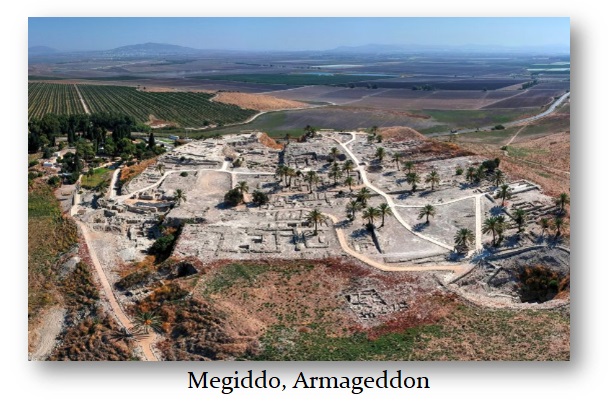
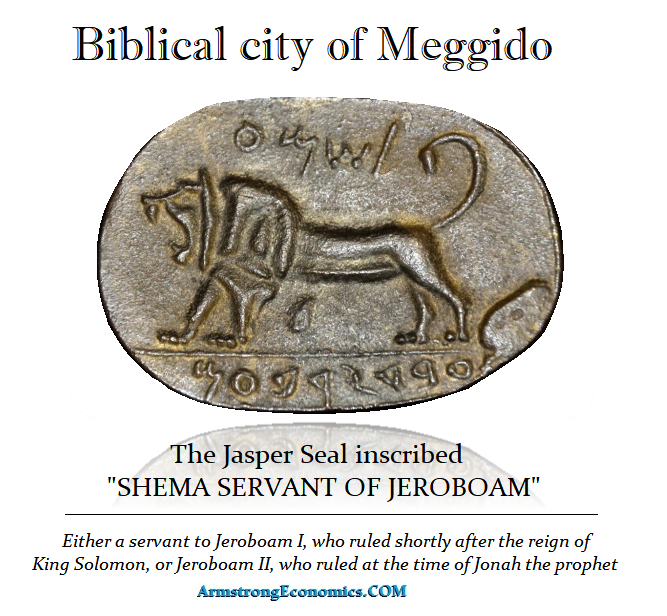
Megiddo is a fascinating site of twenty cities constructed directly on top of one another. It has been inhabited continuously from 3000 to 300 BC and lies at a strategic junction of north-south and east-west roads. Whoever had control of Megiddo had control of one of the major trade routes of antiquity. There were no coins produced by Egypt until the Ptolemy and the conquest by Alexander the Great. Likewise, there was no coinage of Judah. This is a reproduction of a Jasper Seal of Shema discovered at Megiddo in 1903.

Many battles have been fought at Megiddo. One great Battle of Megiddo occurred in 609 BC when Pharaoh Necho II of Egypt joined his allies, involving the Neo-Assyrians and the Neo-Babylonians. This required passing through territory controlled by the Kingdom of Judah. The Judaean king, Josiah, refused to let the Egyptians pass. The Judaean forces battled the Egyptians at Megiddo, resulting in Josiah’s death, and his kingdom then became a vassal state under Egypt. The battle is recorded in the Hebrew Bible, the Greek 1 Esdras, and the writings of Jewish historian Josephus. There is always a chance of losing whenever there is war. This is how the arrogant always fall.

There remains considerable debate about whether this is literally or symbolically a Great Battle to be fought on the plane of Armageddon, overlooked by Megiddo, which made sense in those days since it was a major link between the East and West, or are we looking at that as just symbolic of the world ar large.
Isarel vs Iran: In 2024, in his Knesset speech, Netanyahu said: “I’ve been warning about Iran for 30 years.” It was reported on March 3rd, during a visit to a site struck by an Iranian missile, Netanyahu stated: “We read in this week’s Torah portion, ‘Remember what Amalek did to you.’ We remember - and we act.”

In 1 Samuel 15:2-3, God gives King Saul a specific, direct order to carry out this command. The prophet Samuel relays the message: “This is what the LORD Almighty says: ‘I will punish the Amalekites for what they did to Israel when they waylaid them as they came up from Egypt. Now go, attack the Amalekites and totally destroy all that belongs to them. Do not spare them; put to death men and women, children and infants, cattle and sheep, camels and donkeys. ‘”

The Amalekites were a people group in the Hebrew Bible, presented as the archetypal and perpetual enemy of the Israelites. Their story is less about a distinct archaeological culture and more about a theological symbol of opposition to God’s purposes. According to biblical genealogies, the Amalekites descend from Amalek, kinging them to the Edomites and places them within the extended family of Abraham, making their hostility toward Israel a form of “brotherly” betrayal.

They are described as a semi-nomadic people inhabiting the Negev and Sinai regions, known for guerrilla-style raids. The Amalekites are defined almost entirely by their hostility to Israel. Over time, Jewish tradition transformed Amalek from a specific nation into a symbol of evil itself. There is no direct archaeological or extra-biblical evidence confirming the Amalekites actually existed as a distinct historical people. Scholars suggest the biblical portrayal is likely “blanket” designation for various hostile desert groups or a literary device to embody the theological concept of opposition to God.

In contemporary political and religious rhetoric, some Israeli leaders, most notably Prime Minister Benjamin Netanyahu, have explicitly compared the Iranian regime to the biblical Amalekites. However, Muhammad and Islam came roughly 2,500 years after Judaism. By no account, can the Iranians be the fabeled Islam, which did not emerge until the 7th century AD, long after the codification of the Hebrew Bible and the development of rabbinic Judaism."

Monday, September 28, 2026

"Alert! Russia Mobilizes 2.5 Million! Iran FM Leaves NY Early!"

Full screen recommended.
Canadian Prepper, 9/28/26
"Alert! Russia Mobilizes 2.5 Million! 
Iran FM Leaves NY Early!"
Comments here:

“Parasitic Derivatives: $1.5 – 2.5 Quadrillion Dollars,

“Parasitic Derivatives: $1.5 – 2.5 Quadrillion Dollars,
Too Big to Understand”
by David Hague

“I recently returned from two weeks of ‘high level’ meetings with a group of Bankers [this is code for two weeks of subsidized debauchery with bankers] in Rome. As I sat at my desk, I was hoping to motivate myself to pursue a more chaste and pure existence. Unfortunately the Polar Vortex experienced by North America drained me of my good intentions. The bone chilling cold once again had me reaching for my trusty bottle of Jack Daniels for warmth and inspiration. My time in Rome had not been completely ‘wasted’, so to speak. I had secured a contract from the European Central Bank [ECB] to research the topic of Derivatives. I was to present my findings at the upcoming World Economic Forum in Davos later that month.

One Quadrillion Dollars: Too Big to Understand: Dear Reader, please resist your natural instinct to click away from this commentary at the mere mention of the word ‘Derivatives’. I am acutely aware of the boredom and befuddlement that this word instills in you. At this point I would simply remind you that the derivatives market is estimated to exceed one quadrillion dollars. [This incredibly large number is actually an accurate estimate of the size of the derivatives marketplace]. (In addition, unfunded liabilities, like medical care and pensions, are at least $300 trillion globally. If we add gross derivatives of $1.5 quadrillion, which are likely to turn into real debt as counterparties fail, the total debt and liabilities are above $2 quadrillion. Source - CP) Despite the fact the derivatives market eclipses the market capitalization of the NYSE by an exponential factor, it is not discussed, reported or tracked because it is simply too complicated and opaque. Warren Buffet’s, comment about ‘weapons of mass financial destruction’ seem to be the beginning and end of any discussion on the topic.

Derivatives are a parasitic financial instrument: For those of you who are unschooled on the topic of derivatives, allow me to explain. Derivatives are abstract financial instruments, which, like parasites, can attach themselves to all manner of stocks, bonds, mortgages, commodity, debt obligations, currency exchange, interest rate fluctuations… in short, anything. Derivatives exist in the ‘twilight zone’ of the banking industry. Like black holes, their presence and massive influence are acknowledged yet the true influence on the global economy of this quadrillion dollar ‘event horizon’ is only theoretical. The near catastrophic disasters at Barings, JP Morgan and AIG are small examples of their destructive powers. However I will offer you Investorpedia’s more clinical definition. “A security whose price is dependent upon or derived from one or more underlying assets. The derivative itself is merely a contract between two or more parties.”

You got to know when to hold ‘em, know when to fold ‘em, {Kenny Rogers}: One might think of derivatives as a random game of online poker: you don’t know who your opponents are [your counterparty], you do not know if you will be paid [counterparty risk], you do not know if the game is legitimate, [lack of regulation], and your opponents are probably able to see what cards you are holding, [market domination by large banks]. As well, you are making bets that in many instances neither you nor your opponents fully grasp [complexity of the market]. With each wager you are potentially risking not only your current assets, but your future assets as well. [Leverage]. In some cases you do not know how much you are betting. Imagine as well, that you play this game every day with trillions of dollars that you do not have. This is the global derivatives market.

It is all Greek to me: Alternately, as derivatives are often created as a form of insurance, think of them as an insurance policy in which you:
• Do not know the name, address or any contact information relating to your insurer.
• Do not know if your insurer has the resources to pay a claim.
• Do not understand the insurance contract as it is written in Greek.
• Must rely on a shadowy third party [ISDA] to decide what constitutes a claim. [Credit event]
• Do not know whether your insurer is itself vulnerable to the particular risk you have contracted with it to insure.

His moral lassitude allowed him to excel: Dear Reader, I digress, let me return to my narrative. The aforementioned lucrative contract was secured by two key factors. The first factor was my friendship with Gustavo Laframboise-Pierre, the European Central Bank’s [ECB] Global Director of Statistical Creation. My relationship with such an esteemed member of the ECB traced its roots back to Gustavo’s days as a bookie for Wall Street’s elite. I referred so much business to him we became very good friends. His station in life took a remarkable turn when a senior member of the ECB, while in New York on a ‘fact finding mission’ [this is code for visiting his favorite escort] made an outrageously large and incorrect wager on the outcome of the 2010 World Cup. (Perhaps unsurprisingly, the term ‘derivative’ is commonly used in sports betting!) The only way the debt could be settled was for the banker to offer Gustavo a highly paid sinecure at the ECB. Gustavo became the Global Director of Statistical Creation with the responsibility of making up statistics to support whatever fantastical and deranged policies Central Banks around the world were initiating. Remarkably Gustavo’s aptitude for numbers, coupled with his moral lassitude allowed him to excel at his job. It was Gustavo who invented the term ‘Quantitative Easing’ as a benign euphemism for runaway money printing.

Where ignorance is bliss, ‘tis folly to be wise’: The second factor that secured the contract for me was a chance remark I made as Gustavo and I enjoyed a ‘working lunch’, with several senior executives who represented many of the world’s largest banks. The working lunch was held at Rome’s exclusive Blue Moon Gentleman’s Club. As the featured dancer left the stage I happened to mention to the assorted luminaries that I had read an article on the subject of derivatives. The bankers looked at me with something akin to awe and reverence. Gustavo whispered to me that the topic of derivatives had been discussed in a recent conference call by the world’s bankers. The conclusion reached at that time was that derivatives were too boring and too complicated for bankers to grasp. Despite JP Morgan’s very public, expensive and monumentally stupid 5 billon dollar derivatives trading loss bankers still choose to remain cocooned in a ‘Cloak of Ignorance’ as it relates to derivatives. Thomas Gray’s lament that ‘where ignorance is bliss, ’tis folly to be wise’ could easily be the mission statement of the global banking industry.

I had read a complete article, I was a ‘de facto expert’: Dear reader, I am not being rude and offensive in my remarks about JP Morgan. Surely you would agree with me that any large bank that loses $5 billion in derivatives trading is ignorant of the properties and risks of derivatives? The fact that I had actually read a complete article on the subject made me a de facto expert on the topic. Gustavo, in an act of kindness, seized the opportunity on my behalf and pressed his colleagues to retain me to research the topic and make a presentation at the upcoming World Economic Forum in Davos. Thus I found myself preparing to dazzle the world’s financial elite with my insights into the risks and opportunities presented by the global derivatives market. In a rush to complete the deal before the next dancer took the stage it was agreed that I would receive the standard banker’s honorarium of $5,000/hour up to a maximum of ‘whatever it takes’.

At $5,000/hr., you would surely not expect me to be brief: I sat at my desk, sipping ‘Gentleman Jack‘ while I looked out at the bleak weather that made Brooklyn so depressing in the winter. My TV was tuned to CNBC, as I waited for Wall Street to open. I put my crack pipe in its case. Dear reader like many of you [especially those of you who work in the banking industry], I have learned all too well, the dangers of mixing crack cocaine with whiskey on an empty stomach. [Have we not all indulged, to our regret, that particular venial sin at least once?] I collected my thoughts and began to write my lengthy tome on the derivatives market. Dear reader at $5,000/hr., you would surely not expect me to be brief.

Lions and Tigers and Bears [and derivatives] Oh My!: I do not want to frighten you. However I will share with you some facts about derivatives that will have you reacting as nervously as Dorothy did in the Wizard of OZ when confronted with the thought of Lions and Tigers and Bears. ‘Derivatives, Oh My’, will I suspect be the words that escape your lips.
• Size of the derivatives market: 1.5 – 2.4 QUADRILLION dollars
• Size of Global Stock and bond markets: 175 trillion dollars
• Who regulates the Derivatives market? LOL, Regulation is a ‘work in progress’ dominated by the big banks.

How dangerous are derivatives? They almost destroyed the world’s largest insurance company, AIG, as well as the global economy. Seriously, you don’t remember? Just Google the words AIG and collapse. Alternately you might call Jamie Dimon at JP Morgan and ask him if Derivatives are dangerous. Have recent regulatory changes made the world economy less likely to implode from a derivative fuelled explosion? Actually as one might expect, thanks to regulatory enhancements that had to run the gauntlet of bank lobbyists prior to their approval, the world’s economy is in more danger than ever from a derivatives inspired meltdown.

‘Duck Dynasty’ and ‘Real Housewives’ to the rescue: How much attention does the Main Street pay to the world’s largest and riskiest casino? [AKA: the Derivatives market]. If one were to Google the word derivatives, one will get 34 million ‘hits’. Alternately, if one does a similar search for the words stocks bonds and markets one will get 400 million ‘hits’. The 34 million ‘hits’ generated by a Google search of the word derivatives compares unfavorably with the 37 million ‘hits’ generated by a search of the term ‘Real Housewives of Atlanta’, the 209 million ‘hits’ generated by a search of the term ‘Duck Dynasty’ or the 713 million ‘hits’ generated by searching the word ‘Sex’. One must conclude that only when derivatives are discussed by one of the ‘Real Housewives of Atlanta’ posing nude in bed with one of the cast members of ‘Duck Dynasty’ will derivatives receive the attention they deserve.

Reality bites: Derivatives can only be discussed as ‘Fake News’: Where can one find insights and coverage of the Derivatives Market in the mainstream media? Is Fox News or CNN my best choice? Sadly Dear reader your best choice would have been The Daily Show with Jon Stewart. Despite the calamitous risk and obvious importance of this topic only Mr. Stewart and his team dared to share information with the general public. Given the outlandish and frightening risks derivatives constitute to the Global Economy, perhaps Mr. Stewart was correct that it can only be discussed in the ‘Fake News’ format.

Derivatives: better suited for Ripley’s Believe it or not than the Wall Street Journal: How bizarre is the derivatives market? How is the concept of money for nothing propagated by the derivatives market? What is the difference between a chump and a champion in the derivatives market? I will leave it to Shah Gilani in his excellent post in “Wall Street: Insights and Indictments“ to explain. Suffice to say that one is able to buy insurance in the derivatives market. One can then cause the insured event to occur by collaborating with a third party. All that remains is to collect the insurance proceeds. [To be clear the proceeds are usually in the tens of millions of dollars.] The derivatives market makes the Ponzi-like money printing of the Central banks look like ‘Amateur Hour’.

Who needs ‘Crack’? Dear reader, usually I needed a little help from my friend Mr. Crack to feel as paranoid and euphoric as I did at this moment. Paranoid, because it was clear to me that the derivatives market was truly a weapon of mass financial destruction. Euphoric because I knew that my research would make my ‘Derivatives’ presentation at the World Economic Forum a groundbreaking ‘tour de force’ that would vault me to the forefront of ‘talking heads’ that pass for experts on mainstream media. Fame, fortune, a book deal and perhaps that elusive Nobel Prize would surely follow. My twenty minutes of painstaking research, had made me one of the world’s foremost experts on this complex subject. [BTW Dear Reader by reaching this point in my commentary, you surely now know more about derivatives than most bankers and traders on Wall Street. You should be quite pleased.]

David, you are an imbecile: I decided to reach out to my pal Gustavo and share some of my findings. I knew that it was 3:30 in the afternoon in Paris so I would be able to catch Gustavo just as he arrived for another day of work. “Gustavo”, I intoned, breathless with excitement. “I have uncovered some startling, controversial, and frightening information about derivatives. The luminaries and leading lights who attend my presentation in Davos will be utterly gobsmacked by my revelations. The media will undoubtedly ensure that my findings go viral. The topic of derivatives will no longer exist only in the dark shadows of the banking industry. The danger that derivatives pose to the global economy will permeate the consciousness of Main Street.” Gustavo sighed, “David, I do not know if you are stupid or naïve. Every September when you bet $1,000 that the perennially atrocious Toronto Maple Leafs will win the Stanley Cup, I assumed you were simply ingenuous. Your comments today have convinced me that you are an imbecile. Let me assure you that those will not be the findings that you present at the World Economic Forum. Rather you will inform the world that derivatives are a financial instrument that is being used by brilliant and prudent financial professionals to mitigate risk and make the world a safer place.”

The ‘Truth Will Out’: “Gustavo”, I groaned, “that would be a lie. I cannot in good conscience, sacrifice my integrity, my honor, my core beliefs and my good name simply to placate Wall Street and the Central Banks. I have a responsibility to my readers on Main Street to inform them, to warn them, to prepare them for the likely financial chaos that derivatives will cause”. “Gustavo”, I said with iron willed determination, “the Truth Will Out”. “David”, Gustavo snarled, “If you change the tenor of your presentation and indicate that derivatives are the most benign form of financial instrument, somewhat akin to Treasury bills, we will double your fee”.

Move along nothing to see here: Dear Reader, in summary let me say that derivatives are the most benign form of financial instrument, somewhat akin to treasury bills. Gustavo’s immutable logic and persuasive argument was instrumental in helping me reach the correct conclusion regarding the risks to the Global economy posed by derivatives. So Dear Reader, move along, there is nothing to see here.”
o
"$2.5 Quadrillion Disaster Waiting to Happen 
– Egon von Greyerz"
By Greg Hunter’s USAWatchdog.com

"There is sufficiency in the world 
for Man's need but not for his greed." 
- Mahatma Gandhi

From November 1, 2022, and more terrifyingly worse now...$4.2 QUADRILLION as of September 2026. "Egon von Greyerz (EvG) stores gold for clients at the biggest private gold vault in the world buried deep in the Swiss Alps. EvG is a financial and precious metals expert. EvG is a former Swiss banker and an expert in risk. He says the risk in the global markets has never been this high.

EvG explains, “Credit has increased dramatically through derivatives. All instruments being issued now by banks, pension funds, stock funds, it’s all synthetic. There is no real underlying payments in anything almost. Therefore, my estimate for derivatives would be at least $2 quadrillion, and I think that is probably conservative. Then, we have debt on top of that of $300 trillion, and we also have a couple hundred trillion dollars of unfunded liabilities. So, we are talking about $2.5 QUADRILLION, and that’s with a global GDP of $88 trillion $126.3 as of September 2026. So, there is a disaster waiting to happen, and especially because all this created money has created no value whatsoever. I always knew this would collapse, and it’s taken longer than I expected, but I think we are at the end of a major era. 

These derivatives, at some point soon, will actually turn into debt. Central banks will have to cover all the outstanding liabilities of the commercial banks as we are seeing now with Credit Suisse, Bank of England and etc. This is going to happen across the board. Whether it’s called derivatives or called debt, as far as I am concerned, it’s the same thing. It will have the same effect on the world financial system, which will be disastrous, of course.”

EvG says the derivative markets were simply a way for financial institutions to carry debt and not show it on their balance sheets. In the end, everything will balance out. EvG goes on to say, “Nobody can repay the debt, and they can’t even pay interest. So, therefore, when the debt implodes, so will the assets that were financed by this debt. So, both sides of the balance sheet have to come down. Whether it comes down by 50%, 75% or 90%, I don’t know. All I think about is risk, and the financial system will not survive in its present form. Central banks only use one kind of medicine, and that is more printed money. Now, you are getting negative returns on printed money. So, that is not going to save anything. 

Sadly we are looking at a situation when this system will start to implode. The rich are still rich, but the poor are really poor. Overall in the UK, Germany and most European countries, people don’t have enough money to live. This is a human disaster already. With food costs going up 25% and energy going up the same and gasoline, interest rates and rents, people don’t have enough money, and that is happening now. It’s a human disaster of mega proportions. It’s so sad, and governments will have no chance of doing anything about it. The risk is increasing exponentially,  and it is going to get worse.” There is much more in the 43-minute interview.

Join Greg Hunter on Rumble as he goes One-on-One with Egon von Greyerz of Matterhorn Asset Management, which can be found on GoldSwitzerland.com. 

"Next Stop 6 Percent – The Treasury Bond Crisis Is Officially Out Of Control, And It Is Starting To Look A Lot Like 2008 All Over Again"

by Michael Snyder

"A historic Treasury bond crisis has erupted and hardly anyone that doesn’t work in the financial world has any idea what is actually going on. We are literally witnessing the most dramatic financial crisis since 2008, and it isn’t even on the radar of most people in the general population. But it soon will be, because it is going to have tremendous implications for all of us. Economic conditions were very painful for several years after the financial chaos of the fall of 2008, and it appears that we are headed for a similar scenario now.

When average people on the street hear that bond yields are going up, most of them think that must be a good thing. But bond yields and bond prices move inversely to one another, and so when bond yields are spiking that means that bond prices are crashing. And when bond prices crash, that is not good at all.

Investors were waiting to see whether or not the yield on 10 year U.S. Treasury bonds would smash through the 5 percent barrier, and that is precisely what happened. Subsequently, investors have been closely watching the 5.25 percent barrier, because historically that is when market conditions really begin to go haywire…When the yield on the 10-year U.S. Treasury bond rises well above 5.25%, the market landscape undergoes a marked shift. Subsequently, bond‑market volatility - and by extension, equity volatility and credit spreads - tend to increase substantially.

That means bonds are no longer a hedge against equities. The transmission chain unfolds in a tightly linked sequence: as U.S. Treasuries lose their appeal as portfolio‑hedging instruments, marginal buyers become more price‑sensitive, and the market’s responsiveness to capital flows intensifies; investors then turn to options to hedge U.S. Treasuries, driving up implied volatility - leading Treasury yields to rise first, which was precisely the official rationale the U.S. Treasury cited last month when it announced an expansion of its repurchase program (to safeguard Treasury liquidity).

Next, equity‑index volatility cannot remain unaffected: the mutual amplification of gains and losses between stocks and bonds will further destabilize rebalancing flows and push the VIX higher; rising demand for stock‑option hedging will also support implied volatility. The third channel is particularly critical today—bond‑market volatility has heightened uncertainty around discount rates for cash flows, while historically low cross‑stock correlations suggest that the market has scarcely priced in “long‑term interest rates,” the single most dominant source of factor risk.

I realize that all of that sounds quite complicated. The bottom line is that when the yield on 10 year U.S. Treasuries climbs above 5.25 percent, stocks and bonds often start dropping together. In other words, that level acts as a “line in the sand” beyond which everyone tends to panic. Well, on Monday the yield on 10 year U.S. Treasuries hit 5.25 percent for the very first time since 2007…
Of course it isn’t just 10 year U.S. Treasuries that are the problem. At this stage, yields on all long-term U.S. Treasuries are spiking…
Bond charts are never supposed to look like that. U.S. Treasuries are supposed to be among the most stable financial instruments in the entire world. As I discussed above, when the yield on 10 year U.S. Treasuries reaches 5.25 percent, stocks and bonds often start dropping simultaneously. At one point on Monday, U.S. stocks had lost a whopping $720,000,000,000 in value…
Thankfully, the markets have settled down a bit in the last couple of hours. That is probably because there is some intervention going on behind the scenes. But without a doubt, things are moving in a very troubling direction, and the consequences could be extremely severe during the weeks ahead.

Right now, our banks are holding vast amounts of U.S. Treasuries. So when bond yields spike, the value of the U.S. Treasuries that they are carrying plummets. There are a lot of banks that now have balance sheets that resemble a horror show, and that means that more bank failures are on the way.

In 2025, only two U.S. banks failed. On Friday, we witnessed the sixth bank failure of 2026 so far…ANOTHER BANK JUST FAILED… California’s Nano Banc just failed. Shut down Friday. FDIC appointed receiver.

That makes SIX U.S. bank failures this year, versus two in all of 2025. California cited years of mismanagement at Nano. Beyond this bank, I’m watching lenders heavily exposed to commercial property. The FDIC itself has flagged high interest costs and vacant buildings making property debt harder to refinance and repay. If borrowers can’t pay, losses eat through bank capital. That’s how more failures could follow, one balance sheet at a time.

They like to quietly announce these bank failures on Fridays so that they get as little attention as possible. Unfortunately, if bond yields continue to soar they won’t be able to contain the panic for long as one bank after another comes apart like a 20 dollar suit. In addition, rising bond yields could potentially set the stage for a nightmarish derivatives crisis.Interest rate derivatives are the biggest segment of the derivatives marketplace by a a very wide margin, and if interest rates move up fast enough it could cause a cascading wave of defaults.

Let me put it another way. If interest rates rise with sufficient velocity, rapid mark-to-market shifts can outpace liquidity buffers, threatening a systemic chain reaction of counterparty failures. And that would be a massive disaster. Rising interest rates will also have an enormous impact on U.S. consumers. The national average for a 30 year fixed-rate mortgage has already jumped above 7 percent. That is considered to be an extremely important psychological level. Very few potential homeowners want to pay 7 percent, and home sales are likely to be depressed even more than they have been.

Meanwhile, credit card rates are going to go up, and auto loans are going to become a lot more expensive. Collectively, all of this is going to slow down economic activity. Economic activity was already starting to slow down thanks to the global energy crisis, and rising rates will just intensify that slowdown. This is going to be such a catastrophe. We are potentially facing a financial crisis and a major economic slowdown at the same time. If that sounds a lot like 2008, that is because it is a lot like 2008.

Meanwhile, we are forced to deal with a global energy crisis, a global fertilizer crisis and a Super El Niño. On top of everything else, World War III is raging on the other side of the planet. Decades of bad decisions have brought us to this point, and now we all get to pay the price."

"Americans Are Broke and Struggling With Debt… Downfall of The Middle Class Continues"

Full screen recommended.
Epic Economist, 9/28/26
"Americans Are Broke and Struggling With Debt… 
Downfall of The Middle Class Continues"
"Americans are broke and struggling with debt, and more regular families are filing for personal bankruptcy than anyone wants to admit. Medical bills, credit card debt, a co-signed car loan, a layoff, collectors calling about a debt that doubled - the middle class is running out of room. In this video, eleven Americans tell their own bankruptcy stories: a mom who went $60,000 into debt when her son got sick, a woman whose credit was wrecked by her best friend's car loan, a worker who was fired, sued and pushed into Chapter 13, a family that filed to stop a Bank of America lawsuit, and a young man living on $50 a month inside a Chapter 13 plan. We look at how it starts, what Chapter 7 and Chapter 13 actually look like from the inside, and what you can do now while you still have choices."
Comments here:

"This Is Just The Beginning... It's About To Get Ugly"

Adventures With Danno, 9/28/26
"This Is Just The Beginning... 
It's About To Get Ugly"
Comments here:

"This is Really Bad, Monetary Crisis Erupts; The Nightmare Bond Crisis Will Crash The System"

Jeremiah Babe, 9/28/26
"This is Really Bad, Monetary Crisis Erupts; 
The Nightmare Bond Crisis Will Crash The System"
Comments here:

Musical Interlude: Deuter, "Along the High Ridges"

Full screen recommended.
Deuter, "Along the High Ridges"

Free Download: Olaf Stapledon, "Sirius: A Fantasy of Love and Discord"

"But what a universe, anyhow! No use blaming human-beings for what they were. Everything was made so that it had to torture something else. Sirius himself was no exception, of course. Made that way! Nothing was responsible for being by nature predatory on other things, dog on rabbit and Argentine beef, man on nearly everything, bugs and microbes on man, and of course man himself on man. (Nothing but man was really cruel, vindictive, except perhaps the loathly cat). Everything desperately struggling to keep its nose above water for a few breaths before its strength inevitably failed and down it went, pressed under by something else. And beyond, those brainless, handless idiotic stars, lazing away so importantly for nothing. 

Here and there some speck of a planet dominated by some half-awake intelligence like humanity. And here and there on such planets, one or two poor little spirits waking up and wondering what in the hell everything was for, what it was all about, what they could make of themselves; and glimpsing in a muddled way what their potentiality was, and feebly trying to express it, but always failing, always missing fire, and very often feeling themselves breaking up as he himself was doing. Just now and then they might feel the real thing, in some creative work, or in sweet community with another little spirit, or with others. Just now and then they seemed somehow to create or to be gathered up into something lovelier than their individual selves, something which demanded their selves sacrifice and yet have their selves new life. But how precariously, torturingly; and only just for a flicker of time! Their whole life-time would only be a flicker in the whole of titanic time. Even when all the worlds have frozen or exploded, and all the suns gone dead and cold therewill still be time. Oh God, what for?"
 - Olaf Stapledon, "Sirius: A Fantasy of Love and Discord"
○
Freely download "Sirius: A Fantasy of Love and Discord",
by Olaf Stapledon, here:

"A Look to the Heavens"

"Big, beautiful spiral galaxy NGC 1055 is a dominant member of a small galaxy group a mere 60 million light-years away toward the aquatically intimidating constellation Cetus. Seen edge-on, the island universe spans over 100,000 light-years, a little larger than our own Milky Way galaxy. The colorful, spiky stars decorating this cosmic portrait of NGC 1055 are in the foreground, well within the Milky Way. But the telltale pinkish star forming regions are scattered through winding dust lanes along the distant galaxy's thin disk.
Click image for larger size.
With a smattering of even more distant background galaxies, the deep image also reveals a boxy halo that extends far above and below the central bulge and disk of NGC 1055. The halo itself is laced with faint, narrow structures, and could represent the mixed and spread out debris from a satellite galaxy disrupted by the larger spiral some 10 billion years ago."

"Inside The Most Beautiful Palace Ever Imagined"

Full screen recommended.
"Inside The Most Beautiful Palace Ever Imagined"

Incredibly beautiful...

Native American Elder, "If You Live Alone, You Need to Hear This"

Full screen recommended.
Native American Elder,
"If You Live Alone, You Need to Hear This"

Delta King's Blues, "Age Made Me Hard to Fool"

Full screen recommended.
Delta King's Blues,
"Age Made Me Hard to Fool"
"Age has a way of teaching you what people, promises, and empty words are really worth. This witty Delta King’s Blues tune is about hard-earned wisdom and finally seeing through the nonsense. Gritty acoustic guitar and soulful harmonica bring a laid-back, confident blues feel - seasoned, honest, and a little sharp. Life taught me plenty. Being fooled ain’t one of them anymore."
"You don't get to be old by bein' no fool.
Whole lotta young wise men deader'n a motherf****r."
- Richard Pryor

The Daily "Near You?"

Wytheville, Virginia, USA. Thanks for stopping by!

Free Download: Richard Bach, "Illusions"

"We Are All. Free. To Do. Whatever. We Want. To Do.”
by Richard Bach

“We are all free to do whatever we want to do,” he said that night. “Isn’t that simple and clean and clear? Isn’t that a great way to run a universe?” “Almost. You forgot a pretty important part,” I said. “Oh?” “We are all free to do what we want to do, as long as we don’t hurt somebody else,” I chided. “I know you meant that, but you ought to say what you mean.”

There was a sudden shambling sound in the dark, and I looked at him quickly. “Did you hear that?” “Yeah. Sounds like there’s somebody…” He got up, walked into the dark. He laughed suddenly, said a name I couldn’t catch. “It’s OK,” I heard him say. “No, we’d be glad to have you… no need you standing around… come on, you’re welcome, really…”

The voice was heavily accented, not quite Russian, nor Czech, more Transylvanian. “Thank you. I do not wish to impose myself upon your evening…” The man he brought with him to the firelight was, well, he was unusual to find in a midwest night. A small lean wolflike fellow, frightening to the eye, dressed in evening clothes, a black cape lined in red satin, he was uncomfortable in the light.

“I was passing by,” he said. “The field is a shortcut to my house…” “Is it?” Shimoda did not believe the man, knew he was lying, and at the same time did all he could to keep from laughing out loud. I hoped to understand before long.

“Make yourself comfortable,” I said. “Can we help you at all?” I really didn’t feel that helpful, but he was so shrinking, I did want him to be at ease, if he could. He looked on me with a desperate smile that turned me to ice. “Yes, you can help me. I need this very much or I would not ask. May I drink your blood? Just some? It is my food, I need human blood…”

Maybe it was the accent, he didn’t know English that well or I didn’t understand his words, but I was on my feet quicker than I had been in many a month, hay flying into the fire from my quickness. The man stepped back. I am generally harmless, but I am not a small person and I could have looked threatening. He turned his head away. “Sir, I am sorry! I am sorry! Please forget that I said anything about blood! But you see…”

“What are you saying?” I was the more fierce because I was scared. “What in the hell are you saying, mister? I don’t know what you are, are you some kind of VAM-?” Shimoda cut me off before I could say the word. “Richard, our guest was talking, and you interrupted. Please go ahead, sir; my friend is a little hasty.” “Donald,” I said, “this guy…” “Be quiet!” That surprised me so much that I was quiet, and looked a sort of terrified question at the man, caught from his native darkness into our firelight.

“Please to understand. I did not choose to be born vampire. Is unfortunate. I do not have many friends. But I must have a certain small amount of fresh blood every night or I writhe in terrible pain, longer than that without it and I cannot live! Please, I will be deeply hurt – I will die – if you do not allow me to suck your blood… just a small amount, more than a pint I do not need.” He advanced a step toward me, licking his lips, thinking that Shimoda somehow controlled me and would make me submit.

“One more step and there will be blood, all right. Mister, you touch me and you die…” I wouldn’t have killed him, but I did want to tie him up, at least, before we talked much more. He must have believed me, for he stopped and sighed. He turned to Shimoda. “You have made your point?” “I think so. Thank you.”

The vampire looked up at me and smiled, completely at ease, enjoying himself hugely, an actor on stage when the show is over. “I won’t drink your blood, Richard,” he said in perfect friendly English, no accent at all. As I watched he faded as though he was turning out his own light… in five seconds he had disappeared.

Shimoda sat down again by the fire. “Am I ever glad you don’t mean what you say!” I was still trembling with adrenalin, ready for my fight with a monster. “Don, I’m not sure I’m built for this. Maybe you’d better tell me what’s going on. Like, for instance, what… was that?”

“Dot was a wompire from Tronsylwania,” he said in words thicker than the creature’s own. “Or to be more precise, dot was a thought-form of a wompire from Tronsylwania. If you ever want to make a point, you think somebody isn’t listening, whip ‘em up a little thought-form to demonstrate what you mean. Do you think I overdid him, with the cape and the fangs and the accent like that? Was he too scary for you?”

“The cape was first class, Don. But that was the most stereotyped, outlandish… I wasn’t scared at all.” He sighed. “Oh well. But you got the point, at least, and that’s what matters.”

“What point?” “Richard, in being so fierce toward my vampire, you were doing what you wanted to do, even though you thought it was going to hurt somebody else. He even told you he’d be hurt if…” “He was going to suck my blood!” “Which is what we do to anyone when we say we’ll be hurt if they don’t live our way.”

I was quiet for a long time, thinking about that. I had always believed that we are free to do as we please only if we don’t hurt another, and this didn’t fit. There was something missing.

“The thing that puzzles you,” he said, “is an accepted saying that happens to be impossible. The phrase is hurt somebody else. We choose, ourselves, to be hurt or not to be hurt, no matter what. Us who decides. Nobody else. My vampire told you he’d be hurt if you didn’t let him? That’s his decision to be hurt, that’s his choice. What you do about it is your decision, your choice: give him blood; ignore him; tie him up; drive a stake of holly through his heart. If he doesn’t want the holly stake, he’s free to resist, in whatever way he wants. It goes on and on, choices, choices.”

“When you look at it that way…” “Listen,” he said, “it’s important. We are all. Free. To do. Whatever. We want. To do.“
○
Freely download “Illusions: The Adventures of a Reluctant Messiah”
by Richard Bach here:
             
“Born in 1936, Richard Bach is an American author who has written many excellent books. His quotes are inspirational and motivational. “Jonathan Livingston Seagull;” “Illusions;” “The Bridge Across Forever;” to name only a few of his books.

Notice: This electronic version of the book has been released for educational purposes only. You may not sell or make any profit from this book. And if you like this book, buy a paper copy and give it to someone who does not have a computer, if that is possible for you.

The Poet: Rainer Maria Rilke, "Book of Hours II, 16"

"Book of Hours II, 16"

"How surely gravity's law,
strong as an ocean current,
takes hold of even the strongest thing
and pulls it toward the heart of the world.
Each thing-
each stone, blossom, child-
is held in place.
Only we, in our arrogance,
push out beyond what we belong to
for some empty freedom.
If we surrendered
to earth's intelligence
we could rise up rooted, like trees.
Instead we entangle ourselves
in knots of our own making
and struggle, lonely and confused.
So, like children, we begin again
to learn from the things,
because they are in God's heart;
they have never left him.
This is what the things can teach us:
to fall,
patiently to trust our heaviness.
Even a bird has to do that
before he can fly."

~ Rainer Maria Rilke

"Do You Believe..."

“Do you believe,’ said Candide, ‘that men have always massacred each other as they do today, that they have always been liars, cheats, traitors, ingrates, brigands, idiots, thieves, scoundrels, gluttons, drunkards, misers, envious, ambitious, bloody-minded, calumniators, debauchees, fanatics, hypocrites, and fools?”

“Do you believe,” said Martin, “that hawks have always eaten pigeons when they have found them?”
- Voltaire

"The Curse of Interesting Times"

"The Curse of Interesting Times"
Things are the most interesting they've been
 in 80 years, 250 years, and, well, ever.
by Contemplations on the Tree of Woe

"The Chinese curse their enemies with the phrase “may you live in interesting times.” Or, rather, Americans think that Chinese curse their enemies like that; according to Infogalactic, “despite being widely attributed as a Chinese curse, there is no equivalent expression in Chinese.”

Fortunately, there’s an actual Chinese phrase that’s much more interesting. It’s found in a 1627 short story collection by Feng Menglong called "Stories to Awaken the World," and it states "better to be a dog in a peaceful time, than to be a human in a chaotic times.” And to be a dog in 17th China didn’t mean being a beloved fur baby with your own YouTube channel. It meant being a workbeast that got eaten when times were lean. The Chinese still have an annual dog meat festival.

Whichever adage you prefer, our times are both chaotic and interesting. In fact, they are monumentally interesting - they are so interesting as to beggar coherent description, to put to shame historical comparison, so remarkable that every single one of us would be justified in screaming from the rooftops in shock and awe. And yet we don’t. We keep calm and carry on, sturdily gripped by our bias for normalcy, by our human ability to adapt to even the most bizarre circumstances. It’ll be fine, we tell ourselves. This is fine.

But what if we put aside our normalcy bias for a moment and look at how just how “interesting” our times really are? What do we see then?

Once Every 80 Years…Once every 80 years, a country enters a crisis. That is, at least, the assertion of Strauss-Howe Generational Theory. According to Strauss and Howe, human history is organized into repeating patterns marked by four “turnings”: the High, the Awakening, the Unraveling, and the Crisis. Each turning is approximately 20 years long, and an entire cycle of four turnings is therefore about 80 years long. According to Strauss and Howe, American history looks something like this:

○ American Revolutionary Crisis, 1765 - 1785
○ American Civil War Crisis, 1855 - 1875
○ Great Depression and World War II Crisis, 1930 - 1950
○ You Are Here, 2010 - 2030

If we believe Strauss-Howe Generational Theory, we are in the midst of what they call a Fourth Turning - a moment of Crisis. Are we in a Fourth Turning? I certainly believe so. As I documented in "Running on Empty," the United States now stands at a financial precipice. US inflation is at its worst in 40 years because the monetary system we established under Truman and rejuvenated under Nixon is now about to collapse. With that crisis have come challenges from a resurgent Russia and burgeoning China that could lead to a Third World War or, at best, a post-American world order. The Thucydides Trap has never been so close to springing. It’s no wonder then that US fears of nuclear war have surged to levels not seen since the Cold War. But unlike the Cold War, no one wants to ‘ask what they can do for their country’ anymore. US Army recruitment is at its worst in 50 years. And why would they want to serve? Our nation is divided into warring camps. US partisan distrust of the opposing party is at its worst in 30 years.

All right. That all sounds bad. But if Strauss-Howe Generational Theory is true, the Fourth Turning will be over in about 5-10 years and we’ll move into the next Turning, the High. And those are awesome! But what if we won’t be heading into another high?"
Full, fascinating, most highly recommended article is here:
○
Freely download "Stories to Awaken the World", 
by Feng Menglong, here:

"The Prison of Dogmatic Belief"

"The Prison of Dogmatic Belief"
by Sofo Archon

"Nearly ten years ago, I published an article that resonated with many readers. Rereading it recently, I was struck by how much I still stand by what I wrote and how relevant its ideas remain today. That made me want to share it again here, especially now that this newsletter has grown considerably in readership. (Note: I’ve made a few edits to improve the flow and clarity while keeping the original spirit intact.) May you learn from it and enjoy the read.

When I was a teenager, I had a religion teacher who was a devout Orthodox Christian. She often quoted passages from the New Testament about love and kindness and spoke of humanity’s urgent need to unite, emphasizing that our alienation from one another lies at the root of the troubling times we live in.

When she taught Christianity, she was overflowing with joy. Her job, however, was not only to teach Christianity but also to cover other major religions, including Islam, Hinduism, and Buddhism - subjects she did not seem to enjoy. Whenever she taught traditions other than Christianity, she was dismissive of them. In her view, Christianity was the ideologically superior faith, and she discouraged my classmates and me from taking other religions seriously, warning us that they were not to be trusted. In fact, she even claimed that they were evil and resorted to fear-mongering tactics to keep us away from them. For instance, she would say that those who did not abide by Orthodox Christian dogma would be condemned to eternal hell. Yet despite her efforts, I could not be persuaded at all, unlike some of my classmates.

As a child, I had a curious and inquiring spirit. The problem was that I also often voiced my thoughts, even when they contradicted authority. I remember one day sharing with my teacher what I thought were solid arguments against organized Christianity. Instead of responding with counterarguments, she simply told me that I was not mature enough to understand the essence of Christianity. Of course, I didn’t see this as a legitimate answer, so I continued pressing my case. To my surprise, her face turned red, she began yelling, and she eventually expelled me from class because, as she later explained, she felt offended by my “anti-Christian” attitude.

That day, I wondered: Is this the same person who had previously taught us about the power of love and unity? How could she preach such lofty ideals while acting in exactly the opposite way? I was utterly perplexed, and it wasn’t until years later that I realized this kind of contradiction was far more common than I had once imagined.

Since then, I’ve had the opportunity to learn about people from a wide range of religious traditions. One striking pattern I have noticed is that those who most fervently adhere to religious dogma often behave paradoxically. On the one hand, they preach love, compassion, and unity - the core teachings of nearly every religion. On the other hand, they frequently act in ways that are hateful, competitive, and inhumane, especially toward those who do not share their beliefs. In other words, they are often the least likely to practice what they preach.

So what could explain this strange psychological phenomenon? To my understanding, it is an inevitable outcome of becoming attached to any ideology, religious or otherwise. When you accept a particular ideology as the absolute truth and become so devoted to it that you follow it unquestioningly, your capacity to think reasonably and act responsibly diminishes. In that fanatical, blinded state of mind, you identify so strongly with a belief system that any opposition feels like a personal threat. You come to believe that when your ideology is attacked, you yourself are under attack. As a psychological defense mechanism, you then become willing to do almost anything to protect your ideology and, by extension, yourself.

When existential fear is coupled with irrationality, the result can be nothing but destructive. Consider, for example, the suicide attacks carried out by Jihadists, who blow themselves up, killing and injuring so many people in the name of God. Reflect, too, on the historical practice of Sati in India, where Hindu widows were forced to immolate themselves on their husbands’ funeral pyres, believing that this would prove their devotion and virtue to God and society. Or think of the witch hunts of early modern Europe, when tens of thousands of women were tortured, burned, or hanged by self-proclaimed Christians who believed them to be servants of the Devil. In all these cases, fanatical religious believers sincerely thought that through such violent actions they were serving God and humanity.

When it comes to my religion teacher, her behavior was obviously not nearly as cruel, but it was essentially of the same nature. Her firm belief that her religious ideology represented the absolute truth prevented her from engaging in any constructive dialogue about Christianity. To protect her beliefs from criticism, she discouraged students from raising arguments - and when they did, she attempted to silence them, either by claiming they had no understanding of the subject or, in some cases, by expelling them from class. Regardless of how harshly she behaved, in her mind she was acting in the best interest of her students, convinced that she was motivated by love. Trapped in her dogmatic worldview, she could neither recognize the extent of her cognitive dissonance nor the consequences of her actions.

These examples show that it is unwise to evaluate a person’s morals solely by their words, beliefs, or ideals. Instead, we need to focus primarily on their actions and draw our conclusions about their morals from them. No matter how eloquently someone speaks of God, love, or compassion, it is ultimately their behavior that matters. I once read a quote that struck a chord with me: “Oftentimes, the nicest people you meet are covered in tattoos, and oftentimes the most judgmental people you meet go to church on Sundays.” How true that statement is! Often, those whom society labels “bad” have the warmest hearts, while those who seem to embody the cultural ideal of a “good” person are the most egotistical and judgmental.

People tend to quickly judge others based on their own prejudices. “They are non-believers - therefore, they must be immoral individuals,” I’ve heard theists say about atheists. I’ve also heard atheists speak similarly about theists: “They believe in God - therefore, they must be ignorant morons.” To me, it doesn’t matter whether you call yourself an atheist, Christian, Muslim, capitalist, communist, libertarian, conservative, or anything else - what matters is how your ideology shapes your thinking and, in turn, your behavior. Does it improve the quality of your life and the well-being of the world? If so, that’s fine. If not, you’d better reconsider it.

The problem is that the more attached someone is to an ideology, the harder it is for them to recognize the consequences of their beliefs. Personally, I have chosen not to identify with any particular religious, philosophical, political, or other ideology. This choice does not stem from a lack of interest in knowledge - on the contrary, it arises from my desire to develop a multidimensional understanding of reality.

Reality is multifaceted, and attachment to a specific set of beliefs narrows our attention to only a small fragment of it, causing us to overlook the bigger picture. The more open we are to diverse opinions and perspectives, the more we can grow intellectually and deepen our understanding. So why would I want to confine my mind to any single ideology? Of course, by being “open,” I don’t mean blindly accepting what others present as truth. I mean being willing to consider ideas different from mine while applying critical thinking to reach my own conclusions.

Although I enjoy studying and learning from all kinds of traditions and schools of thought, I don’t accept anything on faith alone. Instead, I make sure to apply my reasoning, retaining only the ideas that resonate with me and genuinely help me lead a better life, while discarding those that don’t. For instance, I have discovered pearls of wisdom in all the major religious scriptures, but I have also encountered disturbing, dangerous, and nonsensical teachings that I would never embrace or practice merely because certain religious groups consider them holy.

In addition, aware that actions speak louder than words, I don’t try to impose my opinions on others. Instead, I focus on leading by example, knowing that this is the best way I can positively influence those around me. I make a conscious effort to act thoughtfully and take responsibility for the consequences of my actions. I am also careful not to passively obey external authority, and whenever others attempt to mold my life according to their expectations, I resist them to preserve my freedom.

Sometimes I imagine a world where people don’t judge each other based on their superficial differences, but instead celebrate everyone’s uniqueness. A world where people don’t fight to prove themselves right and others wrong, but instead peacefully exchange ideas to learn and grow in wisdom. A world where people are willing to question their own beliefs and seek new answers, instead of remaining trapped in ideological prisons. Imagine such a world. Wouldn’t it be far more beautiful?"