"The Darkest Hours Are Before The Dawn"
by No1
"The Fourth Turning doesn’t reveal itself gradually - it crashes over you all at once when you finally start to see the pattern. Writing this piece felt like trying to grab sand in my hands; every attempt to contain one aspect of the transformation led to three more slipping through my fingers. What you’ll read here is my best effort to trace the contours of something far larger than any individual could possibly comprehend.
"The same boiling water that softens the potato hardens the egg."
- Roald Dahl
"We’re all in the same boiling water now - the Fourth Turning’s Crisis that began with Lehman Brothers’ collapse in 2008 - but whether we emerge hardened or dissolved depends entirely on what we’re made of. We’re now deep in the Fourth Turning, the winter of this historical cycle, and if you think the past few years have been chaotic? You ain’t seen nothing yet!
History doesn’t move in straight lines. It breathes, it pulses, it turns through seasons as predictable as winter following autumn. William Strauss and Neil Howe discovered this pattern in 1997. Like clockwork, every 80 years or so – a human lifetime, America faces an existential crisis that threatens to tear apart everything we thought permanent. We’ve been through this three times before, and we’re going through it again right now.
Strauss and Howe predicted in 1997 that around 2005, some spark would ignite a Crisis mood. They suggested it might be “as ominous as a financial crash, as ordinary as a national election, or as trivial as a Tea Party”. They nailed it. The 2008 financial crisis wasn’t just another recession - it was the moment the post-World War II global order began its death spiral. Lehman Brothers’ September 15, 2008 collapse marked more than a bank failure; it marked the beginning of the end of trust in the system itself.
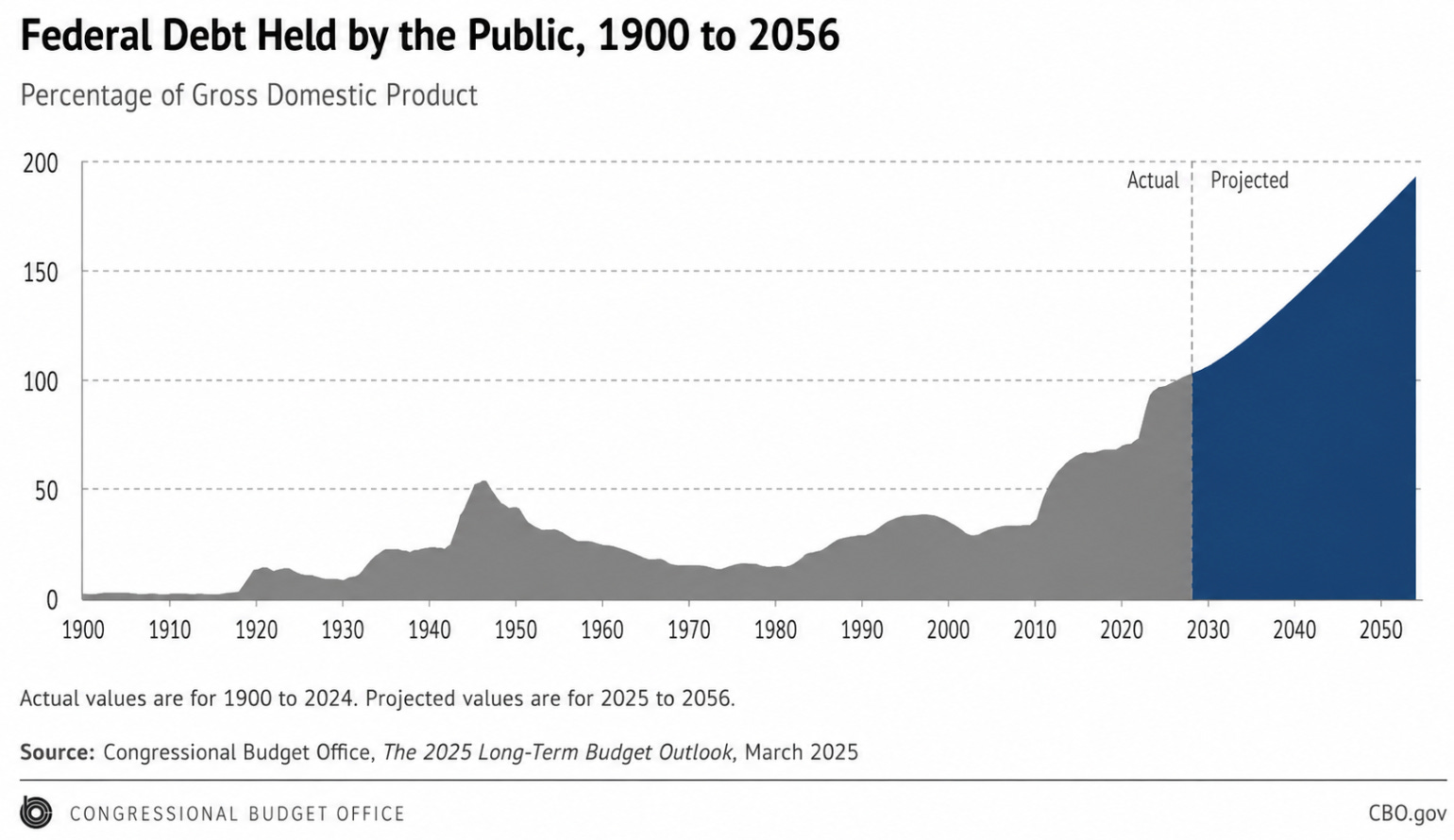
I’ve started following these markets around 2007, and what happened after that particular collapse was unprecedented. The Federal Reserve’s balance sheet exploded from $900 billion to $4 trillion in a matter of years, then to $9 trillion during COVID. The national debt, which stood at $10 trillion in 2008, has now reached $38 trillion as of November 2025. We didn’t solve the crisis - we papered it over with printed money and kicked the can down the road. We didn’t solve the problem - we made it exponentially worse. As someone who tracks gold markets, I can tell you with increasing clarity: the people who actually understand money are quietly converting their paper promises into something that can’t be printed.
The response to 2008 revealed something critical: our institutions no longer functioned as designed. The Federal Reserve, created to be a lender of last resort, became the market itself. Banks that should have failed were declared “too big to fail”. Capitalism’s core principle - that bad bets lead to bankruptcy - was suspended for the connected class while enforced ruthlessly on everyone else. The very people who caused the crisis not only avoided jail but got bonuses funded by taxpayer bailouts. The social contract didn’t just fray; it snapped.
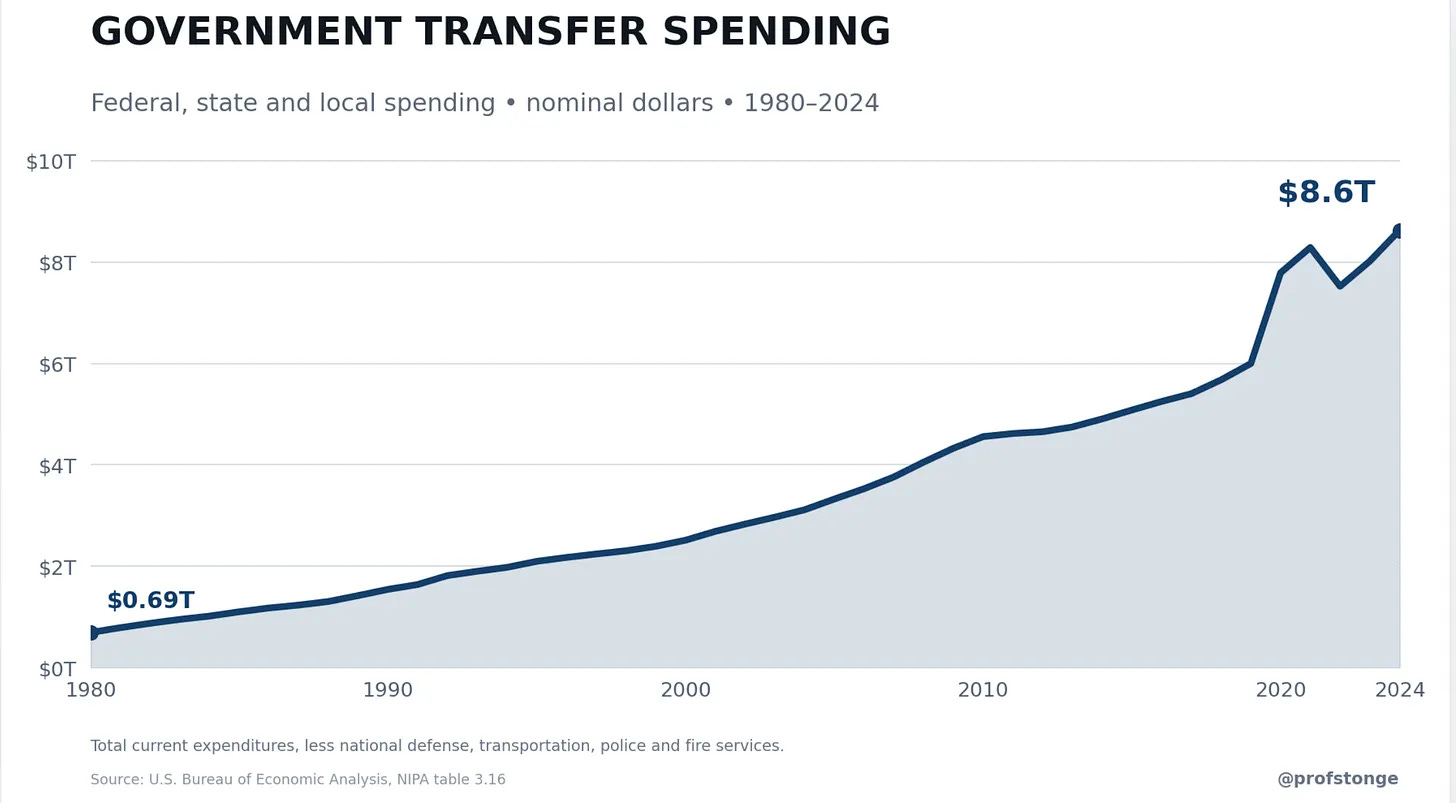
What most people didn’t understand then - and many still don’t grasp now - is that 2008 never really ended. Each intervention created larger distortions requiring bigger interventions. Zero interest rates led to asset bubbles. Quantitative easing led to wealth inequality explosion. Each “solution” deepens the underlying problem: a system that could only survive through ever-increasing debt monetization. The music has stopped, but the Fed keeps the party going by turning up the volume until everyone is deaf.
The knock-on effects rippled globally. European banks, stuffed with toxic American mortgage securities, required massive bailouts. The European debt crisis followed, nearly destroying the euro. China, terrified of global depression, launched the largest credit expansion in history, building ghost cities and redundant infrastructure. Every major economy became addicted to monetary heroin, and seventeen years later, we’re still shooting up.
But the financial crisis was just the catalyst. What makes this a Fourth Turning isn’t the proximate cause but the comprehensive breakdown that follows. Look around. Every institution Americans once trusted - government, media, academia, medicine, law enforcement, intelligence agencies - has suffered catastrophic reputational collapse. When the CDC changes its story for the fifth time, when the FBI raids a former president, when the Supreme Court’s legitimacy is openly questioned, you’re not watching normal political friction. You’re watching the complete unraveling of institutional authority.
This Fourth Turning differs fundamentally from all previous ones because of technology’s role. We’re not fighting with muskets or tanks - we’re fighting with algorithms, narratives, and digital currencies. The battlefield isn’t Gettysburg or Normandy; it’s your smartphone screen, your social media feed, your digital wallet.
Previous Fourth Turnings required mass mobilization of physical bodies. Men marched to war, women worked in factories, everyone bought war bonds. Physical presence mattered. But our Fourth Turning is being fought in the realm of information and perception. When you can’t trust any source of information, when deepfakes make seeing no longer believing, when AI can generate unlimited propaganda at zero marginal cost, how do you even know what you’re fighting for or against? The fog of war has become the fog of everything.
Consider the comprehensive surveillance apparatus that’s emerged since 2008. Edward Snowden’s 2013 revelations showed us the NSA was collecting everything - every email, every text, every call. But that was just the beginning. Now we have AI-powered behavioral prediction, social credit systems, and facial recognition networks. China leads the way with 700 million surveillance cameras - more than half the world’s total - but Western “democracies” aren’t far behind. London has more cameras per capita than Beijing. San Francisco uses the same facial recognition technology as Shanghai.
The COVID-19 pandemic accelerated this technological authoritarianism by decades. Digital vaccine passports normalized the idea that you need government permission to enter a restaurant. Contact tracing apps trained us to accept constant location monitoring. QR codes made every movement trackable. What would have taken a generation to impose gradually was accomplished in months under the banner of “public health”. The ratchet only turns one way - powers gained during a crisis are never voluntarily relinquished.
Consider the Central Bank Digital Currency (CBDC) agenda that’s advancing globally while most people remain blissfully unaware. This isn’t just digitizing money - it’s making money programmable, controllable, censorable. The Federal Reserve, Bank of England, and European Central Bank are all developing CBDCs, following China’s lead with the digital yuan. Imagine a world where your ability to buy gasoline depends on your carbon credit score, where your grocery purchases are limited by your BMI, where your savings can be “expired” to force spending. Money that can’t be used for disapproved purchases, that can be frozen instantly if you express wrongthink. It’s not imagination - China is already doing it. Europe is launching trials. The Federal Reserve is “researching” it. This is the ultimate fusion of monetary and social control.
Bitcoin emerged from the 2008 crisis’ ashes with a message embedded in its genesis block: “Chancellor on brink of second bailout for banks”. The cypherpunks who created it - whether Satoshi was an individual or a team - understood that monetary sovereignty required technological sovereignty. But here’s the uncomfortable question: did we play them or did they play us? Bitcoin’s transparent blockchain makes every transaction traceable forever. The NSA’s 1996 paper “How to Make a Mint” described a system remarkably similar to Bitcoin. The CIA met with Gavin Andresen, Bitcoin’s lead developer, in 2011. Was Bitcoin genuine resistance or the perfect trap - getting libertarians to build their own financial panopticon?
The promise was decentralization, but the reality is increasingly centralized. A handful of mining pools control Bitcoin’s hash rate. A few exchanges handle most trading volume. BlackRock and other institutions now dominate ownership through ETFs. The rebels who thought they were building an alternative to Wall Street may have just built Wall Street 2. 0. With better surveillance.
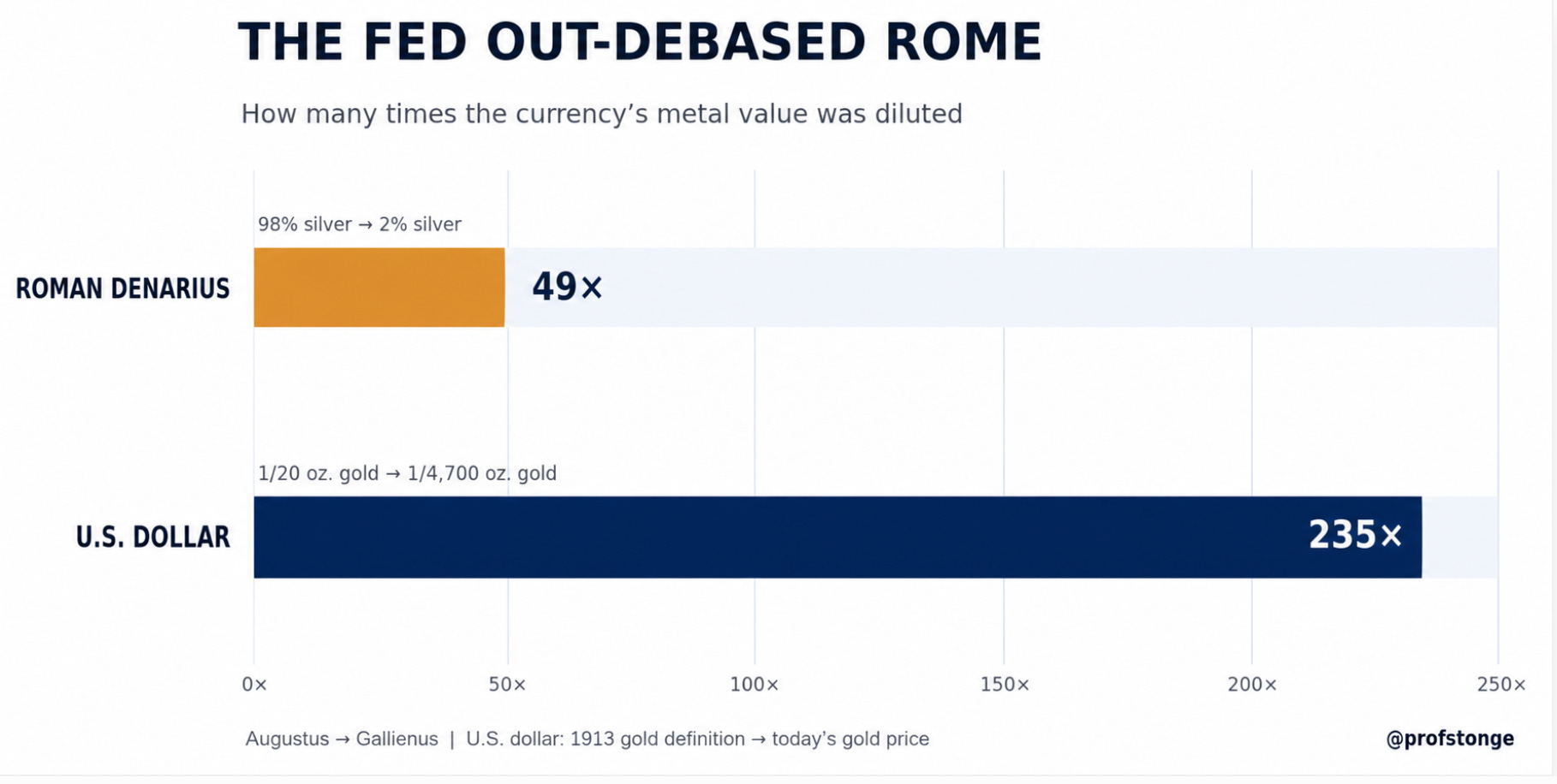
Every Fourth Turning includes a monetary reset. The Revolution gave us the Constitution’s gold and silver clause. The Civil War brought greenbacks and the National Banking System. The Depression/WWII era ended the gold standard domestically and created Bretton Woods. What’s coming this time will be even more dramatic.
The numbers are so large they’ve lost all meaning. The U. S. national debt stands at $40 trillion as of August 2026. Unfunded liabilities - Social Security, Medicare, government pensions - exceed $200 trillion. The Federal Reserve holds over $1 trillion in unrealized losses. Commercial banks sit on $600 billion in underwater securities. We’re not approaching insolvency. We’re already there. Just one repricing away from systemic collapse. And everyone in finance knows it. The only question is whether it happens slowly (inflation), suddenly (default), or systematically (CBDC rollout). My money, literally, is on “all of the above”.
While Americans fight over pronouns and vaccines, the rest of the world isn’t standing still. The real Fourth Turning story isn’t just about America - it’s about the end of the American Century and the birth of something new. The unipolar moment that began with the Soviet Union’s collapse in 1991 is over. We’re not transitioning to a new order but to disorder - multiple competing power centers with incompatible worldviews and no hegemon strong enough to impose rules.
Russia and China’s “no limits” partnership, announced February 4, 2022, just before the Ukraine war, represents the most significant geopolitical realignment since the Molotov-Ribbentrop Pact. Unlike that cynical arrangement between natural enemies, this reflects genuine strategic convergence. Let that sink in.
The two largest threats to American hegemony have decided they’re better off together than apart. China needs Russian resources and military technology. Russia needs Chinese markets and manufacturing. Both need to break American hegemony. Their combined nuclear arsenals, industrial capacity, and geographic position make them essentially unsanctionable and uncontainable. While we’ve been focused on internal divisions, they’ve been stockpiling gold, building alternative payment systems, and creating a parallel world order that doesn’t need dollars or SWIFT.
I’ve called this “water always finds a way” - capital, trade, and power flowing around obstacles like sanctions and finding new channels. The West sanctions Russia, so Russia sells oil to India and China at a discount. We freeze Russian reserves, so everyone else starts wondering if their dollars are safe. We weaponize SWIFT, so they’re building alternative payment systems. Every action creates an equal and opposite reaction, and we’re too arrogant to see we’re accelerating our own replacement.
But perhaps the most devastating loss isn’t monetary or military - it’s moral. The West built its post-WWII hegemony not just on military might and economic power, but on moral authority. We are the “good guys” who defeated fascism, rebuilt Europe, and championed democracy and human rights. That moral high ground is gone, destroyed by our own hypocrisy. When we lecture others about sovereignty while expanding NATO to Russia’s borders despite promises not to, when we invoke “rules-based order” while ignoring international law when convenient, when we sanction countries for actions we ourselves commit - the world sees increasingly through it.
Take Ukraine. We framed it as democracy versus autocracy, good versus evil. But Russia has legitimate security concerns that we’ve deliberately ignored for decades. How would America react if China formed a military alliance with Mexico and stationed missiles in Tijuana? We know exactly how - we nearly started nuclear war over Soviet missiles in Cuba. Yet we expected Russia to accept NATO expansion to its borders as normal. The West could have guaranteed Ukrainian neutrality and avoided this war entirely. Instead, we used Ukraine as a proxy to bleed Russia, but it’s Ukraine that’s bleeding out. 1.8 million dead. For what? So Victoria Nuland could have another regime change on her résumé?
Or look at Gaza. Israel is systematically destroying an entire population - bombing hospitals, schools, refugee camps, killing journalists, aid workers, children by the thousands. The International Court of Justice has issued genocide charges. They issued arrest warrants. Yet the same Western leaders who thundered about Russian war crimes provide Israel with weapons and diplomatic cover for atrocities that shock the conscience. When you can watch children being deliberately starved and bombed while your government calls it “self-defense”, something fundamental breaks in your worldview. The system reveals itself as not just flawed but actively evil.
This moral bankruptcy accelerates the Fourth Turning’s institutional collapse. When people see their governments supporting genocide while preaching human rights, enabling war crimes while demanding justice, destroying countries while claiming to protect democracy -they don’t just lose trust in leaders. They lose faith in the entire Western project. Every Palestinian child killed with American weapons creates a hundred people who will never believe the Western moral claims again. Every Ukrainian conscript sent to die for NATO expansion makes a mockery of our “defensive alliance”. The hypocrisy isn’t just noted; it’s radicalizing.
The Ukraine war thus becomes a triple failure. Militarily, it demonstrates that despite spending more than the next ten nations combined, we can’t defeat Russia in its own backyard. Economically, our sanctions backfire, strengthening alternative systems while weakening our own. But most critically, morally, it exposes the lies undergirding the entire system. We’re not defending democracy - we’re pursuing hegemony. We’re not protecting sovereignty - we’re expanding empire. We’re not the good guys. We’re just another power, playing the same brutal game, whilst demanding everyone pretend otherwise.
The expansion of BRICS in 2024 to include Saudi Arabia, Iran, Egypt, Ethiopia, and the UAE wasn’t just about adding members - it was about creating a critical mass. BRICS now represents 45% of the global population, 35% of global GDP, and controls most of the world’s critical resources. More importantly, it offers an alternative.
Countries can now access development funding without IMF conditionalities, trade without SWIFT, and maintain reserves without dollars. Every country that joins weakens the Western system and strengthens the alternative.
The Middle East’s transformation is particularly striking. Saudi Arabia, America’s most important Arab ally since 1945, is now buying Chinese fighters, pricing oil in yuan, and coordinating with Russia on production cuts. The Abraham Accords, trumpeted as an historic achievement, are being superseded by Chinese-brokered agreements. When Iran and Saudi Arabia restored relations under Chinese auspices in 2023, it marked the end of American diplomatic monopoly in the region.
But the real prize is Taiwan. When, not if, China takes Taiwan - increasingly likely given war game results - without an American military response, the entire American alliance system will collapse overnight. Japan, South Korea, the Philippines, and Australia would have to accommodate China. The dollar would lose reserve status as countries realized American security guarantees are worthless. It wouldn’t be a military defeat but a psychological collapse - the moment everyone realizes the emperor has no clothes.
The tragedy is that America’s military, despite spending more than the next ten nations combined, can’t win wars anymore. We couldn’t defeat the Taliban after twenty years. We can’t build ships that work - the Littoral Combat Ship, Zumwalt destroyer, and Ford-class carrier programs are all disasters. We can’t even supply Ukraine with enough 155mm shells, the most basic artillery ammunition. The military-industrial complex is optimized for profit, not victory. And now we’re paying the price.
Fourth Turnings are generational psychodramas where each archetype plays its destined role. But something’s different this time - the actors seem to be forgetting their lines. The Boomers (our Prophet generation) should be the Gray Champions providing moral clarity during the Crisis. Instead, they are the crisis. They’ve held power longer than any generation in American history and refuse to let go. Biden, Trump, Pelosi - all in their 80s or late 70s, all clinging to power like Gollum to his precious. The oldest president in American history is followed by the second-oldest. Congress looks like a nursing home. The Supreme Court is a gerontocracy. They won’t pass the torch; it will have to be pried from their cold, dead hands.
But which Boomer is the Gray Champion? Trump fit the archetype - the charismatic elder who emerges during the Crisis to remake society. His first term was prologue; his return in 2025 could have been the main act. He has the prophetic certainty, the devoted following, the absolutist vision. But Gray Champions are supposed to unite society for collective purpose, and Trump divides as much as he inspires. Maybe that’s the point - maybe this Fourth Turning’s Gray Champion destroys the old order rather than defending it.
Generation X, my generation, are playing our Nomad role perfectly - qcynical survivors building escape routes. We’re the ones stacking gold, learning skills, moving to rural areas, homeschooling our kids. We don’t believe in collective anything because every institution failed us. Latchkey kids who raised ourselves, we learned early that self-reliance is the only reliability. We’re not trying to save the system; we’re trying to survive its collapse.
But it’s the Millennials who worry me. They’re supposed to be the Hero generation - the ones who should come together, sacrifice for the collective purpose, and rebuild from the ashes. Previous Hero generations - the Republicans who fought the Revolution, the Gilded who won the Civil War, the GI Generation who defeated fascism - had external enemies to unite against. This generation can’t even agree on basic reality.
• Half of them want socialism without understanding that socialism requires a social cohesion they don’t have. The other half chase wealth through crypto and day-trading while living in their parents’ basements.
• They’re the most educated generation in history but can’t do basic repairs.
• They’re the most connected but loneliest.
• They’re supposed to be heroes, but they’re barely functional adults.
Maybe that’s harsh, but Fourth Turnings don’t care about hurt feelings. The problem might be that this generation’s Crisis is too abstract. Climate change is the perfect example - it’s an ever-shifting, never-reached goal that keeps moving further away the closer we supposedly get. First it was global cooling in the 1970s, then global warming, now “climate change” to cover all bases. The apocalypse is always 10 years away - in 1989, the UN said we had until 2000 before irreversible damage. In 2006, Al Gore gave us 10 years. In 2019, Greta gave us 12. The goalposts keep moving, the demands keep escalating, but the emergency never quite arrives.
You can’t defeat climate change like you can defeat Nazi Germany. There’s no V-E Day for carbon emissions, no unconditional surrender of greenhouse gases. It’s a permanent crisis requiring permanent sacrifice with no victory condition - exactly the kind of nebulous threat that demobilizes rather than mobilizes. Systemic racism is another concept, not a Confederate army you can defeat at Gettysburg. COVID was scary. But not scary enough. A 99% survival rate doesn’t mobilize like Pearl Harbor.
Our heroes need something concrete to fight against, and they might get it soon enough. Generation Z and Alpha, our emerging Artists, are being shaped by this Crisis in ways we don’t yet understand. They’re growing up with screens instead of friends, algorithms instead of thoughts, anxiety as baseline. Previous Artist generations were overprotected physically but connected socially. This one is overprotected digitally but isolated physically. They might be the first generation that’s more comfortable in virtual reality than actual reality. Whether that prepares them for the future or ruins them for it remains to be seen.
Every Fourth Turning includes cultural revolution - the complete inversion of previous values. What was sacred becomes profane; what was profane becomes sacred. We’re living through that inversion now, and it’s more extreme than anything since the 1960s. The traditional family structure, foundation of every successful society in history, is now “heteronormative oppression”. Having children is selfish environmental destruction. Marriage is patriarchal enslavement. Meanwhile, drug use is harm reduction, crime is social justice, and mental illness is identity. We’re not just tolerating dysfunction; we’re celebrating it. The DSM-5 has become a character creation guide.
The gender revolution is particularly telling. Not content with equal rights - a worthy goal achieved decades ago - we’ve moved to denying biological reality itself. Men can be women. Women can be men. Children can choose their sex like they choose breakfast cereal. Anyone who points out biological facts is a “transphobe” who must be destroyed. We’re performing medical experiments on children that would have been considered crimes against humanity a generation ago, and we call it “healthcare”.
This isn’t organic social evolution - it’s engineered chaos. Every institution pushes the same message simultaneously. Corporations mandate pronoun training. Schools teach gender fluidity to kindergartners. Media celebrates each new boundary pushed. It’s too coordinated to be coincidental. Someone benefits from this social dissolution. And it’s not the confused kids getting surgeries they’ll regret.
The racial revolution follows similar patterns. Not content with civil rights - another worthy goal largely achieved - we’ve moved to racial revenge. “Antiracism” means active racism against whites and Asians. “Equity” means equal outcomes regardless of effort. “Diversity” means everyone thinks the same but looks different. Martin Luther King’s dream of colorblind society is now considered racist. We’re re-segregating schools and calling it progress.
The religious revolution completes the trifecta. Traditional Christianity, the bedrock of Western civilization for two millennia, is now “hate”. Churches that maintained consistent doctrine for centuries are “bigoted”. Meanwhile, we’ve created new religions - wokeism, climatism, covidism - complete with original sin (privilege/carbon/unvaccination), confession (struggle sessions), and excommunication (cancellation). These new faiths are more intolerant than any Inquisition.
• The purpose of cultural revolution isn’t progress - it’s demoralization.
• When you can make people affirm obvious lies, you’ve broken their spirit.
• When you can make them betray their children, you’ve broken their souls.
• When nothing is sacred, nothing is worth defending.
• A demoralized population doesn’t resist tyranny; it welcomes it as relief from chaos.
But cultural revolutions create their own antibodies. The more extreme the push, the more violent the snapback. Parents discovering what schools are teaching their kids become activated. Workers forced into struggle sessions become radicalized. Normal people told they’re evil for being normal don’t stay normal - they become resistance.
Resolution Scenarios for the 2030s: Based on historical patterns and current trajectories, this Fourth Turning will resolve somewhere between 2028 and 2033. But resolution doesn’t mean return to normal - it means transformation into something unrecognizable. Let me paint the possibilities as I see them.
The Breakup (Most Likely): Trump returned as the Gray Champion in 2025, but not the Trump of 2017. This is a Trump unleashed, a Trump with nothing to lose, a Trump surrounded by true believers instead of establishment Republicans. He uses emergency powers to implement his vision - mass deportations, tribunals for the “deep state”, even a possible federal takeover of elections. But here’s where the script diverges from his expectations.
Trump, the self-proclaimed dealmaker and strongman, started losing. Everywhere. He already lost Ukraine, Europe can’t sustain it alone, and Russia grinds to victory through sheer attrition. He loses Iran - they get the bomb while he’s tweeting threats, fundamentally altering Middle Eastern power dynamics. He bullied Venezuela with military threats and sanctions, and illegally kidnapped it's president and wife. Each loss emboldens the next challenger. The world realizes the emperor truly has no clothes.
Seeing that he’s losing both militarily and morally - with Israel’s ongoing genocide in Gaza destroying what remained of American moral authority - Trump does what all failing empires do: he turns inward. But this creates an economic catastrophe. His tariffs, meant to punish others, punish Americans with inflation. His pressure on the Fed to cut rates despite soaring prices destroys dollar credibility. His continued weaponization of USD and SWIFT drives even allies to seek alternatives.
Suddenly, all those dollars held overseas come flooding home - tens of trillions seeking safety as global trade abandons the greenback. The dollar hyperinflates into toilet paper. The resulting inflation isn’t the 1970s redux everyone expects - it’s Weimar Germany. When bread costs $50 and gas hits $20 a gallon, society doesn’t slowly decay; it collapses. Supply chains that never fully recovered from COVID snap completely. Cities that depend on just-in-time delivery face actual starvation. The EBT system fails, and 40 million Americans lose food assistance overnight. The military, traditionally conservative and oath-bound, doesn’t splinter - it hunkers down, protecting what it can, essentially writing off ungovernable areas.
Blue states, which never really accepted Trump’s legitimacy anyway, make it official. California stops sending tax revenue to Washington - why fund a government that hates you? New York follows suit. Illinois, Oregon, Washington state - they all realize they’re subsidizing their own oppression. The federal government, broke from lost wars and fleeing dollars, can’t enforce compliance. It’s not 1861 where Lincoln could raise an army to preserve the union. The military won’t fire on Americans, and Trump doesn’t have the loyalty to make them.
By 2035, America follows the Soviet playbook. Not violent collapse but exhausted dissolution. The federal government, like Gorbachev’s Kremlin, simply becomes irrelevant. States stop listening, regions form their own arrangements, and one day everyone realizes the United States exists only on maps nobody updates anymore. The empire doesn’t fall - it evaporates.
The Breakup v2 (Increasingly Possible): The differences prove irreconcilable. After another disputed election - 2028 seems likely - states start going their own way. Not through formal secession but through nullification and non-cooperation. Red states refuse to enforce federal gun laws. Blue states refuse to enforce immigration law. Both refuse to send tax revenue for programs they oppose.
The federal government, broke and impotent, can’t enforce its will. The military, asked to fire on Americans, refuses or splits. Washington becomes ceremonial while real power devolves to regions. The Pacific states form an economic union with Canada and Asia. Texas remembers it was once a republic. The Northeast aligns with Europe. The heartland goes its own way.
By 2035, America exists on paper but not in practice. The dollar is replaced by regional currencies or Bitcoin. The military splits into state militias. The federal government maintains embassies and negotiates treaties, but has no domestic power. It’s not civil war - it’s civilized divorce. Messy, expensive, but better than the alternative.
The War Resolution (Plausible but Dangerous): Taiwan is the obvious flashpoint. China invades in 2027, calculating America won’t risk nuclear war over an island. They’re right - we won’t - but we don’t back down either. Economic war escalates to cyber war escalates to proxy war escalates to… what? Not nuclear exchange - everyone loses - but something new. Bioweapons that target specific ethnicities? AI-controlled drone swarms that can’t be stopped? Infrastructure attacks that kill millions without firing a shot?
Or maybe it’s Iran. Israel striuck their nuclear program. Iran retaliated. America got drawn in. Russia backs Iran. China backs Russia. Suddenly we’re in World War III without anyone planning it. The Middle East burns. Europe freezes without Russian gas. Asia starves without Middle Eastern oil. Supply chains collapse. Billions face famine.
The war isn’t won or lost - it just ends when everyone’s exhausted. America “wins” by not losing as badly as others, but the victory is pyrrhic. A generation is traumatized. The economy is destroyed. The empire is over. We retreat to our hemisphere, rebuild what we can, and try to forget. The 2030s are about recovery, not prosperity.
The Transformation (Hopeful but Unlikely): Maybe, just maybe, this Crisis catalyzes genuine renewal instead of collapse. A new generation of leaders emerges - not Boomers clinging to power but GenX/Millennial hybrids who understand both technology and reality. They implement radical but necessary reforms: a constitutional convention that updates our 18th-century operating system for a 21st-century reality, a monetary reset that includes a debt jubilee and sound money, a healthcare system that actually provides health rather than profits, an education system that teaches skills rather than ideology, and a political system that represents people rather than its donors.
Technology gets harnessed for liberation rather than control. Open-source AI breaks the corporate monopolies. Mesh networks break surveillance states. Cryptocurrency breaks central banks. 3D printing breaks supply chain dependencies. Unlimited clean fusion energy breaks resource scarcity. We don’t return to the past but create a future that honors what worked while fixing what didn’t.
By 2035, America is smaller globally but stronger domestically. We’re not the world’s policeman anymore but we’re not an isolationist either. We trade with everyone, ally with those who share our values, and mind our own business otherwise. The federal government is smaller but more effective. States have more autonomy but share a common purpose. It’s not utopia but it’s sustainable.
After the Storm: The Coming High: History suggests that however this Fourth Turning resolves, a High will follow. Spring always follows winter, even the harshest winter. The question isn’t whether we’ll emerge but what we’ll look like when we do.
Previous Highs shared common characteristics that we’ll likely see again. Social cohesion will replace atomization - people will desperately want to belong to something larger than themselves after years of isolation and conflict. Institutional authority will be restored - not the old institutions but new ones built by Crisis’ survivors who know what failure costs. Conformity will be valued over individualism - after chaos, order will feel like freedom. Economic growth will explode - all the delayed investment and deferred consumption will be released all at once.
But this High will be different because the world is different. It won’t be American-dominated - that era is over regardless of how this Crisis resolves. It might not even be Western-dominated. The center of global civilization could shift to Asia for the first time in 500 years. Or we might see true multipolarity - regional powers managing regional spheres without a global hegemon.
Technology will define the new High more than politics will. Artificial intelligence will be either a tool of total control or liberation depending on who controls it. Bioengineering will extend the human lifespan - but perhaps only for those who can afford it. Fusion energy might provide unlimited clean power - or remain forever 20 years away. Space colonization could open infinite resources - or remain science fiction. The choices made during the resolution of this Crisis will determine which future we get.
The Millennials who survive this Crisis will be different than the ones who entered it. The Crisis completes this Hero’s generation development - it burns away weaknesses and forges strength. They’ll build institutions with the knowledge of how previous ones failed. They’ll raise children in a stability they never knew themselves. They’ll create art that celebrates order rather than chaos. They’ll be boring, and that will be beautiful.
Their children, the new Artists, will grow up in a world we can barely imagine. They might be the first generation that’s more machine than human - enhanced, augmented, connected to AI from birth. Or they might rebel against technology entirely, seeking authenticity in a synthetic world. Either way, they’ll be shaped by the High we create, just as we were shaped by the Crisis we’re enduring.
The 2030s and 2040s could be golden if we navigate this Crisis successfully. Imagine fusion finally working, providing unlimited clean energy. Imagine AI eliminating drudgery while humans focus on creativity. Imagine biotech defeating aging, adding healthy decades to life. Imagine space colonies opening infinite resources. Imagine governance that actually represents people. Imagine money that can’t be debased. It’s all possible - if we survive.
But survival isn’t guaranteed. Rome had its Fourth Turning and ended up with the Dark Ages. China had multiple Fourth Turnings that led to centuries of stagnation. The Soviet Union had a Fourth Turning and ceased to exist. The difference between renewal and collapse often comes down to leadership at the crucial moment. Do we get Lincoln or Buchanan? FDR or Hoover? Churchill or Chamberlain? The answer determines whether our grandchildren curse or bless our memory.
What this means for you: So we’re living through the most dangerous period in world’s history since World War II. What do we actually do about it? The answer depends on who we are and what we can control. First and foremost: accept that this is structural, not political. Your candidate winning won’t fix it. Your party taking control won’t stop it. The system itself is what’s breaking, and it needs to break for something new to emerge. Fighting to preserve the current system is like trying to hold back winter - exhausting and futile. Better to prepare for spring while others freeze.
Secondly, position yourself for multiple scenarios. Geographic diversification matters - have somewhere else you can go if your area becomes untenable. This doesn’t mean fleeing the country necessarily, but having options. A rural property, family in another state, even just camping gear and a plan. When cities burned in 2020, those who could leave did. Those who couldn’t suffered.
Skills diversification might matter most. Learn to grow food - even apartment dwellers can grow something. Learn basic medical care - when hospitals are overwhelmed, basic knowledge saves lives. Learn to fix things - when supply chains break, repair becomes invaluable. Learn self-defense - when police won’t come, you’re on your own. Learn to teach -your children might need homeschooling. These skills have value regardless of which scenario plays out.
Community building is essential but difficult. Modern Americans barely know their neighbors, let alone trust them. But any crisis creates rapid bonding - shared danger builds relationships faster than years of small talk. Identify who around you is reliable. Build relationships before you need them. But be careful - the person flying the right flag might be an informant. The one flying the wrong flag might be an ally. Judge by actions, not words.
Mental preparation matters more than physical. This Crisis will last years more. You can’t maintain panic that long - you’ll burn out. You need sustainable vigilance - alert but not anxious, prepared but not paranoid. History is your friend here. Read about previous Fourth Turnings. Understand that a Crisis is normal, not exceptional. Our ancestors survived worse with less. You can too.
Most importantly, understand that you’re living through history, not the end of it. Yes, the West as you knew itmight be ending. But something new is being born. You get to participate in that birth. That’s not a burden - it’s a privilege. Most humans live boring lives in boring times. You get to live through transformation. Your choices matter. Your actions have consequences. Your life has meaning.
The Fourth Turning will end, probably around 2035. You’ll either be a survivor who helped shape the new order or a casualty who didn’t. The choice - and it is a choice - is yours.
The Choice Before Us: We stand at history’s inflection point. Behind us, the familiar world dissolves into memory - the American Century, the post-war order, the assumptions that guided our parents and grandparents. Ahead, something new struggles to be born - unclear, unformed, but inevitable. We can’t go back. That bridge is burned. We can only go forward, through the Crisis, to whatever awaits on the other side.
The Fourth Turning isn’t a prophecy - it’s a pattern. And patterns can be understood, navigated, even shaped by those who see them clearly. Our ancestors faced their Fourth Turnings without understanding the cycle. We have the advantage of historical perspective. We know this is temporary. We know it’s survivable. We know it’s necessary.
But knowing and doing are different things. Knowing winter comes doesn’t keep you warm - preparing for it does. Knowing that the Crisis peaks before its resolution doesn’t make the peak any less dangerous - it might be even more so. Knowing previous generations survived doesn’t guarantee we will - that depends on our choices.
The water is boiling all around us. Some are hardening into stronger versions of themselves. Others are dissolving into mush. The difference isn’t random - it’s about what you’re made of and how you respond to heat. You can’t control the temperature, but you can control your composition.
These times demand passion, compassion, commitment, full-speed-ahead engagement with life. Not because it’s comfortable - it’s not. Not because it’s safe - it won’t be. But because we’re living through the most consequential period in American history since World War II. Our choices will echo for generations. Our actions will be studied by historians. Our courage or cowardice will determine whether the Western experiment continues or ends.
The Fourth Turning suggests we have about five more years of Crisis before resolution. Five years of increasing chaos, conflict, and transformation. Five years that will feel like fifty. Five years that will determine the next fifty. Are you ready? The storm is here. The old world is dying. The new world awaits. What are you going to do about it?"