StatCounter

Thursday, November 5, 2026

"You Are Not Alone..."

"You Are Not Alone"
by Chris MacIntosh

"Many people need desperately to receive this message: I feel and think much as you do, care about many of the things you care about, although most people do not care about them. You are not alone." - Kurt Vonnegut

"To all my friends out there who know what’s really going on…To all my conspiracy theorist friends…Yes, sometimes it’s a curse and not always a blessing to be awake. Awakening is the most liberating, alienating, excruciating, empowering, lonely, confusing, freeing, frightening, expansive journey. If you find yourself struggling as you try to process all this insanity, you are not alone. No one talks about the darkness that accompanies awakening, or the GRIEF.

Not only grieving the life and illusions you once had but the realization that almost everything you thought you once knew, is a LIE. The beliefs you’ve held, people you’ve trusted, principles you were taught - ALL LIES. Shattering illusions is RARELY an enjoyable experience. There is a considerable amount of discomfort that comes with growth and the grieving process doesn’t stop there.

With these newfound realizations, you then find yourself grieving all over again. Grieving the loss of many relationships with people who just don’t “get it”. Feeling alone; being ridiculed and shamed, not only by the masses but for many of you, your very own family and friends too. Feeling like you no longer have much in common with the people you are surrounded by.

Struggling with carrying on bullsh*t, shallow conversations that lack substance with those who are still fast asleep. Even feeling disconnected from your entire support system because they can’t see what you see. Some even grieve the loss of their ignorance- because “ignorance is bliss” and reality is harsh. Awakening can be a lonely road and you will often find yourself journeying alone.

There is no way to sugarcoat it - awakening to the realities of this world is brutal. It will have you running through the entire gamut of human emotions. You have to master the art of diving down the darkest of rabbit holes only to come out and still function in daily life, and that’s a skill people don’t talk about enough. Some of you are struggling with feeling disconnected from family and friends, it’s as though they exist in another world.

Please know you are not alone, and not only are you not alone, you have an entire tribe standing with you. We may be separated by miles, but we are DEEPLY connected; in purpose and in spirit."
o
"When people tell you who they are, Maya Angelou famously advised, believe them. Just as important, however, when people try to tell you who you are, don’t believe them. You are the only custodian of your own integrity, and the assumptions made by those that misunderstand who you are and what you stand for reveal a great deal about them and absolutely nothing about you." - Maria Popova

The Daily "Near You?"

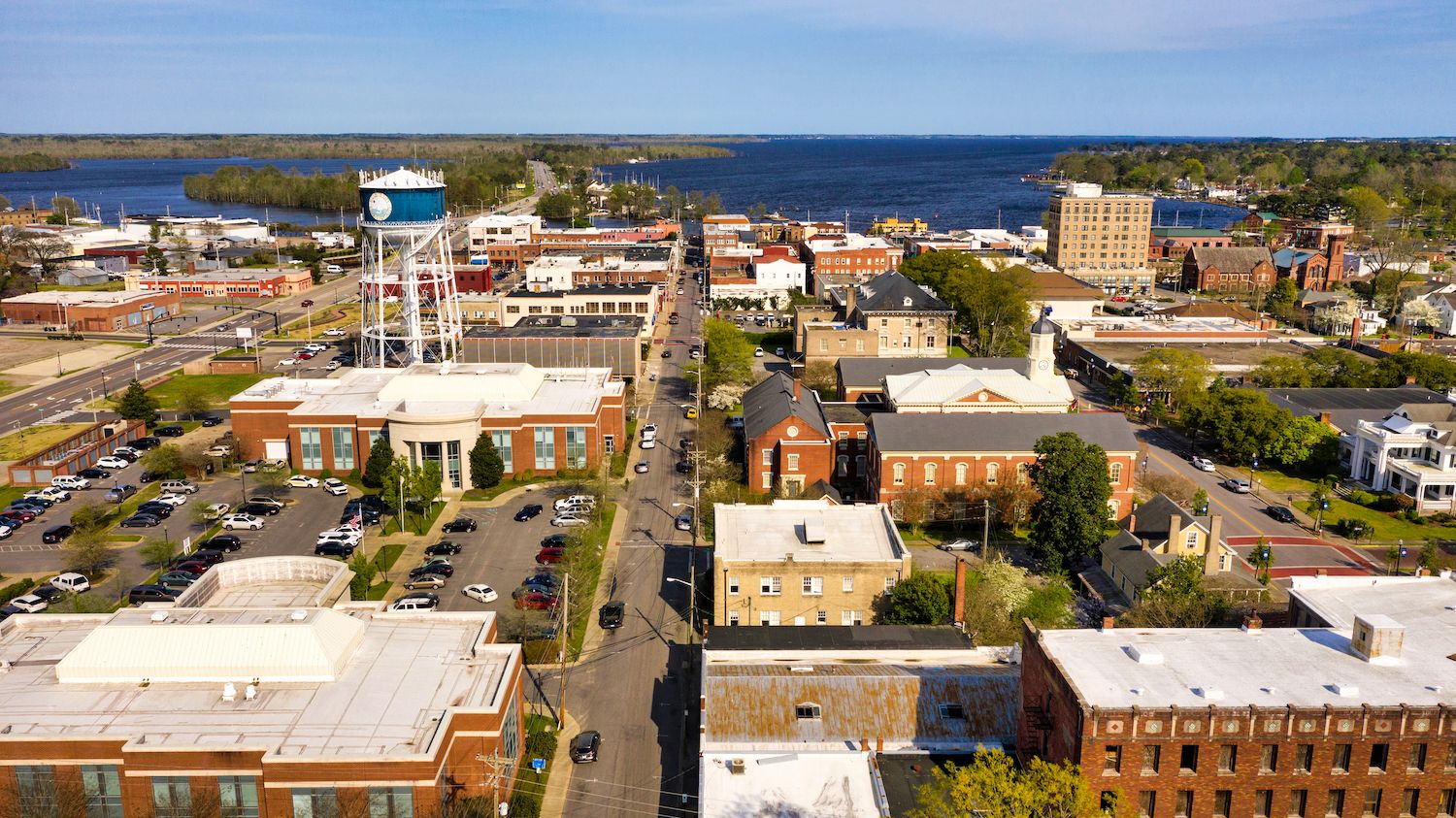
Elizabeth City, North Carolina, USA. Thanks for stopping by!

"Keep Going..."

“We're all going to die. We don't get much say over how or when, but we do get to decide how we're gonna live. So, do it. Decide. Is this the life you want to live? Is this the person you want to love? Is this the best you can be? Can you be stronger? Kinder? More Compassionate? Decide. Breathe in. Breathe out and decide.”
- “Richard”, “Grey’s Anatomy”

The Poet: Charles Bukowski, "The Laughing Heart"

Charles Bukowski, "The Laughing Heart"

"What The World Needs Now"

"In this difficult day, in this difficult time for the United States, it is perhaps well to ask what kind of a nation we are and what direction we want to move in. You can be filled with bitterness, with hatred, and a desire for revenge. We can move in that direction as a country, in great polarization and filled with hatred toward one another. Or we can make an effort to understand and to comprehend, and to replace that violence, that stain of bloodshed that has spread across our land, with an effort to understand with compassion and love. What we need in the United States is not division; what we need in the United States is not hatred; what we need in the United States is not violence or lawlessness; but love and wisdom, and compassion toward one another, and a feeling of justice toward those who still suffer within our country, whether they be white or they be black."
- Robert F. Kennedy, on the assassination of Martin Luther King, Jr.
○
Full screen recommended.
"What The World Needs Now"
by Tom Clay
"Detroit DJ brought this out early in 1973 and it was seen as
a celebration of the message behind that spread
by John F. Kennedy, Martin Luther King Jr. and Bobby Kennedy."

"3 Kinds of Loneliness and 4 Kinds of Forever"

"3 Kinds of Loneliness and 4 Kinds of Forever"
by Maria Popova

"Loneliness is the fundamental condition of life - we are born by another, but born alone; die around others (if we are lucky and loved), but die alone; we spend our lives islanded in our one and only human experience - in these particular bodies and minds and circumstances drawn from the cosmic lottery - amid the immense ocean of time and chance teeming with all possible experience. Everything of beauty and substance that we make - every poem, every painting, every friendship - is an outstretched hand reaching out from one loneliness to another, reaching into the mute mouth of forever for the vowels of a common language to howl our requiem for the evanescent now.

But despite being so fundamental, or perhaps precisely because of it, loneliness is fractal - the closer you look at the granularity of life, the more you see it branching into myriad lonelinesses, which, like the kinds of sadness, all have different emotional hues.

The loneliness of feeling invisible or misunderstood, bottomless and bone-chilling as the Scottish fog.
The loneliness of seeing what others look away from, remote and shoreless as a lighthouse.
The loneliness of public humiliation, a red-hot iron rod.
The loneliness of your most private failure, inky and arid like the desert at night.
The loneliness of success, shiny and sharp as obsidian.
The loneliness of love, lightless as the inside of a skull.

In his 2008 psychology classic "Inner Gold: Understanding Psychological Projection" (public library), Jungian analyst Robert A. Johnson groups all the possible lonelinesses into the three core kinds that pulsate beneath our daily lives and govern our search for love: the past-oriented loneliness of missing what once was and never again will be, the future-oriented loneliness of longing for what could be but has not come to pass, and what he calls “the profound loneliness of being close to God.” This I take to mean the existential disorientation of feeling your transience press against the edge of the eternal, your smallness press against the immensity that dwells at the intersection of time, chance, and love; God is just what some call their dream of a crosswalk when they face that intersection.

The first two lonelinesses are rooted in time, which is itself fractal - there are many kinds of time we live with. The third kind of loneliness deals not with the temporal but with the eternal; it exists outside of time - like music, like wonder, like love. It is an existential loneliness, a creative loneliness, made not from the atoms of now that compose the other two lonelinesses but from the atoms of forever.

Because we, creatures made of time, cannot comprehend forever, it is easy to call it God - that catchall for everything immense and incomprehensible we face in ourselves. But this is an illusion - forever too is fractal, with myriad visitations of it in our daily lives. In a testament to James Baldwin’s timeless insistence that “the poets… are finally the only people who know the truth about us,” it is not the psychologists or the philosophers but the poets who part the veil of illusion to reveal the truth:

"Some Kinds Of Forever Visit You"
by Brenda Hillman

"The unknowns are up early;
they browse through the bronze
porch bells. Crows
call & late
apples blaze
toward western emptiness.
In your illness,
the edges hesitate;
like the revolt
of workers, they
will take a while…

Here comes the fond
mild winter; other
realms are noisy
& unanimous. You tap
the screen & dream
while waiting; four
kinds of forever
visit you today:
something, nothing,
everything & art,
greater than you are
& of your making -"

Ghost Train Orchestra, "All Is Loneliness"

"It's Just Life..."

“Bad things don’t happen to people because they deserve for them to happen. It just doesn’t work that way. It’s just… life. And no matter who we are, we have to take the hand we’re dealt, crappy though it may be, and try our very best to move forward anyway, to love anyway, to have hope anyway… to have faith that there’s a purpose to the journey we’re on.”
- Mia Sheridan

"Snyder Reports, 11/5/26"

Full screen recommended.
Snyder Reports, 11/5/26
Is Your Home Network Safe? 
The New Cybersecurity Threat You Need to Know"
"Hackers just heated blood bank fridges to 230°F and spoiled millions of dollars of food across Europe  and experts warn U.S. homes could be next. In this video we break down the region-wide supermarket fridge hack in France, the same attack hitting military commissaries in the U.S., and what it means for your smart thermostat, refrigerator, doorbell camera, smart lock, garage door, car and solar panels. You'll learn the warning signs your device is hacked and 5 simple steps to protect your home right now, from strong passwords and two-factor authentication to putting smart devices on a separate Wi-Fi network. Have you ever felt like you've been hacked? Tell me what happened in the comments below."
Comments here:

"How It Really Is"


Dan, I Allegedly, "The Midterm Won't Fix This"

Full screen recommended.
Dan, I Allegedly, 11/5/26
"The Midterm Won't Fix This"
"America's economy is facing another major test. From the midterm elections and rising affordability concerns to massive corporate layoffs, Amazon, Microsoft, data center projects, and the future of American business, the changes happening right now could affect millions of households. Is the economy getting ready for another major shakeup? Plus, why protecting your personal finances and preparing for economic uncertainty matters more than ever."
Comments here:

"Tucker Says Trump Will Nuke Iran"

by Mike Whitney

"Under pressure from Israeli prime minister Benjamin Netanyahu, the Trump administration may be within days of launching a nuclear strike on Iran. The target would be Pickaxe Mountain in central Iran, where Israeli intelligence claims the Iranian government has restarted its nuclear enrichment program. No conventional weapon in the American arsenal can penetrate 300 feet of solid granite to destroy the tunnels where enrichment is supposedly taking place. The only military option is a nuclear strike. Netanyahu has been pushing hard for one. “Bibi calls Trump about it every day,” says an informed observer. Netanyahu is cornered and desperate. After last week’s election results, he can’t form a government unless Trump intervenes directly in Israeli politics and brokers a deal with other parties that gives Netanyahu 61 seats in the Knesset. Otherwise, he is out as prime minister and on his way to ignominy, investigations and possibly jail. Netanyahu must stay close to Trump. He needs this war. 

We have to assume that both Trump and Netanyahu understand that another round of attacks on Iran using the same conventional weapons as last time will produce the same result. And since neither the US nor Israel have developed any new weapons systems that might produce a different outcome, we have to ask: What do they have in mind? After all, there is no rational reason to resume hostilities with Iran unless the US-Israel are planning to introduce some new element into the mix that would help them achieve their strategic objectives. But what might that be? There’s only one answer to that question: Nuclear weapons. They plan to use nukes.

On this point, I agree with Tucker. But where I disagree is on the matter of Pickaxe Mountain. I don’t think Tucker has thought-through how the attack on Pickaxe is going to be used by Netanyahu to draw Trump into a bigger and more catastrophic conflict.

So, yes, the US will nuke Pickaxe Mountain ostensibly to destroy parts of an undisclosed (and purely fictional) nuclear weapons program. But because all 13 US intelligence agencies have repeatedly confirmed that Iran has no nuclear weapons program, is not building a nuclear bomb, and was never found to be in violation of the Nuclear Nonproliferation Treaty (NPT)– then we must assume that there is some other purpose for nuking Pickaxe. After all, why would they risk international isolation to nuke a facility the intel agencies have already said poses no national security threat to the US or Israel? They wouldn’t. Therefore, we should assume that nuking Pickax serves a different purpose altogether. But what would that be?

Once the bomb is dropped, Iran will swing into action launching attacks on all the targets across the region it has already specified including critical energy infrastructure, desalination plants, IT and data centers, communications and transportation hubs, and nuclear reactors in Israel (Dimona). Iranian officials have warned that they will have “no red lines” in their retaliation. And this, I think, is what Netanyahu is counting on; he’s counting on a large enough response from Iran to claim that Israel faces an “existential threat” that must be countered with nuclear weapons. In other words, the nuking of Pickaxe Mt is not ‘an end in itself’, but a calibrated provocation designed to justify the annihilation of Iran. The fact is, it will require multiple nuclear bombs to obliterate a country the size of Iran, so Trump must be persuaded to deliver the first blow (thus, breaking the 80-year-long taboo) while Israel follows with numerous other strategic (nuclear) strikes. This is how Netanyahu intends to achieve his lifelong ambition of destroying Iran while making Israel the de facto regional hegemon.
Did you know that Elbridge Colby  – Trump’s Under Secretary of Defense for Policy – who was the primary architect of Trump’s 2018 National Defense Strategy, is also an ardent supporter of “limited nuclear war”? That’s right, Trump’s “Nuclear Doctrine” is entrusted to an ideologue who thinks there should be “credible, rational, limited options” (for the use of nuclear weapons) so the president is not forced into a binary choice between inaction and massive strategic retaliation in a regional conflict.” That’s an impressive airbrushing of Colby’s position, but what it really means is that (under Colby) the threshold for the use of nuclear weapons has been lowered making a nuclear attack on Iran much more likely. Here’s a post by military analyst Will Schryver: 

"(Note: Online rumors suggest that at least one of the Generals that was recently fired had clashed with Colby over the use of nuclear weapons. And while the claims are unverified, it seems plausible that Hegseth may be “weeding out” the high-ranking military personnel who refuse to go along with Trump’s “insane” Iran strategy.)

According to ChatGPT, Colby’s thinking is linked to several ideas: Limited nuclear war is conceivable. Colby has challenged the older assumption that any nuclear use would inevitably escalate immediately to massive strategic exchange. Deterrence requires credible options. If an adversary believes the United States would never respond to a limited nuclear attack because Washington fears escalation, deterrence could fail. The U.S. needs more flexible nuclear options, particularly to deal with Russia and China’s expanding nuclear capabilities and what he sees as potential regional conflicts. ChatGPT

Colby thinks that his approach is more nuanced and doesn’t necessarily indicate that the US is more willing to use nuclear weapons. But obviously, if one regards special categories of nukes as “tactical”, then the threshold has been lowered to the point where serious discussions are taking place about their use of nukes on the battlefield. With this in mind, I asked ChatGPT: “Whether a one-time nuclear strike on Pickaxe Mountain with a low yield nuke fit Colbys definition of a limited nuclear war”:

"If by “Pickaxe Mountain” you mean a hypothetical nuclear strike against a hardened military/nuclear-related target, then yes, conceptually it could fit the category of a “limited nuclear use” scenario that Colby has discussed…. The important distinction is limited nuclear use… if you’re asking whether “one low-yield nuclear strike on a single target, followed by no further nuclear attacks” is the type of scenario people mean by limited nuclear war, the answer is yes." - (ChatGPT)

Bottom line: Yes, a nuclear attack on Iran would fit with Colby’s “limited nuclear use” doctrine. I see this as a confirmation that Trump’s nuclear Braintrust (Colby) would support a nuclear attack on Iran.

Colby’s critics argue that his approach “blurs the conventional-nuclear firebreak, making limited nuclear war more thinkable, and increasing escalation dangers rather than strengthening deterrence.” Daryl G. Kimball , Executive Director, Arms Control Association, has vehemently opposed the shift in nuclear doctrine characterizing it as a move towards an “embrace of nuclear warfighting”, while Bloomberg columnist Andreas Kluth warned that “tactical nukes are a gateway drug to Armageddon”. Other critics have dismissed Colby’s ideas about managed escalation (limited nuclear use) as “wishful thinking.” But, regardless of the criticism, Colby remains located at the center of power where his views will have a profound impact on Trump’s decision to take the war to the next level.

It’s worth noting that U.S. policy does not forbid a nuclear ‘first use’ policy (NFU) The US reserves the option of using nuclear weapons first in extreme circumstances. But Colby defines “extreme circumstances” not merely as defense from an existential threat but defense of the vital interests of the United States and its allies which could mean virtually anything. For example, Iran’s control over the Persian Gulf could be construed as threatening Washington’s imperial interests in the region. Would that be sufficient reason for launching a nuclear attack on Iran? By Colby’s logic, Yes, it would be!

The United States has also never adopted a policy of “never” launching a nuclear attack on a non-nuclear state. So, we should not expect that Iran will be spared because it cannot defend itself against a preemptive nuclear strike. US policymakers say the US must retain “flexibility” in being able to choose whether destroying another country is in America’s broader geopolitical interests or not. (Naturally, morality never enters the equation.) As for Netanyahu, we don’t think he’d have any qualms about nuking Iran. Anyone who can conduct a three-year-long genocide without a shred of remorse, is capable of anything.

A Comment About Iran: For the last 47 years, the United States has treated Iran with hostility, condescension and contempt. At no point have US officials or politicians treated Iranians with the respect and dignity they deserve. At no point have they extended a hand in friendship or tried to find common ground on issues of mutual concern. Instead, they have relentlessly demonized Iran while arrogantly dictating how they are expected to behave. America’s political establishment has never sought a collaborative or cooperative relationship with Iran, opting instead to issue blunt directives backed by unilateral sanctions aimed at intensifying the suffering of ordinary Iranian civilians. The Iranian government has endured these indignities largely without protest and without lashing out militarily as the US would do if it were abused in the same way.

But all of that changed on June 13, 2025, when Israel (assisted by the US) launched its first attack on Iranian nuclear facilities followed by the unprovoked 40-day war that began on February 28, 2026. This direct aggression against the Islamic Republic provided the justification Iran needed to demonstrate its technological superiority vis a vis hypersonic missiles, cutting-edge drones, updated air defense systems and state-of-the-art satellite surveillance systems. In just 40 days, Iran was able to destroy most of America’s military and naval bases across the Gulf while demolishing the most heavily protected airbases and Intelligence sites in Israel. US warships have been forced to remain nearly 1,000 kilometers beyond the Iranian mainland, while Iran has asserted an iron grip on all commercial vessels transiting the world’s most important waterway, the Persian Gulf. 

In short, the war has changed the conditions that sustained Iran’s long-term isolation, and it has put them on-course for regional dominance. Trump’s misguided war has effectively opened the floodgates allowing Iran to pummel its adversaries while establishing the foundation for a new regional security architecture. What we don’t know at this point, is whether the introduction of nuclear weapons will roll back Iran’s strategic gains or finally liberate them from foreign domination. We just don’t know."

"The War on the Middle Class (By Both Parties)"

"The War on the Middle Class (By Both Parties)"
by John Leake

"Without a large middle class consisting of married couples who possess republican virtues, the US Republic will not survive. Several friends and readers have asked me why, in my estimation, the Republicans received such a drubbing during the midterm elections.

The answer, it seems to me, is that President Trump was widely perceived to have betrayed his “America First” campaign promises. Instead of maintaining his focus on policies that would serve patriotic American citizens who work for a living, he took a series of actions that seemed to be at the behest of his billionaire buddies and campaign contributors.

The perception that he is a man given to rude disloyalty was dramatically heightened by his treatment of Thomas Massie and Marjorie Taylor Greene when they vigorously pursued the full release of the Epstein Files.

I’d been a steadfast Trump supporter for a decade, and to me, his preference for keeping the Epstein Files secret was the most spectacular example in history of a politician showing his true colors. The only approximate precedent I can find was the discovery in 1792 that the fiery French Revolutionary, Honoré Gabriel Riqueti, Count of Mirabeau, had served as a paid court informant between 1789 and his death in 1791.
The trouble with the Epstein Class that President Trump wished to protect is that it is thoroughly repugnant to the increasingly narrow stratum of American citizens who may be classified as “middle class,” and who possess what the ancient Romans called “republican virtues.”

During the Roman Republic, these virtues were understood to be rooted in the mos maiorum (the ancestral custom or way of the elders) which emphasized a sense of duty to one’s family and the Republic, and having the moral discipline to choose duty over personal ambitions and pleasures. The core republican virtues were as follows:

ͦ Virtus (Manliness and Courage): Realized through active, brave service and leadership in defense of the res publica (the public affair or state), particularly on the battlefield.
ͦ Pietas (Duty and Devotion): A deep-seated respect and sense of duty toward the gods, the fatherland (patria), and family/ancestors.
ͦ Fides (Trustworthiness and Honesty): Keeping one’s word, reliability, and fidelity in public and private contracts and political relationships.
ͦ Gravitas and Constantia (Dignity and Steadfastness): A serious, weighty sense of responsibility paired with unyielding persistence, mental endurance (patientia), and calm resolve in times of crisis.
ͦ Frugalitas and Temperantia (Frugality and Self-Restraint): Rejection of personal luxury, excess, and corruption, favoring a simple, austere lifestyle anchored in the ideal of the independent citizen-farmer (exemplified by figures like Cincinnatus or Cato the Younger).
ͦ Libertas (Freedom as Non-Domination): Freedom understood not as doing whatever one pleases, but as living in a free community protected from arbitrary power, tyranny, or monarchy.
ͦ Industria and Prudentia (Hard Work and Practical Wisdom): Diligence in public business and the foresight required to navigate political and military challenges.

Institutional and Civic Principles: Beyond personal character traits, Roman republican thought emphasized systemic values:
ͦ Selfless Service to the Common Good: Prioritizing the survival and flourishing of the state over personal wealth or factional loyalty.
ͦ Equality Before the Law: A shared civic framework binding citizens - at least ideally within the citizen body - under common rules and institutions.
ͦ Anti-Corruption and Oversight: A strong suspicion of concentrated or perpetual power, supported by mixed constitutions, checks and balances, and elected magistracies.

The American Founding Fathers were keenly aware of these virtues and regarded them as essential for the survival of the U.S. Constitutional Republic they framed. Such are the virtues of the people in our society who do the following:
ͦ  Diligently learn a trade or acquire a serious education, including an education in civics.
ͦ  Work consistently hard to excel in one’s trade or profession.
ͦ  Avoid dependency on the state.
ͦ  Get married and stay married.
ͦ Invest in a home and real property.
ͦ  Raise children to have the same virtues.
ͦ  Remain loyal to one’s family, community, and country.
ͦ  Oppose corruption and tyranny whenever and wherever it appears, even in its nascent form.

Contemplate these virtues while considering the following data:
ͦ Only 40% of the U.S. population (about 133 million people) are employed full-time
ͦ Only 20–25% of the U.S. population consists of people living in married-couple, middle-income households with at least one employed spouse.
ͦ 23.0% of American households with minor children are headed by a single (unmarried or divorced) mother.
ͦ 8.8% of American households with minor children are headed by a single (unmarried or divorced) father.
ͦ 27% of the working age American adults of working-age adults (ages 18 to 64) receive benefits from at least one safety net program (such as Medicaid, SNAP, SSI, or TANF.
ͦ27% of the American population is retired and most received Social Security and other federal assistance.

Obviously, the above state of affairs does not bode well for the future of the Republic. The great vice of the Democratic Party is that it fosters dependency on the state in order to expand its political constituency. Dependent, dumb, and dysfunctional people are the easiest to manipulate and control. The Republican Party pays lip service to the importance of policies that encourage and support middle class virtues, but what do Republicans (apart from a few notable exceptions like Ron Johnson, Rand Paul, and Thomas Massie) actually do to support the middle class?

Neither Democrats nor Republicans do much if anything to reduce the following:
ͦ Expansion of the state, its power, and its regulation of every aspect of life.
ͦ Expansion of debt.
ͦ Foreign wars and the undue influence of the military industrial complex.
ͦ Debasement of the currency, thereby favoring speculators over hard-working savers.
ͦ The undue influence of lobbyists and the special interests they serve.
ͦ The dilapidation of infrastructure and the ugliness of American public places.
ͦThe widespread coarsening of manners and morals.

In the autumn of 2024, Donald Trump’s extraordinary political skills, energy, and ability to weather every storm his opponents threw at him resulted in what was arguably the greatest presidential victory in American history. With Republicans gaining control of both chambers of Congress, he came into possession of an extraordinary mandate. By signaling his loyalty to his Epstein Class donors, and making the catastrophic mistake to wage war on Iran, he squandered his mandate and his America First legacy in less than two years.

Many readers will doubtless protest that, for all his faults, Trump and the Republicans are still preferable to the awful people who are now being shuffled into both chambers of Congress and who will now be given their own turn to abuse us in all manner of perverse ways.

I agree with this assessment, which makes me all the more despondent that Trump blew it in such a conspicuous way. Such is tragic consequence of betrayal. Most people are capable of forgiving a lot and taking the bad with the good, but their capacity for forgiveness reaches its limit when it comes to conspicuous acts of betrayal.

Contemplating Trump’s betrayed but still loyal supporters reminds me of Gustave Flaubert’s famous novel, "Madame Bovary." The titular character, Emma Bovary, grows bored with her kind and devoted but dull husband, Charles Bovary, a country doctor. Longing for a more glamorous and romantic life, she has a series of affairs with men of greater means who subsequently abandon her, leaving her to her creditors. Despite it all, Charles Bovary still loves Emma and is devastated by her suicide. Shortly thereafter he dies of a broken heart, leaving their daughter to live in poverty.

Flaubert, who came from a prosperous middle class family, claimed to despise the middle class for being unimaginative and materialistic bores, and he strongly identified with his character Emma. Though I agree that she is a far more vivid, engaging, and attractive character than her plodding husband, her story strikes me as a cautionary tale of what happens when middle class values are abandoned in the pursuit of glamor, wealth, and pleasure."

"How America Came to Live Under a Martial Law of Defaults (The Great Normalization)"

"How America Came to Live Under a Martial Law
 of Defaults (The Great Normalization)"
by Madge Waggy

Excerpt: "Congress has never defined martial law. The Constitution omits the phrase, the statute books carry no section under that heading, and two centuries of litigation have produced descriptions of what the condition is not while leaving what it is almost entirely unsettled. What the case law does supply is a test, and the test has been geographic and temporal from the beginning: martial law belongs to the theatre of actual war, it operates while the courts are shut and their process obstructed, and it lifts once the shooting stops and the judges return. Andrew Jackson imposed it on New Orleans in December 1814 with the British eleven miles downriver, jailed a federal district judge who dared issue a writ against him, and raised it again in March. Abraham Lincoln let a military commission try civilians in Indiana in 1864, and Ex parte Milligan struck the arrangement down two years later on the ground that where civil courts stand open and functioning their authority cannot be displaced. Hawaii lived under it from Pearl Harbor until October 1944, longer than the war in Europe lasted, and Duncan v. Kahanamoku dismantled the regime in 1946 for having outlived its reason.

Set the present beside those precedents and something odd appears. Courts are open in every county, no governor has touched the writ, and no proclamation has been posted on a courthouse door. Yet passage through ordinary space gets logged at a granularity that once demanded a pass and a provost detachment, doorways screen their entrants, aircraft nobody locally commissioned fly overhead, and a federal agency draws at will on a private camera index it neither owns nor funds. The forms of civil government remain perfectly intact; the substance of the frisk is already in place.

Nothing announced any of it, which is why it passes unremarked. Martial law historically arrives with a noise, a curfew bell, an order printed in a newspaper, troops in a square. What arrived here came as procurement, and procurement holds no ceremony and names no terminus. A curfew expires when the order says so, whereas a subscription renews itself on page nine until somebody remembers to cancel, and by then the feed has become part of how a department works.

What the Framers Left Undefined: The vacancy at the center of the doctrine is not an oversight so much as a consequence of scale. A country that had fought a war over standing armies distrusted the soldier in civil life and left the exact boundary to be argued in the moment, trusting that any suspension would be local, brief, and loud enough to provoke objection. Milligan gave the objection its vocabulary by insisting on open courts as the dividing line, and for a century and a half that line did the work: a president who wanted troops in a city had to bear the political cost of sending them, which disciplined the decision before it was made.

Technology crossed the line rather than breaching it. A plate reader belongs to a police department and needs no statutory authority to exist, a drone flies under an aviation waiver as an aircraft and not as a deployment, a guard in a supermarket vest is a contractor and not a troop. None of it implicates the separation of soldier from civilian, and all of it performs work that once required men with rifles standing in a road. The constitutional firewall stands exactly where it was built while the functions it was built to fence off have migrated into instruments the builders never imagined.

An 1878 Wall, and What Fits Through It: Reconstruction taught Congress what occupying troops looked like, and the Posse Comitatus Act of 1878 pulled the Army back out of domestic enforcement, leaving one narrow statutory door in the Insurrection Act of 1807 through which a president may call out forces to suppress disorder. That door has been used rarely and always controversially, and its existence kept the question alive in a way the modern administrative state finds inconvenient.

Section 12406 of Title 10 offers a president three alternative findings for federalizing a state’s National Guard, the loosest of which requires a set of “special conditions” and no governor’s consent whatsoever. For decades the clause sat in the code as a drafting curiosity. In June 2025 it became the basis for sending several thousand California Guardsmen and a Marine detachment into Los Angeles over the objection of a sitting governor, the first such federalization since Lyndon Johnson sent troops into Alabama in 1965. A district judge found the call-up unlawful, a Ninth Circuit panel stayed her, and the Supreme Court stayed the panel in December while leaving the troops in place for the appeal. Within weeks the template had been reproduced in the District of Columbia under a crime emergency, with Guardsmen armed at Union Station and agents from half a dozen federal bureaus walking beats, then in Memphis, Portland, and Chicago, each iteration drawing its own injunction, its own stay, and its own circuit split.

What the litigation demonstrated matters less than what it exposed. The federal government had been rehearsing. The Army’s field manual on defense support to civil authorities runs to hundreds of pages governing how soldiers mesh with police, fire, and emergency management, and Northern Command has existed since 2002 for precisely that purpose. Continuity-of-government planning, the machinery for keeping a government running after a catastrophe, has been refined continuously since the Eisenhower years under code names the public glimpses once and forgets. Readiness Exercise 1984, remembered as Rex 84, rehearsed a notional round-up of foreign nationals alongside a notional suspension of the Constitution, and its declassified paper trail has fed four decades of argument about a standing plan nobody has been permitted to read. The plans are real and also dull, which is why the argument outlives them."
Full, most highly recommended article is here:

Bill Bonner, "Veto, Veto, Veto"

"Veto, Veto, Veto"
by Bill Bonner

“Donald Trump was the dumbest goddam student I ever had.”
- Remark supposedly made by Professor William T Kelley

Ardmore, Ireland - "The elections are over. The ballots counted. The king is dead. At least, many people seem to hope so. And here’s the Wall Street Journal with a post-mortem: Rarely in American politics has a president traded away so much political support so quickly.

The losses that Republicans suffered on Tuesday marked one of the most decisive repudiations of a president in modern history. President Trump had re-entered the White House with advantages he lacked in his first term: A victory in the popular vote, a cadre of aides eager to expand his authority and cultural currency that had NFL players doing the “Trump dance” in the end zone.

Only two years later, his political standing has collapsed… A war of choice with Iran and tariffs imposed on U.S. trading partners betrayed his promise to avoid foreign entanglements and tame inflation."

As for the man himself, he blames the media for Republicans’ grim night. MSN: "President Donald Trump lashed out at Fox News as he tried to blame the news network for the GOP’s devastating midterm losses. The Republican said the conservative news channel “bears responsibility for these losses by constantly and consistently putting on the Dumocrat opposition, and worse.” Fox News, meanwhile, blames Trump: "Conservatives stunned by ‘catastrophic’ midterm blue tsunami, blame Trump’s Iran war, high gas prices."

The real trouble was that Trump set out to be a ‘strong man’ leader...a Caesar...a Duce...a hero to the masses. But he just wasn’t any better at despotism than he was at running a casino or a university. His enterprises almost all failed. Now, his ‘strong man’ presidency has gone belly up too.

‘L’etat, c’est moi’ he might have said if he had had more of an historical perspective. He might have taken Juan Peron as his model, if he had ever read a history book...or maybe even Julius Caesar. There, the similarities were striking. Caesar famously crossed the Rubicon; hadn’t Trump crossed the East River?

All along, Trump’s brainpower was vastly exaggerated...especially by himself. It was thought to be so outstanding that neither education, creed, nor ideology was needed; the truth just came to him, without study or reflection, like manna to the Israelites. He could play his ‘three dimensional chess,’ relying on his own unfailing instincts and stable genius gifts.

He sang from neither the Liberal songbook, nor the Conservatives’ old time favorites. Instead, he made ‘deals.’ He was a disrupter. But he did so like a drunk who turns left when GPS says to turn right. But then, Trump had no idea where he was going.

It might have turned out much differently. Had he actually stayed awake when he was at the Wharton School, for example, he would have known what every sophomore knows - that tariffs were likely to cause domestic price increases.

And had he bothered to acquaint himself with Athens’ disastrous misadventure in Sicily...or Guy de Lusignan’s parched crusaders on the Horns of Hattin...or even the freezing Wehrmacht at the gates of Moscow...he might have learned that ‘lethality’ is a word for recruiting sergeants, not for military strategists. Real leaders put their thinking caps on under their battle helmets.

And if he hadn’t purged his competent military advisors, replacing them with numbskulls like Pete Hegseth, they would have told him that a war with Iran was likely to be more trouble than it was worth.

And now it is he, his family and his cronies who face the ‘incoming.’ They’re getting their stories straight already, rehearsing like schoolboys waiting outside the principal’s office. They’ll soon need to tell them to hostile inquisitors. MSN: "Top Democrat tells Trump and Republicans to lawyer up after US midterm defeats." And poor Mr. Trump will hand out pardons like Halloween candy.

What a shame. After so many exceptional highlights to his long career, here is another one. Mr. Trump is now the lamest duck to ever waddle across the White House lawn. We’ve never seen anything like it. Repudiated high and low, far and wide...in the most dramatic mid-term turnaround in US history...what can he do now?

The good news is that he says he’ll do what he should have been doing all along. El Cronista: 'Veto, veto, veto: Donald Trump says he’ll kill every bill a Democratic Congress sends him after Tuesday - and there’s almost no way to overrule him The veto is the perfect tool for him. It requires no real skill or preparation. Just say ‘no.’ And if he says no to enough spending measures...who knows...he may redeem himself.

But Trump’s trouble all along was that he could never figure out a reasonable course of action, and stick with it. That was true even of the strong man role; bobbing, weaving, whirlwind-ing and non-sequitur-ing...he just couldn’t buckle down to the task at hand. In his business career, same thing. He jumped from one sinking ship to another, shrewdly leaving creditors and investors without even life preservers.

Where Trump was successful was on TV - where his lines and his character were written out for him. But in the White House...at 2 am on Truth Social...he was on his own. He had to write his own lines and develop his own character. And a surprisingly large part of the population didn’t like the script. He said things he shouldn’t have said. He made deals he shouldn’t have made. He made enemies where he should have made friends. He made war where he should have made peace.

And now, his race run...his hour upon the stage strutted and fretted away...he will growl, like an old dog at the mailman...snarling at the press, and then limping away, occasionally forgetting who he is talking to...sometimes falling asleep in cabinet meetings...and generally acting like the disgraced codger he is."
o

Adventures With Danno, "Stocking Up At Kroger!"

Full screen recommended.
Adventures With Danno, 11/5/26
"Stocking Up At Kroger!"
Comments here:

Wednesday, November 4, 2026

"Alert! Trump Knows Big Event is Coming! Iran War Starts In 2 Weeks. Russian Oil Burns, Nukes Armed!"

Full screen recommended.
Canadian Prepper, 11/4/26
"Alert! Trump Knows Big Event is Coming! 
Iran War Starts In 2 Weeks. Russian Oil Burns, Nukes Armed!"
Comments here:

Crystal Heaven, "Where Magic Grows"

Full screen recommended.
Crystal Heaven, "Where Magic Grows"
"Step into a world where magic blooms beneath towering mushrooms and every hidden path leads to wonder. Journey through an enchanting forest filled with giant glowing mushrooms, charming fairy cottages, sparkling waterfalls, golden lanterns, magical butterflies, and mysterious blue forests. As soft ambient music guides you deeper into this dreamlike world, discover peaceful rivers, glowing flowers, secret pathways, and cozy fantasy villages hidden beneath enormous mushroom canopies. This immersive fantasy journey is perfect for relaxing, studying, sleeping, reading, meditation, gaming, or simply escaping into a magical world. Relax, breathe deeply, and let the enchanted forest carry you somewhere beyond imagination. Welcome to the forest... where magic grows."


Native American Elder, "What the Old Ones Knew About Death and What Waits After"

Full screen recommended.
Native American Elder,
"What the Old Ones Knew About 
Death and What Waits After"

Delta Blues Brother, "Some Nights Tell the Truth"

Delta Blues Brother,
"Some Nights Tell the Truth"
"The day hides a lot. The night doesn’t. “Some Nights Tell the Truth” is a Delta blues reflection on silence, memory, and the moments when everything slows down enough for you to finally hear what’s been there all along. Not every truth comes loud. Some of them… wait.

Jeremiah Babe, "Game Over! The Blue Wave Conquers America, Prepare For 2027 Nightmare"

Jeremiah Babe, 11/4/26
"Game Over! The Blue Wave Conquers America, 
Prepare For 2027 Nightmare"
Comments here:

11 Facts About The Midterm Election Results That Show That America Is In Far More Trouble Than Most People Realize"

by Michael Snyder

"What in the world just happened? Words like “tsunami” and “wipeout” are being used by the pundits, but I don’t think that they are strong enough. It is clear that much of the population was frustrated with the Republican Party. But instead of seeking out another alternative, voters overwhelmingly chose to hand the keys to the political party that made a giant mess of things when they were in charge earlier this decade. The four years of the Biden administration were absolutely horrific, and the Republicans were given control of the White House, the Senate and the House of Representatives as a result. Now control of the Senate and the House of Representatives has been stripped away from the Republicans and given back to the Democrats. Will that actually solve any of the historic problems that we are facing? Of course not. In fact, our problems are about to get a whole lot worse.

It has been a long time since we have seen anything like we witnessed last night. It was expected that the Democrats were going to do well, but these midterm elections were a total blowout…Control of the U.S. Senate was handed to the Democratic Party Tuesday night, as the party flipped key seats in Texas, Kansas, North Carolina and South Carolina, allowing the party to secure control of both chambers of Congress in one of the most closely watched midterm elections in years.

Democrats secured victories in key races, including in the key battleground state of Georgia, where Jon Ossoff won reelection over President Donald Trump’s pick, Republican Mike Collins, and in Texas, where state representative James Talarico flipped the seat blue, beating current state Attorney General Ken Paxton.

In South Carolina, Republican Darline Graham was defeated by Democrat Annie Andrews, becoming the first woman to be officially elected to statewide office in the state and adding to the list of seven seats flipped by the party.

At the beginning of this calendar year, all of the experts would have told you that there was no way that this could happen. But it did. Many on the right are suggesting that this is just one election and that Republicans will bounce back in two years. Maybe. But to me it appears that America has been steadily drifting to the left. So what is the outlook for the future of our nation as most of the population embraces leftist ideology? The following are 11 facts about the midterm election results that show that America is in far more trouble than most people realize…

#1 As older voters that tend to be more conservative pass away, they will be replaced by younger voters that tend to be more liberal. One nationwide exit poll found that approximately 70 percent of voters under the age of 30 voted for Democrats in these midterm elections…The AP Voter Poll shows about 7 in 10 voters under 30 nationally say they supported the Democratic candidate in their local U.S. House race, while about 3 in 10 say they voted for the Republican.

#2 On Tuesday, Virginia became the latest state to legalize abortion all the way up to birth… Virginians overwhelmingly voted on Tuesday to enshrine the right to kill unborn babies through abortion into their state constitution. Virginia voters approved “Question 1” - which creates a right to abortions up until the moment of birth in the state - 61.4 percent to 38.6 percent with 86 percent of votes counted, the Associated Press (AP) projected.

While the measure allows for restrictions on abortions in the third trimester, the restrictions must have exceptions for a patient’s health or if the baby is likely not going to survive — wording which opponents say creates a loophole to allow abortion on demand in the state at the discretion of pro-abortion doctors.

#3 Prior to the midterms, there were two socialists serving in the U.S. House of Representatives. Now there are seven…Socialists more than doubled their numbers in the House after a series of expected midterm election wins in Democratic strongholds. Far-left candidates backed by the Democratic Socialists of America (DSA) were projected to win at least five House races, expanding the number of avowed socialist lawmakers in the lower chamber from two to seven.

The DSA winners joining “Squad” socialists Alexandria Ocasio-Cortez (D-NY) and Rashida Tlaib (D-Mich.) in the House include: Melat Kiros of Colorado; Chris Rabb of Pennsylvania; Claire Valdez and Darializa Avila Chevalier, both of New York; and Donovan McKinney of Michigan.

#4 What were the voters in Michigan thinking? For at least the next six years, a radical Islamist named Abdul El-Sayed will be a U.S. Senator…Abdul El-Sayed will be a United States Senator, the first Muslim man elected to the world’s most exclusive club. An overwhelming blue wave was enough to propel the socialist-linked El-Sayed to victory despite several bumpy final weeks for the radical candidate - which included poor debate performances in which an energized and aggressive Republican Mike Rogers put the testy Democrat on his back foot. The final weekend before Election Day, his primary rival, Rep. Haley Stevens, switched her endorsement to Rogers over antisemitic rhetoric and other comments and positions she deemed dangerous.

#5 When Abdul El-Sayed got up to deliver his acceptance speech, it took him less than a minute to start speaking in Arabic…Abdul El-Sayed proudly introduces himself as Abdulrahman Mohamed El-Sayed, America’s first Muslim senator, and then starts speaking in Arabic. Americans better brace themselves. The communist and Islamic takeover has officially begun.

#6 The number of Muslims serving in the U.S. House of Representatives has now risen to six…
Ilhan Omar (Minnesota)
Rashida Tlaib (Michigan)
André Carson (Indiana)
Lateefah Simon (California)
Adam Hamawy (New Jersey)
Darializa Avila Chevalier (New York)

#7 South Carolina was supposed to be a solidly red state. On Tuesday, South Carolina sent a Democrat to the U.S. Senate for the first time in more than 20 years…One of the highest-profile losers in the midterms was Darline Graham, who failed to claim the Senate seat her brother Lindsey held for 23 years. Her loss means that South Carolina has a Democrat in the Senate for the first time in 21 years, since Ernest ‘Fritz’ Hollings retired in 2005. It is a remarkable result in a state that Trump won by 17.9 points in 2024. And it is all the more astonishing given that Trump himself hand-picked Graham for the job, anointing her as the rightful heir to her brother’s seat.

#8 Usually there is no hope that a Democrat will win a Senate race in Kansas. But on Tuesday, a far left Methodist pastor became the first Democrat to win a Senate seat in Kansas since 1932…Adam Hamilton, a 62-year-old pastor and farmer, became on Tuesday the first Democrat elected to represent Kansas in the Senate in almost a century. George McGill won re-election in 1932, but after he left Washington in 1939 Kansas has been determinedly red. And when Hamilton launched his campaign, it was seen as a long shot: the last time it was even close was 1974, when Republican Bob Dole squeaked across the line.

#9 Many were hoping that after these midterms both parties would choose to work together for the good of the nation. But instead, Chuck Schumer is pledging to “launch investigations” and entangle President Trump “in legislative razor wire”… Schumer said now, “Americans are calling for accountability, not accommodation.”“They want us to check on Trump’s chaos at home and abroad,” he said. The minority leader pledged that, “Whenever Trump defies the will of the American people or the law, we will launch investigations, take him to court, and entangle him in legislative razor wire.”

#10 Democrats won statewide races in Texas by large margins on Tuesday. If Democrats are able to produce these sorts of numbers in Texas in 2028, there is zero chance that they will lose the race for the White House…The Lone Star State was emblematic of how the night went for Republicans, with Democrat James Talarico defeating Republican Ken Paxton by a whopping 12 percentage points for the party’s first Senate race victory since Lloyd Bentsen in 1988. Republican Gov. Greg Abbott, seeking a fourth term in office, was also swamped by the blue wave, losing to Democratic state lawmaker Gina Hinojosa by seven points.

#11 After surveying the carnage, Ron DeSantis is warning that it appears that the Republicans might not have a shot of retaking control of the U.S. Senate until 2032… “Dems will get 55 Senate seats and 250+ House seats. Looking at the Senate map and considering such a massive House margin, it is very unlikely Republicans will recapture the Congress in 2028. Might not have a shot at Senate control until 2032.”

Anyone that thinks that Democrats are going to magically fix things is just being delusional. If they were going to magically fix things, why didn’t that happen while Joe Biden was in the White House for four years? And just look at how virtually all of our largest cities have degenerated under the leadership of Democrats. Nearly every major system and every major institution in this country is broken. Our society is literally in the process of collapsing all around us, and American voters are counting on the Democratic Party to come up with some sort of a miracle. Good luck with all that."

"If You Lie to Voters About Not Starting a New War, the Voters Make You Pay"

"If You Lie to Voters About Not Starting
 a New War, the Voters Make You Pay"
by Larry C. Johnson

"American voters have a long memory for one particular kind of broken promise. Tell them you will keep their sons out of a foreign war, then march them into one, and they will eventually send you a bill. In 1920 the Democrats paid it. On Tuesday, the Republicans did.

On election night 2024, Donald Trump told a cheering crowd, “I’m not going to start a war, I’m going to stop wars.” Fifteen months later came Operation Epic Fury. Eight months after that, CBS News projects that Democrats will take both the House and the Senate. JD Vance, never one to bury the lede, summed it up on X: “The reason we lost is the war.” Woodrow Wilson would have understood. He ran in 1916 on a slogan that a century of history teachers have never let anyone forget.

He kept us out of war, briefly: “He kept us out of war” carried Wilson to a narrow second term in November 1916. The voters took it as a pledge. It lasted about a month into his second term. On April 2, 1917, Wilson went before Congress and asked for a declaration of war against Germany. Congress obliged four days later. What followed was not what the brochure promised. The draft came. So did the Espionage Act of 1917 and the Sedition Act of 1918, which made criticizing the war a good way to land in prison. More than 100,000 Americans died in uniform. At home, prices soared.

The voters started sending invoices early. In October 1918, Wilson publicly asked them to return a Democratic Congress as a vote of confidence. They returned a Republican one instead, in both chambers. Then came the hangover: the Senate’s rejection of Wilson’s League of Nations, his stroke in the fall of 1919, a wave of strikes, the Red Scare and a sharp postwar slump.

In 1920 the Democrats nominated James Cox, with a young Franklin Roosevelt as his running mate. The Republicans nominated Warren Harding, a man of no particular distinction who promised a “return to normalcy.” Harding took about 60 percent of the popular vote and 404 electoral votes to Cox’s 127. It was the most lopsided popular-vote margin of its era. Voters were not endorsing Harding so much as firing Wilson’s war.

No more wars, he said: Trump did not have a slogan as tidy as Wilson’s. He had something better: a promise repeated so often that it became the soundtrack of the 2024 campaign. At the Republican convention he boasted, “I don’t have wars.” At a Pennsylvania rally that August he said, “we will have no more wars.” On election night it was “I’m not going to start a war, I’m going to stop wars.” At his inauguration he said success would be measured partly by the wars America never gets into.

Then, on February 28, 2026, the United States and Israel went to war with Iran. Hormuz closed. Brent crude was still around $110 this week, about 50 percent above where it sat before the war. Every voter who filled a tank this year got a reminder.

By June, Trump had found a new position on his old promise. “I didn’t guarantee no war,” he told NBC. CNN’s fact-checkers helpfully listed the times he had done precisely that. Voters were not persuaded either. In a Fox News poll in September, more than 60 percent called the war the wrong decision and 71 percent said the administration lacked a clear strategy for ending it. Trump’s approval going into Election Day averaged about 38 percent.

Tuesday was the bill. CBS projects Democrats will hold somewhere between 251 and 268 House seats and at least 54 in the Senate. James Talarico beat Ken Paxton in Texas. Sherrod Brown is back in Ohio. Troy Jackson took Susan Collins’s seat in Maine. Vance blamed the war. Trump, asked about it, said it was “largely true” that the war cost Republicans seats. Then he blamed the gas prices instead, as though they had arrived from another planet. As for the war itself, Trump’s explanation was “You have no choice.”

Not 1894, but not nothing: Before the Democrats start carving Tuesday into marble, some perspective. This was not the worst beating a ruling party has ever taken. It was not even close. In 1894, after the Panic of 1893, Grover Cleveland’s Democrats lost about 125 House seats. In 1932, with the country sinking into the Depression, Herbert Hoover’s Republicans lost roughly 100 House seats and 13 Senate seats. Ulysses Grant’s Republicans lost 96 House seats in 1874, after the Panic of 1873. Benjamin Harrison’s lost 93 in 1890.

This year Republicans look set to lose something over 40 House seats. On the all-time list, that lands somewhere in the high teens, next to Trump’s own 2018 loss and Lyndon Johnson’s Vietnam-era beating in 1966. The Senate tells the same story. A loss of eight or nine seats hurts, but it falls well short of 1932 and 1958, when the ruling party lost a dozen or more. It was a rout, not an extinction event.

Look at what sits at the top of those lists. The real catastrophes were economic. Panics and depressions did what no single policy blunder ever has. Voters will forgive a great deal, but not an empty wallet.

That is what makes 2026 worth studying. Trump did not need a depression to lose Congress. He needed one broken promise, and the war made that promise expensive. The war shut Hormuz. Hormuz pushed up oil. Oil pushed up gasoline, and gasoline put the war into every family’s monthly budget. Wilson’s Democrats learned the same lesson in 1918, when they lost both chambers, including seven Senate seats, with the war still on. Tuesday’s result is smaller than the great economic wipeouts. It is still the clearest demonstration in a generation of what happens when a president promises peace, delivers war, and hands the voters the bill.
Where the parallel bends

History rhymes, but it does not plagiarize, so here are the differences. A promise, not an oath. Neither man swore to stay out of war. The oath of office binds a president to the Constitution. What both broke was a campaign promise, which voters treated as a contract anyway.

Wilson’s slogan was written for him. “He kept us out of war” was a Democratic campaign line, and Wilson himself was careful never to promise that the peace would last. Trump made the promise personally, in the first person, over and over.

Who started it. Germany’s return to unrestricted submarine warfare and the Zimmermann telegram pushed Wilson into war in 1917. No U-boats were sinking American ships off New Jersey in February 2026. Trump chose this war. War was not the only issue. In 1920 voters were also punishing inflation, strikes and a slumping economy. In 2026, Gallup found voters rated the economy and health care slightly ahead of the war. The catch is that the war is what drove up prices, as Trump himself conceded.

Normalcy, anyone? The lesson of 1918 and 1920 is that voters do not need a long memory, only an accurate one. Wilson’s Democrats lost Congress in the middle of the war and the White House when it was over. They then spent twelve years in the wilderness. Republicans are now where Wilson’s party stood in November 1918. They have lost Congress, the war is still on, and the president insists he had no choice.

There are two years until 2028. Trump could take the 1918 result as the warning it is, end the war and let the oil start moving again. Or he could listen to the people urging him to finish the job with another round of strikes on Iran. If he picks the second option, I suspect some Republican in 2028 will discover the political value of the word “normalcy.” Somebody has to run on it. Harding did, and he was not even trying very hard."

Nima and I discuss the Democrat sweep, but it ain’t history breaking: