StatCounter

Monday, July 20, 2026

Chet Raymo, “Angling For Happiness”

“Angling For Happiness”
by Chet Raymo

“There is a concept in physics called angle of repose. Set an object, a book say, on a plank. Now slowly tip up one end of the plank until the moment when the book just starts to slide. The angle between the plank and the horizontal is the angle of repose, where the component of the gravitational force down the plank becomes greater than the maximum friction force holding the book at rest. Or, in more evocative terms - as I write I am lying on the couch with the laptop in my lap, in perfect repose. If you started tipping up the couch, at some point I'd go sliding into a heap at the bottom. That's the angle of repose, or perhaps it would be more accurate to call it the angle of the end of repose.

This comes to mind because I just spent fifteen minutes on my knees in the yard watching ants excavate a nest in the ground. One by one they scurry out of the hole carrying a tiny grain of sand, which they dump in a ring around the hole. A circular pile. Now if the ants just dumped their burdens at the mouth of the hole, pretty soon the pile would get so steep that the sand grains would slide back into the hole. Instead, the circular ring gets higher and wider, with a slope that never exceeds the angle at which the grains will slip - the angle of repose. Now here's the thing: the ants almost invariably carry their grain to just beyond the top of the pile. If the grain slips, it will slide away from the hole. These tiny ants, hardly bigger than sand grains themselves, understand a little physics in their mysterious instinctive way.

Wallace Stegner has a novel titled "Angle of Repose." It is indeed an evocative phrase. In a job, in a relationship, in life itself, many of us instinctively seek that maximum degree of individual gratification that will satisfy emotional needs without doing violence to our essential repose, and that of those around us - the art of walking close to the edge, the thrill without the spill. Every day in the news we hear of folks - politicians or celebrities - who tipped the plank too far, whose lives went sliding into self-destruction, who failed to grasp, metaphorically speaking, something that a tiny ant instinctively understands.”

"The Free and the Brave"

"The Free and the Brave"
by Todd Hayen

"Whatever happened to that (the free and the brave)? Whatever happened to the attitude that had Patrick Henry at the Virginia convention in 1775 say “give me liberty, or give me death”?

Whatever happened to the patriotic fervor and the uncanny commitment to face suffering and death that resulted in over two million young men volunteering for service in World War I, and five times that number volunteering to serve in World War II?

Whatever happened to the ability to conquer fear and ride on the excitement for adventure and potential for immeasurable success that drove hundreds of thousands of men and women into the wild, and dangerous, frontiers of the American West?

Whatever happened to the spirit that filled the souls of those that faced stark adversity, danger to life and limb, that lead over 50,000 hapless men and women (mostly men) into the jungles of Central America to build the Panama Canal? - ultimately killing over 5,000 of them as a result of accidents, all manner of diseases including malaria and dysentery? What happened?

Yeah, this is about us, guys (me included!) Sure, women can be brave - any biological sexual orientation can activate the warrior archetype - but more commonly it is the gendered male that falls into this archetypal constellation. Bravery - a compulsion to protect those he loves, have a critical and logical assessment of a difficult situation, and the force and power, at the very least a potential force and power, ready to inflict whatever necessary to protect partner and family, community and nation. We, us men, have seemed to have lost much of that. Have we become a bunch of puss-balls?

Dr Mark McDonald, a prominent medical doctor with a speciality in psychiatry, doesn’t mince words when he says while describing the psychological state of men and women during this crises: "We essentially have men with no balls, and then we have histrionics, women who have no emotional containment, because there are no men to contain them anymore.”

Sexist? Maybe some will think so, but McDonald is not putting all the blame on one sex, or exclusively on the masculine or feminine archetypes, the responsibility here is rather well balanced.

What does this mean? Very basically it means we have created a culture that has done a pretty good job of emasculating men - the radical feminist movement, as well as a general lack of situations where men can express their “man-ness” in a healthy way, has been a big part of the problem.

“Toxic Masculinity” is a phrase and concept that has taken the world by storm, and contributes quite a bit to the confusion that men are experiencing while trying to ascertain what a “real man” is in today’s “anti male” culture. “Oh boo hoo” some of you may be saying. “Men, through their powerful patriarchal history of abusing women and treating them as inferior partners in relationships deserve a little pull back!” There certainly is truth to that, but two wrongs don’t make a right. You can’t carve out an essential part of being a “man” without some collateral damage, all the way around.

So what does being a “real man” have to do with bravery? A lot, actually. Facing adversity and danger, primarily in order to protect the physically weaker, is a very important attribute of the masculine archetype of warrior, or even king if you want to get more detailed about it. Historically and traditionally the man has been the protector, the physical, and sometimes intellectual (intelligence that is present in logic reasoning and critical thinking) found in masculine archetypes (again, archetypes both men and women have access to).

These attributes are primarily directed toward protection and outwardly projected as strength and resolve. This often stabilizes the more emotional feminine archetypal factors that again, typically, are activated by the female, or woman, in a relationship.

As a psychotherapist, and an archetypal psychologist at that, I see these archetypal powers and influences playing out in my clients every day. Most of the problems I find in a couple’s therapy stems from an imbalance, or a dysfunction, in these energies of masculine and feminine. Again, the “man” in a couple can be activating both masculine and feminine archetypes, as well as the “woman.” The problem comes in if the archetypes activated are inappropriate, out of balance, and create a result that is unexpected, undesired, or not beneficial. Most of these influences run in the unconscious, so very seldom are they consciously manipulated.

It wasn’t until I met Dr McDonald that I connected some very important dots. McDonald recently wrote and released a book titled "United States of Fear." The subtitle of the book, “How America Fell Victim to a Mass Delusional Psychosis” is the primary focus.

McDonald holds nothing back when he addresses what he believes to be a fundamental cause of this mass psychosis. He believes that women (feminine archetypes driving the woman’s behavior) need a strong, and masculine man, to contain her emotionality (due to the unfettered expression of her feminine archetypes.) McDonald, in an interview given on Jerm Warfare, said:

"Do you think men with masks on make women feel safe? It only shows they have no balls. I’ve spoken with female police officers who see men in camouflage, tattooed, driving around in trucks with gun racks - wearing masks. They tell me, ‘this does not make me feel safe. This makes me afraid. If they are this scared of a virus, how will they react to a real threat - what’s going to happen when the bear comes out of the woods? What’s going to happen when a rapist tries to attack me? What’s going to happen when my children are going to be kidnapped by the man in the park, what are they going to do? With their mask on are they going to say, “Please stop. Please. Please.” They’re not going to put their lives on the line. They won’t even put their mouth on the line.’”

Harsh words, my brothers. Harsh words, but I think quite on the money. Is this the only thing that is driving the collapse we are seeing in those that cannot stand up to this current tyranny, and say “Enough is enough, step back!” No, of course not, but, in my opinion, it is a large part of the problem.

Our culture, at least in the West, has been set up for this to happen. We have become more and more dependent on government taking care of us, thus losing our own personal drive to develop character and strength. We depend on government and authority to think for us, and tell us what is best for us to, in a word, parent us. We comply, we stay children, and we ultimately suffer.

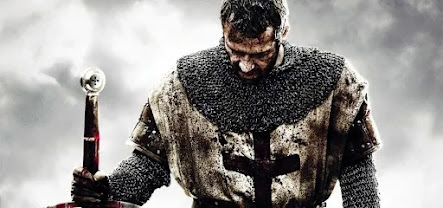
The brave hold onto what makes them free and are willing to fight for it. Freedom is a God given right, not one bestowed upon us by any other authority. The healthy masculine archetypes of warrior and king have at their side the symbolic sword representing their power over adversity and danger.

There is a time for the warrior to pull the sword from its scabbard just a few inches to allow the sun to glint off of its polished surface, flashing in the eyes of a potential enemy, letting them know who they are dealing with. And then there is the time to pull the sword completely free from its confines and slash what is seriously threatening the warrior and those he loves. Now is the time to fight."
“You cannot kill me here. Bring your soldiers, your death, your disease, your collapsed economy because it doesn’t matter, I have nothing left to lose and you cannot kill me here. Bring the tears of orphans and the wails of a mother’s loss, bring your God damn air force and Jesus on a cross, bring your hate and bitterness and long working hours, bring your empty wallets and love long since gone but you cannot kill me here. Bring your sneers, your snide remarks and friendships never felt, your letters never sent, your kisses never kissed, cigarettes smoked to the bone and cancer killing fears but you cannot kill me here. For I may fall and I may fail but I will stand again each time and you will find no satisfaction. Because you cannot kill me here.”
- Iain S. Thomas

"Here We Are..."

"The human race is a herd. Here we are, unique, eternal aspects of consciousness with an infinity of potential, and we have allowed ourselves to become an unthinking, unquestioning blob of conformity and uniformity. A herd. Once we concede to the herd mentality, we can be controlled and directed by a tiny few. And we are."
- David Icke

"The Brutal Truth About Violence When The SHTF"

"The Brutal Truth About Violence When The SHTF"
Selco interviewed by Daisy Luther

"Are you prepared for the extreme violence that is likely to come your way if the SHTF? No matter what your plan is, it’s entirely probable that at some point, you’ll be the victim of violence or have to perpetrate violence to survive. As always, Selco is our go-to guy on SHTF reality checks and this thought-provoking interview will shake you to your core.

If you don’t know Selco, he’s from Bosnia and he lived through a year in a city that was blockaded with no utilities, no deliveries of supplies, and no services. In his interviews, he shares what the scenarios the rest of us theorize about were REALLY like. He mentioned to me recently that most folks aren’t prepared for the violence that is part and parcel of a collapse, which brings us to today’s interview.

How prevalent was violence when the SHTF in Bosnia? It was wartime and chaos, from all conflicts in those years in the Balkan region Bosnian conflict was most brutal because of multiple reasons, historical, political and other. To simplify the explanation why violence was common and very brutal, you need to picture a situation where you are “bombarded” with huge amount of information (propaganda) which instills in you very strong feelings of fear and hate. Out of fear and hate, violence grows easy and fast, and over the very short period of time you see how people around you (including you) do things that you could not imagine before.

I can say that violence was almost an everyday thing in the whole spectrum of different activities because it was a fight for survival. Again, whenever (and wherever) you put people in a region without enough resources, you can expect violence.

We were living a normal life, and then suddenly we were thrown in a way of living where if you could not “negotiate” something with someone, you solve the problem by launching a rocket from an RPG through the window of his living room. Hate stripped down the layers of humanity and suddenly it was “normal” to level an apartment building with people inside with shells from a tank or form private prisons with imprisoned civilians for slave work or sex slaves.

Nothing that I saw or read before could have prepared me for the level of violence and blindness to it, for the lives of kids, elders, civilians, and the innocent. Again, the thing that is important for readers is that we were a modern society one day, and then in few weeks it turned into carnage. Do not make the mistake of saying “it cannot happen here” because I made that mistake too. Do not underestimate power of propaganda, fear, hate, and the lowest human instincts, no matter how modern and good your society is right now and how deeply you believe that “it can not happen here”.

I’ve mentioned warlords and gangs in several of my articles. Were they responsible for the majority of the violence or was it hungry families? Fighting of the armies through the whole period of war brings violence in terms of constant shelling from a distance from different kind of weapons. For example a few multiple rocket launchers (VBR) could bring in 30 seconds the destruction in an area of 3-4 apartment buildings, and being there in that moment and surviving it gives you a completely new view on life. Snipers were a constant threat and over time you simply grow a way of living that you constant scan area in front of you where your next steps gonna be. Are you gonna be visible and from where? Etc.

Most brutal violence was actually lawlessness and complete lack of order between different factions and militias, so in some periods there were militias or gangs who simply ruled the cities or part of the city where they were absolutely masters of everything in terms of deciding of taking someone’s life. In lawlessness, you as one person could be really small and not interesting, or join some bigger group of people to be stronger, some family or militia or gang.

An example of a gang would be group of people of some 300 or 500 people who “officially” were a unit or militia and operate for some faction, but in reality they operate mostly for themselves. That included owning part of the black market, having prison (for forced labor or ransom), attacking people and houses for resources, smuggling people from dangerous areas. Violence from those kinds of group was the most immediate violence, the most visible in terms of SHTF talking. If those people came on your door you could obey, fight, or negotiate, but mostly you could not not ask for help from any kind of authority, because there was no real authority.

In any society, no matter where you are living, there are a great number of people who are waiting for the SHTF to go out and do violent things. Small time criminals or simply violent persons who are not openly violent because system is there to punish them for that. It is like that. Some gang leaders that I knew were actually completely sick people with a strange type of charisma that makes people follow them, weird situations that can happen only in a real collapse. They are people who just waited for their time to rise. Those kinds of people together with criminal organization that are already there in any city in the world will be the backbone of SHTF gangs.

Who were the most likely victims? A very simple answer would be that the most likely victims were people who had interesting things without enough defense. But it was not always that simple. For example one of the first houses that got raided in my neighborhood, right at the beginning of collapse while there was still some kind of order, was a rich family’s home. They had a nice house with bars on the windows, a pretty good setup for defense, and they had enough people inside so they could give pretty good resistance to the mob. But they got raided simply because they were known that they are rich, so they were attacked with enough force to be overwhelmed.

It was not only about how much manpower you had and how well-organized defense of your home was, it was also about how juicy a target you were. If you are faced with 150 angry people attacking your home because they are sure you have good stuff inside your chances are low, no matter how good and tough you are. People who were alone were a pretty easy target and old people without support of family or friends.

It was not always about killing someone or violence. For example, if you were alone and without resources but you had something else valuable like some kind of skill or knowledge you could easily be “recruited” for some faction or group, not by your will of course.

What were some ways to prevent yourself from becoming a victim of violence? How do you recommend that people prepare themselves for the possibility of violence? It can be done in steps, or in layers:

• Do not be interesting (or attract attention) when the SHTF. This means a lot of things, for this article I can give a few examples with shortened explanations because it is a huge topic:

• Do not look like a prepper (before or after SHTF). There is no sense in announcing that you are prepping for EMP, civil collapse, apocalypse, or whatever. With that you are risking the probability that when the SHTF, people will remember that you have interesting things in your home. Your home should look ordinary. For example, if you are living in the city on a street where all houses look similar, there is not much sense in making your home look like a fortress. You’ll just attract attention.

Your defense should be based on more subtle means. Some examples are having means to reinforce doors and windows quickly when you need it, or to reinforce them from inside. Make changes in your yard to funnel possible attackers where you want them to be (trees, fence, bush…). You can make your home look abandoned or already looted.

• Think about what survival is! Survival is about staying alive, it is not about being comfortable at the expense of losing your life. I have seen many times people lose their lives simply because they were too attached to their belongings (house, car, land, goods…) so they simply did not want to leave something and run in a particular moment.

 Everything can be earned and bought again except life. Forget about statements like “I will defend it with my life” or “over my dead body” or similar because the real SHTF is usually not heroic or noble. It is hard and brutal. When you are gone you are gone and there might be nobody to take care of your family just because you have been stubborn or trusted in movies when it came to violence. To rephrase it: Be ready to leave your home in a split second if that means you and your family will survive, no matter how many good things you have stored there.

• Be mentally ready for violence: In a way, it is impossible to be ready for violence, especially widespread violence when the SHTF, but you can minimize shock when that happens with some things. If you are not familiar with what violence is, you can try to get yourself close” to it today (in normal times). It can be done, for example, by doing some voluntary work for example in a local hospital, ER or similar… or simply by working with homeless people. Sounds maybe strange but activities like this can get you a bit of a feeling of what it is all about, not to mention that you can learn some practical and useful skills for SHTF.

• Have means and skills (physically) to defend – or to do violence: No matter how old or young you are, your gender or religion I assure you that you are capable of doing violence. It is only a matter of the situation and how far you are going to be pushed. It is not just “some people are capable of violence.” Everybody is capable. Not everybody enjoys doing it or is willing to do it so easily.

In today (normal times) you can learn some violence skills and you should do it, again no matter if you are a woman or old or young. You should own a weapon and know how to use it. You should practice with it, or have at least some basic knowledge about hand-to-hand combat. The worst case scenario is to have a weapon that you try for the first time when SHTF. Be familiar with your means for defense, let your family members know what they need to do in case of attack of your home, have plan, and go through it. Only through practice will you minimize chances for mistakes.

• Use common sense: I know lot of survivalists almost dream about how they are going to use weapons against bad guys when SHTF, and that they will be something like super heroes from movies, saving innocents and killing villains. Truth is that in a real collapse, a lot of things are kind of blurred and you are not sure who the bad guys are. Good guys turn out to be lunatic gang members who want to bring food to their kids. There are no super heroes when SHTF, and if some of them show up they end up dead quickly.

There is only you and your skills and mindset and what you prepared. Use violence as a last resort because of the simple fact that by using violence you are risking of getting killed or hurt. Remember when SHTF there is maybe no doctor or hospital to take care of your wound. It is a time when even a small cut can eventually kill you through infection and lack of proper care.

Reader questions:
"I’m a single mom with a household full of girls. In an SHTF situation, what would our best strategies be to remain safe?" Just like I have mentioned before, strategy is always same for any part of survival, and shooting from the rifle is pretty similar no matter are you man or woman. Being single mom with household full of girls on first look make you as a ideal target in some situations, but we are talking here in prepper terms so there is no reason not to be perfectly well prepared as a single mom with girls.

But yes I admit it is not perfect situation, even if you are prepared well, some things are sure, you need to connect with other people even more. House with couple of girls will always look like easy prey for some people. It is like that.

"Were people in the city safer than people in the country? Can you tell us more about rural living during this time?" In my case definitely no. In the essence it always come to the resources and people. City meant more people less resources, country (rural) meant less people more resources, and because that level of violence simply was lower. That was most important reason.

There are few more reasons why it was much better in the country. People in the country (rural settings) were much more “connected to ground” they were more tough if you like, they grew their own food, had cattle, lived more simple life prior SHTF and when everything collapsed they had less problems getting use to it. Yes they also did not have electricity and phones, running water or connection to other places but they adapted easier to the new life because they had more useful skills then people in the city. Life was harder for them too than prior to the collapse, but they had means to get resources: land, woods, river…

Another thing is that people in small rural communities “in the country” were more connected to each other, people knew their neighborhood and some things were easier to organize, like community security watch, help in case of diseases and similar.

"What types of weapons did people have for self-defense?" It was different political system prior the collapse where it was not so usual to own a weapon legally. And to own one illegally could mean a lot of troubles. Right prior to SHTF, it became possible to buy different weapons on the black market but still, a majority of people did not own weapons. When it all collapsed, it was possible to get a weapon through trade.

Because of the military doctrine here prior to the collapse, we used “East Bloc” weapons. A favorite was AK-47 in all different kind of editions, or older weapons like M-48 rifle, SKS rifle, 22 and similar. People used what they had, so in one period you would be lucky if you had any kind of pistol and knife. Later through the different channels weapon become more available so people had them more. A lot of that was actually junk that some warlords somehow “imported”. Weapons 50-60 years old without proper ammunition, or not in operating condition. A lot of people simply did not have a clue how to use any kind of weapon so a lot of accidental deaths happened.

I remember people storming abandoned army barracks that was mostly looted, but they found in one building a lot of RPGs while other part of the same building was burning. Two guys were trying to figure out a single-use RPG, and while they were messing with it clearly not knowing how that thing worked, they accidentally armed it and launched a rocket that flew through the crowd, not hurting anyone and exploding in wall 100 meters from where they stood. They were smiling, clearly happy because they thought they figured out how that thing worked.

"What weapons do you suggest to have for SHTF?" It is a never-ending discussion and a favorite prepper topic, and I must say that whole discussion is overrated. I have used them in a real situation, and tried and tested lot of different kind of weapons and what works for me may simply not work for you. For example, here for me good choice is AK-47 rifle, maybe for you wherever you are it is very bad choice.

Good advice is: you need to have a weapon that most people have around you because of multiple reasons: spare parts, repairing, ammunition availability, possibility that you can pick that rifle from other people and you know how to use it. What caliber and similar is a matter of discussion again. I am talking from the point of owning a rifle. Another thing is that you need to know how that weapon works. Luckily, most of my readers live in an area where gun laws are great comparing to region where I am. You have much more choices when it comes to owning a weapon and practicing with it. Use that.

And do not forget that using a weapon in a real life situation is not like shooting at beer bottles with your friends after a barbecue. In real life you might be in a situation to use a weapon while you are tired, dirty, and hungry and while someone is screaming next to you. It is going to be maybe when you are not ready to do that, maybe in pitch dark, maybe after you have been awake for 48 hours. At least think about that.

"When should you use violence?" Contrary to some popular beliefs in the prepper community, the point is to use violence only as a last solution. The reason is as I mentioned already, the risk that you can be hurt or killed too, but also once you do violence you change your own rules, or push it more forward, and it is easy to get lost in violence. There are consequences to that, and you are not going to be the same person ever again.

Violence is a tool, not a toy. You need to know how to use it as best as possible, but also to avoid using it when it is not necessary. It is a good idea to set up a clear set of rules (mentally too) when you are gonna use violence and to try to stick to it. For example you will use weapon if someone tries to break your home and attack you, and you need to be ready to do that without hesitation.

"What else should we know about post-collapse violence?" Think with your head and research. One thing that is absolutely important when it comes to understanding how violent it is going to be and what can you expect in your own case of SHTF, is to understand how much media can influence people in making their decisions about violence.

In my case, the media built up situation where people feared so much from other people that they actually hated them. They hated them so much that they actually strip them down from humanity. In a real-life example, it works in a way that people killed other people, including kids and women, because they hated them so much because media told them.

It may look ridiculous and not possible to you, and you might again think “that can not happen here” but please trust your own resources, look for independent information, not mainstream media, in order to get the right information about what is really happening in the beginning of collapse. Do not be pulled into “popular opinion” just because the “man from TV” (whoever he might be) told you so. It is easier today. Because of the internet, you have much more choices for correct information than in my time. But still be careful, you might find yourself rioting together with 500 people just because you trusted some media."

"More information about Selco: Selco survived the Balkan war of the 90s in a city under siege, without electricity, running water, or food distribution. In his online works, he gives an inside view of the reality of survival under the harshest conditions. He reviews what works and what doesn’t, tells you the hard lessons he learned, and shares how he prepares today. He never stopped learning about survival and preparedness since the war. Regardless what happens, chances are you will never experience extreme situations like Selco did. But you have the chance to learn from him and how he faced death for months. Real survival is not romantic or idealistic. It is brutal, hard and unfair. Let Selco take you into that world."
Read more of Selco’s articles here: 

The Daily "Near You?"

Saco, Maine, USA. Thanks for stopping by!

"Judge Napolitano: Colonel Macgregor's Warning: We're Running Out of Time"

Full screen recommended.
Judge Napolitano - Judging Freedom, 7/20/26
"Colonel Macgregor's Warning: We're Running Out of Time"
Comments here:

Canadian Prepper, "We're At The End, The Clock Is Ticking"

Full screen recommended.
Canadian Prepper, 7/20/26
"We're At The End, The Clock Is Ticking"
Comments here:

"Flickers of Hope in a Black Sea of Carnage"

"Flickers of Hope in a Black Sea of Carnage"
by Leo Hohmann

"Oil prices gave a little flicker of phony hope over the last few hours. As smoke from the Iran War 2.0 darkened over the weekend, oil prices climbed to almost $91/bbl for Brent crude. Then a single individual in Iran teased the idea that maybe a deal could still be struck with the US, so lunatic oil investors stomped the price down to around $86. It came off the highest levels of the day as a spokesman for Iran’s foreign ministry was quoted as saying negotiations with the U.S. could be pursued “based on national interests.” Uh huh.

That obviously stupid move lasted a heartbeat because, sometime around that brief atrial flutter in the price of oil, Iran struck some more oil tankers running through the part of the strait that the US likes to pretend it is protecting for commercial traffic, turning the tankers into raging infernos. In response to that and devastation of its military bases by other Iranian attacks that cost the lives of US servicemen, the US attacked an Iranian nuclear plant that is still under construction, something Iran had said was an absolute red line. So, Brent oil prices shot back up to over $89.50/bbl mid-day.

This would be the same Iran whose parliament just voted to make negotiations with Donald Trump Illegal. The same Iran that said attacking that particular nuclear plant would be crossing a major red line. So, why was anyone dumb enough to think the oil problem was suddenly better?

To underscore how delusional the thinking was, the price wobble of hope happened after the same weekend when the US has moved more refueling planes into the region and has been more openly talking about putting boots on the ground to take over Kharg Island, a move consistent with needing more refueling planes. Iran says, bring those boots in. We’ll be glad to close the net around them!

It means investors are still treating the conflict as something they recognize and believe they can compartmentalize. Well, have fun with that! I’m sure the compartments will hold up as well as the burning compartments of those oil tankers held up between the bulkheads when struck with missiles. The renewed hostilities are “being priced primarily as an oil, inflation and regional-risk event rather than the beginning of a systemic shock,” he said.

Well, it already is a systemic shock, so that kind of thinking is irrational, and the fuel shortages are already a baked-in certainty. Unsurprisingly, gasoline and diesel, which are quick to price in any reason for a rise and slower to price it back out are back up in price again to a US national average above $4/gal. for gasoline and above $5 for diesel. Diesel, of course, influences the inflation on groceries and all goods transported by truck or train as well as energy prices in some regions.

Why would the price of oil drop when the US has promised more …“strikes will continue degrading Iranian military capabilities used to attack commercial vessels and civilian mariners transiting the Strait of Hormuz,” the U.S. Central Command said. Iran’s Islamic Revolutionary Guard Corps (IRGC) claimed on Monday they had targeted U.S. aircraft at the Aqaba airport in Jordan with ballistic missiles, and U.S. military assets and equipment at Kuwait’s Al-Adiri camp and Ali Al Salem Air Base, and in Syria.

The IRGC said in a statement late Monday that, in retaliation, it attacked the U.S. military’s Fifth Fleet in Bahrain, setting its fuel-storage tanks “ablaze” and destroying a Patriot radar, the fleet’s air-control radar and a C-RAM early-warning radar system. “The retaliatory operation is continuing,” it said.

So, yeah, plenty of reason for prices to have taken that sudden dip! I think oil traders must be drinking Texas Tea and hallucinating on the fumes of empty oil tanks. Marco Rubio, the U.S. Secretary of State, said the United States would continue its strikes on Iran until Tehran continues to attack vessels in the Strait of Hormuz. I’m thinking that is written incorrectly: The US will continue its strikes on Iran for as long as Tehran continues to attack vessels in the strait. “As long as Iran insists on controlling an international waterway, we’re going to have to respond to that. The United States always remains open to a diplomatic solution,” the U.S. official said.

Except one report today says Trump is desperately considering ceding control of the entire strait to Iran as the US is running low on munitions—low enough that it cannot long sustain a return to full-scale war, having sold and given so many weapons to Ukraine and sold and given so many to defend Israel during the Gaza War, the Lebanon Hezbollah war and now its bombardment by Iran. The US has also used so many weapons up in its own attacks on Iran during last summer’s Iran War 1.0 and this year’s 2.0, necessary, apparently, to complete the “total” decimation and obliteration of Iran’s nuclear weapons program that was already completed last summer. And the US has lost so many weapons due to Iran’s bombing of US bases all over the Middle East as well with its destroyed air force.
Ponder the realty-based path

Forget smoking the petroleum-based hopium. Ponder reality. If you want to see what is likely to happen with oil prices, consider how the rising price in oil was buffered during the first part of this war and what has happened to those buffers since then:

In the days before the war, there was oversupply of about two million barrels a day, providing a “head start”, the International Monetary Fund (IMF) said in a report on July 15. The world’s top crude oil importer, China, had an outsized role in swaying global oil prices. Since March, it has slashed oil purchases significantly, contributing to reduced global demand. Analysts have attributed this reduction to rising electric vehicle adoption, the use of massive stockpiles and the maturation of alternative fuel sources, such as the increased use of coal in chemical production.

Production outside the Gulf, led by the US, also rose by nearly two million barrels a day above 2025 levels, the IMF said…Governments and international bodies drew heavily on emergency stockpiles. The International Energy Agency (IEA) coordinated the release of 400 million barrels of petroleum, and the US released millions of barrels from strategic reserves.

HOWEVER: Some analysts are sounding the alarm again. The IMF warned that while the factors above helped cushion the initial blow, “much of that room has now been used up”…. Spare capacity has been used up and global strategic and commercial stocks are lower now than when the war began.

What has saved the world in the past four months might not be able to save the world going forward. “The IEA released 400 million barrels, hoping it was a short-term supply shock. But they are not designed or capable of countering a shock that goes on for six to eight months.” “The US strategic petroleum reserve (SPR) is closing in on 300 million barrels, which is the optional minimum for these stockpiles, at a 43-year low.”

Markets are “too complacent” about a smooth restart of Gulf oil production and Hormuz flow normalization. “Moreover, China is returning to the crude market to buy for its SPR and export refineries.” India was able to maximize Russian crude oil purchases in the second quarter of 2026, especially after the US issued a sanctions waiver, allowing countries to purchase Russian oil in March … but it might not be possible to do so on a sustained basis as … Russian refiners have also been severely hobbled by the Ukraine strikes….” Diesel supplies face a “double whammy” as Russia bans diesel exports after Ukrainian drone attacks on its refineries….

Even when Iran declared the Strait of Hormuz closed, oil from the Gulf was “leaking” through alternative routes such as Saudi Arabia’s east-west pipeline…. A significant amount of Gulf oil had been sent to the Red Sea through a Saudi pipeline to the Red Sea port of Yanbu. This week, however, Iran has asked Yemen’s Houthi movement to stand ready to close the Red Sea oil route if the US strikes Iranian power infrastructure.

That has actually already happened today: Houthi militants in Yemen on Monday declared a maritime embargo against Saudi Arabia effective immediately, threatening to exacerbate the oil supply disruption triggered by Iran’s attacks on tankers in the Strait of Hormuz. The Houthis have repeatedly threatened to close the Bab el-Mandeb Strait during the U.S.-Iran war. The strait is a choke point for commercial ship traffic that connects the Red Sea to the Gulf of Aden and global markets.

However, that still didn’t stop the complacency in the oil markets: But crude oil prices were little changed in response to the Houthis’ threat. Brent oil, the international benchmark, had jumped nearly 4% overnight to break $90 per barrel as at least three U.S. service members have died during recent fighting between the U.S. and Iran. Prices subsequently eased after Tehran indicated it was still open to talks with Washington.

Complacency isn’t smart. It’s wishful thinking. It’s denial of reality. The world might not know it is in a supply shock yet, because much of this reality is still working its ways down the pipelines, and it is the nature of shock to initially neutralize pain … though only for a short time. “We’ve burned through all of the buffers we had. Everything,” said one trader. “All of that’s now gone…Now we have close to nothing … and market complacency around Hormuz flows is being severely tested,” Sen warned.

On thing in favor of the flicker of hope, though I’m sure it will not win the day, is that Trump is desperate for a deal: U.S. precision-munitions stocks are reportedly thinning. Analyst assessments built on published inventory data suggest roughly 56 PRSMs have been built to date, fewer than 2,000 Tomahawks remain in the global stockpile, and perhaps as few as 700 are available to CENTCOM specifically. If accurate, that is not a force sized for an open-ended war of attrition.

Put together, the thesis is blunt: this isn’t the U.S. grinding Iran down. It may be Iran grinding the U.S. down — deliberately extending a campaign it believes it can outlast, using an accuracy advantage Washington didn’t anticipate against a munitions stockpile that isn’t built for a long fight…Sources indicate Iran’s inner leadership circle is not, in fact, in a hurry for a ceasefire — believed to want additional time to finish current objectives before any deal is struck. That’s been my claim all along. Iran is playing the long game, making this a war of attrition, by stretching things out with talks without letting any oil through the strait for West so that their oil stocks will run dry and their economies will start to heave.

On the other side of that whisper of hope, we have this: Donald Trump is considering his options to launch a “wider war” against Tehran as more American warplanes are deployed to the Middle East. However, a US official familiar with administration discussions said the operation would be limited by dwindling stockpiles of air defense and long-range munitions. Then, when that is out, what do we do if some nation actually attacks the US? So, will the president get desperate enough to cede full control of the strait to Iran as Iran demands, or will he put boots on the ground to take Kharg Island, as he has been considering?

As the world’s emergency petroleum supplies dangerously dwindle and prices again rise, the Trump administration appears to have lost the upper hand and faces a stark choice: escalate the conflict in a prolonged morass resembling Ukraine, or capitulate and let Iran control the world’s leading energy artery—with the ability to charge service fees for passage and recoup costs, a toll in all but name— energy and geopolitical analysts told Fortune.

That would be a fairly longterm worsening for the entire world that came about because of Trump’s war. Eventually, alternative piped routes will be laid, but that will take time. The one thing I am certain of is that, no matter what Trump decides, the longterm price in oil is in for a hellish ride. If the president announces a new deal, the price will, of course, drop just as was reported above, because the markets seem relentlessly stupid enough to keep believing a ceasefire will avert the oil shock. It won’t. It may stop Trump from making it worse than what it is already set in concrete to be, but experience has taught us any new deal isn’t likely to last long either.

“I don’t think there’s any military option for reopening the Strait of Hormuz,” said Gregory Brew, senior analyst for Iran and energy with the Eurasia Group. “The Iranians have considerable leverage here. I don’t see them backing down and, honestly, time is probably on their side…” The options are to escalate or cut a deal. And I think the [Trump] administration is likely to do the first, see it fail, and end up with the second,” Brew said…

“All of the signs point to higher prices and a longer duration,” said oil forecaster Dan Pickering, founder of the Pickering Energy Partners consulting and research firm. “We’re in the fifth month of this. We have fewer strategic reserves. We have less flexibility, less optionality. It’s a more precarious starting point for round two….”

Iran has clearly demonstrated the heightened value of the Strait of Hormuz, and that’s why it’s so insistent on maintaining control at any cost militarily and economically to wait out the U.S, Pickering said. “We’ve seen how expensive it is to shut everything off. The irony is before all this started that value was there for free for all the participants. “So, are you going to wind up worse off? Yes.”

And the U.S. has very limited options pressing forward, Brew said.“Trump can escalate and potentially widen the conflict to one that causes even more damage and pushes oil prices even higher.” Or he can try to outlast Iran, a middle path that seems unlikely to succeed. Or he cedes the strait to Iran to reopen it.

Because emergency oil stockpiles aren’t depleted—yet—and the price per barrel remains below $100, Brew expects Trump to attempt an escalation that’s now playing out before he feels he’s truly running out of options in a month or two. “My sense is that things are going to get worse before they get better,” Brew said. The U.S. is intensifying its attacks, and Iran is targeting more energy infrastructure of its Gulf neighbors, including potentially the Saudi’s Red Sea traffic, he added.

Even another peace deal is unlikely to last, he said. “It’s not going to be fully resolved. We’re likely to see continued flareups, continued rounds of skirmishing and hostilities. I don’t expect anything more durable than an interim deal that allows traffic to resume somewhat.” In the meantime, “We’re going to see more fireworks in the next two or three weeks before we see any kind of progress towards de-escalation or accommodation.”

As for that whispered ceasefire that brought a flutter of misguided hope in the morning …This morning, Iran rejected a U.S.-backed 10-day Qatari ceasefire proposal, with senior Iranian analyst and close adviser to Iran’s negotiating team Mohammad Marandi dismissing the offer with a blunt message: “Don’t even think about it.”

The proposal reportedly called for a 10-day truce that would reopen two shipping lanes through the Strait of Hormuz. Marandi has previously said Iran has “no plans” to resume negotiations, citing a “fundamental lack of seriousness” from the Trump administration, while Iranian officials have repeatedly said talks will not resume until the threat against Iran has ended.

So the closure of the Strait of Hormuz will not likely be ending soon. That means the flow of oil will not be resuming soon. We (and the rest of the world) are going to go through a very significant shortage - and some outages - of fuel. Prudence dictates that responsible people make plans for that eventuality.

Oops. Hope gone."
o

"How It Really Is"


"Screwing in a Mirror While the World Smokes"

"Screwing in a Mirror While the World Smokes"
by Edward Curtin

"We were screwing in a mirror when we realized our mistake. Since the handyman was unavailable, we had to do it ourselves. Certainly it was very pleasurable to know that we could, but we screwed-up.

Lurid sexual news is common these days; it grabs people’s attention. It titillates the public’s imagination like nothing else, even murders and celebrity scandals. Forget wars and genocide and a world teetering on the edge of nuclear annihilation when there is sexual news to keep you focused. The bombs smoke the air with the smell of death rising everywhere. It’s the air we breathe.

But back to the screwing. Maybe I have reeled you in and you want more details. Okay, let me tell you. As we were screwing in the mirror, we realized we had placed the drywall anchor too low, so it was behind the mirror and not slightly above. A simple measuring mistake. So relax. Perhaps you were getting too excited.

Let’s get to the smoke. No, we had not been smoking an intoxicant, we were just a bit incompetent. Smoke comes from many directions; it’s usually meant to shroud our ability to see the truth of our situation, as in the phrase “smoke and mirrors” – the magician’s trick. Who are the magicians running our show? Sometimes it’s innocent smoke that turns day to night, such as the smoke that’s drifted down from Canada that has just forced me to turn lights on at midday.

Sexual titillation is not innocent smoke. That it is everywhere is obvious; it has been so for decades now. The German-American sociologist Herbert Marcuse posited this in 1964 in his book, "One-Dimensional Man," in which he argued that a new totalitarianism was developing in the USA and Western Europe that “manifests itself precisely in a harmonizing pluralism, where the most contradictory works and truths peacefully coexist in indifference.” This was happening both culturally and politically. This unification of seeming opposites – “democratic unfreedom” that prevents qualitative change – was facilitated by what he called “repressive modes of desublimation.”

One important aspect of this method of social control was the offer of increased satisfaction of the sexual variety that would draw off instinctual energy from significant social change in societies where technological rationality was the underlying fact. Localized sexuality and the sexualization and titillation of everyday life would reduce genuine erotic living.

This faux-sexuality would seem to many people like liberation from the then fading traditional religiously-based forms of sublimation, which were also repressive. But rather than freedom, Marcuse argued, it was the commodification of sex as another commercial product to keep people gratified and happy with their condition in a society of growing inequality and technical control.

This “Happy Consciousness” has prevailed, and today we find ourselves incapable of imagining significant political change as the latest American president, Donald Trump, “of grab them by the pussy” fame, presides over multiple wars and growing internal repression.

Once many people smoked one or more packs of cigarettes a day. Doctors recommended them as good for your health. One of my sisters used to smoke in the shower and our family doctor smoked as he examined us kids. He was the team doctor for a major university’s basketball team. In times past, many a man went out for Lucky Strikes or Camels and never came back. Do they still go out? For what? Do they ever come back?

In my little town of Great Barrington in western Massachusetts there are ten or so pot shops, which is approximately one shop for every 700 people. I wonder if they have read Baudelaire’s “Be Drunk”?

“You have to be always drunk. That’s all there is to it—it’s the only way. So as not to feel the horrible burden of time that breaks your back and bends you to the earth, you have to be continually drunk. But on what? Wine, poetry or virtue, as you wish. But be drunk.” Simon and Garfunkel once asked:

"Where have you gone, Joe DiMaggio?
A nation turns its lonely eyes to you,
wo wo wo.
What’s that you say, Mrs. Robinson
‘Joltin Joe’ has left and gone away,
hey hey hey."

Joe, the mythical man, is long dead. Yet dreams of mythical men perdure and they will be dredged up with the next elections. Sexual scandals will follow. What’s new pussycat?

We think we have come to our senses, that the smoke does not get in our eyes. But that’s an extreme form of mental myopia. The neo-fascist vulgar Trump is our present nightmare, but his presence has a past and a future, which Chris Hedges correctly notes in “Requiem for America on the Fourth of July” [emphasis added]:

"Neoliberals peddle their own form of magical thinking. Neoliberalism is as absurd and infantile as the Christian Rapture and Make America Great Again (MAGA) movement. Trump lies like he breathes, but so did previous presidents including Joe Biden, Barack Obama and Bill Clinton. Trump embraces fantasies, but so did they. Trump, like his Democratic predecessors, enriches himself and his family, although with far more ostentation and greed. He, like them, facilitates the ongoing pillage by the billionaire class. Trump is the fascist iteration of the neoliberal con."

This is Marcuse’s point about the unification of ostensible opposites. But most people still don’t get it, for one-dimensional thinking is the norm. And in a digital world the tyranny of the moment dominates peoples’ attention, even as the moment itself is immediately superseded by the next.

As the Red Queen said to Alice in "Through the Looking-Glass," “Now, here, you see, it takes all the running you can do, to keep in the same place. If you want to get somewhere else, you must run at least twice as fast as that!” So we rush on, getting nowhere fast, forgetting that we areall getting screwed in a looking-glass world."
o
Simon and Garfunkel, "Mrs. Robinson"
o
Freely download "Through The Looking Glass, 
And What Alice Found There", by Lewis Carroll, here:
o
Edward Curtin: Sociologist, researcher, poet, essayist, journalist, novelist….writer – beyond a cage of categories. His new book is "AT THE LOST AND FOUND: Personal & Political Dispatches of Resistance and Hope" (Clarity Press)

"Something Is Seriously Wrong… And It's About To Hit America This Fall"

Full screen recommended.
Across The States, 7/20/26
"Something Is Seriously Wrong… 
And It's About To Hit America This Fall"
"Why does the economy feel so unstable right now? Rising prices, expensive housing, stubborn inflation, and growing financial uncertainty have left millions asking the same question. In this video, we connect the biggest economic trends shaping 2026 and explain how they could affect your money, savings, investments, and daily life. Here’s the thing… these challenges aren't happening one by one. From higher import costs and pressure on regional banks to AI's influence on the stock market and the housing slowdown, every piece fits into a much bigger picture. We break down the facts in simple language so you can understand what may lie ahead. What most people don't realize is that timing matters. When several economic pressures arrive together, families, businesses, and financial markets all feel the impact differently. The reality is that staying informed can help you make smarter financial decisions instead of reacting to headlines. Watch until the end and share your thoughts - which economic issue do you think will affect everyday people the most?"
Comments here:

"No One Can Afford This - You're Not Alone"

Full screen recommended.
Dan, I Allegedly, 7/20/26
"No One Can Afford This - You're Not Alone"
"Millions of Americans are quietly struggling with rising costs, student loan debt, higher insurance premiums, expensive groceries, soaring gas prices, and a cost of living that keeps climbing. In today's video, I explain why so many hardworking families feel like they can no longer keep up, why the affordability crisis is getting worse, and why you're far from alone. We also discuss trade jobs, college costs, bankruptcies, inflation, consumer debt, and the economic warning signs that too many people are ignoring. We'll also cover rising oil prices, the impact on gasoline and everyday expenses, insurance increases, retail store closures, data breaches, Taco Bell's food contamination lawsuits, Fidelity's settlement, and why more Americans are rethinking college and student loans. If you follow business news, personal finance, real estate, banking, inflation, recession trends, or the economy, this episode breaks down the financial pressures affecting households across America."
Comments here:

"People Have Stopped Paying Their Bills... And Here’s What Comes Next"

Full screen recommended.
The Unfolded States, 7/20/26
"People Have Stopped Paying Their Bills... 
And Here’s What Comes Next"
"Americans can’t pay their bills, and the consequences are beginning to move from overdue notices into courtrooms. As credit card balances remain near historic highs, vulnerable households are being forced to decide which essential payment can wait. This video examines how rising living costs, limited emergency savings, and expensive borrowing are placing greater pressure on American households. It explains why credit card debt is growing fastest among people already struggling to get by, how the minimum payment trap can keep balances alive for years, and why a household can appear financially stable even after its safety margin has disappeared. We also follow the process from a missed payment to delinquency, charge-off, debt collection lawsuits, default judgments, and personal bankruptcy filings.

Using data from the Federal Reserve, the Federal Reserve Bank of New York, the Consumer Financial Protection Bureau, and the United States Courts, the analysis separates verified warning signs from exaggerated claims. It also considers what may happen next if real income improves, financial pressure persists, or a weaker labor market pushes more borrowers beyond their ability to remain current. Subscribe for evidence-based analysis of the American economy, household finances, and changing consumer behavior. In the comments, tell us which bill you would protect first if your budget forced you to delay a payment."
Comments here:

Bill Bonner, "A Blaze of Glorious Inflation"

"A Blaze of Glorious Inflation"
by Bill Bonner

Normandy, France - "On Thursday of last week, POTUS had an important message for us. He rambled even more than usual, but suggested that the election process could be compromised. NPR: In a 25-minute primetime address from the White House’s East Room that included many baseless claims, Trump said he was declassifying Intelligence documents that he said reveal “shocking vulnerabilities in our election infrastructure.” Those include allegations of Chinese efforts to influence American elections, concerns over voting machine security, and that noncitizens are found on certain states’ voter rolls.

Those who studied the documents say they do not support the president’s arguments. But the real purpose of the address was probably just to see how people would react. What would they do if he really did use ‘emergency measures’ to protect the integrity of US elections...and/or to get the results he wants?

Here’s the situation. POTUS seems to be losing popular support. CNN: "While the latest Quinnipiac University poll showed 27% strongly approved of Trump (in that case, of registered voters), other polls have pegged that number significantly lower. In those other polls, it’s been at 21% (NPR-PBS-Marist), 20% (Fox News), 19% (AP-NORC), 16% (Marquette Law School), 15% (Post-Ipsos) and 14% (Reuters-Ipsos)."

In most of the recent high-quality polls, the percentage of Americans who strongly approve of Trump is between 1 in 7 and 1 in 5. Very few Americans see what Trump is doing and strongly support it. Is he losing his grip...on his party...or his own frayed rigging? Is it permanent? Or temporary? A real peace with Iran might turn things around. So might a gush of easy money. The gist of today’s message: Trump may or may not tamper with election outcomes. He will have less reluctance to meddle with the economy. Meddling with the votes is regarded as treachery. Meddling with the money brings applause.

While Donald Trump is still front page, headline news, the markets have their own ancient journals. They have their highs and lows...their bubble peaks and dark bottoms. As we mentioned last week, trying for a base hit...a nickel here, a dime there...will probably not make an investor rich. He’ll strike out from time to time too. What he needs is a home run, something he can get into fairly early, nod off, and wake up years later much wealthier. He needs a Primary Trend.

That is what he got from the flower of American industrial capitalism - from the moment Paul Volcker put inflation to flight in 1980...to the moment yields finally found their bottom in July 2020. That trend would have multiplied your wealth - either in stocks or bonds - for four decades. All you had to do was to sit tight. What are the odds of a repeat performance?

They are probably very low. It is mathematically and physically impossible for asset values to become too far removed from the underlying economy for too long. Instead, they cycle up and down, anchored to the real economy by a long, bungee-like cord. So, if you’re aiming for a long cycle of rising prices, your best bet is to grab ahold of the cord when it is stretched about as far as it can go to the downside, after a long cycle of falling prices.

The Dow was under 1,000 in 1980. But today, it’s over 50,000...higher than ever before. The most likely thing - though hardly guaranteed - is that stock prices will snap back down from here, in real terms, if not in nominal ones...and for a very long time.

Our favorite measuring stick is the Dow/Gold ratio. It measures the Dow stocks in terms of gold. We expect Dow highs worth over 15 ounces of gold...and lows below 5. Now around 13...and still holding gold...we look for more stretch to the downside before we close our eyes and make the big trade - out of gold and into stocks. That could happen either by gold going to $10,000...or the Dow stocks falling below 25,000. Most likely, they’ll shake hands somewhere in the middle.

Just where they meet, though, depends to some extent on POTUS and the Fed. Trying to overthrow the election results might outrage the vox populi. But while most people might disapprove of efforts to manage or deny election results, they would cheer to the rafters any temporary measures that offered them lower mortgage payments.

Most people, endowed by Nature with the earnest faith of a friendly dog, believe an economy is adjustable...manageable...and improvable by Ph.D.-bearing technicians in expensive suits. That touching naïveté is what dug our present hole. Few protested in 1971 when Richard Nixon declared a series of new measures - including wage price controls and taking the US off the gold standard. They thought the economic bigheads knew what they were doing. And the New York Times - then as now, cheerleader for the feds - said the moves would only be necessary “until exchange rates realign.”
They’ve been realigning ever since - almost all countries have raced to devalue their currencies to keep up with the US. If a nation allowed its currency to go up against the dollar, it would make its own goods and services more expensive to foreign buyers and find its high-priced goods shunned on the shelves.

But inflation (the loss of purchasing power) encouraged bad habits - spending money we didn’t have. It was also the real cause of the huge bull markets in stocks, bonds, and gold - 1980-2020. And now the bottom of the yield cycle has been passed and interest rates are going up. And debt has reached such levels - over $300 trillion worldwide - that even a modest twist on the interest rate screw sends the public howling for relief.

The authorities are cornered. Either they throttle back their spending. Or they ‘print’ faster and let the whole system go up in a blaze of glorious inflation later on. It is either ‘inflate...or die.’ Either allow more credit at lower rates to help cover the interest bill...or the bubble economy shrivels. Most likely, as bubble death draws near, the feds will inflate...and inflate some more. And they will be heroes...for a while."