StatCounter

Wednesday, April 22, 2026

"Blockade"

"Stuck in the Strait of Hormuz"
"Blockade"
by Robert Gore

"The world is threatened by a blockade more deadly than Iran’s blockade of the Strait of Hormuz. That blockade is the refusal among the West’s ruling class to allow entry of any thoughts not conforming to their prejudices, slogans, and unattainable objectives. Their minds are more tightly sealed than Hormuz or Bab-el-Mandeb ever has been. In their credentialed arrogance they preen about their intelligence. They are fools repeatedly rushing in where no angel would tread.

If President Trump’s Iran adventure represents what now passes for his and his administration’s mental processes, the U.S. and the world are in grave danger. This fiasco in progress has bypassed every marker of intellectual proficiency. It offers no cognizance of history, geography, or military reality, no recognition of past mistakes, no lessons learned, no acknowledgement that their may be things about which its perpetrators are ignorant. It’s bereft of elementary common sense, much less wisdom tempered by experience and humility.

Trump is not playing with a full deck. Not only are his mental processes visibly deteriorating, but he’s morally compromised in every way possible. His abject servility to Netanyahu, Israel, and the American Jewish lobby may well be due to their ruthless blackmail. He is leading the U.S. to humiliation and defeat that will spell the end of the last vestiges of its failing empire.

That fall may come to be regarded as the first phase of the Age of Chaos. Many of us will be probably be alive to see the culmination of this first phase, but the entire Age of Chaos will probably play out long after we’re all dead. An empire must have the ability to expand its dominion and to subjugate the people within it. Both expansion and subjugation have become problematic.

The American empire is a confederation constructed after World War II. Unlike the Roman empire, its lifespan will be measured in decades, not centuries. The U.S. confederation has been unable to expand its dominion to North Korea, Vietnam, Afghanistan, or most of the Middle East. The exception to the latter is the imposition of the Zionist state of Israel, but that “success” may ultimately lead to the downfall of both Israel and the U.S. empire. The one unambiguous success has been the incorporation of Warsaw Pact nations after the fall of the Soviet Empire. That incorporation has reached its limits with the confederation’s attempt to absorb Ukraine, which may well fail due to Russia’s opposition.

Notwithstanding this litany of mostly failure and the obvious difficulties inherent in an effort to subjugate Iran, Trump and Netanyahu went ahead with what was within a few weeks a readily apparent fiasco. There are, as Jeffrey Sachs and others have pointed out, disturbing indications of megalomaniacal insanity in both men. Failing empires get the leaders they deserve; the fall of the Roman empire had its crazy emperors

Empires are inherently offensive. Sustenance comes from plunder; they must grow or die. The problem for the U.S. and imperialism in general is the yawning disparity between the costs of offensive and defensive warfare and the emerging dominance of asymmetric, or guerrilla, warfare. Historically, guerrilla warfare has been the weapon of the weak, usually defensively employed. The problem for would-be invaders is that the weapons of the weak have become so effective against the weapons of the strong (assuming nuclear weapons are off the table) that it’s stymied offensive warfare. The former are orders of magnitude cheaper than the latter - $30,000 drones are taking out multimillion dollar aircraft, tanks, and seagoing vessels.

Recent history is replete with examples that only fools and madmen (i.e. Trump and Netanyahu) ignore. Exhibit A would be the Russia-Ukraine war, which featured the debut of the newest “star” of asymmetric warfare: drones (See “The Ants New Weapon,” Robert Gore, SLL, June 17, 2025). That war has settled into a World War One-style battle of attrition as drones and artillery have made advancement for either side difficult and costly. New drone-based tactics and counter-tactics evolve almost daily with only measured progress by the Russians; certainly not what they expected when they began their offensive over four years ago. And this is in eastern Ukrainian territory that’s Russia friendly!

Exhibit B would be Yemen’s Houthis, whose closure of the Bab-el-Mandeb strait at the southern end of the Red Sea was a test drive for ally Iran’s closure of the Strait of Hormuz. The Houthis have punched well above their weight, waging often effective land, aerial, and naval warfare against Saudi Arabia, the UAE, Israel, and the U.S. They are part of the Axis of Resistance and receive both tangible and rhetorical support from Hezbollah and Iran. The U.S. government alleges that they also receive support from the Russian, Chinese, and North Korean governments.

The Houthis have employed increasingly sophisticated drones and missiles, many of which have been supplied by Iran. President Trump’s Operation Rough Rider, which launched air and naval strikes against Houthi targets in Yemen; a subsequent cease fire forced by Houthi attacks on more than 190 ships, and Trump’s dubious declaration of victory were a preview of U.S. and Israel’s two subsequent attacks on Iran and their attendant lipstick-on-a-pig propaganda.

The foundation of guerrilla warfare is decentralized cells, operating with a high degree of autonomy from central command. Since the U.S. invasion of Iraq in 2003, the Iranian government has adopted this guerrilla strategy, named Mosaic, as its mode of defensive warfare. Iran has been turned into 31 autonomous operational zones with substantial drone and missile capabilities. Thus, killing most of Iran’s formal leadership and extensive bombing, particularly of Tehran, did not achieve the stated objective: a quick Iranian capitulation. Nor did it prevent a lethal Iranian counterstrike.

Guerrilla warfare works because it engenders chaos against forces attempting to either impose order or their own brand of “managed” chaos, from which order will supposedly emerge. The Iranians have certainly engendered chaos in the Middle East, and if order emerges, it will apparently be on their terms. Most important, Iran could exercise control of the Strait of Hormuz with its sovereignty intact and greatly enhanced influence in the region.

The U.S.-Israel alliance is confronted with a choice. It can recognize the epochal reality currently unfolding: short of nuclear attack, invasion and traditional offensive warfare are being rendered virtually obsolete. The implications of full reality recognition would be enormous. The U.S. would have little or no influence in the Middle East, perhaps withdrawing completely (other than commercial transactions), while that of nearby powers Russia and China would expand.. The petrodollar arrangement from which the U.S. has so greatly benefitted would be over. The development would herald the end of the American empire and the possible ascendancy of Russian and Chinese-led multilateralism.

That would have its salutary aspects for the U.S. Psychologically, it’s way past time for a well-deserved comeuppance. Economically, the empire is an unaffordable luxury for a government $39 trillion in debt. Politically, the nation has enough problems at home without creating more for itself abroad.

However, the outlook for Israel would be bleak. For decades it has fomented chaos and division in the Middle East to reduce the chances of unified Islamic opposition against it. An Iran that has defeated the U.S.-Israel alliance and become the dominant power within the region would be Israeli and American Zionists’ worst nightmare. Israel’s continuing existence would be in question. Not necessarily because Iran would acquire nuclear weapons, if it doesn’t already have them. Rather, the small Jewish state will stand revealed as militarily vulnerable, and it has many actual and potential enemies in the Middle East. That fact suggests that the alliance won’t choose reality recognition, but rather nuclear nihilism.

The Sampson Option is Israel’s well-known strategy should it be confronted with circumstances that its leaders feel threaten its existence. They would activate Israel’s nuclear weapons - if Israel’s going down they’ll take the rest of the world with it. It may have enough nuclear bombs to do so. The Israelis characterize the Sampson Option as a deterrence strategy, and if push came to shove nobody knows if they’d press the button. However, the apocalyptic rhetoric spouted by Netanyahu and his cohort, and American Christian-Zionists like Mike Huckabee, is not reassuring. If the Israel-American alliance opts for nuclear nihilism, global chaos is assured. The continuation of Homo Sapiens is not.

Regardless of the alliance’s choice, increasingly amplified chaos is in the cards. Even if the impossibility of maintaining an empire is fully, if begrudgingly, recognized, the American empire’s dissolution will be chaotic. Its satrapies will be left to scramble for alternative military and economic arrangements. Accommodations will have to be made with the global majority as centuries of Western domination draw to a close.

That’s not to say that multipolarity among the global majority will be any kind of nirvana. The ever-strengthening forces of decentralized chaos will be impossible for any government to contain. Power always corrupts; multipolarity won’t abolish rivalry among nations and venality among their rulers. Russia and China, the leaders of the multipolar bloc, are currently led by exceptionally adroit authoritarians; their successors probably won’t be as adept. Governments, as coercive political arrangements, are incompatible with human freedom. As such, they’re never permanent, and today’s tyrannical behemoths are well past their sell-by dates.

Chaos may be most intense within the U.S. Much of its apparent strength rests on the shakiest of foundations. Decisive defeat in the Middle East will undermine the military “glue” that has supported the U.S. since World War II and its fiat dollar since 1971. Then there’s the exponentially mounting debt. Those two factors will eventually obliterate U.S. financial markets. The burgeoning chaos reflects the mental chaos playing out in so many American minds - apocalyptic Christian-Zionist dispensationalism, woke, transhumanism, “art” and “culture” that are neither, elite depravity, and who knows what other mental and moral depredations (it’s hard to keep track). These are the ingredients for uncontrollable chaos.

Insanity inevitably meets reality, and the latter always wins. There’s a good chance the U.S. will splinter. The most optimistic scenario is that some of the resultant pieces become enclaves committed to protecting freedom and individual rights. They would have to have the capability to protect themselves from malign elements. They would also require an unswerving commitment to reason and mental clarity not currently apparent among any appreciable segment of the American population. However, chaos will impart wisdom among some of those who survive it, and they could potentially rebuild and institute order based on choice, incentives, and cooperation, not coercion and violence.

Contemplating bewildering day-to-day developments without a broader analytical framework only heightens the bewilderment. That framework doesn’t come from a social sciences perspective, but the physical sciences offers some understanding. Without getting into the weeds of the concept of entropy, it’s fair to say that entropy is associated with disorder and randomness; that in systems left to spontaneous evolution entropy remains constant or increases, that energy is required to slow, stop, or reverse the entropic process, and certain processes are irreversible.

For centuries, order - controlling entropy - has been imposed by governments, but now they’re being overwhelmed by entropic processes. They can no longer command the resources necessary to contain the decentralized and ever-increasing dispersal and power of computing, communications, and weaponry. The “energy” of governments is being overwhelmed by disorder and randomness, and that process is almost certainly irreversible. Ironically, most of what governments now do to impose order only increases disorder and chaos; they are adding to rather than subtracting from entropy.

This analysis yields no confident predictions about what happens next; chaos is unpredictable. Nor does it yield claims of knowledge about billions of unknowable data points. What it does yield is some comprehension of the epochal breakdown well underway. Not particularly comforting, but it at least offers insight amidst the unending confusion."

"And Never, Never To Forget..."

"To love. To be loved. To never forget your own insignificance. To never get used to the unspeakable violence and the vulgar disparity of life around you. To seek joy in the saddest places. To pursue beauty to its lair. To never simplify what is complicated or complicate what is simple. To respect strength, never power. Above all, to watch. To try and understand. To never look away. And never, never, to forget."
- Arundhati Roy

"Hope In a Time of Hopelessness" 

"Hope In a Time of Hopelessness" 
by Washingtons Blog

"Hope has two beautiful daughters. Their names are anger and courage;
anger at the way things are, and courage 
to see that they do not remain the way they are."
- Augustine of Hippo

"Several long-time activists have told me recently they are overwhelmed, worried, and think that we may be losing the struggle. One very smart friend asked me if there is any basis for hope. Hope is an act of will, not a passive mood. Admittedly, things are easier when circumstances bring hope to us, and we can just receive the hopeful and inspiring news. But if we care about winning, we have to be able to decide to have hope even when outer circumstances aren't so positive.

I have children who are counting on me to leave them with a reasonably safe and sane planet. As I've said elsewhere, I care too much about my kids and my freedom to be afraid. I care enough about them that it gets my heart beating, connects me to something bigger than myself, and that gives me courage, even when the chips are down. 

If I allowed myself to lose hope about exposing falsehoods, about protecting our freedom and building a hopeful future, I would be dropping the ball for my kids. I would be condemning them to a potentially very grey world where bigger and worse things may happen, where their liberties and joys are wholly stripped away, where every ounce of vitality is beholden to joyless and useless tasks.

Many of us may be motivated by other things besides kids, and only you can know what that is. But we each must dig down deep, and connect with our most powerful motivations to win the struggle for freedom and truth.

I don't know about you, but I don't have the luxury of giving up hope. When I get depressed, overwhelmed or exhausted by the stunning acts of savagery, treason, and disinformation carried out by the imperialists, or the willful ignorance of far too many Americans, I will myself into finding some reason to have hope. Because the struggle for life and liberty is too important for me to give up." 
Full screen recommended.
Jason Mraz, "I Won't Give Up"

And don't you ever give up...

"Florida Orange Production Down 95%, U.S. Cattle Herd Smallest Since 1951, And Winter Wheat Is Being Suffocated By Severe Drought"

by Michael Snyder

"We live at a time when most people don’t know where their food comes from, and so they have no idea that we are facing an agricultural nightmare in 2026. Yesterday, I published an article about the historic drought that is devastating our heartland and the nightmarish fertilizer crisis that has been caused by the war in the Middle East. Today, I am going to talk about the stunning decline of the U.S. cattle herd, concerns about the winter wheat harvest, and the frightening drop that we have witnessed in Florida orange production.

I have said this before, but I will say it again. If farmers don’t grow our food, we don’t eat. When I was growing up, everyone was drinking Florida orange juice. Sadly, that is no longer true. This year, the number of oranges that will be harvested in Florida will be down 95 percent from 1996…But now, the fruit that helped build Florida is disappearing. The orange is falling victim to disease, disasters and development.

Just how far the orange crop has fallen is shocking. Thirty years ago, 225 million boxes of oranges were picked from Florida orange groves. That was almost enough for one box of oranges for every American in the mid-1990s. This year, the forecast from the U.S. Agriculture Department is 12 million boxes. That is a drop of 95% in one generation. How in the world could this have happened?

Well, the cold weather that Florida experienced during the month of February severely damaged orange production. But the far bigger problem is citrus greening disease. It is not going to go away, and it could potentially completely wipe out Florida’s oranges…The cold weather in February cost the citrus industry almost $700 million according to a preliminary estimate from the state agricultural commission. Most of the loss is from a smaller crop and damaged trees.

And then there’s the decades-long fight against a small bug that has been turning Florida’s oranges green. Citrus greening disease is caused by a bacterial infection spread by the Asian citrus psyllid. The bug showed up in Florida almost 30 years ago. The first signs of the disease were visible in citrus groves about 20 years ago.

Meanwhile, the multi-year drought that the heartland of America is experiencing is making it very difficult to produce sufficient quantities of hard red winter wheat… Hard red winter wheat (HRW) futures widened to their largest premium over soft red wheat (SRW) in more than two years as severe drought intensified across key breadbasket regions in the Great Plains and Midwest. This means traders are pricing in weather impacts and tightening expectations for higher-protein wheat supplies.

It is important to note that HRW is a more valuable protein and is primarily used in bread, rolls, and all-purpose flour. It is grown in the U.S. Plains (Kansas, Oklahoma, Texas), while SRW is used in cakes, cookies, crackers, and pastries, and is grown in the Eastern U.S. (Ohio Valley, Midwest, Southeast).

Just think about all of the things that you eat on a regular basis that have wheat in them. If you feel that those products are expensive now, just wait until you see what the prices will be like later this year. Beef prices have also become very painful, and that is because the size of the U.S. cattle herd has fallen to the lowest level that we have seen since 1951… The U.S. cattle herd dwindled to its smallest size since 1951, the U.S. Department of Agriculture said on Friday, signaling that beef prices will stay high for consumers after setting records last year. The nation had 86.2 million cattle and calves as of Jan. 1, the USDA said in a biannual report, after a persistent drought drove ranchers to slash their herds. That was down 0.4% from a year earlier, when the herd also hit its lowest level since 1951.

In 1951, approximately 154 million people lived in the United States. Today, approximately 342 million people live in the United States. So we are trying to feed more than twice as many people with the same amount of cattle that we had in 1951.

Unfortunately, this could be just the beginning of this crisis because the New World screwworm is on a relentless march north…The flesh-eating parasite, called the New World screwworm, was detected this month in the Mexican state of Nuevo León, just 90 miles away from the U.S. border. As of last year, the insect was still 400 miles away.

“The New World screwworm is not some distant problem,” Texas Agriculture Commissioner Sid Miller said. “It is a direct and imminent threat to Texas, and we are treating it that way. This is a high-stakes situation for our ranchers, our livestock industry and our food supply, and we are moving aggressively to stay ahead of it.”

Ranchers are frightened out of their minds, because these little parasites love to ravage cattle. All it takes for disaster to strike is for one female fly to find a body opening or an open wound…This insect is attracted to the smell of wounds and body openings, including the nose, eyes, ears, mouth and genitals.Once a female fly makes contact, it can lay 200 to 300 eggs in a wound or opening that can be as small as a tick bite. In some cases, the fly may lay up to 3,000 eggs during its 10 to 30-day lifespan. The eggs then hatch into maggots that burrow into the wound or opening and feed on the flesh. After about seven days of feeding, the larvae drop to the ground and eventually emerge as adult screwworm flies.

Even without the war in the Middle East, this would be an exceedingly challenging year for our farmers and our ranchers. But now thanks to the war, we are facing skyrocketing fuel costs and global fertilizer shortages…Farmers around the world are facing fertilizer shortages and rising costs due to supply disruption caused by the war in Iran, which could make food more expensive later this year. The war has halted shipments through the Strait of Hormuz, a narrow passage off Iran that handles about a fifth of the world’s oil and nearly a third of global fertilizer trade. As I discussed yesterday, one survey found that 70 percent of U.S. farmers are admitting that they won’t be able to buy enough fertilizer this year because prices have simply gotten too high.

Diesel prices are spiking as well, and they are only going to go higher as global supplies of fuel get tighter and tighter
Nobody can dispute any of the facts that I have presented in this article. Food prices have risen steadily in recent years, but the truth is that what is ahead will be even worse. In impoverished nations, the number of people experiencing acute hunger was already at an all-time record high before the war with Iran erupted, and now many experts are warning of widespread famines. But most people out there just expect everything to turn out just fine somehow, because that is how the stories that they watch on television always end. Of course what we are living through is not a television show. This is the real world, and in the real world bad decisions can lead to severe consequences."

"How It Really Is"


Judge Napolitano - Judging Freedom, 4/22/26

Full screen recommended.
Judge Napolitano - Judging Freedom, 4/22/26
"Live From Tehran: Prof. Mohammad Marandi: 
Why Iran Won’t Meet With Netanyahu’s Puppets"
Comments here:
o
Full screen recommended.
Judge Napolitano - Judging Freedom, 4/22/26
"Gilbert Doctorow: 
The Kremlin Prepares for War With Europe"
Comments here:
o
Full screen recommended.
Judge Napolitano - Judging Freedom, 4/22/26
"Joe Kent - Fmr. Dir. National Counterterrorism Center:
 Why Iran Is No Threat to the US!"
Comments here:

"Everyone Hates Their Job Right Now - And It’s About To Get Worse"

Full screen recommended.
Dan, I Allegedly, 4/22/26
"Everyone Hates Their Job Right Now - 
And It’s About To Get Worse"
"Americans are more dissatisfied with their jobs than ever before, and the numbers are backing it up. In this video, I break down the growing fear across the workforce as employees face record levels of job insecurity, toxic management, and declining benefits. From workers being pushed to do more for less, to entire industries like trucking being exposed for wage manipulation and unfair practices, this is a deep dive into why job satisfaction is collapsing in real time. We also connect the dots between rising costs of living, “unretirement,” and the changing economy - from Las Vegas slowing down to major business shakeups that signal deeper problems ahead. If you’ve been feeling stressed about your job, worried about layoffs, or questioning your future, you are not alone. This is the reality millions of Americans are facing right now - and it’s only getting more intense."
Comments here:

"If Food Shortages Are Coming Target Is Another Option"

Full screen recommended.
Adventures With Danno, 4/22/26
"If Food Shortages Are Coming 
Target Is Another Option"
Comments here:
o
Full screen recommended.
The Vanishing States, 4/22/26
"9 Foods Quietly Disappearing From Shelves"
"Store shelves may still look stocked, but something is changing behind the scenes. In this video, we uncover 9 everyday foods that are quietly becoming harder to find and why some people are already preparing before it becomes obvious. Rising costs, supply chain strain, extreme weather, and increasing global demand are all putting pressure on key grocery staples. While most shoppers haven’t noticed yet, small gaps, delayed restocks, and price increases are already happening."
Comments here:
o
Full screen recommended.
Snyder Reports, 4/22/26
"Prices Are Spiking On Items 
You Buy Every Single Day"
Comments here:

John Wilder, "Delayed Reaction: Systems, Cash, and Shortages"

"Delayed Reaction:
Systems, Cash, and Shortages"
by John Wilder

"One thing I’ve noticed in life is that there is always a delay between action and reaction. If there weren’t a delay, we wouldn’t need watches to see why our spouses were still not ready even though we agreed we were leaving at 9am. I digress. One famous example is a household thermostat. I think I’ve mentioned it before. In my house, the air conditioner has exactly two settings. On. Off. That’s it. It doesn’t have a “make it colder faster” setting. Or a “don’t overshoot and make the water condensing on the windows freeze” setting. Nope. Just on or off.

That alone is something that many adults don’t even recognize. If it’s 80°F (3MPa) in the house, turning the thermostat down to 58°F (6km) won’t make it get any cooler any faster. It will, however, keep the AC going long after The Mrs. has gone to get a blanket.

There are many other things like this as well. Infestation er, immigration is one. We go from “Well, that was a pleasant new Mexican restaurant,” to, “Can you speak a little more slowly and enunciate? Or, better yet, get me someone that speaks English,” to “No, let’s not go to that part of town anymore because we don’t speak hindi and they poop in the street,” in only 30 years or so of unrelenting legal and illegal immigration.

Somewhere between 30 years and 3 hours, though, there’s the space where our economy moves in its cause-and-effect loop. Part of the economy is entirely made up, that being stock prices and cash. The dollar wouldn’t exist if we didn’t all agree it exists. Where did it come from? Well, we made it up. We first said we’ll print pieces of paper that entitled you to a bit of gold, and when the “bit of gold” part became inconvenient we decided to skip the entire gold part and keep the “we’ll print” part. That’s fictional. And it always ends up the same through thousands of years of human history, but, yeah, sure. This time it will be different.

But there’s also a part of the economy that’s based in raw reality. Rather than trading bits of paper for other bits of paper, or electrons on one storage system for electrons on another storage system, at some point people need to move the actual stuff that all the fictional stuff is tracking.

And that’s real. I can’t eat a beef future that’s been cooked medium rare since it’s on a hard-drive in Pittsburgh or some place. I have to wait until I have an actual ribeye in front of me. Real things are those things that still exists when we stop believing in them. Anyone here want to buy some francs or deutschmarks? Thought not.

They don’t exist. But they used to. So, by definition, they were only as real as our belief. What’s neat about imaginary things is you can make as many as you want as quickly as you want. I think that since politicians spend our dollars with exactly that mindset, they lose the concept that they can’t just print eggs out of thin air.

No, we have a technology that turns insects into usable protein in the form of an egg, the product of thousands of years of human ingenuity. It’s called a chicken. And chickens are real, especially my neighbor’s rooster, who can’t seem to figure out that midnight isn’t dawn.

Real things, like the temperature in my house, are subject to actual physical laws. And the reaction to an action is sometimes something that may take months or longer. Let’s take the price of food. When the price of fuel goes up, the price of fertilizer goes up, and the price of food goes up.

The typical reaction of a politician is to solve the problem by controlling the imaginary lever he controls: spending more than they have. Then the Federal Reserve™ uses the levers they control, namely cash supply and interest rates. Interest rates are an imaginary thing that shows how much extra cash the most recent administration just spent.

But throughout all of this, we can’t imagine a steak. We still need fertilizer to make the grass grow and diesel to harvest and move the hay, and a cow to eat the hay, and someone to kill and butcher the cow and then some way to get it to my house. None of that is imaginary, and is all where the physical world intrudes on the fantasy of finance.

And, just like cooling my house, all of this operates on a delay. The oil is pumped from the ground. The oil is then pumped into a tank. It sits waiting for transport. Then it’s transported to a refinery where it sits in a tank until its turned into diesel or gasoline and put in a tank. And then it’s shipped to another tank where it sits until it’s put into a filling station tank. Then it hits the final tank: the fuel tank of the tractor or car where it will be transferred to the engine and, finally, burned to make useful energy.

At each of those steps there’s a buffer where the oil sits in a tank for some time. That buffer is the lag in the system, the time between when a shortage starts at any part in the process. As the buffer disappears, the shortage that cannot be papered over shows up at last. About 20% of the finished gasoline in the United States is stored . . . in car and truck tanks.

And in six months or a year, we’ll all wonder why steak costs $73.37 a pound and silver $290 an ounce because those can’t be created by changing a computer entry. I suppose it’s time to save money now for the future inflation crush. I did tell The Mrs. that there was no need to set the temperature so cold on our air conditioner. She told me? “Not a fan.”

Bill Bonner, "Doing the Nixon"

Former US President Richard Nixon, 
after his resignation in August of 1974.
"Doing the Nixon"
by Bill Bonner

"Never interrupt your enemy when he is making a mistake."
- Napoleon Bonaparte

Baltimore, Maryland - "Like prisoners on death row, investors spend most of their time waiting for something to happen. One day, a headline tells us that a deal is close...and oil goes down. Bloomberg: "Oil and Gas Plunge on Hormuz Opening, Hope for End of War." The next day, oil gushes up...as hopes for a deal fade. The Guardian: "Oil prices rise and markets fall after US seizure of ship hits Iran peace deal hopes." But unless you’ve got an inside track to the White House...BBC: "$580M oil trades made minutes before Trump’s key Iran announcement draw scrutiny."

You’re more likely to make big money by getting ‘on the right side of history,’ and staying there, than you are by speculating on policy changes. Today, we guess about where the ‘right side of history’ really is.

Right now, investors are waiting for some kind of resolution to the US/Israeli attack on Iran. Flush from the easy-peasy capture of Venezuela’s president, the kidnappers figured they could follow up in Iran. All they had to do, as another famous leader said of invading the Soviet Union 85 years before, was to ‘kick in the door and the whole house’ would come falling down.

The Trump administration made a ‘mistake,’ say the pundits. They kicked in the door - assassinating Iran’s leadership, not just the Supreme Leader, Khamenei, but his daughter, son-in-law, granddaughter, daughter-in-law and about forty of the nation’s military and civilian leaders. But the roof still stood. And the walls. And the people left alive inside did just what you might expect; they fought back.

Out-gunned...out-spent...out-classed - like the Soviet Union, Iran nevertheless had an ace up its sleeve. In Russia, vast distances, poor roads, and bad weather were the Soviets’ best allies. Iran’s BFF, meanwhile, is a narrow passage between the Saudi peninsula and the Eurasian mainland. Iranian gunners can hide in caves and declivities and knock out ships passing through the Strait of Hormuz.

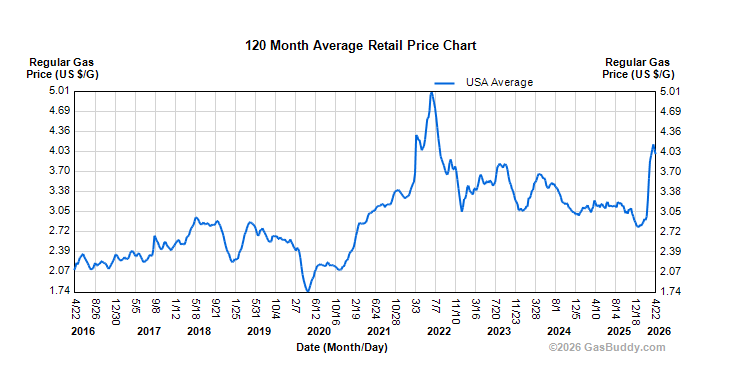
So, what was supposed to be short and sweet - Operation Epic Fury - went FUBAR. Allies edged away from the US. (The Financial Times: European Right is Pivoting Away from America). America’s financial picture darkened. (”I am certain we will spend $1 trillion for the Iran war,” says Linda Bilmes of the Harvard Kennedy School). The price of the world’s most vital single commodity - oil - rose 50%. (Average gasoline price is now over $4.)
And Iran remains much as it was before. More importantly, for POTUS...his polling numbers fell. The top priority of the Iranian leaders is survival. They suspect that the US would kill them if it is given the chance.

The top priority for Donald Trump, meanwhile, is the survival of Republican control of Congress. Otherwise, he will be impeached....his hopes for a Nobel Prize, or even a Medal of Honor, erased...his name taken from public buildings...his picture removed from recruiting offices...plans for a Triumphal Arch scrapped...and many of his friends and family put on trial for corruption.

At this stage, Republicans are probably making a mistake. The longer Trump stays in the captain’s chair...and the crazier and more inept he appears...the more likely the democrats are to win elections - both this year...and in ‘28. Wise Democrats might not want to ‘25th amendment his ass’ after all. We’re not offering political advice here, but a wise Trump, meanwhile, might welcome regime change and take a dive. Like Richard Nixon, he would step down - for health reasons - leaving Vance to take over, in exchange for a pardon.

For every action there is a reaction, and our guess is that the nation is weary of the Big Man’s bombast. A return to sober, sane ordinariness – even if it is mostly fraudulent - might give Republicans a fair shot of staying in power for ten more years...spare Trump from retribution…and allow the decline of the empire to continue, but at a slower, more dignified pace. Tomorrow, we will look at the alternative - how Democrats might come back...with a vengeance."

"Alert! Trump And Nuclear Codes? Shots Fired At Hormuz, US Attack Imminent, Oil Apocalypse"

Full screen recommended.
Canadian Prepper, 4/21/26
"Alert! Trump And Nuclear Codes? Shots Fired At Hormuz,
 US Attack Imminent, Oil Apocalypse"
Comments here:

Tuesday, April 21, 2026

Joel Bowman, "First Kiss, Last Bell"

"First Kiss, Last Bell"
by Joel Bowman

“Surely all mankind stands as a mere breath.”
~ Psalm 39:5

Buenos Aires, Argentina - "The inevitable A.I. takeover... a looming energy crisis... western civ on the brink... Ho hum. Ho hum. Dear readers will kindly forgive our melancholy disposition. It is with a heavy heart that we bring you today’s tidings...

On a blistering, late summer’s day, in what now seems like another lifetime, a nervous boy knelt on a worn pew in the primary school chapel, his stomach full of butterflies. From behind the altar, a solemn man in a purple stole preached of sin, repentance, redemption and other such matters beyond the boy’s comprehension. Confused and not a little unsettled, his young mind wandered from the father’s words, unable to avoid the immovable object looming in his immediate future.

Outside the stained glass window, set ajar to seduce a listless Lenten breeze, the crows and magpies cawed in the gnarled branches of the nearby melaleuca forest. The air in the chapel was still and dry, parched like the paperbarks. Distracted by the murder and the mischief, the boy thought of Ms. Zajczak, the short-tempered Polish teacher with the close cropped silver hair who, he had heard it whispered, arrived before class one morning armed with a shotgun, and calmly proceeded to blow the raspy birds clean out of the trees in a bloody massacre. Yet here they are, thought the boy, arguing and caw, caw, cawing, as is their nature.

The reverie afforded him little respite, for no sooner had the chatter and the clamor resumed when his mind turned once more to the impending lunch break and the true source of his anguish. It was not the ominous cawing, or the portentous sermonizing, or even old Zajczak’s shotgun that set the boy’s nerves on edge. Rather, as the reader has already guessed, it was a member of the fairer sex that worried him so.

Earlier that very morning, under the shade of a melaleuca copse on the lower field, beneath the cawing crows and the arguing magpies, he had made a terrible mistake. When confronted with the age-old schoolyard dilemma, he hastily chose dare over truth and, before he knew it, kissed a girl for the very first time. Worse still, by the time the recess bell tolled, through an unstoppable momentum belonging to some unwritten code of playground rules and etiquette, he and the girl were “going steady.”

The problem, glaring and conspicuous even to him: she was cool, funny, smart, and popular. He was... not. It was only a matter of time before everyone discovered this obvious, strangely overlooked fact. Then what?

Having failed to stay the momentum of the morning’s disaster, the boy understood the cold and pitiless nature of the task laid before him: preemptive breakup. And so, to his everlasting shame, he passed a note to his first kiss, asking her to meet him under the stairs directly after the lunch bell... where, without giving too much away, he mumbled through a half-prepared speech, the gist of which was that they were better off “just friends” after all. “Of course,” the girl responded, blinking her yellow-green eyes. “I was thinking the same.”

With an unsettling mixture of relief and guilt, the boy sat through afternoon classes, willing the last bell of the day to ring out over the incessant calling of the callous old crows.

The boy’s memory grows unreliable for the next few years as primary school turns into high school and college and the ensemble of classes and characters shifts before his aging eyes. Sometimes he sees the girl on the edge of a group, laughing at a joke he cannot hear, or parlaying a rumor he cannot quite recall. Other times he imagines that she left school altogether, maybe that same summer, moved away with her family, continued her life somewhere else, in some other town. Or maybe that was another friend, from another grade...

Some years later, not long after the boy had left his hometown and moved overseas, he ran into another childhood friend in a city far from home. Seated at the bar in a hotel lobby, the old playground compatriots talked for hours about their youth, summoning teachers and classmates to life, jogging one another’s memories with long forgotten anecdotes and water-cooler gossip.

When the girl’s name came up, the friend’s face turned from laughter to sorrow. “You didn’t hear?” she sighed, relaying the news to the boy even before the words came out. “She died in a motorcycle accident. That was, Geez... I dunno... That was years ago.”

The boy’s heart sank. Although he had not thought of the girl for a very long time, he occasionally recalled the days of his childhood, the smell of the wild flowers in the little school chapel, the taste of the eucalyptus drops from the school tuckshop, the sounds of the birds in the paperbark trees, down by the lower paddock. And sometimes, as when he ran into an old acquaintance, a long, long way from home, he remembered the girl, funny and cool, who agreed to be his friend.

Far from the crows, the melaleuca forest, and the days of his youth, and with no one close by to reminisce with, the boy’s connection to his childhood grew ever fainter as the years went by. Once or twice, when he ran into a friend abroad or visited family back home, he asked after the people from the neighborhood. Some had moved on. Others stayed. A few even taught at his old school, watching over the next generation, listening out for the same lunch bells.

Many years later (he cannot remember exactly when, or where), he ran into another friend and the pair fell into a familiar conversation. When the girl’s name came up, the boy, who was now a man with a wife and a young child of his own, felt the old pang of sorrow in his chest. “Oh, you heard that one, too?” his friend asked. “You know, that was just some silly rumor. Not sure where or how it started. But yeah, I swear. She’s alive and well. I see her little sister all the time...”

Overwhelmed, the boy recalled the girl’s face, resurrected, as it were, into the realm of the living. He thought of all the years he had falsely presumed her dead, more years – many more – than he had even known her alive. He felt an enormous, unexpected sense of relief, like a fresh breeze blowing in through the windows, an unburdening of his memory. He wanted to laugh, to celebrate this person’s life, ridiculous though that seemed. For in fact, he did not even know the girl, who after all was now a woman, in the slightest... save for the strange fact that she was suddenly alive.

For years afterward, whenever he ran into an old friend or found himself reminiscing about his childhood, he would quietly recall the girl who he thought had died so young, remembering all over again that she was, in fact, “alive and well.” He could not say why this brought him such joy. Perhaps it made the little boy inside him feel alive, too.

Then, this past weekend, the boy received a message from back home. The girl who once agreed to be his friend, once brought back to life, had passed away again. Cause uncertain, but verified. Now, what’s a little boy to do? R.I.P. ~ Joanna C. (1981-2026)"

Gerald Celente, "Truth Or Consequences? Trumpsh*t Or Bullsh*t?"

Strong Language Alert!
Gerald Celente, 4/21/26
"Truth Or Consequences? Trumpsh*t Or Bullsh*t?"
"The Trends Journal is a weekly magazine analyzing global current events forming future trends. Our mission is to present Facts and Truth over fear and propaganda to help subscribers prepare for What's Next in these increasingly turbulent times."
Comments here:

"Time To Stock Up On Food, The Supply Chain Crisis Could Start A Global Depression And Food Shortages"

Jeremiah Babe, 4/21/26
"Time To Stock Up On Food, The Supply Chain Crisis
 Could Start A Global Depression And Food Shortages"
Comments here:

"WW3 is Here: "We're in For Some Really Rough Times"

Full screen recommended.
Canadian Prepper, 4/21/26
"WW3 is Here:
 "We're in For Some Really Rough Times"
Comments here:

"Did Donald Trump Request Nuclear Codes For A Civilization-ending Strike Against Iran?"

"Did Donald Trump Request Nuclear Codes 
For A Civilization-ending Strike Against Iran?"
by Leo Hohmann

"President Donald Trump was said by a former CIA analyst to have requested a nuclear code during a heated exchange in a White House meeting with top national security aides on the night of Saturday, April 18. The original source of this report, Larry Johnson, appeared on an April 20 podcast hosted by former Fox News legal analyst Judge Andrew Napolitano. You can watch the video below in which Johnson made the claim (fast forward to the 4:35 mark).
Let me start by saying, this is a very serious allegation from a very serious person. Larry Johnson is not just any podcast schmuck whose claims can be summarily dismissed or ignored. He’s a former CIA analyst who later served as deputy director of the U.S. State Department’s Office of Counterterrorism from 1989 to 1993.

Two days after the fact, Johnson’s claim is still being talked about and passed around online. When a bombshell story the deep state doesn’t want out goes viral like that, a legacy media outlet can always be counted on to run an article saying it was baseless and false. Nothing to see here, move along.

Enter Newsweek. It posted a nearly 600-word article today, April 21, in which it quoted a “White House spokesperson” saying Johnson’s claim was false. As if any White House spokesperson would corroborate such a story even if it were true. If they had confirmed the story, I can guarantee you they’d have been fired immediately, and then crucified in the media to the extent that they’d never get another job in Washington as long as they lived.

Johnson should have cited his evidence for such a claim. I don’t like it when things are just thrown out there, with no citation. But who knows what types of consequences he faced if he had said anything more specific than what he said in that April 20 podcast.

Interestingly, Newsweek did confirm that a high-level meeting of Trump’s national security team did take place Saturday night at the White House. And the look on General Caine’s face as he exited did appear dire. But exactly what was discussed at the meeting and whether there was an intense moment over whether nukes should be used against Iran, we may never know. Or perhaps we will find out the truth about the April 18 meeting some years after Trump is out of office, or even deceased.

One thing specifically mentioned in the Newsweek article that I disagree with is that the military has no ability to stop a president from giving an order for a nuclear strike. While technically this is true, it’s the military that holds the cards and it’s the military that has to execute the president’s order, so if the military officers believe they are being given an illegal order, they absolutely have the right, and the duty, to disobey.

Remember, we are dealing with a president who just two weeks ago threatened to end an entire civilization, a threat that many took as a reference to nuclear annihilation. This same president’s mental capabilities have been widely called into question in recent days since that statement and other bizarre statements have come from Trump’s mouth and keyboard.

There was also a mainstream media report last week, from the generally pro-Trump Wall Street Journal, that Trump had to be physically removed from the White House situation room during the downed-pilot rescue mission over Iran on Good Friday. He “screamed at aides for hours” and was then “kept out of the room” while his team was given minute-by-minute updates, according to the WSJ report. Does this sound like a man who would hesitate to order a civilization-ending nuclear attack on a country and people that have frustrated his efforts to conquer them at every turn?

Again, I’m not saying this controversy happened. I wasn’t there. And the source of the story did not give verifiable details. All I am suggesting is that Newsweek is not a reliable source to investigate the validity of Johnson’s statement. But this much I do know: Larry Johnson is not known for spewing lies or outright fabrications. I’ve been watching him for years in interviews with Napolitano and others and found him to be an extremely reliable and credible source. If it comes down to his word against some anonymous White House staffer, it’s no contest as to who I would believe. And the fact that a major legacy (read lapdog) media outlet like Newsweek had to run cover for the deep state to “debunk” this story tells me it is more than likely true."

"Food Shortages & Price Increases, This Might Get Ugly"

Adventures With Danno, 4/21/26
"Food Shortages & Price Increases,
 This Might Get Ugly"
Comments here:

Musical Interlude: "Music of the Night: East of The Full Moon"

Full screen recommended.
Deuter, 
"Music of the Night: East of The Full Moon"

Beautiful...

"A Look to the Heavens"

"Why does this galaxy have such a long tail? In this stunning vista, based on image data from the Hubble Legacy Archive, distant galaxies form a dramatic backdrop for disrupted spiral galaxy Arp 188, the Tadpole Galaxy. The cosmic tadpole is a mere 420 million light-years distant toward the northern constellation of the Dragon (Draco). Its eye-catching tail is about 280 thousand light-years long and features massive, bright blue star clusters. 
One story goes that a more compact intruder galaxy crossed in front of Arp 188 - from right to left in this view - and was slung around behind the Tadpole by their gravitational attraction. During the close encounter, tidal forces drew out the spiral galaxy's stars, gas, and dust forming the spectacular tail. The intruder galaxy itself, estimated to lie about 300 thousand light-years behind the Tadpole, can be seen through foreground spiral arms at the upper right. Following its terrestrial namesake, the Tadpole Galaxy will likely lose its tail as it grows older, the tail's star clusters forming smaller satellites of the large spiral galaxy."

"Ex Obscurum, Adagio for Strings, Op. 11"

Full screen recommended.
"Ex Obscurum, Adagio for Strings, Op. 11"
"From emotional turmoil, hatred, and addiction the miracle of recovery begins in this Spadecaller Video entitled "Ex Obscurum" (From Darkness). Featuring original poetry narrated by the author and visual artist, Matthew Schwartz. Composer Samuel Barber's powerful musical score, adopted for the movie "Platoon", (Adagio for Strings) sets the background for this spiritual exodus "From Darkness."

"From Stardust to Sapiens: A Stunning Serenade to Our Cosmic Origins and Our Ongoing Self-Creation"

"From Stardust to Sapiens: A Stunning Serenade to 
Our Cosmic Origins and Our Ongoing Self-Creation"
By Maria Popova

"We were never promised any of it - this world of cottonwoods and clouds - when the Big Bang set the possible in motion. And yet here we are, atoms with consciousness, each of us a living improbability forged of chaos and dead stars. Children of chance, we have made ourselves into what we are - creatures who can see a universe of beauty in the feather of a bird and can turn a blind eye to each other’s suffering, creatures capable of the Benedictus and the bomb. Creatures who hope.

A generation after Maya Angelou held up a cosmic mirror to humanity with “A Brave and Startling Truth,” Pattiann Rogers - who writes with uncommon virtuosity about the intersection of the cosmic and the human, and whose poems have therefore been a frequent presence in "The Universe in Verse" - offers a poignant cosmogony of our self-creation in the stunning final poem of her book "Flickering" (public library).                                                            
Full screen recommended.
"Homo Sapiens: Creating Themselves"
by Pattiann Rogers, Read by Maria Popova

I.
"Formed in the black-light center of a star-circling
galaxy; formed in whirlpool images of froth
and flume and fulcrum; in the center image of herring
circling like pieces of silver swirling fast, a shoaling
circle of deception; in the whirlpool perfume of sex
in the deepest curve of a lily’s soft corolla. Created
within the images of the creator’s creation.

Born with the same grimacing wrench of a tree-covered
cliff split wide suddenly by lightning and opened
to thundering clouds of hail and rain.

Cured in the summer sun as if in a potter’s oven,
polished like a stone rolled by a river, emboldened
by the image of the expanse beyond earth’s horizon,
inside and outside a circumference in the image
of freedom.

Given the image of starlight clusters steadily silent
above a hillside-silence of fallen snow… let there be sleep.

II.
Inheriting from the earth’s scrambling minions,
images of thorn and bur, fang and claw, stealth,
deceit, poison, camouflage, blade, and blood…
let there be suffering, let there be survival.

Shaped by the image of the onset and unstoppable
devouring eclipse of the sun, the tempestuous, ecliptic
eating of the moon, the volcanic explosions of burning
rocks and fiery hail of ashes to death… let there be
terror and tears. Let there be pity.

Created in the image of fear inside a crawfish
skittering backward through a freshwater stream
with all eight appendages in perfect coordination,
both pincers held high, backing into safety beneath
a fallen leaf refuge… let there be home.

III.
Made in the image of the moon, where else
would the name of ivory rock craters shine
except in our eyes… let there be language.

Displayed in the image of the rotting seed
on the same stem with the swelling blossom…
let there be hope.

Homo sapiens creating themselves after the manner
and image of the creator’s ongoing creation — slowly,
eventual, alert and imagined, composing, dissembling,
until the right chord sounds from one brave strum
of the right strings reverberating, fading away
like evening… let there be pathos, let there be
compassion, forbearance, forgiveness. Let there be
weightless beauty.

Of earth and sky, Homo sapiens creating themselves,
following the mode and model of the creator’s creation,
particle by particle, quest by quest, witness by witness,
even though the unknown far away and the unknown
nearby be seen and not seen… let there be goodwill
and accounting, let there be praise resounding."

Complement with astronomer-poet Rebecca Elson’s ode to dark matter and the mystery of being, “Let There Always Be Light,” non-speaking autistic poet Hannah Emerson’s astonishing “Center of the Universe,” and Jane Hirshfield’s “To Be a Person,” then revisit Pattiann Rogers’s harmonic of the human and cosmic perspectives, read by David Byrne and illustrated by Maira Kalman."

"Obeisance to the 'Greater Good'"

"Obeisance to the 'Greater Good'"
by Jeff Thomas

"Most people in the West are familiar with the biblical story of Moses. In this tale, a spiritual leader, chosen by God, leads his people out of Egypt to the promised land. The Israelites are saved. God provides Moses with a list of commandments that they are to live by – pretty basic stuff: Don’t kill people, don’t steal or lie, don’t cheat on your spouse, etc. But interestingly, the second commandment exhorts the Israelites not to create false gods, nor to bow down to nor serve them. Unfortunately, when Moses was away, the Israelites did create a false god. They couldn’t resist the very human urge to have a visible deity that would hopefully provide them with good times, as long as they were willing to prostrate themselves before it.

And past eras are filled with such stories – naïve pagans sacrificing animals and humans to the deities in the hopes that they would provide rain, a good crop, healthy babies, freedom from inter-tribal aggression, etc. We can look upon otherwise-advanced cultures such as the Egyptians, the Romans, the Aztecs, etc., and shake our heads at their naivete. All of them created great ceremonies that involved blood sacrifices, in order to appease the deities. So, how are we doing? Have we banished paganism from the modern world?

Well, unfortunately, no. We may live in a more technological age, yet human nature remains the same. Those who are not highly focused within themselves have the perennial tendency to want to put their faith in some magical entity out there who will smile upon them and make all the bad things go away. But even more astonishing is the fact that, just as in days of yore, a majority of people are quite prepared to suspend logic in order to believe in such pagan deities.

A quick peek at the current religion of Climate Change reminds us of this. It began as "Global Cooling" but fell flat since a solar warm spell happened to occur just when the concept was introduced. It took the Global Cooling scammers over a decade to decide that they were on the wrong track, but when they did, they changed the name of the conceptual deity to "Global Warming," to match the existing weather conditions. But unfortunately, a cyclical solar cooling period was due to arrive and Global Warming failed to match the new weather conditions.

Time to give up and admit that a false deity had been imagined? Not at all. A further new name was given to the deity – Climate Change – that would encompass literally anything that happened in the weather. From that day forward, the prophets attributed every earthquake, every typhoon, every drought to the Climate Change deity. Every meteorological event therefore provided "proof" of man-made Climate Change.

And like the Pharisees of old, the Climate Change prophets proclaimed that the natural disasters were due to the sins of the population – that they were being punished by the deity… for driving SUVs and relying on coal for heating. And people bought it, as they always do. "The end of the world is nigh" has sold well for millennia. Paganism works every time.

And as any Climate Change activist will proclaim, "We must make sacrifices." The gods must be appeased and the prophets will always assure the tribe that a sacrificial offering is necessary to accomplish this. Thankfully, in this particular case, all that’s required to appease the god is to pay a carbon tax. It’s not clear how this will end Climate Change, but… have faith and pay. But Climate Change is a mere carnival sideshow in comparison to the main event.

Mankind has always had amongst its number those individuals (roughly four percent, according to studies) who are sociopathic, who are obsessive in their desire to control others, whilst having little or no emotional capacity to be concerned about the genuine welfare of the populace. In tribes, these individuals strive to rise to the top. In larger communities, they tend to form groups to provide leadership, and as any community grows large enough, sociopaths rise in prominence, to form and expand governments to rule their minions.

In every case, the larger a population becomes, the greater the opportunity to have power over them, since they can be taxed in order to fund the government. The greater their numbers, the greater the tax revenue. The greater the revenue, the greater the power of leaders to dominate the lesser mortals.

But along the way, some members of the hoi polloi may at times say, "Hang on a minute – why should we let the leaders dictate to us whilst they live off the fruits of our labor?" And invariably, neo-paganism is trotted out to fill its perennial role. The populace is reminded that, without obeisance on their part, there would be chaos and all would suffer. Therefore, all must sacrifice for the sake of "the common good."

The reader might recall Hillary Clinton commenting in 2004, "We’re going to take things away from you on behalf of the common good." Mrs. Clinton was very up-front about the intention of the State, echoing predecessors such as Karl Marx, Adolf Hitler, Josef Stalin and a host of Caesars.

Most all political leaders have the same intent, although they’re generally a bit more subtle in their language. (A veiled intent attracts a greater number of willing followers.) The result is also perennial: The tribe accepts a condition of increased taxation and regulation and thereby becomes increasingly enslaved and subservient to the leaders. After all – to refuse obeisance would be to endanger the common good – to invite chaos.

But how are we to know when we’ve reached this point of subjugation? At what point do we go beyond "willing contributors" and degenerate into "servants of the rulers?" Thomas Jefferson made this distinction, circa 1800. He said, "When the people fear their government, there is tyranny; when the government fears the people, there is liberty." When he and his cohorts formed the United States, their primary goal was to do away with obeisance to any government. At the close of the Constitutional Convention in 1787, Benjamin Franklin was asked by a delegate, "What have we got?" Mister Franklin replied, "A republic… if you can keep it." But the republic, as anticipated, devolved into a mere democracy, which then further eroded into a plutocracy/bureaucracy – rule by the very rich in the form of a central banking cartel, enforced through non-elected officialdom.

Obeisance to any "greater being" is regressive, whether that greater being is a deity or a government. Liberty is, by definition, the state of being free within society from oppressive restrictions imposed by authority on one’s behavior, views, or way of life."

"When the Soul Gives Up on Life"

The Silent Grace, 4/21/26
"When the Soul Gives Up on Life"
Comments here:

“Death twitches my ear; 'Live,' he says...'I am coming.” 
- Virgil

The Poet: Robert Bly, "Things to Think"

"Things to Think"

"Think in ways you've never thought before.
If the phone rings, think of it as carrying a message
Larger than anything you've ever heard,
Vaster than a hundred lines of Yeats.

Think that someone may bring a bear to your door,
Maybe wounded and deranged; or think that a moose
Has risen out of the lake, and he's carrying on his antlers
A child of your own whom you've never seen.

When someone knocks on the door,
Think that he's about
To give you something large: tell you you're forgiven,
Or that it's not necessary to work all the time,
Or that it's been decided that if you lie down no one will die."

- Robert Bly, “Morning Poems”