"Sitting with our sadness takes the courage to believe that we can bear the pain and we will come out the other side. The last thing most of us want to hear or think about when we are dealing with profound feelings of sadness is that deep learning can be found in this place. In the midst of our pain, we often feel picked on by life, or overwhelmed by the enormity of some loss, or simply too exhausted to try and examine the situation. We may feel far too disappointed and angry to look for anything resembling a bright side to our suffering. Still, somewhere in our hearts, we know that we will eventually emerge from the depths into the light of greater awareness. Remembering this truth, no matter how elusive it seems, can help.
The other thing we often would rather not hear when we are dealing with intense sadness is that the only way out of it is through it. Sitting with our sadness takes the courage to believe that we can bear the pain and the faith that we will come out the other side. With courage, we can allow ourselves to cycle through the grieving process with full inner permission to experience it. This is a powerful teaching that sadness has to offer us. - the ability to surrender and the acceptance of change go hand in hand.
Another teaching of sadness is compassion for others who are in pain, because it is only in feeling our own pain that we can really understand and allow for someone else’s. Sadness is something we all go through, and we all learn from it and are deepened by its presence in our lives. While our own individual experiences of sadness carry with them unique lessons, the implications of what we learn are universal. The wisdom we gain from going through the process of feeling loss, heartbreak, or deep disappointment gives us access to the heart of humanity."
"Those of us who pursue positive change are very often frustrated. We see the necessity of change all too clearly, and we can explain how it should come about, but it never seems to happen. The truth, however, is that change does come; it just comes more slowly than we’d like, and in ways that differ from those we imagined.
One real change I like to point out is the passing of blind trust in politicians. In the 1950s and ‘60s, most people spoke of politicians with respect and even with reverence. Now it’s almost standard for people to agree that they’re liars and thieves. That’s a very significant change, even if it did take several decades to unfold. So, a significant change has occurred in our time, and over a very broad base. Still, most people are hanging on, and often desperately, to old ways that should really be abandoned.
The Automatic Benefit of the Doubt: It’s a bit troubling to see how blindly, and for how long, people give the benefit of the doubt to hierarchy and its operators. They can know that a system is abusing them, and they can complain about it at length, but still they grasp at reasons to keep believing in it.
Here’s what I mean: During the bad spots of the Middle Ages, people would be abused by the clergy but say, “If only His Holiness knew!” During the reign of the USSR, people in the Gulag would often say, “If only Stalin knew!” In our time, people hold Political Party A or Political Party B as grave evils, while pretending that the combination of A + B is good and noble.
Still, such blind biases do eventually break. Stalin, after all, is gone, along with his USSR. The Protestant reformation broke the domination of the Church. And the delusions of our time will die as well.
“Still, I look to Find a Reason to Believe”: If there were such a competition, I’d nominate Rod Stewart’s song, "Reason To Believe," as the Anthem of the Age. Regardless of how badly they are abused, people have a very hard time letting go of their hierarchies; they’ve taken emotional refuge in them, after all. Even when sharp pain forces them to examine the hierarchy that constantly tells them, “Obey or we’ll hurt you,” the impulse to maintain belief erupts. Here’s how the song expresses it:
"If I listened long enough to you,
I’d find a way to believe that it’s all true.
Knowing that you lied,
straight-faced while I cried.
Still I look to find a reason to believe."
Humans have a real problem with that last line: looking for reasons to believe. It flies in the face of both logic and honesty, but people not only do it, but vigorously defend it. As for specific reasons to believe, they’re endless. Seldom are humans quicker and cleverer than when justifying their previous actions.
Why This Is a Good Sign: When people are desperately grasping for reasons to believe, it’s because the benefit of the doubt is cracking beneath them. Otherwise, why would they fight so wildly? The circumstances of our modern world are propelling people toward this break. Every time a ruling system tells gigantic lies, censors the public square, surveils their own people and frightens the masses for their own benefit, belief in their system cracks a little.
More and more people are conceding that it’s not just “one bad actor” here or there, but that Joe Stalin really is evil, that the clergy really is corrupt, and that hierarchies are abusive by nature. The whirlwind of distractions and slogans arrayed against moral clarity are losing their effectiveness. Little by little, humanity’s blind devotion to authority is cracking. Someday, it will break."
“This is your life, and it’s ending one minute at a time.”
– Fight Club
"Distractions. Blaise Pascal wrote about them in his book "Pensées," which is French and means “reflections” and is pronounced “Hamwich” because the French never properly figured out that sounds in words should be connected in some fashion to the letters used.
Pascal was a mathematician, a physicist, and invented the laptop computer, which was initially a plank of wood. In reality, he did some of the foundational work that showed that atmospheric pressure varied with altitude, even has a unit named after him. Pascal was also a philosopher, and thought a whole bunch about Christianity. This was back before the “let’s get a cappuccino and listen to Pastor Dave talk about why God wants lesbian ministers” type of church, and instead when there were debates on how salvation occurred and if free will was a thing.
Pascal wrote: “Distraction is the only thing that consoles us for our miseries. Yet, it is, itself, the greatest of our miseries.” And, although he’s dead, Pascal was entirely correct. We see it all around us right now.
Distraction is seductive. I remember we were on a family vacation and stopped at a Denny’s® to get breakfast. There was a line, and about 30 people (mainly families) were waiting. As I looked, every eye was focused on a phone – 30 people sitting next to each other, yet distracted by whatever it was that they were looking at. They had escaped reality, and also escaped talking to each other, almost as if they were addicted to the distractions coming to them over their iPhones®.
They did have bills. Their jobs sucked. Their immortal soul was in peril. But that’s difficult to think about, so it’s much easier to look at pretty colors and cat videos for ten seconds before flipping to the next infotainment bite. The distraction was total.
Is it any wonder that coping skills have been drastically impacted in the generation raised on the distraction of phones? Kids can’t cope because they’re never forced to confront themselves until the stakes are high. This creates a group of victims. I hate victims. A lot. They’re whiney and they suck every bit of energy out of the room, like psychic vampires. Oh, wait, I just described "The View." Huh.
Absolutely, there are people who are in situations that are far beyond their control. And, absolutely there are people who don’t deserve what fate has given them. However, when I look at people who have self-control, who have looked fate in the eye and said, “Yeah, so what? I’m still standing here, chump,” I feel admiration.
Neil Postman was a professor and writer, but then he died. Perhaps his best-known work is "Amusing Ourselves to Death," written in 1985. The Mrs. introduced me to it not long after we met, and I knew she was a keeper. In it, Postman talks about the impact of amusement. Amusement is close enough to distraction for our purposes and both Postman and Pascal are dead, so they can’t put up too much of a fight.
Again, Postman wrote about this in 1985, well before the every distraction, every place, all at once monster of the smartphone appeared. In it, Postman identified television as a drug. If so, it’s a gateway drug like aspirin, and the Internet is heroin.
It’s a world where, “Excuse me, I’m talking” becomes a replacement for actual thought and people thinking deeply about issues like old Pascal becomes rarer and rarer. A side effect is that the information we get becomes information we can’t take action on. Want to complain to your congressman? How would you even contact them? How would you get their attention? Hell, getting the attention of an HOA is nearly impossible in some subdivisions. Instead, you’ll complain to your neighbor.
Worse, though, is the impact that’s happening to our youth. The lesson that bad crap is going to happen to them so they need to learn deal with it simply isn’t taught because they just distract themselves away from the Truth they don’t want to consider. It’s not their fault – their brain is optimized to live in villages, and we distract them with the hardest hitting drug in history: the smartphone.
Failure is an option. And failure is a teacher, but when the teacher is fired and replaced with social media? The lesson is muted or ignored. How did Pascal manage to deal with being a religious philosopher, a mathematician, and a physicist? I guess Pascal was good at avoiding distraction and dealing with pressure."
"When Zimbabwe makes the news, it’s rarely for good reasons. There’s a good reason for that. The country has spent years in a state of perpetual crisis. Hyperinflation obliterated its currency and decimated the economy. Yet beneath the surface lies extraordinary wealth. Zimbabwe is rich in natural resources: gold, platinum, diamonds, and some of the most fertile farmland on Earth. That’s what led me to organize a research trip there about 10 years ago alongside legendary investor Doug Casey. We also sat down with Gideon Gono, the former head of the central bank, who made everyone "trillionaires."
From left to right: Nick Giambruno, Doug Casey, Gideon Gono
Gideon Gono was Zimbabwe’s central bank chief during the infamous hyperinflation of 2008–2009. His signature appears on the now-iconic 100-trillion-dollar Zimbabwe note—the highest denomination of any currency ever printed.
Today, that bill is completely worthless… except as a novelty or collector’s item. During our meeting, Gono recounted his impossible position as Zimbabwe’s central banker in the 2000s. The country was flat broke - and it needed to pay the army. In any country, failing to pay the military spells trouble. But in Africa, it almost guarantees a coup. So when the Zimbabwean government ordered Gono to print money to pay the army and its other bills, he obeyed. There was no alternative. He described it as "being in a car without gas," yet being ordered to drive from point A to point B. Everyone - Gono included - knew exactly where this was headed. You didn’t need to be a financial genius to understand that printing currency to fund soaring deficits would end in hyperinflation. And that’s exactly what happened.
The Gono episode lays bare the uncomfortable truth about central banks. Central banks were never truly "independent." It was always an illusion - a societal myth. They exist to siphon wealth from the public through inflation and funnel it to the politically connected. What Gono did is no different from what the Federal Reserve is doing right now. Just as the Zimbabwean central bank’s independence was always a sham, so too is the Federal Reserve’s. It’s a mirage - and it’s now fast disappearing.
Even establishment stalwarts like the Bank of England have explicitly recognized this. Here’s what they recently wrote: "Central bank operational independence underpins monetary and financial stability. A sudden or significant change in perceptions of Federal Reserve credibility could result in a sharp repricing of dollar assets, including US sovereign debt markets, with the potential for increased volatility, risk premia and global spillovers."
The Federal Reserve maintained its mirage of independence for over 110 years. But that’s changing as an increasingly imminent debt crisis forces the US government to fund itself more explicitly through the Fed’s printing presses. Trump is simply doing what any leader in his position would do. No one believes China’s central bank is independent of Xi. If any nation faced a similar situation, its central bank would fall in line with government demands for easy money.
What is happening in the US is not that different from what happened in Zimbabwe—or in any other country where government finances became desperate. They always turn to the central bank to print currency to help finance their spending. As the issuer of the world’s reserve currency and the most powerful government in the world, the US can extend the charade of solvency longer than any other entity on the planet. However, even the mightiest empires in human history couldn’t do so indefinitely - especially once they begin to struggle to service their debt.
One of the most potent and underappreciated forces responsible for the downfall of the most powerful empires throughout history has been debt. While military defeats, political upheavals, and external invasions often dominate historical accounts of the fall of great powers, excessive debt - the "Empire Killer" - has quietly but relentlessly eroded the foundations of empires across the centuries. From Rome to the Soviet Union, the over-extension of resources, poor financial management, and the inability to service massive debts have led to economic collapse, social unrest, and, ultimately, the demise of these once-mighty empires. The same pattern is playing out in the US right now.
In short, the US government cannot stop spending, which means deficits cannot stop growing, which means more debt must be issued, which means the government leans on the central bank to help ease the debt burden, which means the illusion of central bank independence evaporates. And once that happens, ever-increasing currency debasement becomes unstoppable. That’s where we are today. But it won’t end with just higher prices. Capital controls, people controls, price controls, tax hikes, wealth confiscations, and countless other destructive government interventions are all on the menu.
The Gideon Gono story isn’t just a Zimbabwean cautionary tale - it’s a clean, unvarnished look at what happens when a government hits the point of no return and the central bank’s "independence" gives way to political necessity. That same endgame is now advancing in the US, and when the "reset" phase arrives, the biggest losses will hit those who wait for official confirmation."
"After this week is over, there may be no turning back. President Trump is literally threatening to “obliterate” Iran’s power grid, and the Iranians cannot do a thing to prevent that from happening. But in response, the Iranians are threatening to destroy oil and gas infrastructure all over the Persian Gulf. The Iranians have already destroyed 17 percent of Qatar’s Ras Laffan natural gas complex, and if they destroy the remaining 83 percent of that facility it will immediately plunge us into the greatest natural gas crisis in human history by a very wide margin. There would be widespread natural gas shortages, fertilizer plants all over the world would be forced to shut down, and hunger would run rampant. Approximately 20 percent of the world’s entire supply of liquified natural gas comes from Ras Laffan, and it will take 3 to 5 years to rebuild the portions of the complex that have already been destroyed. If the rest of the complex gets destroyed by Iran, it will be a cataclysmic event. When I say that, I am not exaggerating one bit. We really have reached a moment in human history that could change everything.
It all depends on what Donald Trump does next. On Saturday, Trump gave the Iranians an ominous ultimatum. Either they fully open the Strait of Hormuz within 48 hours, or the U.S. military will destroy their power grid…
For reasons that I have discussed in previous articles, the Iranians are not going to give Donald Trump what he wants. It just isn’t going to happen.
Instead of giving in to Trump’s demands, the Iranians are threatening to attack energy infrastructure throughout the Persian Gulf, and they are pledging to completely close the Strait of Hormuz…"In a response to Trump’s statements, the Khatam al-Anbiya Central Headquarters, which is the central headquarters of the Iranian armed forces, said that it will fully close the Strait of Hormuz if “America’s threats regarding Iran’s power plants are implemented.” Iran also warned that it would start targeting “all power plants, energy infrastructure, and information technology,” while any company in the region with American shareholders would also become a target. Finally, Iran threatened to attack the power plants of any country in the region hosting American military bases.
“Everything is ready for a great jihad with the aim of completely destroying all economic interests of America in the Middle East,” the statement said. So what happens if the Iranians wipe out Qatar’s Ras Laffan natural gas complex and other extremely critical energy production facilities in other Gulf countries? What would Trump’s next move be then? Would he send in U.S. ground troops? CBS News is already reporting that U.S. officials have “made detailed preparations for deploying U.S. ground forces into Iran”…"Pentagon officials have made detailed preparations for deploying U.S. ground forces into Iran, multiple sources briefed on the discussions told CBS News. Senior military commanders have submitted specific requests aimed at preparing for such an option as President Trump weighs moves in the U.S.-Israel-led conflict with Iran, the sources said."
The most likely target for U.S. ground troops would be Kharg Island, and the Iranians are promising that we will “suffer losses that are unprecedented since World War II” if Trump tries to do that…"An Iranian military source warned that new U.S. strikes or an invasion of Kharg Island, a key Iranian oil export hub, could prompt Tehran to escalate by threatening nearby waterways, including the Red Sea and the Bab al-Mandab Strait, telling the Islamic Revolutionary Guard Corps (IRGC)-affiliated Tasnim News Agency the United States would face an “unprecedented” response. On a potential U.S. invasion of the island, the official warned that American troops would struggle to defend it and would “suffer losses that are unprecedented since World War II.”
How far up the escalation ladder are we willing to go? It sounds like Israel is ready to raise the stakes as well. The Iranians have been hitting Israeli population centers with cluster munitions, and Israeli Defense Minister Israel Katz is warning that if this continues his nation will “hit Iran so hard it will be sent back decades”…"Israeli Defense Minister Israel Katz said Israel would send Iran “back decades” if it continues targeting cities, accusing Tehran of deliberately firing on civilian population centers. “If this continues, we’ll be sure to hit Iran so hard it will be sent back decades,” Katz said while visiting the site of a missile strike in Arad that injured scores.
If the U.S. and Israel push Iran to the wall, will the Iranians unleash any unconventional weapons that they have been holding in reserve? In such a scenario, how would the U.S. and Israel react? We are only a couple of steps away from an apocalyptic scenario. Already, the damage that this war has done has set the global economy back for years.
The price of oil is causing major problems all over the globe, and experts are warning that we could eventually see it reach $200 a barrel…"Vandana Hari, founder of oil market analysis firm Vanda Insights, warned: “Benchmark Middle Eastern crudes like Oman and Dubai have already crossed the $150 threshold, so $200 is already within sight, even if not for Brent and West Texas Intermediate.” Analysts at consultancy Wood Mackenzie have also said Brent could soon hit $150 and that $200 oil is not “outside the realms of possibility” in 2026."
If this war stretches on for an extended period of time, the pain that we will experience is going to be immense. I am already hearing of diesel shortages in some parts of the world, and United Airlines has already canceled approximately 5 percent of this year’s planned flights…"United Airlines (UAL) CEO Scott Kirby said on Friday the airline will cancel about 5% of this year’s planned flights in the short term, as jet fuel prices surge due to the Middle East conflict. “If prices stayed at this level, it would mean an extra $11 billion in annual expense just for jet fuel,” Kirby said in a message to employees posted on its website.
Of course the natural gas crisis that we are facing could potentially be even worse. If this war lasts for a number of months, we could literally have to deal with “a full-blown economic emergency across Europe, the UK and large parts of Asia”…"Bank of America has warned European gas prices could surge from around €29 to as high as €500 this winter if the strait stays shut for an extended period, far exceeding levels seen after Russia’s invasion of Ukraine. Such a spike would trigger what analysts describe as a full-blown economic emergency across Europe, the UK and large parts of Asia, with energy costs spiralling and industries forced to cut back, The Telegraph reports."
Needless to say, natural gas is also a primary raw material that is used in the production of nitrogen fertilizer. Normally, close to a third of all fertilizer that is traded globally travels through the Strait of Hormuz…"About a third of all fertilizer shipped globally goes through the Strait of Hormuz, the narrow passage between the Persian Gulf and the Gulf of Oman. Now, shipping traffic has been reduced to a trickle because of the U.S.-Israeli war with Iran, and the prices of goods like oil, natural gas, and fertilizer have been rising. “Fertilizer prices are way up. They’re up around 30 percent more in some parts of the world, and that’s significant,” says Noah Gordon, fellow at the Carnegie Endowment for International Peace."
Gulf countries like Saudi Arabia, the United Arab Emirates, Kuwait and Iran are big global producers of fertilizer, and they export the raw ingredients other countries use to make their own fertilizers, like natural gas and minerals. But that is only part of the story. Because they are not able to get liquified natural gas from the Persian Gulf right now, fertilizer plants in other parts of the globe are being forced to close down…"The Carnegie Endowment noted fertilizer production in India, Bangladesh and Pakistan has shut down because those countries cannot get natural gas from Qatar, and Egypt, another producer, has had to turn to the more expensive LNG market because its supplies from Israel have been disrupted."
This is planting season for farmers all over the northern hemisphere. In many poorer countries, there simply won’t be enough fertilizer this year. In wealthier countries, fertilizer will be available, but it will cost far more than it usually does…"Tennessee farmer Todd Littleton expects to pay $100,000 more for fertilizer this season, a 40% spike from his bill last year thanks to the war in Iran - and he is scrambling to cover that extra cost.
“The problem is, is we’re so strained financially coming into this issue,” said Littleton, a third-generation farmer from Gibson County in the state’s northwest corner. “We have had a couple of record losses the last couple years, so everyone’s kind of grabbing at straws anyway, and then to have input prices increase yet again, it just really couldn’t happen at a worse time.”
Littleton, who grows corn, soybeans and wheat, is among thousands of farmers across the country who will pay far more this spring than they expected for fertilizer that is essential to their crops. Nitrogen-based fertilizer is especially vital for corn, usually the largest crop in the U.S. - and one that feeds the nation’s livestock and is converted into fuel that helps power most U.S. cars and trucks."
The crops that will be primarily affected by this fertilizer crisis will be those that are planted annually. This is such an important point. For example, nitrogen fertilizer is widely used by wheat farmers to maximize yield, improve grain quality, and promote healthy growth. A lack of fertilizer will mean that less wheat will be grown around the world in 2026 and prices will soar. Barley is another example of an annual crop that is heavily dependent on nitrogen fertilizer because it promotes leaf and stem development, significantly affecting both yield and crop quality. By the end of this year, barley prices are likely to be far higher than they are now.
On the other hand, crops that do not have to be planted annually will fare much better. Grape vines can live for 50 to 100 years, and they will just keep producing year after year. Olive trees commonly live for hundreds of years, and some can even survive for more than 1,000 years. Incredibly, there are examples of olive trees that have been around for more than a millennium that are still bearing fruit.
What I am saying is that annual crops like wheat and barley could be absolutely devastated by this current crisis, while crops that do not have to be planted annually such as grapes and olives will not experience much disruption. So much is going to depend on what happens this week. Decisions that are being made right now are going to deeply affect every single one of us, and so let us hope that our leaders make their decisions wisely."
"Iran’s Operation True Promise 4 continues with ferocity as Israel pays a heavy price for its leadership role in the US’s war as Trump’s ultimatum threatens to send the Gulf States into a crisis of epic proportions. Danny Haiphong breaks down Day 24 of the war on Iran changing the world."
"Diesel fuel prices are surging at an alarming rate, and this could have a devastating impact on the entire economy. In this breaking news update, we break down how rising diesel costs are affecting small businesses, supply chains, food prices, and everyday consumers. While many people focus on gas prices, diesel is the backbone of transportation, logistics, and production - meaning every product you buy is directly impacted. As inflation pressures return and budgets get tighter, this could be the beginning of a much larger financial crisis. Main Street America is already feeling the effects, with small business owners struggling to absorb rising costs and being forced to raise prices or shut down. From grocery stores to restaurants to shipping and manufacturing, the ripple effect of higher fuel costs is spreading fast. If diesel prices continue to climb, consumers can expect higher food prices, increased living expenses, and renewed inflation across the board. This is a critical economic warning sign that could impact your finances, your budget, and the overall stability of the U.S. economy."
"An Iranian Fattah-2 hypersonic missile struck a classified American command post in Kuwait. Twelve senior US military officers killed instantly. Two generals, four colonels, three lieutenant colonels, three majors. All dead in one strike. And the weapon that killed them cannot be stopped by any defense system America has deployed."
"The cost of living in America has reached a breaking point - and the numbers prove it. In this video, real Americans share what financial stress actually looks like in 2026. A household earning nearly $30,000 a month that still feels broke. An ER doctor making $2,600 every two weeks whose rent alone costs $2,200. People who are not buying luxuries. People who are just trying to survive.
Grocery prices are out of control. A family of four is spending $200 a week just to keep the fridge stocked. One woman walked out of CVS having spent $72 on four items - shampoo, conditioner, toilet paper, and a birthday card. Another spent nearly $70 at Walgreens on basic children's medication: Advil, Zyrtec, and vapor rub.
Here is what the data actually shows. A single American needs $4,686 a month just to cover basic necessities - rent, utilities, health insurance, transportation, and food. To earn that, you need to make $60,000 to $70,000 a year. The median income in the United States is $53,000. That gap is not shrinking. For millions living paycheck to paycheck, it is growing every single month.
Then there is gas. Prices have jumped nearly a dollar in just a few days, tied to the war threatening the Strait of Hormuz - the single passage through which roughly 20% of the world's oil supply moves. When that route is disrupted, oil prices rise. When oil prices rise, trucking costs rise, food distribution costs rise, and grocery prices follow. Americans are already panic buying fuel, which will push prices even higher. By summer, analysts are warning gas could hit $6 to $8 a gallon. This is the American financial crisis happening right now. Drop a comment and tell us how you are feeling it where you live."
"What created Devils Tower? The origin of this extraordinary rock monolith in Wyoming, USA is still debated, with a leading hypothesis holding that it is a hardened lava plume that never reached the surface to become a volcano. In this theory, the lighter rock that once surrounded the dense volcanic neck has now eroded away, leaving the dramatic tower.
Click image for larger size.
Known by Native Americans by names including Bear's Lodge and Great Gray Horn, the dense rock includes the longest hexagonal columns known, some over 180-meters tall. High above, the central band of the Milky Way galaxy arches across the sky. Many notable sky objects are visible, including dark strands of the Pipe Nebula and the reddish Lagoon Nebula to the tower's right. Green grass and trees line the foreground, while clouds appear near the horizon to the tower's left. Unlike many other international landmarks, mountaineers are permitted to climb Devils Tower."
"The early bird catches the worm. A stitch in time saves nine. He who hesitates is lost. We can’t pretend we haven’t been told. We’ve all heard the proverbs, heard the philosophers, heard our grandparents warning us about wasted time, heard the damn poets urging us to seize the day. Still, sometimes, we have to see for ourselves. We have to make our own mistakes. We have to learn our own lessons. We have to sweep today’s possibility under tomorrow’s rug, until we can’t anymore, until we finally understand for ourselves what Benjamin Franklin meant: That knowing is better than wondering. That waking is better than sleeping. And that even the biggest failure, even the worst, most intractable mistake, beats the hell out of never trying.”
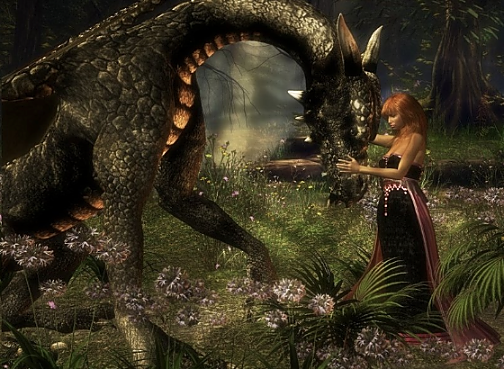
"Perhaps all the dragons in our lives are princesses who are
only waiting to see us act, just once, with beauty and courage.
Perhaps everything that frightens us is, in its deepest essence,
something helpless that wants our love. "
- Rainer Maria Rilke, "Letters to a Young Poet"
○
"The Restless Heart "
by Chet Raymo
"In "Letters to a Young Poet", Rainer Maria Rilke writes: "We should try to love the questions themselves, like locked rooms and like books that are written in a very foreign tongue." To which I would add, let us trust the gifts that nature has given us- curiosity, attention, reason- and if our personal lives are destined for oblivion, then know that we have made of ordinary things something grander and more enduring. We are the transformers. We are bestowers of praise. "Don't search for the answers, which could not be given to you now, because you would not be able to live them," Rilke advises the restless young poet, echoing the great Catholic mystics: "And the point is, to live everything. Live the questions now. Perhaps then, someday far in the future, you will gradually, without even noticing it, live your way into the answer."
Is it enough? In the long history of humanity, no hope has been so enduring as personal immortality. At every time and in every place men and women have assumed they will live forever. It is our solace, our balm for the restless heart. Even Neanderthals, it seems, placed flowers in the graves of their dead, presumably to grace the afterlife.
But the lesson of modern biology is clear: Death is final. Do we lapse then into morbidity? Do we rage, rage against the dying of the light? We have art. We have science. Even a rhyme can thumb its nose at death, says Seamus Heaney. We can each of us try to live our lives as poetry, to add to the world an element of graciousness that is not strictly necessary, to leave behind a spoor of rhymes that marks our passage on the Earth.
Yes, the spirit is flesh, but the spirit is more than flesh. The spirit is flesh in interaction with a universe of almost unimaginable grandeur and complexity. The windows of the flesh are thrown open to the world. The spirit is a wind of awareness, a pool stirred by angels."
Some part of the spirit will linger after the flesh is gone, as memories in other flesh, as words, music, science, rhymes- as a world nudged slightly in its pell-mell course towards good or bad. But the self is mortal: This is the existential fact that agitates the restless heart. "We are biological and our souls cannot fly free," writes Harvard biologist E. O. Wilson, summarizing what science has taught us about ourselves. He adds: "This is the essential first hypothesis for any consideration of the human condition."
“You go up to a man, and you say, “How are things going, Joe?” and he says, “Oh fine, fine... couldn’t be better.” And you look into his eyes, and you see things really couldn’t be much worse. When you get right down to it, everybody’s having a perfectly lousy time of it, and I mean everybody. And the hell of it is, nothing seems to help much.” - Kurt Vonnegut
"People are sad. People are broke. People are worried about money, people are worried that they're not enough and not amounting to anything and they don't feel good about themselves. People have rough times, and everybody's pretending it's not true, and we need to break that veneer." - Eve Ensler
Buenos Aires, Argentina - “Looks like you got back just in the nick of time!” remarked one friend, welcoming us home. “South is the only way to fly these days!” chimed another, with one wary eye on our northern neighbors. “Energy… food… water… and a long overdue measure of political sanity!” added a third, extolling a few of the virtues of our chosen home down here at the End of the World.
We’re back on Terra Argentea, dear reader, after a couple of months roaming the northern hemisphere… from Japan to the USA to Panama and back down the end of the Americas once more. It is from this distant southern clime we read this morning’s headlines… and the worsening situation whence we just escaped.
The latest, from AFP: "US, Iran Trade Threats To Target Infrastructure In Middle East. Iran threatened on Sunday to “irreversibly destroy” key infrastructure across the Middle East if US President Donald Trump follows through on his vow to “obliterate” the Islamic republic’s power plants unless the Strait of Hormuz swiftly reopens."
The tit-for-tat threats came as the war entered its fourth week and continued to reverberate across the Middle East, with alarm mounting over strikes around nuclear sites. Trump, under pressure over rising fuel prices, raised the stakes by announcing a countdown over Tehran’s de facto blockade of the vital Strait of Hormuz shipping route. Writing on Truth Social, Trump said the US would “hit and obliterate” Iranian power plants “starting with the biggest one first” if Tehran did not fully reopen the strait within 48 hours, or 23:44 GMT on Monday according to the time of his post.
Hmm… is this what is meant by “unintended consequences…” “higher-order events…” “unforeseen externalities…”? Call it what you will, dear reader… but when the words “obliteration,” “irreversible destruction” and “oil blockade” start popping up in headlines about the world’s key oil chokepoint, it’s generally not a positive sign for peace and prosperity...
Indeed, in the “fog of war,” cascading knock-on effects have a way of spiraling out of control. One day, Israel is striking Iran’s South Pars “super giant” gas field… the next Iran is bombing Qatar’s Ras Laffan (the world’s largest liquefied natural gas facility)… and before you know it, you’ve got an old-fashioned energy crunch on your hands!
And even if one could make a wish and imagine peace in the Middle East overnight, a scenario that looks less and less likely by the day, it’s not as though one simple flicks a switch and turns supply on again. Indeed, triple digit oil prices may be far stickier than expected. Wrote Goldman Sachs in a note to investors on Thursday: “The persistence of several prior large supply shocks underscores the risk that oil prices may stay above $100 for longer in risk scenarios with lengthier disruptions and large persistent supply losses.”
What does a world economy without access to cheap, reliable and abundant energy look like? Are we likely to see a global recession this year? (As of a couple of days ago, Moody’s had the odds at 49%.) Or worse? A depression? There will be lots to unpack and sort through over the coming weeks and months… and we’re happy to be doing so down here, far from the madding crowd."
"The great irony of the past 75 years of expanding consumption is the belief that all these decades of success prove the system is rock-solid and future success is thus guaranteed. The irony lies in the systemic fragility that's built into the large-scale industrial production that generates endless surpluses of energy, food, fresh water, etc. and the global financial system that delivers endless surpluses of capital and credit to be distributed by public authorities and private owners of capital.
The key driver of increasing efficiencies has been scaling up production by concentrating ownership and capacity into a few quasi-monopolies/cartels. In industry after industry, where there were once dozens of companies, there are now only a handful of behemoths with outsized market and political power which they wield to retain their dominance.
For example, where there were dozens of large regional banks in the U.S. not that long ago, relentless consolidation has led to a handful of supergiant too big to fail banks which can take extraordinary risks (and undertake criminal skims) knowing that the federal government will always bail them out and leave the banks' corporate criminals untouched.
Two of these too big to fail banks recently paid fines in the billions of dollars, yet no one went to prison or even faced criminal charges. This highlights the systemic problem with concentrating capital and power in the hands of the few: too big to fail means corporate wrongdoers have a permanent get out of jail free card while the small-fry white-collar criminal will get a fiver (five-year prison sentence) for skimming a tiny fraction of the billions routinely pillaged by the too big to fail banks.
The net result is a two-tier judicial/law enforcement system: the too big to fail "essential" companies get a free hand and the citizenry get whatever "justice" they can afford, i.e. very little.
This concentration of wealth and power in the hands of a few corporations is of course state-cartel socialism in which the public good has become subservient to the profits of corporate owners and insiders, and the skims paid to the state's insiders. The state enables and enforces this concentration of private wealth and power in a number of ways: regulatory capture, the polite bribery of lobbying, the revolving door between government and private industry, and so on.
The public good would best be served by competition and transparent markets and regulations, but these are precisely what's been eliminated by relentless consolidation and the paring down of the economic ecosystem to a handful of too big to fail nodes which work tirelessly to eliminate competition, transparency and meaningful public oversight.
This ruthless pursuit of efficiencies and profits has stripped the economy of redundancies and buffers. Production supply chains have been engineered to function in a narrow envelope of quality, quantity and time. Any disruption quickly leads to shortages, something that became visible when meatpacking plants were closed in the pandemic.
Supply chains are long and fragile, but this fragility is not visible as long as everything stays within the narrow envelope that's been optimized. Once the envelope is broken, the supply chain breaks down. Since redundancies and buffers have been stripped away, there are no alternatives available. Shortages mount and the entire system starts breaking down.
Quality has been stripped out as well. When markets become captive to cartels and monopolies, customers have to take what's available: if it's poor quality goods and services, tough luck, pal, there are no alternatives. There are only one or two service providers, healthcare insurers, etc., and they all provide the same minimal level of quality and service.
The moral rot in our social, political and economic orders is another source of hidden fragility. I'm constantly told by readers that corruption has been around forever, so therefore nothing has changed, but these readers are indulging in magical nostalgia: things have changed profoundly, and for the worse, as the moral rot has seeped into every nook and cranny of American life, from the top down.
There is no "public good," there is only a rapacious, obsessive self-interest that claims the mantle of "public good" as a key mechanism of the con.
As I discussed in "Everything is Staged", everyone and everything in America is now nothing more than a means to a self-interested end, and so the the entirety of American life is nothing but 100% marketing of various cons designed to enrich the few at the expense of the many. That America was a better place without endless marketing of Big Pharma meds and "vaccines", and colleges hyping their insanely costly "product" (a worthless diploma) has been largely forgotten by those indulging in magical nostalgia.
What few seem to realize is all the supposedly rock-solid permanent foundations of life are nothing more than fragile social constructs based on trust and legitimacy. Once trust and legitimacy have been lost, these constructs melt into the sands of time.
A great many things we take for granted are fragile constructs that could unravel with surprising speed: law enforcement, the courts, elections, the value of our currency -- these are all social constructs. Once legitimacy is lost, people abandon these constructs and they melt away. It's clear to anyone who isn't indulging in magical nostalgia that trust in institutions is in a steep decline as the legitimacy of these institutions, public and private, have been eroded by incompetence, corruption, dysfunction and the rapacious self-interest of insiders.
What we've gotten very good at is masking the rot and fragility. Masking the rot and fragility is not the same thing as strength or permanence. The nation is about to discover the difference in the years ahead."