StatCounter

Monday, March 23, 2026

"From Zimbabwe to Washington: The Farce of "Independent" Central Banks

"From Zimbabwe to Washington: 
The Farce of "Independent" Central Banks
by Nick Giambruno

"When Zimbabwe makes the news, it’s rarely for good reasons. There’s a good reason for that. The country has spent years in a state of perpetual crisis. Hyperinflation obliterated its currency and decimated the economy. Yet beneath the surface lies extraordinary wealth. Zimbabwe is rich in natural resources: gold, platinum, diamonds, and some of the most fertile farmland on Earth. That’s what led me to organize a research trip there about 10 years ago alongside legendary investor Doug Casey. We also sat down with Gideon Gono, the former head of the central bank, who made everyone "trillionaires."
From left to right: Nick Giambruno, Doug Casey, Gideon Gono

Gideon Gono was Zimbabwe’s central bank chief during the infamous hyperinflation of 2008–2009. His signature appears on the now-iconic 100-trillion-dollar Zimbabwe note—the highest denomination of any currency ever printed.
Today, that bill is completely worthless… except as a novelty or collector’s item. During our meeting, Gono recounted his impossible position as Zimbabwe’s central banker in the 2000s. The country was flat broke - and it needed to pay the army. In any country, failing to pay the military spells trouble. But in Africa, it almost guarantees a coup. So when the Zimbabwean government ordered Gono to print money to pay the army and its other bills, he obeyed. There was no alternative. He described it as "being in a car without gas," yet being ordered to drive from point A to point B. Everyone - Gono included - knew exactly where this was headed. You didn’t need to be a financial genius to understand that printing currency to fund soaring deficits would end in hyperinflation. And that’s exactly what happened.

The Gono episode lays bare the uncomfortable truth about central banks. Central banks were never truly "independent." It was always an illusion - a societal myth. They exist to siphon wealth from the public through inflation and funnel it to the politically connected. What Gono did is no different from what the Federal Reserve is doing right now. Just as the Zimbabwean central bank’s independence was always a sham, so too is the Federal Reserve’s. It’s a mirage - and it’s now fast disappearing.

Even establishment stalwarts like the Bank of England have explicitly recognized this. Here’s what they recently wrote: "Central bank operational independence underpins monetary and financial stability. A sudden or significant change in perceptions of Federal Reserve credibility could result in a sharp repricing of dollar assets, including US sovereign debt markets, with the potential for increased volatility, risk premia and global spillovers."

The Federal Reserve maintained its mirage of independence for over 110 years. But that’s changing as an increasingly imminent debt crisis forces the US government to fund itself more explicitly through the Fed’s printing presses. Trump is simply doing what any leader in his position would do. No one believes China’s central bank is independent of Xi. If any nation faced a similar situation, its central bank would fall in line with government demands for easy money.

What is happening in the US is not that different from what happened in Zimbabwe—or in any other country where government finances became desperate. They always turn to the central bank to print currency to help finance their spending. As the issuer of the world’s reserve currency and the most powerful government in the world, the US can extend the charade of solvency longer than any other entity on the planet. However, even the mightiest empires in human history couldn’t do so indefinitely - especially once they begin to struggle to service their debt.

One of the most potent and underappreciated forces responsible for the downfall of the most powerful empires throughout history has been debt. While military defeats, political upheavals, and external invasions often dominate historical accounts of the fall of great powers, excessive debt - the "Empire Killer" - has quietly but relentlessly eroded the foundations of empires across the centuries. From Rome to the Soviet Union, the over-extension of resources, poor financial management, and the inability to service massive debts have led to economic collapse, social unrest, and, ultimately, the demise of these once-mighty empires. The same pattern is playing out in the US right now.

In short, the US government cannot stop spending, which means deficits cannot stop growing, which means more debt must be issued, which means the government leans on the central bank to help ease the debt burden, which means the illusion of central bank independence evaporates. And once that happens, ever-increasing currency debasement becomes unstoppable. That’s where we are today. But it won’t end with just higher prices. Capital controls, people controls, price controls, tax hikes, wealth confiscations, and countless other destructive government interventions are all on the menu.

The Gideon Gono story isn’t just a Zimbabwean cautionary tale - it’s a clean, unvarnished look at what happens when a government hits the point of no return and the central bank’s "independence" gives way to political necessity. That same endgame is now advancing in the US, and when the "reset" phase arrives, the biggest losses will hit those who wait for official confirmation."

"Apocalypse Rising: We Have Reached A Moment In Human History That Could Change Everything"

by Michael Snyder

"After this week is over, there may be no turning back. President Trump is literally threatening to “obliterate” Iran’s power grid, and the Iranians cannot do a thing to prevent that from happening. But in response, the Iranians are threatening to destroy oil and gas infrastructure all over the Persian Gulf. The Iranians have already destroyed 17 percent of Qatar’s Ras Laffan natural gas complex, and if they destroy the remaining 83 percent of that facility it will immediately plunge us into the greatest natural gas crisis in human history by a very wide margin. There would be widespread natural gas shortages, fertilizer plants all over the world would be forced to shut down, and hunger would run rampant. Approximately 20 percent of the world’s entire supply of liquified natural gas comes from Ras Laffan, and it will take 3 to 5 years to rebuild the portions of the complex that have already been destroyed. If the rest of the complex gets destroyed by Iran, it will be a cataclysmic event. When I say that, I am not exaggerating one bit. We really have reached a moment in human history that could change everything.

It all depends on what Donald Trump does next. On Saturday, Trump gave the Iranians an ominous ultimatum. Either they fully open the Strait of Hormuz within 48 hours, or the U.S. military will destroy their power grid
For reasons that I have discussed in previous articles, the Iranians are not going to give Donald Trump what he wants. It just isn’t going to happen.

Instead of giving in to Trump’s demands, the Iranians are threatening to attack energy infrastructure throughout the Persian Gulf, and they are pledging to completely close the Strait of Hormuz…"In a response to Trump’s statements, the Khatam al-Anbiya Central Headquarters, which is the central headquarters of the Iranian armed forces, said that it will fully close the Strait of Hormuz if “America’s threats regarding Iran’s power plants are implemented.” Iran also warned that it would start targeting “all power plants, energy infrastructure, and information technology,” while any company in the region with American shareholders would also become a target. Finally, Iran threatened to attack the power plants of any country in the region hosting American military bases.

“Everything is ready for a great jihad with the aim of completely destroying all economic interests of America in the Middle East,” the statement said. So what happens if the Iranians wipe out Qatar’s Ras Laffan natural gas complex and other extremely critical energy production facilities in other Gulf countries? What would Trump’s next move be then? Would he send in U.S. ground troops? CBS News is already reporting that U.S. officials have “made detailed preparations for deploying U.S. ground forces into Iran”…"Pentagon officials have made detailed preparations for deploying U.S. ground forces into Iran, multiple sources briefed on the discussions told CBS News. Senior military commanders have submitted specific requests aimed at preparing for such an option as President Trump weighs moves in the U.S.-Israel-led conflict with Iran, the sources said."

The most likely target for U.S. ground troops would be Kharg Island, and the Iranians are promising that we will “suffer losses that are unprecedented since World War II” if Trump tries to do that…"An Iranian military source warned that new U.S. strikes or an invasion of Kharg Island, a key Iranian oil export hub, could prompt Tehran to escalate by threatening nearby waterways, including the Red Sea and the Bab al-Mandab Strait, telling the Islamic Revolutionary Guard Corps (IRGC)-affiliated Tasnim News Agency the United States would face an “unprecedented” response. On a potential U.S. invasion of the island, the official warned that American troops would struggle to defend it and would “suffer losses that are unprecedented since World War II.”

How far up the escalation ladder are we willing to go? It sounds like Israel is ready to raise the stakes as well. The Iranians have been hitting Israeli population centers with cluster munitions, and Israeli Defense Minister Israel Katz is warning that if this continues his nation will “hit Iran so hard it will be sent back decades”…"Israeli Defense Minister Israel Katz said Israel would send Iran “back decades” if it continues targeting cities, accusing Tehran of deliberately firing on civilian population centers. “If this continues, we’ll be sure to hit Iran so hard it will be sent back decades,” Katz said while visiting the site of a missile strike in Arad that injured scores.

If the U.S. and Israel push Iran to the wall, will the Iranians unleash any unconventional weapons that they have been holding in reserve? In such a scenario, how would the U.S. and Israel react? We are only a couple of steps away from an apocalyptic scenario. Already, the damage that this war has done has set the global economy back for years.

The price of oil is causing major problems all over the globe, and experts are warning that we could eventually see it reach $200 a barrel…"Vandana Hari, founder of oil market analysis firm Vanda Insights, warned: “Benchmark Middle Eastern crudes like Oman and Dubai have already crossed the $150 threshold, so $200 is already within sight, even if not for Brent and West Texas Intermediate.” Analysts at consultancy Wood Mackenzie have also said Brent could soon hit $150 and that $200 oil is not “outside the realms of possibility” in 2026."

If this war stretches on for an extended period of time, the pain that we will experience is going to be immense. I am already hearing of diesel shortages in some parts of the world, and United Airlines has already canceled approximately 5 percent of this year’s planned flights…"United Airlines (UAL) CEO Scott ‌Kirby said on ‌Friday the airline will cancel ​about 5% of this year’s planned flights in the short ‌term, as ⁠jet fuel prices surge due to ⁠the Middle East conflict. “If prices stayed ​at this ​level, ​it would mean ‌an extra $11 billion in annual expense just for jet fuel,” Kirby said in a ‌message to ​employees posted ​on ​its website.

Of course the natural gas crisis that we are facing could potentially be even worse. If this war lasts for a number of months, we could literally have to deal with “a full-blown economic emergency across Europe, the UK and large parts of Asia”…"Bank of America has warned European gas prices could surge from around €29 to as high as €500 this winter if the strait stays shut for an extended period, far exceeding levels seen after Russia’s invasion of Ukraine. Such a spike would trigger what analysts describe as a full-blown economic emergency across Europe, the UK and large parts of Asia, with energy costs spiralling and industries forced to cut back, The Telegraph reports."

Needless to say, natural gas is also a primary raw material that is used in the production of nitrogen fertilizer. Normally, close to a third of all fertilizer that is traded globally travels through the Strait of Hormuz…"About a third of all fertilizer shipped globally goes through the Strait of Hormuz, the narrow passage between the Persian Gulf and the Gulf of Oman. Now, shipping traffic has been reduced to a trickle because of the U.S.-Israeli war with Iran, and the prices of goods like oil, natural gas, and fertilizer have been rising. “Fertilizer prices are way up. They’re up around 30 percent more in some parts of the world, and that’s significant,” says Noah Gordon, fellow at the Carnegie Endowment for International Peace."

Gulf countries like Saudi Arabia, the United Arab Emirates, Kuwait and Iran are big global producers of fertilizer, and they export the raw ingredients other countries use to make their own fertilizers, like natural gas and minerals. But that is only part of the story. Because they are not able to get liquified natural gas from the Persian Gulf right now, fertilizer plants in other parts of the globe are being forced to close down…"The Carnegie Endowment noted fertilizer production in India, Bangladesh and Pakistan has shut down because those countries cannot get natural gas from Qatar, and Egypt, another producer, has had to turn to the more expensive LNG market because its supplies from Israel have been disrupted."

This is planting season for farmers all over the northern hemisphere. In many poorer countries, there simply won’t be enough fertilizer this year. In wealthier countries, fertilizer will be available, but it will cost far more than it usually does…"Tennessee farmer Todd Littleton expects to pay $100,000 more for fertilizer this season, a 40% spike from his bill last year thanks to the war in Iran - and he is scrambling to cover that extra cost.

“The problem is, is we’re so strained financially coming into this issue,” said Littleton, a third-generation farmer from Gibson County in the state’s northwest corner. “We have had a couple of record losses the last couple years, so everyone’s kind of grabbing at straws anyway, and then to have input prices increase yet again, it just really couldn’t happen at a worse time.”

Littleton, who grows corn, soybeans and wheat, is among thousands of farmers across the country who will pay far more this spring than they expected for fertilizer that is essential to their crops. Nitrogen-based fertilizer is especially vital for corn, usually the largest crop in the U.S. - and one that feeds the nation’s livestock and is converted into fuel that helps power most U.S. cars and trucks."

The crops that will be primarily affected by this fertilizer crisis will be those that are planted annually. This is such an important point. For example, nitrogen fertilizer is widely used by wheat farmers to maximize yield, improve grain quality, and promote healthy growth. A lack of fertilizer will mean that less wheat will be grown around the world in 2026 and prices will soar. Barley is another example of an annual crop that is heavily dependent on nitrogen fertilizer because it promotes leaf and stem development, significantly affecting both yield and crop quality. By the end of this year, barley prices are likely to be far higher than they are now.

On the other hand, crops that do not have to be planted annually will fare much better. Grape vines can live for 50 to 100 years, and they will just keep producing year after year. Olive trees commonly live for hundreds of years, and some can even survive for more than 1,000 years. Incredibly, there are examples of olive trees that have been around for more than a millennium that are still bearing fruit.

What I am saying is that annual crops like wheat and barley could be absolutely devastated by this current crisis, while crops that do not have to be planted annually such as grapes and olives will not experience much disruption. So much is going to depend on what happens this week. Decisions that are being made right now are going to deeply affect every single one of us, and so let us hope that our leaders make their decisions wisely."
o

"US-Israel-Iran War, 3/23/26"

Full screen recommended.
OPTM, 3/23/26
"Trump Panics As Iran Closes All Doors To 
Negotiation And Ceasefire; Trump Backs Down"
Comments here:
o
Full screen recommended.
Danny Haiphong, 3/23/26
"Iran’s Hypersonic Missiles Smash Israel, 
Trump Caves on Plant Strikes"
"Iran’s Operation True Promise 4 continues with ferocity as Israel pays a heavy price for its leadership role in the US’s war as Trump’s ultimatum threatens to send the Gulf States into a crisis of epic proportions. Danny Haiphong breaks down Day 24 of the war on Iran changing the world."
Comments here:
o
Dialogue Works, 3/23/26
Prof. Ted Postol:
 Israel’s Air Defense in Total Collapse"
Comments here:

Michael Bordenaro, "How the System Keeps People Stuck in Poverty"

Full screen recommended.
Michael Bordenaro, 3/23/26
"How the System Keeps People Stuck in Poverty"
Comments here:

"This Will Cripple the Economy - And It’s Happening Right Now!"

Full screen recommended.
Dan, I Allegedly, 3/23/26
"This Will Cripple the Economy - 
And It’s Happening Right Now!"
"Diesel fuel prices are surging at an alarming rate, and this could have a devastating impact on the entire economy. In this breaking news update, we break down how rising diesel costs are affecting small businesses, supply chains, food prices, and everyday consumers. While many people focus on gas prices, diesel is the backbone of transportation, logistics, and production - meaning every product you buy is directly impacted. As inflation pressures return and budgets get tighter, this could be the beginning of a much larger financial crisis. Main Street America is already feeling the effects, with small business owners struggling to absorb rising costs and being forced to raise prices or shut down. From grocery stores to restaurants to shipping and manufacturing, the ripple effect of higher fuel costs is spreading fast. If diesel prices continue to climb, consumers can expect higher food prices, increased living expenses, and renewed inflation across the board. This is a critical economic warning sign that could impact your finances, your budget, and the overall stability of the U.S. economy."
Comments here:

Sunday, March 22, 2026

"Gas Prices About to Skyrocket – Here's What's Coming"

Full screen recommended.
Snyder Reports, 3/22/26
"Gas Prices About to Skyrocket – 
Here's What's Coming"
Comments here:

"Israel is Over, 20,000 IDF Wiped Out As US Turns On Netanyahu"

Full screen recommended.
Alastair Crooke, 3/22/26
"Israel is Over, 20,000 IDF Wiped
 Out As US Turns On Netanyahu"
Comments here:

"Iran's Fattah-2: Twelve US Officers Killed in One Strike"

AlertSyncro, 3/22/26
"Iran's Fattah-2: 
Twelve US Officers Killed in One Strike"
"An Iranian Fattah-2 hypersonic missile struck a classified American command post in Kuwait. Twelve senior US military officers killed instantly. Two generals, four colonels, three lieutenant colonels, three majors. All dead in one strike. And the weapon that killed them cannot be stopped by any defense system America has deployed."
Comments here:

"The Harsh Reality Of Going Broke - People Will Work Until They Die"

Jeremiah Babe, 3/22/26
"The Harsh Reality Of Going Broke -
 People Will Work Until They Die"
Comments here:

"The Insane Cost of Living Is Crushing People"

Full screen recommended.
Epic Economist, 3/22/26
"The Insane Cost of Living Is Crushing People"

"The cost of living in America has reached a breaking point - and the numbers prove it. In this video, real Americans share what financial stress actually looks like in 2026. A household earning nearly $30,000 a month that still feels broke. An ER doctor making $2,600 every two weeks whose rent alone costs $2,200. People who are not buying luxuries. People who are just trying to survive.

Grocery prices are out of control. A family of four is spending $200 a week just to keep the fridge stocked. One woman walked out of CVS having spent $72 on four items - shampoo, conditioner, toilet paper, and a birthday card. Another spent nearly $70 at Walgreens on basic children's medication: Advil, Zyrtec, and vapor rub.

Here is what the data actually shows. A single American needs $4,686 a month just to cover basic necessities - rent, utilities, health insurance, transportation, and food. To earn that, you need to make $60,000 to $70,000 a year. The median income in the United States is $53,000. That gap is not shrinking. For millions living paycheck to paycheck, it is growing every single month.

Then there is gas. Prices have jumped nearly a dollar in just a few days, tied to the war threatening the Strait of Hormuz - the single passage through which roughly 20% of the world's oil supply moves. When that route is disrupted, oil prices rise. When oil prices rise, trucking costs rise, food distribution costs rise, and grocery prices follow. Americans are already panic buying fuel, which will push prices even higher. By summer, analysts are warning gas could hit $6 to $8 a gallon. This is the American financial crisis happening right now. Drop a comment and tell us how you are feeling it where you live."
Comments here:

Musical Interlude: Neil H, "Spellbound"

Neil H, "Spellbound"

"A Look to the Heavens"

"What created Devils Tower? The origin of this extraordinary rock monolith in Wyoming, USA is still debated, with a leading hypothesis holding that it is a hardened lava plume that never reached the surface to become a volcano. In this theory, the lighter rock that once surrounded the dense volcanic neck has now eroded away, leaving the dramatic tower.
Click image for larger size.
Known by Native Americans by names including Bear's Lodge and Great Gray Horn, the dense rock includes the longest hexagonal columns known, some over 180-meters tall. High above, the central band of the Milky Way galaxy arches across the sky. Many notable sky objects are visible, including dark strands of the Pipe Nebula and the reddish Lagoon Nebula to the tower's right. Green grass and trees line the foreground, while clouds appear near the horizon to the tower's left. Unlike many other international landmarks, mountaineers are permitted to climb Devils Tower."

"The Rules"


"We've All Heard..."

"The early bird catches the worm. A stitch in time saves nine. He who hesitates is lost. We can’t pretend we haven’t been told. We’ve all heard the proverbs, heard the philosophers, heard our grandparents warning us about wasted time, heard the damn poets urging us to seize the day. Still, sometimes, we have to see for ourselves. We have to make our own mistakes. We have to learn our own lessons. We have to sweep today’s possibility under tomorrow’s rug, until we can’t anymore, until we finally understand for ourselves what Benjamin Franklin meant: That knowing is better than wondering. That waking is better than sleeping. And that even the biggest failure, even the worst, most intractable mistake, beats the hell out of never trying.”
- “Meredith”, “Grey’s Anatomy”

Freely Download Or Read Online: Rainer Maria Rilke, "Letters to a Young Poet"

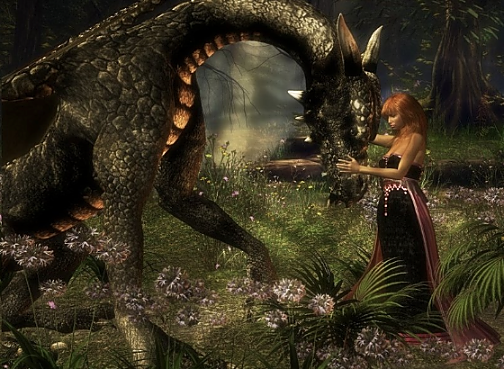
"Perhaps all the dragons in our lives are princesses who are 
only waiting to see us act, just once, with beauty and courage.
Perhaps everything that frightens us is, in its deepest essence,
something helpless that wants our love."
- Rainer Maria Rilke, "Letters to a Young Poet"
"The Restless Heart" 
by Chet Raymo

"In "Letters to a Young Poet", Rainer Maria Rilke writes: "We should try to love the questions themselves, like locked rooms and like books that are written in a very foreign tongue." To which I would add, let us trust the gifts that nature has given us- curiosity, attention, reason- and if our personal lives are destined for oblivion, then know that we have made of ordinary things something grander and more enduring. We are the transformers. We are bestowers of praise. "Don't search for the answers, which could not be given to you now, because you would not be able to live them," Rilke advises the restless young poet, echoing the great Catholic mystics: "And the point is, to live everything. Live the questions now. Perhaps then, someday far in the future, you will gradually, without even noticing it, live your way into the answer."

Is it enough? In the long history of humanity, no hope has been so enduring as personal immortality. At every time and in every place men and women have assumed they will live forever. It is our solace, our balm for the restless heart. Even Neanderthals, it seems, placed flowers in the graves of their dead, presumably to grace the afterlife.

But the lesson of modern biology is clear: Death is final. Do we lapse then into morbidity? Do we rage, rage against the dying of the light? We have art. We have science. Even a rhyme can thumb its nose at death, says Seamus Heaney. We can each of us try to live our lives as poetry, to add to the world an element of graciousness that is not strictly necessary, to leave behind a spoor of rhymes that marks our passage on the Earth.

Yes, the spirit is flesh, but the spirit is more than flesh. The spirit is flesh in interaction with a universe of almost unimaginable grandeur and complexity. The windows of the flesh are thrown open to the world. The spirit is a wind of awareness, a pool stirred by angels."

Some part of the spirit will linger after the flesh is gone, as memories in other flesh, as words, music, science, rhymes- as a world nudged slightly in its pell-mell course towards good or bad. But the self is mortal: This is the existential fact that agitates the restless heart. "We are biological and our souls cannot fly free," writes Harvard biologist E. O. Wilson, summarizing what science has taught us about ourselves. He adds: "This is the essential first hypothesis for any consideration of the human condition."
Freely read online or download "Letters to a Young Poet",
 by Rainer Maria Rilke, here:

"Everybody's Pretending..."

“You go up to a man, and you say, “How are things going, Joe?” and he says, “Oh fine, fine... couldn’t be better.” And you look into his eyes, and you see things really couldn’t be much worse. When you get right down to it, everybody’s having a perfectly lousy time of it, and I mean everybody. And the hell of it is, nothing seems to help much.” - Kurt Vonnegut

"People are sad. People are broke. People are worried about money, people are worried that they're not enough and not amounting to anything and they don't feel good about themselves. People have rough times, and everybody's pretending it's not true, and we need to break that veneer." - Eve Ensler

"Far From the Madding Crowd"


"Far From the Madding Crowd"
by Joel Bowman

Buenos Aires, Argentina -  “Looks like you got back just in the nick of time!” remarked one friend, welcoming us home. “South is the only way to fly these days!” chimed another, with one wary eye on our northern neighbors. “Energy… food… water… and a long overdue measure of political sanity!” added a third, extolling a few of the virtues of our chosen home down here at the End of the World.

We’re back on Terra Argentea, dear reader, after a couple of months roaming the northern hemisphere… from Japan to the USA to Panama and back down the end of the Americas once more. It is from this distant southern clime we read this morning’s headlines… and the worsening situation whence we just escaped.

The latest, from AFP: "US, Iran Trade Threats To Target Infrastructure In Middle East. Iran threatened on Sunday to “irreversibly destroy” key infrastructure across the Middle East if US President Donald Trump follows through on his vow to “obliterate” the Islamic republic’s power plants unless the Strait of Hormuz swiftly reopens."

The tit-for-tat threats came as the war entered its fourth week and continued to reverberate across the Middle East, with alarm mounting over strikes around nuclear sites. Trump, under pressure over rising fuel prices, raised the stakes by announcing a countdown over Tehran’s de facto blockade of the vital Strait of Hormuz shipping route. Writing on Truth Social, Trump said the US would “hit and obliterate” Iranian power plants “starting with the biggest one first” if Tehran did not fully reopen the strait within 48 hours, or 23:44 GMT on Monday according to the time of his post.

Hmm… is this what is meant by “unintended consequences…” “higher-order events…” “unforeseen externalities…”? Call it what you will, dear reader… but when the words “obliteration,” “irreversible destruction” and “oil blockade” start popping up in headlines about the world’s key oil chokepoint, it’s generally not a positive sign for peace and prosperity...

Indeed, in the “fog of war,” cascading knock-on effects have a way of spiraling out of control. One day, Israel is striking Iran’s South Pars “super giant” gas field… the next Iran is bombing Qatar’s Ras Laffan (the world’s largest liquefied natural gas facility)… and before you know it, you’ve got an old-fashioned energy crunch on your hands!

And even if one could make a wish and imagine peace in the Middle East overnight, a scenario that looks less and less likely by the day, it’s not as though one simple flicks a switch and turns supply on again. Indeed, triple digit oil prices may be far stickier than expected. Wrote Goldman Sachs in a note to investors on Thursday: “The persistence of several prior large supply shocks underscores the risk that oil prices may stay above $100 for longer in risk scenarios with lengthier disruptions and large persistent supply losses.”

What does a world economy without access to cheap, reliable and abundant energy look like? Are we likely to see a global recession this year? (As of a couple of days ago, Moody’s had the odds at 49%.) Or worse? A depression? There will be lots to unpack and sort through over the coming weeks and months… and we’re happy to be doing so down here, far from the madding crowd."

The Daily "Near You?"

Port Dover, Ontario, Canada. Thanks for stopping by!

"Everything We Assume Is Permanent Is Actually Fragile"

"Everything We Assume Is
 Permanent Is Actually Fragile"
by Charles Hugh Smith

"The great irony of the past 75 years of expanding consumption is the belief that all these decades of success prove the system is rock-solid and future success is thus guaranteed. The irony lies in the systemic fragility that's built into the large-scale industrial production that generates endless surpluses of energy, food, fresh water, etc. and the global financial system that delivers endless surpluses of capital and credit to be distributed by public authorities and private owners of capital.

The key driver of increasing efficiencies has been scaling up production by concentrating ownership and capacity into a few quasi-monopolies/cartels. In industry after industry, where there were once dozens of companies, there are now only a handful of behemoths with outsized market and political power which they wield to retain their dominance.

For example, where there were dozens of large regional banks in the U.S. not that long ago, relentless consolidation has led to a handful of supergiant too big to fail banks which can take extraordinary risks (and undertake criminal skims) knowing that the federal government will always bail them out and leave the banks' corporate criminals untouched.

Two of these too big to fail banks recently paid fines in the billions of dollars, yet no one went to prison or even faced criminal charges. This highlights the systemic problem with concentrating capital and power in the hands of the few: too big to fail means corporate wrongdoers have a permanent get out of jail free card while the small-fry white-collar criminal will get a fiver (five-year prison sentence) for skimming a tiny fraction of the billions routinely pillaged by the too big to fail banks.

The net result is a two-tier judicial/law enforcement system: the too big to fail "essential" companies get a free hand and the citizenry get whatever "justice" they can afford, i.e. very little.

This concentration of wealth and power in the hands of a few corporations is of course state-cartel socialism in which the public good has become subservient to the profits of corporate owners and insiders, and the skims paid to the state's insiders. The state enables and enforces this concentration of private wealth and power in a number of ways: regulatory capture, the polite bribery of lobbying, the revolving door between government and private industry, and so on.

The public good would best be served by competition and transparent markets and regulations, but these are precisely what's been eliminated by relentless consolidation and the paring down of the economic ecosystem to a handful of too big to fail nodes which work tirelessly to eliminate competition, transparency and meaningful public oversight.

This ruthless pursuit of efficiencies and profits has stripped the economy of redundancies and buffers. Production supply chains have been engineered to function in a narrow envelope of quality, quantity and time. Any disruption quickly leads to shortages, something that became visible when meatpacking plants were closed in the pandemic.

Supply chains are long and fragile, but this fragility is not visible as long as everything stays within the narrow envelope that's been optimized. Once the envelope is broken, the supply chain breaks down. Since redundancies and buffers have been stripped away, there are no alternatives available. Shortages mount and the entire system starts breaking down.

Quality has been stripped out as well. When markets become captive to cartels and monopolies, customers have to take what's available: if it's poor quality goods and services, tough luck, pal, there are no alternatives. There are only one or two service providers, healthcare insurers, etc., and they all provide the same minimal level of quality and service.

The moral rot in our social, political and economic orders is another source of hidden fragility. I'm constantly told by readers that corruption has been around forever, so therefore nothing has changed, but these readers are indulging in magical nostalgia: things have changed profoundly, and for the worse, as the moral rot has seeped into every nook and cranny of American life, from the top down.

There is no "public good," there is only a rapacious, obsessive self-interest that claims the mantle of "public good" as a key mechanism of the con.

As I discussed in "Everything is Staged", everyone and everything in America is now nothing more than a means to a self-interested end, and so the the entirety of American life is nothing but 100% marketing of various cons designed to enrich the few at the expense of the many. That America was a better place without endless marketing of Big Pharma meds and "vaccines", and colleges hyping their insanely costly "product" (a worthless diploma) has been largely forgotten by those indulging in magical nostalgia.

What few seem to realize is all the supposedly rock-solid permanent foundations of life are nothing more than fragile social constructs based on trust and legitimacy. Once trust and legitimacy have been lost, these constructs melt into the sands of time.

A great many things we take for granted are fragile constructs that could unravel with surprising speed: law enforcement, the courts, elections, the value of our currency -- these are all social constructs. Once legitimacy is lost, people abandon these constructs and they melt away. It's clear to anyone who isn't indulging in magical nostalgia that trust in institutions is in a steep decline as the legitimacy of these institutions, public and private, have been eroded by incompetence, corruption, dysfunction and the rapacious self-interest of insiders.

What we've gotten very good at is masking the rot and fragility. Masking the rot and fragility is not the same thing as strength or permanence. The nation is about to discover the difference in the years ahead."

"Leaving the Earth a Better Place"

“How is one to live a moral and compassionate existence when one is fully aware of the blood, the horror inherent in life, when one finds darkness not only in one’s culture but within oneself? If there is a stage at which an individual life becomes truly adult, it must be when one grasps the irony in its unfolding and accepts responsibility for a life lived in the midst of such paradox. One must live in the middle of contradiction, because if all contradiction were eliminated at once life would collapse. There are simply no answers to some of the great pressing questions. You continue to live them out, making your life a worthy expression of leaning into the light.”
- Barry Lopez
"Leaving the Earth a Better Place:
A Legacy of Love"
by Madisyn Taylor, The DailyOM

"It is a great act of love to leave the earth a better place when we leave than which we found her. We inherit this great planet from our parents and from the generations that came before. Then, in concert with the surrounding culture, our elders teach us how to care for the land and the sea, ourselves and each other. They model ways of being in relationship with every other expression of life on earth. But whether they act with care or carelessness, compassion or cruelty, generosity or greed, we have the ability to choose our own individual way of relating with the planet and her inhabitants. From our first breath here to our very last, we will find infinite opportunities to influence our environment for the better. We can decide now to act with intention in order to leave this amazing planet brighter and more beautiful than when we arrived.

If we enjoy environmental activism, we might feel moved to clean up beaches or to plant trees. But, we need not feel limited in our ability to contribute positively. There are many ways to leave a legacy of love. We might begin by radiating affirmative thoughts and feelings about how magnificent the earth truly is. We might create and tend a special garden, one that provides an abundance of food and herbs for ourselves and our loved ones. Or we might create a garden filled with sweet smelling flowers to uplift our hearts. We might even honor the earth simply by trying to be the best person we can be while we are here. Such good will can have a domino effect, inspiring others to contribute in their own way as well.

We spend our lifetimes being nourished and enlivened by the rain, sun, soil and wind. Our experience is blessed by other living beings, from plants to insects to birds and humans. We receive so much; giving back just naturally feels good. When we live our lives with intention of leaving this temporary home a better place for generations to come, we are perhaps leaving behind the best gift of all."

The Poet: Theodore Roethke, “The Geranium”

“The Geranium”

“When I put her out, once, by the garbage pail,
She looked so limp and bedraggled,
So foolish and trusting, like a sick poodle,
Or a wizened aster in late September,
I brought her back in again
For a new routine -
Vitamins, water, and whatever
Sustenance seemed sensible
At the time: she’d lived
So long on gin, bobbie pins, half-smoked cigars, dead beer,
Her shriveled petals falling
On the faded carpet, the stale
Steak grease stuck to her fuzzy leaves.
(Dried-out, she creaked like a tulip.)
The things she endured!
The dumb dames shrieking half the night
Or the two of us, alone, both seedy,
Me breathing booze at her,
She leaning out of her pot toward the window.
Near the end, she seemed almost to hear me -
And that was scary -
So when that snuffling cretin of a maid
Threw her, pot and all, into the trash-can,
I said nothing.
But I sacked the presumptuous hag the next week,
I was that lonely.”

- Theodore Roethke

"Life Comes At You Fast, So You Better Be Ready"

"Life Comes At You Fast, So You Better Be Ready"
by Ryan Holiday

"In 1880, Theodore Roosevelt wrote to his brother, “My happiness is so great that it makes me almost afraid.” In October of that year, life got even better. As he wrote in his diary the night of his wedding to Alice Hathaway Lee, “Our intense happiness is too sacred to be written about.” He would consider it to be one of the best years of his life: he got married, wrote a book, attended law school, and won his first election for public office.

The streak continued. In 1883, he wrote “I can imagine nothing more happy in life than an evening spent in the cozy little sitting room, before a bright fire of soft coal, my books all around me, and playing backgammon with my own dainty mistress.” And that’s how he and Alice spent that cold winter as it crawled into the new year. He wrote in late January that he felt he was fully coming into his own. “I feel now as though I have the reins in my hand.” On February 12th, 1884 his first daughter was born.

Two days later, his wife would be dead of Bright’s disease (now known as kidney failure). His mother had died only hours earlier in the same house, of typhoid fever. Roosevelt marked the day in his diary with a large “X.” Next to it, he wrote, “The light has gone out of my life.”

As they say, life comes at you fast. Have the last 12 months not been an example of that? In December of 2019, the Dow was at 28,701.66. Things were good enough that people were complaining about the “war on Christmas” and debating the skin color of Santa Claus. In January, the Dow was at 29,348.10 and people were outraged about the recent Oscar nominations. In February 2020, when the Dow reached a staggering 29,568.57, Delta Airlines stock fell nearly 25% in less than a week, as people argued intensely over a message from Delta’s CEO about passengers reclining their seats. Even in early March, there were news stories about Wendy’s entering the “breakfast wars” and a free stock-trading app outage that caused people to miss a big market rally.

And that was just in the news. Think about what you busied yourself with at home during that same period. Maybe you and your wife were looking at plans to remodel your kitchen. Maybe you were finally going to pull the trigger on that Tesla Model S for yourself - the $150,000 one, with the ludicrous speed package. Maybe you were fuming that Amazon took an extra day to deliver a package. Maybe you were frustrated that your kid’s room was a mess. And now? How quaint and stupid does that all seem? The global economy has essentially ground to a halt.

Life comes at us fast, don’t it? It can change in an instant. Everything you built, everyone you hold dear, can be taken from you. For absolutely no reason. Just as easily, you can be taken from them. This is why the Stoics say we need to be prepared, constantly, for the twists and turns of Fortune. It’s why Seneca said that nothing happens to the wise man contrary to his expectation, because the wise man has considered every possibility-even the cruel and heartbreaking ones.

And yet even Seneca was blindsided by a health scare in his early twenties that forced him to spend nearly a decade in Egypt to recover. He lost his father less than a year before he lost his first-born son, and twenty days after burying his son he was exiled by the emperor Caligula. He lived through the destruction of one city by a fire and another by an earthquake, before being exiled two more times.

One needs only to read his letters and essays, written on a rock off the coast of Italy, to get a sense that even a philosopher can get knocked on their ass and feel sorry for themselves from time to time.

What do we do? Well, first, knowing that life comes at us fast, we should be always prepared. Seneca wrote that the fighter who has “seen his own blood, who has felt his teeth rattle beneath his opponent’s fist… who has been downed in body but not in spirit…” - only they can go into the ring confident of their chances of winning. They know they can take getting bloodied and bruised. They know what the darkness before the proverbial dawn feels like. They have a true and accurate sense for the rhythms of a fight and what winning requires. That sense only comes from getting knocked around. That sense is only possible because of their training.

In his own life, Seneca bloodied and bruised himself through a practice called premeditatio malorum (“the premeditation of evils”). Rehearsing his plans, say to take a trip, he would go over the things that could go wrong or prevent the trip from happening - a storm could spring up, the captain could fall ill, the ship could be attacked by pirates, he could be banished to the island of Corsica the morning of the trip. By doing what he called a premeditatio malorum, Seneca was always prepared for disruption and always working that disruption into his plans. He was fitted for defeat or victory. He stepped into the ring confident he could take any blow. Nothing happened contrary to his expectations.

Second, we should always be careful not to tempt fate. In 2016 General Michael Flynn stood on the stage at the Republican National Convention and led some 20,000 people (and a good many more at home) in an impromptu chant of “Lock Her Up! Lock Her Up!” about his enemy Hillary Clinton. When Trump won, he was swept into office in a whirlwind of success and power. Then, just 24 days into his new job, Flynn was fired for lying to the Vice President about conversations he’d had with Sergey Kislyak, the Russian ambassador to the United States. He would be brought up on charges and convicted of lying to the FBI, and eventually pardoned by President Trump.

Life comes at us fast… but that doesn’t mean we should be stupid. We also shouldn’t be arrogant.

Third, we have to hang on. Remember, that in the depths of both of Seneca’s darkest moments, he was unexpectedly saved. From exile, he was suddenly recalled to be the emperor’s tutor. In the words of the historian Richard M. Gummere, “Fortune, whom Seneca as a Stoic often ridicules, came to his rescue.” But Churchill, as always, put it better: “Sometimes when Fortune scowls most spitefully, she is preparing her most dazzling gifts.”

Life is like this. It gives us bad breaks - heartbreakingly bad breaks - and it also gives us incredible lucky breaks. Sometimes the ball that should have gone in, bounces out. Sometimes the ball that had no business going in surprises both the athlete and the crowd when it eventually, after several bounces, somehow manages to pass through the net.

When we’re going through a bad break, we should never forget Fortune’s power to redeem us. When we’re walking through the roses, we should never forget how easily the thorns can tear us upon, how quickly we can be humbled. Sometimes life goes your way, sometimes it doesn’t.

This is what Theodore Roosevelt learned, too. Despite what he wrote in his diary that day in 1884, the light did not completely go out of Roosevelt’s life. Sure, it flickered. It looked like the flame might have been cruelly extinguished. But with time and incredible energy and force of will, he came back from those tragedies. He became a great father, a great husband, and a great leader. He came back and the world was better for it. He was better for it.

Life comes at us fast. Today. Tomorrow. When we least expect it. Be ready. Be strong. Don’t let your light be snuffed out."

"How It Really Is"


"U.S. National Debt Clock, Real Time"

"Americans Know Something Big Is Coming and They're Getting Ready"

Full screen recommended.
A Homestead Journey, 3/22/23
"Americans Know Something Big
 Is Coming and They're Getting Ready"
Comments here:

Adventures With Danno, "Doomsday Prepping At Costco!"

Full screen recommended.
Adventures With Danno, 3/22/23
"Doomsday Prepping At Costco!"
Comments here:
o
Full screen recommended.
Economic News Ninja, 3/22/26
"Panic At Costco As Gas Prices Rise"
Comments here:

Dan, I Allegedly, "Grants for Your Business AndYour Bills - Here's the Full List"

Full screen recommended.
Dan, I Allegedly, 3/22/26
"Grants for Your Business AndYour Bills - 
Here's the Full List"
"Millions of Americans are struggling with rising bills, expensive utilities, and the high cost of starting or running a business - but what most people don’t realize is that free grant money is still widely available right now. In this video, I break down how to find grants for your business, grants to help pay your bills, and local programs that can provide real financial assistance. From programs offering $5,000 to $50,000 for small businesses to resources that can help cover utilities, rent, internet, and even medical expenses - these opportunities are out there if you know where to look. I also walk you through exactly how to search for grants in your city and state, including overlooked programs like 211 services, local redevelopment initiatives, and private grant opportunities. Thousands of people have already signed up for my Free Grant Guide, and many are seeing real results - from paid utility bills to funding for their businesses."
 Don’t miss out on money that is already set aside to help
 people - take action today and get access to the guide here: 

Comments here:

"Something Is Wrong With American Food… And You Can Feel It Every Day"

Full screen recommended.
The Unfolded States, 3/22/26
"Something Is Wrong With American Food… 
And You Can Feel It Every Day"
"Something about the food you eat every day has changed. Energy drops faster, hunger comes back sooner, and digestion feels less predictable. This video breaks down what’s actually happening inside the modern American food system, from production and processing to how food is designed and consumed. Using data from sources like the CDC, USDA, and peer-reviewed research, we look at how ultra processed food, large-scale agriculture, and supply chain optimization have reshaped what ends up on your plate. The goal is not to blame individuals, but to understand how the system itself has evolved over time. Once you see how these changes connect, many everyday symptoms start to make more sense. Not as isolated problems, but as patterns shaped by the environment you’re eating in."
Comments here:

""US-Israel-Iran War, 3/22/26""

Full screen recommended.
OPTM, 3/22/26
"Trump Panics As Netanyahu Begs For Ceasefire 
After Iran Damages 13 Refuelling Aircraft"
Comments here:
o
Danny Haiphong, 3/22/26
"Iran HITS Israel’s Dimona Nuke Site, 
Trump’s 48-Hour Power Plant Threat Collapses"
Comments here:
o
Full screen recommended.
Gerald Celente, 3/22/26
"Marandi Responds To Trump's 48-Hour Ultimatum To Iran"
"President Donald Trump posted late Saturday that the U.S. would "obliterate" Iran's power plants if it does not open the Strait of Hormuz. Professor Mohammad Marandi responded to the threat and said Iran's position remains "steadfast." The Trends Journal is a weekly magazine analyzing global current events forming future trends. Our mission is to present Facts and Truth over fear and propaganda to help subscribers prepare for What's Next in these increasingly turbulent times."
Comments here:
o
Glenn Diesen, 3/22/26
"Seyed M. Marandi: Total War - 
Attacking Nuclear Plants, Desalination & Infrastructure"
"Seyed Mohammad Marandi discusses the targeting of nuclear plants, desalination plants, critical infrastructure, and the civilian population. Trump has given Iran 48 hours to open the Strait of Hormuz (capitulation), otherwise the US will destroy Iran's energy facilities. Then there will be no limits on Iran's response, and the consequences will be global. The future of global stability will be decided over the next few days. Marandi is a professor at Tehran University and a former advisor to Iran's Nuclear Negotiation Team."
Comments here:

Saturday, March 21, 2026