StatCounter

Tuesday, October 28, 2025

"US Enters Panic Mode, Millions Won't Survive"

Full screen recommended.
Snyder Reports, 10/28/25
"US Enters Panic Mode, Millions Won't Survive"
Comments here:
o
Full screen recommended.
Snyder Reports, 10/28/25
"End Of SNAP Benefits Will Create 
Devastating Snowball Effect"
Comments here:
o
Full screen recommended.
Benefits Insider - Social Security & Food Stamps, 10/28/25
"These 8 States Will Pay Food Stamps In November"
Comments here:

Dan, I Allegedly, "People are Crashing Financially - This Economy Sucks!"

Full screen recommended.
Dan, I Allegedly, 10/28/25
"People are Crashing Financially - 
This Economy Sucks!"
"Elon Musk’s $1 trillion pay deal - genius move or absolute insanity? In today’s video, we’re diving into the mind-boggling details of this merit-based compensation package for Tesla’s CEO. From hitting $2 trillion valuations to delivering 20 million Tesla vehicles and achieving milestones like 10 million self-driving cars, Elon’s ambitious goals could redefine the future of the auto industry. But is anyone worth that kind of money? Let’s break down the numbers, the risks, and what this could mean for Tesla if Musk walks away. We’re also talking about the struggles real people are facing—including skyrocketing bankruptcies, the state of the auto loan market, and corporate closures affecting thousands of jobs. Can you believe some people are financing cars for eight years? Meanwhile, we explore the rising cost of living, including pricey fast food, the housing market, and even the return of Chi-Chi’s restaurants. It’s a wild time for the economy, folks."
Comments here:

"Musk's Anti-Woke Grokipedia Has Landed - Hosts 900,000 Articles On Day 1"

"Musk's Anti-Woke Grokipedia Has Landed -
 Hosts 900,000 Articles On Day 1"
by Tyler Durden

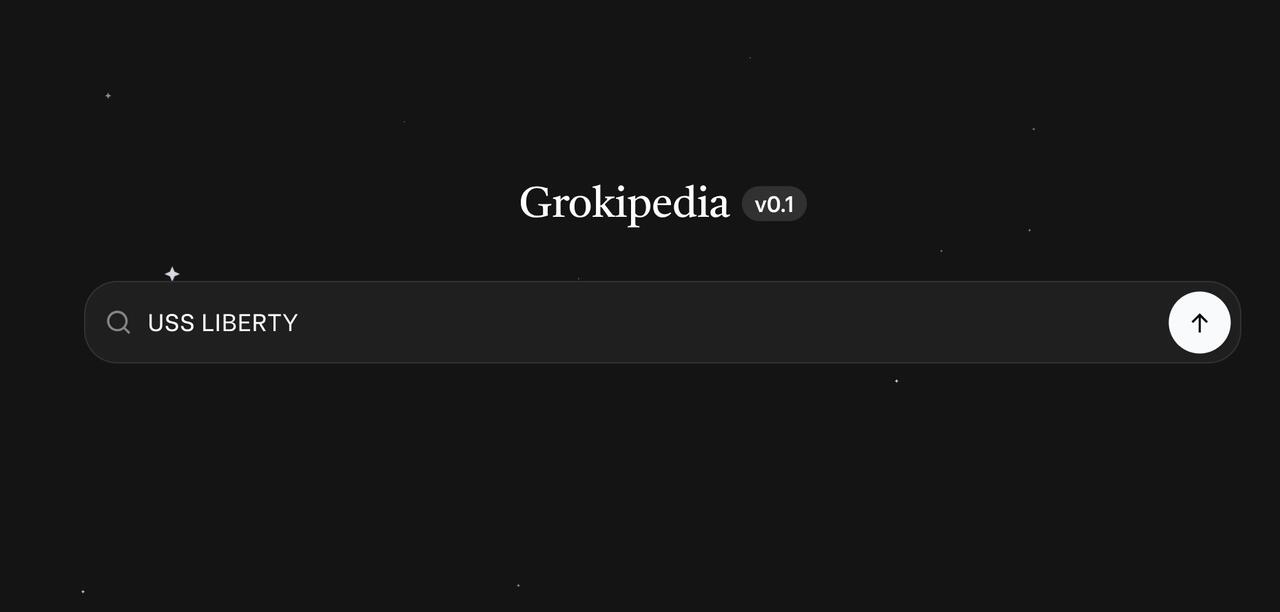
"Elon Musk's anti-woke alternative to Wikipedia - an aspiration he announced less than a month ago - went live on Monday, with "Grokipedia" already boasting nearly 900,000 articles by the end of its first day. "The goal of Grok and Grokipedia.com is the truth, the whole truth and nothing but the truth. We will never be perfect, but we shall nonetheless strive towards that goal," Musk wrote on X, referring to the launch-day Grokipedia as Version 0.1, and promising that "Version 1.0 will be 10X better." The Grokipedia home page presents a clean, no-nonsense interface

Grokipedia is powered by xAI, Musk's artificial intelligence company that also drives the generative AI "Grok" chatbot. Many of the pages we sampled are extremely comprehensive, detailed and lengthy. Journalists and social media users quickly set out to compare how the two sites differ in covering controversial topics. For example, regarding gender transition, the New York Times reported that "[Grokipedia] said medical treatment for transgender people was based on evidence that was 'limited and of low quality' [while] Wikipedia’s corresponding page said scientific understanding of the subject had existed for decades." We also observed that Grokipedia's page covers theories that the huge spike in trans identification since the early 2010s may be driven by "social influence or contagion."

Wikipedia vs. Grokipedia: Wikipedia smears RFK Jr as a “conspiracy theorist and anti-vaccine activist” in the first sentence, while Grokipedia sticks to the facts. "I’m switching to Grokipedia 👍 pic.twitter.com/OvumKlvjQW" - Chief Nerd (@TheChiefNerd) October 27, 2025

Wikipedia, launched in 2001, has grown into the seventh most-visited website globally, boasting over 7 million articles across 329 languages and attracting more than 4 billion visits each month. Officially, Wikipedia operates under the policies of "verifiability" and "neutrality," but in practice, the world's largest online encyclopedia is routinely manipulated by activists ranging from progressive leftists seeking to dominate the culture war to West Bank settlers working to mold opinions about the State of Israel.

The brainwashing risk is no longer confined to everyday human users, as today's leading AI models draw heavily on the supposed facts found on Wikipedia pages. Having said that, many Grokipedia 0.1 entries on uncontroversial topics have passages that are word-for-word identical to their Wikipedia counterparts. In September, responding to a question posed by an X user about Grok's use of Wikipedia, Musk said, "We should have this fixed by end of year."

GROKIPEDIA VS WIKIPEDIA: TWO VERSIONS OF JAN 6: Grokipedia’s entry describes Jan. 6 as a riot - factual, chronological, and restrained. It cites crowd breaches, security failures, and prosecutions without assigning political intent. Wikipedia calls it an “attempted coup”… https://t.co/WHJX68rlel pic.twitter.com/i70gHWdsdM— Mario Nawfal (@MarioNawfal) October 28, 2025

While Grokipedia content is being created by AI, Wikipedia content is written by millions of volunteer contributors, whose sourcing is limited by an official color-coded list of sites given grades such as "generally reliable" (green) or "generally unreliable" (red). Hardcore leftist outlets Mother Jones and the SPLC get the top green rating, as do MSNBC and CNN. Fox News gets a middling yellow "marginally reliable" rating, while ZeroHedge is red due to "propagation of conspiracy theories." Antiwar.com, which we've found to be exceedingly well-sourced while observing high journalistic standards, is also off-limits.

In January, Musk lashed out at Wikipedia over content on his biographical page saying his gesture at a 2024 Trump inauguration event "was compared to a Nazi salute or fascist salute." Urging donors to stop financing Wikipedia, Musk said, "Since legacy media propaganda is considered a ‘valid’ source by Wikipedia, it naturally simply becomes an extension of legacy media propaganda!”

So far, Grokipedia has about one-seventh the number of pages as Wikipedia, so some of your favorite spicy topics may not be covered yet. Take it for a spin at Grokipedia.com."

“Nine Meals from Anarchy”

“Nine Meals from Anarchy”
by Jeff Thomas

“In 1906, Alfred Henry Lewis stated, “There are only nine meals between mankind and anarchy.” Since then, his observation has been echoed by people as disparate as Robert Heinlein and Leon Trotsky. The key here is that, unlike all other commodities, food is the one essential that cannot be postponed. If there were a shortage of, say, shoes, we could make do for months or even years. A shortage of gasoline would be worse, but we could survive it, through mass transport, or even walking, if necessary.

But food is different. If there were an interruption in the supply of food, fear would set in immediately. And, if the resumption of the food supply were uncertain, the fear would become pronounced. After only nine missed meals, it’s not unlikely that we’d panic and be prepared to commit a crime to acquire food. If we were to see our neighbor with a loaf of bread, and we owned a gun, we might well say, “I’m sorry, you’re a good neighbor and we’ve been friends for years, but my children haven’t eaten today – I have to have that bread – even if I have to shoot you.”

So, let’s have a closer look at the actual food distribution industry, compare it to the present direction of the economy and see whether there might be reason for concern.

The food industry typically operates on very small margins – often below 2%. Traditionally wholesalers and retailers have relied on a two-week turnaround of supply and anywhere up to a 30-day payment plan. But an increasing tightening of the economic system for the last eight years has resulted in a turnaround time of just three days for both supply and payment for many in the industry. This is a system that’s already under sever pressure, and has no further wiggle room should it take significant further hits.

If there were a month where significant inflation took place (say, 3%), all profits would be lost for the month, for both suppliers and retailers, but goods could still be replaced and sold for a higher price next month. But, if there were three or more consecutive months of inflation, the industry would be unable to bridge the gap, even if better conditions were expected to develop in future months. A failure to pay in full for several months would mean smaller orders by those who could not pay. That would mean fewer goods on the shelves. The longer the inflationary trend continued, the more quickly prices would rise to hopefully offset the inflation. And ever-fewer items on the shelves.

From Germany in 1922, to Argentina in 2000, to Venezuela in 2016, this has been the pattern, whenever inflation has become systemic, rather than sporadic. Each month, some stores close, beginning with those that are the most poorly-capitalized. In good economic times, this would mean more business for those stores that were still solvent, but, in an inflationary situation, they would be in no position to take on more unprofitable business. The result is that the volume of food on offer at retailers would decrease at a pace with the severity of the inflation.

However, the demand for food would not decrease by a single loaf of bread. Store closings would be felt most immediately in inner cities, when one closing would send customers to the next neighborhood, seeking food. The real danger would come when that store had also closed and both neighborhoods descended on a third store in yet another neighborhood. That’s when one loaf of bread for every three potential purchasers would become worth killing over. Virtually no one would long tolerate seeing his children go without food because others had “invaded” his local supermarket.

In addition to retailers, the entire industry would be impacted and, as retailers disappeared, so would suppliers, and so on, up the food chain. This would not occur in an orderly fashion, or in one specific area. The problem would be a national one. Closures would be all over the map, seemingly at random, affecting all areas. Food riots would take place, first in the inner cities, then spread to other communities. Buyers, fearful of shortages, would clean out the shelves.

Importantly, it’s the very unpredictability of food delivery that increases fear, creating panic and violence. And, again, none of the above is speculation; it’s an historical pattern – a reaction based upon human nature whenever systemic inflation occurs.

Then… unfortunately… the cavalry arrives. At that point it would be very likely that the central government would step in and issue controls to the food industry that served political needs, rather than business needs, greatly exacerbating the problem. Suppliers would be ordered to deliver to those neighborhoods where the riots were the worst, even if those retailers were unable to pay. This would increase the number of closings of suppliers. Along the way, truckers would begin to refuse to enter troubled neighborhoods and the military might well be brought in to force deliveries to take place.

So what would it take for the above to occur? Well, historically, it has always begun with excessive debt. We know that the debt level is now the highest it has ever been in world history. In addition, the stock and bond markets are in bubbles of historic proportions. They are most certainly popping.

With a crash in the markets, deflation always follows, as people try to unload assets to cover for their losses. The Federal Reserve (and other central banks) has stated that it will unquestionably print as much money as it takes to counter deflation. Unfortunately, inflation has a far greater effect on the price of commodities than assets. Therefore, the prices of commodities will rise dramatically, further squeezing the purchasing power of the consumer, thereby decreasing the likelihood that he will buy assets, even if they’re bargain-priced. Therefore, asset-holders will drop their prices repeatedly, as they become more desperate. The Fed then prints more to counter the deeper deflation and we enter a period when deflation and inflation are increasing concurrently.

Historically, when this point has been reached, no government has ever done the right thing. They have, instead, done the very opposite – keep printing. Food still exists, but retailers shut down because they cannot pay for goods. Suppliers shut down because they’re not receiving payments from retailers. Producers cut production because sales are plummeting.

In every country that has passed through such a period, the government has eventually gotten out of the way, and the free market has prevailed, re-energizing the industry and creating a return to normal. The question is not whether civilization will come to an end. (It will not.) The question is the liveability of a society that is experiencing a food crisis, as even the best of people are likely to panic and become a potential threat to anyone who is known to store a case of soup in his cellar.

Fear of starvation is fundamentally different from other fears of shortages. Even good people panic. In such times, it’s advantageous to be living in a rural setting, as far from the centre of panic as possible. It’s also advantageous to store food in advance that will last for several months, if necessary. However, even these measures are no guarantee, as, today, modern highways and efficient cars make it easy for anyone to travel quickly to where the goods are. The ideal is to be prepared to sit out the crisis in a country that will be less likely to be impacted by dramatic inflation – where the likelihood of a food crisis is low and basic safety is more assured.”

Adventures with Danno, "SNAP: It's Time To Discuss This... Prepare For The Worst"

Adventures with Danno, 10/28/25
"SNAP: It's Time To Discuss This... 
Prepare For The Worst"
Comments here:
o
Full screen recommended.
Timcast IRL, 10/28/25
"SNAP & Food Stamps To End Nov 1st, 
Food Riots Could Erupt Overnight"
Comments here:

Bill Bonner, "Socialism Whacked"

Argentine President Javier Milei, ‘Long live freedom, damnit.’
"Socialism Whacked"
by Bill Bonner

Baltimore, Maryland - "Looking out at the vast universe of politics, we see dead, black...empty...and cold...space. But a closer look reveals two flickering stars – one burning much brighter after last Sunday’s election.

Here at home, Tom Massie is holding his ground against the richest and most powerful groups in the country. Ed Gallrein, his new opponent, a former Navy Seal, hasn’t put forward any real policies or platform ideas of his own. Instead, his promise to voters is that he will be a rubber stamp to the president, and do whatever Trump tells him to do. Gallrein: “This district is Trump Country. The President doesn’t need obstacles in Congress - he needs backup. I’ll defeat Thomas Massie, stand shoulder to shoulder with President Trump, and deliver the America First results Kentuckians voted for.”

But that brings us to the second bright spot, Javier Milei, and the curious “America First results” that Kentuckians didn’t vote for. Whatever else can be said about unorthodox Argentine chief, his star is rising. The BBC: "Argentina’s Milei wins big in midterms with ‘chainsaw’ austerity. Argentina’s president Javier Milei has led his party to a landslide victory in Sunday’s midterm elections, after defining the first two years of his presidency with radical spending cuts and free-market reforms. His party, La Libertad Avanza, won nearly 41% of the vote, taking 13 of 24 Senate seats and 64 of the 127 lower-house seats that were contested."

His gains will make it much easier for the president to push ahead with his program to slash state spending and deregulate the economy. Before the vote, Milei’s ally Donald Trump made it clear that the US’s recently announced $40bn lifeline for Argentina would depend on Milei keeping political momentum. Milei’s supporters welcomed that, though critics accused Donald Trump of foreign interference in Argentina’s elections.

Bailouts at home may be bad policy, but at least they are understandably part of the America First program. Few Kentuckians probably realized that in voting for Trump they would get a bailout – of a foreign country. And that instead of protecting their soybean and beef prices, the president would open them to more competition.

And talk about election interference! Trump told the Argentines that he was ready to give them a line of credit worth $40 billion - but only if they voted for his candidate, Milei. He even gave the Argentine president a photo op in the White House, referring to him as his ‘favorite president.’ Using US taxpayer money to influence any election is remarkable enough. The CIA and other spookish agencies have been doing it for decades...but never right out in the open; maybe it is a sign of progress that instead of assassinations, coups and blackmail, the feds are using bribery to get the regimes they want.

But that brings us to another remarkable thing: Why does Trump want Milei? “I’m with this man because his philosophy is correct, and he may win it. He may not win, but I think he’s going to win. And if he wins, we’re staying with him. And if he doesn’t win, we’re gone.”

But if Milei’s philosophy is correct, Trump’s philosophy must be wrong - because they are opposites. The soft-headed press describes Milei as a ‘right winger.’ Perhaps Trump believes it. But the real story is more likely that a Republican fixer, Barry Bennett, and a New York billionaire, Rob Citrone, figured out a way to make some money by getting Trump to back the peso. When the announcement was made, millions or billions of dollars suddenly changed owners.

Milei is neither a right-winger nor a left-winger; he is a doctrinaire libertarian. Unlike Trump, he’s not a Big Man leader; he’s a Big Idea leader. And his idea is basically the one embedded in the US Constitution, now forgotten, that the government that governs best is the one that governs least. The Argentine president is doing what no other head of state is doing...and something, as far as we know, that has never, ever been done at all. He aims to govern less.

Occasionally, but more and more rarely, a politician such as Massie wishes to follow the Constitution, limiting his own power, and letting people get on with their own lives. More often, both ‘left’ and ‘right’ converge to seek a bigger and bigger share of the nation’s output for what Milei calls the ‘casta politica.’ In this sense, Trump is a classic. He has expanded the role of the federal government perhaps more than any other president in this century. Trade, immigration, crime, disease, education, foreign policy - never before have we had such an activist in the White House.

Milei, meanwhile, is doing something different. He’s cutting budgets, trimming employees, and chopping off unnecessary bureaucratic appendages. He’s been in office for a little shy of two years. During that time, he’s reduced inflation by about 90% and cut the budget deficit by 100%. Argentina has climbed out of its almost permanent recession to have the fastest growing economy in the Americas, with GDP growth more than twice that of the US. Real wages have tripled. And poverty has been cut by 40%. And this week, after winning the mid-term elections, Milei’s star burns brighter than ever. He has passed the first test. He whacked the government with a chainsaw, as promised. The voters did not revolt; they applauded. Stay tuned."

"Alert: Mystery Fireball Over Moscow, Military Surround Kremlin, Putin On Highest Alert in Bunker"

Full screen recommended.
Prepper News, 10/27/25
"Alert: Mystery Fireball Over Moscow,
 Military Surround Kremlin, Putin On Highest Alert in Bunker"
Comments here:

Monday, October 27, 2025

"Chinese Space Telescope Just Detected 3I/ATLAS Is Carrying Life - And It’s Heading Toward Earth"

Full screen recommended.
Hidden Headlines, 10/27/25
"Chinese Space Telescope Just Detected 3I/ATLAS 
Is Carrying Life - And It’s Heading Toward Earth"
"A Chinese space telescope detected 3I/ATLAS, an interstellar object exhibiting unusual pulsating heat and light emissions. Analysis reveals a unique chemical composition and bio-signals, unlike any comet observed before. This object's trajectory has shifted, now heading towards Earth."
Comments here:
o
Full screen recommended.
Michio Kaku, 10/27/25
"It's 'Waking Up': JWST Sees "Internal Structures" 
Moving Inside 3I/ATLAS"
"The JWST just scanned interstellar object 3I/ATLAS, and what it found is terrifying. Webb detected precise, geometric structures moving inside the object. This isn't a comet; it looks engineered. We are looking at potential Aliens technology, a discovery from Space that completely challenges the Fermi Paradox. Is 3I/ATLAS a machine? And what is it doing in our Space? Let's break down the data."
Comments here:

"Google’s Quantum AI Finally Decoded the Buga Sphere...What It Found Shocked Scientists"

Full screen recommended.
Top Master, 10/26/25
"Google’s Quantum AI Finally Decoded the Buga Sphere...
What It Found Shocked Scientists"
"The Buga Sphere has left scientists speechless. After a mysterious silver orb crashed near Buga, Colombia, researchers discovered an object that defies the laws of physics. Its perfect symmetry, floating inner spheres, and unknown alloy already made it extraordinary - but when Google’s Quantum AI decoded the symbols etched across its surface, the results changed everything. The glyphs revealed patterns of life itself - encoded amino acids, advanced bioengineering, and mathematical constants that predate civilization. Now, new tests suggest the sphere is over 12,500 years old. Could it be a relic from a lost advanced civilization - or something extraterrestrial? Join us as we uncover the shocking truth behind the Buga Sphere and how Quantum AI is rewriting history."
Comments here:

"Leaving California Was The Smartest Thing I Ever Did; Beware Of EBT Zombies"

Jeremiah Babe, 10/27/25
"Leaving California Was The Smartest Thing I Ever Did; 
Beware Of EBT Zombies"
Comments here:

Musical Interlude: Deuter, "Music of the Night: East of The Full Moon"

Deuter, "Music of the Night: East of The Full Moon"

"A Look to the Heavens"

"How did galaxies form in the early universe? To help find out, astronomers surveyed a patch of dark night sky with the Very Large Telescope array in Chile to find and count galaxies that formed when our universe was very young. Analysis of the distribution of some distant galaxies (redshifts near 2.5) found an enormous conglomeration of galaxies that spanned 300 million light years and contained about 5,000 times the mass of our Milky Way Galaxy. Dubbed Hyperion, it is currently the largest and most massive proto-supercluster yet discovered in the early universe.
A proto-supercluster is a group of young galaxies that is gravitationally collapsing to create a supercluster, which itself a group of several galaxy clusters, which itself is a group of hundreds of galaxies, which itself is a group of billions of stars. In the featured visualization, massive galaxies are depicted in white, while regions containing a large amount of smaller galaxies are shaded blue. Identifying and understanding such large groups of early galaxies contributes to humanity's understanding of the composition and evolution of the universe as a whole."

Free Download: Mark Twain, "Letters From the Earth"

"Mark Twain's 'Letters From the Earth'"
by Wikipedia

“Letters from the Earth” is one of Mark Twain's posthumously published works. The essays were written during a difficult time in Twain's life; he was deep in debt and had lost his wife and one of his daughters. Initially, his daughter, Clara Clemens, objected to its publication in March 1939, probably because of its controversial and iconoclastic views on religion, claiming it presented a "distorted" view of her father. Henry Nash Smith helped change her position in 1960. Clara explained her change of heart in 1962 saying that "Mark Twain belonged to the world" and that public opinion had become more tolerant. She was also influenced to release the papers due to her annoyance with Soviet propaganda charges that her father's ideas were being suppressed in the United States. The papers were edited in 1939 by Bernard DeVoto. The book consists of a series of short stories, many of which deal with God and Christianity. The title story consists of eleven letters written by the archangel Satan to archangels, Gabriel and Michael, about his observations on the curious proceedings of earthly life and the nature of man's religions. Other short stories in the book include a bedtime story about a family of cats Twain wrote for his daughters, and an essay explaining why an anaconda is morally superior to Man.

Textual references make clear that sections, at least, of “Letters from the Earth” were written shortly before his death in April 1910. (For instance, Letter VII, in discussing the ravages of hookworm, refers to the $1,000,000 gift of John D. Rockefeller Jr. to help eradicate the disease – a gift that was announced on October 28, 1909, less than six months before Twain's death.)"
Excerpt: "Letters From the Earth"
by Mark Twain

"This is a strange place, an extraordinary place, and interesting. There is nothing resembling it at home. The people are all insane, the other animals are all insane, the earth is insane, Nature itself is insane. Man is a marvelous curiosity. When he is at his very very best he is a sort of low grade nickel-plated angel; at is worst he is unspeakable, unimaginable; and first and last and all the time he is a sarcasm. Yet he blandly and in all sincerity calls himself the "noblest work of God." This is the truth I am telling you. And this is not a new idea with him, he has talked it through all the ages, and believed it. Believed it, and found nobody among all his race to laugh at it.

Moreover - if I may put another strain upon you - he thinks he is the Creator's pet. He believes the Creator is proud of him; he even believes the Creator loves him; has a passion for him; sits up nights to admire him; yes, and watch over him and keep him out of trouble. He prays to Him, and thinks He listens. Isn't it a quaint idea? Fills his prayers with crude and bald and florid flatteries of Him, and thinks He sits and purrs over these extravagancies and enjoys them. He prays for help, and favor, and protection, every day; and does it with hopefulness and confidence, too, although no prayer of his has ever been answered. The daily affront, the daily defeat, do not discourage him, he goes on praying just the same. There is something almost fine about this perseverance. I must put one more strain upon you: he thinks he is going to heaven!"
Freely download "Letters From the Earth", by Mark Twain, here: 

"How It Really Is, And Will Be For a Long, Long time"


"The Dignity of Work"

"The Dignity of Work"
by Paul Rosenberg

"At one time I lived close to the Field Museum of Chicago; I had a membership and spent a good deal of time there. One evening, about ten minutes before closing, I noticed that workers had begun preparing the first floor for an evening event. I had a panoramic view from where I stood at the second floor balcony, and what I saw has stuck with me ever since.

What I saw was a lone man setting up tables and chairs – simple work, the kind that a teenager could do. But what I watched this man do was every bit as beautiful as dance. He moved with integrity, with precision, and with intent. He carefully spaced the tables in a precise geometry, he moved every chair with efficiency. This was more than just work; it was art. This man knew that he was doing his job well, and, perhaps most importantly, he enjoyed doing it well. I was transfixed by it all, and I stood there until the guards asked me to leave. And even then, I moved very slowly until I lost sight of him.

There is real beauty in doing a job well, even a simple job. It is our great loss that this form of beauty is never mentioned in public these days – double-sad, because at one time, such beauty was acknowledged.

The Virtue of Productivity: It is productivity that improves life upon Earth. What I call “the productive class” are the people who build and repair our cars, our houses, and our computers; the people who provide us with air conditioning, electricity, plumbing, and food; the people who make, clean and repair our clothing; the people who treat our sicknesses and wounds.

If you can drive around town and point out places where you repaired things, or delivered things, or fed people, or made human life better in any of a thousand ways, you are a producer. And if you are a producer, there is an inherent dignity in what you do. You are actively making the world better. You are directly creating benefit for yourself and for other human beings. What you do every day is morally virtuous and worthy of respect. And you should never let anyone tell you otherwise.

And, it’s worth pointing out: Money is not a measure of your worth. Money is certainly useful, and getting it should matter to you, but merely having money is no measure of your dignity. Actively improving the world, however, that conveys dignity.

What, Really, Is Work? It’s important to look at things directly; to clarify what they really are, not just what people say about them. This is what I see when I focus on work itself: Productive work is the insertion of creativity into the world. It is the birthing of benefit into the world. It is, in a word, beautiful, and people who do it should be deeply satisfied with what they do.

Compared to productive work, status is ornamental puffery: a shiny coat with the word “Important” emblazoned upon it, worn by a sad little man. If you are a member of the productive class, please work at re-arranging your assumptions and stop revering status. Instead, start respecting things that actually improve human life. Creating things, improving things, or making it possible for other people to create… these are noble, beautiful, and important. Please start giving yourself credit for them."
o
Full screen recommended.
Philosophical Vision, 10/26/25
"The Work Scam: 
How the System Sells Slavery as Success"
Comments here:

“'The Well Has Run Dry': Are The People That Are Having Epic EBT Meltdowns Serious About What They Plan To Do Next?"

“'The Well Has Run Dry': Are The People That Are Having 
Epic EBT Meltdowns Serious About What They Plan To Do Next?"
by Michael Snyder

"People all over social media are publicly threatening to steal food once their EBT benefits run out. Some of them are taking it one step further by threatening to get violent with anyone that tries to prevent them from stealing food. So what is our country going to look like if this actually happens on a widespread basis? Today is day 26 of the government shutdown, and there is no end in sight. It appears that food stamp benefits will not be paid out to 42 million Americans at the beginning of November, and nobody is exactly sure what is going to happen next.

Personally, I have never seen as much anger directed toward the federal government as I am seeing right now. Countless EBT meltdown videos are being posted on social media platforms, and the closer we get to the November 1st deadline the more dramatic they seem to become.

Full screen recommended.

Are these people really serious? I believe that they are. When people openly admit that they plan to commit acts that are morally wrong, I tend to believe them. I know that it isn’t easy out there right now. I write about the economic suffering in this nation all the time. But there is no excuse for theft and there is no excuse for violence.

Unfortunately, I think that we are going to see a lot of theft and a lot of violence during the weeks ahead. According to the U.S. Department of Agriculture, November 1st is a hard deadline because “the well has run dry”…"The U.S. Department of Agriculture (USDA) announced on its website that SNAP benefits won’t be sent out come Nov. 1 because the program lacks the funding it needs during the ongoing government shutdown. SNAP, also known as food stamps, is a federal program that provides 42 million Americans monthly benefits to afford healthy food. “Bottom line, the well has run dry. At this time, there will be no benefits issued November 1,” a message on USDA’s website as of Oct. 27 says."

Some states are going to continue funding food stamp benefits for as long as they can. But most states will not be able to do that. So some families that are currently receiving hundreds of dollars a month in benefits will soon be receiving nothing…"A family of four on average receives $715 (£540) per month, according to CBPP, which breaks down to a little less than $6 (£4.50) per day per person. The states administer the programs, with much of the funding coming from the federal government."

Several states have pledged to use their own funds to cover any shortfall, however the federal government has warned that they will not be reimbursed. There are certain states that will get hit far harder than others. For example, in New Mexico a whopping 21 percent of the entire population is on food stamps…"In terms of state population proportions, New Mexico is the state most dependent on SNAP, with 21 percent, or 451,200, of its residents claiming food stamps in 2024. It is followed by Louisiana and Oregon, where 18 percent get benefits."

Those numbers are staggering. Nearly one out of every five people in Oregon and Louisiana is on food stamps, and more than one out of every five people in New Mexico is on food stamps. I think that we will probably see the most chaos in large urban areas such as New York City, Chicago and Los Angeles. When people get hungry, they also tend to get very emotional.

And the fact that EBT benefits are being cut off just before the holidays is just going to intensify the emotions that people are now feeling…"Another said, ‘Cutting off EBT during the holidays is heartless & telling people “just get a job” behind these food stamps is crazy. AINT NOBODY HIRING. People been getting LAID OFF by the THOUSANDS. Y’all are evil.’ ‘If you’ve never had to survive on food stamps you don’t understand what’s about to happen to many families next month,’ agreed a third.

The gap between the wealthy and the poor has never been wider, and this crisis will only make things worse. The vast majority of the country, and this is especially true for those that are poor, are just barely scraping by from month to month. For example, CBS News just interviewed one man in Georgia that literally doesn’t know where his next meal will come from… “I applied on Sept. 11,” he said. “They actually approved me that same day, but I didn’t find out until I got a letter in the mail later. I’ve been waiting for my food stamp card ever since - since around Sept. 20.” Nearly a month later, he’s still waiting. Daryl says the delay has turned everyday living expenses into a day-by-day struggle. “Groceries right now in my house are nonexistent,” he said. “My fridge is empty - just condiments. When I do get food, it’s just something for that day. I can’t even think about tomorrow.”

There are tens of millions of other Americans that are just like Daryl. This is one of the reasons why I rant about the failures of our system so much. All along the way, our system has failed men like Daryl.

But this is what happens when you make government the central pillar of your economy. In one way or another, the vast majority of the population becomes dependent on the government. In addition to food stamp benefits being cut off, if this government shutdown persists it is going to cause an enormous amount of economic pain in other ways as well…"Thousands of federal employees will also miss their first full paychecks this week, so services like TSA screenings and air traffic control operations could be further stunted if those workers stop showing up, as was the case during the 35-day partial shutdown that ended in early 2019. “Things are about to get worse,” Senate Majority Leader John Thune warned in a floor speech late last week."

And that’s to say nothing of the Nov. 1 date that open enrollment begins for Affordable Care Act health plans. That’s when people will start to see just how much their premiums are set to skyrocket because insurers aren’t confident Democrats and Republicans will reach a deal to extend enhanced tax credits before they expire at the end of the year - a central point of conflict amid the partisan shutdown impasse.

Our founders intended for us to have a very limited federal government. But instead we have the largest government in the entire history of the planet. In the weeks ahead, millions of people will be clamoring for their government benefits. If they do not get them, they will become very, very angry. The stage has been set for the sort of civil unrest that I have been writing about for a very long time. Hopefully an agreement to end the government shutdown will be reached and we will be given a reprieve. Because I don’t think that anyone is eager to see rioting, looting and violence in major cities all over the nation."

The Daily "Near You?

Oaxaca, Mexico. Thanks for stopping by!

"I Am Convinced..."

"The longer I live, the more I realize the impact of attitude on life. Attitude to me is more important than facts. It is more important than the past, than education, than money, than circumstances, than failures, than success, than what other people think or say or do. It is more important than appearance, gift, or skill. It will make or break a company, a church, a home. The remarkable thing is we have a choice every day regarding the attitude we will embrace for that day. We cannot change our past, we cannot change the fact that people will act in a certain way. We cannot change the inevitable. The only thing we can do is play on the string we have, and that is our attitude. I am convinced that life is 10 percent what happens to me and 90 percent how I react to it. And so it is with you... we are in charge of our attitudes. "
- Charles Swindoll

"What a Weasel Knows: Annie Dillard on How to Live"

"What a Weasel Knows:
 Annie Dillard on How to Live"
by Maria Popova

"Suppose we answer the most important question of existence in the affirmative. There is then only one question remaining: How shall we live this life?

Despite all the technologies of thought and feeling we have invented to divine an answer - philosophy and poetry, scripture and self-help - life stares mutely back at us, immense and indifferent, having abled us with opposable thumbs and handicapped us with a consciousness capable of self-reference that renders us dissatisfied with the banality of mere survival. Beneath the overstory of one hundred trillion synapses, the overthinking animal keeps losing its way in the wilderness of want.

Not so the other animals. “They do not sweat and whine about their condition,” Walt Whitman wrote in "Leaves of Grass" (which is philosophy and poetry and scripture and self-help in one), “they do not lie awake in the dark and weep for their sins, they do not make me sick discussing their duty to God, not one is dissatisfied, not one is demented with the mania of owning things.”

A century and a half after Whitman, Annie Dillard looks to another animal for a model of how to live these human lives. Having let a muskrat be her teacher in unselfconsciousness, she recounts her lens-clearing encounter with a weasel in an essay originally published in her 1982 packet of revelations Teaching a Stone to Talk, later included in "The Abundance: Narrative Essays Old and New "(public library) - one of my all-time favorite books.

She writes: "I startled a weasel who startled me, and we exchanged a long glance. Twenty minutes from my house, through the woods by the quarry and across the highway, is Hollins Pond, a remarkable piece of shallowness, where I like to go at sunset and sit on a tree trunk. Hollins Pond is also called Murray’s Pond; it covers two acres of bottomland near Tinker Creek with six inches of water and six thousand lily pads. In winter, brown-and-white steers stand in the middle of it, merely dampening their hooves; from the distant shore they look like miracle itself, complete with miracle’s nonchalance. Now, in summer, the steers are gone. The water lilies have blossomed and spread to a green horizontal plane that is terra firma to plodding blackbirds, and tremulous ceiling to black leeches, crayfish, and carp.

This is, mind you, suburbia. It is a five-minute walk in three directions to rows of houses, though none is visible here. There’s a 55-mph highway at one end of the pond, and a nesting pair of wood ducks at the other. Under every bush is a muskrat hole or a beer can. The far end is an alternating series of fields and woods, fields and woods, threaded everywhere with motorcycle tracks - in whose bare clay wild turtles lay eggs.

So, I had crossed the highway, stepped over two low barbed-wire fences, and traced the motorcycle path in all gratitude through the wild rose and poison ivy of the pond’s shoreline up into high grassy fields. Then I cut down through the woods to the mossy fallen tree where I sit. This tree is excellent. It makes a dry, upholstered bench at the upper, marshy end of the pond, a plush jetty raised from the thorny shore between a shallow blue body of water and a deep blue body of sky.

The sun had just set. I was relaxed on the tree trunk, ensconced in the lap of lichen, watching the lily pads at my feet tremble and part dreamily over the thrusting path of a carp. A yellow bird appeared to my right and flew behind me. It caught my eye; I swiveled around - and the next instant, inexplicably, I was looking down at a weasel, who was looking up at me.

Weasel! I’d never seen one wild before. He was ten inches long, thin as a curve, a muscled ribbon, brown as fruitwood, soft-furred, alert. His face was fierce, small and pointed as a lizard’s; he would have made a good arrowhead. There was just a dot of chin, maybe two brown hairs’ worth, and then the pure white fur began that spread down his underside. He had two black eyes I didn’t see, any more than you see a window. Encounters are events, they touch things in us, change things in us, bend probability in the shape of the possible, tie time and chance into a knot of meaning between two creatures." 

Dillard recounts: "The weasel was stunned into stillness as he was emerging from beneath an enormous shaggy wild rose bush four feet away. I was stunned into stillness twisted backward on the tree trunk. Our eyes locked, and someone threw away the key.

Our look was as if two lovers, or deadly enemies, met unexpectedly on an overgrown path when each had been thinking of something else: a clearing blow to the gut. It was also a bright blow to the brain, or a sudden beating of brains, with all the charge and intimate grate of rubbed balloons. It emptied our lungs. It felled the forest, moved the fields, and drained the pond; the world dismantled and tumbled into that black hole of eyes. If you and I looked at each other that way, our skulls would split and drop to our shoulders. But we don’t. We keep our skulls. So."

Every meaningful encounter is a kind of enchantment - it comes unbidden and breaks without warning, leaving us transformed. As the weasel vanishes under the wild rose, Dillard finds herself wondering what life is like for a creature whose “journal is tracks in clay, a spray of feathers, mouse blood and bone: uncollected, unconnected, loose leaf, and blown,” and what clues that life might give her about how to live her own. Reflecting on the memory of the encounter, on the revelation of it, she writes:

"I would like to learn, or remember, how to live. I come to Hollins Pond not so much to learn how to live as, frankly, to forget about it. That is, I don’t think I can learn from a wild animal how to live in particular - shall I suck warm blood, hold my tail high, walk with my footprints precisely over the prints of my hands? - but I might learn something of mindlessness, something of the purity of living in the physical sense and the dignity of living without bias or motive. The weasel lives in necessity and we live in choice, hating necessity and dying at the last ignobly in its talons. I would like to live as I should, as the weasel lives as he should. And I suspect that for me the way is like the weasel’s: open to time and death painlessly, noticing everything, remembering nothing, choosing the given with a fierce and pointed will."

Because we are creatures made of time, to change our way of being is to change our experience of time. She considers the chronometry of wildness: "Time and events are merely poured, unremarked, and ingested directly, like blood pulsed into my gut through a jugular vein."

It is hard enough for a human being to attain such purity of being, harder still to share it with another. In a passage that to me is the purest, most exalted measure of love — love of another, love of life - she writes: "Could two live that way? Could two live under the wild rose, and explore by the pond, so that the smooth mind of each is as everywhere present to the other, and as received and as unchallenged, as falling snow?

We could, you know. We can live any way we want. People take vows of poverty, chastity, and obedience - even of silence - by choice. The thing is to stalk your calling in a certain skilled and supple way, to locate the most tender and live spot and plug into that pulse. This is yielding, not fighting. A weasel doesn’t “attack” anything; a weasel lives as he’s meant to, yielding at every moment to the perfect freedom of single necessity.

I think it would be well, and proper, and obedient, and pure, to grasp your one necessity and not let it go, to dangle from it limp wherever it takes you. Then even death, where you’re going no matter how you live, cannot you part. Seize it and let it seize you up aloft even, till your eyes burn out and drop; let your musky flesh fall off in shreds, and let your very bones unhinge and scatter, loosened over fields, over fields and woods, lightly, thoughtless, from any height at all, from as high as eagles."

For more lessons on how to be human drawn from the lives of other animals, learn about time and tenderness from a donkey, about love and loss from an orca, and about living with a plasticity of being from a caracara."

"The Pleasure Trap We Mistake for Freedom"

Full screen recommended.
The Psyche, 10/25/25
"The Pleasure Trap We Mistake for Freedom"
"What if the very things that make us feel free are the ones quietly enslaving us? In this powerful exploration inspired by Aldous Huxley’s “Brave New World,” we uncover how the modern world has transformed pleasure into the most elegant form of control. From endless scrolling to instant gratification, we’ve mistaken stimulation for happiness and distraction for freedom. Huxley foresaw this - a future where humanity would love its own servitude, where entertainment would replace meaning, and where people would stop thinking because pleasure made questioning unnecessary. This video dives deep into the psychology and philosophy behind the “pleasure trap” - drawing from thinkers like Viktor Frankl, Nietzsche, Jung, and Erich Fromm - to reveal how comfort has become the new cage of the human spirit."
Comments here:

"How Easy It Seems..."

“A craven can be as brave as any man, when there is nothing to fear. And we all do our duty, when there is no cost to it. How easy it seems then, to walk the path of honor. Yet soon or
 late in every man’s life comes a day when it is not easy, a day when he must choose.”
- George R.R. Martin
o
“Life has no victims. There are no victims in this life. No one has the right to point fingers at his/her past and blame it for what he/she is today. We do not have the right to point our finger at someone else and blame that person for how we treat others, today. Don’t hide in the corner, pointing fingers at your past. Don’t sit under the table, talking about someone who has hurt you. Instead, stand up and face your past! Face your fears! Face your pain! And stomach it all! You may have to do so kicking and screaming and throwing fits and crying – but by all means – face it! This life makes no room for cowards.”
- C. Joybell C.

"How It Really Is"

With U.S. debt now at $38 trillion, the cost of the interest bill
alone on all that borrowing is about $3 billion a day. A quick calculation:
the USA is paying out over a trillion in interest this year. This is was our money folks...

Adventures with Danno, "Buy These Dollar Tree Items Now Before Prices Go Up!"

Full screen recommended.
Adventures with Danno, 10/27/25
"Buy These Dollar Tree Items 
Now Before Prices Go Up!"
Comments here:

"Watch What Happens When Welfare Queens Get Denied Food Stamps!"

Full screen recommended.
Buddy Brown, 10/27/25
"Watch What Happens When Welfare
 Queens Get Denied Food Stamps!"
"The shocking reality is here - 41.7 million people relying on EBT and SNAP benefits (Supplemental "Nutritional Assistance Program) are facing a crisis as the funding well officially runs dry."
Comments here:
o
Full screen recommended.
Yak Motley, 10/27/25
"Food Stamps Are Ending, People Are Panicking!"
"The shocking reality is here - 41.7 million people relying on EBT 
and SNAP benefits (Supplemental "Nutritional Assistance Program)
 are facing a crisis as the funding well officially runs dry."
Comments here: 
o
CCR, "Bad Moon Rising"

Dan, I Allegedly, "The Well Has Run Dry - No More Free Lunch!"

Full screen recommended.
Dan, I Allegedly, 10/27/25
"The Well Has Run Dry - No More Free Lunch!"
"The shocking reality is here - 41.7 million people relying on EBT and SNAP benefits (Supplemental Nutritional Assistance Program) are facing a crisis as the funding well officially runs dry. In this video, I break down what this means for millions of Americans, share real examples of the entitlement mindset plaguing the system, and discuss the challenges for those who genuinely depend on these programs. From jaw-dropping stories of misuse to the impact of the government shutdown, this is a wake-up call for all of us. We dive deep into the ongoing crackdown on SNAP benefits and Section 8 housing, the controversial new work requirements, and the growing tension across the country. You’ll hear firsthand accounts of people navigating this chaos - some taking advantage of the system, others struggling just to get by. What’s your take on this? Let me know in the comments!"
Comments here:

"EBT Apocalypse: When the Purple Drink Runs Dry and the Cities Go Full Mad Max"

Full screen recommended.
"EBT Apocalypse: When the Purple Drink
Runs Dry and the Cities Go Full Mad Max"
by John Wilder

"There are 41.7 million Americans slurping up Supplemental Nachos And Porkrinds (SNAP) benefits. That’s an amazing number, and it shows just how far down the bread and circuses route that we’ve gone. I was surprised at the number, but I can now surmise that the only people voting for Democrats are single white women and freeloaders. But I repeat myself.

The federal government shutdown is, as I write this, dragging into its fourth week. I’m generally pretty happy about that since the impact to almost everyone I know is... zero. However, that may soon change. EBT cards, (EBT stands for Entitled Bums Treats) are about to have a zero balance.

The Democrats in the Senate have voted a dozen times as I write this to not fund the SNAP (Socialist Nourishment And Pampering) program. The reason? This is one of their key weapons against Trump. They want to blame Trump for not having a budget because it won’t fund the SNAP (Scam Network for Appetite Pandering) program. Since people who use EBT (Endless Bailout for Takers) aren’t generally the ones who pay attention to anything that takes longer than 17 seconds, they’ll buy it.

Some states (Virginia, for one) realize that the place will look like Mad Max in by Monday if the pizza rolls stop flowing, and have found some cash in the couch cushions to kick the can down the road. New Jersey doesn’t even own a couch, so they have no money, and Connecticut has mobilized their National Guard for emergency ramen drops.

No more swiping for that purple drank or Hot Pockets®. When the EBT (Everyone But Taxpayers) card goes dry, life may get... interesting. What will happen? “Mostly peaceful” flash mobs looting grocery stores. These flash mobs will make the 2020 riots look like a church picnic gone wrong because someone demanded gluten-free tofu.

Because SNAP (Subsidized Nuggets for Apathetic Parasites) isn’t just a program: it’s the duct tape holding urban America’s powder keg together. As mentioned, there are 41.7 million people, about 12.3% of the U.S. population, who rely on those cards for daily food.

There is an inconvenient fact to bring up: the same slice of society leaning hardest on EBT is the one driving the nation’s homicide stats. FBI data from recent years shows Black Americans, who make up 13% of the population but 26% of SNAP users, account for over 50% of murder offender. Coincidence? Nope. Poverty plus entitlement equals a volatile cocktail, and when the free refills dry up, that cocktail gets spiked with Molotovs.

Matt Bracken, the prophet of this particular powder keg, whose 2012 essay “When the Music Stops” reads like a Ouija board session with Cassandra, nailed it. “What if a cascading economic crisis leads to millions of EBT cards flashing nothing but zeroes? Any disruption in the normal functioning of the EBT system will lead to food riots with a speed that is astonishing... the cutoff of ‘their’ food money will cause an immediate explosion of rage. When the hunger begins to bite, supermarkets will be looted.”

My guess? Within 72 hours of the blackout, flash mobs of “minority urban youths” (MUYs, in Bracken’s lingo) would swarm intersections, yank soccer moms from their SUVs. Three days until the cities burn, but with today’s social media coordination, it’ll be three hours till the first viral EBT Uprising Dance Challenge goes from meme to murder.

How bad could it get? If just 1% of those 41.7 million SNAPsters snap, that’s over 417,000 murderers hitting the streets, amped up on empty stomachs and without the burden of intellect but liberally spiced with Glocks™.

I saw a video (it was on X®, probably started on TikTok©) where a woman was claiming that she couldn’t work – she was retired at 22 with her six children. Six children that you’re paying for, by the way. She indicated that it was everyone else’s responsibility to go and work for her. And then another video. And another.

We’re talking about a group of people, who, when looting Walmart™, won’t be stealing any job applications. Instead, they’ll behave like locusts because that’s their basic operating system, consume, mate, move on. And, like locusts, when unleashed they’ll create Biblical levels of plunder. Stores will be stripped bare in under 60 minutes: shelves will echo with the ghosts of grape soda, and cashiers will be forced to hide in the walk-in freezer, live-streaming their sudden turn being on the front lines.

Day One: Inception: Sporadic smash-and-grabs in blue cities. Chicago’s South Side turns into a perpetual Black Friday brawl, with looters hauling off flat-screens because “hunger makes you binge-watch.” Atlanta’s got 640,000 kids on SNAP (Subversive Nutrition for Aimless Proles); when their purple drink privilege evaporates, expect school buses repurposed as battering rams. Cops will be overwhelmed, as Bracken predicted. Their OODA loop is slower than a dial-up modem.

Day Two: Escalation: Hunger turns tribal. “Youths” blockade highways, turning I-95 into a demolition derby. Commuters dragged from Priuses™, beaten with shopping carts after the looters take what food they had bought.

Suburban enclaves? Home invasions spike as “foragers” hit Whole Foods for organic chicken wings to pair with their rage. Gas stations? Torched for the Cheetos® inside. And the violence? Unprecedented in scale, a synchronized symphony of savagery from sea to shining sea. Why? Because unlike 1992’s Rodney King ripple, this is nationwide: 42 states face EBT (Emergency Burger Tantrum) evaporation simultaneously. To be fair, there will be drift. Even red-state small towns within 20 or so miles will get spillover when the urban exodus turns feral.

Day Three (and beyond): Full Bracken: It’s here that things get fuzzy. Deploy the National Guard? Sure. To where? With what food? The infrastructure in the cities is gone, and as Katrina taught us, the people who are kept from murdering only by the thin veneer of society aren’t going to stop at one. 417,000 potential murderers doesn’t equate to only 417,000 murders.

And there will be the inevitable TikTok© trends: the EBT Uprising Dance Challenge evolves into the Loot Loop, where the winner gets the last uncrushed Dorito™ bag. Riots will ratchet racial: “The Other” will get sorted out at 100 yards because nothing unites like a common enemy. The economy? Tanked. Even illegal Sikh truckers won’t roll into war zones, so food deserts bloom into famine fields.

Do I expect this? No. Could it happen? Yes. But what can you do? We are at a period of significant SNAP (Social Norms Are Precarious) risk because of the EBT (Entitlement Brawl Trigger)."