StatCounter

Monday, May 18, 2026

"Information Off The Internet..."


Full screen recommended.
Grandpa Got The Blues,
 "Too Many Words, Too Little Meaning"
"'Too Many Words, Too Little Meaning' is a reflective blues track about a world full of noise but empty of truth. With a calm, seasoned perspective, it captures the frustration of endless talking, hollow opinions, and conversations that go nowhere - while choosing silence, simplicity, and inner peace over the chaos. A gentle acoustic guitar carries the melody like an old man’s slow walk at sunset. The harmonica sighs soft and low, like memories drifting through warm southern air. The rhythm moves slow and steady the kind of blues made for porch swings, fading sunlight, and hands that still find each other after all these years.Because sometimes the real blues isn’t about heartbreak…it’s about a love that stayed. Grandpa’s been around long enough to know: the best love story isn’t the loudest one - it’s the one that keeps going. Growing old ain’t so bad… if you ain’t doing it alone."

"How It Really Is"


National Debt Clock, Real-time:

"We've Optimized Fragility, Failure, Denial - and Rage"

"We've Optimized Fragility, Failure, Denial - and Rage"
by Charles Hugh Smith

"What happens when optimization is itself the point of failure? In today's zeitgeist, everything must be optimized or we'll fail: our time, productivity, fitness, diet, supplements, career, income, wealth - everything must be constantly optimized lest we fall behind or fail.

The grand irony is optimization generates fragility which generates failure which generates denial which eventually generates rage. We've optimized global supply chains for efficiency and cost, rendering them exquisitely vulnerable to disruption and collapse. We've optimized the global economy for "growth" based on expanding consumption of energy and everything that depends on energy, which is everything.

To fund this endless expansion of consumption, everyone must borrow more money to buy more than their income allows. To enable this endless expansion of debt, money must be nearly free to borrow after adjusting for inflation.

The irony here is when money has no cost, it's squandered on excess consumption or speculation. The incentive to borrow and spend/invest wisely is that borrowing money has a high cost. Reduce the cost to boost borrowing/consumption/speculation and you create credit-asset bubbles and households, enterprises and governments one mis-step from insolvency.

Optimization raises expectations to lofty heights. The promise of optimization is endless--there's no limit to optimization, and so there's no limit to technology, profits, health, wealth and prosperity. If we keep optimizing, everything becomes possible. By tweaking technology and finance, we can endlessly expand consumption and wealth.

The mindset this generates is: follow the rules of optimization and you'll enjoy all the benefits of success. Optimize your career by borrowing a small fortune to obtain a university diploma, chase the Next Big Thing, optimize your engagement, visibility, and the buzzword du jour, and all the good things in life will be within reach.

The expectations are as fragile as the system they rely on. We've been taught that "our vote counts," that democracy means we have a say in collective decisions via representatives we elect. We've been taught we have agency - control of our destiny: work hard, work smart, optimize work flows and innovation, and anyone can be a startup founder who cashes out with millions of dollars--and the high agency that comes from high visibility.

Except all of this that's presented as stable, trustworthy, predictable and real is fragile, unstable and artificial - simulations of stability, trust and predictability. The belief that this vast system of mythologies, beliefs and "the real world" is as it's presented is civilizational psychosis, a self-reinforcing state of denial in which some new innovation/optimization will "solve" whatever problems arise.

So what's the optimized solution when optimization itself is the problem? What if a new product or profitable technology is not a solution but an extension of optimized fragility?

What's been optimized is centralization of power and control in the hands of the few because distributed capital, agency, power and control are inefficient. So we inhabit a world of overlapping monopolies and cartels, the marriage of state and private sector monopolies. In terms of optimizing profits, the optimized structure is monopoly. Nothing else comes close. So an economy of overlapping monopolies and shared-monopoly (i.e. cartels) is the perfection of a system optimized to maximize profits for the owners of the monopolies.

This is why it doesn't matter who you vote for, as the decisions are made to suit the interests of those at the top of the optimized concentrations of power pyramid. The masses are fed distractions, us-vs-them divisions, fake virtue-signaling policy-tweak "solutions," and a circus of entertainment. As for optimizing security and a place in the sun - oops, you didn't optimize enough. You didn't optimize innovation enough, and let's face it, you didn't optimize optimization enough, so you failed. Maybe your AI chatbot can console you.

High expectations lead to dreams dashed which leads to denial crumbling on contact with the real world. And when denial crumbles and the scales fall from our eyes, and we see everything that was presented as authentic is actually artificial, a synthetic simulation designed to obscure the gearing of an increasingly fragile system, our sense of betrayal, the shattering of trust, the awareness that we've been lied to, conned, to benefit those doing the bamboozling, then we become angry.

We become angry because we're social beings who depend on trust and truth to function as a group that benefits its members and not just its leaders. When trust and truth have been replaced by artifices to serve the interests of leaders touting how the system benefits everyone, the group dynamics transition from positive to destructive. Nobody likes being conned, and there is a selective advantage to this trait.

Part of the con is to claim that we can collectively transit smoothly from denial to acceptance, skipping the messy, difficult stages of anger, bargaining and depression. (Kubler-Ross's progression of the five stages of grief: denial, anger, bargaining, depression, acceptance.) But this isn't how we're wired, and this progression cannot be optimized away. So never mind you're selling your blood to make ends meet while a handful of others are about to reap fortunes in IPOs. Just accept this is your lot in life. Not all outcomes are equal, creative destruction, blah blah blah.

But what if optimization is the techno-speak cover story for a rigged casino? What if all the buzzwords - innovation, growth, super-abundance, and so on - are all techno-speak cover stories for the substitution of economic metrics for a life that's actually worth living? We've been herded into a Mouse Utopia of metrics--financial metrics, systems, data, models - that leaves out the reality that we exist in a moral universe in which trust and truth matter more than GDP, stock markets, and the hollow, surreal realm of consumerist transactions.

In this universe, anger leads to redress or retribution. The current system is optimized to avoid redress by optimizing the substitution of artifice for authenticity. This optimization has reached such perfection that the status quo leaders, public and private, believe their mastery of this substitution will continue protecting them from public anger come what may. Just pull the levers, and the public will continue believing.
Our leaders have effectively optimized their belief in their own PR. There is no need for redress because the public will accept more of the same: distractions, us-vs-them divisions, fake virtue-signaling policy-tweak "solutions," and a circus of entertainment. But this isn't how the transition from denial to anger works. Applying more of the same will only push anger into rage, where it becomes an emergent force with non-linear dynamics: unpredictable, uncontrollable.

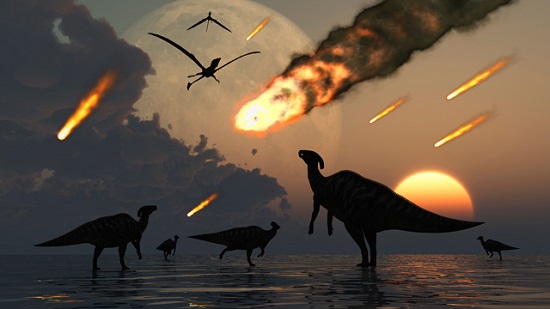
In terms of optimized metrics and systems, rage is irrational. In the moral universe, it's perfectly rational. What happens when an unexpected asteroid shatters all the interconnected fragilities of hyper-optimized supply chains and finance? We can rephrase this to: what happens when optimization is itself the point of failure? What happens when the optimization of substituting artifice for authenticity to mask the decay of trust and truth fails?

All this boils down to: what happens when redress is set aside as needless? That leaves retribution as the only outlet for all the energy being converted from denial to anger. What seemed preposterous before the asteroid is later recognized as destiny."

"Americans Are Going Broke… Gas, Groceries & Bills Just Destroyed the Middle Class"

Full screen recommended.
Across The States, 5/18/26
"Americans Are Going Broke… 
Gas, Groceries & Bills Just Destroyed the Middle Class"
"The American middle class is quietly breaking - and millions of people feel it every single month. If working harder still isn’t enough to get ahead, this video explains why. From rising rent and grocery prices to crushing healthcare costs, debt, and shrinking financial security, the cost of living crisis in America has reached far beyond low-income households. Even people earning solid salaries are finding themselves trapped in a cycle of bills, stress, and constant financial calculation. In this video, we break down the real reasons everyday Americans feel financially stuck. We explore how housing became unaffordable, why wages stopped keeping pace with essential costs, and how systems that once created stability - homeownership, education, retirement - slowly changed over the last two decades. You’ll also see why budgeting advice alone no longer solves the problem for many families, and how economic pressure is reshaping everything from spending habits to family planning and mental health. If you’ve been wondering why life feels more expensive despite doing everything “right,” this video connects the dots in a way most headlines never do."
Comments here:

"Oil Deficit Turns Into Shortage, Crisis Countdown Begins"

Full screen recommended.
Snyder Reports, 5/18/26
"Oil Deficit Turns Into Shortage, 
Crisis Countdown Begins"
Comments here:

"10 Big U.S. Retailers Are Closing Stores Across America in 2026"

Full screen recommended.
Across The States, 5/18/26
"10 Big U.S. Retailers Are Closing
 Stores Across America in 2026"
"Major retailers are disappearing across America - and it’s not just dying malls or weak brands anymore. Grocery stores, pharmacies, fast food chains, convenience stores, and department stores are all shutting locations at the same time, revealing a much bigger shift happening inside the American economy. Here’s the thing most people miss: these closures aren’t caused by one single problem. Rising labor costs, expensive leases, inflation, online shopping, theft, lower customer spending, and changing habits are all colliding at once. We’re breaking down why chains like Walgreens, Macy’s, Kroger, Wendy’s, Pizza Hut, and 7-Eleven are shrinking - and why some communities are losing access to basic services faster than people realize. The reality is, this isn’t only about retail stores disappearing. It’s about everyday infrastructure quietly breaking down. The pharmacy that used to stay open late. The grocery store nearby. The cheap meal families relied on. Once those disappear, entire neighborhoods feel the impact immediately."
Comments here:

Dan, I Allegedly, "Walmart & Bank of America Just Issued Major Warnings"

Full screen recommended.
Dan, I Allegedly, 5/18/26
"Walmart & Bank of America 
Just Issued Major Warnings"
"Today on iAllegedly, we break down two major economic warning signs that should have everyone paying attention. Walmart is reporting dramatic changes in consumer shopping behavior as Americans cut back on spending, buy cheaper products, avoid fresh food, and stop purchasing non-essentials altogether. At the same time, Bank of America says consumers are only using debit and credit cards for necessities as discretionary spending collapses across the country. Concert ticket sales are falling, retailers are cutting jobs, and more families are relying on debt just to survive. We also discuss Walmart eliminating self-checkout lanes, rising retail theft, layoffs, frozen food trends, credit card dependency, Wells Fargo’s controversial “smart dust” patent, cyber truck recalls, and why more businesses are leaving high-tax states. These economic indicators point to a major shift in consumer confidence and spending habits in 2026. Are we already in a silent recession? Watch this full breakdown and share your thoughts below."
Comments here:

"JFK's Executive Order 11100 Abolishing the Federal Reserve"

"JFK's Executive Order 11100 Abolishing the Federal Reserve"
by John P. Curran

“Article 1, Section 8 of the US Constitution specifically says that Congress is the only body that can "coin money and regulate the value thereof." The US Constitution has never been amended to allow anyone other than Congress to coin and regulate currency. So what’s the Federal Reserve?

In 1910 Senator Nelson Aldrich, then Chairman of the National Monetary Commission, in collusion with representatives of the European central banks, devised a plan to pressure and deceive Congress into enacting legislation that would covertly establish a private central bank. This bank would assume control over the American economy by controlling the issuance of its money. After a huge public relations campaign, engineered by the foreign central banks, the Federal Reserve Act of 1913 was slipped through Congress during the Christmas recess, with many members of the Congress absent. President Woodrow Wilson, pressured by his political and financial backers, signed it on December 23, 1913. The act created the Federal Reserve System, a name carefully selected and designed to deceive. "Federal" would lead one to believe that this is a government organization. "Reserve" would lead one to believe that the currency is being backed by gold and silver. "System" was used in lieu of the word "bank" so that one would not conclude that a new central bank had been created.

In reality, the act created a private, for profit, central banking corporation owned by a cartel of private banks. The Federal Reserve Bank, a.k.a Federal Reserve System, is a Private Corporation. Black's Law Dictionary defines the "Federal Reserve System" as: "A Network of twelve central banks to which most national banks belong and to which state chartered banks may belong. Membership rules require investment of stock and minimum reserves." Privately-owned banks own the stock of the FED. Who owns the FED? The Rothschilds of London and Berlin; Lazard Brothers of Paris; Israel Moses Seif of Italy; Kuhn, Loeb and Warburg of Germany; and the Lehman Brothers, Goldman, Sachs and the Rockefeller families of New York. Did you know that the FED is the only for-profit corporation in America that is exempt from both federal and state taxes? The FED takes in trillions of dollars per year tax free! The banking families listed above get all that money.

The FED basically works like this: The government granted its power to create money to the FED banks. They create money, then loan it back to the government charging interest. The government levies income taxes to pay the interest on the debt. On this point, it's interesting to note that the Federal Reserve Act and the sixteenth amendment, which gave Congress the power to collect income taxes, were both passed in 1913. The incredible power of the FED over the economy is universally admitted. Any one person or any closely knit group who has a lot of money has a lot of power. Now imagine a group of people who have the power to create money. Imagine the power these people would have. This is exactly what the privately owned FED is!

An often overlooked aspect of John F. Kennedy's attempt to reform American society involves money. Kennedy apparently reasoned that by returning to the Constitution, which states that only Congress shall coin and regulate money, the soaring national debt could be reduced by not paying interest to the bankers of the Federal Reserve System, who print paper money then loan it to the government at interest. He moved in this area on June 4, 1963, by signing Executive Order 11110 which called for the issuance of $4,292,893,815 in United States Notes through the U.S. Treasury rather than the traditional Federal Reserve System. That same day, Kennedy signed a bill changing the backing of one and two dollar bills from silver to gold, adding strength to the weakened U.S. currency.

When Kennedy signed this Order, it returned to the federal government, specifically the Treasury Department, the Constitutional power to create and issue currency- money - without going through the privately owned Federal Reserve Bank. President Kennedy's Executive Order 11110 gave the Treasury Department the explicit authority: "to issue silver certificates against any silver bullion, silver, or standard silver dollars in the Treasury." This means that for every ounce of silver in the U.S. Treasury's vault, the government could introduce new money into circulation based on the silver bullion physically held there. As a result, more than $4 billion in United States Notes were brought into circulation in $2 and $5 denominations. $10 and $20 United States Notes were never circulated but were being printed by the Treasury Department when Kennedy was assassinated.

It appears obvious that President Kennedy knew the Federal Reserve Notes being used as the purported legal currency were contrary to the Constitution of the United States of America. Kennedy knew that if the silver-backed United States Notes were widely circulated, they would have eliminated the demand for Federal Reserve Notes. This is a very simple matter of economics. The USN was backed by silver and the FRN was not backed by anything of intrinsic value. Executive Order 11110 should have prevented the national debt from reaching its current level (virtually all of the $35 trillion in federal debt has been created since 1963) if LBJ or any subsequent President were to enforce it. It would have almost immediately given the U.S. Government the ability to repay its debt without going to the private Federal Reserve Banks and being charged interest to create new "money". Executive Order 11110 gave the U.S.A. the ability to, once again, create its own money backed by silver and realm value worth something.

President Kennedy was assassinated on November 22, 1963 and the United States Notes he had issued were immediately taken out of circulation. Federal Reserve Notes continued to serve as the legal currency of the nation. According to the United States Secret Service, 99% of all U.S. paper "currency" circulating in 1999 are Federal Reserve Notes. It seems very apparent that President Kennedy challenged the "powers that exist behind U.S. and world finance."

Perhaps the assassination of JFK was a warning to all future presidents not to interfere with the private Federal Reserve's control over the creation of money. The Latin phrase, “Cui bono” ("To whose benefit?," literally "as a benefit to whom?”), is frequently applied in determining motive for a crime. Ask yourself, who had the most to lose if Kennedy had lived, and who benefited the most from Kennedy’s assassination? The answer is the same to both questions."
"No man did more to expose the power of the FED than Louis T. McFadden, who was the Chairman of the House Banking Committee back in the 1930s. In describing the FED, he remarked in the Congressional Record, House pages 1295 and 1296 on June 10, 1932: "Mr. Chairman, we have in this country one of the most corrupt institutions the world has ever known. I refer to the Federal Reserve Board and the Federal reserve banks. The Federal Reserve Board, a Government Board, has cheated the Government of the United States and he people of the United States out of enough money to pay the national debt. The depredations and the iniquities of the Federal Reserve Board and the Federal reserve banks acting together have cost this country enough money to pay the national debt several times over. This evil institution has impoverished and ruined the people of the United States; has bankrupted itself, and has practically bankrupted our Government. It has done this through the maladministration of that law by which the Federal Reserve Board, and through the corrupt practices of the moneyed vultures who control it."

Some people think the Federal Reserve Banks are United States Government institutions. They are not Government institutions, departments, or agencies. They are private credit monopolies which prey upon the people of the United States for the benefit of themselves and their foreign customers. Those 12 private credit monopolies were deceitfully placed upon this country by bankers who came here from Europe and who repaid us for our hospitality by undermining our American institutions.

The FED basically works like this: The government granted its power to create money to the FED banks. They create money, then loan it back to the government charging interest. The government levies income taxes to pay the interest on the debt. On this point, it's interesting to note that the Federal Reserve Act and the sixteenth amendment, which gave congress the power to collect income taxes, were both passed in 1913. The incredible power of the FED over the economy is universally admitted. Some people, especially in the banking and academic communities, even support it. On the other hand, there are those, such as President John Fitzgerald Kennedy, that have spoken out against it. His efforts were spoken about in Jim Marrs' 1990 book "Crossfire":

"Another overlooked aspect of Kennedy's attempt to reform American society involves money. Kennedy apparently reasoned that by returning to the constitution, which states that only Congress shall coin and regulate money, the soaring national debt could be reduced by not paying interest to the bankers of the Federal Reserve System, who print paper money then loan it to the government at interest. He moved in this area on June 4, 1963, by signing Executive Order 11110 which called for the issuance of $4,292,893,815 in United States Notes through the U.S. Treasury rather than the traditional Federal Reserve System. That same day, Kennedy signed a bill changing the backing of one and two dollar bills from silver to gold, adding strength to the weakened U.S. currency.

Kennedy's comptroller of the currency, James J. Saxon, had been at odds with the powerful Federal Reserve Board for some time, encouraging broader investment and lending powers for banks that were not part of the Federal Reserve system. Saxon also had decided that non-Reserve banks could underwrite state and local general obligation bonds, again weakening the dominant Federal Reserve banks. In a comment made to a Columbia University class on Nov. 12, 1963, ten days before his assassination, President John Fitzgerald Kennedy allegedly said: "The high office of the President has been used to foment a plot to destroy the American's freedom and before I leave office, I must inform the citizens of this plight." In this matter, John Fitzgerald Kennedy appears to be the subject of his own book... a true "Profile of Courage."
Executive Order 11110
AMENDMENT OF EXECUTIVE ORDER NO. 10289 AS AMENDED, RELATING TO THE PERFORMANCE OF CERTAIN FUNCTIONS AFFECTING THE DEPARTMENT OF THE TREASURY. By virtue of the authority vested in me by section 301 of title 3 of the United States Code, it is ordered as follows:

SECTION 1. Executive Order No. 10289 of September 19, 1951, as amended, is hereby further amended — (a) By adding at the end of paragraph 1 thereof the following subparagraph (j): "(j) The authority vested in the President by paragraph (b) of section 43 of the Act of May 12, 1933, as amended (31 U.S.C. 821 (b)), to issue silver certificates against any silver bullion, silver, or standard silver dollars in the Treasury not then held for redemption of any outstanding silver certificates, to prescribe the denominations of such silver certificates, and to coin standard silver dollars and subsidiary silver currency for their redemption," and (b) By revoking subparagraphs (b) and (c) of paragraph 2 thereof. 
SECTION 2. The amendment made by this Order shall not affect any act done, or any right accruing or accrued or any suit or proceeding had or commenced in any civil or criminal cause prior to the date of this Order but all such liabilities shall continue and may be enforced as if said amendments had not been made."
JOHN F. KENNEDY
THE WHITE HOUSE
June 4, 1963
Once again, Executive Order 11110 is still valid. According to Title 3, United States Code, Section 301 dated January 26, 1998: The 1974 and 1987 amendments, added after Kennedy's 1963 amendment, did not change or alter any part of Kennedy's EO 11110. A search of Presidential Directives has shown no reference to any alterations, suspensions, or changes to EO 11110."

"The Fast Death and the Slow Death" (Excerpt)

"The Fast Death and the Slow Death"
by Jay Martin

Excerpt: "Every central bank in history, when forced to choose between a fast death and a slow death, chooses the slow death. Let’s get into it.

The Library On Madison Avenue: On the morning of October 22, 1907, a line of frightened New Yorkers stretched around the block at the corner of Fifth Avenue and 34th Street. They were holding bankbooks. They were waiting to pull their savings from an institution called the Knickerbocker Trust, the third-largest trust company in New York, where they had collectively deposited what would today be the equivalent of about half a billion dollars. By 12:30 in the afternoon, the trust had paid out everything it had - roughly eight million dollars in cash - and locked the doors. The president of Knickerbocker, a man named Charles Barney, walked home. Three weeks later, he shot himself.

From the Knickerbocker, the panic spread. Other trusts faced runs. The New York Stock Exchange nearly closed because banks ran out of cash to fund routine margin trades. The Dow Jones had already lost almost half its value over the preceding year. And here is the part that matters. The part that built the world we are living in right now. There was no Federal Reserve. There was no central bank. There was no entity in the entire United States whose job it was to step in and stop the financial system from collapsing on itself. So one man did it.

John Pierpont Morgan was seventy years old, semi-retired, and one of the wealthiest men alive. When the panic broke, he was at a church convention in Virginia. He cancelled his plans, boarded a special train back to New York, and went to work. For the next two weeks, he ran the rescue of the United States financial system out of his personal library on Madison Avenue.

He called the heads of every major New York bank to his home. He locked the doors of the library and told them they were not leaving until they pooled enough cash to backstop the system. He personally examined the books of the troubled trusts and decided which ones were solvent enough to save and which had to be allowed to fail. He coordinated roughly twenty-five million dollars in emergency loans - a staggering sum at the time. He sorted the wreckage in front of him into two piles. The patients he could save, he saved. The patients he could not save, he let die.

It worked. The panic was contained. The financial system survived. But take a step back and look at what had just happened. The largest economy on Earth had just been saved from collapse by an elderly private banker performing triage in his own library.

Morgan held no charter, no mandate, no government authority. He had cash, credibility, and the willingness to use them. If he had been in Europe, sick, dead, or simply uninterested in being a hero, the United States might have crashed in a way no one in this century has ever seen. The country drew the obvious conclusion. It could not keep relying on one rich man to save it.

Post Morgan: Three years later, in November 1910, a small group of men boarded a private railcar at a station in Hoboken, New Jersey. They were travelling under assumed first names. They had been told to dress for hunting. They were carrying drafts of legislation that the United States Congress had not yet seen. The men were Senator Nelson Aldrich, an assistant secretary of the Treasury, and four senior bankers - including representatives of the houses of Morgan, Kuhn Loeb, and what is today Citibank.

Their destination was a hunting club on Jekyll Island, off the coast of Georgia, owned by Morgan himself. The cover story was a duck-hunting trip. The actual purpose was to draft, in secret, what would become the Federal Reserve Act. Three years after that, on December 23, 1913, President Woodrow Wilson signed the Federal Reserve into law. A new institution that had power to do, on demand, what Morgan had done by hand.

When banks ran short of cash, the Fed could create new cash and lend it to them. When markets froze, the Fed could thaw them. When the system needed liquidity, the Fed would produce it. That is the founding mission of the Federal Reserve. It exists, in its bones, to prevent another Knickerbocker. To do triage on the financial system in the moments when no one else can.

For over a century, it has done that job well. We have not had another 1907. And the panics of 1987, 1998, 2008, and 2020 have been met with the same medicine. The Fed steps in, creates dollars and buys what no one else will buy. The patient stabilizes.

But there is a question Morgan never had to ask in his library. And it is the question that defines our entire present moment. What does the medicine cost?"
The full, highly recommended article is here:

Sunday, May 17, 2026

"A Simple Flat Tire Is A Financial Death Sentence, People Are Crashing Out On The Economy"

Jeremiah Babe, 5/17/26
"A Simple Flat Tire Is A Financial Death Sentence, 
People Are Crashing Out On The Economy"
Comments here:

Musical Interlude: Justin Hayward, "The Way of the World"

Full screen recommended.
Justin Hayward, "The Way of the World"

"A Look to the Heavens"

“Can the night sky appear both serene and surreal? Perhaps classifiable as serene in the below panoramic image taken last Friday are the faint lights of small towns glowing across a dark foreground landscape of Doi Inthanon National Park in Thailand, as well as the numerous stars glowing across a dark background starscape. Also visible are the planet Venus and a band of zodiacal light on the image left.
Click image for larger size.
Unusual events are also captured, however. First, the central band of our Milky Way Galaxy, while usually a common site, appears here to hover surreally above the ground. Next, a fortuitous streak of a meteor was captured on the image right. Perhaps the most unusual component is the bright spot just to the left of the meteor. That spot is the plume of a rising Ariane 5 rocket, launched a few minutes before from Kourou, French Guiana. How lucky was the astrophotographer to capture the rocket launch in his image? Not lucky at all- the image was timed to capture the rocket. What was lucky was how photogenic - and perhaps surreal - the rest of the sky turned out to be.”

"It's Not the End of the World"

"It's Not the End of the World"
by Jeff Thomas

"Periodically, I’ll encounter someone who has read one of my essays and has decided not to pursue them further, stating, "You’re one of those ‘End of the world’ guys. I can’t be bothered reading the writings of someone who thinks we’re all doomed. I have a more positive outlook than that." In actual fact, I agree entirely with his latter two comments. I can’t be bothered reading the thoughts of a writer who says we’re all doomed, either. I, too, have a more positive outlook than that.

My one discrepancy with such comments is that I don’t by any means think that the present state of events will lead to the end of the world, as he assumes. But then, neither am I naïve enough to think that if I just hope for the best, the powers that be will cease to be parasitical and predatory out of sympathy for me. They will not.

For any serious student of history, one of the great realizations that occurs at some point is that governments are inherently controlling by nature. The more control they have, the more they desire and the more they pursue. After all, governments actually produce nothing. They exist solely upon what they can extract from the people they rule over. Therefore, their personal success is not measured by how well they serve their people, it’s measured by how much they can extract from the people. And so, it’s a given that all governments will pursue ever-greater levels of power over their minions up to and including the point of total dominance.

It should be said that, on rare occasions, a people will rise up and create a governmental system in which the rights of the individual are paramount. This was true in the creation of the Athenian Republic and the American Constitution, and even the British Magna Carta. However, these events are quite rare in history and, worse, as soon as they take place, those who gain power do their best to diminish the newly-gained freedoms. Such freedoms can almost never be destroyed quickly, but, over time and "by slow operations," as Thomas Jefferson was fond of saying, governments can be counted on to eventually destroy all freedoms.

We’re passing through a period in history in which the process of removing freedoms is nearing completion in many of the world’s foremost jurisdictions. The EU and US, in particular, are leading the way in this effort. Consequently, it shouldn’t be surprising that some predict "the end of the world." But, they couldn’t be more incorrect.

Surely, in 1789, the more productive people of France may have felt that the developing French Revolution would culminate in Armageddon. Similarly, in 1917, those who created prosperity in Russia may well have wanted to throw up their hands as the Bolsheviks seized power from the Romanovs.

Whenever a deterioration in rule is underway, as it is once again now, the observer has three choices:

Declare the End of the World: There are many people, worldwide, but particularly in the centers of the present deterioration – the EU and US – who feel that, since the situation in their home country is nearing collapse, the entire world must also be falling apart. This is not only a very myopic viewpoint, it’s also quite inaccurate. At any point in civilization in the past 2000 years or more, there have always been empires that were collapsing due to intolerable governmental dominance and there have always concurrently been alternative jurisdictions where the level of freedom was greater. In ancient Rome, when Diocletian devalued the currency, raised taxes, increased warfare and set price controls, those people who actually created the economy on a daily basis found themselves in the same boat as Europeans and Americans are finding themselves in, in the 21st century.

It may have seemed like the end of the world, but it was not. Enough producers left Rome and started over again in other locations. Those other locations eventually thrived as a result of the influx of productive people, while Rome atrophied.

Turn a Blind Eye: This is less dreary than the above approach, but it is nevertheless just as fruitless. It is, in fact, the most common of reactions – to just "hope for the best." It’s tempting to imagine that maybe the government will realize that they’re the only ones benefitting from the destruction of freedom and prosperity and they’ll feel bad and reverse the process. But this clearly will not happen. It’s also tempting to imagine that maybe it won’t get a whole lot worse and that life, although not all that good at present, might remain tolerable. Again, this is wishful thinking and the odds of it playing out in a positive way are slim indeed.

Accept the Truth, But Do Something About It: This, of course, is the hard one. Begin by recognizing the truth. If that truth is not palatable, study the situation carefully and, when a reasonably clear understanding has been reached, create an alternative. When governments enter the final decline stage, an alternative is not always easy to accept. It’s a bit like having a tooth pulled. You want to put it off, but the pain will only get worse if you delay. And so, you trundle off to the dentist unhappily, but, a few weeks after the extraction, you find yourself asking, "Why didn’t I do this sooner?"

To be sure, those who investigate and analyze the present socio-economic-political deterioration do indeed espouse a great deal of gloom, but this should not be confused with doom. In actual fact, the whole point of shining a light into the gloom is to avoid having it end in doom.

It should be said here that remaining in a country that is tumbling downhill socially, economically and politically is also not the end of the world. It is, however, true that the end result will not exactly be a happy one. If history repeats once again, it’s likely to be quite a miserable one.

Those who undertake the study of the present deterioration must, admittedly, address some pretty depressing eventualities and it would be far easier to just curl up on the sofa with a six-pack and watch the game, but the fact remains: unless the coming problems are investigated and an alternative found, those who sit on the sofa will become the victims of their own lethargy.

Sadly, we live in a period in history in which some of the nations that once held the greatest promise for the world are well on their way to becoming the most tyrannical. If by recognizing that fact, we can pursue better alternatives elsewhere on the globe, as people have done in previous eras. We may actually find that the field of daisies in the image above is still very much in existence, it’s just a bit further afield than it was in years gone by. And it is absolutely worthy of pursuit."

"What Happens When We Die"

"What Happens When We Die"
by Maria Popova

"When my atheist engineer grandfather died, my atheist engineer grandmother leaned over the body in the hospice bed that had contained half a century of shared life and love, cradled the cranium in which his stubborn and sensitive mind had dwelt, and whispered into the halogen-lit ether: “Where did you go, my darling?”

Whatever our beliefs, these sense making playthings of the mind, when the moment of material undoing comes, we - creatures of moment and matter - simply cannot fathom how something as exquisite as the universe of thought and feeling inside us can vanish into nothingness.

Even if we understand that dying is the token of our existential luckiness, even if we understand that we are borrowed stardust, bound to be returned to the universe that made it - a universe itself slouching toward nothingness as its stars are slowly burning out their energy to leave a cold austere darkness of pure spacetime - this understanding blurs into an anxious disembodied abstraction as the body slouches toward dissolution. Animated by electrical impulses and temporal interactions of matter, our finite minds simply cannot grasp a timeless and infinite inanimacy - a void beyond being.
Pillars of Creation, Eagle Nebula, Messier 16
Even Walt Whitman, who could hold such multitudes of contradiction, could not grasp the void. “I will make poems of my body and of mortality,” he vowed as a young man as he reverenced our shared materiality in his timeless declamation that “every atom belonging to me as good belongs to you.” It was easy, from the shimmering platform of his prime, to look forward to becoming “the uncut hair of graves” upon returning his own atoms to the grassy ground one day.

But then, when that day loomed near as he grew old and infirm, “the poet of the body and the poet of the soul” suddenly could not fathom the total disbanding of his atomic selfhood, suddenly came to “laugh at what you call dissolution.” And then he did dissolve, leaving us his immortal verses, verses penned when his particles sang with the electric cohesion of youth and of health, verses that traced with their fleshy finger the faint contour of an elemental truth: “What invigorates life invigorates death.”

I wish I could have given my grandmother, and given the dying Whitman, the infinitely invigorating "Mr g: A Novel About the Creation" (public library) by the poetic physicist Alan Lightman - a magical-realist serenade to science, coursing with symphonic truth about our search for meaning, our hunger for beauty, and what makes our tender, transient lives worth living.

Toward the end of the novel, Mr g watches, with heartache unknown in the Void predating the existence of universes and of life, an old woman on her deathbed, the film of her long and painful and beautiful life unspooling from the reel of memory, leaving her grief-stricken by its terminus, shuddering with defiant disbelief that this is all. “How can a creature of substance and mass fathom a thing without substance or mass?” wonders Mr g as he sorrows watching her succumb to the very laws he created. “How can a creature who will certainly die have an understanding of things that will exist forever?”

And then, as a faint smile washes across her face, she does die. Lightman writes: "At that moment, there were 3,​147,​740,​103,​497,​276,​498,​750,​208,​327 atoms in her body. Of her total mass, 63.7 percent was oxygen, 21.0 percent carbon, 10.1 percent hydrogen, 2.6 percent nitrogen, 1.4 percent calcium, 1.1 percent phosphorous, plus a smattering of the ninety-odd other chemical elements created in stars.

In the cremation, her water evaporated. Her carbon and nitrogen combined with oxygen to make gaseous carbon dioxide and nitrogen dioxide, which floated skyward and mingled with the air. Most of her calcium and phosphorous baked into a reddish brown residue and scattered in soil and in wind.

But then we see that every atom belonging to her - or, rather, temporarily borrowed by her - truly does belong to everything and everyone, just as you and I are now inhaling the same oxygen atoms that once inflated Walt Whitman’s lungs with the lust for life: "Released from their temporary confinement, her atoms slowly spread out and diffused through the atmosphere. In sixty days’ time, they could be found in every handful of air on the planet. In one hundred days, some of her atoms, the vaporous water, had condensed into liquid and returned to the surface as rain, to be drunk and ingested by animals and plants. Some of her atoms were absorbed by light-utilizing organisms and transformed into tissues and tubules and leaves. Some were breathed in by oxygen creatures, incorporated into organs and bone.

In a passage evocative of the central sentiment in Ursula K. Le Guin’s spare, stunning poem “Kinship,” he adds: "Pregnant women ate animals and plants made of her atoms. A year later, babies contained some of her atoms… Several years after her death, millions of children contained some of her atoms. And their children would contain some of her atoms as well. Their minds contained part of her mind.

Will these millions of children, for generations upon future generations, know that some of their atoms cycled through this woman? It is not likely. Will they feel what she felt in her life, will their memories have flickering strokes of her memories, will they recall that moment long ago when she stood by the window, guilt ridden and confused, and watched as the tadr bird circled the cistern? No, it is not possible. Will they have some faint sense of her glimpse of the Void? No, it is not possible. It is not possible. But I will let them have their own brief glimpse of the Void, just at the moment they pass from living to dead, from animate to inanimate, from consciousness to that which has no consciousness. For a moment, they will understand infinity.

And the individual atoms, cycled through her body and then cycled through wind and water and soil, cycled through generations and generations of living creatures and minds, will repeat and connect and make a whole out of parts. Although without memory, they make a memory. Although impermanent, they make a permanence. Although scattered, they make a totality."

Here we are, you and me, Walt and Alan, my grandmother who is and my grandfather who is no more - each of us a trembling totality, made of particles both absolutely vulnerable and absolutely indestructible, hungering for absolutes in a universe of relatives, hungering for permanence in a universe of ceaseless change, famished for meaning, for beauty, for emblems of existence. Out of these hungers, out of these contradictions, we make everything that invigorates life with aliveness: our art and our music, our poems and our mathematics, our novels and our loves."

"The Wisdom Of Satchel Paige"

“Age is a case of mind over matter. 
If you don't mind, it don't matter.”

“Don't look back. Something might be gaining on you.”

“Ain't no man can avoid being born average, 
but there ain't no man got to be common.”

“Money and women. They're two of the strongest things 
in the world. The things you do for a woman you wouldn't
 do for anything else. Same with money.”

“How old would you be if you didn't know how old you are?”

"Work like you don't need the money.
Love like you've never been hurt.
Dance like nobody's watching."

- Satchel Paige

The Poet: Rainer Maria Rilke, "A Walk"

"A Walk"

"My eyes already touch the sunny hill.
going far ahead of the road I have begun.
So we are grasped by what we cannot grasp;
it has inner light, even from a distance -
and changes us, even if we do not reach it,
into something else, which, hardly sensing it,
we already are; a gesture waves us on
answering our own wave...
but what we feel is the wind in our faces."

- Rainer Maria Rilke

Chet Raymo, “The Radiance Of What Is”

“The Radiance Of What Is”
by Chet Raymo

“In the summer of 1936, as I nestled snug in my mother's womb, Fortune magazine sent the young writer James Agee and the photographer Walker Evans to rural Alabama to report on how the Great Depression was affecting the poorest of the poor. For eight weeks they lived with three impoverished sharecropper families. (Pictured below is the family of Bud Fields.)
Their combined work never appeared in Fortune, but it was published as a book- “Let Us Now Praise Famous Men”- in 1941. The book was not an immediate success, but decades later, after Agee won a posthumous Pulitzer for "A Death in the Family", it found a new audience and eventually a place in the American canon of literary and photographic masterpieces.

The book has a strange, difficult and self-lacerating Preamble in which Agee tries to understand what it is that he and Evans have done. Does art report or create? Have the two artists exploited the families they reported on? How do we discern the truth when we are burdened with so many limitations, preconceptions and personal agendas? How do we make ourselves neutral channels for what is and not for what we wish it to be? Is it possible to be "neutral"? Is it desirable?

These are questions that science and art struggle with perennially, each in its own way. These are questions that each of us should ask about our own constructions of reality. Agee writes: For in the immediate world, everything is to be discerned, for him who can discern it, and centrally and simply, without dissection into science or digestion into art, but with the whole of consciousness, seeking to perceive it as it stands: so that the aspect of a street in sunlight can roar in the heart of itself like a symphony, perhaps as no symphony can: and all of consciousness is shifted from the imagined, the revised, to the effort to perceive simply the cruel radiance of what is.

Agee professes his desire to suspend imagination, so that "there opens before consciousness, and within it, a universe luminous, spacious, incalculably rich and wonderful in each detail, as relaxed and natural to the human swimmer, and as full of glory, as his breathing."

A marvelous aspiration. But impossible, of course. Science strives mightily for "objectivity." The artist too wants to reveal something real and wonderful, a cruel radiance. And always there, between our eyes and the world, is the imagination. And why not? It is the imagination that defines our humanity, the channel by which the world becomes conscious of itself. We read “Let Us Now Praise Famous Men” or look at Evans' photographs, and we see what is and what should be, creation roaring in the heart of itself and in our hearts too.”

The Daily "Near You?"

Cluj-napoca, Cluj, Romania. Thanks for stopping by!

"The Tragedy..."

"The tragedy of modern war is that the young men die fighting 
each other - instead of their real enemies back home in the capitals."
- Edward Abbey

“Have we raised the threshold of horror so high that nothing short of a nuclear strike qualifies as a ‘real’ war? Are we to spend the rest of our lives in this state of high alert with guns pointed at each other’s heads and fingers trembling on the trigger?”
 - Arundhati Roy

"Hezbollah Kills 9 IDF Generals in One Strike - IDF Command Paralyzed?"

Full screen recommended.
"Hezbollah Kills 9 IDF Generals in One Strike - 
IDF Command Paralyzed?"
"The conflict on the Northern Front has just witnessed its most severe escalatory blow. In a stunning tactical development, reports are surfacing of a high-impact precision strike targeting an IDF forward command briefing in Southern Lebanon. Hezbollah is claiming a catastrophic success, stating that 9 high-ranking IDF officials and commanders were neutralized in a single, coordinated missile and drone assault. With rumors of a "paralyzed" command structure circulating across the region, the cross-border war has reached a point of absolute reckoning.In this emergency report for Money wars history l, we examine the tactical details of this massive strike, the weaponry used to bypass air defenses, and the immediate operational response from Jerusalem.
The Command Post Strike: Analyzing the reports surrounding the targeted strike on a temporary, reinforced IDF forward headquarters located just beyond the Litani River. 
The "9 Officials" Claim: Breaking down the claims coming out of Beirut regarding the identities and ranks of the targeted personnel. How a high-level operational briefing was compromised despite strict field security protocols. 
Bypassing the Grid: How Hezbollah utilized its new fiber-optic guided drone technology and low-altitude cruise missiles to strike the compound without triggering early-warning sirens, leaving the command post completely vulnerable. 
IDF Command Posture: Separating internet rumors from tactical reality—how the IDF is restructuring its frontline leadership to prevent operational paralysis and maintain the integrity of the "Yellow Line" security zone. 
The Retaliation Wave: Reporting on the immediate, heavy artillery and airstrike campaigns launched by the IDF across Southern Lebanon in the hours following the attack."
Comments here:
o
Col. Douglas Macgregor, 5/17/26
"Iran Erases Secret Us–Israel Command Center - 
167 Elite Troops Killed, Pentagon In Chaos"
Comments here:
o
Scott Ritter, 5/17/26
"Israel Can't Strike Iran - Drone War Nightmare"
"Scott Ritter drops the bomb: Why Israel can no longer strike Iran effectively. The shocking drone war reality - Hezbollah’s FPV drones are destroying Iron Dome while U.S. and Israeli munitions are running out. Trump’s plan is collapsing fast."
Comments here:

"Alert! We Dont Have Much Time Left. Day X and WW3"

Canadian Prepper.5/17/26
"Alert! We Dont Have Much Time Left. 
Day X and WW3"
Comments here:

"Dr. Mohammad Marandi: Israel Evacuates 50,000 from Haifa - Missile Threat Too Great to Ignore"

Strategic Conflict Brief, 5/17/26
"Dr. Mohammad Marandi: Israel Evacuates 
50,000 from Haifa - Missile Threat Too Great to Ignore"
"Dr. Marandi discusses escalating tensions in the region as reports circulate about large-scale evacuations in Haifa amid heightened security alerts. This video examines the strategic importance of Haifa, potential missile threats, regional escalation risks, and the broader geopolitical implications involving Israel and neighboring states. While tensions and security concerns in the region remain high during conflict periods, large-scale evacuation figures and specific claims should be treated cautiously unless officially confirmed. Stay informed with balanced analysis of ongoing developments in the Middle East."
Comments here:

"Oh How It Really Is"