StatCounter

Monday, May 11, 2026

Musical Interlude: Two Steps From Hell, "Downstream"

Full screen recommended.
Two Steps From Hell, "Downstream"
“For this is what we do. Put one foot forward and then the other. Lift our eyes to the snarl and smile of the world once more. Think. Act. Feel. Add our little consequence to the tides of good and evil that flood and drain the world. Drag our shadowed crosses into the hope of another night. Push our brave hearts into the promise of a new day. With love: the passionate search for truth other than our own. With longing: the pure, ineffable yearning to be saved. For so long as fate keeps waiting, we live on. God help us. God forgive us. We live on.”
- Gregory David Roberts, “Shantaram”

"A Look to the Heavens"

"A now famous picture from the Hubble Space Telescope featured Pillars of Creation, star forming columns of cold gas and dust light-years long inside M16, the Eagle Nebula. This false-color composite image views the nearby stellar nursery using data from the Herschel Space Observatory's panoramic exploration of interstellar clouds along the plane of our Milky Way galaxy. Herschel's far infrared detectors record the emission from the region's cold dust directly. 
The famous pillars are included near the center of the scene. While the central group of hot young stars is not apparent at these infrared wavelengths, the stars' radiation and winds carve the shapes within the interstellar clouds. Scattered white spots are denser knots of gas and dust, clumps of material collapsing to form new stars. The Eagle Nebula is some 6,500 light-years distant, an easy target for binoculars or small telescopes in a nebula rich part of the sky toward the split constellation Serpens Cauda (the tail of the snake).”

"Lift Up Your Eyes"

"Lift Up Your Eyes"
by Paul Rosenberg

"When was the last time you tasted the sublime? When did you last feel wonder? Can you remember feeling awed by something? These are things we need, if we are to thrive. They are fuel for the higher human abilities. If we lack them, as is currently endemic throughout the West, our higher abilities will lag. For lack of better terms we can call these feelings “upward movements of the heart,” and we are diminished when there is a lack of them. Without them we fail to develop our higher capacities and insights. We slide more and more toward becoming, in one critic’s words, “mere trousered apes.”

I am certainly not the first person to notice this. Here, for example, is something Albert Einstein wrote on the subject: "The most beautiful thing we can experience is the mysterious. It is the source of all true art and science. He to whom this emotion is a stranger, who can no longer pause to wonder and stand rapt in awe, is as good as dead: his eyes are closed."

Here’s a comment from Mozart: "Neither a lofty degree of intelligence, nor imagination, nor both together go to the making of genius. Love, love, love, that is the soul of genius."

And here’s a poem from Richard Feynman:

"Out of the cradle
onto the dry land
here it is
standing:
atoms with consciousness;
matter with curiosity.
Stands at the sea
wonders at wondering: I
a universe of atoms
an atom in the universe."

We need these things.

Currents to the Contrary: Sadly, the modern West has become a mad scramble to distract as many sets of eyes as possible, and to keep them – to own them – for as long as possible. And so long as professional distractors own your imagination, you won't experience much in the way of awe.

Think of Google and Facebook; these outfits bring in billions of dollars per month, based almost entirely on how much human attention they can capture. Likewise the many news networks; they get paid according to how many people watch their images for how many minutes. These people are serious about owning your brain cycles; they employ armies of employees to count, gather, plan, and improve their ownership of your eyes. Please understand the content they deliver serves only to grasp your attention.

Certainly websites like Freeman’s Perspective also want your attention but not for its own sake. I want your attention because I think we have something worthwhile to communicate, not to own your brain. Facebook and Google want to own you… the inner you.

Likewise the lords of academia; they want your mind to bear their impress... permanently. Consider, for example, the many academics who espouse cold, rationalist, materialistic philosophies: that we are no more than preprogrammed machines, that words can never really communicate anything, that humanity is ignorant and dangerous. Have you noticed that they reek of “smarter than thou”? Then if you have the opportunity, examine their lives for beautiful acts, for loving passions, for kindness and deep benevolence. If your experience is anything like mine, you’ll notice a striking lack of those things.

The Contrasts: Among the greatest of all contrasts to the upward movements of the heart are those pertaining to dominance, status, and rulership. They are natural antagonists.

Think of drinking in the wonders of the universe, the beauty of nature, the glorious love between a good parent and their child… and then contrast those things with the blight of the dominator “protecting” you at the point of a sword… of the politician cultivating your fears like a gardener cultivates a garden… of the lover of status who feels pleasure when seeing you beneath her.

Dominance, status, and rulership are the drives of the people who abuse us. And they are primary causes for our elevated experiences being diminished.

Moving Past the Blockage: We need to get away from these people and beyond these foul concepts. And once we do, life will expand. Here to make that point is a final quote, this one from Rabbi Abraham Joshua Heschel: "The loss of awe is the avoidance of insight. A return to reverence is the first prerequisite for a revival of wisdom…"

The things that contribute to our higher nature have been driven away from the Western world, and often systematically. Humans who are denuded of the higher things are far less trouble to rule, and they are far easier to manipulate… to own without their noticing. But don’t let yourself by driven away from the higher and better things:

Lay under the stars and wonder.
Look into the face of a child and experience his or her awe of the world.
Sit in the wilderness and imagine benevolence and beauty and goodness unchained.
Lie in bed and imagine yourself with a conscious sense of righteousness.
Imagine yourself with no embedded fear.
Ruminate over good things you could do in the future, over beautiful things you’d do in the right circumstances.

Politics poisons this, dominators wish to subdue it, sociopaths cannot experience it. Get as much of it as you can. Go out of your way to cultivate it.”

"The Mark Of Him..."

“The barbarian hopes, and that is the mark of him, that he can have his cake and eat it too. He will consume what civilization has slowly produced after generations of selection and effort, but he will not be at pains to replace such goods, nor indeed has he a comprehension of the virtue that has brought them into being. We sit by and watch the barbarian. We tolerate him in the long stretches of peace, we are not afraid. We are tickled by his irreverence; his comic inversion of our old certitudes; we laugh. But as we laugh we are watched by large and awful faces from beyond, and on these faces there are no smiles.“
- Hilaire Belloco

"60% Of Israel Wiped Out: The Entire System Is Collapsing Faster Than Expected"

Prof. Jeffrey Sachs, 5/11/26
"60% Of Israel Wiped Out: 
The Entire System Is Collapsing Faster Than Expected"

"Paul Craig Roberts: Iran's Revenge Forces US Military to Retreat!"

Dialogue Works, 5/11/26
"Paul Craig Roberts: 
Iran's Revenge Forces US Military to Retreat!"
Comments here:

"Negotiations Crumble as Gasoline and Diesel Prices Rise to a National Record"

Full screen recommended.
Peak Prosperity, 5/11/26
"Negotiations Crumble as Gasoline and 
Diesel Prices Rise to a National Record"
Comments here:

Judge Napolitano - Judging Freedom, 5/11/26

Judge Napolitano - Judging Freedom, 5/11/26
"Scott Ritter: 
Why Iran Is Still Winning Trump's War"
Comments here:
o
Judge Napolitano - Judging Freedom, 5/11/26
"Prof. Jeffrey Sachs: 
The Economic Consequences of Trump's War"
Comments here:

"Truth Is the First Casualty of War. The Currency Is the Second"

"Truth Is the First Casualty of War. 
The Currency Is the Second"
by Nick Giambruno

"The first panacea for a mismanaged nation is inflation of the currency; the second is war. Both bring a temporary prosperity; both bring a permanent ruin. But both are the refuge of political and economic opportunists." - Ernest Hemingway

Thanks to the fiat currency system, governments at war can tap into a nation’s savings by financing conflict through currency debasement. Under a gold standard, governments had to have the gold or impose taxes if they wanted the funds to prosecute a war. When the gold ran out, the war stopped. But not in a fiat currency system. They can continue debasing the currency until they hyperinflate it.

That’s why there’s a simple equation you should sear into your memory: War = Inflation.

The historical pattern is clear. If the first casualty of war is truth, the second casualty is the currency. For example, the US money supply (M2) more than doubled during World War I and about tripled during World War II. During Vietnam, the money supply rose roughly 90%, and during the 2003 Iraq War era, it rose about 65%.

War is expensive. The US government often ends up financing it by going deeper into debt and debasing the currency to service that debt. How much will the war in Iran cost? Nobody knows the exact amount, but I am confident it will result in meaningful currency debasement.

According to the Iran War Cost Tracker, the conflict has cost at least $74 billion so far. Other estimates, such as those from CSIS, put the cost at around $2 billion per day. But these estimates almost certainly understate the true direct costs, not to mention the indirect costs of the war. Further, the Pentagon is now asking for an additional $200 billion in emergency war funding. And that is on top of its recent request for a 50% budget increase to $1.5 trillion.

Lastly, it’s worth noting that recently Iran destroyed at least one E-3G "Sentry" Airborne Early Warning & Control aircraft in Saudi Arabia, along with 2 or 3 KC-135 tanker aircraft in the same strike. This marked the first combat loss of an E-3 in history. Each unit costs at least $540 million. After the strike, the US likely has only around 8 operational E-3s left, with none currently in production. It remains one of the most important aircraft in the US Air Force.

A cheap Iranian Shahed-136 drone, costing roughly $7,000 per unit, was what took out the $540 million E-3. That works out to a cost asymmetry of roughly 77,286 to 1 in this strike, which has to be a record, or close to it, for the biggest cost asymmetry in a single military strike.

If the war drags on for a few more weeks and Hormuz remains closed, I think we will see an economic collapse far larger than the one caused by the global lockdowns during the Covid mass psychosis. In response to that slowdown, the US government went on its biggest money-printing binge in history and increased the money supply by 40% in a matter of months. I expect the economic disruption from a prolonged closure of Hormuz to be even greater, and thus the accompanying monetary "stimulus" to be even greater as well.

In short, the Iran war and its side effects could unleash a tsunami of new government spending, which was already in the stratosphere. How is the US government going to finance all of this spending? It will do so by issuing new debt - Treasuries - but to whom, and on what terms?

First, it is important to understand that the overwhelming majority of new issuance has been in short-term T-bills. There are dwindling buyers - suckers - willing to buy long-duration US debt. That is typical in a debt crisis. As demand for long-term bonds weakens, investors gravitate toward short-term instruments like T-bills instead of 10-year notes and 30-year bonds. It is the same pattern you see in emerging-market crises. The market shortens maturities as conditions deteriorate. Only a fool would want to lend a bankrupt government money for the long term.

Further, the Chinese are divesting their Treasuries rather than buying more. The Japanese, the single largest foreign holder, are selling Treasuries to support the yen and prop up their own warped bond market.

So, who will be buying all of the new paper the US government is likely to issue to finance the Iran war and its effects? There is only one real candidate: the Federal Reserve, which buys Treasuries with "money" it creates out of thin air by debasing the currency. As the war spending grows, the real cost will not be paid only through higher debt or bigger Treasury auctions. It will be paid through the destruction of the dollar’s purchasing power. And if the Fed becomes the buyer of last resort again, the next wave of currency debasement could be far more disruptive than most people expect."

The Daily "Near You?"

St. James, Michigan, USA. Thanks for stopping by!

Free Download: Richard Bach, “Illusions: The Adventures of a Reluctant Messiah”

“Illusions: The Adventures of a Reluctant Messiah”
by Richard Bach

“We are all free to do whatever we want to do,” he said that night. “Isn’t that simple and clean and clear? Isn’t that a great way to run a universe?” “Almost. You forgot a pretty important part,” I said. “Oh?” “We are all free to do what we want to do, as long as we don’t hurt somebody else,” I chided. “I know you meant that, but you ought to say what you mean.”

There was a sudden shambling sound in the dark, and I looked at him quickly. “Did you hear that?” “Yeah. Sounds like there’s somebody…” He got up, walked into the dark. He laughed suddenly, said a name I couldn’t catch. “It’s OK,” I heard him say. “No, we’d be glad to have you… no need you standing around… come on, you’re welcome, really…”

The voice was heavily accented, not quite Russian, nor Czech, more Transylvanian. “Thank you. I do not wish to impose myself upon your evening…” The man he brought with him to the firelight was, well, he was unusual to find in a midwest night. A small lean wolflike fellow, frightening to the eye, dressed in evening clothes, a black cape lined in red satin, he was uncomfortable in the light.

“I was passing by,” he said. “The field is a shortcut to my house…” “Is it?” Shimoda did not believe the man, knew he was lying, and at the same time did all he could to keep from laughing out loud. I hoped to understand before long.

“Make yourself comfortable,” I said. “Can we help you at all?” I really didn’t feel that helpful, but he was so shrinking, I did want him to be at ease, if he could. He looked on me with a desperate smile that turned me to ice. “Yes, you can help me. I need this very much or I would not ask. May I drink your blood? Just some? It is my food, I need human blood…”

Maybe it was the accent, he didn’t know English that well or I didn’t understand his words, but I was on my feet quicker than I had been in many a month, hay flying into the fire from my quickness. The man stepped back. I am generally harmless, but I am not a small person and I could have looked threatening. He turned his head away. “Sir, I am sorry! I am sorry! Please forget that I said anything about blood! But you see…”

“What are you saying?” I was the more fierce because I was scared. “What in the hell are you saying, mister? I don’t know what you are, are you some kind of VAM-?” Shimoda cut me off before I could say the word. “Richard, our guest was talking, and you interrupted. Please go ahead, sir; my friend is a little hasty.” “Donald,” I said, “this guy…” “Be quiet!” That surprised me so much that I was quiet, and looked a sort of terrified question at the man, caught from his native darkness into our firelight.

“Please to understand. I did not choose to be born vampire. Is unfortunate. I do not have many friends. But I must have a certain small amount of fresh blood every night or I writhe in terrible pain, longer than that without it and I cannot live! Please, I will be deeply hurt – I will die – if you do not allow me to suck your blood… just a small amount, more than a pint I do not need.” He advanced a step toward me, licking his lips, thinking that Shimoda somehow controlled me and would make me submit.

“One more step and there will be blood, all right. Mister, you touch me and you die…” I wouldn’t have killed him, but I did want to tie him up, at least, before we talked much more. He must have believed me, for he stopped and sighed. He turned to Shimoda. “You have made your point?” “I think so. Thank you.”

The vampire looked up at me and smiled, completely at ease, enjoying himself hugely, an actor on stage when the show is over. “I won’t drink your blood, Richard,” he said in perfect friendly English, no accent at all. As I watched he faded as though he was turning out his own light… in five seconds he had disappeared.

Shimoda sat down again by the fire. “Am I ever glad you don’t mean what you say!” I was still trembling with adrenalin, ready for my fight with a monster. “Don, I’m not sure I’m built for this. Maybe you’d better tell me what’s going on. Like, for instance, what… was that?”

“Dot was a wompire from Tronsylwania,” he said in words thicker than the creature’s own. “Or to be more precise, dot was a thought-form of a wompire from Tronsylwania. If you ever want to make a point, you think somebody isn’t listening, whip ‘em up a little thought-form to demonstrate what you mean. Do you think I overdid him, with the cape and the fangs and the accent like that? Was he too scary for you?”

“The cape was first class, Don. But that was the most stereotyped, outlandish… I wasn’t scared at all.” He sighed. “Oh well. But you got the point, at least, and that’s what matters.”

“What point?” “Richard, in being so fierce toward my vampire, you were doing what you wanted to do, even though you thought it was going to hurt somebody else. He even told you he’d be hurt if…”

“He was going to suck my blood!” “Which is what we do to anyone when we say we’ll be hurt if they don’t live our way.”

I was quiet for a long time, thinking about that. I had always believed that we are free to do as we please only if we don’t hurt another, and this didn’t fit. There was something missing.

“The thing that puzzles you,” he said, “is an accepted saying that happens to be impossible. The phrase is hurt somebody else. We choose, ourselves, to be hurt or not to be hurt, no matter what. Us who decides. Nobody else. My vampire told you he’d be hurt if you didn’t let him? That’s his decision to be hurt, that’s his choice. What you do about it is your decision, your choice: give him blood; ignore him; tie him up; drive a stake of holly through his heart. If he doesn’t want the holly stake, he’s free to resist, in whatever way he wants. It goes on and on, choices, choices.”

“When you look at it that way…”

“Listen,” he said, “it’s important. We are all. Free. To do. Whatever. We want. To do.“
o
"The bond that links your true family is not one of blood,
but of respect and joy in each other's life.
Rarely do members of one family grow up under the same roof."
o
Freely download “Illusions” here:

“Born in 1936, Richard Bach is an American author who has written many excellent books. His quotes are inspirational and motivational. “Jonathan Livingston Seagull;” “Illusions;” “The Bridge Across Forever;” to name only a few of his books."

Notice: This electronic version of the book has been released for educational purposes only. You may not sell or make any profit from this book. And if you like this book, buy a paper copy and give it to someone who does not have a computer, if that is possible for you.

Musical Interlude: Procol Harum, "A Salty Dog"

Procol Harum, "A Salty Dog"

The Poet: Robinson Jeffers, "The Answer"

"I Keep Saying That..."

"Angel: Well, I guess I kinda worked it out. If there's no great glorious end to all this, if nothing we do matters... then all that matters is what we do. 'Cause that's all there is. What we do. Now. Today. I fought for so long, for redemption, for a reward, and finally just to beat the other guy, but I never got it.
Kate Lockley: And now you do?
Angel: Not all of it. All I wanna do is help. I wanna help, because I don't think people should suffer as they do. Because, if there's no bigger meaning, then the smallest act of kindness is the greatest thing in the world.
Kate Lockley: Yikes. It sounds like you've had an epiphany.
Angel: I keep saying that, but nobody's listening."

"Decide..."

“We're all going to die. We don't get much say over how or when, but we do get to decide how we're gonna live. So, do it. Decide. Is this the life you want to live? Is this the person you want to love? Is this the best you can be? Can you be stronger? Kinder? More compassionate? Decide. Breathe in. Breathe out and decide.”
- “Richard”, “Grey’s Anatomy”

"Do You Want To Live..."

"Do you want to live life, or do you want to escape life?"
- Macklemore

Dr. Seuss, "The Waiting Place"

"The Waiting Place"
by Dr. Seuss

"Congratulations!
Today is your day.
You're off to Great Places!
You're off and away!

You have brains in your head.
You have feet in your shoes.
You can steer yourself
any direction you choose.
You're on your own. And you know what you know.
And YOU are the guy who'll decide where to go.

You'll look up and down streets. Look 'em over with care.
About some you will say, "I don't choose to go there."
With your head full of brains and your shoes full of feet,
you're too smart to go down any not-so-good street.

And you may not find any
you'll want to go down.
In that case, of course,
you'll head straight out of town.

It's opener there
in the wide open air.
Out there things can happen
and frequently do
to people as brainy
and footsy as you.

And then things start to happen,
don't worry. Don't stew.
Just go right along.
You'll start happening too.

OH!
THE PLACES YOU'LL GO!

You'll be on your way up!
You'll be seeing great sights!
You'll join the high fliers
who soar to high heights.

You won't lag behind, because you'll have the speed.
You'll pass the whole gang and you'll soon take the lead.
Wherever you fly, you'll be best of the best.
Wherever you go, you will top all the rest.

Except when you don't.
Because, sometimes, you won't.
I'm sorry to say so
but, sadly, it's true
that Bang-ups
and Hang-ups
can happen to you.

You can get all hung up
in a prickle-ly perch.
And your gang will fly on.
You'll be left in a Lurch.

You'll come down from the Lurch
with an unpleasant bump.
And the chances are, then,
that you'll be in a Slump.

And when you're in a Slump,
you're not in for much fun.
Un-slumping yourself
is not easily done.

You will come to a place where the streets are not marked.
Some windows are lighted. But mostly they're darked.
A place you could sprain both your elbow and chin!
Do you dare to stay out? Do you dare to go in?
How much can you lose? How much can you win?

And IF you go in, should you turn left or right...
or right-and-three-quarters? Or, maybe, not quite?
Or go around back and sneak in from behind?
Simple it's not, I'm afraid you will find,
for a mind-maker-upper to make up his mind.

You can get so confused
that you'll start in to race
down long wiggled roads at a break-necking pace
and grind on for miles cross weirdish wild space,
headed, I fear, toward a most useless place.
The Waiting Place...

...for people just waiting.
Waiting for a train to go
or a bus to come, or a plane to go
or the mail to come, or the rain to go
or the phone to ring, or the snow to snow
or the waiting around for a Yes or No
or waiting for their hair to grow.
Everyone is just waiting.

Waiting for the fish to bite
or waiting for the wind to fly a kite
or waiting around for Friday night
or waiting, perhaps, for their Uncle Jake
or a pot to boil, or a Better Break
or a string of pearls, or a pair of pants
or a wig with curls, or Another Chance.
Everyone is just waiting.

NO!
That's not for you!

Somehow you'll escape
all that waiting and staying
You'll find the bright places
where Boom Bands are playing.

With banner flip-flapping,
once more you'll ride high!
Ready for anything under the sky.
Ready because you're that kind of a guy!

Oh, the places you'll go! There is fun to be done!
There are points to be scored. There are games to be won.
And the magical things you can do with that ball
will make you the winning-est winner of all.
Fame! You'll be as famous as famous can be,
with the whole wide world watching you win on TV.

Except when they don't
Because, sometimes they won't.
I'm afraid that some times
you'll play lonely games too.
Games you can't win
'cause you'll play against you.

All Alone!
Whether you like it or not,
Alone will be something
you'll be quite a lot.

And when you're alone, there's a very good chance
you'll meet things that scare you right out of your pants.
There are some, down the road between hither and yon,
that can scare you so much you won't want to go on.

But on you will go
though the weather be foul.
On you will go
though your enemies prowl.
On you will go
though the Hakken-Kraks howl.
Onward up many
a frightening creek,
though your arms may get sore
and your sneakers may leak.

On and on you will hike,
And I know you'll hike far
and face up to your problems
whatever they are.

You'll get mixed up, of course,
as you already know.
You'll get mixed up
with many strange birds as you go.
So be sure when you step.
Step with care and great tact
and remember that Life's
a Great Balancing Act.
Just never forget to be dexterous and deft.
And never mix up your right foot with your left.

And will you succeed?
Yes! You will, indeed!
(98 and 3/4 percent guaranteed.)

KID, YOU'LL MOVE MOUNTAINS!

So...
be your name Buxbaum or Bixby or Bray
or Mordecai Ali Van Allen O'Shea,
You're off the Great Places!
Today is your day!
Your mountain is waiting.
So...get on your way!"

"All That Is Solid Melts Into Air..."


"How It Really Is"


Adventures With Danno, "Massive Price Increases At Sam's Club"

Full screen recommended.
Adventures With Danno, 5/11/26
"Massive Price Increases At Sam's Club"
Comments here:

Dan, I Allegedly, "I Rode The D Line - The Economy Is Changing Fast"

Full screen recommended.
Dan, I Allegedly, 5/11/26
"I Rode The D Line - 
The Economy Is Changing Fast"
"Today on I Allegedly, I took the brand-new Los Angeles D Line train from Union Station through downtown LA to Grand Central Market to see firsthand how people are adapting to today’s economy. What started as a simple train ride turned into a real look at how inflation, travel costs, parking prices, and everyday financial stress are changing how Americans live. From Dodger Stadium commuters avoiding expensive parking to families riding public transportation for free weekend events, this trip revealed how mass transit is becoming a major part of the new economy. Along the way, I visited Grand Central Market, explored downtown Los Angeles, checked out the brand-new Wilshire/Fairfax station, and talked about major business and economic stories including retail shutdowns, food shortages, bankruptcies, airline drama, tariffs, rising prices, and why more Americans are searching for affordable entertainment and transportation. The economy is shifting fast, and this trip through LA shows exactly what that looks like on the ground."
Comments here:
o
Meanwhile, elsewhere...
Full screen recommended.
Travelling With Russell, 12/25/25
"I Travelled on Russia's Brand-New Electric Tram"
Comments here:
o
Full screen recommended.
Lisa With Love, 2/1/25
"Trying New Russian Metro - 
The Best Transport In The World?"
Comments here:
Incredible what a sane, civilized society can achieve, isn't it?

"Hantavirus and Psychological Bioterrorism"

by Robert W. Malone, MD

"Fear is one of the most powerful drugs ever invented. Unlike antibiotics or antivirals, it requires no FDA approval, no manufacturing plant, and no cold-chain shipping. Fear spreads itself. All it takes is a headline, a few experts on television, ominous music behind a news segment, and suddenly millions of people begin scanning their bodies for symptoms they did not know they had ten minutes earlier.

Psychological Bioterrorism is the weaponization of fear about disease in order to manipulate individuals, populations, markets, and governments. Sometimes the objective is political. Sometimes financial. Sometimes bureaucratic. Often, it is all three at once.

This is not a conspiracy theory. It is a recognized form of psychological warfare. We have written about it extensively in our book "Psywar." In that book, we write about Dr. Alexander Kouzminov, a former Soviet-Russian intelligence officer with deep experience in biological espionage and biosecurity operations, who in 2017, described how fear of infectious disease can be strategically amplified to shape public behavior, influence governments, and create opportunities for those positioned to benefit from the panic. That process is called psychological bioterrorism.

Once you understand the framework, you start seeing the pattern everywhere. A virus or some other pathogen emerges somewhere in the world. The media shifts into apocalyptic mode. Experts appear to be predicting catastrophe. Computer models project millions dead, if the right circumstances coalesce. Politicians declare emergencies. Pharmaceutical companies announce new products. Social media turns into a digital panic attack. And ordinary people, who just wanted to buy eggs and walk the dog, suddenly feel like civilization is one cough away from collapse. Wash. Rinse. Repeat.

The latest example is the current media frenzy surrounding Hantavirus. Now, to be clear, Hantavirus is a real disease. It can be serious. It deserves appropriate medical attention and surveillance. Rodent control around homes and barns matters, particularly in areas where the virus is endemic. Nobody sensible is arguing otherwise. But if you watched the recent media cycle unfold, you would think half the country was moments away from dying in a cloud of mouse droppings drifting through the HVAC system at Tractor Supply.

The reality is far less cinematic. Hantavirus infections in the United States remain extremely rare. Most cases occur in very specific geographic regions and involve clear exposure risks, typically in enclosed areas contaminated with rodent waste. Yet suddenly, every media outlet behaves as though sweeping out your old feed room or poking around your basement is equivalent to starring in a Hollywood outbreak movie.

This is how psychological bioterrorism works. The pathogen itself matters less than the emotional payload attached to it. Fear scales faster than facts. The reason these campaigns work so well is simple. Human beings are biologically wired to fear invisible threats. A wolf outside the cave is frightening. But an invisible virus floating through the air? That activates something much deeper in the human nervous system. You cannot see it. You cannot smell it. You cannot negotiate with it. Every stranger becomes a potential threat. Every cough becomes suspicious. That loss of control is the point.

Psychological bioterrorism succeeds because it simultaneously creates four powerful emotional conditions:

First, speed. Modern communications allow fear to spread globally in real time. One dramatic headline in New York can trigger anxiety in Nebraska before breakfast.
Second, vulnerability. Most people feel helpless against infectious disease. They do not know what is true, what is exaggerated, or what actually works. That uncertainty creates dependency on authorities.
Third, confusion. During outbreaks, conflicting information floods the public sphere. Models change. Predictions fail. Definitions shift. Recommendations reverse. In the fog of uncertainty, populations become easier to steer.
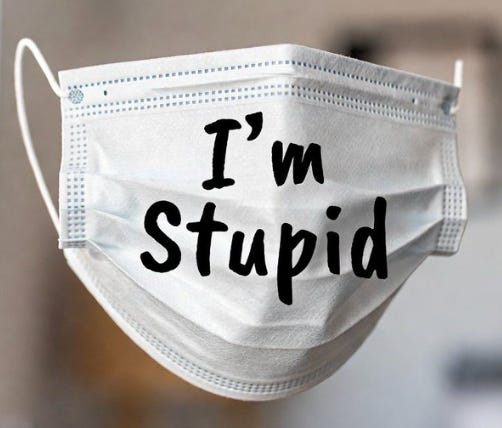
And fourth, social pressure. Once fear takes hold, compliance becomes a kind of tribal ritual. Masks, distancing, endless boosters, disinfecting groceries, standing on little floor stickers six feet apart like contestants in a strange game show. Many of these behaviors become symbols of belonging as much as they do of actual disease mitigation.

Humans are social creatures. We want to belong to the protected group. That instinct can be manipulated. Suddenly, every dusty shed becomes a potential death trap. Sweep out the feed room, and apparently, you now require the courage of a Navy SEAL entering Fallujah.

This is where the psychology becomes more important than the pathogen itself. The actual risk matters less than the emotional framing. Invisible threats produce a unique type of anxiety because people cannot easily assess danger with their own senses. You can see smoke from a fire. You can hear a tornado siren. But you cannot see a virus particle. That uncertainty creates fertile ground for fear amplification.

And once fear takes hold socially, it becomes self-reinforcing. People constantly scan for danger signals. Every cough becomes suspicious. Every news alert feels urgent. Social media feeds become giant feedback loops of anxiety. One frightened person shares alarming information with ten others, who then amplify it further. Before long, the emotional reaction has become detached from the actual statistical risk.
We watched this dynamic unfold repeatedly during COVID. We are now seeing smaller replay versions with avian influenza, Hantavirus, measles outbreaks, and whatever pathogen dominates the next media cycle. The script rarely changes. First comes the alarming headline. Then come the predictive models. Then the expert panels. Then the declarations that “we must act now.” Soon, politicians, bureaucracies, corporations, and media organizations all become economically and institutionally invested in maintaining public attention on the threat. Fear becomes infrastructure.

One of the more fascinating aspects of these cycles is how often speculative language is transformed into emotional certainty. Watch closely, and you will notice the repeated use of phrases like “could spread,” “may mutate,” “might become severe,” or “has pandemic potential.” Scientifically, these statements may be technically true. Almost anything in biology is possible. But psychologically, the public often processes those phrases as though catastrophe is inevitable. That shift in language matters enormously.

Most people do not have the time, scientific background, or emotional distance to continuously evaluate evolving risk claims. They rely instead on emotional tone and institutional trust. If every headline sounds urgent, the brain assumes there must be urgency. This is one reason why psychological bioterrorism is so effective. The campaign does not require outright fabrication. It only requires selective amplification, strategic framing, repetition, and emotional saturation.

Historically, governments and institutions have always understood the political utility of fear. Fear justifies emergency powers. Fear accelerates funding streams. Fear increases media consumption. Fear also creates social cohesion around compliance behaviors. During COVID, entire rituals emerged around masking, distancing, sanitizing groceries, vaccination, and public displays of “doing the right thing.” Some interventions may have had a partial benefit. Others bordered on theater. But all served an additional social purpose by signaling membership in the morally protected group. Humans desperately want to belong to a protected group. That instinct is ancient. And it is easily manipulated.

None of this means infectious diseases are imaginary, nor does it mean all public health officials are malicious actors. Real outbreaks happen. Surveillance matters. Preparedness matters. Basic hygiene matters. But proportionality matters too. A society permanently trapped in hypervigilance eventually loses the ability to distinguish genuine emergencies from manufactured panic.

And that may be the greatest long-term danger of all. When populations are conditioned to exist in a constant state of biological anxiety, they become psychologically exhausted. Trust erodes. Critical thinking deteriorates. Some people become permanently fearful. Others swing toward reflexive cynicism and stop believing anything at all, including legitimate warnings. Both outcomes are destructive.

An even bigger danger is the use of prolonged national health emergencies by those in charge to seize power. Election processes are manipulated or deferred. Medical practitioners who don’t comply or speak out lose their licenses permanently. Small businesses are shuttered, while large transnational corporations with ties to the government grow ever bigger. More “safety” regulations that benefit big ag are incorporated. Rules tighten, and freedoms become more restrictive.

The challenge moving forward is not to become fearless. The challenge and opportunity is to become harder to manipulate. That requires perspective, resilience, and the willingness to ask calm questions during moments of manufactured urgency. Who benefits from the panic? What evidence actually exists? What is known versus speculative? Are we responding proportionally to the actual level of risk?

Most importantly, we must learn to recognize when fear itself has become the product being marketed. Because once societies accept perpetual emergency as normal, freedom begins to erode one anxious headline at a time."

"Global Fertilizer Shortage Means Spring Planting Season Disaster In The Northern Hemisphere"

by Michael Snyder

"Nobody is going to be able to save the spring planting season in the northern hemisphere now, and that is really bad news because according to the UN the number of people in the world experiencing acute hunger was already at an all-time high even before the war began. A historic global food crisis has been escalating for years, and now farmers all over the northern hemisphere either can’t get the nitrogen fertilizer that they desperately need or they are paying much more for it. As a result, global food prices will start rising dramatically once harvest season rolls around, and in many impoverished nations there simply won’t be enough food for everyone.

During normal times, approximately one-third of all globally-traded nitrogen fertilizer travels through the Strait of Hormuz, but right now it can’t get out of the Persian Gulf thanks to the Iranians. Unfortunately, if that nitrogen fertilizer doesn’t get into the hands of farmers in the northern hemisphere within a certain period of time they will completely miss the application window

The Hormuz Strait carries roughly one-third of global fertilizer trade. If farmers miss the application window, no amount of catch-up planting can recover the loss. The International Grains Council estimates cumulative global wheat and coarse grain output could fall 53 million tons below last season, a shortfall larger than Ukraine’s entire annual grain export volume in a typical year.

According to a former co-chair of the White House’s Supply Chain Disruptions Task Force, the spring fertilizer application window in the northern hemisphere ends next month…Spring fertilizer application in the Northern Hemisphere runs through June. Parts of Africa are entering the primary planting season now - a critical window for the continent’s most food-insecure populations. A missed window doesn’t delay a harvest - it eliminates it. The shortfall will be invisible until it materializes in spiking prices and empty shelves next fall.

This is the story the Hormuz blockade coverage is missing. The crisis isn’t just raising energy prices - it is breaking food supply chains. The world is facing a slow-motion catastrophe that will not announce itself until it is too late.

That last sentence is so true. We really are facing a slow-motion catastrophe. For example, we are being told that fertilizer shortages and high fuel costs have created a “critical threat” to global rice supplies…Global rice supplies are facing a critical threat this year as farmers across Asia have been forced to reduce planting due to fertilizer shortages and soaring fuel costs, issues exacerbated by the ongoing Iran war. This situation is compounded by the emerging El Nino effect, which is anticipated to further tighten global rice output.

Rice is central to global food security, and even slight disruptions in supply can have wide-ranging effects. Experts warn that rising prices could pressure household budgets, especially in price-sensitive regions like Asia and Africa. A lot less rice is going to be grown this year. Meanwhile, the global population continues to grow. So who is going to have enough rice to eat? It won’t be the poor. The wealthy will buy up whatever is available, and it will be at significantly higher prices.

There are close to 1.6 billion people living in Africa, and we are being warned that they will soon be facing soaring prices and food shortages…The Iran war could have “dramatic consequences”, causing food shortages and price rises in some of Africa’s poorest and most vulnerable communities, the head of the world’s largest fertiliser company has said.

Svein Tore Holsether, the chief executive of Yara International, said world leaders needed to guard against soaring prices and shortages of fertiliser causing a de facto global auction that would leave the poorest countries, particularly in Africa, scrambling for supplies they could ill afford.

Here in the United States, food will still be available. But it will cost a lot more than it once did, because farmers will be forced to pass along much higher costs for fertilizer and fuel… Farmers have already begun to feel the effects, with rising fertilizer costs and shortages in supply.

The effects of the global conflict are being felt all over Ohio, Bales said. They have taken a large toll on areas such as north central Ohio and western Ohio, where a large amount of row cropping occurs. “(Between the) double whammy of fertilizer and fuel, that is definitely going to make some tough decisions going forward,” said Bales.

This crisis is going to hit us a lot harder than most people realize. One recent survey discovered that a whopping 70 percent of all U.S. farmers are unable to afford all the fertilizer that they need this year…The result is wreaking havoc on farmers. An agricultural lobbying group, the American Farm Bureau Federation, ran a survey and found that 70% of farmers couldn’t afford all the fertilizer they needed.

“Fertilizer pre-booking rates varied significantly by region, with just 19% of Southern producers reporting fertilizer purchases secured ahead of the season, compared to 30% in the Northeast, 31% in the West and 67% in the Midwest, reflecting differences in planting decision timelines and exposure to recent price increases,” the AFBF wrote. Farm diesel prices, which fuel the heavy machinery used in the industry (other than small-scale farms that don’t produce the majority of food crops in the country) are up 46% since the end of February, according to the organizations.

We have never been through anything like this. Some farmers have decided to switch to crops that require less fertilizer, and some farmers have decided not to plant at all this season. In fact, the number of acres of wheat that U.S. farmers are planting this spring will be the fewest that we have seen “since record keeping began in 1919”.

If the Strait of Hormuz reopened tomorrow, and there is no way that is going to happen, it would take weeks for cargo vessels to reach their destinations. And once the Strait does finally reopen, we are being told that “it could be months before supply chains normalize”…“Even if the strait reopens, it will take weeks to bring the plants back online and get them running efficiently, it could be months before supply chains normalize,” the United States House Agriculture Committee wrote in a letter to the U.S. Department of Agriculture. At this point, there is no saving the spring planting season in the northern hemisphere. It is going to be a disaster.

Meanwhile, 60 different nations have implemented emergency energy policies within the past two months…We desperately need the Strait of Hormuz to be reopened.But the Iranians are telling us that this is going to be how it is from now on.

They are in full control of the Strait, and it appears that they just attacked yet another cargo ship…A cargo ship was struck by multiple small craft while sailing near the Strait of Hormuz on Sunday, UK military officials said. The ship, which was not immediately identified, was hit right off the coast of Sirik, Iran, just east of the strait, according to the British military’s United Kingdom Maritime Trade Operations Centre.

We are still in the very early stages of this nightmare. If Iran holds the global economy hostage for an extended period of time, we will see economic chaos that is unlike anything we have ever seen before. But for now most people in the western world are not taking this crisis seriously enough, because they are convinced that it is just a temporary bump in the road."