Procol Harum, "A Salty Dog"

So, we rise from the rubble...
StatCounter
Monday, May 11, 2026


"I Keep Saying That..."

"Angel: Well, I guess I kinda worked it out. If there's no great glorious end to all this, if nothing we do matters... then all that matters is what we do. 'Cause that's all there is. What we do. Now. Today. I fought for so long, for redemption, for a reward, and finally just to beat the other guy, but I never got it.
Kate Lockley: And now you do?
Angel: Not all of it. All I wanna do is help. I wanna help, because I don't think people should suffer as they do. Because, if there's no bigger meaning, then the smallest act of kindness is the greatest thing in the world.
Kate Lockley: Yikes. It sounds like you've had an epiphany.
Angel: I keep saying that, but nobody's listening."
"Decide..."

“We're all going to die. We don't get much say over how or when, but we do get to decide how we're gonna live. So, do it. Decide. Is this the life you want to live? Is this the person you want to love? Is this the best you can be? Can you be stronger? Kinder? More compassionate? Decide. Breathe in. Breathe out and decide.”
- “Richard”, “Grey’s Anatomy”

Dr. Seuss, "The Waiting Place"

"The Waiting Place"
by Dr. Seuss
"Congratulations!
Today is your day.
You're off to Great Places!
You're off and away!
You have brains in your head.
You have feet in your shoes.
You can steer yourself
any direction you choose.
You're on your own. And you know what you know.
And YOU are the guy who'll decide where to go.
You'll look up and down streets. Look 'em over with care.
About some you will say, "I don't choose to go there."
With your head full of brains and your shoes full of feet,
you're too smart to go down any not-so-good street.
And you may not find any
you'll want to go down.
In that case, of course,
you'll head straight out of town.
It's opener there
in the wide open air.
Out there things can happen
and frequently do
to people as brainy
and footsy as you.
And then things start to happen,
don't worry. Don't stew.
Just go right along.
You'll start happening too.
OH!
THE PLACES YOU'LL GO!
You'll be on your way up!
You'll be seeing great sights!
You'll join the high fliers
who soar to high heights.
You won't lag behind, because you'll have the speed.
You'll pass the whole gang and you'll soon take the lead.
Wherever you fly, you'll be best of the best.
Wherever you go, you will top all the rest.
Except when you don't.
Because, sometimes, you won't.
I'm sorry to say so
but, sadly, it's true
that Bang-ups
and Hang-ups
can happen to you.
You can get all hung up
in a prickle-ly perch.
And your gang will fly on.
You'll be left in a Lurch.
You'll come down from the Lurch
with an unpleasant bump.
And the chances are, then,
that you'll be in a Slump.
And when you're in a Slump,
you're not in for much fun.
Un-slumping yourself
is not easily done.
You will come to a place where the streets are not marked.
Some windows are lighted. But mostly they're darked.
A place you could sprain both your elbow and chin!
Do you dare to stay out? Do you dare to go in?
How much can you lose? How much can you win?
And IF you go in, should you turn left or right...
or right-and-three-quarters? Or, maybe, not quite?
Or go around back and sneak in from behind?
Simple it's not, I'm afraid you will find,
for a mind-maker-upper to make up his mind.
You can get so confused
that you'll start in to race
down long wiggled roads at a break-necking pace
and grind on for miles cross weirdish wild space,
headed, I fear, toward a most useless place.
The Waiting Place...
...for people just waiting.
Waiting for a train to go
or a bus to come, or a plane to go
or the mail to come, or the rain to go
or the phone to ring, or the snow to snow
or the waiting around for a Yes or No
or waiting for their hair to grow.
Everyone is just waiting.
Waiting for the fish to bite
or waiting for the wind to fly a kite
or waiting around for Friday night
or waiting, perhaps, for their Uncle Jake
or a pot to boil, or a Better Break
or a string of pearls, or a pair of pants
or a wig with curls, or Another Chance.
Everyone is just waiting.
NO!
That's not for you!
Somehow you'll escape
all that waiting and staying
You'll find the bright places
where Boom Bands are playing.
With banner flip-flapping,
once more you'll ride high!
Ready for anything under the sky.
Ready because you're that kind of a guy!
Oh, the places you'll go! There is fun to be done!
There are points to be scored. There are games to be won.
And the magical things you can do with that ball
will make you the winning-est winner of all.
Fame! You'll be as famous as famous can be,
with the whole wide world watching you win on TV.
Except when they don't
Because, sometimes they won't.
I'm afraid that some times
you'll play lonely games too.
Games you can't win
'cause you'll play against you.
All Alone!
Whether you like it or not,
Alone will be something
you'll be quite a lot.
And when you're alone, there's a very good chance
you'll meet things that scare you right out of your pants.
There are some, down the road between hither and yon,
that can scare you so much you won't want to go on.
But on you will go
though the weather be foul.
On you will go
though your enemies prowl.
On you will go
though the Hakken-Kraks howl.
Onward up many
a frightening creek,
though your arms may get sore
and your sneakers may leak.
On and on you will hike,
And I know you'll hike far
and face up to your problems
whatever they are.
You'll get mixed up, of course,
as you already know.
You'll get mixed up
with many strange birds as you go.
So be sure when you step.
Step with care and great tact
and remember that Life's
a Great Balancing Act.
Just never forget to be dexterous and deft.
And never mix up your right foot with your left.
And will you succeed?
Yes! You will, indeed!
(98 and 3/4 percent guaranteed.)
KID, YOU'LL MOVE MOUNTAINS!
So...
be your name Buxbaum or Bixby or Bray
or Mordecai Ali Van Allen O'Shea,
You're off the Great Places!
Today is your day!
Your mountain is waiting.
So...get on your way!"


Adventures With Danno, "Massive Price Increases At Sam's Club"
Full screen recommended.
Adventures With Danno, 5/11/26
"Massive Price Increases At Sam's Club"
Comments here:
Dan, I Allegedly, "I Rode The D Line - The Economy Is Changing Fast"
Full screen recommended.
Dan, I Allegedly, 5/11/26
"I Rode The D Line -
The Economy Is Changing Fast"
"Today on I Allegedly, I took the brand-new Los Angeles D Line train from Union Station through downtown LA to Grand Central Market to see firsthand how people are adapting to today’s economy. What started as a simple train ride turned into a real look at how inflation, travel costs, parking prices, and everyday financial stress are changing how Americans live. From Dodger Stadium commuters avoiding expensive parking to families riding public transportation for free weekend events, this trip revealed how mass transit is becoming a major part of the new economy. Along the way, I visited Grand Central Market, explored downtown Los Angeles, checked out the brand-new Wilshire/Fairfax station, and talked about major business and economic stories including retail shutdowns, food shortages, bankruptcies, airline drama, tariffs, rising prices, and why more Americans are searching for affordable entertainment and transportation. The economy is shifting fast, and this trip through LA shows exactly what that looks like on the ground."
Comments here:
o
Meanwhile, elsewhere...
Full screen recommended.
Travelling With Russell, 12/25/25
"I Travelled on Russia's Brand-New Electric Tram"
Comments here:
o
Full screen recommended.
Lisa With Love, 2/1/25
"Trying New Russian Metro -
The Best Transport In The World?"
Comments here:
Incredible what a sane, civilized society can achieve, isn't it?
"Hantavirus and Psychological Bioterrorism"

by Robert W. Malone, MD
"Fear is one of the most powerful drugs ever invented. Unlike antibiotics or antivirals, it requires no FDA approval, no manufacturing plant, and no cold-chain shipping. Fear spreads itself. All it takes is a headline, a few experts on television, ominous music behind a news segment, and suddenly millions of people begin scanning their bodies for symptoms they did not know they had ten minutes earlier.
Psychological Bioterrorism is the weaponization of fear about disease in order to manipulate individuals, populations, markets, and governments. Sometimes the objective is political. Sometimes financial. Sometimes bureaucratic. Often, it is all three at once.
This is not a conspiracy theory. It is a recognized form of psychological warfare. We have written about it extensively in our book "Psywar." In that book, we write about Dr. Alexander Kouzminov, a former Soviet-Russian intelligence officer with deep experience in biological espionage and biosecurity operations, who in 2017, described how fear of infectious disease can be strategically amplified to shape public behavior, influence governments, and create opportunities for those positioned to benefit from the panic. That process is called psychological bioterrorism.
Once you understand the framework, you start seeing the pattern everywhere. A virus or some other pathogen emerges somewhere in the world. The media shifts into apocalyptic mode. Experts appear to be predicting catastrophe. Computer models project millions dead, if the right circumstances coalesce. Politicians declare emergencies. Pharmaceutical companies announce new products. Social media turns into a digital panic attack. And ordinary people, who just wanted to buy eggs and walk the dog, suddenly feel like civilization is one cough away from collapse. Wash. Rinse. Repeat.
The latest example is the current media frenzy surrounding Hantavirus. Now, to be clear, Hantavirus is a real disease. It can be serious. It deserves appropriate medical attention and surveillance. Rodent control around homes and barns matters, particularly in areas where the virus is endemic. Nobody sensible is arguing otherwise. But if you watched the recent media cycle unfold, you would think half the country was moments away from dying in a cloud of mouse droppings drifting through the HVAC system at Tractor Supply.
The reality is far less cinematic. Hantavirus infections in the United States remain extremely rare. Most cases occur in very specific geographic regions and involve clear exposure risks, typically in enclosed areas contaminated with rodent waste. Yet suddenly, every media outlet behaves as though sweeping out your old feed room or poking around your basement is equivalent to starring in a Hollywood outbreak movie.
This is how psychological bioterrorism works. The pathogen itself matters less than the emotional payload attached to it. Fear scales faster than facts. The reason these campaigns work so well is simple. Human beings are biologically wired to fear invisible threats. A wolf outside the cave is frightening. But an invisible virus floating through the air? That activates something much deeper in the human nervous system. You cannot see it. You cannot smell it. You cannot negotiate with it. Every stranger becomes a potential threat. Every cough becomes suspicious. That loss of control is the point.
Psychological bioterrorism succeeds because it simultaneously creates four powerful emotional conditions:
First, speed. Modern communications allow fear to spread globally in real time. One dramatic headline in New York can trigger anxiety in Nebraska before breakfast.
Second, vulnerability. Most people feel helpless against infectious disease. They do not know what is true, what is exaggerated, or what actually works. That uncertainty creates dependency on authorities.
Third, confusion. During outbreaks, conflicting information floods the public sphere. Models change. Predictions fail. Definitions shift. Recommendations reverse. In the fog of uncertainty, populations become easier to steer.
And fourth, social pressure. Once fear takes hold, compliance becomes a kind of tribal ritual. Masks, distancing, endless boosters, disinfecting groceries, standing on little floor stickers six feet apart like contestants in a strange game show. Many of these behaviors become symbols of belonging as much as they do of actual disease mitigation.
Humans are social creatures. We want to belong to the protected group. That instinct can be manipulated. Suddenly, every dusty shed becomes a potential death trap. Sweep out the feed room, and apparently, you now require the courage of a Navy SEAL entering Fallujah.
This is where the psychology becomes more important than the pathogen itself. The actual risk matters less than the emotional framing. Invisible threats produce a unique type of anxiety because people cannot easily assess danger with their own senses. You can see smoke from a fire. You can hear a tornado siren. But you cannot see a virus particle. That uncertainty creates fertile ground for fear amplification.
And once fear takes hold socially, it becomes self-reinforcing. People constantly scan for danger signals. Every cough becomes suspicious. Every news alert feels urgent. Social media feeds become giant feedback loops of anxiety. One frightened person shares alarming information with ten others, who then amplify it further. Before long, the emotional reaction has become detached from the actual statistical risk.
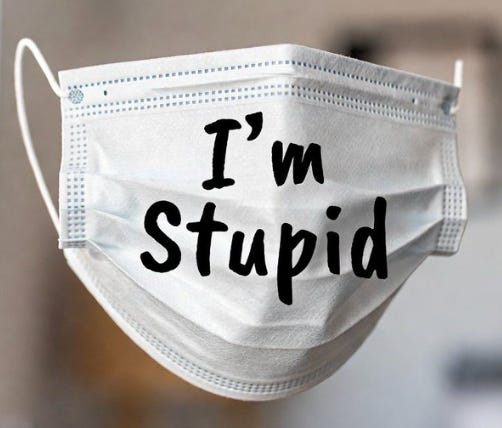
We watched this dynamic unfold repeatedly during COVID. We are now seeing smaller replay versions with avian influenza, Hantavirus, measles outbreaks, and whatever pathogen dominates the next media cycle. The script rarely changes. First comes the alarming headline. Then come the predictive models. Then the expert panels. Then the declarations that “we must act now.” Soon, politicians, bureaucracies, corporations, and media organizations all become economically and institutionally invested in maintaining public attention on the threat. Fear becomes infrastructure.
One of the more fascinating aspects of these cycles is how often speculative language is transformed into emotional certainty. Watch closely, and you will notice the repeated use of phrases like “could spread,” “may mutate,” “might become severe,” or “has pandemic potential.” Scientifically, these statements may be technically true. Almost anything in biology is possible. But psychologically, the public often processes those phrases as though catastrophe is inevitable. That shift in language matters enormously.
Most people do not have the time, scientific background, or emotional distance to continuously evaluate evolving risk claims. They rely instead on emotional tone and institutional trust. If every headline sounds urgent, the brain assumes there must be urgency. This is one reason why psychological bioterrorism is so effective. The campaign does not require outright fabrication. It only requires selective amplification, strategic framing, repetition, and emotional saturation.
Historically, governments and institutions have always understood the political utility of fear. Fear justifies emergency powers. Fear accelerates funding streams. Fear increases media consumption. Fear also creates social cohesion around compliance behaviors. During COVID, entire rituals emerged around masking, distancing, sanitizing groceries, vaccination, and public displays of “doing the right thing.” Some interventions may have had a partial benefit. Others bordered on theater. But all served an additional social purpose by signaling membership in the morally protected group. Humans desperately want to belong to a protected group. That instinct is ancient. And it is easily manipulated.
None of this means infectious diseases are imaginary, nor does it mean all public health officials are malicious actors. Real outbreaks happen. Surveillance matters. Preparedness matters. Basic hygiene matters. But proportionality matters too. A society permanently trapped in hypervigilance eventually loses the ability to distinguish genuine emergencies from manufactured panic.
And that may be the greatest long-term danger of all. When populations are conditioned to exist in a constant state of biological anxiety, they become psychologically exhausted. Trust erodes. Critical thinking deteriorates. Some people become permanently fearful. Others swing toward reflexive cynicism and stop believing anything at all, including legitimate warnings. Both outcomes are destructive.
An even bigger danger is the use of prolonged national health emergencies by those in charge to seize power. Election processes are manipulated or deferred. Medical practitioners who don’t comply or speak out lose their licenses permanently. Small businesses are shuttered, while large transnational corporations with ties to the government grow ever bigger. More “safety” regulations that benefit big ag are incorporated. Rules tighten, and freedoms become more restrictive.
The challenge moving forward is not to become fearless. The challenge and opportunity is to become harder to manipulate. That requires perspective, resilience, and the willingness to ask calm questions during moments of manufactured urgency. Who benefits from the panic? What evidence actually exists? What is known versus speculative? Are we responding proportionally to the actual level of risk?
Most importantly, we must learn to recognize when fear itself has become the product being marketed. Because once societies accept perpetual emergency as normal, freedom begins to erode one anxious headline at a time."
"Global Fertilizer Shortage Means Spring Planting Season Disaster In The Northern Hemisphere"

by Michael Snyder
"Nobody is going to be able to save the spring planting season in the northern hemisphere now, and that is really bad news because according to the UN the number of people in the world experiencing acute hunger was already at an all-time high even before the war began. A historic global food crisis has been escalating for years, and now farmers all over the northern hemisphere either can’t get the nitrogen fertilizer that they desperately need or they are paying much more for it. As a result, global food prices will start rising dramatically once harvest season rolls around, and in many impoverished nations there simply won’t be enough food for everyone.
During normal times, approximately one-third of all globally-traded nitrogen fertilizer travels through the Strait of Hormuz, but right now it can’t get out of the Persian Gulf thanks to the Iranians. Unfortunately, if that nitrogen fertilizer doesn’t get into the hands of farmers in the northern hemisphere within a certain period of time they will completely miss the application window…
The Hormuz Strait carries roughly one-third of global fertilizer trade. If farmers miss the application window, no amount of catch-up planting can recover the loss. The International Grains Council estimates cumulative global wheat and coarse grain output could fall 53 million tons below last season, a shortfall larger than Ukraine’s entire annual grain export volume in a typical year.
According to a former co-chair of the White House’s Supply Chain Disruptions Task Force, the spring fertilizer application window in the northern hemisphere ends next month…Spring fertilizer application in the Northern Hemisphere runs through June. Parts of Africa are entering the primary planting season now - a critical window for the continent’s most food-insecure populations. A missed window doesn’t delay a harvest - it eliminates it. The shortfall will be invisible until it materializes in spiking prices and empty shelves next fall.
This is the story the Hormuz blockade coverage is missing. The crisis isn’t just raising energy prices - it is breaking food supply chains. The world is facing a slow-motion catastrophe that will not announce itself until it is too late.
That last sentence is so true. We really are facing a slow-motion catastrophe. For example, we are being told that fertilizer shortages and high fuel costs have created a “critical threat” to global rice supplies…Global rice supplies are facing a critical threat this year as farmers across Asia have been forced to reduce planting due to fertilizer shortages and soaring fuel costs, issues exacerbated by the ongoing Iran war. This situation is compounded by the emerging El Nino effect, which is anticipated to further tighten global rice output.
Rice is central to global food security, and even slight disruptions in supply can have wide-ranging effects. Experts warn that rising prices could pressure household budgets, especially in price-sensitive regions like Asia and Africa. A lot less rice is going to be grown this year. Meanwhile, the global population continues to grow. So who is going to have enough rice to eat? It won’t be the poor. The wealthy will buy up whatever is available, and it will be at significantly higher prices.
There are close to 1.6 billion people living in Africa, and we are being warned that they will soon be facing soaring prices and food shortages…The Iran war could have “dramatic consequences”, causing food shortages and price rises in some of Africa’s poorest and most vulnerable communities, the head of the world’s largest fertiliser company has said.
Svein Tore Holsether, the chief executive of Yara International, said world leaders needed to guard against soaring prices and shortages of fertiliser causing a de facto global auction that would leave the poorest countries, particularly in Africa, scrambling for supplies they could ill afford.
Here in the United States, food will still be available. But it will cost a lot more than it once did, because farmers will be forced to pass along much higher costs for fertilizer and fuel… Farmers have already begun to feel the effects, with rising fertilizer costs and shortages in supply.
The effects of the global conflict are being felt all over Ohio, Bales said. They have taken a large toll on areas such as north central Ohio and western Ohio, where a large amount of row cropping occurs. “(Between the) double whammy of fertilizer and fuel, that is definitely going to make some tough decisions going forward,” said Bales.
This crisis is going to hit us a lot harder than most people realize. One recent survey discovered that a whopping 70 percent of all U.S. farmers are unable to afford all the fertilizer that they need this year…The result is wreaking havoc on farmers. An agricultural lobbying group, the American Farm Bureau Federation, ran a survey and found that 70% of farmers couldn’t afford all the fertilizer they needed.
“Fertilizer pre-booking rates varied significantly by region, with just 19% of Southern producers reporting fertilizer purchases secured ahead of the season, compared to 30% in the Northeast, 31% in the West and 67% in the Midwest, reflecting differences in planting decision timelines and exposure to recent price increases,” the AFBF wrote. Farm diesel prices, which fuel the heavy machinery used in the industry (other than small-scale farms that don’t produce the majority of food crops in the country) are up 46% since the end of February, according to the organizations.
We have never been through anything like this. Some farmers have decided to switch to crops that require less fertilizer, and some farmers have decided not to plant at all this season. In fact, the number of acres of wheat that U.S. farmers are planting this spring will be the fewest that we have seen “since record keeping began in 1919”.
If the Strait of Hormuz reopened tomorrow, and there is no way that is going to happen, it would take weeks for cargo vessels to reach their destinations. And once the Strait does finally reopen, we are being told that “it could be months before supply chains normalize”…“Even if the strait reopens, it will take weeks to bring the plants back online and get them running efficiently, it could be months before supply chains normalize,” the United States House Agriculture Committee wrote in a letter to the U.S. Department of Agriculture. At this point, there is no saving the spring planting season in the northern hemisphere. It is going to be a disaster.
Meanwhile, 60 different nations have implemented emergency energy policies within the past two months…We desperately need the Strait of Hormuz to be reopened.But the Iranians are telling us that this is going to be how it is from now on.
They are in full control of the Strait, and it appears that they just attacked yet another cargo ship…A cargo ship was struck by multiple small craft while sailing near the Strait of Hormuz on Sunday, UK military officials said. The ship, which was not immediately identified, was hit right off the coast of Sirik, Iran, just east of the strait, according to the British military’s United Kingdom Maritime Trade Operations Centre.
We are still in the very early stages of this nightmare. If Iran holds the global economy hostage for an extended period of time, we will see economic chaos that is unlike anything we have ever seen before. But for now most people in the western world are not taking this crisis seriously enough, because they are convinced that it is just a temporary bump in the road."
"Black Swans: Interconnected, Nonlinear, and Ready to Ruin Your Day"

"Black Swans: Interconnected,
Nonlinear, and Ready to Ruin Your Day"
by John Wilder
"I’ve read enough history to know that the world doesn’t change in smooth straight lines. When change hits, it lurches. One day everything seems stable and the peasants are happily tilling the fields, and the next they’re communists busy storming the Bastille. That’s the Black Swan. Nassim Nicholas Taleb laid the definition out in his book "The Black Swan." A real Black Swan isn’t just a surprise. It has three traits.
First, it’s an outlier, so far outside what most expected that the past gives zero warning.
Second, it carries an extreme impact, the kind that reshapes economies, governments, or entire ways of life.
Third, after it hits, we humans can’t help ourselves: we retroactively “explain” it like it was obvious all along. “Of course, a fight about ethics in video game journalism would lead to the Strait of Hormuz being closed.”
We’ve had plenty of Black Swans, but I’ll run through some of the greatest hits reel to show the pattern.
1914. The assassination of Archduke Franz Ferdinand in Sarajevo looked like a local Balkan thing. A couple of pistol shots, right? By the end of summer, however, the Guns of August had turned Europe into a meat grinder. Twenty million ended up dead due to the war. Empires dismantled. The map of Europe was redrawn and communism popped up yet again, this time in war-devastated Russia, being just another proof of the Russian national motto: “And then it got worse”.
1929. Stock prices had climbed a mountain of margin debt. Thankfully we’ve learned our lesson and now have only twice the margin debt piled into the market here in 2026. But back then? One bad week in October and the market collapsed like Will Smith’s career. The Great Depression followed.
1992. The Soviet Union looked like it would last forever: nukes, tanks, gulags, that guy that Rocky had to box, the works. Then, overnight, it imploded. Gorbachev’s reforms, economic rot, and a failed coup turned the world’s other superpower into fifteen broke republics. The Cold War ended not with a bang but with a shrug and empty shelves in Moscow. This was a positive Black Swan. Unless you were Gorby.
2000. The Dot-Com Bubble in 2000 was next. Internet stocks were going to change everything. Pets.com. Webvan. Internet pizza by the slice, but you had to go pick it up. Stock valuations that made tulip mania look rational. When the music stopped, trillions evaporated. NASDAQ dropped 78%. One of my friends sold a company for $50 million. In Alta-Vista® stock. That he couldn’t sell for two years.
2001. September 11. Nineteen illiterate savages with box cutters rewrote global security, launched two endless wars, and shifted trillions in spending. Air travel changed forever. Civil liberties got waterboarded. They made The Mrs. take off her sandals going through security, and then ran a metal detector wand over her bare feet after the shoe bomber.
2008. The Great Recession came from a housing market no one thought could fail. The cause? Subprime mortgages, collateralized debt obligations, and banks playing Jenga™ with other people’s money. Lehman Brothers folded, credit froze, and the government printed enough money to wallpaper the Moon.
2020. COVID-19, a virus from a wet market (or a lab, pick your conspiracy) shut down the planet. Just-in-time supply chains snapped like dry twigs. Governments printed trillions while telling you to stay home and order DoorDash™ because no one working for DoorDash© could spread the disease. Inflation roared back like a thing roaring back.
Every single one of these events looked impossible right up until it wasn’t. And every single one was explained afterward like the smart people had been warning us that these events were going to happen all along.
We are living in the most interconnected, nonlinear system humanity has ever built. The whole mess is dependent upon global supply chains, instant financial markets, AI-driven trading, just-in-time inventory, and central banks playing God with interest rates. A hiccup in one node doesn’t stay local anymore. It cascades. Nonlinear means small inputs can produce gigantic, unpredictable outputs, like a butterfly flapping its wings in Beijing, causing Nic Cage to say “no” when offered a part in a movie.
We are in a world where I think more Black Swans are imminent, because there are groups that are actively shaking the foundations of the way the world words. Like China. China’s economic ascendency isn’t some slow rise. It’s unrestricted economic warfare, exactly like the Chinese generals described in their book. They’ve gutted our manufacturing base while we cheered “free trade.” They control rare earths, solar panels, pharmaceuticals, and now a big chunk of silver production and refining. One policy tweak in Beijing and entire U.S. industries seize up. That’s not theory. It’s happening.
At the same time, Trump is busy recasting the entire post-World War II alliance structure. In his defense, it was going to happen anyway, so might as well try to recast it in a way that works for the United States. The old Cold War playbook: NATO, endless commitments, sending our treasure overseas while our own borders leak is getting rewritten.
New deals based on new priorities, while old partners are suddenly on notice. When you yank the scaffolding out from under a 75-year-old global order, things get wobbly.
Add in the debt bomb. Interest payments alone are bigger than defense budgets used to be. Bond vigilantes haven’t shown up yet, but they’re circling. One bad auction, one loss of faith, and the bond market revolts. Rates spike. Stocks crater. Pensions and 401(k)s take a hit that makes 2008 look like a warm-up.
Then there’s AI and automation. We’re likely on the edge of having AGI (artificial general intelligence) that could rewrite every job category. Or we could get an AI stock crash first: valuations are moonshot, hype is everywhere, and conflicting AI agents trading against each other at light speed could trigger a flash crash that makes 1987 look quaint. Massive unemployment follows as advanced automation eats white-collar work the way robots ate factory jobs. What happens when millions of college-educated professionals suddenly have nowhere to go?
Geopolitical Black Swans are lining up too. Civil unrest in the UK that looks more like low-grade civil war every year: mass migration, cultural collapse, and the elites are disconnected. Could Saudi Arabia fracture internally while oil markets hang in the balance? What about a Cascadia subduction zone earthquake that could drop bridges, snap pipelines, and isolate the Pacific Northwest for weeks? Any one of these hits an already-fragile, hyper-connected world and the dominoes don’t stop falling. The point is to recognize the pattern: complexity plus nonlinearity plus rapid systemic change equals Black Swan habitat. We’ve never had more of all three at once.
So what to do? Stop pretending the experts have it under control. They clearly don’t. The good news is resilience looks the same for many cases. Skills beat degrees when the power goes out. A garden and a stocked pantry beats a grocery store when shelves empty. Cash, metals, and productive land beat IOUs from a government that prints money like it’s confetti.
The Black Swan doesn’t care about fear, but it does respect preparation. The next one is coming. It always does. And if you’re off to storm the Bastille, well, remember to wear clean underwear. I’d usually tell a more complicated joke at the end, but the best underwear jokes are brief."
"Eight Weeks To Empty Shelves. Sixty Days To Famine. What Caused It, And What You Need To Do Immediately"

"Eight Weeks To Empty Shelves. Sixty Days To Famine.
What Caused It, And What You Need To Do Immediately"
by Mark A. Shryock
"I called this timeline months ago. June and July 2026. I said it when there was no data to support it. I said it when people thought I was wrong. I said it when even the AI systems I work with told me I was getting ahead of the evidence. I said it because I could see the convergence coming through my training in systems analysis and because something deeper than data was telling me the timeline was right. Now the data is here. And it confirms everything.
I have run this research across four separate large language models. I have cross-referenced every claim against the U.S. Energy Information Administration, the International Energy Agency, Bloomberg, Goldman Sachs, JPMorgan, Fortune, the Associated Press, Reuters, PBS, CNN, and the United Nations. I have verified the expert assessments from Carlyle Group, Rystad Energy, Shell, Chevron, and the EIA administrator himself.
What I am about to show you is not speculation. It is not opinion. It is the documented, sourced, verified trajectory of the global oil supply as it exists right now, on May 8, 2026. If you can hear me, your life depends on what is in this article. I am not being dramatic. I am not overstating this. I am telling you that the data says the United States of America will run out of usable oil by July 4, 2026. Europe will run out this month. The food system that feeds you runs on diesel. Diesel runs out first. Read this. Understand it. Act on it today. Not tomorrow. Today.
THE LAST TANKER: On May 3, 2026, a Hong Kong-flagged tanker called the New Corolla docked at the Port of Long Beach, California. It was carrying two million barrels of Iraqi crude oil loaded at the Port of Basra on February 24, four days before the United States and Israel launched Operation Epic Fury against Iran and the Strait of Hormuz effectively closed. That tanker was the last one. The last oil shipment from the Middle East to reach American shores. It arrived, it unloaded, and now it is gone.
The buffer that kept fuel flowing for two months, tankers that were already at sea when the war started, is exhausted. Bryon Stock, director of the Chevron El Segundo refinery, the largest refinery on the West Coast, called it a "significant milestone that I've not seen or faced in my 27-year career." His refinery normally receives 20 percent of its crude from the Arab Gulf. That supply is now zero. California imports roughly 60 percent of its crude. Roughly 20 percent of that came from the Middle East. Gone.
For two months, the world coasted on oil that was already at sea. That floating inventory masked the full scale of what was happening. It kept prices high but stable. It kept fuel flowing. It kept people thinking this was just another spike at the pump. That illusion ended on May 3 in Long Beach. We are no longer in a price crisis. We are entering a physical shortage. A point where fuel stops being available at any price because there is none left to sell.
WHAT HAPPENED TO THE STRAIT: The Strait of Hormuz is a narrow waterway between Iran and Oman. Before the war, roughly 120 commercial vessels transited it every day. It carried 20 million barrels of oil per day, 20 percent of the global seaborne oil trade. It was the single most important energy chokepoint on the planet.
On February 28, 2026, the United States and Israel launched strikes against Iran that killed Supreme Leader Ayatollah Ali Khamenei. Iran retaliated by closing the strait. By early March, only three oil tankers transited in a single day where fifty had passed days earlier. Iran deployed mines, IRGC gunboats, anti-ship missiles, and drone attacks to enforce the closure. On March 4, Iran formally declared the strait closed and threatened to attack any vessel attempting passage. At least 34 documented attacks on commercial vessels have occurred since the maritime phase began.
By the week ending May 3, Lloyd's List reported only 40 ships crossed the strait in the entire seven-day period. That is roughly five or six per day. Pre-war traffic was 120 per day. That is a 95 percent collapse in commercial shipping through the most important oil corridor on Earth.
The United States imposed its own naval blockade of Iranian ports on April 13. On April 23, Trump ordered the Navy to destroy any Iranian boats laying mines. On May 3, Trump said the U.S. would help free stranded ships, then paused the effort. Iran warned the U.S. to stay out.
The strait has been effectively closed for over two months. Twenty thousand mariners and two thousand ships remain stranded in the Persian Gulf. Insurance firms are refusing war-risk cover for Hormuz transits, and the London Joint War Committee has expanded its designated high-risk zones. War risk premiums have increased four to six times pre-war levels. Even vessels willing to attempt passage face insurance costs that make the trip economically unviable.
WHAT "TANK BOTTOMS" MEANS AND WHY IT WILL END YOUR WAY OF LIFE: You are going to hear a phrase in the coming days that most Americans have never encountered: tank bottoms. Jeff Currie, senior advisor at the Carlyle Group, told Bloomberg Television on May 6, 2026, that oil storage tanks in Europe will hit tank bottoms "sometime in the month of May" and in the United States "somewhere in that July 4th period." He said he has "never seen anything like it before."
Stop and understand what this means. Tank bottoms does not mean the tanks are low. It means the system stops working. Oil storage tanks require a minimum volume of liquid to maintain the pressure that allows pumps to function. When levels drop below that threshold, the remaining oil becomes physically inaccessible to the pipeline system. It cannot be pumped out. It cannot be moved. The pumps fail.
Below that, the bottom five to ten percent of large storage tanks contains sediment, water, and paraffin wax that the industry calls "heavies." If you try to draw from that level, you clog filters and damage refinery equipment. That last volume is not usable without intensive processing that takes weeks.
So when Currie says "tank bottoms," he is describing a point where the infrastructure itself fails. The pumps cannot pull. The pipelines cannot deliver. The refineries cannot process. It does not matter what the price is. It does not matter how much money you have. The fuel is physically gone from the system. Europe is hitting that point now. This month. May 2026. The United States hits it around July 4. That is not a projection for next year. That is eight weeks from the day I am writing this.
THE NUMBERS THAT PROVE IT: As of the week ending May 1, total U.S. commercial petroleum inventories fell by 5.9 million barrels in a single week. Crude oil stocks dropped 2.3 million barrels. Distillate fuel (diesel and jet fuel) dropped 1.3 million barrels and now sits 11 percent below the five-year average, at the lowest level since 2005. U.S. gasoline stocks fell 2.5 million barrels. This was the eleventh straight weekly decline in gasoline inventories. All of this is from the EIA's own weekly petroleum status report, released May 6, 2026.
Globally, the net market deficit is running at 5.1 million barrels per day according to the EIA's Q2 2026 estimate. But that is only the gap between production and consumption. When you include the drawdown of strategic reserves, floating storage, and commercial stocks worldwide, the gross depletion rate reaches 10 to 13 million barrels per day. One analysis estimates that over one billion barrels of stored petroleum have been depleted since late February.
To put that in context, the entire U.S. Strategic Petroleum Reserve held 413 million barrels in December 2025. We have burned through the equivalent of more than two full Strategic Petroleum Reserves in ten weeks.
The SPR itself stood at 397.9 million barrels as of late April. As of the week of May 1, it was down to 392.7 million barrels and falling. The U.S. has announced a release of 172 million barrels as part of a coordinated 32-nation effort totaling 400 million barrels. Only 17.5 million of that U.S. release has been completed so far. The release is structured as an exchange, not a sale, meaning every barrel must be returned to the reserve later with an 18 to 22 percent premium. We are borrowing from our own emergency stockpile at interest, to fill a hole that cannot be filled.
Goldman Sachs reported global stocks at 101 days of demand and projected they will fall to 98 days by end of May. HFI Research estimated that U.S. buffer crude product stores could run out in two weeks. U.S. buffer oil stores could run out in eight weeks. The only remaining buffers globally are U.S. commercial stocks and China's strategic reserve.
Currie's assessment on Bloomberg was definitive: "It's baked in, full stop. It's going to take so long to get all this restarted that those inventories will continue to draw." Even if the war ended today, the shortages are inevitable.
DIESEL RUNS OUT FIRST AND THEN EVERYTHING STOPS: Not all fuels are equal in this crisis. Diesel runs out first. And when diesel stops, America stops. U.S. distillate inventories (diesel and jet fuel combined) are 11 percent below the five-year average and at the lowest levels since 2005. In Michigan, diesel hit $6.00 per gallon. In the Great Lakes region, it is above $6.00. In California, projections range from $6.00 to $8.90 per gallon depending on how long the crisis continues.
Diesel is not a luxury fuel. Diesel is the blood supply of the American economy. Seventy percent of all agricultural and food products in the United States are transported by truck. Every truck runs on diesel. Every tractor in every field runs on diesel. Every combine harvester runs on diesel. Every refrigerated trailer keeping food cold on its way to your grocery store runs on diesel. Every freight train pulling grain cars runs on diesel.
When diesel becomes scarce, trucks stop moving. When trucks stop moving, food does not get picked up from farms. It does not get delivered to processing plants. It does not get driven to distribution centers. It does not arrive at grocery stores. This is not inflation. Inflation is when prices go up. This is when the shelves go empty because there is nothing to put on them. There is nothing to put on them because there is no fuel to move the food from where it grows to where you live.
The United Nations has already sounded the alarm. UN News reported that the Hormuz disruption is raising fears of a global food crisis. FAO economists warned the situation could deteriorate further, particularly if countries begin restricting exports to protect domestic supplies, a pattern seen in every previous food crisis. Fertilizer prices are already surging because nitrogen fertilizer production depends on natural gas, and natural gas supplies through Hormuz have been cut. California nitrogen fertilizer prices have reached $450 to $575 per ton.
CNN reported that the oil crisis is turning into "an everything crisis." Plastic caps, crates, snack bags, and containers are becoming harder to procure. Petroleum derivatives are needed for adhesives in footwear and furniture, industrial lubricants for machinery, solvents for paints and cleaning. Beer, noodles, chips, toys, cosmetics, kidney dialysis supplies, condoms. All of it depends on petroleum. All of it is being disrupted right now.
We are not approaching a food crisis. We are entering one. And it will become a famine if this continues through June and July, which the data says it will.
THE AVIATION COLLAPSE HAS ALREADY BEGUN: On May 2, 2026, Spirit Airlines ceased all operations. The announcement came at 3:00 AM Eastern Time. Seventeen thousand workers lost their jobs. The airline's lawyer said there was "no remaining way out." Spirit had absorbed over $100 million in fuel costs since March 1. It is gone. Spirit Airlines is not the last carrier that will fall. It is the first.
Jet fuel inventories at the European benchmark hub of Amsterdam-Rotterdam-Antwerp have fallen 50 percent since the war began in late February. Claudio Galimberti, chief economist at Rystad Energy, told Fortune the decline has been "a straight line down, and it will continue to be like that for at least the next few weeks no matter what we do."
Goldman Sachs projects that European commercial jet fuel inventories will drop below the International Energy Agency's critical 23-day shortage threshold sometime in June. The U.K. is identified as the most at risk of jet fuel rationing. Some European countries hold no official jet fuel stock at all.
Lufthansa has canceled 20,000 flights through October. AirAsia X has raised fares 31 to 40 percent and cut capacity 10 percent. Air New Zealand has canceled 1,100 flights. Over 13,000 flights scheduled for May alone have been canceled across Europe. Almost two million seats have been removed from carrier schedules worldwide.
American Airlines estimated its 2026 fuel expenses at $4 billion higher than last year. Delta reported a $2 billion spike in fuel costs for the second quarter alone.
Galimberti told Fortune: "We're still kind of sleepwalking into this approaching disaster. There is little doubt there is going to be a disaster." He called it sleepwalking. That is the word. The data is screaming and the world is sleepwalking.
THE FUELS NOBODY TALKS ABOUT: The crisis extends far beyond what goes in your car or your truck. The Strait of Hormuz carried roughly 20 percent of global liquefied natural gas trade. Qatar, the world's largest LNG exporter, has sustained damage at its Ras Laffan processing complex that has knocked out an estimated 17 percent of its capacity. Rystad Energy estimates the disruption has stripped 7 to 11 percent of annual global LNG supply from the market. Asia spot LNG prices have surged 140 percent, from $10 per million BTU before the war to above $25.
Liquefied petroleum gas, the fuel that feeds plastics manufacturing, chemical production, heating systems, and agricultural operations, has seen shipments stall as Gulf exports collapse. Goldman Sachs identifies LPG as a key shortage risk in Q2 2026.
Naphtha, the petrochemical feedstock that is the raw material for plastics, solvents, and industrial chemicals, is vanishing from Asian markets. Fujairah storage stocks are down 72 percent. Northwest Europe ARA naphtha stocks are down 37 percent. Singapore middle distillate prices have hit record highs above $290 per barrel. Petrochemical plants across Asia are shutting down because they cannot afford or obtain feedstock.
These are not consumer fuels. Most Americans will never hear about naphtha or LPG shortages. But they will feel them. Plastic packaging, medical supplies, fertilizer components, industrial chemicals, heating fuel for homes that use propane. All of it depends on supply chains that are breaking right now.
THE REGIONS THAT WILL BE HIT FIRST: Not every part of America faces the same level of risk. Geography determines vulnerability. California operates as what analysts call an "energy island." It is disconnected from the domestic pipeline network and relies almost entirely on sea-borne crude imports. The Chevron El Segundo refinery, the largest on the West Coast, is cut off from a significant portion of its supply with no pipeline alternative. California gas is already above $6.00 per gallon and climbing.
The southeastern United States depends heavily on the Colonial Pipeline, the major refined products pipeline running from the Gulf Coast to the Eastern Seaboard. That pipeline is currently seeing reduced throughput because Gulf Coast refineries are prioritizing exports to Europe, where the shortage is more acute. The Southeast may face localized shortages even before the national average reaches crisis levels.
Asia and the Pacific are being hit first and hardest. Shell CEO Wael Sawan told investors that "South Asia was first to get that brunt. That's moved to Southeast Asia, Northeast Asia and then more so into Europe as we get into April." South Korea, Japan, and China together account for 75 percent of the oil that normally flows through Hormuz. Australia has already implemented government-mandated work-from-home orders. The Philippines moved to a four-day workweek. Vietnam ordered workers to stay home.
Europe faces immediate exhaustion of inventories this month. Heavy reliance on Qatari LNG and Saudi crude via Hormuz has led to industrial surcharges of up to 30 percent. Total CEO Patrick Pouyanne estimated that 10 to 13 million barrels per day have been drawn from global stocks since the crisis began, roughly 500 million barrels consumed so far. Equinor's CEO has said it would take six or more months to normalize even after a deal is reached.
THE PRICE YOU SEE IS A LIE: There is something happening in the oil markets right now that most Americans will never hear about, and it may be the most important signal in this entire crisis. There are two prices for oil. The 'paper' price is what you see on the news, the futures contracts traded on exchanges. Then there is the 'physical' price. This is what actual barrels of oil sell for when real buyers pay real money for real crude to be delivered to real refineries.
In a normal market, those two prices track each other closely. Right now they do not. The gap between them has ranged from $20 to $60 per barrel since the crisis began, depending on the day and the grade of crude. On May 8, Brent crude futures settled around $101.65 per barrel. That is the number the headlines report. But on April 7, physical Dated Brent hit $144.42 per barrel, the highest recorded price since 1987. That is a gap of more than $40 in a single benchmark. The IEA reported physical crude spot prices near $150 per barrel in April.
Veteran energy investor George Noble captured the disconnect when paper settled at $90 and physical traded at $144 on the same day: 'One of them is WRONG.' He added, based on 45 years of experience, that when paper catches up to physical, the repricing will be 'violent.
The price you see on the news is the paper price. The price the world is actually paying for oil is far higher. And when those two numbers converge, every price you pay for everything will move with them. Reuters reported that short sellers placed $7 billion in oil-price bets ahead of major price movements in March and April, making hundreds of millions of dollars in profits. Somebody knew. Somebody positioned themselves to profit from the chaos. And they did.
THE 64-WEEK LAG THAT NOBODY UNDERSTANDS: Here is the fact that should keep every policymaker awake tonight. If the Strait of Hormuz opened this afternoon, completely and permanently, the first drop of new Persian Gulf gasoline would not reach a Midwestern gas pump until approximately June 2027. That is 64 weeks from now.
The math is straightforward. It takes roughly 40 days for a Very Large Crude Carrier to travel from the Persian Gulf to the U.S. Gulf Coast. Once crude arrives at a refinery, it enters a multi-week refining process before it becomes usable fuel. Then the refined gasoline has to be moved from coastal refineries to inland distribution points, which takes another 10 to 14 days by pipeline and truck. Add it all together and you get 64 weeks from strait to pump.
That means the pain is locked in. Regardless of what happens diplomatically. Regardless of what deal is reached. Regardless of what any politician promises. The physical reality of moving oil across oceans, refining it, and distributing it to 150,000 gas stations cannot be compressed. No speech fixes this. No executive order fixes this. No tweet fixes this. Physics does not negotiate.
Currie confirmed this on Bloomberg: "You're talking three-plus months to even start to get even a resemblance of this stuff beginning to flow." And that three months is just the beginning. The full timeline to restored flow is over a year.
But the barriers go far beyond transit time. Shipping lanes must be cleared of mines. Maritime insurance companies must be convinced the strait is safe, and Lloyd's of London will likely maintain war risk premiums for months after any peace deal. Ships must be repositioned. Production that was shut in must be restarted, a process that the post-COVID recovery showed can take up to two years, with permanent damage to some reservoirs if wells were not properly mothballed. Over two million barrels per day of Middle East refining capacity is offline or damaged. Qatar's Ras Laffan facility has lost an estimated 17 percent of its capacity. Industry estimates put the repair timeline at up to five years. Critical equipment like gas turbines has OEM backlogs of two to four years. The total Gulf repair bill is estimated between $25 and $58 billion. Even if peace comes tomorrow, the recovery takes years.
THE FORCED SHUTDOWN OF DEMAND: When supply disappears, demand must follow. Not because people choose to consume less. Because they are forced to. Before the war, the IEA projected global oil demand would grow by 730,000 barrels per day in 2026. By their April report, that projection had been revised to a contraction of 80,000 barrels per day for the full year. Q2 2026 alone is projected to decline by 1.5 million barrels per day, the sharpest quarterly decline since COVID-19. Goldman Sachs projects an even steeper Q2 decline of 1.7 million barrels per day.
This is not conservation. This is demand destruction. It means factories closing. Flights canceled. Commutes eliminated. Agricultural operations scaled back. Economies contracting because there is not enough fuel to sustain them.
U.S. gasoline demand showed a sharp contraction in late April as prices surged and supply fears spread. The IEA projects Q2 2026 demand will decline by 1.5 million barrels per day, the steepest quarterly drop since COVID-19. Global refinery runs have been cut by nearly 6 million barrels per day, concentrated in Asia and the Middle East, because refiners cannot obtain crude to process.
EIA Administrator Tristan Abbey stated: "Our petroleum forecasts are highly contingent on the interaction of three variables: duration of closure, production outage estimates, and reopening timeline." He then added the sentence that should alarm every American: "We've never seen the strait close, and we've never seen it reopen." Nobody knows how this ends because it has never happened before.
OPEC CANNOT SAVE US: In every previous oil crisis, the Organization of the Petroleum Exporting Countries stepped in to stabilize the market by ramping up production. That is what OPEC exists to do. It cannot do it this time. The producers are trapped behind the blockade.
Saudi Arabia, Iraq, Kuwait, Qatar, Bahrain, the countries with the capacity to pump more oil, cannot get their product to market through a closed strait. Saudi Arabia has partial diversion capability through the East-West Petroline pipeline to the Red Sea, but it is nowhere near enough to replace the volume that normally flows through Hormuz.
On April 28, the United Arab Emirates announced it was leaving OPEC and OPEC+, effective May 1. The UAE is the third-largest OPEC producer at roughly 3.6 million barrels per day, about 12 percent of OPEC output. It was the largest producer withdrawal in the cartel's 65-year history by volume. ADNOC, the UAE's national oil company, now operates independently with its own Murban crude benchmark.
The traditional market stabilizer is paralyzed. Its biggest producers are locked behind a closed chokepoint. Its third-largest member just walked out the door. There is no OPEC cavalry coming.
THE UNITED STATES IS DRAINING ITSELF TO SUPPLY THE WORLD: While American storage tanks empty, the United States is exporting petroleum at all-time record levels. Total petroleum exports hit 14.2 million barrels per day in early 2026, a 33 percent increase from 2025. Refined product exports hit a fresh all-time high of 8.2 million barrels per day. Gasoline exports rose 27 percent. Diesel exports rose 23 percent. Jet fuel exports rose 82 percent.
Read that again. Jet fuel exports rose 82 percent while Spirit Airlines went bankrupt from fuel costs. The United States is sending its fuel overseas to fill shortfalls in Europe and Asia while its own inventories collapse. U.S. crude imports are at fresh five-year seasonal lows. The country is simultaneously producing record volumes, exporting record volumes, and watching its own reserves drain at record speed.
The national average price of gasoline as of May 7 was $4.52 per gallon, up from $4.27 just one week earlier and up from $2.81 in January. California is at $5.84 to $6.17 per gallon. Diesel in Michigan hit $6.00. In March alone, between the 2nd and the 16th, gas jumped from $3.01 to $3.96, nearly a dollar in two weeks. Diesel jumped from $3.89 to $5.37 in the same period. These are not the final numbers. These are the numbers on the way to the final numbers. And the summer driving season has not even started yet.
THE DEBT WALL: This crisis does not arrive in a vacuum. It arrives on top of a national debt that has reached 100 percent of GDP, a level not seen since World War II. The Committee for a Responsible Federal Budget published a report in March 2026 stating plainly: "The U.S. has never experienced an economic shock as indebted as we are today."
Public debt is projected by the Congressional Budget Office to reach 130 percent of GDP within a decade and 240 percent within three decades under current policies. Annual interest payments on this debt have already tripled to $1 trillion since 2021.
Now layer an energy crisis on top of that. Tax revenue depends on economic activity. Economic activity depends on transportation. Transportation depends on fuel. When fuel stops, commerce stops. When commerce stops, tax revenue collapses. When tax revenue collapses, the government cannot service its debt or fund emergency response.
Rising prices from energy costs. Falling economic output from supply chain collapse. Ballooning debt with no capacity to borrow more. A currency that weakens as the economy contracts. All at the same time. The triple whammy that no one in Washington appears to be planning for, because no one in Washington appears to understand what is happening.
WHY THIS IS WORSE THAN ANYTHING THAT HAS COME BEFORE: In 1973, the Arab oil embargo disrupted roughly 8 percent of global supply. Prices quadrupled. It took five months to resolve. In 1979, the Iranian Revolution disrupted roughly 7 percent. Prices doubled. The effects lasted years. In 1990, Saddam Hussein's invasion of Kuwait disrupted roughly 7 percent. Prices doubled. A coalition formed and resolved it in six months. In 2022, Russia's invasion of Ukraine disrupted roughly 3 percent of supply. Prices spiked 60 percent.
In 2026, the Hormuz closure has disrupted 15 to 20 percent of global supply. Physical oil has already hit $144 per barrel. This is three times the Kuwait disruption. Twice the 1973 embargo. And unlike 1973, OPEC cannot respond because OPEC's own members are locked behind the blockade. Unlike 1990, there is no quick coalition solution because the damage is physical and structural, not just political.
This is the largest gross disruption to global oil supply in modern history. There is no precedent for it. The EIA administrator said it himself: "We've never seen the strait close, and we've never seen it reopen."
THE MAN WITH THE PIECE OF PAPER: While the oil supply of the United States counts down to zero, while Europe's storage tanks drain to nothing, while Spirit Airlines shuts down and 17,000 people lose their jobs, while the UN warns of global famine, while analysts at Carlyle and Rystad and Goldman Sachs use words like "disaster" and "unprecedented" and "baked in," the President of the United States is carrying around a piece of paper. All day long. Pulling it out of his pocket. Showing it to anyone who walks into the room. It is a drawing of a golden ballroom. He is obsessed. The design. The aesthetics of a room that does not yet exist while the country he is supposed to be leading runs out of fuel.
That is where we are. A president focused on a ballroom sketch while the system collapses. A cabinet that does not appear to grasp the scale of what is occurring. A Congress that funded the war without demanding a contingency plan for what happens when 20 percent of global oil supply disappears. Republicans who backed every decision that brought us here. Democrats who did not cry out loudly enough to stop it before it started. He is a child with a drawing. And the house is on fire.
This cabinet is not a functioning government. It is a clown circus that cannot see past the next press conference. And the people of this nation are about to pay for their incompetence with empty shelves, empty tanks, and empty futures.
WHY NOBODY STOPPED THIS: Every analyst I have cited in this piece is on the record. Currie at Carlyle said it on Bloomberg Television two days ago. Galimberti at Rystad told Fortune we are "sleepwalking into this approaching disaster." Shell's CEO warned the system "cannot simply switch back on." The IEA projects global oil demand will decline because people are being forced to stop consuming. The data is public. The experts are speaking. The indicators are flashing red on every dashboard in every energy trading floor on the planet. And yet the world allowed this to happen.
China saw it. They account for a massive share of Hormuz oil imports. Russia saw it. Europe saw it. Japan and South Korea saw it. They are being hit first and hardest. The United Nations saw it and issued warnings about food crisis. Every energy ministry on Earth has access to the same data I am presenting in this article.
So why did no one stop it? Why did no world leader cry out from the rooftop before it got to this point? Why did they allow a military operation to proceed that was guaranteed to close the most important energy chokepoint on the planet, knowing full well what that would do to the global oil supply, to food systems, to economies that run on diesel, to billions of people who depend on affordable fuel to eat?
Why did Israel participate in strikes they had to know would trigger this cascade? Why did the United Nations not mobilize before the tanks started draining? Why did Korea, Japan, India, who knew their economies would be devastated, not scream before February 28?
I do not have the answer. Either the cascade was not modeled correctly by anyone, which is itself an indictment of every intelligence agency and energy ministry on the planet. Or it was modeled and the geopolitical momentum could not be stopped. Or leadership in every capital made a calculation that this was acceptable risk. None of those explanations excuse what is about to happen.
And there is a darker question. Who benefits from global collapse? Defense contractors benefit from conflict. Energy traders placed $7 billion in bets ahead of major price swings and made hundreds of millions. Oil companies with production outside the disrupted zone benefit from record prices. But at the scale this crisis is reaching, even those actors lose. BlackRock collapses. The banking system collapses. Currency collapses. There is nothing left to profit from. Which means either they did not see the scale of the cascade they set in motion, or there is a calculation we cannot see from the outside. Either answer is terrifying.
THE FAILURE THAT CANNOT BE FORGIVEN: A government that launches a war and does not plan for the energy consequences of that war is not a functioning government. A Congress that funds military operations without demanding a contingency plan for what happens when 20 percent of global oil supply disappears overnight is not a functioning Congress. A cabinet that watches fuel inventories collapse for ten weeks without mobilizing a national emergency response is not a functioning cabinet.
We are eight weeks from tank bottoms in the United States. Diesel inventories are at 2005 lows. The Strategic Petroleum Reserve is being drained. The last tanker from the Middle East has already docked and been emptied. The 64-week lag means there is no fast fix. Europe's tank bottoms arrive this month. Ours arrive in July. And the people responsible for this are still in office.
This is not a partisan argument. This is a question of basic competence and the survival of the nation. Any administration, any party, any leader who brought the nation and the world to this point has demonstrated a failure so profound that it disqualifies them from further governance. People will lose their jobs over this. People will lose their savings. People will go hungry. People will die. In the parts of the world that were already on the edge, millions will die.
When the shelves start emptying in American grocery stores, when diesel hits $8 and $9 a gallon and truckers cannot afford to run their routes, when airlines fold and regional airports close, when farmers cannot afford to harvest the crops they planted, when communities discover that the complex system delivering their food and fuel has simply stopped functioning because there is no fuel left to run it, the American people will want to know who did this.
The answer is a government that started a war without understanding what it would break. A Congress that backed it without question. A political movement more interested in cultural control than national survival. A president who spends his days pulling a ballroom drawing out of his pocket and showing it to everyone in the room while the nation runs out of fuel. And world leaders who saw this coming and said nothing.
These people should not be in office an hour longer. Not because of ideology. Because of the mathematics of oil supply, logistics, and food distribution. Because the data says they have brought us to a door we cannot walk back through, and they are still standing there pretending the door does not exist.
Every government that allowed this to happen, from Washington to Brussels to Beijing to Jerusalem, must answer for it. The people of every nation affected by this crisis have the right to demand new leadership. Not next year. Not at the next scheduled election. Now. Because the timeline does not wait for elections. Tank bottoms do not wait for political convenience.
The UN was built to prevent exactly this kind of cascading global catastrophe. It failed. NATO intelligence agencies briefed their leaders on the consequences of a Hormuz closure. Those leaders proceeded anyway. Every one of them should face their citizens and explain why they allowed billions of people to be put at risk of famine.
WHAT I AM TELLING YOU AND WHY: Some will say I am overstating this. That governments will intervene. That rationing will slow the cascade. That emergency measures will buy time. That the system will adapt. Maybe. Governments may ration fuel. Emergency shipping corridors may be established. Military convoys may move critical supplies. Demand destruction may reduce consumption enough to stretch what remains a few weeks further.
None of that changes the physical reality. The data says tank bottoms hit in Europe this month and in the United States by July 4. The data says diesel runs out first. The data says 70 percent of American food moves by truck and every truck runs on diesel. The cascade from diesel shortage to food shortage is not a probability estimate. It is a mechanical fact. When the fuel stops, the trucks stop. When the trucks stop, the food stops. Emergency measures may soften the impact. They will not prevent it.
This is not a probability assessment. This is a warning. And the difference between a warning you act on and a warning you dismiss is measured in whether your family eats in August. You need to prepare now. Not because collapse is guaranteed in every detail. But because the physical shortage is real, the timeline is fixed, and the window to prepare is closing. If emergency measures work and the worst does not come, you will have extra food in your pantry and fuel in your shed. If they do not work and you did nothing, you will have neither. That is not a hard calculation.
WHAT YOU MUST DO NOW: This is not a drill. This is not a warning about something that might happen in the distant future. This is happening right now. The countdown is measured in weeks. Days in some places. If you are reading this, your survival in the next two months depends on what you do starting today. Not tomorrow. Not this weekend. Today. Stop what you are doing and start acquiring the things that will keep you and your family alive.
Food. Non-perishable goods, canned foods, dried goods, rice, beans, anything with a long shelf life. Buy what you can afford right now because the prices will be higher next week and higher the week after that, and at some point the issue will not be price. It will be availability. The shelves will be empty. Not because of panic buying. Because there is no diesel to run the trucks that fill them.
Water. Store it. If pumping stations lose power or fuel, municipal water systems can be affected. Fill containers. Buy filters. Know your nearest natural water source.
Fuel. If you can store diesel, gasoline, or propane safely and legally, do it now. Not next week. Now.
Know your local food supply. Know your local farmers. Know your local supply chains. The communities that will survive this are the ones with local food production and local distribution networks that do not depend entirely on long-haul trucking from a thousand miles away.
Talk to your neighbors. Organize. Share information. Pool resources. This is a community-level challenge, not an individual one. The people who survive systemic disruption are the ones who organize, share, and look out for each other.
And hear me on this: stop treating your debt as your priority. Your credit card payment is not your priority. Your mortgage payment is not your priority. Your priority is physical survival. Food. Water. Fuel. Shelter. Community. Every dollar you spend servicing debt to financial institutions is a dollar you do not have for the things that will keep your family alive.
In a systemic collapse, the institutions holding your debt will become insolvent. The currency you are using to pay them may become worthless. The enforcement mechanisms that collect on debts require a functioning legal system, and a functioning legal system requires a functioning society. When the diesel runs out and the shelves empty, the society you know stops functioning. Use every available resource to acquire what you need to survive the next months. Redirect what you have toward survival, not toward keeping a credit score alive in a system that is collapsing. You can settle debts in a depreciated currency later, if the creditor still exists to collect them.
This is not financial advice. This is triage. And triage means you save the living first. Demand accountability from your government. Call your representatives today. Tell them you know what the data shows. Tell them you know what tank bottoms means. Tell them you know the 64-week lag means this is locked in regardless of what happens diplomatically. Tell them the people who brought this crisis to your door need to answer for it now, not after the shelves are empty.
THE BOTTOM LINE: Brent crude: $101.65 per barrel as of May 8, 2026. Physical oil trading near $150. U.S. gasoline: $4.52 per gallon national average as of May 7. Up from $2.81 in January. California above $6.00. Strait of Hormuz: 95 percent traffic collapse. Effectively closed since February 28. The last Middle East oil tanker to reach California: the New Corolla, Long Beach, May 3. No more coming. U.S. distillate (diesel/jet fuel) inventories: 11 percent below five-year average. Lowest since 2005.
Europe: tank bottoms this month. United States: tank bottoms by July 4. Recovery if peace comes today: 64 weeks minimum to first fuel delivery. Two years to full production recovery. Five years for damaged LNG infrastructure. Spirit Airlines: gone. Seventeen thousand jobs, gone. Seventy percent of American food moves by diesel truck. The president is carrying around a drawing of a ballroom. You do the math."
God help us, God help us all...
Subscribe to:
Posts (Atom)