StatCounter

Tuesday, April 21, 2026

"Lockdowns" Are Already Happening, Americans Are Stuck"

Full screen recommended.
Snyder Reports, 4/21/26
"Lockdowns" Are Already Happening, 
Americans Are Stuck"
Comments here:

Dan, I Allegedly, "Tariff Refunds are Here! But Not to You!"

Full screen recommended.
Dan, I Allegedly, 4/21/26
"Tariff Refunds are Here! But Not to You!"
"A new website was set up to give people a tariff refund, but not for you. The U.S. government is now being forced to return $166 billion in tariff revenue after a major Supreme Court ruling - and the money is already being claimed. Over $133 billion has been accounted for, with tens of thousands of companies filing for refunds tied to import overcharges. While many believed tariff payments would lead to stimulus-style checks, the reality is far different. Businesses that directly paid tariffs are first in line, and individuals may see little to nothing.

In this video, Dan breaks down who qualifies for tariff refunds, how the claims process works, and why prices remain high despite tariffs being removed. Miguel Galindo joins us to explain how tariffs affected his company Datavideo Featuring real-world insight from industry professionals at the National Association of Broadcasters convention, this episode exposes the gap between policy promises and economic reality. If you think you’re owed money - or want to understand where this $166B is really going - watch this before you miss your chance."
Comments here:

"How It Really Is"

“I am frequently asked if I have visited Israel, whereas yet, it is simply assumed that I have. Well, I don’t travel. I really don’t, and if I did, I probably wouldn’t visit Israel. I remember how it was in 1948 when Israel was being established and all my Jewish friends were ecstatic, I was not. I said: what are we doing? We are establishing ourselves in a ghetto, in a small corner of a vast Muslim sea. The Muslims will never forget nor forgive, and Israel, as long as it exists, will be embattled. I was laughed at, but I was right. I can’t help but feel that the Jews didn’t really have the right to appropriate a territory only because 2000 years ago, people they consider their ancestors, were living there. History moves on and you can’t really turn it back.” 
-  Isaac Asimov
What do you do with an uncontrollable, rabidly vicious mad dog?
You know very well... so be it!

"The Consequences of Incompetence"

"The Consequences of Incompetence"
by Scott Ritter

"The US lost the first round of the war with Iran decisively. If Trump decides to go a second round, the results will be disastrous for American and its allies. For nearly 40 days, Israel and the United States carried out an extensive aerial campaign against Iran designed to topple the government and suppress Iran’s ability to defend itself. This campaign failed to achieve any of its stated objectives. Instead, it devolved into a numbers game where inflated outcomes were sold to an unquestioning public by military professionals and politicians alike. The Iranian government not only withstood the efforts at decapitation-induced regime change, but actually strengthened its hold on power when the people of Iran, instead of turning on the Islamic Republic, rallied to its cause.

Moreover, rather than suppressing Iran’s ability to launch ballistic missiles and drones against US military bases, critical infrastructure in the Gulf Arab States, and Israel, Iran not only sustained its ability to strike, but deployed new generations of weapons that readily defeated all missile defense systems while, using intelligence information that permitted accurate targeting, destroyed critical military infrastructure worth tens of billions of dollars.

Regional experts had long warned about the consequences of entering an existential conflict with Iran, noting that Iran would not simply allow itself to be erased as a viable nation state without ensuring that the other nations of the region were subjected to similar existential threats to their survival, and that global energy security would be disrupted in such a manner as to trigger a world economic crisis. These assessments were backed up by a belied that Iran would not only be able to shut down shipping transiting the Strait of Hormuz, but also effectively target and destroy the major energy production potential of the Gulf Arab States.

It wasn’t that the politicians and military planners in the US and Israel doubted Iran’s ability to impact global energy markets or strike targets in Israel and the Gulf region. They knew Iran had the potential. They just believed that they would be able to achieve regime change in Tehran in relatively short order, thereby mooting any threat Iran might pose to energy supplies and infrastructure. They were wrong, which is why the US was looking for an offramp from the war soon after it started. The end result was this current ceasefire, which was ostensibly entered into to buy time for US and Iranian negotiators to hammer out a lasting peace plan.

There is a fundamental problem, however. While Iran has approached the current negotiations from a practical, reality-based posture predicated on resolving the actual major points of difference between the US and Iran, the US is being held hostage by the politicized whim of an American President who needs to shape domestic public opinion in a way which transforms the reality of a humiliating defeat into the perception of a bold victory.

President Trump ran for office on a platform premised on the notion that he would keep America out of the kind of costly, open-ended military misadventures that had defined the US since the start of the 21st Century. The war with Iran proved this promise to be a lie.

This lie, combined with numerous other political missteps that have transpired during the first year and a half of his second term in office, have put President Trump and his political legacy at risk, with critical midterm elections looming on the horizon that threaten to shift the balance of power in the US Congress away from the Republican Party, and to the Democratic Party. If the Republicans lose the House of Representatives, the impeachment of Donald Trump is all but a certainty. This alone would spell the end of Trump’s legislative agenda. But if the Democrats take the Senate as well, and with a wide enough margin, the Trump will not only find himself impeached, but possibly convicted. And this would not only mean the end of the Trump Presidency, but also the end of the Trump brand, something Trump has been burnishing his entire adult life and which he has transformed into a political cult of personality that has redefined American politics.

Iran has entered the current round of negotiations focused on the practicalities and realities of geopolitics and national security. Trump is about shaping perceptions to his political benefit. These are not compatible goals and objectives, especially when Iran has emerged victorious from a war it did not want, and Trump is trying to invent a narrative that has him prevailing in a conflict his team not only should never have engaged in, but which they lost, and now Trump has to spin this dismal reality in a manner which benefits him politically.

Take the current impasse over the Strait of Hormuz. Iran has asserted control over all shipping transiting this strategic waterway, and by being selective about which ships can transit, has created a global energy crisis which has detrimentally impacted US allies in Europe and Asia. It was the reality that the US had no military solution to the problem of Iran’s compelled closure of the Strait that led the US to seek a diplomatic solution to the problems it alone had created.

There are other outstanding issues as well, such as Iran’s stockpile of 60% enriched uranium (which the US apparently tried to seize in a failed special operations raid), as well as the issue of Iran’s nuclear program in general, which the US insists can continue only if Iran forgoes enrichment altogether, something Iran has said it will never do.

The US also wishes to curtail Iran’s ballistic missile programs, despite the fact it is these very missiles which provided Iran with the ability to prevail militarily over the US, Israel and the Gulf Arab States. The US also insists that Iran cease its relationship with regional allies such as Hezbollah in Lebanon (which is engaged in an open-ended conflict with Israel due to Israel’s ongoing occupation of southern Lebanon) and the Ansarullah movement in Yemen, which has been opposing a Saudi-led aggression since 2014.

There’s literally a snowball’s chance in hell Iran would concede any of these issues, especially after winning a war where all of the non-nuclear matters helped contribute to the Iranian victory. And therein lies the rub.

Trump has largely bought into an Israeli-influenced narrative which defines victory as being predicated on Iran yielding on all of the issues listed above. Something Iran will never do. Trump has shown zero political acumen when it comes to trying to shape US public opinion in his favor. Instead of taking credit for getting Iran to agree to open the Strait of Hormuz, Trump insists on posturing as a tough guy by insisting on continuing a naval blockade which exists in name only, prompting Iran to reverse course and close down the Strait. And close down negotiations. Leaving Trump further boxed into a corner of his own making.

With the only option available being the resumption of the very military operations that had proven unable to defeat Iran and, if initiated, will trigger consequences which will have a devastating impact on global energy markets - the very thing Trump was trying to avoid when seeking out the ceasefire to begin with. But there may very well be other consequences.

Iran is at the point in this conflict where trying to play a game of escalation management is counterproductive. If the US opts to resume its attacks on Iran, with or without Israel, Iran will have no choice but to go for the jugular from the start. To strike not only the energy production capabilities of the regional actors, like the United Arab Emirates, Saudi Arabia, Kuwait, and Bahrain, that continue to provide assistance to the US when it comes to the conflict with Iran, but also their water desalinization plants and power production plants.

Denying these nations access to the very water they need to survive. And power they need to provide air conditioning to the skyscrapers that have defined their status as modern oasis’ of civilization. The hot summer months approach. And if Iran eliminates water and air conditioning, then these modern Gulf Arab States become uninhabitable. Cities like Dubai and Abu Dhabi become uninhabitable. So, too, Kuwait City, Riyadh, and Manama. Everything the rulers of these Gulf nations have aspired to accomplish over the course of the past several decades will lie in ruins, ghost cities in place of thriving metropolis’.

And Iran would likely do the same to Israel, destroying the critical infrastructure the tiny Zionist enclave needs to survive as a modern nation states. Making the land of milk and honey uninhabitable for millions of Israelis who will have no choice but to go back to their homes of origin.

These are all known knowns - there is no mystery about what the consequences of resuming military operations against Iran will bring. Albert Einstein is widely quoted as once noting that the definition of insanity was doing the same thing over again and expecting a different result. The US and Israel launched a surprise attack against Iran using the full strength of their respective air forces. And they failed.

Today, Iran stands ready to receive a combined US-Israeli strike which will match, but not exceed, the destructive power of those initial attacks. And Iran will respond with missile and drone attacks which will exceed by an order of magnitude the targeted destruction of its previous retaliatory strikes. Iran will change the cycle of escalation by going straight for the jugular. And Trump won’t know what hit him. The consequences of incompetence are real. Something Trump and the American people are about to find out in real time should the US go forward with the threats to resume bombing Iran in the next few days."

"The Most Moral Army In the World"

"The Most Moral Army In the World"
by Redacted

"The Israeli Defense Force says it will investigate this photo of an IDF soldier destroying a statue of Jesus on the Cross by taking a sledgehammer to the head. The image, unsurprisingly, prompted outrage online. The IDF responded that "the soldier’s conduct is wholly inconsistent with the values expected of its troops."

Well, that's not what the troops themselves say. Israeli newspaper Haaretz published a report on what it calls the “moral injuries” experienced by former IDF soldiers after what they did and witnessed in Gaza. Moral injury is not the same as PTSD, which was originally developed as a diagnosis for Vietnam veterans experiencing trauma. Moral injury refers to trauma caused by one’s own actions.

"Moral injury happens due to exposure to incidents that are perceived as a fundamental violation of basic moral values – of oneself or of others – and typically involves feelings of guilt, shame, rage, disgust, alienation, loss of faith and a breakdown in identity, meaning and a sense of humanity," according to Professor Yossi Levi-Belz of the University of Haifa.

IDF soldiers told Haaretz about what haunts them. One recounts killing an old man and children. Another, a sniper, describes shooting people seeking aid. Others describe drone strikes that killed civilians. One reservist says he saw civilians fired upon and then buried with bulldozers. Another describes looting of Palestinian homes and the abuse of detainees.

All of them living in fear of retribution and shame. "Maybe in some way I want to die, to get it over with," one said. "I don't kill myself because I promised my mother, but I admit I don't know how long I can keep it up."

The IDF does not formally recognize moral injury or have programs in place to treat it. How could they? They would have to accept blame for what they sent them to do. "It's pretty obvious that a sociopolitical statement is being made here," said a mental health officer in the reserves. "After all, if we recognize that many soldiers are suffering from moral injuries, how does this fit with the cliché about the most moral army in the world? So, instead, they chose a phrase that shifts responsibility to the soldier, as if there were a problem with his identity rather than the actions his leaders sent him to perform."

So the question becomes harder to avoid: What does it mean to call an army “moral” if carrying out its orders is leaving its own soldiers psychologically and morally broken?"

Bill Bonner, "DC Regime Change"

"DC Regime Change"
by Bill Bonner

"Trump literally sounds like an unhinged super villain from a 
Marvel comic movie. This IS NOT WHAT WE VOTED FOR!!
How do we 25th amendment his ass?"
- Alex Jones

Baltimore, Maryland - "The polling numbers just seem to be getting worse and worse. Newsweek: "President Donald Trump is set to see his worst approval ratings of this second term as new polling from the NBC News Decision Desk released Sunday found that eight out of 10 Gen Z voters say the country is on the wrong track.

The poll, conducted powered by SurveyMonkey, found that that not only is Trump seeing a 76 percent disapproval among voters aged 18 to 29, but that young Republicans are driving the downward trend, marking a troubling shift in a demographic largely credited as key to the party retaking the White House.'

Emboldened by the polls, the press and influencers are firing from two directions: 1) POTUS is crazy. Or, 2) he is monumentally incompetent. New York Times: "President Trump’s erratic behavior and extreme comments in recent days and weeks have turbocharged the crazy-like-a-fox-or-just-plain-crazy debate that has followed him on the national political stage for a decade."

Even Trump’s most loyal fans are turning to the ‘just-plain-crazy’ hypothesis. USA Today: "MAGA dissidents join Democrats in questioning Trump’s ‘mental capacity’. “I really think that his mental capacity needs to be examined,” Marjorie Taylor Greene said an April 15 appearance on CNN International." “And he does babble,” added Alex Jones, giving his medical opinion, “and, you know, sounds like the brain’s not doing too hot.”

Candace Owens: "Trump is a “genocidal lunatic...Our Congress and military need to intervene.”

Ty Cobb, a former White House lawyer: The president is “clearly insane.”

It is one thing to be ranting about the injustices done to him by Hollywood stars and Washington commentators...it is quite another thing to go off the rails on matters of life and death...and national security. Trump:

“We’re offering a very fair and reasonable DEAL, and I hope they take it because, if they don’t, the United States is going to knock out every single Power Plant, and every single Bridge, in Iran. NO MORE MR. NICE GUY! They’ll come down fast, they’ll come down easy and, if they don’t take the DEAL, it will be my Honor to do what has to be done, which should have been done to Iran, by other Presidents, for the last 47 years. IT’S TIME FOR THE IRAN KILLING MACHINE TO END!” the president wrote.

What to make of it? Just a negotiating tactic? But if the threat is just a barroom bluff, it makes Trump look incompetent. If the threat is genuine, he appears to be criminally insane. In any case, the war with Iran invites charges of recklessness and failure.

Former secretary of Labor Secretary, Robert Reich, blasts away on the ‘incompetence’ hypothesis, pointing out that “Trump killed every business he touched.’ Doesn’t matter what he was selling. Airline tickets, steaks, Bibles, gambling, a university, a board game, a bicycle race (Tour de Trump), football, mortgages, a magazine, vodka, ice, travel - they all failed."

Most of the criticism, however, focuses on the attack on Iran. MSNBC: "Trump’s biggest mistake so far in his costly war on Iran." BBC: "US war on Iran was a ‘mistake’, says Reeves." Former Ambassador Chas. Freeman: “AMERICA’S EMPIRE CRACKING UNDER TRUMP’S MISTAKES.”

Mistake? Maybe not. Trump had been training for it all his life. If anyone could wreck the empire, it was Donald J. Trump. One failure after another. And here was a chance to take his inept dilettantism to the very top.

Trump isolated the US from its allies...loaded it up with debt ($11 trillion added so far)...threatened and bombed foreign nations...drove people away from the dollar...increased the price of the world’s most important commodity by 50%...and gratuitously outraged the world’s biggest religious group. He’s followed through on the program better than anyone expected.

At this stage, Republicans must be beginning to see Donald J. Trump as more of a liability than an asset. They watched as the Democrats waited far too long to get Biden to step down. They won’t want to repeat the error. And JD Vance might stand a better chance in ’28 if he’s had a little time on the job before the election. Watch out for ‘regime change’ in America."

"Is Trump Going for Armageddon?"

"Is Trump Going for Armageddon?"
by Larry C. Johnson

"Pakistan is trying desperately to hold a new round of talks in Islamabad between the US and Iran. After conflicting statements from the Trump administration, it appears that JD Vance, accompanied by his Zionist watchers - Steve Witkoff and Jared Kushner - are headed back to Islamabad. As of 22:20 hours eastern, Iran’s lead negotiator, Mohammad Bagher Ghalibaf, said there will be no negotiations while the US blockade of Iranian ports remains in effect, stating that they are prepared to demonstrate new cards on the battlefield.

On Monday, April 20, 2026, Iranian President Masoud Pezeshkian made several public statements (primarily via a post on X and remarks reported by state media) regarding potential negotiations with the United States. His tone was cautious, skeptical, and defiant, while still leaving the door open to diplomacy. He emphasized that any serious talks must be based on consistent, reliable behavior rather than pressure. Pezeshkian highlighted “deep historical mistrust in Iran toward US government conduct.” He accused American officials of sending “unconstructive and contradictory signals” that convey a “bitter message” - that the US is seeking Iran’s surrender.

Pezeshkian stressed that Iran will not yield to threats or bullying. He stated that “war benefits no one” and that “every rational and diplomatic path should be used to reduce tensions.” However, he added that “distrust of the enemy and vigilance in interactions are undeniable necessities.” He described the ongoing US naval blockade as evidence that Washington may be “repeating previous patterns and betraying diplomacy.” Unless Donald Trump lifts the blockade and stops issuing threats, I think that Iran will not agree to a new round of talks.

On the military front, Iran has reacted to the seizure of its cargo ship in the Gulf of Oman by deploying thousands of new anti-ship mines in the Strait of Hormuz. Iran was not making idle threats about closing the Strait of Hormuz. It is day 53 since the start of the Ramadan war on the 28th of February and Iran is showing no signs of wavering in its demand that the US fulfill its initial acceptance of Iran’s 10-point plan.

Today, Tuesday, marks the final day of the ceasefire that Israel, the US and Iran accepted on 7 April. Both the US and Iran are locked-and-loaded to continue the fight. The US lacks the military resources that are required to open the Strait of Hormuz. It is not just a matter of clearing the mines and seizing territory on the coast… The US would need an enormous ground force to drive inland in order to locate and destroy missile and drone launch sites. As long as Iran can fire missiles and drones at a ship that tries to pass through the Strait without the permission of the IRGC, the Strait will remain closed and firmly under Iranian control.

A recent Wall Street Journal article  "Behind Trump’s Public Bravado on the War, He Grapples With His Own Fears" - reports that Trump’s spate of bizarre, vulgar, threatening posts on social media, e.g., threatening to end Iran as a civilization (implying the use of nuclear weapons), is simply a negotiating ploy - i.e., convince the Iranians that he is unstable and could do anything in order to convince Iran to make concessions. If that is genuinely Trump’s intention, it has backfired spectacularly. It has raised legitimate questions about his mental competence.

Although Trump reportedly is terrified of getting bogged down in another forever war that he once vowed he would never do, I think he will order a new round of attacks in hopes that he will break Iran’s will to resist. That will only compound his problems because Iran will retaliate and inflict catastrophic damage on the Gulf Arabs who continue to side with the US.

Trump still has an exit ramp… JD Vance, working through the Pakistanis, had a tentative deal with the Iranians on Friday that consisted of sanctions relief, unfrozen assets, toll fees recognized in exchange for permanent cessation of hostilities, plus enrichment limits under IAEA supervision. Trump blew off that deal with his decision to impose a blockade. Trump being Trump, he could reverse himself, lift the blockade and empower JD Vance to make the deal.

I am not holding my breath. While such a deal will infuriate the Zionists - both Jewish and Christian - this concession might salvage what is left of Trump’s tattered legacy. However, I think Trump will resort to force… I hope I am wrong."

Monday, April 20, 2026

"7 Eleven & Wendy’s Are Shutting Down… US Economy Is Breaking"

Full screen recommended.
Snyder Reports, 4/20/26
"7 Eleven & Wendy’s Are Shutting Down…
 US Economy Is Breaking"
Comments here:

"The Governments Secret Plan for Food Shortages and WW3"

Full screen recommended.
Canadian Prepper, 4/20/26
"The Governments Secret Plan 
for Food Shortages and WW3"
"Engineer and professor Dr. Joshua Pearce discusses what 
scientists are doing to prepare for food shortages."
Comments here:

Musical Interlude: Deuter, "Loving Touch"

Full screen recommended.
Deuter, "Loving Touch"

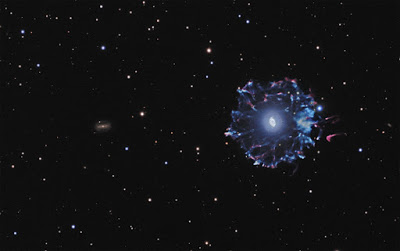
"A Look to the Heavens"

“The Cat's Eye Nebula (NGC 6543) is one of the best known planetary nebulae in the sky. Its more familiar outlines are seen in the brighter central region of the nebula in this impressive wide-angle view. But the composite image combines many short and long exposures to also reveal an extremely faint outer halo. At an estimated distance of 3,000 light-years, the faint outer halo is over 5 light-years across.
Planetary nebulae have long been appreciated as a final phase in the life of a sun-like star. More recently, some planetary nebulae are found to have halos like this one, likely formed of material shrugged off during earlier episodes in the star's evolution. While the planetary nebula phase is thought to last for around 10,000 years, astronomers estimate the age of the outer filamentary portions of this halo to be 50,000 to 90,000 years. Visible on the left, some 50 million light-years beyond the watchful planetary nebula, lies spiral galaxy NGC 6552.”
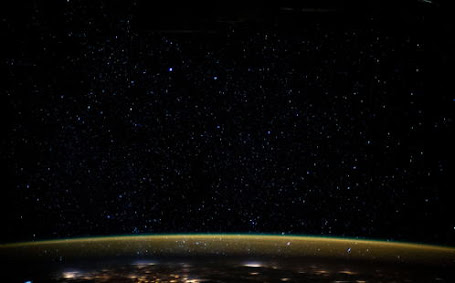
"Our planet is a tiny porthole, looking over a cosmic sea.
Can we learn what lies beyond our own horizons of perception?" 

"What Is Hope?"

"What Is Hope?"

"What is hope? It is the pre-sentiment that imagination is more real and reality is less real than it looks. It is the hunch that the overwhelming brutality of facts that oppress and repress us is not the last word. It is the suspicion that reality is more complex than the realists want us to believe. That the frontiers of the possible are not determined by the limits of the actual; and in a miraculous and unexplained way, life is opening creative events which will light the way to freedom and resurrection. But the two - suffering and hope - must live from each other. Suffering without hope produces resentment and despair. But hope without suffering creates illusions, naïveté and drunkenness.

So let us plant dates even though we who plant them will never eat them. We must live by the love of what we will never see. That is the secret discipline. It is the refusal to let our creative act be dissolved away by our need for immediate sense experience, and it is a struggled commitment to the future of our grandchildren. Such disciplined hope is what has given prophets, revolutionaries and saints the courage to die for the future they envisage. They make their own bodies the seed of their highest hope."
- Rubin Alves

“I Know How to Live… I Don’t Know How to Die”

“I Know How to Live… I Don’t Know How to Die”
by Bill Bonner

“I’ve never done this before…” The woman on the bed was almost a skeleton. The flesh had already gone from her. What was left was an 86-year-old empty tube – shriveled, bent, used up. “I know how to live,” she said. “I don’t know how to die. I don’t know what I’m supposed to think or what I’m supposed to do.”

“Don’t worry about it,” we advised. “It’ll come naturally. Do you need anything?” “Need anything? I need nothing at all. Absolutely nothing. I’m dying. And I have everything I need to do it.” “How about some more pain medication?” “No. I don’t want any. I am only going to do this once. I don’t want to get doped up. I don’t want to miss anything.”

Heaven with Tobacco Fields: People who are dying have a status somewhere between Nobel Prize winners and mobsters. We are reluctant to contradict them. We remember a scene from childhood: We had gone to visit a dying uncle, Edward. Like all our relatives, he was a tobacco farmer. But now the plant he had cared for all his life was killing him: he had lung cancer. Other relatives had gathered at the house to say goodbye. The mood was gloomy, dark… quiet. But the conversation, in early spring, ran in a familiar direction – toward the weather and soil conditions. “They won’t be planting tobacco where I’m going,” said Uncle Edward.

The group fell silent. Some looked down at the floor. Some shuffled toward the kitchen. But Agnes, a cousin, challenged him. “How do you know where you’re going or what they’re doing there?” This enlivened and emboldened the confrérie of tobacco growers. “Yeah, for all we know they’re pulling the plants already,” said one, glancing out the window to see if the rain had stopped. (The plants were “pulled” from the nursery beds for transplanting in the fields. We particularly disliked pulling them because black snakes enjoyed the warm of the gauze-like covering and slithered among the plants.)

The 12-year-old in the group – your editor – forever admired his cousin Agnes. She could see the truth and had the courage to speak it. None of us knew what happened after death. Why not tobacco farming? We tried to imagine Heaven with tobacco fields. It was so implausible that we had a hard time with it. But we persisted. Rows of the green plants, tended by generations of deceased farmers. The sun must not be so hot in Heaven, we concluded, for there was nothing heavenly about the scorching summer sun when you were cutting tobacco. The ghost farmers must hoe each row… and “top” the plants to remove the flower and force the growth to the leaves, just as we did in the Maryland fields. At the end of the day, sweat-stained and tired, they must gather around their pickup trucks – one foot up on the running board, an elbow on the raised knee, with a cigarette in the right hand.

An Unexplored Mystery: The other professions must have their quarters, too… Wheat farmers need broader fields. Cobblers could enjoy their trade, too. Why not? Heaven – immeasurably large – could have a place for everybody. Even bankers and lawyers might find a spot. For a moment, we imagined what it must be like, with mechanics tightening their bolts and dairymen milking their cows. But if everybody did in Heaven what he did on Earth, what was the point of it? The juvenile mind, like its adult successor, stalled.

Half a century later, it is still stopped where it was left – like a tractor abandoned on the edge of a field, with trees grown up between the wheels. Rust has covered the hood. The tires, cracked from the sun, have flattened and disintegrated. It has moved not an inch forward… leaving the mystery of Heaven completely unexplored. “Well, you’re not dead yet,” we replied. “How about a little apple juice?”

The death rattle began two days later. The goodbyes have all been said. Prayers have been offered. Undertakers contacted. A church put on alert. Remembrances shared. Toward the end there was no one there to share the remembrances with. The spirit seemed to have packed up and moved out before the body got the message. Life, like bull markets and credit expansions, always come to an end, sooner or later. New technology and newfangled monetary policies offer delays, unfounded hope, and stays of execution – but never a full pardon.”
Bread, "Everything I Own"

"If you were going to die soon and had only one phone call 
you could make, who would you call and what would you say? 
And why are you waiting?"
- Stephen Levine

Chet Raymo, “As Time Goes By”

As Time Goes By
by Chet Raymo

“Is time something that is defined by the ticking of a cosmic clock, God’s wristwatch say? Time doesn’t exist except for the current tick. The past is irretrievably gone. The future does not yet exist. Consciousness is awareness of a moment. Or is time a dimension like space? We move through time as we move through space. The past is still there; we’re just not there anymore. The future exists; we’ll get there. We experience time as we experience space, say, by looking out the window of a moving train. Or is time…

Physicists and philosophers have been debating these questions since the pre-Socratics. Plato. Newton. Einstein. Most recently, Lee Smolin. Without resolution. What makes the question so difficult, it seems to me, is that time is inextricably tied up with consciousness. We won’t understand time until we understand consciousness, and vice versa. So far, consciousness is a mystery, in spite of books with titles like “Consciousness Explained”. Will consciousness be explained? Can consciousness be explained? If so, will it require a conceptual breakthrough of revolutionary proportions? Or is the Darwinian/material paradigm enough? Are we in for an insight, or for a surprise?

As I sit here at my desk under the hill, looking out at a vast panorama of earth, sea and sky, filled, it would seem, infinitely full of detail, so full that my awareness can only skim the surface, I have that uneasy sense that it’s going to be damnably difficult to extract consciousness, as a thing, from the universe in its totality. I think of that word “entanglement,” from quantum theory, and I wonder to what extent consciousness is entangled, perhaps even with past and future.

Who knows? Perhaps consciousness, or what I think of as my consciousness, is just a slice of cosmic consciousness, in the same way that the present is a slice of cosmic time. As a good Ockhamist, I am loathe to needlessly multiply hypotheses. But time will tell. Or consciousness will tell. Or something.”
"Casablanca", "As Time Goes By", 
Original Song by Sam (Dooley Wilson)

"Death in the Afternoon"

"Death in the Afternoon"
by Joel Bowman

"To be immortal is commonplace; except for man, 
all creatures are immortal, for they are ignorant of death; 
what is divine, terrible, incomprehensible, is to know that one is mortal."
~ Jorge Luis Borges

"Everything is illuminated against its opposite; truth against fallacy; light against darkness; life against death. And who would have it any other way, even if they could? What would life on this mortal coil be, for instance, without the eternity of its terminally mysterious counterpoint?

If there exists a perfect setting for these and associated meditations, it must surely be the magnificent Recoleta Cemetery, located right here in Buenos Aires. On any given weekend, this sacred resting place for thousands of the city’s most famous – and infamous – people is found to be one of the liveliest places in town. Notable interments include a who’s-who list of Argentine writers, painters, poets, musicians, scientists and luminaries from other noble fields of interest. And, because nothing, including death, is beyond the law of equilibrium, a handful of politicians also rot underfoot.

Tourists pour in to adorn Maria Eva Duarte de Perón’s grave with flowers, for instance, bypassing the resting place of a Nobel Prize-winning chemist and a dozen honest writers to do so. Other, temporary attendees pose with Colgate smiles to have their picture taken beside weeping cement angels, frozen, as they are, in a state of perpetual sorrow. Young boys give the “peace” symbol next to the generals’ tombs whose armies laid to waste to tens of thousands of men, not much older than they, the bodies of whom are long forgotten, their makeshift graves unmarked.

Nowhere does irony live a fuller life than in a cemetery. Walking among the deceased, reading bookend dates on the bronze plaques, one is reminded of the finite nature of all things; organisms, currencies, political regimes, class structures. When the cemetery was constructed, back in 1822, it must have been a good ride from the exclusive barrios of San Telmo and Montserrat. The rich probably wouldn’t have been caught dead around the grounds of the Monks of the Order of the Recoletos, nor near the shabby, patchwork graveyard that was built there the same year the group disbanded.

Half a century later - and with Argentina still reeling from the War of the Triple Alliance and its own, subsequent civil war - a yellow fever epidemic tore through the capital city. Its wealthier, southern quarters were among the worst hit areas. Death toll estimates range from thirteen to twenty-five thousand. The clase alta packed up and moved north, largely into and around the Recoleta barrio. As such, the marbled vaults came to be populated with members of this same aristocracia, who, though they escaped the fever, came to rest here eventually just the same.

Today, you could buy an entire building in San Telmo for the same price as some of the finely appointed homes in Recoleta. An entire block in Montserrat might go for half that much.

And so it goes. People die…cities and empires crumble to the ground…and time, indifferent to the fleeting anguishes and triumphs of men, presses on.

At the turn of the 20th century, Argentina was ranked as the 8th most prosperous nation on earth. Only Belgium, Switzerland, Britain and a handful of former English colonies - including the United States – were more favorably positioned, economically. In 1913, Argentina’s bustling, cosmopolitan capital, Buenos Aires, had the thirteenth highest per capita telephone penetration rate in the world. Her per capita income was, around this time, 50% higher than in Italy, almost twice that of Japan and five times greater than its northern neighbor, Brazil. Argentina’s industry churned out quality textiles and leading edge, refrigerated shipping containers carried her prized beef, first introduced in 1536 by the Spanish Conquistadors, from the fertile plains of the pampas to the farthest reaches of the known world.

As the century wore on, protectionist policies at home and increased competition from the export-led, post-WWII economies – particularly from Japan and Italy – undermined Argentina’s international advantage. From 1900 through to the beginning of the new millennium, Argentina’s real GDP per person grew at a rate of 1.88% per year. Brazil outpaced her handily, clocking a 2.39% annualized growth rate. Japan, starting with a real GDP per person of just over $1,500 (2006 dollars) at the turn of the twentieth century, grew an average of 2.76% per year. By the middle of last decade, Japan’s real GDP per person had doubled that of Argentina. By 2020, it was more than quadruple.

The phenomenon is so conspicuous, the local Argentines even have a joke for it. “There are four types of countries in the world,” they lament. “First world. Third world. Japan, where nobody can figure out how they did so much with so little. And Argentina, where nobody can figure out how we did so little with so much.”

War, currency debasement, civil unrest, military rule and the catalyzing agent of political aspiration, harbored by the equally corrupt and inept, all conspired to stultify this once-proud nation’s potential. The great Argentine poet and essayist, Jorge Luis Borges, described one such retarding factor with characteristic flare and wit: “The Falklands thing was a fight between two bald men over a comb.”

On a comfortable Sunday afternoon in late February, an elderly group of well-dressed gentlemen met at their favorite restaurant, right by the gate to the Recoleta Cemetery, for lunch. They took a table outside, one in the shade and with a view of the passing foot traffic. The waiters, having brought the regulars the same thing, more or less, every Sunday for as long as they could remember, immediately set about filling their table. There was bife de lomo and chorizo sausages, mozzarella and buffalo tomatoes and papas fritas by the pile. Rich, Argentine Malbecs and Cabernets flowed freely and the merriment of the group soon became infectious. They flirted with the pretty waitresses and joked with patrons at the nearby tables.

After more than a few bottles, one of the gentlemen got chatting with an Australian editor of no particular importance. “I am a judge here,” he eventually told the younger man. “My friends and I have seen it all in this city…riots, economic crises, war, people’s entire life savings wiped out overnight.”

One of his friends lent over and placed a knowing hand on the judge’s shoulder. “Today, we enjoy the moment,” he said to his lifelong friend, before adding, one long finger pointed over the cemetery wall, “because tomorrow…ha ha…well, you know our next stop old man.” And the table erupted in laughter, as the sun set over the angel’s heads in the background.

Cheers,"

“In The Long Run… We Are All Alive”

“In The Long Run… We Are All Alive”
by MN Gordon 

“In 1976, economist Herbert Stein, father of Ben Stein, the economics professor in Ferris Bueller’s Day Off, observed that U.S. government debt was on an unsustainable trajectory. He, thus, established Stein’s Law: “If something cannot go on forever, it will stop.” Stein may have been right in theory. Yet the unsustainable trend of U.S. government debt outlasted his life.  Herbert Stein died in 1999, several decades before the crackup. Those reading this may not be so lucky.

Sometimes the end of the world comes and goes, while some of us are still here. We believe our present episode of debt, deficits, and state sponsored economic destruction, is one of these times.. We’ll have more on this in just a moment. But first, let’s peer back several hundred years. There we find context, edification, and instruction.

In 1696, William Whiston, a protégé of Isaac Newton, wrote a book. It had the grandiose title, “A New Theory of the Earth from its Original to the Consummation of All Things.” In it he proclaimed, among other things, that the global flood of Noah had been caused by a comet. Mr. Whiston took his book very serious. The good people of London took it very serious too. Perhaps it was Whiston’s conviction. Or his great fear of comets. But, for whatever reason, it never occurred to Londoners that he was a Category 5 quack.

Like Neil Ferguson, and his mathematical biology cohorts at Imperial College, London, Whiston’s research filled a void. Much like today’s epidemiological models, the science was bunk. Nonetheless, the results supplied prophecies of the apocalypse to meet a growing demand. It was just a matter of time before Whiston’s research would cause trouble…

Judgement Day: In 1736, William Whiston crunched some data and made some calculations. He projected these calculations out and saw the future. And what he witnessed scared him mad. He barked. He ranted. He foamed at the mouth to anyone who would listen. Pretty soon he’d stirred up his neighbors with a prophecy that the world would be destroyed on October 13th of that year when a comet would collide with the earth.

Jonathan Swift, in his work, “A True and Faithful Narrative of What Passed in London on a Rumour of the Day of Judgment,” quoted Whiston: “Friends and fellow-citizens, all speculative science is at an end: the period of all things is at hand; on Friday next this world shall be no more. Put not your confidence in me, brethren; for tomorrow morning, five minutes after five, the truth will be evident; in that instant the comet shall appear, of which I have heretofore warned you. As ye have heard, believe. Go hence, and prepare your wives, your families, and friends, for the universal change.”

Clergymen assembled to offer prayers. Churches filled to capacity. Rich and paupers alike feared their judgement. Lawyers worried about their fate. Judges were relieved they were no longer lawyers. Teetotalers got smashed. Drunks got sober. Bankers forgave their debtors. Criminals, to be executed, expressed joy.

The wealthy gave their money to beggars. Beggars gave it back to the wealthy. Several rich and powerful gave large donations to the church; no doubt, reserving first class tickets to heaven. Many ladies confessed to their husbands that one or more of their children were bastards. Husbands married their mistresses. And on and on…

The Archbishop of Canterbury, William Wake, had to officially deny this prediction to ease the public consternation. But it did little good. Crowds gathered at Islington, Hampstead, and the surrounding fields, to witness the destruction of London, which was deemed the “beginning of the end.” Then, just like Whiston said, a comet appeared. Prayers were made. Deathbed confessions were shared. And at the moment of maximum fear, something remarkable happened: the world didn’t end. The comet did not collide with earth. It was merely a near miss.

The experience of Whiston, and his pseudoscience prophecy, shows that predictions of the end of the world come and go while people still remain. Sometimes the fallout of these predictions, and the foolishness they provoke, is limited. Other times the foolishness they provoke leads to catastrophe. Here’s what we mean…

“In the long run we are all dead,” said 20th Century economist and Fabian socialist, John Maynard Keynes. This was Keynes rationale for why governments should borrow from the future to fund economic growth today. Of course, politicians love an academic theory that gives them cover to intervene in the economy. This is especially so when it justifies spending other people’s money to buy votes. Keynesian economics, and in particular, counter-cyclical stimulus, does just that.

U.S. politicians have attempted to borrow and spend the nation to prosperity for the last 80 years. Over the past decade, the Federal Reserve has aggressively printed money to fund Washington’s epic borrowing binge. Fed Chair Jay Powell confirmed that the Fed will pursue policies of dollar destruction to, somehow, print new jobs.

The world as it was once known – where a dollar was as good as gold – has come and gone. Today, in life after the end of that world, we are witnessing the illusion of wealth, erected by four generations of borrowing and spending, crumble before our eyes. Moreover, contrary to Keynes, in the long run we are not all dead. In fact, in the long run we are all very much alive. And we are all living with the compounding consequences of shortsighted economic policies.”

The Poet: Galway Kinnel

"Another Night in the Ruins"

"How many nights must it take
one such as me to learn
that we aren't, after all, made
from that bird that flies out of its ashes,
that for us
as we go up in flames,
our one work is
to open ourselves,
to be the flames?"

~ Galway Kinnel

"Compassion and Enabling"

"Compassion and Enabling"
by Admin

"Sometimes there is a very blurry line between feeling and expressing compassion, and enabling someone. Showing compassion is giving someone space and understanding so they can work through their predicament whilst remaining at a healthy emotional distance. This healthy emotional distance can be hard to judge in close knit relationships such as marriage and families. For should one fall over the edge of compassion and into the field of pity, neither party will benefit. Pity serves no one in relation to creating the desired changes within relationships of any kind.

Somewhere in between the blurry lines of compassion and pity lies the process labeled as enabling. Enabling is an overdose of compassion. When compassion distorts into pity, the individual is assisted in continuing with behavioral traits that clearly do not serve either party with regards to emotional, mental and psychical health.

People become enabled to continue their damaging behavioral traits via beloved others wearing the mask of compassion. The beloved other becomes drawn into the vacuum of the sufferer’s reality. Unknowingly, they begin to slip into pity, whilst believing that they are still expressing compassion. Once a person becomes drawn into the illusion of the other person’s reality they begin to make excuses for themselves as a means of justifying the abuse they are committing. They are enabling the sufferer, therefore abusing the sufferer, whilst they wear the mask of compassion. For anyone who is assisting the abuser, via allowing the abuser to continue on their discourse without obstruction, using (false) compassion (pity) as a reason, is ultimately abusing and damaging the abuser even more. And they are also damaging themselves.

Now this sounds all good and fine in theory from the clear perspective of the unattached observer, but what of the person in the eye of the tornado. What of the mother whose daughter is severely addicted to drugs? And what of the husband who must cope with the severe depression of his wife?

Compassion and pity become extremely difficult to distinguish in such circumstances. One’s own belief systems become strained and one starts to question the integrity of their own reality. Little by little people begin to compromise themselves in order to compensate for the others distorted behavioral traits. This is pity and pity is abuse. These self compromises come from one’s own false belief that they alone are responsible for ensuring that the abuser is healed. They take the false responsibility on board based on ethics and morals they have adopted from society or other people, meanwhile their intuition, (their inner truth) screams at them telling them that this does not feel right.

When one indulges another’s reality long enough via pity, one cannot help become exposed to deteriorating emotional and psychological states. This is the clearest sign that you have been enabling someone. If you are showing someone genuine compassion then your psychological and emotion health will not be affected.

When you find yourself constantly dwelling over another’s situation as well as altering your psychological and emotional states to compensate for another’s predicament, then you are enabling someone. This for most people is too harsh a reality to admit, especially when the person is very close to you. Usually one’s entire belief system is based on giving love and helping another, yet when love and compassion distort into pity and enabling, we are simply forgetting to love ourselves first, and in doing so, we hurt the other instead.

On the surface this may sound selfish, yet the underlying truth is that we cannot help another, unless we love ourselves correctly first. Another harsh reality is that you are responsible for no one but yourself. Compassion allows someone the opportunity to realize this even in the mist of immense suffering. Pity enables another to disperse responsibility away from themselves and onto another, which helps and heals no one.

There are no definitive guidelines to judge whether you are expressing compassion or enabling someone. But perhaps the question you could ask yourself is; if I continue to live with my present emotional and mental states, will this affect my overall health in the future? If you can honestly answer ‘no’, then you are expressing compassion. If you can’t honestly say ‘no’, then perhaps you need to step back a touch and love yourself more, and then you will have a clearer perspective in regards to the other, and what the other really requires."
o
"Compassion is not at all weak. It is the strength that arises out of seeing the true nature of suffering in the world. Compassion allows us to bear witness to that suffering, whether it is in ourselves or others, without fear; it allows us to name injustice without hesitation, and to act strongly, with all the skill at our disposal. To develop this mind state of compassion... is to learn to live, as the Buddha put it, with sympathy for all living beings, without exception."
- Sharon Salzberg

The Daily "Near You?"

Tours, Centre, France. Thanks for stopping by!

"Don't Wonder..."

"Don't wonder why people go crazy. Wonder why they don't.
In the face of what we can lose in a day, in an instant,
wonder what the hell it is that makes us hold it together."
- "Grey's Anatomy"

"Stupidity..."

“Evil isn’t the real threat to the world. Stupid is just as destructive 
as Evil, maybe more so, and it’s a hell of a lot more common. What we 
really need is a crusade against Stupid. That might actually make a difference.” 
-  Jim Butcher

'The U.S. Navy Just Blew A Giant Hole In An Iranian Cargo Ship As The Crisis In The Strait Of Hormuz Escalates To An Entirely New Level"

by Michael Snyder

"Apparently the Trump administration was not kidding when it warned that no Iranian ships would be allowed through the blockade. Just a little while ago, Donald Trump announced that the U.S. Navy has blown an enormous hole in the side of an Iranian cargo vessel that willingly chose to ignore a warning to turn around. Just two days after the completely irrational euphoria that we witnessed on Friday, the crisis in the Strait of Hormuz is worse than ever, and there is no end in sight.

On Friday, I explained why the extremely positive headlines that we were reading in the western world were dead wrong. When the two week ceasefire with Iran was originally unveiled, the Iranians were supposed to completely open the Strait of Hormuz for that two week period. But they hesitated because fighting was still raging in Lebanon, and the Iranians believed that the fighting in Lebanon was supposed to be part of the ceasefire. When Israel and Hezbollah finally agreed to a ten day ceasefire late last week, the Iranians finally fulfilled their obligation by opening the Strait of Hormuz for the remainder of the ceasefire. But the Iranians also warned that if the U.S. did not respond by lifting the naval blockade for the rest of the ceasefire the Strait of Hormuz would be quickly closed once again, and that is precisely what happened.

Just hours after opening it, the IRGC shut down all traffic through the Strait of Hormuz and announced that any attempt to pass through would be “considered cooperation with the enemy, and the violating vessel will be targeted”…Iran’s Islamic Revolutionary Guard Corps (IRGC) reportedly issued a sweeping warning to ships in the region on Saturday, saying any movement toward the Strait of Hormuz will be viewed as cooperation with “the enemy.”

“Following the violation of the ceasefire conditions, the American enemy did not lift the naval blockade of Iranian vessels and ports; therefore, from this afternoon, the Strait of Hormuz is closed until this blockade is lifted,” the IRGC said, according to Tehran-based WANA News Agency. The IRGC also instructed vessels in the Persian Gulf and Gulf of Oman to remain at anchor, warning that any ship approaching the strategic waterway “will be considered cooperation with the enemy, and the violating vessel will be targeted.”

Needless to say, the Iranians were not bluffing. On Saturday, multiple commercial vessels were fired upon…"Gunfire was reported after at least two vessels tried to pass through the waterway on Saturday – with the captain of one tanker claiming his ship was approached by two Iranian gunboats. US security sources claimed that Iran carried out at least three attacks on ships, Axios reports.

The UK Maritime Trade Operations centre confirmed a cargo vessel was attacked by a projectile near Oman – damaging containers on board. The captain of an Indian oil tanker that was completely convinced that he had permission to go through the Strait was desperately asking for permission to turn around once the Iranians started shooting at his ship…In the radio transmission, the captain of the Sanmar Herald oil tanker addresses ‘Sepah navy,’ which is the name of the Islamic Revolutionary Guard Corps (IRGC) Navy. Clearly alarmed, he continues: ‘This is Motor Vessel Sanmar Herald. You gave me clearance to go! My name is second on your list. ‘You gave me clearance to go! You a firing now. Let me turn back!’ Marine tracking data shows the Sanmar got part of the way through the Strait before sharply doubling back on itself.

If the Trump administration would have just lifted the blockade for the duration of the ceasefire, a lot of tankers could have potentially gotten through the Strait, and that would have been a huge blessing to everyone. But instead we are back to square one, and the Iranians are mocking us… Ebrahim Azizi, the head of the Iranian parliament’s national security and foreign policy committee, taunted Trump over the closure. In a post on social media, he said: “We warned you, but you ignored it. Now ENJOY the Strait of Hormuz returning to the status quo.”

This is a very alarming turn of events. A reporter for CBS News traveled to the Strait of Hormuz to see things for himself, and he encountered dozens of large commercial vessels just sitting still in the water…"We crossed from one Gulf country into another and eventually found ourselves on a coastal road that felt almost too beautiful for the tensions that lay just offshore.

On one side were jagged mountains rising straight out of the earth, completely bare of vegetation. On the other, clear blue water stretched out into the Gulf. And then, as the road curved, we saw the ships. Not one or two, but dozens. Sitting still. Waiting."

Overall, there are more than 3,000 ships that are currently trapped in the Persian Gulf with no way out. Of course the Iranians cannot get any ships out either now that a U.S. Navy blockade is in place. On Sunday, one of our guided missile destroyers blew a giant hole in the side of an Iranian cargo ship named “TOUSKA”…
It took a while for that to sink in when I first came across that post by President Trump. I could hardly believe what I had just read. This is a major escalation. And the U.S. is also threatening to seize Iranian vessels anywhere in the world during the days ahead… The US military is preparing to board Iran-linked vessels and oil tankers in the coming days, a move that will expand a conflict largely confined to the Strait of Hormuz into a global crackdown. General Dan Caine, the chairman of the Joint Chiefs of Staff, announced the escalation on Thursday, according to US officials who spoke with The Wall Street Journal. Caine said the US ‘will actively pursue any Iranian-flagged vessel or any vessel attempting to provide material support to Iran’.

The Trump administration is convinced that this blockade is the key to ending the war. They believe that the Iranians will be forced to give in eventually. On the other side, the Iranians are convinced that holding the global economy hostage will force the Trump administration to give in.

Both sides are making tragic miscalculations, and meanwhile the entire world is suffering. It is spring planting season, and we can’t get fertilizer from the Middle East into the hands of farmers all over the northern hemisphere that desperately need it… Beginning in the 1960s, in an effort to diversify their economies, the Gulf countries invested heavily in their fertilizer industries, leveraging their abundant natural resources. Foreign fertilizer companies began flocking to Dubai in the United Arab Emirates, drawn by low taxes, a favorable geographic location, and the city’s seamless air and sea transport hubs.

The Gulf’s investment in fertilizer paid off, as by 2026, much of the developing world was reliant on Gulf fertilizers. Three of the top ten global urea exporters, the world’s most commonly used nitrogen-based fertilizer, are located within the Persian Gulf. One-third of internationally traded fertilizers and roughly 45% of sulphur exports, a key ingredient in phosphate fertilizers, pass through the Strait of Hormuz. Iran’s blockade has brought all of these exports to a near-halt. The timing could hardly be worse, coming during planting season for much of the world.

In addition, nations such as India that normally import large amounts of natural gas from the Middle East in order to make their own fertilizer are being forced to cut back production…The effects go well beyond halting shipments of fertilizer produced in the Gulf, which is situated at the head of a vast global supply chain. India, itself a big fertilizer producer, has had to scale back production due to fuel shortages linked to the war. New Delhi ordered fertilizer plants to scale back production to 70% capacity to cope with the shortage. “This is not only an energy shock. It is a systematic shock affecting agrifood systems globally,” Chief Economist of the Food and Agriculture Organization of the United Nations, Máximo Torero, warned on Thursday.

We are facing a global fertilizer crisis that is far beyond anything that we have ever seen before. Here in the United States, this has come at a time when we are already in the midst of a historic drought… A massive drought has emerged across large swaths of the US agricultural belt, threatening crops and livestock and eventually affecting food prices, at a time when fertilizer and diesel costs are soaring. As of early April, 60% of the Lower 48 is in drought as the Northern Hemisphere growing season begins and farmers begin plantings, according to NOAA. The southern US is already experiencing severe, extreme, and even exceptional drought conditions, putting pressure on key crops such as sugarcane, rice, and peanuts, while fruit trees have also been damaged by extreme temperatures.

Food production is going to be way down all over the planet in 2026. José Andrés is warning that we are headed for “a very big increase in famine across the world by the fall of 2026 and 2027″… The celebrity chef and humanitarian José Andrés has a warning for the suits in Washington and around the world: stop looking at the oil tickers and start looking at the soil. The World Central Kitchen (WCK) founder believes that the world is sleepwalking into a massive, multi-year famine, being slow-walked by the “silent” collapse of the global fertilizer trade as a byproduct of the war with Iran. “I foresee a very big increase in famine across the world by the fall of 2026 and 2027,” Andrés told the Guardian on the sidelines of Semafor’s global economy conference in Washington.

He is right. If the Strait of Hormuz does not open soon, food shortages will hit the world like a freight train in 6 to 9 months. But unless consequences are going to hit us immediately, most people in the western world don’t seem to care. Instead, most of us just continue to go about our lives as if nothing unusual is going on, and for the moment ignorance is bliss."