StatCounter

Wednesday, August 26, 2026

"Learning from Ants"

"Learning from Ants"
by Jeff Thomas

"If you catch 100 red fire ants as well as 100 large black ants, and put them in a jar, at first, nothing will happen. However, if you violently shake the jar and dump them back on the ground the ants will fight until they eventually kill each other. The thing is, the red ants think the black ants are the enemy and vice versa, when in reality, the real enemy is the person who shook the jar. This is exactly what’s happening in society today. Liberal vs. Conservative. Black vs. White. Pro Mask vs. Anti-Mask. Vax vs. Anti-vax. Rich vs. poor. Man vs. woman. Cop vs. citizen. [Etc.] The real question we need to be asking ourselves is who’s shaking the jar… and why?"

The above observation by Shera Starr cannot be improved upon. And yet, the answer to the question is fairly simple. But let’s first take a look at this anomaly. It’s natural to identify with some individuals more than others. That tendency occurred before Homo sapiens came into being. In addition, the tendency for animals to group into families or packs also predates humans.

We tend to want to be around those who behave the way we do and have the same perceptions as we do. That only makes sense. We wish to surround ourselves with those who are unlikely to surprise and possibly even endanger us by behaving in a fashion that we would not ourselves choose. This is the basis of trust – an essential in group or herd mentality. And being a part of a group or herd brings to us increased safety.

So, what then, of those who are not within our group or herd? How do we relate to them? Well, any nature program that covers animals gathered around a water hole can provide that answer. We see a small group of wild pigs drinking alongside a group of wildebeests. Neither species is predatory, so they learn to recognize that, even though one group is made up of savannah-living grazers and the other are forest-living foragers, they can easily co-exist, which will increase the ability of both species to use the water hole at the same time.

We might also see a group of hyenas using the water hole, but we notice that the prey animals all seek to keep a distance between themselves and the predatory hyenas. Everyone understands that they are all at the water hole for the same reason and it makes sense to share, even if, in another situation, they are natural enemies. In fact, in most of nature, we see that species adapt to a condition of mutual tolerance in order to be able to coexist.

No surprise, then, that Homo sapiens got on the mutual tolerance bandwagon in its formative stages and, for the most part, has remained that way. But it is also true that predators develop dual habits. They may exercise tolerance at the water hole, but at some point, they mean to make a meal of their water hole neighbors. And when doing so, many species create associations with others of their kind to hunt.

This, too, is true of humans. Most of humanity seeks to live in a spirit of cooperation with others. In the countryside, people erect walls and fences to establish boundaries, then find it expedient to respect such divisions in order to live in peace. Even in cities, people who live cheek by jowl in the same building respect each other’s privacy for the most part. Even if they do not become friends, they either remain polite or ignore each other.

Although there are always exceptions, for the most part, mankind behaves in a manner that is based upon "getting along." He might argue with others, but for the most part, he understands that cooperation generally should be the objective, as it’s in his best interests.

But why, then, are we seeing in so many of the countries of the First World, a rapidly increasing polarity amongst people. Ms. Starr is exactly correct. Those who would be most inclined toward mutual tolerance have, in recent years, become so polarised that they cannot so much as get together with their own families for the holidays without getting into heated arguments.

Why are people of today so solidly in one of two camps? Can this be blamed on the rise of the internet? Well, no, the internet has become the source of a plethora of opinions and perceptions. And more than closing people off to polarized "A" and "B" choices, the internet has served to broaden public discourse.

Of course, most people express distrust for the media, particularly those networks that purportedly deal in "news." What passes for news today is far from objective information that the viewer can then assess at his leisure. On one network, we view unceasing diatribes against one political party. Then we turn the channel and view unceasing diatribes against the opposing party. In turning on the News, we arrive at Indoctrination Central.

But if we really pay attention objectively, we discover that the same programs are dictating to us that it is either our humanitarian duty to vax, or that vaxxing will enslave us to globalists who will inject us with microchips. They are also our source for the opposing beliefs that warfare is essential to protect us against those who seek to destroy us, or that it will be the wars themselves that will destroy us.

In fact, all of Ms. Starr’s concerns find their source in the media. When we ask the question, "Who is shaking the jar… and why?" we find that those who control the media are at the source of the polarization of people, especially in the First World. As to the "Why?" the answer is so simple that it’s often overlooked. Like the ants, the more a people can be made to fight each other, the easier it is to subjugate them. And since the effort to polarize people has become so massive, we can only conclude that the ultimate objective will be to implement a far greater level of subjugation, in an abnormally short period of time.

Liberal vs. Conservative. Black vs. white. Man vs. woman. Divide and conquer. In such a socio-political climate, the challenge will be to keep your wits about you. As the jar is shaken on a daily basis, it will be vital to recognize that those who control the media are creating a war between the pigs and the wildebeests. This is something that is not desired by either species, but as Hermann Goering stated, "Why, of course the people don’t want war." They must be goaded into it if those who are pulling the stings are to achieve greater subjugation.

In the coming years, this trend can be expected to become far worse than at present. The best you can and should do is to stay informed so that you can protect yourself in the best way possible."

The Daily "Near You?"

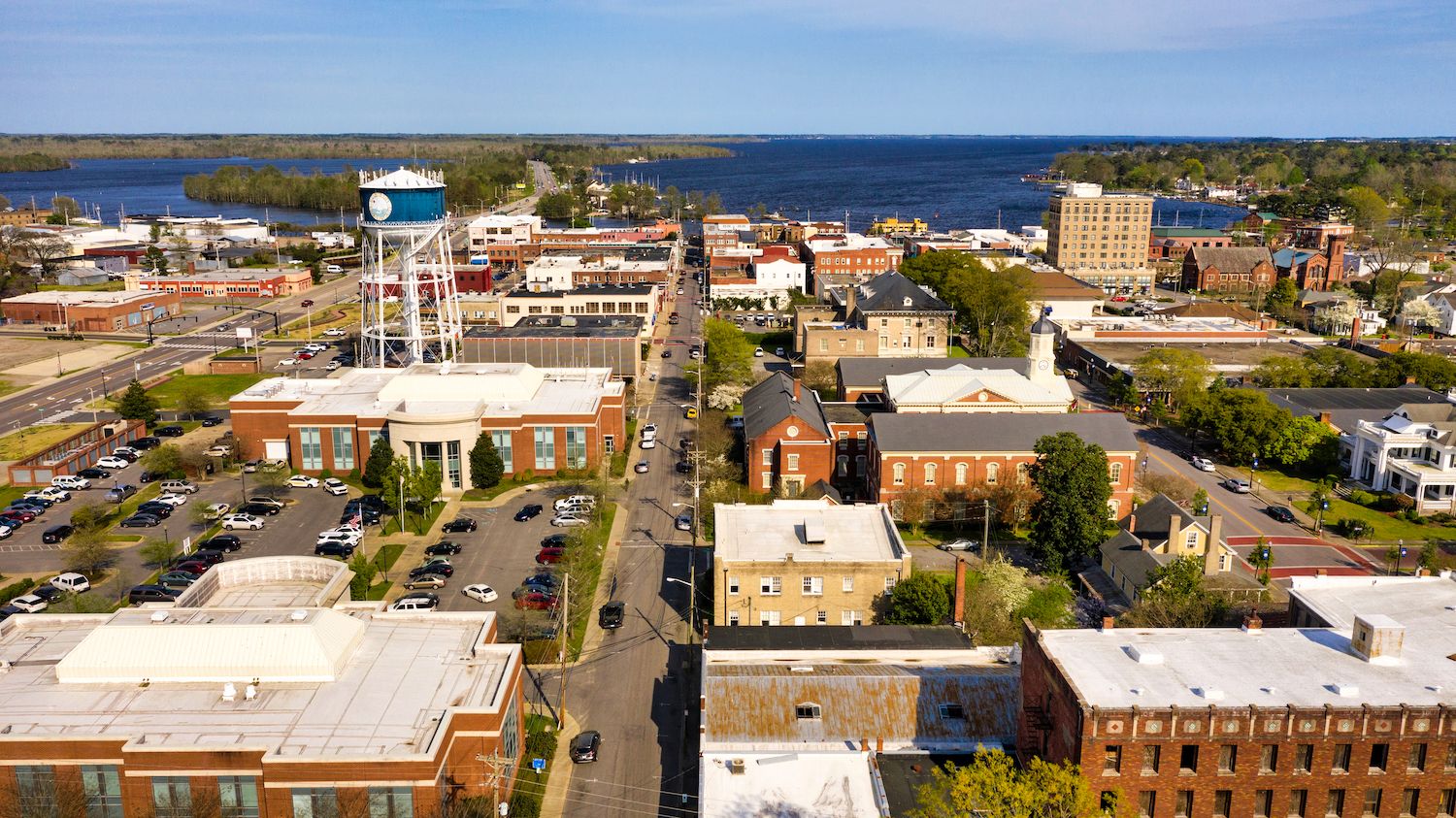
Elizabeth City, North Carolina, USA. Thanks for stopping by!

"Do You Want..."

"Do you want to live life, or do you want to escape life?"
- Macklemore

"Surviving The War"

"Surviving The War"
by The Zman

"There was a time when normal Americans thought about how to survive a nuclear exchange with the Russians. During the Cold War, this seemed like a real prospect, so there was a reason to think about it. Into the 1960’s school kids had to do the hide under the desk thing, which was mostly about conditioning people to accept permanent war, but it conditioned people to the idea of being nuked. How to make it through a nuclear war became something of an industry.

There were two schools of thought on the subject back then. One said that any hint of a nuclear attack by either side would result in a mag dump by both sides. The United States and the Soviet Union were in a prisoner’s dilemma. If either side showed restraint, then they risked the other side striking first and possibly making it impossible to retaliate, so logic said to send all of your missiles first. Both sides accepted this logic which is why a system was put in place to prevent it.

From a survival perspective, such a scenario made the prospects for anyone living through it extremely low. The arsenals at the time were larger than today and the assumption was they could wipe out all life on the planet. The initial blasts would kill most people, but the fallout and nuclear winter would kill the rest. Even if people survived somehow, the numbers would be tiny. There was simply no point in preparing for what would be instant death for almost everyone.

The other school of thought was more optimistic. War would escalate with an initial exchange that might not lead to a mag dump. Even if the will were there to send all the missiles, many people would refuse to push the button. The disruption from the initial strikes would also render communications useless. The example of Vasili Arkhipov seemed like proof that a full scale exchange was unlikely. That meant it was possible to survive a nuclear war if you were prepared.

Today, that last scenario is more plausible. Nuclear arsenals are much smaller than during the Cold War. No one is really sure that the antique systems on which these weapons rely would work under stress. The American ICBM system still relies upon 1970’s technology. The Russian systems are similarly antiquated. The most likely scenario is that the major powers are no longer functional after a nuclear exchange, so lots of people survive the event.

The first step in surviving a nuclear war is to avoid a direct hit. Washington DC will get several direct hits and the initial flash will vaporize most of the population. The shock wave will level most of the city. By now, the Russians and Chinese know to target Northern Virginia, so it will be a saturation bombing. The five percent that survive the initial blast will be radiated and die soon thereafter. Therefore, the first rule of nuke club is to be outside the target zone.

The safe bet is to be away from the coasts. The Rockies or Appalachia are the best bet for making it through the first stage. Denver will be nuked, for sure, but the damage will be contained to that plateau. People in the mountains will escape the flash and the blast, even if Denver takes multiple strikes. The Green Briar will get hit, for old times sake, but most of West Virginia will be spared. There are lots of places to escape the flash and the blast in the mountains.

Once things settle after the final missile strikes, there will be four key things to surviving the aftermath. You will need water, shelter, food and a way to defend yourself from the people who were not prepared. Imagine a land ravaged by mask wearing Covidians and you get the picture. You will have to be prepared to kill a lot of people in order to avoid ending up like them. This means you need to pick a spot that has access to water, a food source and is defendable.

Since a post-nuclear America is going to look like the frontier as far as you are concerned, you are going to need frontier skills. You will need to know how to make a fire, provide yourself basic medical care and know how to hunt and fish. If your location is near a river, then you can initially get by with fishing and water from the river, but you have to boil the water and cook the fish. The ability to make fire without modern items like a lighter or matches is essential.

Once you have sorted the location and provided yourself with the frontier skills required to live in the wild, you need to think about the defense issue. A man alone is easy prey, even to desperate city people roaming the countryside. It would be better to have a tribe that can work together for common defense. That means you either need the skills to create a tribe from who is left or you have to create a tribe now. One way or the other, survival will depend upon community.

This basic framework of preparedness is just scratching the surface, but it does provide the basis for building a survival plan. For example, you will not want modern firearms for defense in the post-nuclear world. Making your own gunpowder for modern ammunition is not realistic. You can make black powder from raw materials. That means the old fashioned muzzleloader is a good weapon to own and master. Of course, older range weapons like spears and bows are an option.

The same applies to tools. Creating your own electric for powering modern tools is possible, but not very practical. If you assume society takes generations to bounce back from the holocaust, then it makes no sense to rely upon modern tools. They will break and you will not be able to fix them. The same would apply to vehicles. Old cars need gasoline and lubricants. Even if you stock those, they will run out eventually and your vehicles become lawn ornaments.

This is why forming communities in advance of the holocaust is critical. You can plan for the two general scenarios. The first scenario is the world steps back to the pre-industrial age and does not bounce back. The other scenario is the people responsible manage to survive and quickly set about recreating the modern world by bringing things like the power grid on-line. Do you want to play a role in that rebuilding or do you want to seek vengeance on them?

Community building in advance lets you wargame these issues. It also makes survival much more likely. No one man can know everything or prepare for everything, so having help increases your odds of survival dramatically. It also provides the means for surviving what comes after the initial devastation. In a post-nuclear world, tribalism will be the key to survival, which means the best tribe wins. Of course, that is also why the world was blown up, but that is a story for another day."

Free Download: Ayn Rand, "AtlasShrugged"

"If you saw Atlas, the giant who holds the world on his shoulders, if you saw that he stood, blood running down his chest, his knees buckling, his arms trembling but still trying to hold the world aloft with the last of his strength, and the greater his effort the heavier the world bore down upon his shoulders - what would you tell him to do?"
"I... don't know. What could he do? What would you tell him?"
"To shrug."
- Ayn Rand, “Atlas Shrugged”
"Then you will see the rise of the men of the double standard - the men who live by force, yet count on those who live by trade to create the value of their looted money - the men who are the hitchhikers of virtue. In a moral society, these are the criminals, and the statutes are written to protect you against them. But when a society establishes criminals-by-right and looters-by-law - men who use force to seize the wealth of disarmed victims - then money becomes its creators' avenger. Such looters believe it safe to rob defenseless men, once they've passed a law to disarm them. But their loot becomes the magnet for other looters, who get it from them as they got it. Then the race goes, not to the ablest at production, but to those most ruthless at brutality. When force is the standard, the murderer wins over the pickpocket. And then that society vanishes, in a spread of ruins and slaughter.

Do you wish to know whether that day is coming? Watch money. Money is the barometer of a society's virtue. When you see that trading is done, not by consent, but by compulsion - when you see that in order to produce, you need to obtain permission from men who produce nothing - when you see that money is flowing to those who deal, not in goods, but in favors - when you see that men get richer by graft and by pull than by work, and your laws don't protect you against them, but protect them against you - when you see corruption being rewarded and honesty becoming a self-sacrifice - you may know that your society is doomed."
"Francisco’s Money Speech” from “Atlas Shrugged,” by Ayn Rand.
Freely download "Atlas Shrugged", by Ayn Rand, here:

"That's When..."

"It does not count if you believe in yourself when it's easy to believe in yourself. It counts when it's hard to believe in yourself, when it looks like the world's going to end and you've still got a long way to go. That's when it counts." 
- Iain Thomas
o
Don Williams, "I Believe In You"

"American Life During The 1930s"

Full screen recommended.
Old Photos Channel, 
"American Life During The 1930s"

"Welcome back to the Old Photos Channel! Today, we're taking a journey back to one of the most challenging and transformative decades in American history – the 1930s. Through these incredible old photos, we'll explore what life was when the spirit of resilience and community defined everyday life in the United States.

The 1930s were marked by the Great Depression, a time when millions of Americans faced severe economic hardships. Many lost their jobs, homes, and savings. In these photos, you can see the somber faces of people standing in breadlines, searching for work, or living in makeshift shantytowns called "Hoovervilles." Yet, amid these struggles, there was a deep sense of perseverance. Communities came together to support one another, and families made do with what little they had.

These photos also reveal the strength of family bonds during the 1930s. Despite the hardships, people found joy in simple things: children playing in the streets, families gathering for meals, and neighbors helping each other. This sense of community was a vital part of survival during the Great Depression, showing us that hope and connection can thrive even in the toughest of times.

Surprisingly, the 1930s was also a time of cultural creativity. As we look at these photos, we see jazz clubs thriving, movie theaters offering an escape from reality, and artists like Dorothea Lange capturing iconic images of the era. Despite the economic downturn, Americans found ways to express themselves and find joy through music, film, and art. The 1930s was a decade of both struggle and resilience. These photos give us a glimpse into the lives of those who lived through the hardships, reminding us of the strength of the human spirit in times of adversity.
Comments here:

"How It Really Is"

"It's a Big Club, and you ain't in it. You and I are not in the Big Club."
- George Carlin

"Americans Are Trapped In Debt, And It's Getting Worse"

Full screen recommended.
Dan, I Allegedly, 8/26/26
"Americans Are Trapped In Debt, 
And It's Getting Worse"
"America is getting trapped in debt, and the warning signs are everywhere. Auto repossessions are surging, the average new car is approaching $50,000, car payments and insurance are crushing household budgets, and millions of Americans are struggling to keep up with rising costs. Credit-card debt, medical bills, housing costs, gasoline, groceries and utilities are all competing for the same paycheck. This isn't simply about people forgetting to pay their bills - many Americans simply don't have enough money left after paying for everyday life. In this video, Dan breaks down the growing American debt crisis, rising auto-loan delinquencies, repossessions, expensive cars, Cybertruck prices, credit-card debt, medical debt, housing sales and the decline of cash buyers. We also look at personal finance, emergency funds, insurance, household budgets and the difficult choices people are making just to survive. The American consumer is running out of financial room, and these debt problems could become an even bigger economic story. iAllegedly - a news channel focused on the stories that matter to your money, your business and your future."
Comments here:

Adventures With Danno, "Let's Go Hunting At Kroger"

Full screen recommended.
Adventures With Danno, 8/26/26
"Let's Go Hunting At Kroger"
Comments here:

Bill Bonner, "Misleading Voters in the Customary Way"

"Misleading Voters in the Customary Way"
by Bill Bonner

"The ultimate intervention is our military, 
and if we have to use that, we will."
- Donald Trump

Poitou, France - "Here’s America’s own Secretary of the Treasury, Scott Bessent. The New York Times: "Bessent’s Warning of ‘Economic D-Day’ for Iran." The headline suggests grim, determined men setting off...their lives in danger...as they try to change the course of history. And Bessent may succeed. He’s been practicing at home. The US government now spends nearly $1.40 for each dollar it collects honestly. That is not a statement of success. Rather it is the kind of thing a doctor says in a hushed voice to a soon-to-be widow. Pretty soon, the monitors will sound the alarm. That’s when you can expect the landing craft to come ashore. In New Jersey, if not in Iran.

Yesterday, we looked at how it’s s’posed to work. Normally and naturally, a boom financed on credit is followed by a bust in which the bad loans - and the asset prices that depend on them - are marked down. And since asset prices are plainly in BubbleLand, it is a bust we are expecting, not a boom.

There have been two dips in AI stocks - one in January...the other in June. Each one knocked about a trillion dollars off the top of the market. But investors have been trained to buy the dip. They followed the plan...and each dip was followed by a bounce. When the real correction begins, yields (and interest rates) will soar – at first. Interest rates are prices; they are what you pay to use someone else’s money. The longer you use his money, the more you pay for the privilege.

But when the financial world begins to shake and shimmy, lenders become cautious. They’re no longer concerned so much about the rate of return ON their money; what they worry about is the return OF their money. That’s what happens in a crash/depression. There are bounces, but they aren’t sustained. And a lot of loans are never paid back. Some of the biggest lenders, however, have political power as well as financial power. And that is really where our story for today begins.

The biggest banks actually own the Federal Reserve. They have their people - economists, bankers, investors - embedded in the Fed and the administration, helping them decide when to lend and to whom. When the bust comes, these insiders are keenly interested in avoiding a system-wide collapse. It is perfectly okay for little banks, Savings and Loans, and mutual lending societies to go belly up. The ordinary foot-soldier of capitalism - the man from Ohio who invests in a strip mall - falls into an unmarked grave. But Goldman Sachs and J.P.Morgan get medevac’ed. They are ‘too big to fail.’ Which is to say, they are powerful enough to demand a bailout when they need it.

And a weapon that the feds have that nobody else has is the little printing press in the basement. They can counterfeit dollars without going to jail. In a pinch, which is what you have when your you-know-what gets caught in a wringer, the feds can ‘print’ up extra money and lend it to you...or to themselves. The price of credit is subject to the law of supply and demand too. So, when the federal government splashes ashore with trillions of crisp, new dollars, interest rates go down.

Scott Bessent is now feeling around in the dark for the right lever. He wants to cripple Iran’s economy...but make the US economy dance. First, he announced that he would buy 30-year US Treasuries. The extra ‘demand’ ought to raise bond prices and lower bond yields. But it was too little...and too obvious. Interest rates fell, briefly, and then went back up.

The too-obvious part was that he had to get the money to buy the bonds from somewhere. Everyone knew that that would mean selling more short-term paper in order to buy the long-term paper. And the shorter the term...the more ‘inflationary’ the intervention. The shortest-term paper is the dollar itself...a ‘bill’ of immediate maturity. No need to wait before using it to buy something. Somewhat less immediate, but with similar inflationary effect (though subject to a delay) are the fed’s overnight, 30-day, 90-day bills, etc. You might as well be ‘printing’ dollars themselves.

It was obvious to one and all that Bessent was really proposing to make mortgages more accessible by making credit card use more expensive. Bond investors were not impressed. They saw the writing on the wall...it said in plain English: inflation ahead. They dumped bonds. Yields rose.

Then, Bessent tried another lever. He pretended that he could get the money to buy long-dated bonds from the feds’ checkbook. This was just silly. The feds’ general account holds, presently, a little shy of $1 trillion. But it is the money they use for paying all their bills. And currently, revenues are running way behind expenses. So, if you suck out money to diddle the bond market, you still have to come up with some new money from somewhere. And the only way - though the exact mechanisms can vary - is to ‘print’ it.

Right now, Bessent is just trying to manipulate long-bonds to lower mortgage rates going into the November elections. Very ordinary stuff...misleading voters in the customary way. But when the bust comes...then you will see Scott Bessent with beads of sweat on his forehead...and maybe a slight stutter. He’ll announce another D-Day attack...Perhaps like McArthur landing at Luzon in 1945, he will step onto the beach at Atlantic City. Stay tuned.

"Rich Man, Richer Man"

"Rich Man, Richer Man"
by Sheila Kennedy

"One of the most trenchant commentators on America’s current disaster of an administration is former Labor Secretary Robert Reich. Reich’s tenure made him widely admired; in 2008, Time named him one of the Ten Most Effective Cabinet Members of the century, and in that same year The Wall Street Journal –not noted for its liberal bona fides–placed him sixth on its list of Most Influential Business Thinkers. He has taught at Harvard, Brandeis and Berkley.

Reich posts opinion pieces regularly, and they are all worth reading and considering. A recent one focused upon just who is “raking it in” as America’s national debt explodes. Much of that explosion, Reich tells us, is the result of the billions of dollars in lost revenue from Trump’s invalidated tariffs, and the effect of Trump’s tax cuts to big corporations and the already very wealthy. And then, of course, there are the soaring costs of Trump’s war.

Reich reassures readers that crossing the forty-trillion-dollar threshold doesn’t mean a depression is looming. But he focuses in on what we can only describe as the actual – and very troubling – effects of that debt.

The problem is that an increasing portion of our nation’s budget - and your tax dollar - is dedicated to paying interest on this growing debt. Annual net interest payments on the federal debt have surpassed $1 trillion, making servicing the debt one of the largest of all federal budget expenditures. That’s money we don’t spend on schools, healthcare, roads and bridges, and social safety nets. We’ll soon be paying more in interest on the federal debt each year than we spend annually on Medicare.

Reich then explains something that is not widely understood–the identity of those who benefit from those interest payments. This is an issue you hear very little discussion about, because the wealthy and powerful of this country would rather you not know. (And don’t expect Trump suck-up Bessent to tell you, because he’s too busy denying that economic inequality is worsening.)

Foreign governments and foreign investors hold only about 30 percent of our debt. The rest - roughly 70 percent - is held domestically. That is, we pay the interest to ourselves. And who, exactly, are the “ourselves” we are paying? Reich tells us that by far the largest amount - nearly half - “is held by mutual funds, pension funds, insurance companies, and banks.” And who owns those funds, companies and banks? Who holds the Treasury bills that are generating the growing amount of interest the rest of us are paying on the ballooning national debt? People at the top. Rich people.

Reich spells it out. The richest 1 percent of U.S. households hold about 35.6 percent of all financial assets - shares of stock, corporate bonds, and Treasury bills - so it’s safe to assume they hold at least a third of all Treasury bills. Here’s where things get really interesting.

Decades ago, wealthy Americans financed the federal government mainly by paying taxes. Their tax rate was far higher than it is today. In the 1950s, under President Dwight Eisenhower, the richest Americans paid a marginal tax rate of 91 percent. (Tax deductions and tax credits lowered this top effective marginal rate somewhat.)

Today, the tax rate on wealthy Americans is far lower. The richest 400 Americans pay an average effective total tax rate of about 24 percent - including federal, state, local, and corporate taxes. Jeff Bezos - America’s second or third richest person - paid no federal income taxes in 2018. Trump paid no federal taxes for years before he became president. So now, wealthy Americans finance the federal government mainly by lending it money and collecting interest payments on those loans.

So while the richest Americans are collecting those growing interest payments, the taxes they pay have reduced government revenues by $10.6 trillion, courtesy of the tax cuts bestowed by George W. Bush and Donald J. Trump. As Reich reminds us, since 2000, 65 percent of the benefits from those tax cuts have gone to the richest of Americans - 22 percent to the top 1 percent. As he sums up: “Decades ago, the wealthiest Americans financed the government by paying higher taxes. Now, the government pays wealthy Americans interest on a swelling debt, caused largely by lower taxes on wealthy Americans.”

The taxes on ordinary Americans increasingly go to pay wealthy Americans interest on those loans - rather that funding the government services everyone needs. And that is the real problem with our enormous national debt."

"The Passing Of The American Empire?"

"The Passing Of The American Empire?"
by John Wilder

"The United States sits at the center of the largest empire the world has ever seen. Certainly, that empire is now slipping. But let’s review my first assertion. Is the United States an empire? I mean, I was expecting more trumpets and purple robes. Yes, it is. The definition of an empire is that it cuts across most fields of human life for vast groups of diverse people, having authority over them, economic control, and cultural influence. Yes, we’ve got that. The United States is the inheritor of the mantle of the leading partner in Western Civilization. Before us was Great Britain, paving the way and making it easier for us.

How can we be sure that we’re still in an empire? English is spoken everywhere. Sure, thank the Brits, but the reason they kept speaking it is because it is, by far, the most widely used language in the world. If I got off a plane in Lanzhou or Lillehammer, I could get by without knowing any local languages and rely entirely on English to get me by. Sadly, English is no longer spoken in London or Los Angeles, and my Arabic and Spanish could use some work, so I’d be out of luck there. So, language.

What about centralized authority and governance? Trump is certainly showing that, although the United States pretended to not be the big cheese because France hates that, it really was the big cheese all along. There’s nothing that Europe can do alone to remotely influence the United States. Nor can Japan. In fact, all those hundreds of United States military bases around the world? Yeah, if a country has one of those, it’s an American client. At one point we had more than 850 bases in 90 countries. That’s an empire.

Also, economically. In Rome you could use the denarius (not Daenerys, who was a hot chick with dragons and not a coin, according to Google©) to buy almost anything you wanted anywhere in the empire. In the world today, you can use a dollar anywhere they take money and not shrunken heads, and also in some places you can trade dollars for shrunken heads.

Finally, cultural and ideological leadership. Why did they have a “no kings” protest in Canada, where they have a king? Why did they have BLM® marches in places in Europe where there are no blacks? Why did Botswana legalize gayness in 2019? Why is every little tinpot dictator called a “President” instead of a “Prime Minister”? I mean, if I were a tinpot dictator I’d call myself, “Sovereign Lord and King John Wilder the First, Flayer of Men, Defender of the Faith, Scourge of India, and Former Costco™ Member”. You always have to throw in something silly. I mean, I’ve never even been to Costco®.

Rome proved at the Teutoberg Forest that you don’t need to win every battle to remain an empire. You can suffer astonishing defeats and go, “Well, that stung,” and keep on with the empire. I mean, Rome never really went after the Germans with the intent to subjugate them after that battle. The Germans, however...

But, of course, Rome didn’t face the technological evolution of warfare to the extent we’ve seen in the last 20 years, which greatly levels the playing field between the United States and other countries. The great advantage the Romans had was their empire to draw men from, and their mastery of transport engineering and logistics which could quickly, as measured in 100A.D., put 10,000 men where their enemy wanted them least.

Spain, however, did experience technical obsolescence in its final humiliation of empire. In 1898, the United States was a rising power. The United States wasn’t quite ready to challenge Great Britain in 1898, but it did see Spain. What did Spain have? Oh, overseas colonies, colonies that could help the United States grow in the natural direction of the country: the Pacific. Sure, it came with a short-term rental of Cuba and a long-term lease on Puerto Rico, but the real prize for the United States was Guam and the Philippines, which still looks like it has one too many of the letter “p” in it.

This addition got the United States a leg up in the last part of aligning non-Western nations and established a firm gateway to Asia and military base for projection of force throughout the Pacific. We were, in fact, willing to fight an 11-year war against the Filipinos and develop the M1911 in .45ACP to kill drugged out Filipino guerrillas, because a .38 just wasn’t enough. I digress.

The reason the United States utterly defeated Spain in less than four months was it had an intense technological and logistical lead in every facet of warfare. The numbers speak for themselves: 4,119 American casualties versus somewhere near 56,500 dead Spanish. Oh, and the Spanish ships were still sporting cannon over a century old.

Spain was dead as an empire, only waiting for someone to knock it over, take its stuff, and buy something nice for themselves. That was the United States. By the time of the Spanish-American War, the United States fighting Spain was the geopolitical version of a velociraptor taking on a kitten. The only way the kitten survives is if the velociraptor gets all the kibble.

Where are we now? Are we Rome? Are we Spain? Both analogies are suspect, since I don’t trust either Italians or Spaniards. Too much wine in both countries, and I know how I am after one too many bottles of pinot: I’m in a lot of economic trouble, personal danger, and I can’t remember my past.

Is the United States, like Rome, just taking another L that won’t matter because we’re still the empire? No, I think we’re not. I think we’re beyond the peak of American hegemony, which probably happened on August 15, 1987 while I was throwing a kegger. Woo!

Is the United States, like Spain, passing? Again, no, I don’t think so. We are seeing that some of our main weapons date to designs of nearly 70 years of age. I’m looking at you, B-52. The reason is that the bomber is dead to anyone who isn’t living in mud huts, and we realize that. The B-52 would have been awesome in 1945 but now is just a target.

And we realize that. I think we’ve realized that with our aircraft carriers as well, and now understand that wars in a time where satellites can provide real-time targeting make big ships filled with thousands of sailors liabilities rather than assets. Remember this: no matter what happens, we still irritate the hell out of France. We’ll always have that."

"Wendy’s and Papa Johns Are Collapsing - Jobs Are Disappearing"

Full screen recommended.
Michael Bordenaro, 8/25/26
"Wendy’s and Papa Johns Are Collapsing - 
Jobs Are Disappearing"
Comments here:

Tuesday, August 25, 2026

"Trump Decides to Launch War With The World to Defeat Iran and Destroy the Dollar"

"Trump Decides to Launch War With The World
to Defeat Iran and Destroy the Dollar"
by David Haggith

"Before we get into Trump’s suicide mission to end the Iran war by destroying the US dollar, we should lead off with Treasury Secretary Scott Bessent’s confession about how stupid he is because we have to grasp the ignorance level of those in charge to really believe they are embarking on their dumbest war plan to date.

The Jerry Lewis Klutz Award for Mental Gymnastics has to go this week to this statement by Secretary Bessent: On Thursday, hours after announcing that Washington would keep its naval blockade and hit Iran with the too toughest sanctions in history, the Treasury Secretary watched crude climb and told CNBC, “I’m not sure why oil has popped up on this.” He called it a spike he doesn’t understand, and waved it off as noise. Buried in the bafflement is a remarkable assumption: that slapping draconian sanctions on a major oil producer should make oil cheaper.

It actually includes a lot more asinine assumptions than the overall thought that Bessent’s new financial war against Iran will make oil cheaper. For example: It assumes Iran won’t fight back with its own economic warfare against the US and many other Western nations.

It assumes that Iran won’t even think up the possibility of fighting back with heavy artillery in the Strait of Hormuz and Bab el Mandeb to disable more tankers, making the blockades complete.

It assumes they won’t start wildly destroying oil infrastructure again all over the Middle East to up the cost for the the entire world every day that the US imposes its tough sanctions in order to pressure the US to drop its sanctions.

It assumes Iran will not fight back with physical destruction brought to American soil, perhaps even chemical or biological, to cripple the US economically and seriously raise the cost in US lives and suffering. It did, after all, use WMD with Iraq. It may not have nukes, but it has chemical and biological weapons, and missiles and bombs are not the only means of delivery.

Bessent’s ignorance as to why on earth laying siege on Iran with the most hostile and crippling sanctions ever imposed would possibly cause a rise in the price of oil should scare anyone into realizing that the people who have devised Trump’s new warfare strategy haven’t thought anything through past Day One - economic D-Day, as Trump & Team were calling yesterday when the plan commenced.

Iran immediately promised it would retaliate with a much hotter war within forty-eight hours - a countdown that is now down to something around twelve hours. Oil did go down today, slavishly following any headline by Donald Trump, who told the same old lie that the US fully controls the strait AND that Iran desperately wants to make a deal!

Meanwhile, Iran kept running the clock toward whatever higher escalation its next salvo will bring. However, Bessent’s likely satisfaction today that oil finally moved the direction he thought it would should be short-lived because Iran has been very good about no longer engaging in mere saber rattling, as was long its practice, and actually carrying out, unlike Donald Trump, every threat it makes. And they have been very measured in their responses - not being the ones to wildly escalate the war, but increasing pressure with new types of impact whenever they see escalation by the US.

Blowback is certain: Before we even get to Iran’s war response, let’s consider how shortsighted Trump’s promise of a huge economic war that will devastate Iran is in terms of how the shock waves from his attack will ricochet and cause severe economic damage to the US even if Iran does nothing.

Bessent just published an article in the FT. It reads like an economic suicide note. I think the US is legit about to blow its brains out by imposing secondary sanctions on China as the USD global system unwinds. Bessent’s threat in broad strokes was this: The alternative for those who tether themselves to Tehran is the foreclosure of any path to lasting prosperity. Illicit finance will flourish, as it so often does, where confidence has collapsed. And any nation that serves as a financial artery of a withering regime should expect to share in its isolation. To become a sanctuary for terror is to become, in the eyes of the United States, a global pariah.

In an announcement ahead of the move, The Trump administration on Monday announced a plan to isolate Iran’s economy by threatening to impose secondary sanctions on the “enablers” keeping the Islamic Republic afloat. “We are launching an economic onslaught against Iran’s financial connections around the globe,” Treasury Scott Bessent said as he unveiled the new sanctions scheme, dubbed “Operation Economic Outcast.” President Donald Trump is calling world leaders and making “specific requests to cease their interactions” with Iran, Bessent said at the Treasury Department.

That means an onslaught against the nations that trade with Iran, as if Trump has the right to tell other sovereign nation whom they can trade with. To be a little more specific, here is one of the big actions carried out since economic D-Day: The Trump administration’s “Operation Economic Outcast” has expanded the sanctions campaign across China and Hong Kong, targeting dozens of individuals and businesses while intentionally holding off on sanctioning major Chinese banks that keep Tehran connected to the global financial system. Beijing, meanwhile, signaled earlier Tuesday that it would not retreat from its economic relationship with Iran, raising the risk that Trump’s economic war against Tehran could evolve into a direct confrontation with China, the largest buyer of discounted Iranian crude.

First, by ruling out fooling around with China’s big banks, the plan practically renders itself too harmless to make a big enough change. “Sanctions against specific entities are meaningless, as entity-specific sanctions can’t be applied quickly enough to match the speed at which substitute entities can be created,” said Derek Scissors, a senior fellow at the American Enterprise Institute who tracks Chinese trade, according to Bloomberg. Scissors said some sanctioned entities could create pop-up shell companies to evade Treasury sanctions, adding that the dozens of entities named by the US “exist in a universe of tens of thousands.”

“No one is above the reach of US sanctions,” Bessent warned during Monday’s press conference. To be effective, the sanctions will have to be against major banks, not just against specific companies or individuals. So, this will escalate in time into sanctions on banks if it is to have any serious effect.

Beijing has said it will not back down to this siege being laid against its own economy by the US; so, of course, it will heat the trade war with China back up. Bessent responded, “This is a sustained campaign to collapse every last option for Iran. Let there be no ambiguity as to the position of the United States: an economic engagement of any kind with this murderous regime will expose those responsible to the full reach of American power.”

The starting salvo looked like this: Late Monday afternoon, Treasury Secretary Scott Bessent unveiled nearly 60 Iran-linked sanctions under what he called Operation Economic Outcast, a campaign designed to sever Iran’s remaining trade, technology and financial lifelines.

Is the Trump administration seriously dumb enough to think that all of those nations involved will not fight back with their own raised tariffs and embargoes on US goods? Obviously, it is that dumb, given Bessent’s total dumbfounded bewilderment over how oil rose upon his announcement before finally falling obediently today. These nations that are now being pulled directly into the war by Trump’s effort to economically damage them for not obeying his demands will exact their own damage on the US in creative way we haven’t even thought of.

“China’s cooperation with Iran has always been conducted within the international framework and should not be interfered with or undermined,” Lin said. “China is closely monitoring relevant developments and will take all necessary measures to firmly safeguard its own interests.” Financial Times reports that Beijing could retaliate if Chinese firms are included in any expansion of the economic war against Iran.

Most importantly, Treasury stopped short of targeting large Chinese banks because doing so could have derailed next month’s summit between Xi Jinping and Trump. With their economies already being damaged extremely by Trump’s oil war, and with some facing food shortages already because of Trump’s War, and with the promise of US sanctions severe enough to turn them into economic outcasts along with Iran, we can certainly expect an intensified financial war against the US petrodollar. As noted in my last Deeper Dive, dispatching of US Treasuries picked up some during the last month reported, but nothing severe as of yet. That could become severe if a number of nations are finally just done with the dollar, given how Trump has now promised his war will be fought by using the dollar as the primary weapon. This is the part where it gets really dumb: “Any entity that facilitates money laundering on behalf of Iran will be removed from the U.S. dollar system,” he said. “The clock just started ticking.”

Every time the United States has weaponized the dollar by cutting those it doesn’t like out of the global financial system, it has weakened the dollar’s value as a global trade currency. It has increased distrust and left nations to wonder when they will be next to be hated for some unexpected reason by the mercurial Trump, like Canada just was for blowing smoke up our backside, resulting in newly imposed tariffs has high as 50% and the schoolboy wail that he will rename Lake Ontario as Lake America just to show them whose boss (as if such a lame move would do anything to change what all Canadians call it!)

So, the new economic war will work by pulling out the old US trick of cutting anyone seen as an enabler for Iran out of the SWIFT dollar transaction system. “We want to make clear here today that no one is above the reach of U.S. sanctions,” Bessent said when asked if the administration would target Chinese banks, or if it would avoid doing so in order to preserve relations with Beijing. “If they facilitate transactions and are part of the ecosystem that turns Iranian oil into money, into repression, they will be targeted,” Bessent said…

Bessent said Monday that the new U.S. objective “is to sever every economic lifeline that sustains this tyrannical regime until Tehran stands alone.” The regime’s enablers include those who buy or transport its oil, facilitate its financial transactions, accept its flights and allow it conduct seaborne transfers, he said.

What Trump’s plan will actually accomplish is to make sure the US stands alone. The US will be the economic attacker here against nations that did nothing expressly against the US simply because Trump demands that he has the right to unilaterally control their trade and punish them with sanctions that will leave them isolated financially as economic “pariah” if they do not cooperate with his imperial demands. As Hal Turner comments, "Bessent threatens to turn China, the UAE, Türkiye, Iraq, the EU, India, Pakistan, Russia, Afghanistan, and Oman (Iran’s top ten trading partners) into global pariahs."

That won’t fly with any of those nations. So, it makes all of them direct enemies of a US economic war agains those nations, not just a war with Iran. It turns the Trump-Iran War into a defined world war against the economies of other nations, intended to hit them so hard as to “obliterate” them, to “decimate” them, as Trump likes to say - to turn them into isolated outcasts wandering the most austere steppes of the global economy.

It is not Iran that will be seen as the hostile attacker against these nations. They WANT to trade with Iran, and Iran simply wants to trade with them. So, Iran will not be viewed as the enemy by any of the nations Trump takes action against. The US will isolate itself as being the sole threat in all of this turmoil against all of those nations. Can anyone even for a moment believe this won’t strengthen their determination to destroy the tool that is specifically being used to crush them - the US dollar? After all, the damage to them by the dollar will now be part of an actual war plan by the US. Talk about currency wars! And that is why others are writing that Bessent’s plan reads like a suicide note.

The U.S. is also expanding its sanctions scope to target those who participate in Iran’s digital assets, technology, gold, aviation, and shipping sectors, said Bessent. Bessent added: “Iran’s enablers purchase and transport its petroleum. They facilitate the flow of its finances through exchange houses and free trade zones.” All of that will come under economic fire, and the dollar will be the gun - cutting off their ability to move US dollars through the international banking system.

US Treasury Secretary Bessent announces any country that helps Iran will be removed from the US dollar system, any country that supports Iran in any form globally including China should now be prepared to face US sanctions, and countries that “stick with Iran will be isolated alongside them,” as Trump is now making phone calls to world leaders to cut economic ties with Iran.

By removing them from the dollar system, we are the ones sabotaging the petrodollar system that has served the US well for decades by financing our now highly burdensome and imperiled debt. Each member of the system that we totally remove takes all of their dollar transactions out of play. If they don’t immediately bend to the United States’ iron will, they have no other choice but to find a different currency for trade, and I think many will be disinclined to treat this time of their cancelled membership in the system as temporary. They would be wise, I think, to say, “You know what? The US has just taken us out of the dollar’s global trade currency system. Let’s just plan to stay out for good and finish establishing other alternatives.”

The US will be reducing the size of the petrodollar system with every participant that it disconnects - likely for good if those nations have any sense and any courage.

Escalation promised: Now let’s get to Iran’s response. First, the overview of how Iran says it will escalate the war during the new war plan: “Any country that becomes a partner in creating economic restrictions against us will be regarded by us as an enemy,” he said in an interview with Iran’s state broadcaster.

Meanwhile, the flow of oil but also other goods through the strait will not be anything like what the oil markets just repriced following Bessent’s bewilderment over their disobedience to his will: In a series of posts on X on Sunday, Iran’s state-controlled Persian Gulf Strait Authority, or PGSA, warned that vessels violating its transit rules in the Hormuz Strait could face penalties, including “fines, seizure, or confiscation” during future passages. Clearly, Iran will intensify its effort to bomb tankers, but it sounds here like they will become hostile toward confiscating the goods on cargo ships as well. Tehran’s parliament approved on Sunday a provision stipulating that ships passing through the Hormuz choke point will pay for services provided by Tehran.

Read the words not quite said: the tolls that Trump has ruled out will be imposed on all ships going through the strait. “Paying for services” does not mean paying for refueling while at sea or paying for food services. It means paying insurance money for being assured safe passage when only Iran is threatening your passage.

BREAKING: Iran directly warns it will massively escalate the confrontation with the United States within the next 48 hours, declaring that its response to Washington’s economic war will carry “consequences” and that Tehran is “not empty-handed.” “The necessary warnings have been issued,…” Iran’s Foreign Ministry spokesperson said, confirming that any country cooperating with the U.S. campaign will face retaliation.

They are giving a chance for countries to declare their unwillingness to go along with the US before attacking any of them. The day before D-Day Iran said it believed kinetic hostilities in the Persian Gulf region are “likely to resume in the coming days.” Iran is not going to be dumb and agree to fight the war by US rules and keep this to just a purely economic war, as Trump would like. They will force Trump to keep expending his diminishing weaponry by fighting the economic sanctions with “kinetic hostilities.”

If Bessent & Buddies didn’t realize Iran would not play by US rules but would return to a hot war, they were as naive as Bessent’s statement about oil prices indicated. That’s scary to think they would be that stupid. And its stupid on oil traders’ part to not realize that this guarantees a return to hot war - likely hotter war than ever by Iran who has also said, “Any country that joins in the U.S. effort will be considered to be engaging in an Act of War upon Iran - and will be brutally attacked militarily.” Then, specifically mentioning Persian Gulf countries, Iran said “Not one drop of oil will flow from the Persian Gulf; triggering a global energy crisis and economic disaster.”

All of that as a response should have been a no-brainer for the Trump administration before they even announced their attempt to try to turn this into a war fought only on financial fronts. Of course, Iran will launch a brutal military response! Of course, oil is a big play in how Iran will fight back economically against the sanctions. It is their BIGGEST economic bomb! Only idiots would think they would not, first and foremost, resort to the weapon that has worked best for them, but with intensified measure.

Who can miss the likelihood that Iran will engage its allies, the Houthis to attack the Saudi Arabia port of Yanbu on the Red Sea, already known to be one of the primary targets for Iran, to halt the estimated 5.5 million barrels of oil per day flowing from there.

Why would they not seek to destroy it entirely? Up until now, Iran has seemed to want to contain its damage to levels that could be repaired within months of an actual end of the war. But, now that they know they must survive an all-out siege against their nation on every front, they are not likely to hold back on the damage they seek to bring. They are not likely to care if their warfare destroys entire ports that will take years to rebuild if their alternative is to be on the long and exhausting, torturous and eventually dying end of a war of attrition … as firmly laid sieges are. The Oman port of Fujairah is known to be a second major port facility shipping oil, which has also been previously named as a target by Iran.

All of these places likely become intensified targets for total destruction. The one thing holding Iran back is likely not wanting to get all of those nations engaged in a much more intense hot war against them, but that becomes a less significant concern once you see your enemy is fully intent upon starving you until you surrender because Trump’s siege, means Iran has ZERO income, ZERO imports. Its people starve to death slowly, at least to whatever extent Trump is actually capable of carrying out his threat, and assuming this is not going to be just another big TACO switch where Trump & Friends pocket huge gains on insider market trading when they announce tomorrow that Iran is so desperate to make a deal that Trump is going to give them more time.

And, oh, the naiveté: Speaker of the House, Mike Johnson, says war is about to enter a new phase: “We expect the war in Iran to soon enter a new phase, and that ‘American allies will assist the United States in ending the war.’”

What an idiot. When have America’s allies helped in any part of Trump’s ill-conceived, poorly planned war with Iran, other than with the rare use of a few bases? What a joke! But these are the fantasizing brains we have in charge. Totally delusional. Maybe it was an implied threat: Help us as we fight a war you never wanted or become one of those cut out of the dollar’s global trade currency system. But then, you might as well say, “Help us, or we move you from being our ally to being one of our direct enemies in long war.”

Iran’s response: “The third wave of the war is approaching, and this round will be the fiercest. The UAE, Bahrain, Kuwait, and Israel will participate in it, and most likely, this round will be the reason for the United States’ withdrawal from the region, unleashing a wave of change in American society. So, Iran has made clear the first areas into which it will aim with escalated attacks. Those areas will receive more destruction, not less, than what they’ve seen so far; but it won’t be limited to those named areas. They are just the certain spots to be attacked.

The idiots now running our country believe they are invincible. They believe in magical thinking, where they can just declare how the facts on the ground in a new war will go based on their own will. So far, nothing has gone as they planned. The situation has become the total quagmire, I said it would be, and Iran is now promising that, once the US has launched its new plan (so that Iran’s actions can be seen as purely defensive), Iran will greatly intensify its attacks on others in the Middle East, which clearly translates into longer-lasting damage to oil.

Expanding the types of damage and the fronts of war into cyberspace: BUT don’t think for a minute that Iran’s intensified attacks are limited to just more oil damage in the Middle East or just those nations named. Look at what we already witnessed in the UK: "Iranian cyber attack shuts down UK power plant for four days." Attack appears to be the latest escalation after London allowed Washington to use British bases in ‘defensive operations’ against Iran. According to the newspaper, the incident appears to mark the first time Iran-linked hackers have successfully shut down such a British facility. The incident occurred alongside a series of attacks on US water infrastructure last month, which affected at least 12 states and caused concern in the White House.

These are shots over the bow, intended to show us the reach that Iran is capable of. They intentionally did not cause serious lasting damage. Reportedly no one in the UK was left without power because other sources on the grid were able to take over the load from the facility that was put off line. The attack appears to mark an escalation following the UK’s decision to grant the US permission to launch “defensive operations” against Iran from British bases.

In March, Prime Minister Keir Starmer’s government had granted permission to the US military to use the Royal Air Force base in Fairford and the joint facility on Diego Garcia, for limited operations against Iranian missile facilities that “directly threatened British personnel”, regional allies, or sovereign assets…. In June, an Iran-linked hacker-activist group, Handala, claimed responsibility for a cyber intrusion targeting water facilities in California, saying the action was carried out in retaliation for alleged US strikes on water infrastructure in southern Iran.

This can readily escalate into a no-holds barred round of cyberattacks far outside of Iran, and it could go from that to more humanly destructive actions like destructive shutdowns of major power grids, shutdowns of complete regional water systems. Iran seems to be meting out its actions based on some sort of human proportional justice system, not doing its most cruel attacks unless and until it has no other recourse. The group said it had obtained data from the systems and described the breach as a warning to Washington.

Exactly, these are small warning shots over the bow to show what they CAN do. They are not the worst Iran can do, but are intentionally limited strikes - stings to say, “BEWARE!” In a statement, Handala said it had the capability to disrupt water supplies but “stopped short of actually cutting off water to American cities”, citing a different ethical code than its adversaries.

As we shut off the dollar banking system to everyone who attempts any trade with Iran, who knows what hacking abilities Iran has to shut off parts of our own banking system to us? Trump and Bessent are playing with some serious fire here, and the fact that they seem surprised when oil goes up for a couple of days because of their high-risk adventure indicates they really haven’t thought things through at all. I would expect them to experience many more days of “surprise.”

IF they are telling the truth, we have to assume they are truly stupid human beings running our nation who have no ability to see even the most obvious cause-and-effect reactions. The alternative, of course, is to believe they are just lying about not seeing or understanding the consequences and are willing to have us take the consequences. Either one does not look good for them, or for all the rest of us, especially, as TheRump is now back to engaging full-on dollar warfare against our former trading partners like Canada, ostensibly (at least, as first claimed) because they let their forest-fire smoke cross the border as an illegal alien entry into the US.

It’s easy to imagine many answers to this dilemma: are they intentionally destroying the US financially, or are they just this dumb? Watch oil prices return to rising as the truth about Iran’s increased hostility proves itself out in the ME and in entirely new battlefields. Only the oilbots are dumb enough to believe that won’t happen at this point because they take headlines at face value. It’s getting real with fuel prices regardless:

Already, the price of diesel is now at $6/gallon in parts of Pennsylvania, $6.35 on average in Washington State, and around $6.50 in California. Woohoo! We haven’t even hit the part where spotty fuel shortages start showing up in the US yet. Stay tuned until next month - just a week away when we are likely to have a much clearer picture of how hot the war is going to get."

"We're so freakin' doomed!" - The Mogambo Guru

"Nothing Matters if People Lose Trust In The System"

Jeremiah Babe, 8/25/26
"Nothing Matters if People Lose Trust In The System"
Comments here:

"At Precisely 12:12 AM Eastern Time On August 28th A Stunning Blood Moon Eclipse Will Occur Over The Entire Continental United States"

by Michael Snyder

"It is not often that everyone living in the entire continental United States is able to view a blood moon eclipse with their own eyes. On the night of August 27th into the early hours of August 28th, a celestial spectacle will light up the night sky as Earth’s colossal shadow rises to swallow more than 96 percent of the full moon. In a breathtaking cosmic display, the brilliant lunar surface will be plunged into darkness, bleeding into deep shades of copper, fiery orange, and blood red. While a solitary, blazing sliver of light will fight to remain untouched, escaping a technical total eclipse by a razor-thin margin of less than four percent, the agonizingly close near-total blackout will leave onlookers spellbound. Overall, the eclipse will last for a total of five hours and 38 minutes. In the United States, it will start at 9:23 PM eastern time on August 27th, and it will end at 3:01 PM eastern time on August 28th. But it will be at precisely 12:12 AM eastern time that the main event will occur. At that moment the red color of the “blood moon” will reach a peak, and throughout human history many cultures have considered a “blood moon” to be a very ominous sign.

This is not something that happens every day. Time Magazine has pointed out that 44.4 percent of the entire global population will be able to see this eclipse…It’s not often that 3.6 billion people - or 44.4% of the world’s population - look at the same thing at the same time. And it’s not often that something comes along that’s worth the attention of all those billions. But that will happen on the evening of Aug. 27 when much of the world will be able to witness a blood moon lunar eclipse, during which 96% of the face of the full moon will fall into Earth’s shadow, glowing a deep orange-red in the process.

Approximately a billion people in the United States, Canada and Latin America will have “prime, hours-long views” as long as the weather cooperates. I would encourage you to stay up for this if you are able to do so.

A lunar eclipse unfolds in three phases, and the maximum phase for this particular eclipse will last for one hour and 39 minutes…There are three phases of any lunar eclipse - the penumbral, partial, and total or maximum. The penumbral phase occurs first, when the moon moves into the faint, outer reaches of the Earth’s umbra, or shadow. The partial phase comes next, when the true, darker shadow of the Earth begins to cover the lunar disk. The total or maximum phase is when only a small portion - or none at all - of the moon remains unshadowed. For the upcoming eclipse, the penumbral phase will take one hour and ten minutes, the partial phase one hour and 39 minutes, and the maximum phase, when the moon will be 96% obscured, will also take one hour and 39 minutes. That maximum shadow will occur at 12:12 a.m. ET. The eclipse will then return to the partial and penumbral phases before the moon soars on and leaves the Earth’s shadow behind.

As the maximum phase gets very close, the moon will start to turn red. And once the moon is 96 percent covered by Earth’s shadow at mid-eclipse at 12:12 AM eastern time, the redness of the moon will be at peak intensity… As the eclipse become deeper – and approaches maximum – you should begin to notice a red glow on the moon. There are varying opinions as to when this red color might become visible. Some say by 90%. Some say 95%. The darker your sky, the better chance you’ll have of seeing the red color sooner. Since 96% of the moon will be in Earth’s shadow at mid-eclipse, you’ll hopefully see some redness by then.

And you should see a bright white patch along the moon’s northeastern limb. That is the portion of the moon not yet submerged in the shadow. In other words, that’s the unshaded, daytime part of the moon.

So why will the moon turn red? NASA has explained it in a way that I think is very easy to understand…A Blood Moon refers to the reddish or copper color the Moon projects during a lunar eclipse. This astronomical event occurs when the Earth moves between the Sun and the Moon. In doing so, it blocks and filters sunlight on the Moon’s surface.

“The same phenomenon that makes our sky blue and our sunsets red causes the Moon to turn reddish-orange during a lunar eclipse,” NASA reports. “Sunlight appears white, but it actually contains a rainbow of components—and different colors of light have different physical properties. Blue light scatters relatively easily as it passes through Earth’s atmosphere. Reddish light, on the other hand, travels more directly through the air.”

“During a lunar eclipse, the Moon appears red or orange because any sunlight that’s not blocked by our planet is filtered through a thick slice of Earth’s atmosphere on its way to the lunar surface,” NASA continues. “It’s as if all the world’s sunrises and sunsets are projected onto the Moon.”

Those living on the east coast will be able to view this eclipse from the very beginning to the very end. At 9:23 eastern time on August 27th the moon will start to enter the Earth’s shadow, and the eclipse will finally be over at 3:01 eastern time on August 28th…The eclipse begins when the moon enters Earth’s faint outer shadow at 9:23 p.m. EDT on Aug. 27 (0123 GMT on Aug. 28).

Things get much more interesting at 10:33 p.m. EDT (0233 GMT), when the partial eclipse begins and Earth’s dark umbral shadow starts to creep across the lunar surface.
Maximum eclipse occurs at 12:12 a.m. EDT (0412 GMT) on Aug. 28, when 96.2% of the moon will be immersed in Earth’s umbra. The partial phase ends at 1:51 a.m. EDT (0551 GMT), with the penumbral eclipse concluding at 3:01 a.m. EDT (0701 GMT).

This eclipse has sparked a frenzy of speculation on social media. Many are wondering what it might mean, and even mainstream news sources are bringing up Bible verses in relation to this event…Several passages in the Bible describe the moon turning red, signaling a major event or God’s intervention. Key references include Joel 2:31, Acts 2:20, which echoes the same imagery, and Revelation 6:12, which describes the moon becoming like blood during apocalyptic events.

Believers often interpret these verses as signs that a blood moon could herald a time of upheaval, judgment for the wicked, or salvation for the faithful, giving the August eclipse a heightened sense of spiritual significance.

This is going to be the final lunar eclipse of 2026. But there will be several notable eclipses in 2027, and in 2028 a total lunar eclipse will actually occur on New Year’s Eve…This week’s lunar eclipse follows a total lunar eclipse in March and will be the second and last of the year. But if you miss it, more celestial events are coming in 2027.

Two solar eclipses will take place next year - one on February 6 and the other on August 2. But you might want to make this lunar eclipse count: three lunar eclipses in 2027 will be “penumbral” p meaning the moon will pass through Earth’s penumbra, the fainter part of its shadow, which won’t make quite as spectacular a view. The next total lunar eclipse will take place on New Year’s Eve in 2028 - what a way to ring in 2029!

I did not know about that there will be a total lunar eclipse on New Year’s Eve in 2028. Every day I am learning something new, and that is a good thing because if you are not learning you are not growing. Personally, I am going to make it a point to check out the blood moon eclipse that will happen later this week. It should be spectacular. So many unusual events have already occurred in 2026, and I am expecting the pace of events to pick up even more during the remaining portion of this year."

Gerald Celente, "It's Not Bullshit, It's Trumpshit"

Strong language alert!
Gerald Celente, 8/25/26
"It's Not Bullshit, It's Trumpshit"
"Subscribe to the Trends Journal: https://trendsjournal.com/ The Trends Journal is a weekly magazine analyzing global current events forming future trends. Our mission is to present Facts and Truth over fear and propaganda to help subscribers prepare for What's Next in these increasingly turbulent times." 
Comments here:

Oh, Gerald's in fine form today, lol

Musical Interlude: Mario Frangoulis and Justin Hayward, "Nights in White Satin"

Full screen recommended.
Mario Frangoulis and Justin Hayward, 
"Nights in White Satin"

Musical Interlude: 2002, “Even Now”

2002, “Even Now”