StatCounter

Monday, June 16, 2025

Dan, I Allegedly, "Free Stuff = Crime Pays - The Shocking Truth"

Full screen recommended.
Dan, I Allegedly, 6/16/25
"Free Stuff = Crime Pays - The Shocking Truth"
"Free stuff + no punishment = a world where crime pays, and the shocking truth is hitting us hard. In today’s video, I dive into the rise of retail theft, COVID-era financial scandals, and the jaw-dropping stats revealing a $40 billion misuse of government-issued credit cards. From skyrocketing prices to chaotic lawlessness, it’s clear we’re living in a decade of change—or should we say, a decade of lawlessness. Let’s talk about how businesses, consumers, and the economy are being impacted by unchecked crime, and what this means for all of us moving forward.

The chaos doesn’t stop there - California’s push to eliminate sell-by dates and the collapse of auto parts suppliers are just a few more pieces of the puzzle. These shifts will change the way we shop, repair, and even trust the systems meant to serve us. And don’t even get me started on the Whole Foods cyberattack or the overpriced strawberry shortcake catastrophe!"
Comments here:

Adventures With Danno, "Jaw-dropping Prices At Meijer"

Full screen recommended.
Adventures With Danno, AM 6/16/25
"Jaw-dropping Prices At Meijer"
Comments here:

Bill Bonner, "Everybody Loves a Parade"

"Everybody Loves a Parade"
Aristotle believed that people turned to tyrants when the elites became 
contemptuous of them and the government became largely dysfunctional.
by Bill Bonner

‘While tyranny may be a delightful spot, there is no way back from it.’
- Solon

Youghal, Ireland - "When we left you last week…Israel had just attacked Iran. Oil prices were going up. The US stock market was a sea of red. The US military had been deployed in LA. A US senator had been roughly handled in California. And down in Florida, the authorities promised to ramp up the violence. Latin Times:

Florida Sheriff Wayne Ivey, who threatened to kill anti-ICE protesters "graveyard dead," has a history of corruption, racial profiling and bribery in local campaigns, despite calling himself a "constitutional sheriff." Ivey issued the threat during a press conference on Thursday. His warning drew cheers from MAGA supporters and widespread condemnation from others. The viral moment also resurfaced his history of corruption, dating back to 2018.

But come Saturday, and Donald Trump got the parade of his dreams. The Washington Post: "President Donald Trump got the parade he always wanted Saturday - a grand demonstration of military might and patriotic zeal that took place along the National Mall on his 79th birthday. But it fell on an overcast day that capped one of the most tumultuous weeks of his presidency - with troops deployed on the streets of the country’s second largest city, missiles launched in the Middle East and, less than 24 hours before the parade began, a targeted killing of a state lawmaker and her spouse in Minnesota."

The parade and counterdemonstrations were largely peaceful, which must have disappointed a lot of people. Many viewers were hoping for a showdown. Some even expected a ‘Tiananmen Moment’ when a protester would run onto the street and stand in front of a tank, daring it to run him down. Mike Benz: "The CIA's riot guide from 1983 calls for agitators to "create a martyr for the cause" by leading the demonstrators into a confrontation with authorities" to "provoke riots or shootings which may cause the death" of a protester, and then use that death for bigger riots."

We can imagine the cameras turning to Mr. Trump. Presumably, he would stand and give a thumbs up or thumbs down. Either way, the drama would capture the world’s attention, proving that the US had become as decadent as ancient Rome…or that it wasn’t so bad after all, depending on which way it went.

But nothing of the sort happened. By contrast, the parade seemed a little dull. The only casualty mentioned in the press was neither part of the parade nor part of the resistance to it; he was simply a bystander shot by accident by what appears to have been a trigger-happy vigilante ‘peace-keeper.’

It didn’t help that all of the president’s agenda - save the parade - has been found to be illegal, ineffective, or still not implemented. Each week brings new crackpot initiatives. And then, last week, US courts had ruled that once again, President Trump had exceeded his Constitutional authority by taking command of the California national guard. ‘Unique,’ or ‘unprecedented,’ are common adjectives to describe the Trump administration. Many people say we are in ‘uncharted territory.’ But they need to pull out the old maps. Every shoal and reef is well-marked. But we run into them anyway.

Aristotle favored monarchs, aristocrats and constitutional republics. When they degenerated, he said, it led to tyrants, oligarchies and democracies. He believed that people turned to tyrants when the elites became contemptuous of them and the government became largely dysfunctional. But being a ‘tyrant’ was not necessarily a bad thing. There were bad tyrants, like Draco, from whom we get the word ‘draconian.’ And there were good tyrants, like Solon.

Donald Trump fits the ‘tyrant’ description. He is a low-brow, ‘Big Man’ leader, elected to ‘Make America Great Again,’ which meant turning his back on the New York Times, Harvard, the UN and other bastions of elite power.

Opinions still differ on whether Trump is a good tyrant…a bad tyrant…or even a tyrant at all. The masses were delighted when he dropped his pants and made a rude gesture toward his own ample bottom. It gave Trump Derangement Syndrome sufferers the heebie jeebies. And the MAGA crowd loved it. If he had stopped there, his administration probably would have been a jolly success.

But instead of sticking to the showmanship of the TV wraslin’ genre, or the stage-managed reality of The Apprentice, Mr. Trump insisted on imposing his own agenda on the real world. Bigger deficits, seizing Greenland, reciprocal tariffs, more money for the Pentagon, large-scale deportations, DOGE - a mixture of flop and farce, sturm und drang… But no reason for a marching band."

"'Pakistan will Drop Nuclear Bomb on Israel' - Iran’s Top General Issues Terrifying Threat for WWIII"

Full screen recommended.
Oneindia News, 6/16/25
"'Pakistan will Drop Nuclear Bomb on Israel' - 
Iran’s Top General Issues Terrifying Threat for WWIII"
"In a chilling escalation of the Middle East conflict, Iran’s top IRGC General Mohsen Rezaei claims that Pakistan has assured Tehran it will launch a nuclear strike on Israel if Israel uses a nuclear bomb against Iran. The statement comes as missile exchanges between Iran and Israel intensify, with over 240 reported deaths. Pakistan, though officially silent on nuclear use, has voiced strong support for Iran and warned of catastrophic consequences if the West continues backing Israel. Meanwhile, U.S. President Donald Trump has issued a stark warning to Tehran and continues efforts to broker a deal. This video breaks down the alarming new axis forming in the Middle East and what it means for global security."
Comments here:

"$100? $200? $300? – How Catastrophically High Will The Price Of Oil Go When Iran Closes The Strait Of Hormuz?"

"$100? $200? $300? – How Catastrophically High Will 
The Price Of Oil Go When Iran Closes The Strait Of Hormuz?"
by Michael Snyder

"It is being reported that Iran is seriously considering closing the Strait of Hormuz. We don’t know how high the price of oil will go if that happens, because it has never happened before. Of course I think that it would be safe to assume that the price of oil would rapidly surpass the $100 mark, and if it stays there for an extended period of time that would be enough to push us into a recession all by itself. But if the price of oil were to surpass the $200 mark and stay there, I believe that could be enough to actually push us into an economic depression. Shockingly, as you will see below, there is one official in the Middle East that is convinced that the price of oil could go up to $300 a barrel if Iran closes the Strait of Hormuz. Needless to say, that would be a nightmare scenario.

All of this has been coming for a long time. As I documented on Friday, we were warned that the price of oil would go nuts once a major war erupted between Israel and Iran, and we were also warned that Israel would be blamed for the high price of oil because they struck first. At the end of last week the price of oil was up about 5 dollars a barrel, but if the Strait of Hormuz gets closed that will send the price of oil into the stratosphere.

Unfortunately, we are being told that Iranian leaders are “seriously” considering making such a move…"The closure of the strategic Strait of Hormuz is being seriously reviewed by Iran, IRINN reported, citing statements by Esmail Kosari, a member of the parliament’s security commission. The Strait of Hormuz, which lies between Oman and Iran, is the world’s most important gateway for oil shipping."

The Iranians understand that they can hold the global economy hostage, because approximately 20 percent of all global oil consumption travels through the Strait of Hormuz…"According to the US Energy Information Administration, about 20 percent of global oil consumption flows through the strait, which the agency describes as the “world’s most important oil transit chokepoint”. At its narrowest point, it is 33km (21 miles) wide, but shipping lanes in the waterway are even narrower, making them vulnerable to attacks and threats of being shut down."

If the Iranians do this, most experts are anticipating that the price of oil will go well above $100 a barrel. But Iraqi Foreign Minister Fuad Hussein believes that the price of oil could actually rise as high as $300 a barrel…"Escalating tensions in the Middle East and a potential closure of the Strait of Hormuz could drive oil prices up to $300 per barrel, Iraqi Foreign Minister Fuad Hussein warned during a phone conversation with German Foreign Minister Johann Wadephul. On Friday morning, Israeli jets bombed military and nuclear sites across Iran, kicking off an ongoing exchange of hostilities between the two countries.

According to Hussein, oil prices could surge to between $200 and $300 per barrel “if military operations were to break out, which would significantly increase inflation rates in European countries and complicate oil exports for producing states such as Iraq.”

I don’t think that we will see the price of oil go quite that high. But if the price of oil even doubles from current levels, it will be a crippling blow for the global economic system. And even if the Strait of Hormuz is not closed down, this war is going to push the price of oil much higher anyway. After the Iranians started hitting major cities in Israel, the Israelis started going after Iranian energy infrastructure. For example, we now have stunning video of fires at the Shahran oil depot in Tehran reaching into the night sky…
And an Israeli drone strike has caused extensive damage at a very important refinery in Iran’s Bushehr province…"A fire broke out at Kangan Port in Iran’s Bushehr province following an Israeli drone strike targeting on onshore refinery at Phase 14 of the South Pars gas field in the Persian Gulf on Saturday. It was the first attack by Israel specifically targeting Iran’s critical energy sector."

Of course destroying Iran’s energy infrastructure is not the primary goal for Israel. The primary goal is to damage Iran’s nuclear facilities as much as possible.

At Natanz, it appears that IDF strikes have been “extremely effective”…"Initial assessments indicate that Israel’s strikes on Iran’s Natanz nuclear facility were extremely effective, going far beyond superficial damage to exterior structures and knocking out the electricity on the lower levels where the centrifuges used to enrich uranium are stored, two US officials told CNN. “This was a full-spectrum blitz,” said another source familiar with the assessments.

The strikes destroyed the above-ground part of Natanz’s Pilot Fuel Enrichment Plant, a sprawling site that has been operating since 2003 and where Iran had been enriching uranium up to 60% purity, according to the International Atomic Energy Agency (IAEA). Weapons-grade uranium is enriched to 90%."

But Fordow is an entirely different story. Without U.S. help, Israel simply does not have the ability to do much damage there…"The Fordow Fuel Enrichment Plant is a far more difficult site to target. The plant is buried deep in the mountains near Qom, in northern Iran, and houses advanced centrifuges used to enrich uranium up to high grades of purity. Israel targeted the site during its Friday attacks, but the IAEA said it was not impacted and the IDF has not claimed any significant damage there. Iranian air defenses shot down an Israeli drone in the vicinity of the plant, Iranian state media outlet Press TV reported Friday evening. “The expectation has always been that Israel would not be able to reach (Fordow), because it would need the kind of bunker-buster, massive ordinance bombs that only the United States has,” Vaez said." If Fordow continues to operate once this is all over, it will be a major defeat for Israel and a major victory for Iran. So we will want to watch what happens at Fordow very closely.

Israel is also working to eliminate as many Iranian nuclear scientists as possible. So far, it appears that a total of 14 Iranian nuclear scientists are dead…"Israel has killed 14 Iranian nuclear scientists in a series of attacks that reportedly included car bombs, Iran has claimed. Sources told Reuters that the attacks, which have taken place since Friday, were designed to cripple Iran’s ability to create nuclear weapons. Local media reported Tehran was hit by five car bombs."

Ultimately, Israel wants to make it impossible for Iran to produce nuclear weapons. But could this war make Iran more determined than ever to push forward with their program? Right now, Iranian lawmakers are reportedly considering a bill which would withdraw Iran from the Nuclear Non-Proliferation Treaty…"On Sunday, Iranian lawmakers pushed forward a bill to withdraw from the Nuclear Non-Proliferation Treaty (NPT).

MP Meysam Zahourian revealed an expedited bill mandating Iran’s exit from the NPT under Article 10, which permits withdrawal in the face of extraordinary threats to national interests, awaiting formal endorsement and legal review. Zahourian described the move as a legal countermeasure to recent developments undermining Iranian sovereignty, and is expected to proceed rapidly through the Islamic Consultative Assembly (Iran’s Parliament)."

So why would Iran want to withdraw from that treaty? I will give you only one guess. The Nuclear Non-Proliferation Treaty prevents nations that currently do not have nuclear weapons from getting them. If Iran pulls out of that treaty, this crisis will go to an entirely different level. For decades, we have been warned of the threat of nuclear war.But that threat has never materialized. Sadly, I believe that we live at a time when nuclear weapons will actually be used. This “final showdown” between Israel and Iran is one of the most important signposts that we have ever seen. Missiles are flying back and forth even as I write this article, and things are going to get extremely chaotic in the days ahead."

"Economic Market Snapshot 6/16/25"

"Economic Market Snapshot 6/16/25"
Down the rabbit hole of psychopathic greed and insanity...
Only the consequences are real - to you!
"It's a Big Club, and you ain't in it. 
You and I are not in the Big Club."
- George Carlin
o
Market Data Center, Live Updates:
Financial Stress Index

"The OFR Financial Stress Index (OFR FSI) is a daily market-based snapshot of stress in global financial markets. It is constructed from 33 financial market variables, such as yield spreads, valuation measures, and interest rates. The OFR FSI is positive when stress levels are above average, and negative when stress levels are below average. The OFR FSI incorporates five categories of indicators: creditequity valuationfunding, safe assets and volatility. The FSI shows stress contributions by three regions: United Statesother advanced economies, and emerging markets."
Job cuts and much more.
Commentary, highly recommended:
"The more I see of the monied classes,
the better I understand the guillotine."
- George Bernard Shaw
Oh yeah... beyond words. Any I know anyway...
And now... The End Game...
o

"Total Meltdown! Israel’s Defense Hub and Airport Smashed by Hypersonic Retaliation!"

Full screen recommended.
OpenmindedThinker Show 6/16/25
"Total Meltdown! Israel’s Defense Hub 
and Airport Smashed by Hypersonic Retaliation!"
"The nightmare Israel feared is now reality. In a shocking and unprecedented escalation, hypersonic missiles rained down on the Zionist regime’s most sensitive infrastructure - Ben Gurion International Airport and Rafael Advanced Defense Systems, the weapons manufacturer behind the Iron Dome. Eyewitnesses report scenes of devastation as fireballs lit up the sky and explosions shook the heart of Israel’s military-industrial complex. While Israeli officials scramble to censor the fallout, leaked videos and satellite imagery confirm that critical systems have been destroyed. This is no longer a limited conflict - it's a seismic blow to Israel’s war machine."
Comments here:

Sunday, June 15, 2025

"Alert! U.S. Entering War, Dozens Of U.S. Warplanes Head East; Israel Getting Hammered!"

Prepper News, 6/15/25
"Alert! U.S. Entering War, Dozens Of U.S. 
Warplanes Head East; Israel Getting Hammered!"
Comments here:
o
Full screen recommended.
Times Of India, 6/15/25
"Iran Burns Tel Aviv; Mayhem As Blasts Rock City, 
Building & Cars On Fire, 'Dozens Of Casualties...'"
Comments here:
o
Full screen recommended.
Times Of India, 6/15/25
"Iran's Chilling Threat Amid New Offensive Against Israel, 
Military Says 'Leave Occupied Land'"
Comments here:

"We Are All Amalek"

George Galloway, 6/15/25
"We Are All Amalek"
No option but to defeat the Israeli regime. "What is wrong with
 these monsters?" asks Prof. Marandi. Nazi Germany sans Hitler!
Comments here:

Musical Interlude: Deuter, "Loving Touch"

Full screen recommended.
Deuter, "Loving Touch"

"A Look to the Heavens"

“Stars are sometimes born in the midst of chaos. About 3 million years ago in the nearby galaxy M33, a large cloud of gas spawned dense internal knots which gravitationally collapsed to form stars. NGC 604 was so large, however, it could form enough stars to make a globular cluster.
Many young stars from this cloud are visible in the above image from the Hubble Space Telescope, along with what is left of the initial gas cloud. Some stars were so massive they have already evolved and exploded in a supernova. The brightest stars that are left emit light so energetic that they create one of the largest clouds of ionized hydrogen gas known, comparable to the Tarantula Nebula in our Milky Way's close neighbor, the Large Magellanic Cloud.”

"Hope..."

“Hope is always about the future. And it isn’t always good news. Sometimes, hope can imprison us with belief or expectation that something will happen in the future to change our lives. Similarly hopelessness isn’t always about despair. Hopelessness can bring us right into this very moment and answer all of life’s most difficult questions. Who am I? Where am I? What does this mean? And what now?”
- Daniel Gottlieb

The Daily "Near You?"

Oneonta, New York, USA. Thanks for stopping by!

"I Know..."

“I know the world seems terrifying right now and the future seems bleak. Just remember human beings have always managed to find the greatest strength within themselves during the darkest hours. When faced with the worst horrors the world has to offer, a person either cracks and succumbs to ugliness, or they salvage the inner core of who they are and fight to right wrongs. Never let hatred, fear, and ignorance get the best of you. Keep bettering yourself so you can make the world around you better, for nothing can improve without the brightest, bravest, kindest, and most imaginative individuals rising above the chaos.”
- Cat Winters

"The Purge: America Is Beyond A Breaking Point! This Should Worry You!"

Jeremiah Babe, 6/15/25
"The Purge: America Is Beyond A Breaking Point!
 This Should Worry You!"
Comments here:

And here we are, as it all goes down...
Full screen recommended.
"Titanic"
As the Mogambo Guru has proclaimed, "We're so freakin' doomed!"
Folks, it has been a privilege playing with you tonight...

So, if it's truly hopeless, and it is, then why bother?
If you were facing a firing squad, and we all are...
wouldn't you at least want to know why? 
And who stood you against the wall? I would...

"40% Crash In Less Than 24 Hours! Don't Ignore This!"

Full screen recommended.
Steven Van Metre, 6/15/25
"40% Crash In Less Than 24 Hours!
 Don't Ignore This!"
Comments here:

Greg Hunter, "Israel/Iran War Kicks Financial Table Over"

"Israel/Iran War Kicks Financial Table Over"
by Greg Hunter’s USAWatchdog.com

"Precious metals expert and financial writer Bill Holter has warned there is a long list of financial trouble coming to America. There is massive unpayable debt both on and off the books, huge fraud and waste uncovered by DOGE and a Fed that looks like it’s lost control. Holter calls the financial system a “hyper-levered house of cards.” Now, you can put a fast-escalating war between Israel and Iran at the top of the list of things that can go really wrong. Holter says, “Mathematically, there are so many strings on this rug that are being pulled on that we are going to have a financial meltdown. Look at the LA riots going on, and now they are planning riots all over the country. If you have strife like this during good times, what’s it going to be like during bad times? Hope is not a plan. Hope is for dopes. It seems to me, from a financial standpoint and a societal standpoint, the West is upside down. It seems this has given the West a reason to escalate the situation and kick the table over. This way, those in power don’t take the blame. They can point the finger and say, hey, it wasn’t our fault, World War III happened.”

Israel is now reportedly bombing Iran’s oil and natural gas infrastructure. What will that do to inflation and market stability? All this uncertainty and debt is reflecting on the bond market and the financing of America. Holter says, “Liquidity is getting tight. We are at the point in time where US Treasury auctions are being questioned. We had a good Treasury auction a few days ago, but for the last six to nine months, they have been disastrous. In order for the system to continue, you have to have a seamless pathway for the Treasury to borrow. The brick wall is out there somewhere, and maybe they feel the brick wall is pretty close. Whenever military action has happened in the past, we have always seen a huge bid in the dollar. We have always seen a huge bid in Treasuries. In this instance, the dollar barely moved, Treasuries barely moved as gold is up 1.5 % for the day. So, it’s pretty clear the world is viewing gold as the place to hide or the safe haven.”

Holter points out silver has broken above $36 per ounce and gold near record highs at $3,430 per ounce. Holter contends the math says the gold and silver price is going much higher. Just look at the 8,300 tons of gold that the US claims to hold in places like Fort Knox. Holter explains, “The total debt and commitments of the US is over $200 trillion, but forget about that number. Just use the ‘official’ US debt that is on the books of $37 trillion, and divide it by 262 million ounces of gold or 8,300 tons. Right now, you come up with a number for the price of gold at $135,000 plus per ounce.”

Holter says if America loses a war such as in the Middle East or even “an aircraft carrier gets sunk, you can expect a total meltdown in the paper markets.” That would coincide with an immediate price explosion for physical gold and silver. Pray it does not happen. There is much more in the 41-minute interview."

Join Greg Hunter on Rumble as he goes One-on-One 
with financial writer and precious metals expert Bill Holter.

"How It Really Is"

Meanwhile, elsewhere...
Full screen recommended.
Different Russia, 6/15/25
"Shopping in Russia 2025:
 Inside a Huge Supermarket, Great Variety & Difficult Choice"
Comments here:

Gregory Mannarino, "Markets, A Look Ahead: War, Rot, And A Timeline"

Gregory Mannarino, 6/15/25
"Markets, A Look Ahead: War, Rot, And A Timeline"
Comments here:

"Eighty-nine Seconds Away; On The Brink Of Nuclear War: Iran-Israel"

Full screen recommended.
George Galloway, 6/15/25
"Eighty-nine Seconds Away; 
On The Brink Of Nuclear War: Iran-Israel"
Comments here:
o
Full screen recommended.
Hindustan Times, 6/15/25
"Iran Preparing For All-Out War, Announces Big Move
 Amid Threat To Launch 2,000 Missiles At Israel"
"Tehran and Israel are locked in a dramatic escalation, with both sides unleashing waves of missile and drone strikes that have left scores dead and major cities reeling. On June 15, Iran opened bomb shelters nationwide - including metro stations and public buildings - amid fears of further Israeli attacks, while also imposing widespread internet blackouts that hampered emergency communications. Israeli airstrikes rocked Tehran, targeting the defense ministry, oil depots, and key infrastructure, while Iran retaliated with barrages of ballistic missiles and drones that struck Israeli cities such as Tel Aviv and Haifa, causing heavy casualties and widespread destruction."
Comments here:

"A Banking Nightmare - Amazon's Crypto Plan - No Kings Shenanigans"

Full screen recommended.
Dan, I Allegedly, 6/15/25
"A Banking Nightmare - 
Amazon's Crypto Plan - No Kings Shenanigans"
"Amazon's crypto ambitions might just shake things up - but is it a banking nightmare waiting to happen? In today’s video, I’m diving into Amazon and Walmart’s plans for their own stablecoins and how they’re pushing the idea of faster, smoother transactions. But do we really need this? I’ll share my thoughts on why this might not be the game-changer they claim it to be. Plus, I’m covering consumer scams you need to watch out for, including shady medical billing practices and door-to-door sales schemes targeting the elderly. Business updates? Yep, I’ve got those too - Chevron’s massive layoffs and Conagra Foods’ surprising move to bring back TV dinners with a modern twist. We’ll also touch on quirky news like Palmer Luckey’s dragon-inspired crypto bank and the strange ID policy for Walmart deliveries. And don’t miss the updates on skyrocketing homeowner’s insurance rates in Florida and a restaurant charging for no-shows - yikes!"
Comments here:

"'Anarchy' in USA?"

 
"'Anarchy' in USA?"
Or just another round of "mostly peaceful riots"?
by Joel Bowman

“The Anarchists are right in everything; in the negation of the existing order, and in the assertion that, without Authority, there could not be worse violence than that of Authority under existing conditions. They are mistaken only in thinking that Anarchy can be instituted by a revolution. But it will be instituted only by there being more and more people who do not require the protection of governmental power and by there being more and more people who will be ashamed of applying this power. There can be only one permanent revolution – a moral one: the regeneration of the inner man.”
~ Leo Tolstoy, "On Anarchy" (1900)

Tiranë, Albania - "Uh-oh… don’t look now, dear reader, but they’re tossing around the “A-word” again, and this time it’s coming from both sides…

"Los Angeles erupts in anarchy as protesters storm major highway and clash with law enforcement" ~ The Daily Mail

"Fetterman Calls California Protests ‘Anarchy’ as He Criticizes Democrats" – The New York Times

"Trump, at Fort Bragg, vows to use force against ‘anarchy’" ~ The Washington Post

It is a sad state of affairs, indeed, when philosophical, non-violent anarchists are given a bad name by hordes of actual, marauding rioters. Of course, if you listened to the mainstream media, what’s going down presently in the City of Angels… and now in metro areas across the Land of the Free, from Sea to Shining Sea… is nothing more than “mostly peaceful car burnings.”

Your Lyin’ Eyes: Earlier this week, ABC journalist Jory Rand sought to “reframe” the escalating violence on the streets of LA, even as his own channel broadcast images of cars completely engulfed in flames, the thick black smoke billowing into the night air. Noting there was “a large group of people” running wild, Rand said it “could turn very volatile if you move law enforcement in there the wrong way and turn what is just a bunch of people having fun watching cars burn into a massive confrontation and altercation between officers and demonstrators.” And really, dear reader, who among us hasn’t gathered the family around for a bit of ol’ fashioned automobile arson of a Saturday evening? Good, wholesome stuff.

Not that we’d expect anything more from the shameless chorus of presstitutes that brought you the “two weeks to flatten the curve” fraud… the “safe and effective” propaganda… the “good people on both sides” hoax… the “Russiagate” chicanery… the “bloodbath” dupe… to say nothing of the original “mostly peaceful protests” deceit.
Reality imitating parody, or parody imitating reality? 
CNN’s live “coverage” during the “mostly peaceful” BLM riots.

The MSM’s flagrant, borderline compulsive deception notwithstanding, words actually do matter… and if there’s a “war of ideas” to be won, as we’re constantly being reminded, we’ll do well to be precise in our definitions of terms. For the average citizen, the word “anarchist” is a pejorative used to describe jackbooted hooligans rampaging through the streets, hurling Molotov cocktails through Starbucks windows, setting Tesla’s on fire and generally throwing their toys out of the stroller. In point of fact, nothing could be further from the truth. The word has been hijacked and, in accordance with the Newspeak of our time, has come to mean the exact opposite of that for which what it stands.

Properly understood, the term anarchy, which derives from the Greek anarchia, literally translates: an, “without” + arkhos, “ruler.” Freedom from being owned... enslaved... forced against one’s will. Freedom to act voluntarily. Freedom to associate with whomever one so desires and under whatever conditions he or she sees fit...provided they do not diminish the ability of another to enjoy the same freedom. To “live and let live,” in other words. Cooperation over coercion. Voluntarism over violence.

The great spiritual anarchist quoted above, Leo Tolstoy, understood this concept well. Indeed, his ideas on peaceful civil disobedience and nonviolent resistance, expressed in such works as The Kingdom of God Is Within You, were to have a profound impact on such pivotal twentieth-century figures as Mohandas Gandhi and Martin Luther King, Jr., men who preached peace, love and real anarchy. Of course, the world is not so simple as all that… and capital-T “Truth” is often hard to find. Ah, but that’s a subject for another Note…

Meanwhile, this week we’ve got something for everyone… to kvetch over. On Tuesday, we invited Elon and his DOGE Musketeers to head south to Argentina, where the largest open air experiment in libertarianism is unfolding before the world’s eyes. And on Thursday, we added another tiny tile in the grand mosaic titled “real socialism is a pipe dream,” citing the observably calamitous results in collectivist, twentieth-century Albania."

"The West That Was, Part 4"

"The West That Was, Part 4"
by Paul Rosenberg

"America, 1776: The development of the American colonies moved in an arc. They began with a lot of oppression (after the old world model), shook it off as the arc rose toward 1776 and the revolution, then headed slowly back down. My job today is to give you some feel of the times, and I’ll begin with some background.

Perhaps the most important accident of the early America period was a British policy that later became known as salutary neglect. This salutary (healthful) neglect began in 1722, when a Whig named Robert Walpole became the king’s chief minister. The Whigs held what we might call libertarian opinions, and Walpole wanted to govern loosely, to avoid government meddling, and to let natural forces bring prosperity to England. Under Walpole, many of the regulations upon American trade were simply ignored.

This policy lasted, more or less, until 1760, after which the impositions we normally associate with the American Revolution began. The most enduring expressions of this line of development came from George Mason, Thomas Jefferson, and Thomas Paine. But more important than the words of the most eloquent Americans were the words and deeds of working people. In 1773, for example, the people of Hubbardston, Massachusetts, a town of about 300, published this in a declaration:

"We are of the opinion that rulers first derive their power from the ruled by certain laws and rules agreed upon by rulers and ruled, and when a ruler breaks over such laws… and makes new ones… then the ruled have a right to refuse such new laws and… to judge for themselves when rulers transgress. 
In Worcester, a town of a few thousand, a similar letter was published at about the same time: "It is our opinion that mankind are by nature free, and the end design of forming social compacts… was that each member of that society might enjoy his life and property, and live in the free exercise of his rights… which God and Nature gave." Notice in both these cases, that we are seeing working men and women making firm and confident pronouncements about the world.

At the same time, a group of creditors, lawyers, and judges (again, people of the political means) posed a threat to the small farmers and artisans of Worcester county. In response, the people formed their own legal system, abandoned government courts and used arbitration to resolve their disputes.

Events like these were common all through the colonies. These people believed in their individual right to judge the world and to act upon it without permission, and that’s the first thing to understand about this era: These people had been far enough from power, and for long enough, that they felt they had the right to judge it.

This was the real revolution, according to John Adams, a man deeply and even centrally involved. He maintained that it had almost nothing to do with the external events. In a letter to Thomas Jefferson, dated August 24, 1815, he wrote this: "What do we mean by the Revolution? The war? That was no part of the revolution; it was only an effect and consequence of it. The revolution was in the minds of the people, and this was effected from 1760-1775, in the course of fifteen years, before a drop of blood was shed at Lexington."

The Americans of 1776, then, or a large number of them, had moral and political references outside those authorized by power. Upon consideration, they had no interest in being ruled by the English king. And while they weren’t particularly looking for a war (at least most weren’t) they did want the king’s enforcers to leave.

The outside points of reference these people had were primarily two: The Bible and John Locke’s "Second Treatise on Government." The Bible is a large book, written by a significant number of people over many centuries. And while it can be used to support varied ideas, it very clearly places rulers in a highly critical light, and as less righteous than the virtuous poor.

"Locke’s Second Treatise on Government" is a fundamental work of political theory, and should still be read by most everyone. (It’s not long and the old language isn’t that hard to understand.) The American founders (Sam Adams in particular) revered it and referred to it often.

To understand this moment, then, we need to understand the mind of someone who looks at current events from a point outside of them. Looking at the world as an outsider reduces the power of propaganda. And if the ruler doesn’t have myths and legends that will make the masses swell with emotion, he’s left with convincing people to slave their lives away for his benefit. And that’s precisely what failed in the colonies.

The British Americans of 1776 had lost their bias toward rulership. They no longer gave it a continual benefit of the doubt. The began to see power for what it was, not what it was promoted as. As a result, power could no longer hold its grip. The farmers, mechanics and so on lost their awe for “the institution,” and walked away from it. The Americans who still supported the king were mainly those who had something go gain from it (a considerable percentage), and, of course, those who wanted to believe the old myths. Bear in mind that Americans had been fending for themselves for a long time. They knew from actual practice that they really didn’t need the king.

Three Underlying Factors: As we know, the colonists weren’t allowed to walk away, nor were they allowed to vote on secession. Rather, they were forced to fight, and that requires a far deeper conviction than most people possess; that’s why despised rulers stay in power: working people simply don’t want to engage in fights to the death (that’s what war is). And so rulers – employing men who will fight to the death – have a massive advantage… an advantage allows them to abuse without consequence for long periods of time. The American colonists were able to transcend that advantage, and walk into gigantic fights to the death, because of three primary factors:

Religious faith. This is a large subject by itself, but beneath it lies a simple observation: The people who display serious courage are overwhelmingly people of faith. These may not be deeply observant people, but they do have beliefs. This is obviously a complex subject, but the observation holds, and there is clearly an internal organizing power to beliefs. And very certainly these people had strong beliefs; that was a crucial part of their ability to stand up to the king’s armed men.

Deep drives. Deep psychological drives, like the need for heroic and historic meaning, compel us. By far most humans have lived and died without suitable outlets for such desires. That is, they find no accessible ways to overtly change the world. The rebellion against the British, however, gave these colonists such an opportunity. Moreover, their pressures toward this were somewhat higher than the same pressures we feel today. Beyond the electronic perma-distractions of our time, these people faced shorter and less certain lifespans than we do. If you have one shot at a historic life and few years in which to take it, you’re as likely as not to jump upon the opportunity at hand. And so these people did.

An acceptance of the tragic aspect of life. This goes hand in hand with the above, but it’s a bit different. Death was more of a companion in pre-modern times. Babies often died, infections could sometimes be deadly, and so on. More than that, people frequently died at home, where other family members would see it up close. It seems to me that our modern separation from death is perhaps better for us, but it has definitely insulated us from the tragedy of life. These people, then, accepted that tragedy was part of life, making it easier for them to step into a tragic war.

Understanding The Culture: Moving along from the outer aspects of the West of this era, let’s look at the more important part: The culture of the time, incorporating the daily lives and thoughts of these people. There’s a lot to understand, of course (these people were fundamentally as complicated as we are), but we do have a number of telling aspects to look at.

Intellectual life. Intellectual life in the American colonies took place primarily in churches, taverns and newspapers. Newspapers were more or less unconstrained after 1735, were very widely read and were generally well-written. The urban populace was well informed, as were most of the farmers, albeit some days later than the cities, owing to delivery times.

The churches were likewise centers of intellectual life. Firstly, of course, were the weekly sermons, which were taken very seriously (many were transcribed and published) and also related to current events. As I’ve noted before, churches were strongly attended and a place where most people dealt with serious thoughts for at least an hour or two every week. And, quite contrary to Europe, American Christians of different sects learned, even if grudgingly, to get along, as Historian Merrill Jensen wrote:

"The back countrymen were of various religious sects, and while perhaps not tolerant by conviction, they were so on necessity on the frontier where so many religious groups had settled. The taverns were where men went to discuss, argue about and plan the events of their times. A very large percentage of the American rebellion from Britain was forged in the taverns of America. And yes, the consumption of alcohol, per capita, was quite a bit higher at this time than it is today."

On the whole, we can say that the people of this era took their ideas very seriously, and were quite willing to act upon them. Between the “no myth” issue we covered in The West That Was #3 and the fact that they had been so substantially on their own, the came to find importance and meaning in important ideas.

Commercial life. The American colonies had what we can call a strongly bourgeois culture. That is, it was a culture dominated by shopkeepers, small farmers, mechanics and merchants. Many other commercial activities existed, but these were the most common.

Slavery and large farms (plantations) accounted for a good deal of commerce in the South, of course, but even there the bourgeois model was strong. For example, in 1766 the rebellious Sons of Liberty of Charleston, South Carolina (a slave state), were composed of, “six carpenters, three painters, three clerks, two blacksmiths, two coach-makers, two saddlers, two wheelwrights, a glass-grinder, one carver, one upholsterer, one butcher, one tailor, one schoolmaster, and one merchant.”

This “shopkeeper” model of life creates an assumption of self-reliance, as well as assumptions of capability. These are strongly positive ways for people to view themselves, and the colonists embodied a great deal of it… another of the forces that made them feel competent to judge kings.

Liberation from class. European life, during this era, was strongly class-based. The aristocracy was separated from the peasants by law and treated very differently. City life differed frequently, but the vast majority of the populace remained rural in the 18th century. Americans in the 18th century were very clear on the fact that they had far more opportunity than their relatives back in Europe. Their self-images often featured this fact and their actions were very often impelled by either gratitude for it, or a need to show they deserved it.

The arts. The usual comment about arts in the America colonies is that they were miserable. To an extent this was true, as survival in the wilderness (which is what most of America was in those days) leaves little room for the production of fine arts. Still American homes featured reproductions of European art, even good reproductions. More than that, however, music was a significant business in the colonies. Here, for example (apologies on the quality; it’s from 300 years ago), is an ad for sheet music. It ran in the New England Courant in 1724:
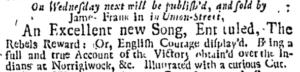

Here, from a Philadelphia paper of 1740, is an advertisement for sheet music being sold for the sake of charity:
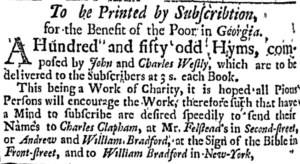
These people, then, while a long way from the centers of production for fine arts, still cared enough about them that they’d buy sheet music and learn new songs in their homes, performing them for family and friends at least.

The Fruits: As always, these people were essentially us, albeit in different circumstances. And what grew out of their circumstances were most notably self-reliance and self-trust. We further see that these virtues led men and women to sift and compare ideas, arriving at a conclusion that their rough liberty was better than the polished servitude of the kingdoms, and that they believed it enough to suffer for it."

"Iranian Missiles Burn Down Haifa Oil Refinery in Israel’s Worst Nightmare Come True!"

Full screen recommended.
OpenmindedThinker Show, 6/15/25
"Iranian Missiles Burn Down Haifa Oil Refinery
 in Israel’s Worst Nightmare Come True!"
Comments here:
Out of the rat hole, checking the damage.
Face says it all.

Saturday, June 14, 2025

"WW3 Has Begun; America Is Breaking Apart As The Financial System Rots"

Jeremiah Babe, 6/14/25
"WW3 Has Begun; America Is Breaking 
Apart As The Financial System Rots"
Comments here:

"Iranian Missiles Obliterate Israeli Nuclear Facility - Massive Explosions Rock Tel Aviv!'

Full screen recommended.
OpenmindedThinker Show, 6/15/25
"Iranian Missiles Obliterate Israeli Nuclear Facility - 
Massive Explosions Rock Tel Aviv!'
Comments here:
ol
Danny Haiphong, 6/14/25
"Mohammad Marandi: 
Iran’s Response Just Devastated Israel, US in Trouble"
"Prof. Mohammad Marandi joins the show to react to Iran's intense retaliation to Israel, including the extent of the strikes and just how it will impact Israel, the US, and the world at large. Prof. Marandi asserts that while Israel struck first, Iran's retaliation has devastating consequences that are not yet understood by Israel or its US backers."
Comments here:
o
Full screen recommended.
Mahmood OD, 6/14/25
"Haifa Oil And Chemical Refineries Explode; 
2,000 Missiles; F-135 Shot Down"
Comments here: