StatCounter

Sunday, June 15, 2025

"'Anarchy' in USA?"

 
"'Anarchy' in USA?"
Or just another round of "mostly peaceful riots"?
by Joel Bowman

“The Anarchists are right in everything; in the negation of the existing order, and in the assertion that, without Authority, there could not be worse violence than that of Authority under existing conditions. They are mistaken only in thinking that Anarchy can be instituted by a revolution. But it will be instituted only by there being more and more people who do not require the protection of governmental power and by there being more and more people who will be ashamed of applying this power. There can be only one permanent revolution – a moral one: the regeneration of the inner man.”
~ Leo Tolstoy, "On Anarchy" (1900)

TiranĂ«, Albania - "Uh-oh… don’t look now, dear reader, but they’re tossing around the “A-word” again, and this time it’s coming from both sides…

"Los Angeles erupts in anarchy as protesters storm major highway and clash with law enforcement" ~ The Daily Mail

"Fetterman Calls California Protests ‘Anarchy’ as He Criticizes Democrats" – The New York Times

"Trump, at Fort Bragg, vows to use force against ‘anarchy’" ~ The Washington Post

It is a sad state of affairs, indeed, when philosophical, non-violent anarchists are given a bad name by hordes of actual, marauding rioters. Of course, if you listened to the mainstream media, what’s going down presently in the City of Angels… and now in metro areas across the Land of the Free, from Sea to Shining Sea… is nothing more than “mostly peaceful car burnings.”

Your Lyin’ Eyes: Earlier this week, ABC journalist Jory Rand sought to “reframe” the escalating violence on the streets of LA, even as his own channel broadcast images of cars completely engulfed in flames, the thick black smoke billowing into the night air. Noting there was “a large group of people” running wild, Rand said it “could turn very volatile if you move law enforcement in there the wrong way and turn what is just a bunch of people having fun watching cars burn into a massive confrontation and altercation between officers and demonstrators.” And really, dear reader, who among us hasn’t gathered the family around for a bit of ol’ fashioned automobile arson of a Saturday evening? Good, wholesome stuff.

Not that we’d expect anything more from the shameless chorus of presstitutes that brought you the “two weeks to flatten the curve” fraud… the “safe and effective” propaganda… the “good people on both sides” hoax… the “Russiagate” chicanery… the “bloodbath” dupe… to say nothing of the original “mostly peaceful protests” deceit.
Reality imitating parody, or parody imitating reality? 
CNN’s live “coverage” during the “mostly peaceful” BLM riots.

The MSM’s flagrant, borderline compulsive deception notwithstanding, words actually do matter… and if there’s a “war of ideas” to be won, as we’re constantly being reminded, we’ll do well to be precise in our definitions of terms. For the average citizen, the word “anarchist” is a pejorative used to describe jackbooted hooligans rampaging through the streets, hurling Molotov cocktails through Starbucks windows, setting Tesla’s on fire and generally throwing their toys out of the stroller. In point of fact, nothing could be further from the truth. The word has been hijacked and, in accordance with the Newspeak of our time, has come to mean the exact opposite of that for which what it stands.

Properly understood, the term anarchy, which derives from the Greek anarchia, literally translates: an, “without” + arkhos, “ruler.” Freedom from being owned... enslaved... forced against one’s will. Freedom to act voluntarily. Freedom to associate with whomever one so desires and under whatever conditions he or she sees fit...provided they do not diminish the ability of another to enjoy the same freedom. To “live and let live,” in other words. Cooperation over coercion. Voluntarism over violence.

The great spiritual anarchist quoted above, Leo Tolstoy, understood this concept well. Indeed, his ideas on peaceful civil disobedience and nonviolent resistance, expressed in such works as The Kingdom of God Is Within You, were to have a profound impact on such pivotal twentieth-century figures as Mohandas Gandhi and Martin Luther King, Jr., men who preached peace, love and real anarchy. Of course, the world is not so simple as all that… and capital-T “Truth” is often hard to find. Ah, but that’s a subject for another Note…

Meanwhile, this week we’ve got something for everyone… to kvetch over. On Tuesday, we invited Elon and his DOGE Musketeers to head south to Argentina, where the largest open air experiment in libertarianism is unfolding before the world’s eyes. And on Thursday, we added another tiny tile in the grand mosaic titled “real socialism is a pipe dream,” citing the observably calamitous results in collectivist, twentieth-century Albania."

"The West That Was, Part 4"

"The West That Was, Part 4"
by Paul Rosenberg

"America, 1776: The development of the American colonies moved in an arc. They began with a lot of oppression (after the old world model), shook it off as the arc rose toward 1776 and the revolution, then headed slowly back down. My job today is to give you some feel of the times, and I’ll begin with some background.

Perhaps the most important accident of the early America period was a British policy that later became known as salutary neglect. This salutary (healthful) neglect began in 1722, when a Whig named Robert Walpole became the king’s chief minister. The Whigs held what we might call libertarian opinions, and Walpole wanted to govern loosely, to avoid government meddling, and to let natural forces bring prosperity to England. Under Walpole, many of the regulations upon American trade were simply ignored.

This policy lasted, more or less, until 1760, after which the impositions we normally associate with the American Revolution began. The most enduring expressions of this line of development came from George Mason, Thomas Jefferson, and Thomas Paine. But more important than the words of the most eloquent Americans were the words and deeds of working people. In 1773, for example, the people of Hubbardston, Massachusetts, a town of about 300, published this in a declaration:

"We are of the opinion that rulers first derive their power from the ruled by certain laws and rules agreed upon by rulers and ruled, and when a ruler breaks over such laws… and makes new ones… then the ruled have a right to refuse such new laws and… to judge for themselves when rulers transgress. 
In Worcester, a town of a few thousand, a similar letter was published at about the same time: "It is our opinion that mankind are by nature free, and the end design of forming social compacts… was that each member of that society might enjoy his life and property, and live in the free exercise of his rights… which God and Nature gave." Notice in both these cases, that we are seeing working men and women making firm and confident pronouncements about the world.

At the same time, a group of creditors, lawyers, and judges (again, people of the political means) posed a threat to the small farmers and artisans of Worcester county. In response, the people formed their own legal system, abandoned government courts and used arbitration to resolve their disputes.

Events like these were common all through the colonies. These people believed in their individual right to judge the world and to act upon it without permission, and that’s the first thing to understand about this era: These people had been far enough from power, and for long enough, that they felt they had the right to judge it.

This was the real revolution, according to John Adams, a man deeply and even centrally involved. He maintained that it had almost nothing to do with the external events. In a letter to Thomas Jefferson, dated August 24, 1815, he wrote this: "What do we mean by the Revolution? The war? That was no part of the revolution; it was only an effect and consequence of it. The revolution was in the minds of the people, and this was effected from 1760-1775, in the course of fifteen years, before a drop of blood was shed at Lexington."

The Americans of 1776, then, or a large number of them, had moral and political references outside those authorized by power. Upon consideration, they had no interest in being ruled by the English king. And while they weren’t particularly looking for a war (at least most weren’t) they did want the king’s enforcers to leave.

The outside points of reference these people had were primarily two: The Bible and John Locke’s "Second Treatise on Government." The Bible is a large book, written by a significant number of people over many centuries. And while it can be used to support varied ideas, it very clearly places rulers in a highly critical light, and as less righteous than the virtuous poor.

"Locke’s Second Treatise on Government" is a fundamental work of political theory, and should still be read by most everyone. (It’s not long and the old language isn’t that hard to understand.) The American founders (Sam Adams in particular) revered it and referred to it often.

To understand this moment, then, we need to understand the mind of someone who looks at current events from a point outside of them. Looking at the world as an outsider reduces the power of propaganda. And if the ruler doesn’t have myths and legends that will make the masses swell with emotion, he’s left with convincing people to slave their lives away for his benefit. And that’s precisely what failed in the colonies.

The British Americans of 1776 had lost their bias toward rulership. They no longer gave it a continual benefit of the doubt. The began to see power for what it was, not what it was promoted as. As a result, power could no longer hold its grip. The farmers, mechanics and so on lost their awe for “the institution,” and walked away from it. The Americans who still supported the king were mainly those who had something go gain from it (a considerable percentage), and, of course, those who wanted to believe the old myths. Bear in mind that Americans had been fending for themselves for a long time. They knew from actual practice that they really didn’t need the king.

Three Underlying Factors: As we know, the colonists weren’t allowed to walk away, nor were they allowed to vote on secession. Rather, they were forced to fight, and that requires a far deeper conviction than most people possess; that’s why despised rulers stay in power: working people simply don’t want to engage in fights to the death (that’s what war is). And so rulers – employing men who will fight to the death – have a massive advantage… an advantage allows them to abuse without consequence for long periods of time. The American colonists were able to transcend that advantage, and walk into gigantic fights to the death, because of three primary factors:

Religious faith. This is a large subject by itself, but beneath it lies a simple observation: The people who display serious courage are overwhelmingly people of faith. These may not be deeply observant people, but they do have beliefs. This is obviously a complex subject, but the observation holds, and there is clearly an internal organizing power to beliefs. And very certainly these people had strong beliefs; that was a crucial part of their ability to stand up to the king’s armed men.

Deep drives. Deep psychological drives, like the need for heroic and historic meaning, compel us. By far most humans have lived and died without suitable outlets for such desires. That is, they find no accessible ways to overtly change the world. The rebellion against the British, however, gave these colonists such an opportunity. Moreover, their pressures toward this were somewhat higher than the same pressures we feel today. Beyond the electronic perma-distractions of our time, these people faced shorter and less certain lifespans than we do. If you have one shot at a historic life and few years in which to take it, you’re as likely as not to jump upon the opportunity at hand. And so these people did.

An acceptance of the tragic aspect of life. This goes hand in hand with the above, but it’s a bit different. Death was more of a companion in pre-modern times. Babies often died, infections could sometimes be deadly, and so on. More than that, people frequently died at home, where other family members would see it up close. It seems to me that our modern separation from death is perhaps better for us, but it has definitely insulated us from the tragedy of life. These people, then, accepted that tragedy was part of life, making it easier for them to step into a tragic war.

Understanding The Culture: Moving along from the outer aspects of the West of this era, let’s look at the more important part: The culture of the time, incorporating the daily lives and thoughts of these people. There’s a lot to understand, of course (these people were fundamentally as complicated as we are), but we do have a number of telling aspects to look at.

Intellectual life. Intellectual life in the American colonies took place primarily in churches, taverns and newspapers. Newspapers were more or less unconstrained after 1735, were very widely read and were generally well-written. The urban populace was well informed, as were most of the farmers, albeit some days later than the cities, owing to delivery times.

The churches were likewise centers of intellectual life. Firstly, of course, were the weekly sermons, which were taken very seriously (many were transcribed and published) and also related to current events. As I’ve noted before, churches were strongly attended and a place where most people dealt with serious thoughts for at least an hour or two every week. And, quite contrary to Europe, American Christians of different sects learned, even if grudgingly, to get along, as Historian Merrill Jensen wrote:

"The back countrymen were of various religious sects, and while perhaps not tolerant by conviction, they were so on necessity on the frontier where so many religious groups had settled. The taverns were where men went to discuss, argue about and plan the events of their times. A very large percentage of the American rebellion from Britain was forged in the taverns of America. And yes, the consumption of alcohol, per capita, was quite a bit higher at this time than it is today."

On the whole, we can say that the people of this era took their ideas very seriously, and were quite willing to act upon them. Between the “no myth” issue we covered in The West That Was #3 and the fact that they had been so substantially on their own, the came to find importance and meaning in important ideas.

Commercial life. The American colonies had what we can call a strongly bourgeois culture. That is, it was a culture dominated by shopkeepers, small farmers, mechanics and merchants. Many other commercial activities existed, but these were the most common.

Slavery and large farms (plantations) accounted for a good deal of commerce in the South, of course, but even there the bourgeois model was strong. For example, in 1766 the rebellious Sons of Liberty of Charleston, South Carolina (a slave state), were composed of, “six carpenters, three painters, three clerks, two blacksmiths, two coach-makers, two saddlers, two wheelwrights, a glass-grinder, one carver, one upholsterer, one butcher, one tailor, one schoolmaster, and one merchant.”

This “shopkeeper” model of life creates an assumption of self-reliance, as well as assumptions of capability. These are strongly positive ways for people to view themselves, and the colonists embodied a great deal of it… another of the forces that made them feel competent to judge kings.

Liberation from class. European life, during this era, was strongly class-based. The aristocracy was separated from the peasants by law and treated very differently. City life differed frequently, but the vast majority of the populace remained rural in the 18th century. Americans in the 18th century were very clear on the fact that they had far more opportunity than their relatives back in Europe. Their self-images often featured this fact and their actions were very often impelled by either gratitude for it, or a need to show they deserved it.

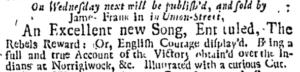
The arts. The usual comment about arts in the America colonies is that they were miserable. To an extent this was true, as survival in the wilderness (which is what most of America was in those days) leaves little room for the production of fine arts. Still American homes featured reproductions of European art, even good reproductions. More than that, however, music was a significant business in the colonies. Here, for example (apologies on the quality; it’s from 300 years ago), is an ad for sheet music. It ran in the New England Courant in 1724:


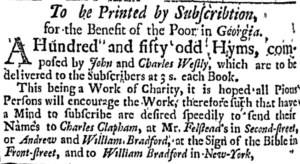
Here, from a Philadelphia paper of 1740, is an advertisement for sheet music being sold for the sake of charity:

These people, then, while a long way from the centers of production for fine arts, still cared enough about them that they’d buy sheet music and learn new songs in their homes, performing them for family and friends at least.

The Fruits: As always, these people were essentially us, albeit in different circumstances. And what grew out of their circumstances were most notably self-reliance and self-trust. We further see that these virtues led men and women to sift and compare ideas, arriving at a conclusion that their rough liberty was better than the polished servitude of the kingdoms, and that they believed it enough to suffer for it."

"Iranian Missiles Burn Down Haifa Oil Refinery in Israel’s Worst Nightmare Come True!"

Full screen recommended.
OpenmindedThinker Show, 6/15/25
"Iranian Missiles Burn Down Haifa Oil Refinery
 in Israel’s Worst Nightmare Come True!"
Comments here:
Out of the rat hole, checking the damage.
Face says it all.

Saturday, June 14, 2025

"WW3 Has Begun; America Is Breaking Apart As The Financial System Rots"

Jeremiah Babe, 6/14/25
"WW3 Has Begun; America Is Breaking 
Apart As The Financial System Rots"
Comments here:

"Iranian Missiles Obliterate Israeli Nuclear Facility - Massive Explosions Rock Tel Aviv!'

Full screen recommended.
OpenmindedThinker Show, 6/15/25
"Iranian Missiles Obliterate Israeli Nuclear Facility - 
Massive Explosions Rock Tel Aviv!'
Comments here:
ol
Danny Haiphong, 6/14/25
"Mohammad Marandi: 
Iran’s Response Just Devastated Israel, US in Trouble"
"Prof. Mohammad Marandi joins the show to react to Iran's intense retaliation to Israel, including the extent of the strikes and just how it will impact Israel, the US, and the world at large. Prof. Marandi asserts that while Israel struck first, Iran's retaliation has devastating consequences that are not yet understood by Israel or its US backers."
Comments here:
o
Full screen recommended.
Mahmood OD, 6/14/25
"Haifa Oil And Chemical Refineries Explode; 
2,000 Missiles; F-135 Shot Down"
Comments here:

Musical Interlude: Liquid Mind VII, "Reflection"

Full screen recommended for reflection, contemplation.
Liquid Mind VII, "Reflection"

"A Look to the Heavens"

"To some, it looks like a giant chicken running across the sky. To others, it looks like a gaseous nebula where star formation takes place. Cataloged as IC 2944, the Running Chicken Nebula spans about 100 light years and lies about 6,000 light years away toward the constellation of the Centaur (Centaurus).
 
The featured image, shown in scientifically assigned colors, was captured recently in a 12-hour exposure. The star cluster Collinder 249 is visible embedded in the nebula's glowing gas. Although difficult to discern here, several dark molecular clouds with distinct shapes can be found inside the nebula."

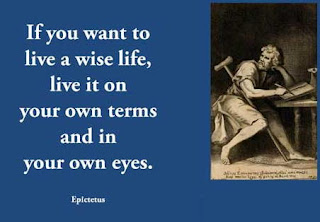
"On Your Own Terms..."

“If the sun is shining, stand in it – yes, yes, yes. Happy times are great, but happy times pass – they have to – because time passes. The pursuit of happiness is more elusive; it is life-long, and it is not goal-centered. What you are pursuing is meaning – a meaningful life… There are times when it will go so wrong that you will be barely alive, and times when you realize that being barely alive, on your own terms, is better than living a bloated half-life on someone else’s terms.”
- Jeanette Winterson
o
Full screen recommended.
"The Psychology of Conformity"
by Academy of Ideas

"This video, building on the ideas of Ernest Becker, Kierkegaard, Nietzsche and Emerson, examines why we are so susceptible to conformity and looks at why nonconformity, or the cultivation of one’s uniqueness, is such an important ingredient in a life well-lived."

The Poet: J.R.R. Tolkien, “The Road”

“The Road”

“The Road goes ever on and on
Down from the door where it began.
Now far ahead the Road has gone,
And I must follow, if I can,
Pursuing it with eager feet,
Until it joins some larger way
Where many paths and errands meet.
And whither then? I cannot say.
The Road goes ever on and on
Out from the door where it began.
Now far ahead the Road has gone,
Let others follow it who can!
Let them a journey new begin,
But I at last with weary feet
Will turn towards the lighted inn,
My evening-rest and sleep to meet.”

- J.R.R. Tolkien

"Waiting..."

“Life passes like a flash of lightning, whose blaze barely lasts long enough to see. While the earth and sky stand still forever, how swiftly changing time flies across man’s face. O you who sit over your full cup and do not drink, tell me – for whom are you still waiting?”
- Hermann Hesse

"I Hope I End Up..."

“I don’t want to pass through life like a smooth plane ride. All you do is get to breathe and copulate and finally die. I don’t want to go with the smooth skin and the calm brow. I hope I end up a blithering idiot cursing the sun - hallucinating, screaming, giving obscene and inane lectures on street corners and public parks. People will walk by and say, “Look at that drooling idiot. What a basket case.” I will turn and say to them, “It is you who are the basket case! For every moment you hated your job, cursed your wife and sold yourself to a dream that you didn’t even conceive. For the times your soul screamed yes and you said no. For all of that. For your self-torture, I see the glowing eyes of the sun! The air talks to me! I am at all times!” And maybe, the passersby will drop a coin into my cup.”
- Henry Rollins

"Alert! U.S. Northcom On High Alert; Nuclear Action Messages; Cyberattack; Iran War About To Explode"

Prepper News, 6/14/25
"Alert! U.S. Northcom On High Alert; Nuclear Action Messages;
 Cyberattack; Iran War About To Explode"
Comments here:

The Daily "Near You?"

Harare, Zimbabwe. Thanks for stopping by!

"When I Am Old"

"When I Am Old"
Author Unknown

"When I am old… I will wear soft gray sweatshirts… and a bandana over my silver hair… and I will spend my social security checks on my dogs. I will sit in my house on my well-worn chair and listen to my dogs breathing. I will sneak out in the middle of a warm summer night and take my dogs for a run, if my old bones will allow… When people come to call, I will smile and nod as I show them my dogs… and talk of them and about them…the ones so beloved of the past and the ones so beloved of today… 

I will still work hard cleaning after them, mopping and feeding them and whispering their names in a soft loving way. I will wear the gleaming sweat on my throat, like a jewel, and I will be an embarrassment to all… especially my family… who have not yet found the peace in being free to have dogs as your best friends… These friends who always wait, at any hour, for your footfall… and eagerly jump to their feet out of a sound sleep, to greet you as if you are a God, with warm eyes full of adoring love and hope that you will always stay,

I’ll hug their big strong necks… I’ll kiss their dear sweet heads… and whisper in their very special company… I look in the mirror… and see I am getting old… this is the kind of person I am… and have always been. Loving dogs is easy, they are part of me. Please accept me for who I am. My dogs appreciate my presence in their lives… they love my presence in their lives… When I am old this will be important to me… you will understand when you are old, if you have dogs to love too."
"Old?" One of us is 14 1/2, the other's 73...
Not so sure about "wise" though, hahaha
Full screen recommended.
Alan Parsons Project, "Old And Wise"

“Standing Up When It’s Too Late”

“Standing Up When It’s Too Late”
By JR Nyquist

“This article is a comparison between America and another great empire faced with rot in high office and a decline of the state – Rome. The writer, JR Nyquist, artfully points out it’s not the big events that sink an empire but many seemingly little ones. You could call what is happening to the U.S. “death by a thousand cuts.” Except in this story, people are not really aware how deep the cuts are and exactly who is doing the cutting. I loved this piece, and I hope you do as well.” – Greg Hunter
“There is a letter by Marcus Tullius Cicero, dated 18 December 50 B.C. This letter was written to his friend Atticus on the eve of the Roman Civil War. He wrote as follows: “The political situation alarms me deeply, and so far I have found scarcely anybody who is not for giving Caesar what he demands rather than fighting it out.” To explain the situation in brief, G. Julius Caesar had demanded the right to circumvent the Roman constitution, to break laws with impunity, to extend his command over a large army by using that army to threaten the Senate of Rome. “And why should we start standing up to him now?” asked Cicero. The next day he wrote to Atticus: “We should have stood up to him [Caesar] when he was weak, and that would have been easy. Now we have to deal with eleven legions…” Though he hated the idea of civil war, the only course, said Cicero, was to follow “the honest men or whoever may be called such, even if they plunge.”

And who were these “honest men”? “I don’t know of any,” wrote Cicero in the same letter. “There are honest individuals, but there are no honest groups.” Then he asked rhetorically if the Senate was honest, or the tax farmers, or the capitalists. None were frightened of living under an autocracy, he lamented. The capitalists, especially, “never have objected to that, so long as they were left in peace.” But civil war occurred nonetheless, because people are not free to be dishonest forever. They must admit to certain responsibilities, and oppose the advance of evil. The previous inclination to look away, to do nothing, to shrug off responsibility, proves in the end to be no more than a delaying tactic. They attempted to put off calamity, Cicero suggested, and made it all the more calamitous. That is all.

Why did the Roman Senate suddenly stand up to Caesar? What triggered their resistance? As with all free people, they began with policies of procrastination and appeasement. They hoped that the problem (i.e., Caesar) would go away. In the end, however, they discovered their mistake. Everyone still hoped for peace, though none believed it was possible. Everyone wanted to avoid war, but nobody saw a way out. Pompey stood before the Senate and gave voice to what everyone thought. “If we give Caesar the consulship, it will mean the subversion of the constitution.” In other words, it would mean the end of Rome, the end of the republic, the destruction of their country.

In a fitting preface to John Dickinson’s “Death of a Republic,” George L. Haskins wrote, “that the history of Rome is the history of the world, that, as all roads lead to Rome, so all history ends or begins with Rome.” Why do free people fall into complacency? Why are threats ignored until the eleventh hour?

“Surely,” wrote Cicero at the end of Caesar’s dictatorship, “our present sufferings are all too well deserved. For had we not allowed outrages to go unpunished on all sides, it would never have been possible for a single individual to seize tyrannical power.” Caesar’s cause was not right, but evil, Cicero explained. “Mere confiscations of the property of individual citizens were far from enough to satisfy him. Whole provinces and countries succumbed to his onslaught, in one comprehensive universal catastrophe…” As for the city of Rome, Cicero lamented, “nothing is left - only the lifeless walls of houses. And even they look afraid that some further terrifying attack may be imminent. The real Rome is gone forever.”

Republics are slow to defend themselves against enemies that advance, like Caesar, under camouflage. But make no mistake, republics always defend. Groups and categories of men may not be honest or brave, but when they are finally confronted with the truth – as individuals – they see no other course. They stand up and fight. We should not be surprised, therefore, that Caesar was struck down in the Senate and killed by thrusting daggers.

It is all too true, of course. “We should have stood up to him when he was weak,” Cicero lamented. The problem with republican government is its tardiness; or rather, tardiness in the face of danger. As Machiavelli wrote, “The institutions normally used by republics are slow in functioning. No assembly or magistrate can do everything alone. In many cases, they have to consult with one another, and to reconcile their diverse views takes time. Where there is a question of remedying a situation that will not brook delay, such a procedure is dangerous.”

Machiavelli concluded, therefore, “that republics in imminent danger, having no recourse to dictatorship, will always be ruined when some grave misfortune befalls them.” This is the weakness of republican government. Here is the ground on which it dies. An obvious threat, like 9/11 or Pearl Harbor is not the greatest danger. It is the subtle, camouflaged threat, that creeps up from behind. It is this camouflage that gives reluctant men a way out. “We need not fight. We need not make a fuss. There is nothing to fear.”

When this is the prevailing view, people who understand a given threat may ask: “What is to be done?” As long as we are isolated individuals, there is nothing to do. The individual may be honest with himself, but groups are not honest. What prevails overall is an optimistic dismissal. “The threat isn’t real.” This is how Hitler got so far. This is how Communism took over so many countries, and continues today under camouflage. There is nothing the individual can do that will sway the crowd. And as we are a republic, our political system operates according to the psychology of a crowd. The majority are caught up in the fads and media trends of the moment. Cynical and empty publicity characterizes much of our public discourse. But one day the country will awaken. Then, and only then, Americans will stop going along as if nothing serious hangs over them. Will it be too late? Perhaps it will be too late to save the republic. But it will not be too late to save the country.”

"Live All You Can..."

"Live all you can; it's a mistake not to. It doesn't so much
matter what you do in particular, so long as you have your life.
If you haven't had that, what have you had?"
- Henry James

"We suffer more often in imagination than in reality. 
You want to live but do you know how to live? 
You are scared of dying but tell me, 
is the kind of life you lead really any different to being dead?"

"Lady In Red Coffee Hour"

"Lady In Red Coffee Hour"
Now and then, very rarely, you stumble upon something simply extraordinary,
something that's just so astonishingly beautiful and well done it's unbelievable. 
This is one of those times...
Savor the magic...scroll through the many musical images with sound on.
No sign in required.

"How It Really Is"


"Russia Unfiltered: Wild Nightlife on Moscow’s Streets"

Meanwhile, in a sane, civilized society...
Full screen recommended.
Window To Moscow, 6/14/25
"Russia Unfiltered: Wild Nightlife on Moscow’s Streets"
A walk along the streets after midnight. 
No clubs, no staging - just real street life.
Comments here:
o
Nightlife somewhere else...
Full screen recommended.
Cash Jordan, 6/14/25
"Protesters Torch Police Cars As NYC Collapses"
"Nationwide immigration raids and deportations have activists so riled up, they are taking their anger out on law enforcement officers in sanctuary cities who arent even allowed to assist ICE.  Protesters say this is all President Trump's fault, but how can that be true when they're going after their own police officers just for wearing a badge?"
Comments here:

Dan, I Allegedly, "Layoffs, Inflation, and Warnings You Can't Ignore!"

Full screen recommended.
Dan, I Allegedly, 6/14/25
"Layoffs, Inflation, and Warnings You Can't Ignore!"
"No job is safe in 2025, and today, I’m breaking down the massive layoff crisis hitting every industry. From MTZ’s shocking closure to global layoffs in banking, airlines, and gaming, the numbers are staggering. Whether you’re a professional, contractor, or laborer, this crisis affects everyone. It’s time to plan for the unexpected, protect your finances, and stay informed. I’m sharing tips on navigating these turbulent times, from spotting government auction deals to understanding shifts in housing and auto markets.

Inflation, corporate downsizing, and skyrocketing costs are reshaping our world. We’ll also touch on surprising stories, like shrimp recalls, controversial landlord policies, and even the crazy things people do when evicted. Plus, why In-N-Out stands out as the best fast food employer and how Las Vegas heat is wreaking havoc on tires."
Comments here:

"Every Normal Man..."

"Every normal man must be tempted, at times, to spit on his hands,
hoist the black flag, and begin slitting throats."
 - H. L. Mencken
“Platitudes are safe, because they're easy to wink at, but truth is something else again.”

“A man who has blown all his options can't afford the luxury of changing his ways. He has to capitalize on whatever he has left, and he can't afford to admit - no matter how often he's reminded of it - that every day of his life takes him farther and farther down a blind alley. Very few toads in this world are Prince Charmings in disguise. Most are simply toads... and they are going to stay that way. Toads don't make laws or change any basic structures, but one or two rooty insights can work powerful changes in the way they get through life. A toad who believes he got a raw deal before he even knew who was dealing will usually be sympathetic to the mean, vindictive ignorance that colors the Hell's Angels' view of humanity. There is not much mental distance between a feeling of having been screwed and the ethic of total retaliation, or at least the random revenge that comes with outraging the public decency.”

“A man has to BE something; he has to matter.”
- Hunter S. Thompson

"Shocking Genetic Science Reveals Ashkenazi Jews Suffer High Rates of Mental Illness Due To Inbreeding"

"Shocking Genetic Science Reveals Ashkenazi Jews
 Suffer High Rates of Mental Illness Due To Inbreeding"
by Mike Adams 

"We are facing a dire situation for humanity. Today, I reveal some of the elements that have led us to that, including shocking scientific evidence that studied the inbreeding common among Ashkenazi Jews (the dominant population worldwide) and found that centuries of inbreeding has produced widespread mental illness and schizophrenia. This is relevant because Netanyahu thinks God talks to him and tells him to mass murder people in Gaza, Lebanon and Iran. He thinks he's hearing voices from God. It's actually a genetic mental illness caused by inbreeding.

- Genetic studies on Ashkenazi Jews reveal mental disorders.
- Generations of inbreeding have produced mental illness defects.
- High levels of schizophrenia among "God's chosen people."
- Netanyahu thinks God is talking to him and telling him to commit genocide.
- Quotes from Jewish Rabbis calling for mass death of non-Jews.
- The U.S. has provided nuclear weapons to mentally ill sociopathic inbreds.
- Jewish inbreeding has also removed "mirror neurons" responsible for empathy and compassion.
- High risk of nuclear war that kills billions, due to Israel's insane genocide."
Fully explained in video here:

Many references online.

Now it all makes sense...
Full screen recommended.
"Investigating War Crimes In Gaza"

And you, America, pay for every goddamned bit of it...

"The Whole Planet Is Being Kept Hostage By A Death Cult"

"The Whole Planet Is Being 
Kept Hostage By A Death Cult"
by Pepe Escobar

Let’s cut to the chase. The devastating attack on Iran by the psychopathological genocidal “chosen” ethno-supremacist set up in Tel Aviv – a de facto declaration of war – was coordinated in detail with the President of the United States, Circus Ringmaster Donald Trump. This infantilism-afflicted Narcissus Drowned in the Pool of his Own Image gave away the game, himself, in a rambling post. Selected highlights: “I gave Iran chance after chance to make a deal”. No “deal”; actually his unilateral demands. After all, he torpedoed the original deal, the JCPOA, because it was not his “deal”. “I told them it would be much worse than anything they know, anticipated, or were told.” The decision to strike had already been made.

“Certain Iranian hardliners spoke bravely, but (…) they are all DEAD now, and it will only get worse!” Gloating comes with the territory. “The next already planned attacks being even more brutal.” Total alignment with the trademark Israeli “decapitation” strategy. “Iran must make a deal, before there is nothing left, and save what was once known as the Iranian Empire”. It was Persian Empire – but after all this is a man who doesn’t read, or study. Notice the Art of Diplomacy: Take my deal, or drop dead.

This – incandescent – decade was launched by an assassination, of Gen. Soleimani in Baghdad, as I emphasized in my 2021 book Raging Twenties. He was on a diplomatic mission. The green light personally came from then President of the United States, Donald Trump.

The mid-Raging Twenties is now hurled to the brink of a devastating war in West Asia, with global repercussions, by the serial assassination of the IRGC leadership, in Tehran, by the psycho-genocidal Zionist entity. After an elaborate kabuki of deception, the green light to Tel Aviv – go ahead and do it – also came from the President of the United States, Trump 2.0 (who claimed he was “aware’’ of the attacks).

A pre-emptive war against the BRICS: The psycho-pathological genocidal masterplan is to force Tehran to capitulate – without even putting up a fight. The preamble kabuki was masterfully executed. The indirect nuclear negotiations in Oman were taken seriously in Tehran, lulling the Iranian leadership, civilian and military, to sleep. They fell into the trap and were caught, literally, in their sleep.

Ayatollah Khamenei – who himself is in physical danger, as Israel is applying the same decapitation model it unleashed on Hezbollah – has a very tough decision to make: capitulation or total war. It will be total war – and with the U.S. as a direct participant.

The Iranian leadership – actually more the Pezeshkian presidency, crammed with proponents of an “accommodation” with the West – was induced into a false sense of security, forgetting that serial killers don’t do diplomacy.

So the price to pay now, for Iran, will be even more unbearable. Tehran will respond – assuming capabilities are still in place. In this case its oil industry runs the risk of being destroyed. It’s an open question whether two other top BRICS members alongside Iran – Russia and China -, for different reasons, will allow that to happen. And were we about to enter this particular dangerous territory, Iran can play the ultimate card: shut down the Strait of Hormuz and collapse the global economy.

The attack on Iran, fully endorsed by the Empire of Chaos, is above all a pre-emptive attack on the BRICS energy core. It’s part and parcel of the imperial war against BRICS, especially Russia-China. Moscow and Beijing must be drawing the necessary conclusions in real time.

Iran, China and Russia are linked by interlocked strategic partnerships. Last month, I was in Iran tracking the progress of the International North South Transportation Corridor (INSTC), which links Russia, Iran and India. This is only one among a series of key strategic infrastructure projects that will solidify even more Eurasian economic connectivity. A devastating war in West Asia, and a collapsing Iran, will represent a killer blow to increased Eurasia integration.

That’s exactly what suits the Empire’s designs. So it’s no wonder Washington is all in. This is now the Circus Ringmaster War. A devastating response; a nuclear weapon; or capitulation

Tehran’s message is, “We did not start the war, but Iran will determine how it ends.” The burning question is whether they still retain a significant deterrent – and offensive – capacity. The genocidals are hitting ballistic missile storage systems at will in Iran’s northwest and even civilian Mehrabad airport in Tehran. Air defenses are nowhere to be seen. It’s immensely painful to watch.

IDF spin – nothing verified so far – claims that some missile silos and mobile complexes were destroyed even before they were placed on combat alert. Yet the fact is that the overwhelming majority of Iran’s vast arsenal of ballistic missiles is stored in deep, deep underground silos and tunnels, capable of withstanding massive air strikes and overloaded air defenses.

For the moment, Tehran is eerily silent. That makes sense, because they need, in record time, to re-establish a unified chain of command which was smashed by the attacks; make sure that missile launchers can be deployed and not be neutralized by Israeli air supremacy; reorganize the True Promise 3 operation, which was ready to go, as some of us learned in Tehran last month, but now adapted to the new situation (losses included); and plan how to deliver painful blows to Israel’s economic infrastructure.

There is no evidence that the attacks destroyed Iran’s nuclear infrastructure – which is buried deep underground. As it stands, the leadership in Tehran is learning the hard way that diplomacy – committees, letters to the UN, statements to the IAEA, ministerial meetings – all that is eviscerated when it comes to the law of the jungle. Iranians were naĂ¯ve enough to let the IAEA visit their strategic sites, when proverbial spies collected all the info they needed to facilitate Israeli strikes. The DPRK would have never fall into such a trap.

The elimination of a top figure such as Ali Shamkhani, Khamenei’s key advisor, Iran’s lead nuclear negotiator, with decades of influence across the IRGC and intelligence apparatus, is a serious blow.

Systematically erasing Iran’s military and diplomatic leadership in a matter of hours fits the rationale of smashing Khamenei’s close circle. That has started long ago with the Trump-ordered killing of Soleimani and certainly includes the mysterious death of former President Raisi and FM Abdollahian in that dodgy helicopter “accident”. It’s all about creating the conditions for regime change.

On a rare auspicious note, the IRGC let it be known, before the attacks, that they have been developing a secret technology to intensify the impact of its missiles on Israel. We are all riders on the storm now. Once again, there’s no way out: either a devastating blow to the psycho genocidals, or Iran assembles a nuclear weapon in no time. The third option is capitulation, emasculation, and regime change.

Meanwhile, the whole planet is hostage to a lethal threat. Andrea Zhok is professor of Moral Philosophy at the University of Milan, and apart from his brilliant analyses, he wrote the preface of the Italian edition of my book "Raging Twenties," published last year.

Prof. Zhok has succinctly pointed out how no political construction in modern history has amassed a toxic combination of messianic ethnic supremacism; supreme disregard for human life (everyone else, not “chosen”, is “amalek” anyway); supreme disregard for international law; and unlimited access to lethal firepower. So what is to be done with such a voracious, out of control death cult?"

Adventures With Danno, "Shocking Prices At Walmart"

Full screen recommended.
Adventures With Danno, 6/14/25
"Shocking Prices At Walmart"
Comments here:

Friday, June 13, 2025

"Nuclear Emergency In Iran, Nuclear Bomb Test Possible; Russian General's Warning"

Prepper News, 6/13/25
"Nuclear Emergency In Iran, Nuclear Bomb Test Possible; 
Russian General's Warning"
Comments here:

Canadian Prepper, "The War Has Begun: Its Time to Get Serious"

Canadian Prepper, 6/13/25
"The War Has Begun: Its Time to Get Serious"
Comments here:

Musical Interlude: Supertramp, “The Logical Song”

Supertramp, “The Logical Song”

"A Look to the Heavens"

“These three bright nebulae are often featured in telescopic tours of the constellation Sagittarius and the crowded starfields of the central Milky Way. In fact, 18th century cosmic tourist Charles Messier cataloged two of them; M8, the large nebula left of center, and colorful M20 on the right. The third, NGC 6559, is above M8, separated from the larger nebula by a dark dust lane. All three are stellar nurseries about five thousand light-years or so distant.
The expansive M8, over a hundred light-years across, is also known as the Lagoon Nebula. M20's popular moniker is the Trifid. Glowing hydrogen gas creates the dominant red color of the emission nebulae, with contrasting blue hues, most striking in the Trifid, due to dust reflected starlight. The colorful skyscape recorded with telescope and digital camera also includes one of Messier's open star clusters, M21, just above the Trifid.”
"When I heard the learn’d astronomer,
When the proofs, the figures, were ranged
in columns before me,
When I was shown the charts and diagrams,
to add, divide, and measure them,
When I sitting heard the astronomer where
he lectured with much applause in the lecture-room,
How soon unaccountable I became tired and sick,
Till rising and gliding out I wander’d off by myself,
In the mystical moist night-air, and from time to time,
Look’d up in perfect silence at the stars."
- Walt Whitman

The Poet: Edward Hirsch, "I Was Never Able To Pray"

"I Was Never Able To Pray"

"Wheel me down to the shore 
where the lighthouse was abandoned 
and the moon tolls in the rafters.
Let me hear the wind paging through the trees,
and see the stars flaring out, one by one, 
like the forgotten faces of the dead.
I was never able to pray, 
but let me inscribe my name 
in the book of waves,
and then stare into the dome 
of a sky that never ends, 
and see my voice sail into the night."

- Edward Hirsch

Kahlil Gibran, "The Garden Of The Prophet"

“Oftentimes we call Life bitter names, but only when we ourselves are bitter and dark. And we deem her empty and unprofitable, but only when the soul goes wandering in desolate places, and the heart is drunken with over-mindfulness of self.

Life is deep and high and distant; and though only your vast vision can reach even her feet, yet she is near; and though only the breath of your breath reaches her heart, the shadow of your shadow crosses her face, and the echo of your faintest cry becomes a spring and an autumn in her breast.

And Life is veiled and hidden, even as your greater self is hidden and veiled. Yet when Life speaks, all the winds become words; and when she speaks again, the smiles upon your lips and the tears in your eyes turn also into words. When she sings, the deaf hear and are held; and when she comes walking, the sightless behold her and are amazed and follow her in wonder and astonishment.”
Freely read online “The Garden of The Prophet” here: