StatCounter

Monday, April 7, 2025

"All Earthly Empires Die"

"All Earthly Empires Die"
by Bill Bonner

"'Amor fati' was Nietzsche’s famous expression. It is a Latin phrase with connections to the Stoic writings of Epictetus and Marcus Aurelius. Literally translated, it means “love of fate.” It is a white shoe yearning for mud. It is a turkey looking forward to Thanksgiving. Or an investor stoically preparing for a bear market.

We use the term to describe the grace and courage you need to meet a complex, unknowable, and uncontrollable future. You don’t know whether the Earth is warming or cooling… whether it is good or bad… or whether you can do anything about it. You don’t know who’s doing “equal work.” You don’t know what equality is… how to measure it… or what to do about it. You don’t know who the bad guy is. It may even be you. It recognizes that we are all God’s fools, living in a world of ignorance, headed towards we don’t know where. Using our brains, we can make progress in our physical, material world. Technical thinking yields pyramids and Eiffel Towers.

Ignorance Everywhere: But there is another part of life, which has a mind of its own. It does not bend readily to our desires or yield to our intelligence. It is the part of life whose purposes are unknown. The first and most important Commandment, according to Jesus, was not to fight it, but to love it.

But ignorance can be a charm. You just have to take it seriously. And appreciate it. Recognizing your own ignorance will inform your newfound modesty. You will be aware of it. And fiercely proud. Nobody will be humbler than you are! And since you are so chummy with ignorance, you will see it everywhere – in every headline, every public announcement, every speech on the floor of the Senate… and every crackpot comment from every dummy voter in the empire.

In private affairs, you reduce uncertainty by getting as close to the subject as possible. That is, you avoid secondhand “news” and try to find out for yourself. The more you know about a company, for example, the more confident you can be about investing in it. That’s why the insiders always have the inside track, an advantage that is increased by the Securities and Exchange Commission’s phony “level playing field” propaganda. In public affairs – policy discussions, economics, politics – as you get closer, you become less cocksure. That is, the more you know, the more you know you don’t know.

In an interesting university study, people were asked to pick out Ukraine on a map… and whether they approved of military intervention in that country. Curiously, the further off they were on the geography (the average guess was 1,800 miles off), the more they favored forceful intervention. In public affairs, ignorance and confidence vary inversely.

Moral Certainty: When we first moved to Baltimore in the 1980s, we noticed this phenomenon in another context. Baltimore was a disaster. Crime, drugs, poverty, venereal disease, broken homes, unwed mothers, corruption – name a social problem; Baltimore had it. And while its leaders had been noticeably unable to solve any of these problems right in their own back yard, the city’s politically correct politicians were loud and clear on one issue: apartheid had to end… in South Africa. Had they ever visited South Africa? Could they find it on a map? Probably not. But they were sure they knew how to make it a better place.

“Moral certainty is always a sign of cultural inferiority,” wrote Baltimore’s own H.L. Mencken. “The more uncivilized the man, the surer he is that he knows precisely what is right and what is wrong. All human progress, even in morals, has been the work of men who have doubted the current moral values, not of men who have whooped them up and tried to enforce them. The truly civilized man is always skeptical and tolerant, in this field as in all others. His culture is based on ‘I am not too sure.’”

“I am not too sure,” would eliminate many of the world’s myth-driven, self-inflicted ills – pointless wars, dumb arguments, pogroms, persecutions, and lynchings. And reckless spending of other people’s money.

Imagine a wise Hitler entertaining the idea of building Auschwitz as a “final solution” to the “Jewish problem.” “Hmmm… I’m not too sure that would solve it… In fact, I’m not too sure there is a problem!”

Imagine Simon de Montfort readying to attack the town of Albi to exterminate the “heretics.” When told that half the people in the town were good Catholics, de Montfort replied: “Kill them all. God will recognize His own.” Suppose he had thought twice… “Hmmm… Maybe this is not such a good idea… Maybe killing people is not what Christianity is all about… Maybe the heretics aren’t so bad… Maybe I’ll take the afternoon off.”

Unwarranted Confidence: The whole system of modern public policy is built on false knowledge and unwarranted confidence. The elite claims to know what is best for you. That is how every politician can claim his proposals would “benefit the American people.” But the only program that would benefit the American people would be to let them decide for themselves what would benefit them. Give them back their money. Stop bossing them around. End the wars. Stop the empire. But who would suggest such a thing?

A book that appeared in 2018, "Psychology of a Superpower: Security and Dominance in U.S. Foreign Policy", by political scientist Christopher Fettweis, argued that power really does corrupt, and that when a nation or an empire gets too much power, its elite develops new opinions.

Rather than seeing itself as one of many nations that must get along with each other, its elites begin to see that they have a special role to play. They become the one, “indispensable” nation, as former Secretary of State Madeleine Albright put it. They are the world’s only hope in combatting evil, which they do, as current Secretary of State Mike Pompeo elaborated, with “the righteous knowledge that our cause is just, special, and built upon America’s core principles.”

Thus endowed with a special mission and special powers, and subject to the special rules of the only nation with a trillion-dollar-per-year military/empire budget, the elite develop, in Fettweis’s judgment, a fatal combination of unrestrained hubris, unrealistic paranoia, and unrepentant ignorance. They see danger everywhere, without undertaking any serious study (they assume knowledge comes automatically with raw power). And they think they have not only the right, but the means, to do something about it, even if the danger is largely fantasy.

Damned to Hell: But people always come to think what they need to think when they need to think it. “All earthly empires die,” wrote St. Augustine in 413, a few years before the Vandals destroyed his city and finally brought down the Roman Empire in the West.

The elite contribute, by taking up the myths that help it die. Certainty and ignorance vary proportionally, both on the individual and on a national level. The surer a nation is of its myths… its exceptionalism… its manifest destiny… its policies… and its position at the right hand of God… the more it is damned to Hell."

The Daily "Near You?"

Tillsonburg, Ontario, Canada. Thanks for stopping by!

“A Life Worth Living: Albert Camus on Our Search for Meaning and Why Happiness Is Our Moral Obligation”

“A Life Worth Living: Albert Camus on Our Search for
Meaning and Why Happiness Is Our Moral Obligation
by Maria Popova

“To decide whether life is worth living is to answer the fundamental question of philosophy,” Albert Camus (November 7, 1913–January 4, 1960) wrote in his 119-page philosophical essay “The Myth of Sisyphus” in 1942. “There is but one truly serious philosophical problem, and that is suicide. Judging whether life is or is not worth living amounts to answering the fundamental question of philosophy. All the rest – whether or not the world has three dimensions, whether the mind has nine or twelve categories – comes afterwards. These are games; one must first answer. And if it is true, as Nietzsche claims, that a philosopher, to deserve our respect, must preach by example, you can appreciate the importance of that reply, for it will precede the definitive act. These are facts the heart can feel; yet they call for careful study before they become clear to the intellect. Everything else… is child’s play; we must first of all answer the question.” 

One of the most famous opening lines of the twentieth century captures one of humanity’s most enduring philosophical challenges – the impulse at the heart of Seneca’s meditations on life and Montaigne’s timeless essays and Maya Angelou’s reflections, and a wealth of human inquiry in between. But Camus, the second-youngest recipient of the Nobel Prize in Literature after Rudyard Kipling, addressed it with unparalleled courage of conviction and insight into the irreconcilable longings of the human spirit.

In the beautifully titled and beautifully written “A Life Worth Living: Albert Camus and the Quest for Meaning” (public library), historian Robert Zaretsky considers Camus’s lifelong quest to shed light on the absurd condition, his “yearning for a meaning or a unity to our lives,” and its timeless yet increasingly timely legacy: If the question abides, it is because it is more than a matter of historical or biographical interest. Our pursuit of meaning, and the consequences should we come up empty-handed, are matters of eternal immediacy.

Camus pursues the perennial prey of philosophy – the questions of who we are, where and whether we can find meaning, and what we can truly know about ourselves and the world – less with the intention of capturing them than continuing the chase.”

Reflecting on the parallels between Camus and Montaigne, Zaretsky finds in this ongoing chase one crucial difference of dispositions: “Camus achieves with the Myth what the philosopher Maurice Merleau-Ponty claimed for Montaigne’s Essays: it places “a consciousness astonished at itself at the core of human existence.”

For Camus, however, this astonishment results from our confrontation with a world that refuses to surrender meaning. It occurs when our need for meaning shatters against the indifference, immovable and absolute, of the world. As a result, absurdity is not an autonomous state; it does not exist in the world, but is instead exhaled from the abyss that divides us from a mute world.”

Camus himself captured this with extraordinary elegance when he wrote in “The Myth of Sisyphus”: “This world in itself is not reasonable, that is all that can be said. But what is absurd is the confrontation of this irrational and wild longing for clarity whose call echoes in the human heart. The absurd depends as much on man as on the world. For the moment it is all that links them together.”

To discern these echoes amid the silence of the world, Zaretsky suggests, was at the heart of Camus’s tussle with the absurd: “We must not cease in our exploration, Camus affirms, if only to hear more sharply the silence of the world. In effect, silence sounds out when human beings enter the equation. If “silences must make themselves heard,” it is because those who can hear inevitably demand it. And if the silence persists, where are we to find meaning?”

This search for meaning was not only the lens through which Camus examined every dimension of life, from the existential to the immediate, but also what he saw as our greatest source of agency. In one particularly prescient diary entry from November of 1940, as WWII was gathering momentum, he writes: “Understand this: we can despair of the meaning of life in general, but not of the particular forms that it takes; we can despair of existence, for we have no power over it, but not of history, where the individual can do everything. It is individuals who are killing us today. Why should not individuals manage to give the world peace? We must simply begin without thinking of such grandiose aims.”

For Camus, the question of meaning was closely related to that of happiness - something he explored with great insight in his notebooks. Zaretsky writes: “Camus observed that absurdity might ambush us on a street corner or a sun-blasted beach. But so, too, do beauty and the happiness that attends it. All too often, we know we are happy only when we no longer are.”

Perhaps most importantly, Camus issued a clarion call of dissent in a culture that often conflates happiness with laziness and championed the idea that happiness is nothing less than a moral obligation. A few months before his death, Camus appeared on the TV show Gros Plan. Dressed in a trench coat, he flashed his mischievous boyish smile and proclaimed into the camera: “Today, happiness has become an eccentric activity. The proof is that we tend to hide from others when we practice it. As far as I’m concerned, I tend to think that one needs to be strong and happy in order to help those who are unfortunate.”

This wasn’t a case of Camus arriving at some mythic epiphany in his old age – the cultivation of happiness and the eradication of its obstacles was his most persistent lens on meaning. More than two decades earlier, he had contemplated “the demand for happiness and the patient quest for it” in his journal, capturing with elegant simplicity the essence of the meaningful life – an ability to live with presence despite the knowledge that we are impermanent: ”We must” be happy with our friends, in harmony with the world, and earn our happiness by following a path which nevertheless leads to death.”

But his most piercing point integrates the questions of happiness and meaning into the eternal quest to find ourselves and live our truth: ”It is not so easy to become what one is, to rediscover one’s deepest measure.”
Freely download “The Myth of Sisyphus,” by  Albert Camus, here:

"I Remember..."

"I remember my youth and the feeling that will never come back any more – the feeling that I could last for ever, outlast the sea, the earth, and all men; the deceitful feeling that lures us on to joys, to perils, to love, to vain effort – to death; the triumphant conviction of strength, the heat of life in the handful of dust, the glow in the heart that with every year grows dim, grows cold, grows small, and expires – and expires, too soon, too soon – before life itself."
- Joseph Conrad, 1857-1924, English writer, "Youth"

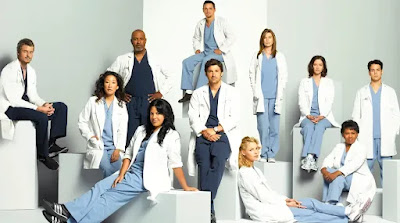
"Grey's Anatomy"

"Grey's Anatomy"

“Whoever said, "What you don't know can't hurt you." 
was a complete and total moron.
 Sometimes not knowing is the worst thing in the world." 
-Meredith Grey

"Knowing is better than wondering. 
Waking is better than sleeping, 
and even the biggest failure, even the worst,
beats the hell out of never trying." 
-Meredith Grey

“Yes or no. In or out. Up or down. Live or die. 
Hero or coward. Fight or give in. 
I'll say it again to make sure you hear me. 
The human life is made up of choices. Live or die. 
That's the important choice. And it's not always in our hands." 
-Derek Shepherd
"We're all going to die. We don't get much say over how or when, but we do get to decide how we're gonna live. So, do it. Decide. Is this the life you want to live? Is this the person you want to love? Is this the best you can be? Can you be stronger? Kinder? More Compassionate? Decide. Breathe in. Breathe out and decide."
- Richard, "Grey's Anatomy"

Travelling with Russell, "I Went to a Russian Garden Center: Darwin Supermarket"

Full screen recommended.
Travelling with Russell, 4/7/25
"I Went to a Russian Garden Center: 
Darwin Supermarket"
"What does a Russian garden center look like inside? Join me as I explore Darwin Supermarket, the first of its kind in Moscow, Russia. The interesting part about this store is its location. What can you buy in a Russian garden center?"
Comments here:

"How It Really Is"


"Addicted To Our Enemies"

"Addicted To Our Enemies"
by Paul Rosenberg

"In 1987, Georgi Arbatov, a senior adviser to the Soviet leader Mikhail Gorbachev, had warned (the West): “We are going to do a terrible thing to you – we are going to deprive you of an enemy.”

"This is not an easy subject, but a necessary one. Please accept my apologies for my inability to present it more comfortably. And I’ll be brief. We in the West, and Americans in particular, have fallen into a very serious trap: a trap we’ve known so long and so well that we accept it as a fact of life. To make this as clear as I can, I’ll state this problem in several ways. I’m quite sure you’ll recognize at least one of them:

- We require continual doses of bad news.
- We require outrages to react to.
- Too long without some new evil to oppose and we become deeply uncomfortable.
- Condemning bad things makes us feel righteous.

The bottom line is that we’ve become unable to feel righteous, except in contrast to evil. That is simply the model nearly all of us have matured within.

This is not a Biblical model, by the way, even if we mix it with Biblical terminology. According to St. Paul, our righteousness is from God, which we have by virtue of being “in Christ.” Jesus wanted us to “do the things I say,” like loving one another, practicing the golden rule and bearing fruit. Moses gave Israel ten commandments to keep personally, and stopped there.

The golden rule, of course, is the best model of morality in practice anywhere, among religious people or otherwise, and it has absolutely no slot for an enemy. Rather, it rests entirely upon self-reference. The enemy addiction, on the other hand, exists only in relation to external points of reference. So, a fixation upon enemies isn’t essential or optimal; it’s simply a trick that generates good feelings, fast and cheap. And however used to it we may be, it is not helping us.

For one thing, this addiction breaks our long-term relationships with better things. When good things come along (as they do in even the worst conditions), we welcome them at first, but rather quickly become bored with them. Soon enough we crave more bad news and let the good news be pushed aside. In other words, our bad news addiction won’t let us hold good news; we’re unable to maintain our focus upon it.

Perhaps even worse, the bad news addiction won’t allow us to build and hold visions of a better future, which we require to move forward with any consistency. “The good place we’re going” can’t maintain a prominent position in our minds, since our model of righteousness requires an enemy to condemn.

I have no intention of continuing on this subject, by the way, but I think it’s worth keeping in mind rather than tossing away. So, here’s a final restatement: Without an enemy firmly in view, our righteousness deflates. Thus unmoored, we are compelled to find yet more bad news. And so we are addicted to our enemies. We need to get out of this cycle, and we are quite able to do so."

"Cycles, Systems and Seats in the Coliseum"

"Cycles, Systems and Seats in the Coliseum"
by Charles Hugh Smith

"Contrary to first impressions, I am not a doom-and-gloomer; I'm a systems-cycles-er, meaning I'm interested in where systems and cycles are heading. Cycles work because we're still running Wetware 1.0 which entered beta testing around 200,000 years ago and was released, bugs and all, around 50,000 years ago. Since the processes and inputs haven't changed, neither do the outputs.

Nature is a mix of dynamic, semi-chaotic systems (fractals, etc.) and cyclical patterns which tend to operate within predictable parameters. Why should human nature and human constructs (societies, economies and political realms) be any different?

So longterm success breeds complacency, hubris, economic and intellectual sclerosis, draining political infighting and the overproduction of parasitic elites, to use Peter Turchin's apt description. Consumption of resources expands to soak up every last bit of what's available and then the supply of goodies plummets for a multitude of completely natural and predictable reasons (sunspot/solar activity, El Nino, etc.) and a host of unpredictable but equally natural semi-chaotic extremes (100-year droughts, floods, etc.).

Wetware 1.0's go-to solutions to all such difficulties are rather limited:

1. Ramp up magical thinking. If a couple of human sacrifices ensured good harvests in the good old days, let's slaughter a couple hundred now - and if that doesn't work, then...

2. Do more of what's failed spectacularly and slaughter a couple thousand fellow humans, because darn it, maybe everything will turn around if we just kill another couple dozen. This requires ignoring the novelty of the current challenges and clinging to what worked so well in the past even as whatever worked in the past can't possibly work now because circumstances are fundamentally different.

3. Seek scapegoats. It's those darn witches. Burn a bunch of them and our troubles will magically disappear.

4. Go take what we need from some other tribe. What's our oil doing under their sand?

5. Consolidate power and wealth in the hands of elites whose failures exacerbated the crisis. Because the obvious solution (to the elites with cushy offices around the palaces and temples) to repeated failures of a leadership that only excels in one thing, squandering rapidly depleting resources on infighting and self-aggrandizement, is to give us all the remaining wealth and power. Hey, this makes perfect sense once you understand #2 above.

6. Demand sacrifices of the many to protect the privileges of the few. The Empire needs some warm bodies to fend off the Barbarians, because it would be a real shame if the Barbarians reached our palatial estates and disrupted the flow of wine and festivities. No worries when you come back on your shield; the bureaucracy will give you a decent burial and your spouse and kids can join the multitude of half-starved beggars waiting for the dwindling distributions of bread and circuses. But never mind that, did you hear about the upcoming games in the Coliseum? Good seats are going fast.

7. Eat your seed corn to keep the party going awhile longer. Not every human group had the luxury of borrowing "money" to keep the fast-unraveling party going awhile longer, so they consumed their seed corn and drained the last of their reserves--which is the same thing as borrowing "money" from a future with diminishing resources and productivity.

8. Maintain supreme confidence that "it will all work out fine because it's always worked out fine" without any sacrifice required of "those who count." What's forgotten is that the luxe greatness that is now teetering on the precipice of ruin was won by the sacrifices of the elites far exceeding the sacrifices of the many.

Back in the day, joining the elite and maintaining one's position required constant sacrifices on behalf of the common good, and strict adherence to public virtue. Now that's all forgotten, and all that remains are elites possessed by the demons of shameless greed and self-interest. The idea that debt, leverage, speculation, greed, exploitation and parasitic elites can expand exponentially forever is magical thinking. Yet that is precisely what America and the rest of the global economic order insists is true and will always be true, forever and ever.

By all means, reject those horrid, awful doom-and-gloomers who look at systems and cycles. Everything will be fine as long as you secure seats for the next games at the Coliseum - they should be spectacular - but not in the way you expect."

Dan, I Allegedly, "Margin Calls - How Bad Will it Get?"

Full screen recommended.
Dan, I Allegedly, AM 4/7/25
"Margin Calls - How Bad Will it Get?"
"Is the economy heading toward another financial collapse? In today’s video, I’m breaking down the mounting economic chaos, the ongoing stock market sell-off, and what experts like Warren Buffett and Larry Summers are saying about the financial landscape. With discussions about margin calls, tariffs, and the potential impact on the average family, there’s a lot to unpack. Plus, I share why diversification and holding assets like gold and silver are more critical than ever right now. We'll also cover how companies like Rite Aid and Nissan are struggling, why food bank lines are growing, and how luxury items like Rolex watches and Ferraris might see a surprising surge. And, for a bit of fun, we’ll talk about the dethroning of Olive Garden as America’s favorite restaurant and Tesla’s bold move with a 50s-themed diner. It’s a packed episode full of insights, financial tips, and a little humor to keep things light amidst the seriousness."
Comments here:

"We Are Witnessing 'Lehman-Style Margin Calls' In The Aftermath Of The Biggest Stock Market Wipeout In U.S. History"

"We Are Witnessing 'Lehman-Style Margin Calls' In 
The Aftermath Of The Biggest Stock Market Wipeout In U.S. History"
by Michael Snyder

"We have never seen so much stock market wealth get wiped out in such a short period of time. Unfortunately, many major players on Wall Street that made a ton of money on the way up were not prepared for a rapid reversal of this magnitude. In an article that I posted on Friday, I wrote that “a lot of financial institutions that are deeply overextended” could quickly “find themselves in a tremendous amount of trouble”, and that is definitely turning out to be quite accurate. All of a sudden, hedge funds are being hit with absolutely enormous margin calls, and this threatens to create a “doom loop” which could potentially push stock prices a whole lot lower.

The panic that we are witnessing on Wall Street right now is very real. Since January 17th, more than 11 trillion dollars in stock market wealth has been wiped out. In fact, a total of 6.6 trillion dollars in stock market wealth was wiped out on just Thursday and Friday…"Roughly $11.1 trillion has been wiped away from the U.S. stock market since Jan. 17, the Friday before President Donald Trump took the oath of office and began his second term, according to data from Dow Jones Market Data. Some $6.6 trillion of that figure was lost on Thursday and Friday alone — the largest two-day wipeout of shareholder value on record, Dow Jones data showed."

We have seen larger percentage drops over the course of two days, but in dollar terms we have never seen stock prices drop as much as they did during that two day period…"Markets have seen bigger percentage drops, such as in 1929 when they tumbled 25 percent over October 28 and 29 that year, but never as much in dollar terms."

This was truly historic. And now a lot of people are concerned that we could potentially see a “Black Monday” and a “Black Tuesday”…"The selloff that followed President Donald Trump’s “Liberation Day” tariff announcement was large by any measure, a Black Thursday and a Black Friday. If they are followed by a Black Monday and Tuesday, then everyone is in trouble."

Hopefully global financial markets will start to stabilize soon. But it certainly hasn’t happened yet. During an interview with CNN, Agriculture Secretary Brooke Rollins openly admitted that the White House knew that there would be “uncertainty”… “The idea that we didn’t know that there would be some uncertainty just isn’t true,” Secretary of Agriculture Brooke Rollins said on CNN’s “State of the Union.” “We knew there would uncertainty.” But Rollins urged Americans not to look at Thursday and Friday’s trading and say, “the world is ending; the markets are crashing.” Instead, she argued, “the markets are adjusting.”

I wouldn’t call this an “adjustment”. The Nasdaq is already in bear market territory. I would call this a crash.

But Treasury Secretary Scott Bessent is insisting that most Americans “don’t look at the day-to-day fluctuations” of the financial markets… In an interview with NBC News’ “Meet the Press,” Bessent called it a “false narrative” that people who are close to retiring may be reluctant after their retirement savings may have dropped last week because of the stock market downturn. “I think that’s a false narrative,” he told moderator Kristen Welker. “Americans who want to retire right now, the Americans who put away for years in their savings accounts, I think they don’t look at the day-to-day fluctuations."

I understand that they are trying to keep everyone calm. But it isn’t working. At this point, even the largest Wall Street banks are officially freaking out. They are hitting hedge funds with “Lehman-style margin calls”…"Hedge funds are facing Lehman-style margin calls as a market crash triggered by President Donald Trump’s tariffs raises fears of a looming ‘Black Monday.’ The market’s sharp downturn has forced hedge funds to sell off assets, with major Wall Street banks demanding collateral after the value of holdings sharply declined, according to sources familiar with the situation."

There is now fear that these margin calls could create cycles of forced selling that could drive stock prices down to extremely painful levels. The sheer panic that we witnessed in New York on Friday was unlike anything that we have seen since the darkest days of 2008… ‘Rates, equities, and oil were all down significantly… it was the broad market movements that caused the scale of the margin calls,’ one prime brokerage executive told the Financial Times. While, another prime brokerage executive noted: ‘We are proactively reaching out to clients to assess [risk] across their entire portfolios.’ Prime brokerage teams on Wall Street, which lend money to hedge funds, held ‘all hands on deck’ meetings on Friday to prepare for the increasing volume of margin calls, sources told the Financial Times."

Wow. This is all happening so fast. A lot of major players that were way out on a limb are going to end up getting their clocks cleaned. Leverage can be so seductive. On the way up, it can help you make tremendous amount of money, but on the way down it can feel like the world is ending.

As I have always warned my readers, you only make money in the stock market if you get out in time. Wall Street loves stability, because stability leads to predictability. Unfortunately for Wall Street, we have now entered times that are going to be extremely unstable.

A number of my readers have pointed out to me that the stock market was way overdue for a correction, and I agree with that assessment very much. But what we are witnessing at the moment is not just another run of the mill correction. What we are witnessing is a full-fledged panic. Will the White House be able to settle the markets down? I don’t know, but I will definitely be watching. Without a doubt, it appears that a very “interesting” week is ahead of us."

Market Data Center, Live Updates:

Bill Bonner, "Swamp Trade"

"Swamp Trade"
If Bangladesh foolishly tries to protect its auto industry with a 50% tariff 
on Cadillacs…is that a reason to make Americans pay more for their pants?
by Bill Bonner

Youghal, Ireland - "The weekend brought a steady flow of tariff news…marked by outrage, indignation… and humor. Politicians often do stupid things…but there is usually some ambiguity about it. On this hand…but on that hand…maybe it will work, maybe it won’t… Rarely do we get to see a policy that is such undiluted claptrap that it brings liberals and conservatives together to have a good laugh.

We got off the ship yesterday in Southampton and made our way over to Ireland. Southampton is a huge port…with thousands of trucks, cars, containers, and cranes lining the harbor. It is a shipping center…with millions of tons of goods passing through. When you go to buy something in England, it’s a good bet that it came via Southampton’s docks. Now, with Trump’s new taxes on trade…spiders are preparing to spin their webs on the giant cranes…and builders will turn empty containers into Airbnb rentals.

But let us first reminisce about our eights days at sea. What did we learn? Well…the Queen Mary II is more of a leisure activity than a way to get somewhere. Most of the people on board were cruise ship veterans. One couple was continuing on the Queen Mary for another week, exploring the coast of Norway. Another had signed on to a 100-day cruise around South America. One couple from Toronto had been all around the world. “Hello, we’re Canadians,” they announced as they sat down. “That’s okay,” we replied. “We forgive you for ripping us off for so many years.” A look of bewilderment crossed the man’s face…but only for a second. “We won’t talk about your president; we promise,” he said.

Everyone we met was friendly…and interesting. A man from Oregon operated canal locks. A man from Ireland had been a circus clown. A professor from George Mason University explained the evolution of early Christianity. Had we been on our own, we would have spent more time alone…reading. But Elizabeth is an improver…so we took dance lessons…went to the theater…listened to lectures…and talked to our neighbors.

Shipboard life is convenient…with everything in easy reach and designed to be pleasant and entertaining. There are always things going on…and always people you might want to do them with. In our ordinary lives, we seldom go to theaters or jazz clubs. But on the Queen Mary II, that is what people do…so we did it too. We took a class on ‘jive’ dancing, for example, with about thirty other over-60 couples. A sight to see!

But now we are back at home…back in the real world…and watching the reaction to Trump’s tariffs. Trump is a ‘Big Man,’ Barnum and Bailey, Smoot and Hawley all in one. And like Big Men everywhere, he is prone to big mistakes. USA Today: "Donald Trump on Sunday night… ‘Sometimes you have to take medicine to fix something.’ Trump's remarks came as U.S. stock futures tumbled Sunday evening, led by the Dow Jones Industrial Average futures dropping about 1,000 points, pointing to another bruising day ahead on Wall Street Monday."

As near as we can figure, Donald Trump has just stumbled into the second big blunder of his career. His ‘medicine’ is more like trepanation than penicillin. Fortune: "Former Treasury Secretary Larry Summers…" “Never before has an hour of Presidential rhetoric cost so many people so much. Markets continue to move after my previous tweet. The best estimate of the loss from tariff policy is now closer to $30 trillion or $300,000 per family of four,” he wrote in a post on X.

“This action has taken $3 trillion [$6 trillion at the close on Friday] off the stock market as a consequence of an hour of rhetoric. The stock market reflects only part of the economy. So if you took the cumulative loss, extrapolated from the stock market, it's closer to $30 trillion. That's more damage than any economic policy pursued by any president in the last—probably in American history,” he said."

Stephen Miller was on TV on Friday, trying to deflect attention from the big sell-off on Wall Street. “These countries have been ripping us off for years…decades,” came the now-familiar war cry.

When a Bangladeshi works in a sweatshop and makes a pair of pants, the price in the US might be $50. A similar American-made pants may be $100. Is the Bangladeshi ripping us off…by working for less…and saving the US consumer $50? Is the Bangladesh government ripping us off by letting him do it? And if Bangladesh foolishly tries to protect its auto industry with a 50% tariff on Cadillacs…is that a reason to make Americans pay more for their pants? And cut the poor Bangladeshi tailor off from his income?

Foreigners do not buy many US-made Escalades. But it is not because of tariffs. It’s because they are designed for America’s wide-open spaces and low fuel prices…not for the narrow streets of Italy or the teeming neighborhoods of Bangladesh. And how many Americans want to stitch shirts for a dollar fifty an hour?

All over the world goods trade hands - an amount over $33 trillion in 2024 - with an average tariff rate of about 2%. Paper cups, T-shirts, luxury autos, oil, cement - all the things you see on Southampton’s docks. Then along comes Donald Trump, with another emergency, imposing tariffs of 10% to as much as 49%. What sort of deep, careful research is the White House doing to discover these numbers? Their origin was one of the most remarkable things to emerge over the weekend.

Our friend David Stockman put AI on the case. And it turns out that the Trump administration has just upended generations of US ‘free trade’ policy…and trillions of dollars’ worth of trade…on the basis of comically silly ‘third grade arithmetic.’

The feds take the difference between exports and imports as proof of unfair trade. Then, to right the wrong, they look at the gross percentage imbalance (a deficit for the US). Bangladesh, for example, may sell its cheap clothing to the US…but prefer to buy its cars from Germany and its hand wipes from China. This leaves it with a big trade surplus with the US, equal to approximately 50% of total trade volume. Then - for some reason unknown to economists or ethicists, ithe Trump team aims to right only half the wrong - they give Bangladesh a tariff of 24%.

So, it turns out that tariffs may have nothing to do with drugs…and nothing to do with ‘unfair’ trade, either. They are based on trade volumes. If a country successfully exports to the US, giving Americans cheaper, better products, Trump punishes them with tariffs… which American consumers have to pay. Foreign Affairs gives us the bottom line: "It is possible that the White House will lower some of its rates, especially as countries lobby for exemptions. But the reality is that the age of free trade is unlikely to come back. Instead, any haggling between Trump and other states will shape an emerging economic system defined by protectionism, tensions, and transactions. The result will not be more jobs, as Trump has pledged. It will be turbulence for all, and for years to come."

Yes, free trade is over. Now we have Swamp Trade – where politicians, lobbyists, and rich campaign donors manipulate prices. Get ready for it."

Gregory Mannarino, "Brace For Impact! What's Happening And What Will Happen"

Gregory Mannarino, AM 4/7/25
"Brace For Impact! 
What's Happening And What Will Happen"
Comments here:
o
Full screen recommended.
Market Gains, 4/7/25
"IRS Fires 30,000 Workers Today
 As Job Market Crashes"
Comments here:

Jim Kunstler, "Farewell, Fugazy!"

"Farewell, Fugazy!"
"Ah, the delicious smell of peak fear on Sunday/Monday...
and max NOISE on X." - Raoul Pal
by Jim Kunstler

"That ruckus you hear in the capital markets is the sickening howl of the Fugazy Economy meeting its extinction. Fugazy means fake, unreal, dishonest, misaligned to what societies need to thrive. Fugazy means mis-using the time-value of things that purport to be wealth to multiply fake wealth in the hands of a few at the expense of the many. The pernicious effects of that system are visible all across the ruined landscape of our country, a nation of broken cities, failed towns, and a demoralized populace.

Mr. Trump apparently aims to convert the expiring Fugazy economy into a production economy - yikes! - based on making things of value, and perhaps more importantly, of people at all social levels having meaningful roles in the making and moving of things. The Trump tariffs are the first big step in a process that is already generating a whole lot of friction, heat, and ferment. The aim of the tariffs is straightforward: the end of a trade regime that punishes and cripples American production.

The response so far is heartening. Many other countries suddenly seek new trade arrangements with the USA, correctly sensing that Mr. Trump means bidness. (This ain’t no Mud Club...this ain’t no foolin’ around...) It’s even possible that these readjustments will happen so swiftly that the tariff differentials will be a wash before summer, and everybody will be, at least, on a firm footing, knowing what the clear new rules say. This new disposition of things required forceful incentives to change entrenched, harmful practices.

Another angle on this process is the dynamic known as import-replacement. It means exactly what it sounds like: where you used to get stuff from other lands, you now make it here. It should be obvious that this can’t be accomplished overnight. But the question is: okay, when are you going to start? Part of the answer is: we can’t afford to put it off any longer. There’s an awful lot of stuff, from machine tools to pharmaceuticals to military equipment that we had better start making again - or else slide into collapse, perhaps even slavery to other powers.

That process starts with deploying real capital - as opposed to Fugazy capital - to re-start businesses and industries. That will take money away from hedge funds and other rackets that exist to play games with evermore abstract layers of things that only pretend to represent money. As that occurs, a lot of pretend money will vanish. Don’t be too shocked by this. That’s what happens when a society bends back toward reality: you start sorting out the real money from the fake money. That’s why the price of gold keeps marching up.

I sense that Mr. Trump and his colleagues knew full-well that the tariff play would rattle the markets badly, that these “corrections” are an unavoidable consequence, and are better gotten-over as quickly as possible. What else would you expect in a system that has dedicated itself for decades to mis-pricing the value of just about everything? The snap-back is sure to be harsh.

The psychopathocracy that drives the Global Left lost more traction last week in its quest to keep all of its old rackets running. Their foot-soldiers in the USA have been defunded effectively by Mr. Musk’s DOGE, starting with the immense network of rackets that were run around the USAID program. The Woke NGOs are no more and the fat paychecks are no longer going out to the nose-ring-for-lunch-bunch who came to infest the DC Beltway - and their satellite offices in Democratic Party controlled cities. Hence, the feeble turn-outs in last weekend’s street actions.

The Baby Boomers have gone especially psychotic. That’s why there are so many old folks waving those Soros-made placards in the astroturfed crowds of the “Hands-off” protests. After an eighty-year run of the most mind-blowing comfort and convenience enjoyed by any generation in world history, America’s Boomers stare into the abyss of their fading Fugazy fortunes as their stock portfolios tank. Kind of too bad. Maybe you shouldn’t have gone along for the ride. Maybe you should have cared for your country a bit more.
Here’s your poster-boy for that: the retarded slob rock-and-roller Neil Young, performing in support of the US Intel blob, the Covid-19 vaccine campaign, the degenerate Democratic party, Senator Adam Schiff, and BlackRock. Neil Young’s estimated net worth is about $200-million. He could lose ninety percent of that and still live a life of luxury. In 2022, he inveighed against Covid vaccine “misinformation” and promoted the shots. Guess, what? You were dead wrong about that, Neil, and now a lot of people are dead and dying because of those vaccines. He has many compadres in showbiz who took the same position against reality.

The time is not far-off when they will be revealed as disgraceful tools - Public vaxx champions such as Stephen Colbert, Jimmy Kimmel, Arnold Schwarzenegger, Oprah Winfrey, Howard Stern, Ryan Reynolds, Lady Gaga...the list is long and discouraging. Meanwhile, they’re all out there rallying the Woke troops against the Golden Golem of Greatness as the Left’s leaky lifeboat goes down, gurgle, gurgle. In the process, they’ve destroyed Hollywood, rock and roll, and comedy. The country will recover from that, too. You’ll have plenty of opportunity to laugh at them in the years to come as the obituaries roll in.

Meanwhile, brace and rejoice! Great changes are set in motion. Roll with the turbulence. You’ll come out the other end, stronger, wiser, steadier, perhaps even happier. And, mark ye, the silence emanating from the DOJ and the FBI these budding spring days. The New York Times is nervous as all git-out."


"Economic Market Snapshot 4/7/25"

"Economic Market Snapshot 4/7/25"
Down the rabbit hole of psychopathic greed and insanity...
Only the consequences are real - to you!
"It's a Big Club, and you ain't in it. 
You and I are not in the Big Club."
- George Carlin
o
Market Data Center, Live Updates:
Comprehensive, essential truth.
Financial Stress Index

"The OFR Financial Stress Index (OFR FSI) is a daily market-based snapshot of stress in global financial markets. It is constructed from 33 financial market variables, such as yield spreads, valuation measures, and interest rates. The OFR FSI is positive when stress levels are above average, and negative when stress levels are below average. The OFR FSI incorporates five categories of indicators: creditequity valuationfunding, safe assets and volatility. The FSI shows stress contributions by three regions: United Statesother advanced economies, and emerging markets."
Job cuts and much more.
Commentary, highly recommended:
"The more I see of the monied classes,
the better I understand the guillotine."
- George Bernard Shaw
Oh yeah... beyond words. Any I know anyway...
And now... The End Game...
o

"Alert! Trading Halted, Historic WW3 Global Market Crash! Iran War Plans In Final Phase!"

Full screen recommended.
Canadian Prepper, 4/7/25
"Alert! Trading Halted, Historic WW3 Global Market Crash! 
Iran War Plans In Final Phase!"
Comments here:

Sunday, April 6, 2025

"It's Over. The Collapse is Here, It's About to Get Violent"

Full screen recommended.
Canadian Prepper, 4/6/25
"It's Over. 
The Collapse is Here, It's About to Get Violent"
Collapse is no longer a future prospect. It's happening now.
Comments here:

"This Is A National Emergency, Carnage Unleashed On US Stocks!"

Jeremiah Babe, 4/6/25
"This Is A National Emergency,
 Carnage Unleashed On US Stocks!"
Comments here:
o
Full screen recommended.
Michael Bordenaro, 4/6/25
"Job Losses Explode As Tariffs Rip Through The Economy"
In March 2025, we saw more job losses in one month been any other month since the pandemic and if you exclude the pandemic, it is the worst month in over a decade since a great financial crisis. The economy is heading into a major recession that is likely only to get worse from here. What's more is President Trump looks to be actually putting the United States into a recession on purpose likely in order to get the Fed to cut interest rates.
Comments here:

Musical Interlude: Alan Parsons Project, "Old and Wise"; Moody Blues, "The Day We Meet Again"

Full screen recommended.
Alan Parsons Project, "Old and Wise"
o
Full screen recommended.
Moody Blues, "The Day We Meet Again"