StatCounter

Tuesday, February 11, 2025

Free Download: Hermann Hesse, "Siddhartha"

"Siddhartha"
by Hermann Hesse

"Siddhartha" is a novel by Hermann Hesse that deals with the spiritual journey of a boy known as Siddhartha from the Indian Subcontinent during the time of the Buddha. The book, Hesse's ninth novel, was written in German, in a simple yet powerful and lyrical style. It was first published in 1922, after Hesse had spent some time in India in the 1910s. It was published in the U.S. in 1951 and became influential during the 1960s. Hesse dedicated "Siddhartha" to Romain Rolland, "my dear friend".

The word Siddhartha is made up of two words in the Sanskrit language, siddha (achieved) + artha (meaning or wealth). The two words together mean "he who has found meaning (of existence)" or "he who has attained his goals". The Buddha's name, before his renunciation, was Prince Siddhartha Gautama. In this book, the Buddha is referred to as "Gotama".

Plot summary: It starts as Siddhartha, the son of a Brahmin, leaves his home to join the ascetics with his companion Govinda. The two set out in the search of enlightenment. Siddhartha goes from asceticism, to a very worldly life as a trader with a lover, and back to asceticism as he attempts to achieve this goal. The story takes place in ancient India around the time of Gautama Buddha (likely between the fourth and seventh centuries BC.

Experience is the aggregate of conscious events experienced by a human in life – it connotes participation, learning and knowledge. Understanding is comprehension and internalization. In Hesse’s novel "Siddhartha," experience is shown as the best way to approach understanding of reality and attain enlightenment – Hesse’s crafting of Siddhartha’s journey shows that understanding is attained not through scholastic, mind-dependent methods, nor through immersing oneself in the carnal pleasures of the world and the accompanying pain of samsara; however, it is the totality of these experiences that allow Siddhartha to attain understanding. Thus, the individual events are meaningless when considered by themselves—Siddhartha’s stay with the samanas and his immersion in the worlds of love and business do not lead to nirvana, yet they cannot be considered distractions, for every action and event that is undertaken and happens to Siddhartha helps him to achieve understanding. The sum of these events is thus experience.

For example, Siddhartha’s passionate and pained love for his son is an experience that teaches him empathy; he is able to understand childlike people after this experience. Previously, though he was immersed in samsara, he could not comprehend childlike people’s motivations and lives. And while samsara clung to him and made him ill and sick of it, he was unable to understand the nature of samsara. Experience of samsara at this point did not lead to understanding; perhaps it even hindered him. In contrast to this, Siddhartha’s experience with his son allows him to love, something he has not managed to do before; once again, the love itself does not lead to understanding.

The novel ends with Siddhartha being a ferryman, learning from a river, and at long last at peace and capturing the essence of his journey: "Slower, he walked along in his thoughts and asked himself: “But what is this, what you have sought to learn from teachings and from teachers, and what they, who have taught you much, were still unable to teach you?” And he found: “It was the self, the purpose and essence of which I sought to learn. It was the self, I wanted to free myself from, which I sought to overcome. But I was not able to overcome it, could only deceive it, could only flee from it, only hide from it. Truly, no thing in this world has kept my thoughts thus busy, as this my very own self, this mystery of me being alive, of me being one and being separated and isolated from all others, of me being Siddhartha! And there is no thing in this world I know less about than about me, about Siddhartha!”

"Massive Botulism Tuna Recall Affecting Walmart, Kroger, Costco & Many Other Retailers"

Adventures With Danno, 2/11/25
"Massive Botulism Tuna Recall Affecting 
Walmart, Kroger, Costco & Many Other Retailers"
Comments here:

The Daily "Near You?"

Valley Center, Kansas, USA. Thanks for stopping by!

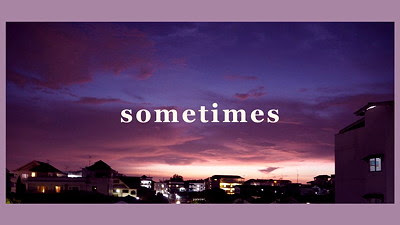
“‘Sometimes’: Poet and Philosopher David Whyte’s Stunning Meditation on Walking into the Questions of Our Becoming”

“‘Sometimes’: Poet and Philosopher David Whyte’s
Stunning Meditation on Walking into the Questions of Our Becoming”
by Maria Popova

“The role of the artist, James Baldwin believed, is “to make you realize the doom and glory of knowing who you are and what you are.” This, too, is the role of the forest, it occurs to me as I walk the ferned, mossed woods daily to lose my self and find myself between the trees; to “live the questions,” in Rilke’s lovely phrase – to let the rustling of the leaves beckon forth the stirrings and murmurings on the edge of the psyche, which we so often brush away in order to go on being the smaller version of ourselves we have grown accustomed to being out of the unfaced fear that the grandeur of life, the grandeur of our own untrammeled nature, might require of us more than we are ready to give.

Those disquieting, transformative stirrings are what the poet and philosopher David Whyte explores with surefooted subtlety in his poem “Sometimes,” found in his altogether life-enlarging collection “Everything Is Waiting for You” (public library) and read here by the poet himself as part of a wonderful short course of poem-driven practices for neuroscientist and philosopher Sam Harris’s “Waking Up” meditation toolkit (which I can’t recommend enough and which operates under an inspired, honorable model of granting free subscriptions to those who need this invaluable mental health aid but don’t have the means).

“Sometimes”

“Sometimes
if you move carefully
through the forest,
breathing
like the ones
in the old stories,
who could cross
a shimmering bed of leaves
without a sound,
you come to a place
whose only task
is to trouble you
with tiny
but frightening requests,
conceived out of nowhere
but in this place
beginning to lead everywhere.
Requests to stop what
you are doing right now,
and
to stop what you
are becoming
while you do it,
questions
that can make
or unmake
a life,
questions
that have patiently
waited for you,
questions
that have no right
to go away.”

- David Whyte

The Universe

“There are no accidents. If it's appeared on your life radar, this is why: to teach you that dreams come true; to reveal that you have the power to fix what's broken and heal what hurts; to catapult you beyond seeing with just your physical senses; and to lift the veils that have kept you from seeing that you're already the person you dreamed you'd become. There are no accidents. And believe me, that was one heck of a dream.”
“Tallyho,”
The Universe

“Thoughts become things... choose the good ones!”

“As I’ve Aged”

“As I’ve Aged”
- Author Unknown

“You ask me how it feels to grow older. I’ve learned a few things along the way, which I’ll share with you…

As I’ve aged, I’ve become kinder to myself, and less critical of myself. I’ve become my own friend. I don’t chide myself for eating that extra cookie, or for not making my bed, or for buying that silly cement gecko that I didn’t need, but looks so avante-garde on my patio. I am entitled to a treat, to be messy, to be extravagant.

I have seen too many dear friends leave this world too soon; before they understood the great freedom that comes with aging. Whose business is it if I choose to read or play on the computer until 4 AM and sleep until noon? I will dance with myself to those wonderful tunes of many years ago, and if I, at the same time, wish to weep over a lost love… I will.

I will walk the beach in a swim suit that is stretched over a bulging body, and will dive into the waves with abandon if I choose to, despite the pitying glances from the jet set. They, too, will get old.

I know I am sometimes forgetful. But there again, some of life is just as well forgotten. And I eventually remember the important things. Sure, over the years my heart has been broken. How can your heart not break when you lose a loved one, or when a child suffers, or even when somebody’s beloved pet gets hit by a car? But broken hearts are what give us strength and understanding and compassion. A heart never broken is pristine and sterile and will never know the joy of being imperfect.

I am so blessed to have lived long enough to have my hair turning gray, and to have my youthful laughs be forever etched into deep grooves on my face. So many have never laughed, and so many have died before their hair could turn silver.

As you get older, it is easier to be positive. You care less about what other people think. I don’t question myself anymore. I’ve even earned the right to be wrong. So, to answer your question, I like being old. It has set me free. I like the person I have become. I am not going to live forever, but while I am still here, I will not waste time lamenting what could have been, or worrying about what will be. And I shall eat dessert every single day (if I feel like it). May our friendship never come apart especially when it’s straight from the heart!”

"What Is The Joy About?"

“There are meaningful warnings which history gives a threatened or perishing society. Such are, for instance, the decadence of art, or a lack of great statesmen. There are open and evident warnings, too. The center of your democracy and of your culture is left without electric power for a few hours only, and all of a sudden crowds of American citizens start looting and creating havoc. The smooth surface film must be very thin, then, the social system quite unstable and unhealthy. But the fight for our planet, physical and spiritual, a fight of cosmic proportions, is not a vague matter of the future; it has already started. The forces of Evil have begun their offensive; you can feel their pressure, and yet your screens and publications are full of prescribed smiles and raised glasses. What is the joy about?”
- Aleksandr Solzhenitsyn

"How It Really Is"

"The Hand We're Dealt..."

“Bad things don’t happen to people because they deserve for them to happen. It just doesn’t work that way. It’s just… life. And no matter who we are, we have to take the hand we’re dealt, crappy though it may be, and try our very best to move forward anyway, to love anyway, to have hope anyway… to have faith that there’s a purpose to the journey we’re on.” - Mia Sheridan

Dan, I Allegedly, "Perfect Storm for a Recession"

Full screen recommended.
Dan, I Allegedly 2/11/25
"Perfect Storm for a Recession"

"The global recession is here - and it’s hitting harder than ever. From skyrocketing energy prices to massive layoffs and struggling homebuilders, the signs are everywhere. In today’s video, I’ll break down why I believe we’re already in a recession, what experts like Ed Dowd are predicting, and how industries across the board are being impacted. Whether it's rising interest rates, unaffordable homes, or government inefficiencies, the economic challenges are massive - and the ripple effects are global.

We’ll also discuss the $84 trillion in real estate baby boomers are holding onto, the struggles builders face with incomplete projects, and how gold and silver prices are reacting. Plus, hear about shocking stories like the JP Morgan account freeze and how some businesses are barely staying afloat."
Comments here:
o
Full screen recommended.
The Good Ship "Global Economy" faces the worldwide economic perfect storm.
There is no escape. God help us, God help us all...

"We Are Heading For A World Wide Recession And Trump Can't Stop It"

Redacted, 2/11/25
"We Are Heading For A World Wide 
Recession And Trump Can't Stop It"
Comments here:

Judge Napolitano, "Col. Douglas Macgregor: Fall of the American Empire"

Judge Napolitano - Judging Freedom, 2/11/25
"Col. Douglas Macgregor: Fall of the American Empire"
Comments here:

"11 Signs That A Recession In The U.S. May Have Already Started"

"11 Signs That A Recession In 
The U.S. May Have Already Started"
by Michael Snyder

"The Biden administration has given us an economy in which homelessness is at an all-time high, demand at food banks is at an all-time high, and poverty is growing all around us. The rising cost of living is absolutely crushing households throughout the nation, and now delinquencies are rising, businesses are going bankrupt at a staggering pace, and mass layoffs are happening from coast to coast. We won’t officially know whether we are in a “recession” at this moment or not until months from now, but I guarantee you that it certainly feels like a “recession” to millions upon millions of us. Our economic momentum has been rapidly taking us in the wrong direction for a long time, and the level of economic pain that we are witnessing right now is truly frightening. The following are 11 signs that a recession in the U.S. may have already started…

#1 Approximately half a million businesses filed for bankruptcy in the U.S. in 2024. That represented a 14 percent increase compared to the previous year…Last year in 2024, about 500,000 businesses filed for bankruptcy. That’s 14% more than the year prior.

#2 More than 7,000 stores closed in the U.S. in 2024, and it is being projected that 15,000 stores will close in the U.S. in 2025…And new data by Coresight predicts 2025 could see yet more closures. It predicts 15,000 stores could close this year, and places particular emphasis on more Chapter 11 bankruptcy filings, liquidations, and total overhauls (for those retailers that can afford to stay open and remake their business).

#3 Home sales are even lower than they were during the Great Recession. In fact, sales of existing homes haven’t been this low in almost 30 years… Existing home sales in the U.S. in 2024 were the lowest in nearly 30 years, as home prices hit an all-time high. The National Association of Realtors released data that showed existing home sales declined to the lowest level since 1995 last year, with 4.06 million homes sold on an annual basis.

#4 A majority of the U.S. population struggles to afford “their regular rent or mortgage payments”…Nearly 70% of single, divorced or separated people struggle to afford their regular rent or mortgage payments, compared to just over half (52%) of married people, according to a recent Redfin-commissioned survey. More than three-quarters (76%) of respondents who live with their partner but aren’t married struggle with housing payments, making them the group most likely to struggle.

#5 The proportion of U.S. homeowners that are seriously delinquent on their mortgage payments is rising… A rising number of homeowners, particularly first-time home buyers and military members and veterans, are missing their monthly payments - and one group says it could be the “canary in the coal mine.” In 2024, the share of serious delinquencies - which refers to mortgage loans that are over 90 days past due but are not in active foreclosure - rose to the highest level in nearly two years, according to a monthly report by Intercontinental Exchange, or ICE.

#6 Mass layoffs are occurring all over the country. For example, the parent company of Facebook and Instagram has decided to give the axe to approximately 3,600 workers… The layoffs, according to Zuckerberg, would target “low-performers.” The layoffs will amount to roughly 3,600 people losing their jobs, according to a Bloomberg report. “I’ve decided to raise the bar on performance management and move out low-performers faster,” said Zuckerberg in an internal memo cited by Bloomberg. “We typically manage out people who aren’t meeting expectations over the course of the year, but now we’re going to do more extensive performance-based cuts during this cycle.”

#7 Workday has announced that over 1,700 of their employees will be hitting the bricks. Finance and human resources software company Workday is laying off 1,750 employees, essentially cutting down its total workforce by 8.5%. Workday CEO Carl Eschenbach said in a note to employees Wednesday that the mass layoffs were a “difficult, but necessary, decision” as the firm clears resources to help expand its global presence and prioritizes the demand for AI.

#8 One expert that was interviewed by CNN is warning that the employment picture is deteriorating because “you’ve already got companies hiring as if they’re in a recession”…“That leaves us in a situation where things can essentially flip quite quickly, because you’ve already got companies hiring as if they’re in a recession - even if they’re not laying people off,” Oliver Allen, senior US economist at Pantheon Macroeconomics, told CNN this week.

#9 The Washington Post is reporting that employers that rely on government contracts “are starting to lay off workers”…Private-sector employers and nonprofits are starting to lay off workers as a result of the Trump administration’s sweeping cuts and funding freezes, unleashing a wave of job losses that economists say could pick up steam in the coming weeks, threatening the broader labor market.

The tally appears to be about several thousand private-sector jobs lost in the past two weeks since federal funding cuts and freezes took hold. More than 7.5 million Americans work in jobs directly connected to the federal government, according to the Brookings Institution, as contractors or grant workers - some of whom are already out of a job. And there are millions more who work in positions indirectly connected to federal funding delays.

#10 It appears that a trade war with China has begun. This will have serious implications on both sides of the Pacific…China has imposed retaliatory tariffs on the US, hitting about $14bn worth of goods and dashing hopes that a trade war between the world’s two largest economies could be avoided. Beijing announced the tariffs last week in response to a US decision to impose an additional 10 per cent levy on Chinese products, which US President Donald Trump called an “opening salvo” in a renewed trade offensive against China.

#11 It appears that a trade war with the EU is rapidly approaching. This will have serious implications on both sides of the Atlantic… The EU has issued a blistering statement hitting out at Donald Trump’s threats to impose huge 25% tariffs on all steel and aluminium imports into the US. The levy will essentially mean a tax on the vital manufacturing materials which could massively impact producers in the UK, Europe, as well as American neighbors, Mexico and Canada.

I don’t see any way that we are going to avoid severe economic pain, and there are many prominent voices that very much agree with that assessment. For example, Ed Dowd just made the following statements during an interview with Greg Hunter…“We are seeing a recession in 2025. The rest of the globe is already starting to roll over. It’s going to be a worldwide recession. There is going to be a mini housing crisis. Housing has been stagnant for the better part of the year. There is no transaction volume, and nobody can afford homes. We are hitting the 18-year housing cycle. The last housing cycle was in 2007, and you add 18 years and you get 2025…

The economy for the middle-class is going down. . . . As time goes on, we are going to see GDP numbers go lower and lower and lower. . . . It’s kind of a perfect storm for the Trump Administration. There is no way to avoid the pain.”

We are definitely facing a “perfect storm”, and it is going to be extremely intense. Apparently hedge funds can see what is coming too, because they are “making a multi-billion-dollar gamble against the US economy”…"Hedge funds are making a multi-billion-dollar gamble against the US economy, betting Donald Trump’s presidency will result in a massive market crash that could devastate 401(k)s, pensions, and household savings across America.

Data from Goldman Sachs has sent shockwaves through financial circles, revealing a dramatic surge in ‘short’ positions against US stocks – a move that signals a belief the market is headed for a precipitous crash. Throughout January, investors placed 10 times more bets on American stocks falling than on their continued rise, a staggering shift that reflects growing unease over Wall Street’s future under Trump’s leadership."

Needless to say, our society is not going to be able to handle what is ahead. Unfortunately, our people riot even when something good happens to them…Thousands of Eagles fans spilled out of bars and onto the streets of Philadelphia Sunday night after watching their team defeat the Kansas City Chiefs 40-22 in Super Bowl LIX. The city had opted not to grease the light poles even though a fan died two weeks ago after falling from a light pole after the NFC Championship Game. Despite that tragedy, Eagles fans showed no hesitation in climbing to the top of light poles, cars, construction vehicles, garbage trucks, small buildings, and almost anything else they could find.

Apparently quite a bit of looting was going on as well. According to one report, “the looting went on through the evening”… Shortly after the team’s victory, two years after losing to the Chiefs in the same game, Eagles fans looted a linen truck, prompting a police response. In a video shared on X, fans were seen crowding around a laundry truck and throwing folded linens from inside out into the crowds. Philadelphia Police asked crowds to ‘disperse and leave city centre streets’, but the celebrations of the Eagles’ win and the looting went on through the evening.

If these people will riot and loot while conditions are still at least somewhat relatively stable, how will they behave during a full-blown societal meltdown? As economic conditions in this country continue to deteriorate, we are going to see so much chaos in the streets. Those that are wise will prepare accordingly."

Bill Bonner, "Off the Wall"

"Off the Wall"
by Bill Bonner

"I object, your honor! This trial is a travesty. It's a travesty of a mockery
 of a sham of a mockery of a travesty of two mockeries of a sham."
- Woody Allen, in "Bananas"

Baltimore, Maryland - "NPR (last November): "A duct-taped banana sells for $6.2 million at an art auction A piece of conceptual art consisting of a simple banana, duct-taped to a wall, sold for $6.2 million at an auction in New York on Wednesday, with the winning bid coming from a prominent cryptocurrency entrepreneur. At one point, another artist took the banana off the wall and ate it." What follows is a reverie about price, value… and bananas.

Guess how much stocks have gone up over the last 100 years… how much more valuable are they than they were in 1925? Go ahead. Take a guess. The answer, according to our new Law of Conservation of Value is…zero.

Since this seems to contradict the evidence (below) and almost everything we think we know about the stock market and the nature of American capitalism, an explanation is in order. But in order to understand it, we need to put on our life preservers as well as our thinking caps…and jump into a sea of slippery numbers.

First, there are lots of different kinds of value. A banana at an art auction may be worth $6.2 million. In the grocery store they sell for 60 cents a pound. What is Bitcoin worth? How about a baseball card?

Things have value inasmuch as people value them. The $Trump coin, for example, is worth something…but only because people want to own it. You can’t eat it. You can’t use it to shovel snow. Maybe it will increase in value…or maybe it won’t.

Most things get their value based on what they do for you. Cars transport you. Houses protect you. But there is also a big aesthetic…or perhaps vanity…component. People want to buy stylish clothes…live in nice neighborhoods…or drive fancy cars that enhance their feeling of well-being, even if they don’t really provide any extra utility.

We are a competitive species…always looking for ways to show off. Often, we pay for it. When people buy bananas at the grocery store, they may try to get the most for their money. But when they buy bananas duct-taped to a wall, they are trying to get the least value for their money. Spending recklessly is proof that they are rich…and perhaps ‘above it all.’ That’s why people buy Gucci handbags or Rolex watches, too. There is little extra utility, but the extra expense sends a message.

Even in the financial world, many people buy things that seem like preposterous places to put money. They buy a crypto or a ‘meme’ stock and claim to be ‘investing.’ What they are really doing is betting that someone will be an even ‘greater fool’ and pay more.

But let us set aside the imponderable world of gambling and vanity spending. Let’s look instead at real world output - the goods and services that most of us want and need - and the capital values of the businesses that produce them.

Ford produces autos and trucks. Its value comes off the assembly line. Today, it makes more and better vehicles than it did a century ago; does that make it more valuable?Oil companies pump more oil, too. Movies are more sophisticated…and home heating, generally, works better. Progress!

Do these improvements increase the value of Ford or other companies? Not necessarily. Values are relative, not absolute. When everyone gets absolutely richer, no one really gets relatively richer. And just because Ford produces more and better cars doesn’t necessarily mean it is worth more…compared to other things. So, in order for stocks (or anything) to be worth more…they must be worth more in relation to other items of value. And other things are making progress too!

The role of money is to make it easier to figure out. If you grow a crop of tomatoes, and you want to exchange it for other things you want or need, your crop will turn to mush before you get very far. Is a newspaper subscription worth 30 tomatoes…or 25? Is a pair of shoes worth 200? But what shoemaker wants 200 tomatoes?

Money also made it possible to establish a ‘price.’ People who want tomatoes can bid against each other. Each has his own wants, needs, and information. The ‘market’ takes it all in, aggregates it, and distills it into a single number… a market price. In dollar terms, over the last 100 years, cars have gone up about 83 times. Houses are 85 times more expensive. But stocks? They’re up 366 times since 1925. Nothing else comes close. (More detail tomorrow…) But how could the makers of ‘stuff’ be so much more valuable than the ‘stuff’ they make? Have the markets gone bananas?"

Adventures With Danno, "Walmart is Killing It, And This Is Why"

Adventures With Danno, 2/11/25
"Walmart is Killing It, And This Is Why"
Comments here:
o
Full screen recommended.
Travelling With Russell, 2/11/25
"I Went to Russia's Only Fixed Price Shop"
"What does a typical Russian low-cost Supermarket look like inside? Join me on a tour of Russia's only fixed-price shop. Home Fix is a unique shop in Russia because every item inside is 99 rubles, or right about $1.00"
Comments here:
o
Full screen recommended.
Lisa With Love, 2/11/25
"Grocery Shopping In Russia, 
What $50 Can Get You In Moscow"
Comments here:

Monday, February 10, 2025

"Alert! The System Just Broke! $3000 Gold! Trump Says 'Hell Will Break Loose'; Baltic Sea WW3"

Full screen recommended.
Canadian Prepper, 2/10/25
"Alert! The System Just Broke! $3000 Gold! 
Trump Says 'Hell Will Break Loose'; Baltic Sea WW3"
Comments here:

"Israel Faces Total Defeat"

Full screen recommended.
Larry C. Johnson, 2/10/25
"Israel Faces Total Defeat"
Comments here:

"Our 101 Trillion Dollar Problem: This Is The Number One Tool The Elite Use To Enslave Us"

Full screen recommended.
Epic Economist, 2/10/25
"Our 101 Trillion Dollar Problem: 
This Is The Number One Tool The Elite Use To Enslave Us"

"People have spent far too much time in the dark. But finally, an awakening has begun. We're starting to learn about the tools used by the elite to enslave our population, and the number one tool they use to control us and keep us dependent on their system is debt. The financial powers of America and the world manipulate debt to enslave not only individuals, but corporations and governments. You probably heard the proverb “the borrower is the servant of the lender” before. And that is an universal truth. Yet, billions of people are deep into debt, inevitably becoming servants of the money powers.

Each time you borrow money from a financial institution, you're not only legally obligated to pay that money back, but you also signed up to pay a significant amount of interest on your loan. Oftentimes, that interest ends up being bigger than the loan itself. So the borrower has to devote a great deal of their labor to earn money for the lender. Of course, there are situations when it is necessary to take out a loan.

But what the United States has been doing for the last few decades gos far beyond “necessary” borrowing. Today, the U.S. federal government is over $36 trillion dollars in debt. State and local governments, as well as corporations and households, have also piled up huge amounts of debt. In the chart from the Federal Reserve, we can see how the total amount of debt in the U.S. system has skyrocketed from $20 trillion during the mid-90s to $101 trillion last year."
Comments here:

"Life Is Going To Get Much Harder For The Average American"

Jeremiah Babe, 2/10/25
"Life Is Going To Get Much Harder
 For The Average American"
Comments here:

Musical Interlude: 2002, "Memory of the Sky"

Full screen recommended.
2002, "Memory of the Sky"

"A Look to the Heavens"

"A now famous picture from the Hubble Space Telescope featured Pillars of Creation, star forming columns of cold gas and dust light-years long inside M16, the Eagle Nebula. This false-color composite image views the nearby stellar nursery using data from the Herschel Space Observatory's panoramic exploration of interstellar clouds along the plane of our Milky Way galaxy. Herschel's far infrared detectors record the emission from the region's cold dust directly. 
The famous pillars are included near the center of the scene. While the central group of hot young stars is not apparent at these infrared wavelengths, the stars' radiation and winds carve the shapes within the interstellar clouds. Scattered white spots are denser knots of gas and dust, clumps of material collapsing to form new stars. The Eagle Nebula is some 6,500 light-years distant, an easy target for binoculars or small telescopes in a nebula rich part of the sky toward the split constellation Serpens Cauda (the tail of the snake).”

"He Cannot Help Doubting Himself..."

"A person who has not been completely alienated, who has remained sensitive and able to feel, who has not lost the sense of dignity, who is not yet for sale, who can still suffer over the suffering of others, who has not acquired fully the having mode of existence briefly, a person who has remained a person and not become a thing, cannot help feeling lonely, powerless, isolated in present-day society. He cannot help doubting himself and his own convictions, if not his sanity." - Erich Fromm

And so, sometimes, we all get like this...
Full screen recommended.
Pet Shop Boys, "Numb"

So...
"I think of the trees and how simply they let go, let fall the riches of a season, how without grief (it seems) they can let go and go deep into their roots for renewal and sleep. Imitate the trees. Learn to lose in order to recover, and remember that nothing stays the same for long, not even pain, psychic pain. Sit it out. Let it all pass. Let it go." - May Sarton

Then...
"Be like the sun for grace and mercy. Be like the night to cover others' faults. Be like running water for generosity. Be like death for rage and anger. Be like the Earth for modesty. Appear as you are. Be as you appear." - Rumi

"If You Caught A Glimpse..."

"If you caught a glimpse of your own death,
would that knowledge change the way you live the rest of your life?"
- Paco Ahlgren, "Discipline"

"Ask Not What Your Country Can Do for You..."

"Ask Not What Your Country Can Do for You..."
by Jeff Thomas

"In his inaugural address in 1961, President John Kennedy gave a stirring speech in which he famously stated, "And so, my fellow Americans: Ask not what your country can do for you – ask what you can do for your country." He then went on to say, "Finally, whether you are citizens of America or citizens of the world, ask of us the same high standards of strength and sacrifice which we ask of you." Nonsense.

John Kennedy was by most measures, one of the better US presidents. But he did believe in the concept that the role of the people of a country should be to serve their country and to sacrifice themselves to it. Again… nonsense.

Let’s put this in perspective. In seeking employment, you don’t seek a particular job because your primary concern is that, in that job, you can "make a difference." This is a nice thought, but it’s not why you seek a job. You seek it because it will provide you with what you’re after for yourself – possibly a good salary, possibly interesting work, possibly fringe benefits, etc. You certainly don’t seek a particular job because they need you to sacrifice for them. For their part, potential employers generally try to provide good working conditions, good salaries and benefits in order to attract the best people to want to work for them.

It’s the same when you seek to buy products. Advertisers appeal to your desires, hoping to convince you to buy their widget, rather than a competitor’s widget. Never do they say, "We want you to buy our product because you have an obligation to provide income for us." You make your choice solely on whether that product appeals to you.

And in seeking a place to live, you might look for a community that’s relatively safe, or has good schools, or has good infrastructure. You don’t choose a community because it needs you more than another town or city. Communities try to put on their best face to attract better residents. They most certainly do not say, "Move here so that you can serve us." That would discourage potential residents, not encourage them.

And yet, for millennia, governments have taken the odd stance that you should serve them – to be "patriotic." The premise is that since, by an accident of birth, you were born in a particular country, you therefore owe dedication and sacrifice to that county. Throughout your life, it’s suggested to you that you should not only willingly sacrifice yourself to your country of birth; you should even take pride in paying whatever tax they burden you with.

The supreme example of this is found in countries that wage war against each other. At such times they go all out to remind you that you should take pride in becoming cannon fodder. As stated by the Roman poet Horace, "Dulce et decorum est, pro patria mori." (Sweet and fitting it is, to die for one’s country.) Once again… nonsense.

To date, I’ve never met an individual who chose his place of birth. To my mind, that means that since it was beyond his choice, he owes no particular loyalty to that country. If he chooses to swear allegiance to it at some point, that should be his prerogative, not his obligation.

Let’s look at this in another light. When I was an infant, I was baptized into a church. That church, throughout my childhood, reminded me that I was a member and owed my allegiance to, not only its perceptions of a God, but to the institution of the church itself. By the age of thirteen, I had come to the conclusion that I owed them no such dedication, as I had not chosen to be baptized. The church and I parted ways. Whatever spiritual leanings I retained were independent of any loyalty to a particular institution that used religion as its format.

By contrast, the Amish, who admittedly run a pretty strict shop, leave baptism to the individual. A young Amish fellow has no responsibility to the church. He may smoke, drink alcohol, go to parties and pursue other worldly pleasures until he makes the decision to join the church of his own volition. Most young Amish men choose to join the church in early manhood, often because they can marry a woman who’s a member of the church only if they themselves have joined. This is certainly an incentive, but the fact remains: The choice is their own.

Once we have all of the above in perspective, we may ask ourselves what role our government should play in our lives. We know that advertisers do their best to con us into buying their products; employers often offer attractive employment packages; and even towns and religions make an effort to present themselves in a favorable light. The objective is to get us to buy in, to take up their offer.

However, governments make less of an effort in the way of a sales pitch. Certainly, they promote themselves as being good leaders, but the loyalty and dedication tends to be something that’s expected by them. If they don’t receive it, they tend to take it by force.

Most all countries issue passports and each regards passports as a privilege, not a right. You’re allowed a document for travel only if they see fit to let you go beyond their borders. Most countries, however, are very lenient in this regard. As long as you commit no major crime, your international movement is not curtailed. And not many countries insist that you join their armed forces. The larger the country, the more likely that these requirements will be imposed upon you. And the more your country of birth seeks to keep you in, the more you should question whether your unwilling "baptism" is in your own interest.

We’re entering an era in which some of the world’s most prominent countries will be increasing their migration controls. Even countries that are very free when allowing new residents in, are already passing legislation that will prevent born citizens from leaving. We’re seeing this, in particular, in North America and Europe. Increasingly, exit from these countries is not by right, but by permission. And those restrictions are tightening. One essential principle in the definition of a "free" country is that a free country is one that you can leave at will. The greater the restrictions on leaving, the less free the country is.

Regardless of the sales pitch by any government that you should "not ask what your country can do for you," if another country has a better offer, it deserves your consideration. If your government takes its "ownership" of you further by stating that you should sacrifice yourself to it, all the more reason to question whether you should remain there… or look for a better offer elsewhere."

"The Inevitable War With Iran, Trump's Gaza Ultimatum Means War, Israel And US Face Defeat"

Full screen recommended.
Jeffrey Sachs, 2/10/25
"The Inevitable War With Iran, Trump's Gaza 
Ultimatum Means War, Israel And US Face Defeat"
Comments here:
o
Full screen recommended.
Oneindia News, 2/10/25
"U.S-Israel Vs Iran Nuclear War Soon? 
Khamenei To Revoke Fatwa On Nukes Amid Trump's Warnings?"
"Tensions are reaching a boiling point as senior IRGC officials urge Supreme Leader Ayatollah Ali Khamenei to revoke his longstanding fatwa against nuclear weapons. The pressure comes amid heightened threats from the U.S. and Israel, intensified by recent Israeli airstrikes on Iranian military sites. With Trump issuing fresh warnings and Iran facing diplomatic isolation, speculation is growing over whether Tehran will abandon its nuclear restraint. Could this trigger an all-out nuclear showdown in the Middle East? Stay tuned for the latest developments on this high-stakes geopolitical crisis."
Comments here:
o
Full screen recommended.
Times Of India, 2/10/25
"Iran To Go Nuclear Finally? 
Khamenei's Men Make Bombshell Pitch; 'Revoke Fatwa...'"
"Iran's IRGC commanders have urged Supreme Leader Ayatollah Ali Khamenei to lift his 1990s fatwa banning the development of nuclear weapons. They argue that possessing nuclear bombs is essential for Iran’s survival and would serve as a deterrent, especially amid rising tensions with Israel."
Comments here:

Dan, I Allegedly, "You Are Still On The Hook"

Full screen recommended.
Dan, I Allegedly, 2/10/25
"You Are Still On The Hook"
"Car Sale Mistake Costs $38K 🚗💸 | Today, I’m sharing an unbelievable story about how selling a car without filing the correct paperwork cost one man $38,000 in fines! You won’t believe how this mistake could put your finances at serious risk. I’ll explain the importance of filing a Notice of Release of Liability when selling a car, especially in California, and how you can protect yourself from unexpected toll and parking charges tied to a car you no longer own. Trust me, this is a lesson you don’t want to learn the hard way!"
Comments here:

"What to Say When You Meet the Angel of Death at a Party"

"What to Say When You Meet 
the Angel of Death at a Party"
by Kate Bowler

"Every 90 days I lie in a whirling CT machine, dye coursing through my veins, and the doctors look to see whether the tumors in my liver are growing. If they are not, the doctors smile and schedule another scan. The rhythm has been the same since my doctors told me I had stage IV colon cancer two and a half years ago. I live for three months, take a deep breath and hope to start over again. I will probably do this for the rest of my life. Whatever that means.

When my scan is over, I need to make clear to my friends and my family that though I pray to be declared cured, I must be grateful. I have three more months of life. Hallelujah. So I try to put the news in a little Facebook post, that mix of sun and cloud. I am trying to clear the linguistic hurdles that show up on my chart. Noncurative. Stage IV. I want to communicate that I am hoping for a continued durable remission in the face of no perfect cure, but the comments section is a blurry mess of, "You kicked cancer's butt!" and "God bless you in your preparations."

It feels impossible to transmit the kernel of truth. I am not dying. I am not terminal. I am keeping vigil in the place of almost death. I stand in the in-between where everyone must pass, but so few can remain.

I was recently at a party in a head-to-toe Tonya Harding costume, my blond wig in a perfect French braid, and a woman I know spotted me from across the dance floor.  "I guess you're not dying!"  she yelled over the music, and everyone stopped to stare at me. "I'm working on it!"  I yelled back, after briefly reconsidering my commitment to pacifism.

We all harbor the knowledge, however covertly, that we're going to die, but when it comes to small talk, I am the angel of death. I have seen people try to swallow their own tongue after uttering the simple words, "How are you?" I watch loved ones devolve into stammering good wishes and then devastating looks of pity. I can see how easily a well-meaning but ill-placed suggestion makes them want to throw themselves into oncoming traffic.

A friend came back from Australia with a year's worth of adventures to tell and ended with a breathless, "You have to go there sometime!"  He lapsed into silence, seeming to remember at that very moment that I was in the hospital. And I didn't know how to say that the future was like a language I didn't speak anymore.

Most people I talk with succumb immediately to a swift death by free association. I remind them of something horrible and suddenly they are using words like pustules at my child's fourth-birthday party. They might be reminded of an aunt, a neighbor or a cousin's friend. No matter how distant the connection, all the excruciating particularities of this person's misfortune will be excavated.

This is not comforting. But I remind myself to pay attention because some people give you their heartbreak like a gift. It was a month or so into my grueling chemotherapy regimen when my favorite nurse sat down next to me at the cancer clinic and said softly: "I've been meaning to tell you. I lost a baby." The way she said "baby," with the lightest touch, made me understand. She had nurtured a spark of life in her body and held that child in her arms, and somewhere along the way she had been forced to bury that piece of herself in the ground. I might have known by the way she smoothed all my frayed emotions and never pried for details about my illness. She knew what it was like to keep marching long after the world had ended.

What does the suffering person really want? How can you navigate the waters left churning in the wake of tragedy? I find that the people least likely to know the answer to these questions can be lumped into three categories: minimizers, teachers and solvers.

The minimizers are those who think I shouldn/t be so upset because the significance of my illness is relative. These people are very easy to spot because most of their sentences begin with, "Well, at least.."  Minimizers often want to make sure that suffering people are truly deserving before doling out compassion.

My sister was on a plane from Toronto to visit me in the hospital and told her seatmate why she was traveling. Then, as she wondered when she had signed up to be a contestant in the calamity Olympics, the stranger explained that my cancer was vastly preferable to life during the Iranian revolution.

Some people minimize spiritually by reminding me that cosmically, death isn't the ultimate end. It doesn't matter, in the end, whether we are here or there. It's all the same, said a woman in the prime of her youth. She emailed this message to me with a lot of praying-hand emoticons. I am a professor at a Christian seminary, so a lot of Christians like to remind me that heaven is my true home, which makes me want to ask them if they would like to go home before me. Maybe now?

Atheists can be equally bossy by demanding that I immediately give up any search for meaning. One told me that my faith was holding me hostage to an inscrutable God, that I should let go of this theological guesswork and realize that we are living in a neutral universe. But the message is the same: Stop complaining and accept the world as it is.

The second exhausting type of response comes from the teachers, who focus on how this experience is supposed to be an education in mind, body and spirit. "I hope you have a Job experience", one man said bluntly. I can't think of anything worse to wish on someone. God allowed Satan to rob Job of everything, including his children's lives. Do I need to lose something more to learn God's character? Sometimes I want every know-it-all to send me a note when they face the grisly specter of death, and I'll send them a poster of a koala that says, "Hang in there!" 

The hardest lessons come from the solutions people, who are already a little disappointed that I am not saving myself. There is always a nutritional supplement, Bible verse or mental process I have not adequately tried. "Keep smiling! Your attitude determines your destiny!"  said a stranger named Jane in an email, having heard my news somewhere, and I was immediately worn out by the tyranny of prescriptive joy.

There is a trite cruelty in the logic of the perfectly certain. Those people are not simply trying to give me something. They are tallying up the sum of my life - looking for clues, sometimes for answers - for the purpose of pronouncing a verdict. But I am not on trial. To so many people, I am no longer just myself. I am a reminder of a thought that is difficult for the rational brain to accept: that the elements that constitute our bodies might fail at any moment. When I originally got my diagnosis at age 35, all I could think to say was, "But I have a son." It was the best argument I had. I can't end. This world can't end. It had just begun.

A tragedy is like a fault line. A life is split into a before and an after, and most of the time, the before was better. Few people will let you admit that out loud. Sometimes those who love you best will skip that first horrible step of saying: "I'm sorry. I'm so sorry this is happening to you."  Hope may prevent them from acknowledging how much has already been lost. But acknowledgment is also a mercy. It can be a smile or a simple, "Oh, hon, what a year you've had."  It does not ask anything from me but makes a little space for me to stand there in that moment. Without it, I often feel like I am starring in a reality program about a woman who gets cancer and is very cheerful about it.

After acknowledgment must come love. This part is tricky because when friends and acquaintances begin pouring out praise, it can sound a little too much like a eulogy. I've had more than one kindly letter written about me in the past tense, when I need to be told who I might yet become.

But the impulse to offer encouragement is a perfect one. There is tremendous power in touch, in gifts and in affirmations when everything you knew about yourself might not be true anymore. I am a professor, but will I ever teach again? I'm a mom, but for how long? A friend knits me socks and another drops off cookies, and still another writes a funny email or takes me to a concert. These seemingly small efforts are anchors that hold me to the present, that keep me from floating away on thoughts of an unknown future. They say to me, like my sister Maria did on one very bad day: "Yes, the world is changed, dear heart, but do not be afraid. You are loved, you are loved. You will not disappear. I am here." 
"Someday stars will wind down or blow up. Someday death will cover us all like the water of a lake and perhaps nothing will ever come to the surface to show that we were ever there. But we WERE there, and during the time we lived, we were alive. That's the truth - what is, what was, what will be - not what could be, what should have been, what never can be."
- Orson Scott Card

Free Download: Jack London, "The Iron Heel"

"I know nothing that I may say can influence you. You have no souls to be influenced. You are spineless, flaccid things. You pompously call yourselves Republicans and Democrats. You are lick-spittlers and panderers, the creatures of the Plutocracy." 
- Jack London
Freely download "The Iron Heel", by Jack London, here:

Read online The Project Gutenberg eBook 
of "The Iron Heel", by Jack London, here:

The Daily "Near You?"

Arvada, Colorado, USA. Thanks for stopping by!

"I'm Rightly Tired Of The Pain..."

“I'm rightly tired of the pain I hear and feel, boss. I'm tired of bein' on the road, lonely as a robin in the rain. Not never havin' no buddy to go on with or tell me where we's comin' from or goin' to or why. I'm tired of people bein' ugly to each other. It feels like pieces of glass in my head. I'm tired of all the times I've wanted to help and couldn't. I'm tired of bein' in the dark. Mostly it's the pain. There's too much. If I could end it, I would. But I can't.”
- Stephen King, "The Green Mile"

“Gods dream of empires, but devils build them.”
- Jessica Cluess, "House of Dragons"

Adventures With Danno, "Shocking Sales At Meijer This Week"

Full screen recommended.
Adventures With Danno, 2/10/25
"Shocking Sales At Meijer This Week"
Comments here:
o
Full screen recommended.
Different Russia, 2/10/25
"Inside Russian Convenience Shop, 
Real Life as Is in a Small Town Near Moscow"
Comments here:

"How It Really Is"


"The Grocery Store Hack That Helps You Avoid Ultra-Processed Foods"