"We were never promised any of it - this world of cottonwoods and clouds - when the Big Bang set the possible in motion. And yet here we are, atoms with consciousness, each of us a living improbability forged of chaos and dead stars. Children of chance, we have made ourselves into what we are - creatures who can see a universe of beauty in the feather of a bird and can turn a blind eye to each other’s suffering, creatures capable of the Benedictus and the bomb. Creatures who hope.
A generation after Maya Angelou held up a cosmic mirror to humanity with “A Brave and Startling Truth,” Pattiann Rogers - who writes with uncommon virtuosity about the intersection of the cosmic and the human, and whose poems have therefore been a frequentpresence in "The Universe in Verse" - offers a poignant cosmogony of our self-creation in the stunning final poem of her book "Flickering" (public library).
"Homo Sapiens: Creating Themselves"
by Pattiann Rogers, read by Maria Popova
I.
"Formed in the black-light center of a star-circling
galaxy; formed in whirlpool images of froth
and flume and fulcrum; in the center image of herring
circling like pieces of silver swirling fast, a shoaling
circle of deception; in the whirlpool perfume of sex
in the deepest curve of a lily’s soft corolla. Created
within the images of the creator’s creation.
Born with the same grimacing wrench of a tree-covered
cliff split wide suddenly by lightning and opened
to thundering clouds of hail and rain.
Cured in the summer sun as if in a potter’s oven,
polished like a stone rolled by a river, emboldened
by the image of the expanse beyond earth’s horizon,
inside and outside a circumference in the image
of freedom.
Given the image of starlight clusters steadily silent
above a hillside-silence of fallen snow… let there be sleep.
II.
Inheriting from the earth’s scrambling minions,
images of thorn and bur, fang and claw, stealth,
deceit, poison, camouflage, blade, and blood…
let there be suffering, let there be survival.
Shaped by the image of the onset and unstoppable
devouring eclipse of the sun, the tempestuous, ecliptic
eating of the moon, the volcanic explosions of burning
rocks and fiery hail of ashes to death… let there be
terror and tears. Let there be pity.
Created in the image of fear inside a crawfish
skittering backward through a freshwater stream
with all eight appendages in perfect coordination,
both pincers held high, backing into safety beneath
a fallen leaf refuge… let there be home.
III.
Made in the image of the moon, where else
would the name of ivory rock craters shine
except in our eyes… let there be language.
Displayed in the image of the rotting seed
on the same stem with the swelling blossom…
let there be hope.
Homo sapiens creating themselves after the manner
and image of the creator’s ongoing creation - slowly,
eventual, alert and imagined, composing, dissembling,
until the right chord sounds from one brave strum
of the right strings reverberating, fading away
like evening… let there be pathos, let there be
compassion, forbearance, forgiveness. Let there be
weightless beauty.
Of earth and sky, Homo sapiens creating themselves,
following the mode and model of the creator’s creation,
particle by particle, quest by quest, witness by witness,
even though the unknown far away and the unknown
nearby be seen and not seen… let there be goodwill
“They couldn’t have known that even this was a lie – that we never really choose, not entirely. We are always being pushed and squeezed down one road or another. We have no choice but to step forward, and then step forward again, and then step forward again; suddenly we find ourselves on a road we haven’t chosen at all. But maybe happiness isn’t in the choosing. Maybe it’s in the fiction, in the pretending: that wherever we have ended up is where we intended to be all along.”
"Many Western political leaders and pundits continue to indulge themselves in the fantasy that the US is in control of its destiny and is an unbreakable hegemon. You may accuse me of exaggerating, but I am shocked by the number of seemingly sane, sober, well-educated Americans who continue to believe that the relationship between Russia and China is ephemeral, and that with just the right amount of pressure Russia will be easily persuaded to abandon China and join the West in its plan to subdue the Chinese government and people. It is a bat shit crazy notion in my opinion, but there are a large number of folks who embrace this nonsense.
As I am writing this piece, the Shanghai Cooperation Organization (SCO) conference is underway and a new chapter in the history of international politics is being written. The SCO has ten member states: China, India, Pakistan, Russia, Kazakhstan, Kyrgyzstan, Tajikistan, Uzbekistan, Iran, and Belarus. Additionally, it has two observer states, Afghanistan and Mongolia, along with several dialogue partners. This year the attendees also include Armenia, Azerbaijan and Turkey. I suspect those three were sent by their Western masters to spy on the event and report back.
Donald Trump’s foreign policy is turning into a serial production of debacles. Case in point: India. The short-sighted decision to hit India with 25% tariffs, and an additional 25% penalty, has energized India’s political class to distance themselves from the United States. A year ago, I could make a cogent case that India was lukewarm about its relationship with BRICS, but that has all changed. Prime Minister Modi, on behalf of his government, now assumes the Presidency of BRICS, and is embracing the task of planning and hosting the 2026 BRICS summit in India. He will not submit to US threats or bullying.
As part of moving BRICS forward, India’s longstanding, contentious relationship with China is in the process of being revamped, with India and China now behaving more as friends than as enemies. The photo at the top of this article tells the story about the new relationship, as does this early press report: “Always a delight to meet President Putin,” Prime Minister Modi posted on X after his meeting with the Russian leader ahead of the summit. In another post on X, Modi wrote: “Interactions in Tianjin continue! Exchanging perspectives with President Putin and President Xi during the SCO Summit.”
China’s President Xi, in his opening remarks, made it clear that the SCO is not just a pleasant social gathering for Asian leaders and those leaders representing countries that were once part of the Soviet Union: "China will work with all parties in the Shanghai Cooperation Organisation to take the regional security forum to a new level," Chinese President Xi Jinping said on Monday, unveiling his ambition for a new global security order that poses a challenge to the United States.
The Shanghai Cooperation Organisation has set a model for a new type of international relations, Xi said in opening remarks addressing more than 20 world leaders at a two-day summit held in northern China’s Tianjin, adding that the forum unequivocally opposed external interference.
BRICS, along with the SCO, is busy constructing an alternative to the post-WW II international economic and political system that has dominated world affairs for the last 80 years. While many in the West foolishly dismiss these gatherings as meaningless, Russia, China and India are quite serious about creating an economic, financial and international political system that is no longer subject to a veto by the United States or Europe. The fact that they represent the most dynamic and innovative economies in the world today should be enough to entice the West to find a path for cooperation with them. Nope! With Washington in the lead, and the Europeans tagging along behind, the West is committed to a policy of confrontation and punishment. The US-tariffs imposed on India are just the latest example.
Randy Credico, a comedian, political activist and friend, hosted me and Andrei Martyanov on his weekly radio program, which broadcasts from New York City. Andrei and I discussed the Great Patriotic War and its relevance to the current war in Ukraine:
"Every group has a story that defines them: the myth, the memory, the moment that crystallizes who they are and what they value. For Christians, it’s the Crucifixion and Resurrection, the ultimate sacrifice and triumph of life. For the Chinese, it’s the Century of Humiliation, a wound that fuels their drive for global dominance. For Three Stooges® fans, it’s the seismic shift when Shemp replaced Curly, forever splitting the purists from the heretics, and don’t even get me started on the anti-Curly, Joe Besser.
But for too many groups the Second World War is the foundational story, a crucible that forged their modern identities. And for most, it’s a scar that still festers, shaping their worldview in ways that are often more curse than blessing like the time I found a genie but didn’t get a wish because I rubbed him the wrong way.
Let’s start with the United States. For the United States, WWII cemented the idea that big government is the ultimate and best problem-solver and has our best interests at heart. The war effort, which would have cost $4.1 trillion in today’s dollars, mobilized industry, science, and bureaucracy like never before, birthing the military-industrial complex that Ike warned us about. I hear JFK was going to work on that, but they changed his mind.
The lesson of the war was simple: if you throw enough tax dollars and central planning at a problem, you can save the world. Never mind that the failed New Deal had already disproved this; WWII made it gospel. Blacks can’t read? Throw money and central planning at it. Poor people keep doing the things that made them poor? Throw money and central planning at it. Women complaining about . . . whatever? Throw money and central planning at it. The result of all this was the United States giving DEI grants for difficult tasks, like breathing.
The war also taught Americans that war is noble when the British say so. Pearl Harbor was the trigger for the entry of the United States, but Britain’s pleas for aid via Lend-Lease pulled us into Europe’s mess for the second time in a generation. Post-1945, the U.S. embraced its role as the world’s foremost military power and world policeman, from Korea to Kabul, with a budget to match, spending trillions to give democracy to those that don’t care about it.
Another lingering ghost: the myth of the “Greatest Generation,” implying every war since is just as righteous, no matter the cost in blood or treasure. This is the same generation that voted in all of Johnson’s Great Society crap, and the generation you can thank for the Hart-Cellar Immigration Act of 1965. Our victory in World War II blinds us to overreach, ballooning debt, and the erosion of liberty at home as the state grows ever fatter.
Moving across the sea to Bongland, where they have a big tower that goes “Bong” every hour, Britain’s WWII story is one of defiance. The “stiff upper lip” against Hitler’s bombs during the Blitz, with Churchill’s speeches rallying a nation under siege. But the war’s cost, $120 billion in debt, 450,000 dead, cities like London and Coventry in jumbled rubble all askew like Yorkshireman’s teeth, broke the back of the Empire.
The foundational lesson twisted: instead of pride in survival, Britain internalized a twisted guilt, spinning off colonies that weren’t quite ready to govern themselves like India and Nigeria faster than you can say “Commonwealth.”
Worse, the “we’re all in this together” myth morphed into a masochistic anti-colonialism, where importing millions of non-British migrants became a moral crusade to atone for empire, starting with the H.M.S. Windrush bringing hundreds of non-British to Great Britain to keep wages down. The result? A cultural identity crisis, where “Britishness” is now a dirty word, and cities like London are less British than Bombay was in 1850. The war taught Britain to survive, but it lost its soul. But, hey, think of all the great food!
Germany got it the worst, or wurst: their national policy became self-hatred. Germany’s WWII story is Hitler and defeat, a double blow that turned national pride into a mortal sin and Hitler into a replacement for Satan. The war toll of German death and destruction: 5.3 million military deaths, 2 million civilian, cities like Cologne and Dresden reduced to rubble or ash was compounded by the framing of Germany as the sole reason for war.
The foundational lesson? Germans can’t be trusted with power or tanks or a sense of humor. Post-war, this bred an anti-nationalism so intense it’s practically policy. Germany’s “Vergangenheitsbewältigung” (reckoning with the past) demands eternal penance as if this was a racial punishment where current Germans who in no way were responsible for World War II have to take the blame.
The result? Immigration surged, with 20% of Germany’s population now foreign-born, often seen as a way to dilute the “German” identity that led to 1939. The war’s shadow stifles dissent: question migration or EU mandates, and you’re a Nazi and your entire political party might be banned. This self-hatred paralyzes Germany’s ability to act decisively, even as its economy stagnates and its culture frays.
For Russia and/or the Soviets, World War II was the triumph of the iron fist. For the Soviets, the Great Patriotic War was proof the Soviet system worked. Despite 27 million deaths (8.7 million military, 19 million civilian), the Red Army’s push to Berlin showed that the sheer scale of production of hundreds of thousands of crappy tanks and endless conscripted bodies could crush any foe. Stalin famously removed seat padding from the T-34 after finding the average lifespan of a T-34 in combat was only a few minutes.
The foundational lesson they learned? Central control, especially when done with brutality, gets results. Stalin’s paternalism became Putin’s playbook: the state over individual, quantity over quality. Post-war, the USSR’s occupation of Eastern Europe and refusal of Marshall Plan aid cemented this mindset. Even today, Russia’s drones are glorified T-34s - cheap, mass-produced, barely competitive, but there are thousands of them. The war’s myth of invincibility fuels Moscow’s paranoia and aggression, from Ukraine to cyberwars, while its economy limps along on vodka, oil, duct tape, and nostalgia.
World War II was a cataclysm. 70-85 million dead and borders were changed as if they were drawn by a hyperactive kid with an Etch-a-Sketch™. For the U.S., it birthed a bloated state and a messianic complex. For Britain, it turned pride into shame. Germany traded nationalism for self-loathing. Russia doubled down on authoritarianism. And, although we didn’t go into it, World War II is the singular foundational event for modern Jewish people, which is why they treat it with religious reverence and questioning any aspect of their narrative is treated as heresy.
The U.S. got off the lightest: our homeland unscathed, our economy booming post-war, but we’re chained to the idea that we must police the globe for some reason. For the others, the scars are deeper, twisting their cultures into knots of guilt, paranoia, or apology. These foundational stories aren’t just history, they’re shackles. Maybe it’s time to write new stories, before the old ones drag us all into another war, or the anti-Curly returns?"
"Since the rise of the state some 5,000 years ago, military activity has occurred over much of the globe. The advent of gunpowder and the acceleration of technological advances led to modern warfare. According to Conway W. Henderson, "One source claims that 14,500 wars have taken place between 3500 BC and the late 20th century, costing 3.5 billion lives, leaving only 300 years of peace (Beer 1981: 20).] An unfavorable review of this estimate mentions the following regarding one of the proponents of this estimate: "In addition, perhaps feeling that the war casualties figure was improbably high, he changed 'approximately 3,640,000,000 human beings have been killed by war or the diseases produced by war' to 'approximately 1,240,000,000 human beings...'" The lower figure is more plausible but could still be on the high side considering that the 100 deadliest acts of mass violence between 480 BC and 2002 AD (wars and other man-made disasters with at least 300,000 and up to 66 million victims) claimed about 455 million human lives in total."
"On June 13, 2025, Israel launched a surprise attack on Iran - an assault that would later become known as the 12-Day War. It began with an attempted decapitation strike aimed at the Iranian leadership. Dozens of senior generals and officials were killed. The US and Israel hoped this would trigger the collapse of the Iranian government. It wasn’t an unrealistic expectation - such a blow could have toppled a government in many other countries.
But Iran’s government didn’t collapse. It regained its footing and launched a devastating counterattack on Israeli targets using ballistic and hypersonic missiles, overwhelming Israeli defenses. The scale of Iran’s response forced both Israel and the US to seek a ceasefire.
Iran reportedly refused the initial ceasefire offer. Why would they agree, after all, when they had the momentum? It wasn’t until Trump was forced to offer concessions that Iran agreed to stop fighting. One key concession: allowing Iran to sell oil to China. China is Iran’s top oil customer, importing over 1 million barrels per day - roughly 14% of China’s total oil imports. Here’s what Trump tweeted shortly after the ceasefire went into effect:
It baffled observers, as allowing Iran to sell oil to China effectively unraveled years of sanctions. It highlighted the scale of concessions the US had to make to persuade Iran to stop fighting. Further, rather than weakening the Iranian government, Round 1 triggered a surge in nationalist sentiment and unified the country around the need to defend itself from foreign aggression - exactly the opposite outcome the US and Israel had hoped for.
The extent of the damage to Iran’s nuclear program remains unclear. President Trump claimed to have “obliterated” it, but that’s far from certain. What is clear is that Iran retains the technical know-how and the capacity to rebuild whatever was lost. The only question is how quickly. In response to US strikes on its nuclear facilities, Iran launched a ballistic missile attack on the massive US airbase in Qatar, destroying a key radar installation. The US sought to keep the damage out of public view to de-escalate the situation.
In short, although Iran suffered significant damage and losses, it did not lose Round 1 of this confrontation. But the war is far from over. The nuclear issue is unresolved. That’s why the 12-Day War was only Round 1. Round 2 is almost certain - and it could be far larger and far more devastating. And now, after an attempted regime change, there is virtually no chance Iran’s government will willingly give up its nuclear ambitions. That leaves only one path for the US and Israel to fully eliminate Iran’s nuclear capability: a full-scale war to overthrow the regime. Any new nuclear deal, if negotiated, would likely be short-lived. Why? Because a lasting agreement would only strengthen Iran - which, in turn, bolsters Russia and China - undermining US power in the global order.
The real issue here is regime change. The nuclear program is just the pretext. Why? Because even if Iran agreed to a new nuclear deal, the US and Israel would still view the Iranian government as an intolerable geopolitical threat. That’s why I believe the status quo is untenable. The outcome is binary:
Outcome #1: The US and Israel succeed in overthrowing Iran’s government, paving the way to destabilize Russia and China.
Outcome #2: Iran’s government remains in power, helping to consolidate Russian and Chinese influence in the multipolar world - while the US suffers a major geopolitical downgrade, much like the British Empire after World Wars 1 and 2.
The outcome of the ongoing war against Iran will be pivotal to the broader result of World War 3 - and to the future of the world order. It’s highly unlikely the US will simply stand by. Doing nothing would be the equivalent of accepting its own decline in a multipolar world. Iran could make a dash for the bomb. If successful, it would solidify the current government, deter US and Israeli efforts at regime change, and mark a major retreat of US geopolitical influence.
In my view, the base case scenario is that the US will launch a full-scale war against Iran - but it will be ill-fated. The effort will likely fail to achieve regime change, and as a result, US global power will continue to recede within the emerging multipolar world order. Faced with the bleak prospects of a successful invasion, the US (or Israel) could resort to using nuclear weapons. But that would almost certainly trigger a chain reaction that could threaten life on Earth. While this remains a possibility, it is not - at least in my view - the base case scenario.
That’s why I believe there’s a strong chance we’ll see a full-scale conventional war - one that will be devastating for all sides. It’s a war the US is unlikely to win, but it may still take the risk to avoid the greater threat of losing its global dominance. And Israel may act unilaterally, regardless of what the US does. Such a war would be catastrophic - and could mark the end of the US as the world’s leading power.
The situation is fluid, volatile, and impossible to predict with precision. But when you step back and look at the full picture, I believe there’s a real chance the US will not succeed in overthrowing Iran’s government. The larger implication? We are likely witnessing the end of US global dominance, much like the fall of the British Empire in the wake of the world wars. Many people are unprepared for such a historic shift. But when you view the Big Picture, this is where the world appears to be headed.
Changes in the world order are rare, history-defining events - with massive implications, both geopolitical and financial. We are living through one of those rare moments right now. That’s why it’s critical to tune out the noise, cut through the propaganda, and understand the true geopolitical landscape.
The 12-Day War was only the opening round in a much larger confrontation - one that could reshape the global order and accelerate the decline of US dominance. As the geopolitical chessboard shifts, the ripple effects won’t stop at borders or battlefields. They will strike directly at the global monetary system, your savings, and your financial future. That’s why it’s essential to see beyond the headlines and understand the deeper forces at play. The truth is, we’re already entering a historic monetary reset - one that will trigger the largest transfer of wealth in living memory.
Most people will be blindsided. But those who prepare now will have the rare chance not just to survive, but to profit. To understand how this crisis could unfold - and how you can position yourself on the winning side - I urge you to read my urgent briefing: The Great Monetary Reset Begins Now. Click here to access the full report and discover how to be on the right side of the largest wealth transfer in history."
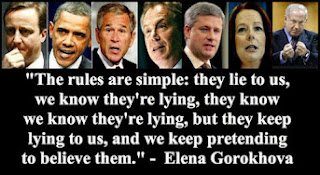
“What happens to people living in a society where everyone in power is lying, stealing, cheating and killing, and in our hearts we all know this, but the consequences of facing all these lies are so monstrous, we keep on hoping that maybe the corporate government administration and media are on the level with us this time. Americans remind me of survivors of domestic abuse. This is always the hope that this is the very, very, very last time one’s ribs get re-broken again.”
A light dusting of snow covers the front deck this morning.
"Invasive Species -
Cutting Big Government Down To Size..."
by Joel Bowman
“The more corrupt the state, the more numerous the laws.”
- Tacitus, "The Annals of Imperial Rome" (c. 110–120 AD)
Villa la Angostura, Argentina - “This is my heaven, where I plan to live and to die.” The sun glistened off the water as our family clamored aboard the modest vessel. Nicolás, our captain for the day (and the boat’s owner-operator), spoke with the passion of a man who has discovered a deeper meaning in life. “When we came here from Buenos Aires, 35 years ago, I knew right away that this would be our new home. My wife and I, we raised our three children here in peace and tranquility, in harmony with nature.” Setting off from Bahia Manzano, a sheltered cove with clear and glassy waters, Nico guided the boat around a lush peninsula, with petite hotels and boutique cabins dotted among the trees.
Petite hotels and lodgings, as seen from the Nahuel Huapi Lake.
“The pines are actually an invasive species,” Nico informed us. “They were introduced back in the 1930s as part of a national afforestation program, designed to establish and grow a local timber industry. But the pines grew fast, and they soon began taking over the native growth. The plan was a total failure, thanks to high transport costs, corruption and general mismanagement... so naturally, the government expanded it, introducing more and more invasive species during the 1970s.
Now we have to manage them, like a pest. So we cut them back and plant native bushes, which help to regenerate the soil. It’s a constant battle, but unless we want our native trees to disappear altogether, it needs to be done.”
Deep Cuts: Meanwhile, back in the Big Smoke, Javier Milei’s motosierra continues hacking back the invasive species that is Big Government. According to the Minister of Deregulation Federico Sturzenegger, more than 53,000 government jobs have been axed since December, 2023. For those counting along at home, that’s ~31,000 centralized admin jobs, ~5,000 military and security personnel and ~17,000 state businesses, for a grand total of 53,345 pines felled nationwide. As Sturzenegger posted on his X account:
"KEEP THE CHAINSAW that allowed us to lift 12 million Argentinians out of poverty. While Kirchnerism tries to drag us back to the model of poverty and inflation, we move forward doing what's right: cutting useless spending so we can lower taxes for Argentinians. Thank you, President @JMilei, for the leadership. VLLC!"
And what has been the impact of these deep state cuts? According to the most recent figures, released late August, the long-strangulated Argentine economy continues to sprout new shoots... The latest, from La Derecha Diario: "The National Institute of Statistics and Censuses (INDEC) reported that the Argentine economy is maintaining solid year-on-year growth, with a 6.4% increase in June compared to the same month of the previous year, according to data from the Monthly Economic Activity Estimator (EMAE). Twelve of the sectors that make up the EMAE recorded year-on-year increases in June, with financial intermediation standing out in particular, which grew by a remarkable 28.7%...
Wholesale and retail trade and repairs, meanwhile, posted a year-on-year growth of 11.5%, being the activity with the greatest positive impact on the EMAE...The manufacturing industry also showed outstanding performance, with a 7.8% year-on-year increase, reflecting the reactivation of industrial production and the consolidation of value chains in key sectors. Other sectors that contributed significantly to growth include mining and quarrying (11%), construction (9.9%), net taxes on products (8.7%), and electricity, gas, and water services (8.6%)."
Of course, one swallow does not make a summer... and there is a lot that can change before the pending midterm elections, which will be held here on the 26th of October. We’ll keep our eye on the situation from the frontlines. Watch this space...
Sundowners and Snowy Peaks: Back on the lake, Nico steered his boat north, past Playa La Escondida and the Rio Bonito, which streams down from the jagged snowy mountains that cut the horizon. The lakefront boasts some of the most expensive real estate anywhere in the country. “That’s Cumelén,” Nico pointed to the postcard coastline, studded with impressive mansions and home to the exclusive Cumelén Country Club. “There’s a nine-hole golf course and a clubhouse, and of course a private muelle, which residents can use for their yachts and sail boats. Most of the owners live in the capital. These are just their vacation homes.”
We puttered around the corner in Nico’s little lancha, where he turned off the motor in a protected corner of the picturesque Bahia Kraft. Leaving his guests to wonder in silence at the surrounding beauty, our captain disappeared into the cabin below, emerging a few minutes later with a hearty picada of local cured meats and cheeses... and a round of Fernet and Cokes.
“Most of us here don’t have a lot of money,” Nico said, handing the drinks around, “Not like these people, anyway. But we are more than happy. And in this life, that’s what really counts. Besides, being out here on the water, with a drink in your hand and the sun setting behind the mountains... that’s for everyone.” Stay tuned for more Notes From the End of the World..."
"You won’t believe what’s going on with the postal service! From stolen checks to corrupt inspectors, this video exposes how trusted postal workers are robbing us blind. Learn about the shocking scam involving stolen arrow keys - master keys that open entire mailboxes - and a degenerate postal inspector who pocketed cash meant for fraud victims. It’s beyond outrageous! Plus, I’ll dive into how AI is being used to catch these criminals, but even the inspectors themselves can’t always be trusted. What’s going on with our mail system? Have you been a victim of postal theft? Let me know in the comments!"
Poitou, France - "A huge statue of a boy, half of whose face appeared as though it had been blown away, looked on as we ate our dinner. We were staying at the Chateau de la Gaude, after a wedding in Aix-en-Provence. This was our second hotel near the city. The first was elaborately decorated, with so many patterns and colors - in the wallpaper, rugs, curtains, bric-a-brac, chandeliers and furniture - that we could hardly sleep. But it was gracious and comfortable, in an old Aix kind of way. The second hotel was more modern. Sleek. Chic. With some of the worst art we have ever seen. In our room, for example, were two watercolors. They appeared to depict a woman’s face in poses of either extreme depression or domestic abuse, maybe both. The worst, though, was the sculpture in the garden.
“Children should be protected from that kind of thing,” said Elizabeth. It was grotesque and hideous - a woman, naked and deformed, whose head was hollowed out, as if by worms. Taken together, the art seemed to signal a kind of corruption of the body...and perhaps, more importantly, the spirit.
Meanwhile, Bloomberg: "Gold Punches Through $3,500 to Hit Record High on Rate-Cut Bets." The precious metal has gained more than 30% this year, making it one of the best-performing major commodities. What is gold trying to tell us? Perhaps it implies a corruption of a different sort...of our financial system.
It’s tempting to think that our heavy allocations in gold have brought us 30% more wealth this year. But, for us, gold is not an investment. It is a way of avoiding investments. It is ‘money;’ we measure our wealth in gold, not dollars. And if we had ten ounces of gold at the beginning of the year, we still have just ten ounces of gold...waiting for an opportunity to invest when the time is right. But if the higher gold price is not telling us that we’re richer, what is it telling us? Maybe it has something to do with the reverie we began yesterday.
Empires, like people, become more fragile when they get old. They sit, as if atop a great mountain, ready to roll down in any direction. They try to hold on by erecting trade barriers, switching to Big Man government and paying the firepower industry to protect them. But one way or another, they’ve got to climb down that mountain.
Which is why, historically, Donald Trump was probably a better bet than Kamala Harris. An empire typically goes out in a blaze of military jackassery and financial chicanery. Harris would have continued wrecking the empire’s finances, more or less at the same pace as Trump. Democrats as well as Republicans are eager to spend money they don’t have. Neither seems particularly concerned about corrupting the system with fake dollars or of running out of other peoples’ money. But Ms. Harris might have been less bold in the use of the military.
The US firepower industry is far ahead of other nations. As with the Romans in the fifth century and the French under Napoleon, it will probably take a combination of foreigners to bring it down. The Trump team seems to be helping that coalition to take shape. Bloomberg: "Chinese leader Xi Jinping and Russian President Vladimir Putin have long showcased their bromance...now they’re embracing a powerful new friend: Indian Prime Minister Narendra Modi."
Modi turned to Eurasia’s huge countries after the Trump administration applied 50% tariffs to imports from India. Trump’s foreign policy strategists seem eager to stir up trouble on our southern flank, too. What other purpose could be served by sending US gunboats to Venezuela?
At the wedding, we met a man who worked for the French aviation company, Dassault. The company makes the famous fighter jet, the Rafale. “The orders are coming so fast, we can’t keep up with them,” he said. Stay tuned."
"This Israeli Regime Has No Future In The Middle East"
"Israel specializes in targeting civilians, says Prof Seyed Marandi, in the wake of the martyring of almost the entire Yemeni cabinet. It can celebrate it all it wants but Israel is despised across the world."
"Colorful NGC 1579 resembles the better known Trifid Nebula, but lies much farther north in planet Earth's sky, in the heroic constellation Perseus. About 2,100 light-years away and 3 light-years across, NGC 1579 is, like the Trifid, a study in contrasting blue and red colors, with dark dust lanes prominent in the nebula's central regions.
In both, dust reflects starlight to produce beautiful blue reflection nebulae. But unlike the Trifid, in NGC 1579 the reddish glow is not emission from clouds of glowing hydrogen gas excited by ultraviolet light from a nearby hot star. Instead, the dust in NGC 1579 drastically diminishes, reddens, and scatters the light from an embedded, extremely young, massive star, itself a strong emitter of the characteristic red hydrogen alpha light."
"In an exciting announcement that has left scientists and space enthusiasts in total awe, the James Webb Space Telescope has unveiled the true scale of the universe. This incredible feat has allowed humanity to peer into the deepest and most mysterious corners of the cosmos, providing a new perspective on our existence on the vast canvas of the universe.
One of the most surprising findings has been the discovery of distant galaxies that had never been observed before. Some of these galaxies are billions of light-years away, which means that the images captured by the telescope allow us to travel back in time and observe the universe in its earliest stages. In addition, the James Webb Telescope has provided detailed information about the formation of stars and planets in various regions of space. The images reveal the complexity and beauty of stellar birth processes, providing a deeper understanding of how stellar systems originate and evolve.
The data collected have also enabled astronomers to more accurately calculate the age of the universe and its expansion. This milestone represents a crucial step in understanding the evolution of the cosmos and how it might develop in the future.
The announcement of the James Webb Telescope marks a before and after in astronomy and astrophysics, leaving an indelible mark on human knowledge. The true scale of the universe, now revealed, invites us to reflect on our place in the cosmos and impels us to continue exploring and unveiling the secrets still hidden in the far reaches of infinite space. This new era of space exploration promises to reveal many more astonishing discoveries, and humanity is poised to take in and understand the vastness and complexity of the universe as never before."
"In this galaxy, there's a mathematical probability of three billion Earth-type planets. And in all of the universe, 20 trillion galaxies like this. And in all of that... and perhaps more, only one of each of us."
“Here’s a question every angry man and woman needs to consider: How long are you going to allow people you don’t even like – people who are no longer in your life, maybe even people who aren’t even alive anymore – to control your life? How long?”
- Andy Stanley
“That goes for old wounds, too, you know, I really wish we’d had the chance to talk before this,” he says, cracking the window so the smoke can escape. “There’s a Longfellow quote I have stuck on my bulletin board at the church office – ‘There is no grief like the grief that does not speak’ – and it’s true. I’ve found that keeping pain inside doesn’t give it a chance to heal, but bringing it out into the light, holding it right there in your hands and trusting that you’re strong enough to make it through, not hating the pain, not loving it, just seeing it for what it really is can change how you go on from there. Time alone doesn’t heal emotional wounds, and you don’t want to live the rest of your life bottled up with anger and guilt and bitterness. That’s how people self-destruct.”
"What if the world around you slowly slipped into a trance - a shared illusion so powerful that even the smartest people you know started repeating the same script, no matter how false it was? What if questioning it made you the enemy? This is mass psychosis - a phenomenon as old as civilization itself, now amplified by technology, media, and global communication. In this full documentary-style deep dive, we’ll break down how it starts, how it spreads, and most importantly… how to get out before it swallows you whole.
Explore the eerie quiet of a world facing a potential civilizational collapse, as this video illustrates the haunting reality of empty spaces and solitary figures. Reflect on what truly matters when society as we know it faces a population collapse and previously trusted systems begin to fail. Consider the future prediction as you observe the stark imagery of abandoned places."
We Are Surrounded by Stupid People, How to Escape"
"In individuals, insanity is rare; but in
groups, parties, nations, and epochs, it is the rule."
- Friedrich Nietzsche.
We live in an age where the crowd worships individuality - yet demands conformity like never before. This video dives deep into mass psychosis, the hidden psychological traps of groupthink, and the dangerous comfort of blind conformity.
"Today we will take a walk through Gorky Park in the centre of Moscow. It will surprise you just how huge this park is. We will see musical performances, beach volleyball, restaurants and also go down to the Moskva River."
"Human life is thus only a perpetual illusion; men deceive and flatter each other. No one speaks of us in our presence as he does of us in our absence. Human society is founded on mutual deceit; few friendships would endure if each knew what his friend said of him in his absence, although he then spoke in sincerity and without passion. Man is then only disguise, falsehood, and hypocrisy, both in himself and in regard to others. He does not wish any one to tell him the truth; he avoids telling it to others, and all these dispositions, so removed from justice and reason, have a natural root in his heart."
"Since its original landmark publication in 1980, “A People’s History of the United States” has been chronicling American history from the bottom up. Known for its lively, clear prose as well as its scholarly research, “A People’s History” is the only volume to tell America’s story from the point of view of - and in the words of - America’s women, factory workers, African-Americans, Native Americans, the working poor, and immigrant laborers. As historian Howard Zinn shows, many of our country’s greatest battles - the fights for a fair wage, an eight-hour workday, child-labor laws, health and safety standards, universal suffrage, women’s rights, racial equality - were carried out at the grassroots level, against bloody resistance. Covering Christopher Columbus’s arrival through President Clinton’s first term, “A People’s History of the United States" features insightful analysis of the most important events in our history.
Library Journal calls Howard Zinn’s iconic “A People’s History of the United States” “a brilliant and moving history of the American people from the point of view of those whose plight has been largely omitted from most histories.” Packed with vivid details and telling quotations, Zinn’s award-winning classic continues to revolutionize the way American history is taught and remembered."
“A lot of the nonsense was the innocent result of playfulness on the part of the founding fathers of the nation of Dwayne Hoover and Kilgore Trout. The founders were aristocrats, and they wished to show off their useless eduction, which consisted of the study of hocus-pocus from ancient times. They were bum poets as well. But some of the nonsense was evil, since it concealed great crime. For example, teachers of children in the United States of America wrote this date on blackboards again and again, and asked the children to memorize it with pride and joy: 1492.
The teachers told the children that this was when their continent was discovered by human beings. Actually, millions of human beings were already living full and imaginative lives on the continent in 1492. That was simply the year in which sea pirates began to cheat and rob and kill them.
Here was another piece of nonsense which children were taught: that the sea pirates eventually created a government which became a beacon of freedom of human beings everywhere else. Actually, the sea pirates who had the most to do with the creation of the new government owned human slaves. They used human beings for machinery, and, even after slavery was eliminated, because it was so embarrassing, they and their descendants continued to think of ordinary human beings as machines. The sea pirates were white. The people who were already on the continent when the pirates arrived were copper-colored. When slavery was introduced onto the continent, the slaves were black. Color was everything.
Here is how the pirates were able to take whatever they wanted from anybody else: they had the best boats in the world, and they were meaner than anybody else, and they had gunpowder, which is a mixture of potassium nitrate, charcoal, and sulphur. They touched the seemingly listless powder with fire, and it turned violently into gas. This gas blew projectiles out of metal tubes at terrific velocities. The projectiles cut through meat and bone very easily; so the pirates could wreck the wiring or the bellows or the plumbing of a stubborn human being, even when he was far, far away. The chief weapon of the sea pirates, however, was their capacity to astonish. Nobody else could believe, until it was much too late, how heartless and greedy they were.”
"If you want to see how far we have not come from the cave and the woods, from the lonely and dangerous days of the prairie or the plain, witness the reaction of a modern suburban family, nearly ready for bed, when the doorbell rings or the door is rattled. They will stop where they stand, or sit bolt upright in their beds, as if a streak of pure lightning has passed through the house. Eyes wide, voices fearful, they will whisper to each other, "There's someone at the door," in a way that might make you believe they have always feared and anticipated this moment - that they have spent their lives being stalked."
"Hey everyone, it’s Dan, and today on I Allegedly, we’re diving into one of the most talked-about trends in America - lawyer billboards! You’ve probably seen them everywhere, from Morgan & Morgan’s massive campaigns to Sweet James dominating Southern California. These ads are flashy, persistent, and, frankly, overwhelming. Some states like Florida, Pennsylvania, and even Vermont are starting to crack down on billboard advertising, and I’ve got plenty to share about why this is happening and how it affects you. In this video, I also touch on the rise of lawyer "mills," the insane money being made by firms like Morgan & Morgan, and why research and personal connections still matter when hiring legal help. Plus, I’ll share some wild stories, the latest legal trends, and my thoughts on how this billboard craze is spiraling out of control. Let’s face it - we’re all tired of the “call us now, you’ve got money coming!” ads, right?"




.jpg)


