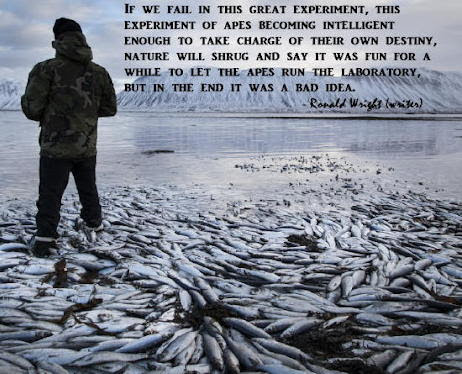
“The Caliphate looms; it is inevitable, and the road to
its gates is paved with the skulls of English children.”
- Peachy Keenan
"Do you hear those alarm bells ringing? Looks like June is bustin’ out all over, as the old Broadway ditty goes. Bedlam is in the air, and in more varieties than Heinz has pickles. Take your pick: civil war blooming in France and the UK, maybe even Germany - if it can shake off its psychotic stupor. World War III flutters over the continent like an answered prayer coming in for a landing. And here in the USA, genuine insurrection ripens with the summer’s peaches.
The Champs Elysees was a battlefield Saturday night as a soccer celebration went all Jihad, leaving two rioters dead and hundreds arrested (unreported inThe New York Times, of course, because... reasons). The two Alexanders at The Duran report that a plot is underway in London to deep-six (not eighty-six) Labour PM Sir Keir Starmer, who enjoys the lowest poll ratings in the history of British polling. Ol’ Keir likes to throw grannies in jail for rude Facebook posts while Islamic rape gangs do their thing and knife attacks multiply on the indigenous population. Not a good look. Perennial nationalist irritant Tommy Robinson was released from prison the other day, too, and you can expect fury arising around - and at him - as the sceptered isle day-by-day disappears under a burqa.
Starmer, Macron, new German Chancellor Friedrich Merz, plus the unelected EU apparatus under Ursula von der Leyen all seem to be avid for war with Russia. They are insane, of course, and not just because their combined militaries are a joke. They stirred the pot badly over the weekend, helping Ukraine carry out drone attacks against Russian air defense bases as far afield as Siberia and outside Murmansk, way up north on the Barents Sea. The bold attack was apparently carried out after a year-and-a-half of planning, using tractor-trailer trucks to transport concealed drones in on-board shipping containers deep into Russia. The drones took out Russian aircraft enabled to launch cruise missiles and long-range radar detection planes, all tolled estimated at $7-billion damage. The gambit would have required NATO satellite targeting assistance.
You might recall a week ago, Chancellor Merz declared that Germany gave Ukraine “permission” to carry out long-range strikes into Russia. Smooth move, Friedrich. He is, apparently, unaware that in so-doing he automatically gave Russia permission to strike deep into Germany as well, which Russia has not yet done. Instead, it replied with missile strikes against Odesa, Kharkiv, Dnipropetrovsk, and Kyiv, little more than a routine smack-back, but perhaps an ominous prelude to worse in the offing.
You understand that things are escalating steeply now in this conflict. A lot of high ranking officials in Russia have lost patience with Mr. Putin’s slow-moving, on-the-ground grind and refusal so far to inflict more serious damage on the Ukrainian capital, which he could turn into an ashtray on a half-hour’s notice, if required. You might suppose he has sought strategically to avoid the total destruction of this cousin-country so that it would not be a failed state in the aftermath of war. It would be to Russia’s advantage if Ukraine could function as a neutralized, sovereign, self-supporting buffer state rather than an ungovernable basket-case / money pit region harboring non-state terrorists of various stripes. The former outcome is surely still preferable to the latter, despite the most recent provocations.
All of this puts Mr. Trump in a bind. His efforts to negotiate peace are on-the-rocks for now, as is his (America’s) ability to control the maniac globalist warmongers of NATO. Many in the US, and Mr. Trump himself, make noises about backing off the big mess altogether and dissociating from a NATO alliance that has lost its purpose and meaning, becoming, in fact, a menace to our interests.
Against all this expanding havoc, peace talks are still scheduled for Istanbul today. Ukraine and Russia have both exchanged ceasefire proposals. Mr. Trump reportedly conferred with President Putin about it. The finalized memorandum said, “Russia is ready to work with Ukraine on a memorandum on a possible future peace treaty defining a number of positions." Take-away? Russia wants to conclude this war. Mr. Trump wants to end it, too. Mr. Zelenskyy, maybe not so much, since his fate is only secure as long as the war keeps going and he is not overthrown by his own wing-men.
Neither the US nor the NATO / EU axis will participate in the Istanbul peace talks directly, but you can suppose that Merz, Macron, Starmer, and von der Leyen are looking to stir-the-pot in the background. You might conclude that war is all they’ve got left as summer draws near and each of them face a European population primed to explode at its feckless, noxious, incompetent leadership. I would expect much more fighting in the streets of the European capitals going forward, and falling governments. It could prove hard to put these Humpty-dumpties back together, with years of political chaos following.
Things are heating up in the USA, too, as an Egyptian national torched a crowd of pro-Israel marchers with a home-made flamethrower in Boulder, Colorado, on Sunday, while “Trans-tifa,” as it styled itself, went to work on Christians assembled in a Seattle park last week. The Democratic Party - like the EU’s warmonger parties - has nothing left but violence against anything that looks like nationalism and traditional values. It’s so bad, and Democratic leadership is so demented, that they are liable to turn Donald Trump into another Abe Lincoln."
“Here in the Milky Way galaxy we have astronomical front row seats as M81 and M82 face-off, a mere 12 million light-years away. Locked in a gravitational struggle for the past billion years or so, the two bright galaxies are captured in this deep telescopic snapshot, constructed from 25 hours of image data.
Their most recent close encounter likely resulted in the enhanced spiral arms of M81 (left) and violent star forming regions in M82 so energetic the galaxy glows in X-rays. After repeated passes, in a few billion years only one galaxy will remain. From our perspective, this cosmic moment is seen through a foreground veil of the Milky Way's stars and clouds of dust. Faintly reflecting the foreground starlight, the pervasive dust clouds are relatively unexplored galactic cirrus, or integrated flux nebulae, only a few hundred light-years above the plane of the Milky Way.”
"That we can never know," answered the wolf angrily. "That's for the future. But what we can know is the importance of what we owe to the present. Here and now, and nowhere else. For nothing else exists, except in our minds. What we owe to ourselves, and to those we're bound to. And we can at least hope to make a better future, for everything."
"Powerful Solar Storms - the strongest of 2025 - are about to hit Earth and trigger a G4 or even G5 geomagnetic, all the while a radiation storm is already happening and M6+ earthquakes are beginning to pop off like fireworks. Technological disruptions are likely to occur, such as satellite failures, GPS issues, even power grid failures! And there are known biophysical and health effects from solar and geophysical activity such as changes to blood viscosity and clotting, activation of the sympathetic nervous system, higher risk of cardiac infarctions in elderly persons and those with cardiac issues, as well as general symptoms such as alterations to circadian rhythms, inflammation, fatigue, and more. A third solar storm may have just launched towards Earth, and in general over the next few days ANYTHING can happen. Space Weather Report by geophysicist Stefan Burns."
But this scientifically valid possibility is very real...
Full screen recommended.
"Knowing"
As Einstein said, "Any fool can know, the point is to understand." So we understand we're on a dust mote in a 13.8 billion year old Universe of 2 trillion galaxies, in a sphere 78 billion light years across and expanding rapidly into infinity at the speed of light... How frail it all is, how fragile, temporary and precious Life really is in the cosmic scheme of things, but here we are...
"Escaping the Trap of Efficiency: The Counterintuitive Antidote
to the Time-Anxiety That Haunts and Hampers Our Search for Meaning"
by Maria Popova
"A decade ago, when I first began practicing with my mindfulness teacher while struggling to make rent and make meaning out of my borrowed stardust, one meditation she led transformed my quality of life above all others - both life’s existential calibration and its moment-to-moment experience: You are asked to imagine having only a year left to live, at your present mental and bodily capacity - what would you do with it? Then imagine you only had a day left - what would you do with it? Then only an hour - what would you do with it?
As you scale down these nested finitudes, the question becomes a powerful sieve for priorities - because undergirding it is really the question of what, from among the myriad doable things, you would choose not to do in order to fill the scant allotment of time, be it the 8,760 hours of a year or a single hour, with the experiences that confer upon it maximum aliveness, that radiant vitality filling the basic biological struggle for survival with something more numinous.
The exercise instantly clarifies - and horrifies, with the force of its clarity - the empty atoms of automation and unexamined choice filling modern life with busyness while hollowing it of gladness. What emerges is the sense that making a meaningful life is less like the building of the Pyramids, stacking an endless array of colossal blocks into a superstructure of impressive stature and on the back of slave labor, than like the carving of Rodin’s Thinker, cutting pieces away from the marble block until a shape of substance and beauty is revealed. What emerges, too, is the sense that the modern cult of productivity is the great pyramid scheme of our time.
Oliver Burkeman reckons with these ideas in "Four Thousand Weeks: Time Management for Mortals" (public library) - an inquiry equal parts soulful and sobering, offering not arsenal for but sanctuary from our self-brutalizing war on the constraints of reality, titled after the (disconcertingly low) number of weeks comprising the average modern sapiens lifespan of eighty (seemingly long) years.
After taking a delightful English jab at the American-bred term “life-hack” and its unfortunate intimation that “your life is best thought of as some kind of faulty contraption, in need of modification so as to stop it from performing suboptimally,” Burkeman frames our present predicament:
"This strange moment in history, when time feels so unmoored, might in fact provide the ideal opportunity to reconsider our relationship with it. Olderthinkers have faced these challenges before us, and when their wisdom is applied to the present day, certain truths grow more clearly apparent. Productivity is a trap. Becoming more efficient just makes you more rushed, and trying to clear the decks simply makes them fill up again faster. Nobody in the history of humanity has ever achieved “work-life balance,” whatever that might be, and you certainly won’t get there by copying the “six things successful people do before 7:00 a.m.” The day will never arrive when you finally have everything under control - when the flood of emails has been contained; when your to-do lists have stopped getting longer; when you’re meeting all your obligations at work and in your home life; when nobody’s angry with you for missing a deadline or dropping the ball; and when the fully optimized person you’ve become can turn, at long last, to the things life is really supposed to be about."
"Denying reality never works, though. It may provide some immediate relief, because it allows you to go on thinking that at some point in the future you might, at last, feel totally in control. But it can’t ever bring the sense that you’re doing enough - that you are enough - because it defines “enough” as a kind of limitless control that no human can attain. Instead, the endless struggle leads to more anxiety and a less fulfilling life."
This pursuit of efficiency hollows out the fullness of life, flattening the sphere of being that makes us complete human beings into a hamster wheel. Burkeman terms this “the paradox of limitation” and writes: "The more you try to manage your time with the goal of achieving a feeling of total control, and freedom from the inevitable constraints of being human, the more stressful, empty, and frustrating life gets. But the more you confront the facts of finitude instead - and work with them, rather than against them - the more productive, meaningful, and joyful life becomes."
Echoing physicist Brian Greene’s poetic meditation on how our mortality gives meaning to our lives, he adds: "I don’t think the feeling of anxiety ever completely goes away; we’re even limited, apparently, in our capacity to embrace our limitations. But I’m aware of no other time management technique that’s half as effective as just facing the way things truly are."
At the crux of facing the limits of reality is the fact that we must make choices — a necessity that can petrify us with “FOMO,” the paralyzing fear of missing out. And yet, as Adam Phillips observed in his elegant antidote to this fear, “our lived lives might become a protracted mourning for, or an endless tantrum about, the lives we were unable to live. But the exemptions we suffer, whether forced or chosen, make us who we are.”
We have different coping strategies for managing the melancholy onus of having to choose. I am aware that my reliance on daily routines, unvaried meals, interchangeable clothing items, recursive playlists, and other life-loops is a coping mechanism aimed at automating certain choices in order to allay the anxiety and time-cost of having to make them afresh each day. Others orient orthogonally to the problem, avoiding making concrete choices and commitments, in life and in love, in order to keep their options “open” - an equally illusory escape from the grand foreclosure that is life itself.
But however we cope with the fearsome fact of having to choose, choose we must in order to live - and in order to have lives worthy of having been lived. It is, of course, all about facing our mortality - like every anxiety in life, if its layers of distraction and disguise are peeled back far enough.
With an eye to the etymology of “decide” - which stems from the Latin decidere, “to cut off,” a root it shares with “homicide” and “suicide” - Burkeman considers the necessity of excision: "Any finite life - even the best one you could possibly imagine - is therefore a matter of ceaselessly waving goodbye to possibility… Since finitude defines our lives… living a truly authentic life - becoming fully human - means facing up to that fact.
[…]
It’s only by facing our finitude that we can step into a truly authentic relationship with life."
Facing our finitude is, of course, the most challenging frontier of our ongoing resistance to facing the various territories of reality. The outrage we intuitively feel at the fact of our mortality - outrage for which the commonest prescription in the history of our species have been sugar-coated pellets of illusion promising ideologies of immortality - is a futile fist shaken at the fundamental organizing principle of the universe, of which we are part and product. Only the rare few are able to orient to mortality by meeting reality on its own terms and finding in that reorientation not only relief but rapturous gladness.
A generation after Richard Dawkins made his exquisite counterintuitive argument for how death betokens the luckiness of life, Burkeman offers a fulcrum for pivoting our intuitive never-enough-time perspective to take a different view of the time we do have: "From an everyday standpoint, the fact that life is finite feels like a terrible insult… There you were, planning to live on forever… but now here comes mortality, to steal away the life that was rightfully yours.
Yet, on reflection, there’s something very entitled about this attitude. Why assume that an infinite supply of time is the default, and mortality the outrageous violation? Or to put it another way, why treat four thousand weeks as a very small number, because it’s so tiny compared with infinity, rather than treating it as a huge number, because it’s so many more weeks than if you had never been born? Surely only somebody who’d failed to notice how remarkable it is that anything is, in the first place, would take their own being as such a given - as if it were something they had every right to have conferred upon them, and never to have taken away. So maybe it’s not that you’ve been cheated out of an unlimited supply of time; maybe it’s almost incomprehensibly miraculous to have been granted any time at all."
"Most other resources on which we rely as individuals - such as food, money, and electricity - are things that facilitate life, and in some cases it’s possible to live without them, at least for a while. Attention, on the other hand, just is life: your experience of being alive consists of nothing other than the sum of everything to which you pay attention. At the end of your life, looking back, whatever compelled your attention from moment to moment is simply what your life will have been."
Annie Dillard captured this sentiment best in her haunting observation that “how we spend our days is, of course, how we spend our lives” - a poetic sentiment that, on a hectic day, becomes an indictment. What makes our attention so vulnerable to distraction is the difficulty of attending to what is consequential in the grandest scheme - a difficulty temporarily allayed by the ease of attending to the immediate and seemingly urgent but, ultimately, inconsequential. (Who among us would, on their deathbed, radiate soul-gladness over the number of emails they responded to in their lifetime?) “People are drawn to the easy and to the easiest side of the easy,” Rilke admonished a century before social media’s stream of easy escape into distraction, before productivity apps and life-hacks and instaeverything. “But it is clear that we must hold ourselves to the difficult.”
Burkeman writes: "Whenever we succumb to distraction, we’re attempting to flee a painful encounter with our finitude - with the human predicament of having limited time, and more especially, in the case of distraction, limited control over that time, which makes it impossible to feel certain about how things will turn out… The most effective way to sap distraction of its power is just to stop expecting things to be otherwise - to accept that this unpleasantness is simply what it feels like for finite humans to commit ourselves to the kinds of demanding and valuable tasks that force us to confront our limited control over how our lives unfold."
And so we get to the crux of our human predicament - the underbelly of our anxiety about every unanswered email, every unfinished project, and every unbegun dream: Our capacities are limited, our time is finite, and we have no control over how it will unfold or when it will run out. Beyond the lucky fact of being born, life is one great sweep of uncertainty, bookended by the only other lucky certainty we have. It is hardly any wonder that the sweep is dusted with so much worry and we respond with so much obsessive planning, compulsive productivity, and other touching illusions of control.
Burkeman - whose previous book made a similarly counterintuitive and insightful case for uncertainty as the wellspring of happiness - writes: "Worry, at its core, is the repetitious experience of a mind attempting to generate a feeling of security about the future, failing, then trying again and again and again - as if the very effort of worrying might somehow help forestall disaster. The fuel behind worry, in other words, is the internal demand to know, in advance, that things will turn out fine: that your partner won’t leave you, that you will have sufficient money to retire, that a pandemic won’t claim the lives of anyone you love, that your favored candidate will win the next election, that you can get through your to-do list by the end of Friday afternoon. But the struggle for control over the future is a stark example of our refusal to acknowledge our built-in limitations when it comes to time, because it’s a fight the worrier obviously won’t win.
[…]
And so insecurity and vulnerability are the default state - because in each of the moments that you inescapably are, anything could happen, from an urgent email that scuppers your plans for the morning to a bereavement that shakes your world to its foundations. A life spent focused on achieving security with respect - as if the point of your having been born still lies in the future, just over the horizon, and your life in all its fullness can begin as soon as you’ve gotten it, in Arnold Bennett’s phrase, “into proper working order.”
The primary manifestation of this - and the root of our uneasy relationship with time - is that, in the course of our ordinary days, we instinctively make choices not through the lens of significance but through the lens of anxiety-avoidance, which increasingly renders life something to be managed rather than savored, a problem to be solved rather than a question to be asked, which we must each answer with the singular song of our lives, melodic with meaning.
Leaning on Carl Jung’s perceptive advice on how to live, Burkeman makes poetically explicit the book’s implicitly obvious and necessary disclaimer: "Maybe it’s worth spelling out that none of this is an argument against long-term endeavors like marriage or parenting, building organizations or reforming political systems, and certainly not against tackling the climate crisis; these are among the things that matter most. But it’s an argument that even those things can only ever matter now, in each moment of the work involved, whether or not they’ve yet reached what the rest of the world defines as fruition. Because now is all you ever get.
[…]
If you can face the truth about time in this way - if you can step more fully into the condition of being a limited human - you will reach the greatest heights of productivity, accomplishment, service, and fulfillment that were ever in the cards for you to begin with. And the life you will see incrementally taking shape, in the rearview mirror, will be one that meets the only definitive measure of what it means to have used your weeks well: not how many people you helped, or how much you got done; but that working within the limits of your moment in history, and your finite time and talents, you actually got around to doing - and made life more luminous for the rest of us by doing - whatever magnificent task or weird little thing it was that you came here for.
In the remainder of the thoroughly satisfying and clarifying "Four Thousand Weeks," drawing on a wealth of contemporary research and timeless wisdom from thinkers long vanished into what Emily Dickinson termed “the drift called ‘the Infinite,'” Burkeman goes on to devise a set of principles for liberating ourselves from the trap of efficiency and its illusory dreams of control, so that our transience can be a little more bearable and our finite time in the kingdom of life a little less provisional, a lot more purposeful, and infinitely more alive.
"Friedrich Nietzsche in ‘Beyond Good and Evil’ holds that only a few people have the fortitude to look in times of distress into what he calls the molten pit of human reality. Most, studiously, ignore the pit. Artists and philosophers, for Nietzsche, are consumed however by an insatiable curiosity, a quest for truth and a desire for meaning. They venture down into the bowels of the molten pit. They get as close as they can before the flames and heat drive them back. This intellectual and moral honesty, Nietzsche wrote, comes with a cost. Those singed by the fire of reality become ‘burnt children’ he wrote, eternal orphans in empires of illusion."
- Chris Hedges
○
"We work in the dark. We do what we can to battle the evil that would otherwise destroy us. But if a man's character is his fate, it's not a choice but a calling. Sometimes the weight of this burden causes us to falter from the fragile fortress of our mind, allowing the monster without to turn within. We are left alone staring into the abyss, into the laughing face of madness."
- Fox Mulder, "X-Files"
○
○
Freely download "Beyond Good And Evil", by Friedrich Nietzsche, here:
"Life feels tough? You’re not alone, and in this video, I’m sharing a perspective that could truly change everything. We’re talking about the struggles so many of us face - burnout, underemployment, financial stress, and that overwhelming feeling of being stuck. But guess what? There’s hope, and it starts with YOU. From personal stories of resilience to insights from experts like Dr. Marvin, this episode of IAllegedly dives into how we can all work through life’s toughest challenges and find purpose and happiness. Plus, I’m at the incredible Hilltop Park in Signal Hill, California, reflecting on how life’s hardest moments can teach us the lessons that lead to our greatest growth. Whether you’re dealing with stress at work, relationship struggles, or just trying to find your path, this video is packed with inspiration and actionable advice to help you move forward."
"At least once a year, I completely burn out: exhausted, I no longer have the energy or will to care about anything but the bare minimum for survival. Everything not essential for survival gets jettisoned or set aside. This goes with the territory if you're trying to accomplish a lot of things that are intrinsically complex and open-ended - for example, running a business, being a parent, juggling college, work, family, community commitments, etc.
I am confident many if not most of you have experienced burnout due to being overwhelmed by open-ended, inherently complex commitments.
I don't think burnout is limited to individuals. I think entire organizations and institutions can experience burnout, especially organizations devoted to caring for others or those facing long odds of fulfilling their core purpose. I even think entire nations can become exhausted by the effort of keeping up appearances or navigating endless crises. At that point, the individuals and institutions of the nation just go through the motions of coping rather than continue the struggle. Perhaps Venezuela is a current example.
I have long suspected that in many ways America is just going through the motions.John Michael Greer (the Archdruid) has brilliantly described a process he calls catabolic collapse, which I would characterize as the stairstep-down of overly complex, costly systems as participants react to crises by resetting to a lower level of complexity and consumption.
Just as ecosystems have intrinsic carrying capacities, so too do individual humans and human systems. When our reach exceeds our grasp, and the costs of complexity exceed the carrying capacity of the underlying systems, then we have to move down to a lower level of complexity and lower cost-structure/energy consumption.
This sounds straightforward enough, but it isn't that easy in real life. We can't offload our kids and downsize to part-time parenting or magically reduce the complexities of operating a small business (or two). These tasks are intrinsically open-ended. Reductions in stress and complexity such as quitting a demanding job (and earning one-third of our former salary) require long years of trimming and planning.
So what can we do to work through burnout?Since I'm designed to over-commit myself, burnout is something I've dealt with since my late teens.I like to think I'm getting better at managing it, but this is probably illusory.(It may be one of those cases where the illusion is useful because it's positive and hopeful.) I find these responses helpful:
1. Reduce whatever complexity can be reduced.Even something as simple as making a pot of chili or soup to eat for a few days (minimizing daily meal prep) helps. Reduce interactions and transactions.
2. Daily walks - two a day if possible.If there is any taken-for-granted magic in daily life (other than sleep, dreaming and playing music), it's probably walking - especially if you let your mind wander rather than keep working.
3. More naps, more sleep.
4. Avoid the temptations of overly fatty/sweet/carbo comfort food, digital distractions, etc.
5. Keep to positive routines (stretching, walking, etc.), no matter how tired and down you feel.
6. Set aside time to play your musical instrument of choice, preferably improvisation rather than practice.
7. Do whatever calms your mind, even if it requires effort.
8. Do stuff you enjoy and set aside as much of the stuff you actively dislike doing as possible.
9. Set aside solitary time to "do nothing." Lowering the barriers raised by conscious effort, focus and thought may well be critical to our well-being.
This is one conclusion from research cited by Sherry Turkel in "Scientific American": "For the first time in the history of our species, we are never alone and never bored. Have we lost something fundamental about being human?"
I think the answer is an unequivocal yes.Our minds need periods of solitude, aimless wandering (i.e. boredom), time to integrate thoughts and feelings, time to question things and time for introspection. Without these restorative periods, we end up just going through the motions, on an autopilot setting of keeping overly complex lives and systems duct-taped together. This leads to burnout, and eventually to some measure of catabolic collapse/system reset.”
"I had lived thirty good years before enduring my first food poisoning - odds quite fortunate in the grand scheme of things, but miserably unfortunate in the immediate experience of it. I found myself completely incapacitated to erect the pillars of my daily life - too cognitively foggy to read and write, too physically weak to work out or even meditate. The temporary disability soon elevated the assault on my mind and body to a new height of anguish: an intense experience of stress. Even as I consoled myself with Nabokov’s exceptionally florid account of food poisoning, I couldn’t shake the overwhelming malaise that had engulfed me - somehow, a physical illness had completely colored my psychoemotional reality.
This experience, of course, is far from uncommon. Long before scientists began shedding light on how our minds and bodies actually affect one another, an intuitive understanding of this dialogue between the body and the emotions, or feelings, emerged and permeated our very language: We use “feeling sick” as a grab-bag term for both the sensory symptoms - fever, fatigue, nausea - and the psychological malaise, woven of emotions like sadness and apathy.
Pre-modern medicine, in fact, has recognized this link between disease and emotion for millennia. Ancient Greek, Roman, and Indian Ayurvedic physicians all enlisted the theory of the four humors - blood, yellow bile, black bile, and phlegm - in their healing practices, believing that imbalances in these four visible secretions of the body caused disease and were themselves often caused by the emotions. These beliefs are fossilized in our present language - melancholy comes from the Latin words for “black” (melan) and “bitter bile” (choler), and we think of a melancholic person as gloomy or embittered; a phlegmatic person is languid and impassive, for phlegm makes one lethargic.
And then French philosopher and mathematician René Descartes came along in the seventeenth century, taking it upon himself to eradicate the superstitions that fueled the religious wars of the era by planting the seed of rationalism. But the very tenets that laid the foundation of modern science - the idea that truth comes only from what can be visibly ascertained and proven beyond doubt - severed this link between the physical body and the emotions; those mysterious and fleeting forces, the biological basis of which the tools of modern neuroscience are only just beginning to understand, seemed to exist entirely outside the realm of what could be examined with the tools of rationalism.
For nearly three centuries, the idea that our emotions could impact our physical health remained scientific taboo - setting out to fight one type of dogma, Descartes had inadvertently created another, which we’re only just beginning to shake off. It was only in the 1950s that Austrian-Canadian physician and physiologist Hans Selye pioneered the notion of stress as we now know it today, drawing the scientific community’s attention to the effects of stress on physical health and popularizing the concept around the world. (In addition to his scientific dedication, Selye also understood the branding component of any successful movement and worked tirelessly to include the word itself in dictionaries around the world; today, “stress” is perhaps the word pronounced most similarly in the greatest number of major languages.)
But no researcher has done more to illuminate the invisible threads that weave mind and body together than Dr. Esther Sternberg. Her groundbreaking work on the link between the central nervous system and the immune system, exploring how immune molecules made in the blood can trigger brain function that profoundly affects our emotions, has revolutionized our understanding of the integrated being we call a human self. In the immeasurably revelatory "The Balance Within: The Science Connecting Health and Emotions" (public library), Sternberg examines the interplay of our emotions and our physical health, mediated by that seemingly nebulous yet, it turns out, remarkably concrete experience called stress.
With an eye to modern medicine’s advances in cellular and molecular biology, which have made it possible to measure how our nervous system and our hormones affect our susceptibility to diseases as varied as depression, arthritis, AIDS, and chronic fatigue syndrome, Sternberg writes: "By parsing these chemical intermediaries, we can begin to understand the biological underpinnings of how emotions affect diseases…
The same parts of the brain that control the stress response… play an important role in susceptibility and resistance to inflammatory diseases such as arthritis. And since it is these parts of the brain that also play a role in depression, we can begin to understand why it is that many patients with inflammatory diseases may also experience depression at different times in their lives… Rather than seeing the psyche as the source of such illnesses, we are discovering that while feelings don’t directly cause or cure disease, the biological mechanisms underlying them may cause or contribute to disease. Thus, many of the nerve pathways and molecules underlying both psychological responses and inflammatory disease are the same, making predisposition to one set of illnesses likely to go along with predisposition to the other.
The questions need to be rephrased, therefore, to ask which of the many components that work together to create emotions also affect that other constellation of biological events, immune responses, which come together to fight or to cause disease. Rather than asking if depressing thoughts can cause an illness of the body, we need to ask what the molecules and nerve pathways are that cause depressing thoughts. And then we need to ask whether these affect the cells and molecules that cause disease.
[…]
We are even beginning to sort out how emotional memories reach the parts of the brain that control the hormonal stress response, and how such emotions can ultimately affect the workings of the immune system and thus affect illnesses as disparate as arthritis and cancer. We are also beginning to piece together how signals from the immune system can affect the brain and the emotional and physical responses it controls: the molecular basis of feeling sick. In all this, the boundaries between mind and body are beginning to blur."
Indeed, the relationship between memory, emotion, and stress is perhaps the most fascinating aspect of Sternberg’s work. She considers how we deal with the constant swirl of inputs and outputs as we move through the world, barraged by a stream of stimuli and sensations:
"Every minute of the day and night we feel thousands of sensations that might trigger a positive emotion such as happiness, or a negative emotion such as sadness, or no emotion at all: a trace of perfume, a light touch, a fleeting shadow, a strain of music. And there are thousands of physiological responses, such as palpitations or sweating, that can equally accompany positive emotions such as love, or negative emotions such as fear, or can happen without any emotional tinge at all. What makes these sensory inputs and physiological outputs emotions is the charge that gets added to them somehow, somewhere in our brains. Emotions in their fullest sense comprise all of these components. Each can lead into the black box and produce an emotional experience, or something in the black box can lead out to an emotional response that seems to come from nowhere."
Memory, it turns out, is one of the major factors mediating the dialogue between sensation and emotional experience. Our memories of past experience become encoded into triggers that act as switchers on the rail of psychoemotional response, directing the incoming train of present experience in the direction of one emotional destination or another.
Sternberg writes: "Mood is not homogeneous like cream soup. It is more like Swiss cheese, filled with holes. The triggers are highly specific, tripped by sudden trails of memory: a faint fragrance, a few bars of a tune, a vague silhouette that tapped into a sad memory buried deep, but not completely erased. These sensory inputs from the moment float through layers of time in the parts of the brain that control memory, and they pull out with them not only reminders of sense but also trails of the emotions that were first connected to the memory. These memories become connected to emotions, which are processed in other parts of the brain: the amygdala for fear, the nucleus accumbens for pleasure - those same parts that the anatomists had named for their shapes. And these emotional brain centers are linked by nerve pathways to the sensory parts of the brain and to the frontal lobe and hippocampus - the coordinating centers of thought and memory. The same sensory input can trigger a negative emotion or a positive one, depending on the memories associated with it."
This is where stress comes in - much like memory mediates how we interpret and respond to various experiences, a complex set of biological and psychological factors determine how we respond to stress. Some types of stress can be stimulating and invigorating, mobilizing us into action and creative potency; others can be draining and incapacitating, leaving us frustrated and hopeless. This dichotomy of good vs. bad stress, Sternberg notes, is determined by the biology undergirding our feelings - by the dose and duration of the stress hormones secreted by the body in response to the stressful stimulus. She explains the neurobiological machinery behind this response:
" As soon as the stressful event occurs, it triggers the release of the cascade of hypothalamic, pituitary, and adrenal hormones - the brain’s stress response. It also triggers the adrenal glands to release epinephrine, or adrenaline, and the sympathetic nerves to squirt out the adrenaline-like chemical norepinephrine all over the body: nerves that wire the heart, and gut, and skin. So, the heart is driven to beat faster, the fine hairs of your skin stand up, you sweat, you may feel nausea or the urge to defecate. But your attention is focused, your vision becomes crystal clear, a surge of power helps you run - these same chemicals released from nerves make blood flow to your muscles, preparing you to sprint.
All this occurs quickly. If you were to measure the stress hormones in your blood or saliva, they would already be increased within three minutes of the event. In experimental psychology tests, playing a fast-paced video game will make salivary cortisol increase and norepinephrine spill over into venous blood almost as soon as the virtual battle begins. But if you prolong the stress, by being unable to control it or by making it too potent or long-lived, and these hormones and chemicals still continue to pump out from nerves and glands, then the same molecules that mobilized you for the short haul now debilitate you."
These effects of stress exist on a bell curve - that is, some is good, but too much becomes bad: As the nervous system secretes more and more stress hormones, performance increases, but up to a point; after that tipping point, performance begins to suffer as the hormones continue to flow. What makes stress “bad” - that is, what makes it render us more pervious to disease - is the disparity between the nervous system and immune system’s respective pace. Sternberg explains:
"The nervous system and the hormonal stress response react to a stimulus in milliseconds, seconds, or minutes. The immune system takes parts of hours or days. It takes much longer than two minutes for immune cells to mobilize and respond to an invader, so it is unlikely that a single, even powerful, short-lived stress on the order of moments could have much of an effect on immune responses. However, when the stress turns chronic, immune defenses begin to be impaired. As the stressful stimulus hammers on, stress hormones and chemicals continue to pump out. Immune cells floating in this milieu in blood, or passing through the spleen, or growing up in thymic nurseries never have a chance to recover from the unabated rush of cortisol. Since cortisol shuts down immune cells’ responses, shifting them to a muted form, less able to react to foreign triggers, in the context of continued stress we are less able to defend and fight when faced with new invaders. And so, if you are exposed to, say, a flu or common cold virus when you are chronically stressed out, your immune system is less able to react and you become more susceptible to that infection."
Extended exposure to stress, especially to a variety of stressors at the same time - any combination from the vast existential menu of life-events like moving, divorce, a demanding job, the loss of a loved one, and even ongoing childcare - adds up a state of extreme exhaustion that leads to what we call burnout.
Sternberg writes: "Members of certain professions are more prone to burnout than others - nurses and teachers, for example, are among those at highest risk. These professionals are faced daily with caregiving situations in their work lives, often with inadequate pay, inadequate help in their jobs, and with too many patients or students in their charge. Some studies are beginning to show that burnt-out patients may have not only psychological burnout, but also physiological burnout: a flattened cortisol response and inability to respond to any stress with even a slight burst of cortisol. In other words, chronic unrelenting stress can change the stress response itself. And it can change other hormone systems in the body as well.
One of the most profound such changes affects the reproductive system - extended periods of stress can shut down the secretion of reproductive hormones in both men and women, resulting in lower fertility. But the effects are especially perilous for women - recurring and extended episodes of depression result in permanent changes in bone structure, increasing the risk of osteoporosis. In other words, we register stress literally in our bones."
But stress isn’t a direct causal function of the circumstances we’re in - what either amplifies or ameliorates our experience of stress is, once again, memory. Sternberg writes: "Our perception of stress, and therefore our response to it, is an ever-changing thing that depends a great deal on the circumstances and settings in which we find ourselves. It depends on previous experience and knowledge, as well as on the actual event that has occurred. And it depends on memory, too."
The most acute manifestation of how memory modulates stress is post-traumatic stress disorder, or PTSD. For striking evidence of how memory encodes past experience into triggers, which then catalyze present experience, Sternberg points to research by psychologist Rachel Yehuda, who found both Holocaust survivors and their first-degree relatives - that is, children and siblings - exhibited a similar hormonal stress response.
This, Sternberg points out, could be a combination of nature and nurture - the survivors, as young parents for whom the trauma was still fresh, may well have subconsciously taught their children a common style of stress-responsiveness; but it’s also possible that these automatic hormonal stress responses permanently changed the parents’ biology and were transmitted via DNA to their children. Once again, memory encodes stress into our very bodies. Sternberg considers the broader implications:
"Stress need not be on the order of war, rape, or the Holocaust to trigger at least some elements of PTSD. Common stresses that we all experience can trigger the emotional memory of a stressful circumstance - and all its accompanying physiological responses. Prolonged stress - such as divorce, a hostile workplace, the end of a relationship, or the death of a loved one - can all trigger elements of PTSD."
Among the major stressors - which include life-events expected to be on the list, such as divorce and the death of a loved one - is also one somewhat unexpected situation, at least to those who haven’t undergone it: moving. Sternberg considers the commonalities between something as devastating as death and something as mundane as moving:
"One is certainly loss - the loss of someone or something familiar. Another is novelty - finding oneself in a new and unfamiliar place because of the loss. Together these amount to change: moving away from something one knows and toward something one doesn’t. An unfamiliar environment is a universal stressor to nearly all species, no matter how developed or undeveloped."
In the remainder of the thoroughly illuminating "The Balance Within," Sternberg goes on to explore the role of interpersonal relationships in both contributing to stress and shielding us from it, how the immune system changes our moods, and what we can do to harness these neurobiological insights in alleviating our experience of the stressors with which every human life is strewn."
“Everyone knows they need to manage their stress. When things get difficult at work, school, or in your personal life, you can use as many tips, tricks, and techniques as you can get to calm your nerves. So here’s a science-backed one: make a playlist of the 10 songs found to be the most relaxing on earth. Sound therapies have long been popular as a way of relaxing and restoring one’s health. For centuries, indigenous cultures have used music to enhance well-being and improve health conditions.
Now, neuroscientists out of the UK have specified which tunes give you the most bang for your musical buck. The study was conducted on participants who attempted to solve difficult puzzles as quickly as possible while connected to sensors. The puzzles induced a certain level of stress, and participants listened to different songs while researchers measured brain activity as well as physiological states that included heart rate, blood pressure, and rate of breathing.
According to Dr. David Lewis-Hodgson of Mindlab International, which conducted the research, the top song produced a greater state of relaxation than any other music tested to date. In fact, listening to that one song- “Weightless”- resulted in a striking 65 percent reduction in participants’ overall anxiety, and a 35 percent reduction in their usual physiological resting rates. That is remarkable.
Equally remarkable is the fact the song was actually constructed to do so. The group that created “Weightless”, Marconi Union, did so in collaboration with sound therapists. Its carefully arranged harmonies, rhythms, and bass lines help slow a listener’s heart rate, reduce blood pressure and lower levels of the stress hormone cortisol.
When it comes to lowering anxiety, the stakes couldn’t be higher. Stress either exacerbates or increases the risk of health issues like heart disease, obesity, depression, gastrointestinal problems, asthma, and more. More troubling still, a recent paper out of Harvard and Stanford found health issues from job stress alone cause more deaths than diabetes, Alzheimer’s, or influenza.
In this age of constant bombardment, the science is clear: if you want your mind and body to last, you’ve got to prioritize giving them a rest. Music is an easy way to take some of the pressure off of all the pings, dings, apps, tags, texts, emails, appointments, meetings, and deadlines that can easily spike your stress level and leave you feeling drained and anxious.
Of the top track, Dr. David Lewis-Hodgson said, “‘Weightless’ was so effective, many women became drowsy and I would advise against driving while listening to the song because it could be dangerous.” So don’t drive while listening to these, but do take advantage of them: