StatCounter

Sunday, February 9, 2025

"From Marcus Aurelius To Omar Little: A Man's Code Is Vital"

"From Marcus Aurelius To Omar Little: 
A Man's Code Is Vital"
by Josh Stylman

"Something that has become increasingly precious in our artificial age: authentic relationships – both family and lifelong friends – that deepen rather than fracture under pressure. What binds these relationships, I’ve come to realize, isn’t shared opinions or circumstances, but a shared code – an unwavering commitment to principles that transcends the shifting sands of politics and social pressure. I’m particularly grateful for my inner circle – friends I’ve known since elementary school and family members whose bonds have only strengthened through the crucible of recent years.

Like many others who spoke out against Covid tyranny, I watched what I thought were solid relationships dissolve in real time. As the owner of a local brewery and coach of my kids’ sports teams, I had been deeply embedded in my community – a “man about town” whose friendship and counsel others actively sought. Yet suddenly, the same people who had eagerly engaged with me would scurry when they saw me coming down the street. Professional networks and neighborhood connections evaporated at the mere questioning of prevailing narratives. They reacted this way because I broke orthodoxy, choosing to stand for liberal values – the very principles they claimed to champion – by rejecting arbitrary mandates and restrictions.

In this moment of testing, the difference between those who lived by a consistent code and those who simply followed social currents became starkly clear. Yet in retrospect, this winnowing feels more like clarification than loss. As surface-level relationships fell away, my core relationships – decades-long friendships and family bonds – not only endured but deepened. These trials revealed which bonds were authentic and which were merely situational. The friendships that remained, anchored in genuine principles rather than social convenience, proved themselves infinitely more valuable than the broader network of fair-weather friends I lost.

What strikes me most about these enduring friendships is how they’ve defied the typical narrative of relationships destroyed by political divisions. As Marcus Aurelius observed, “The impediment to action advances action. What stands in the way becomes the way.” Despite taking opposite sides of the dialectic on political and cultural issues over the decades, we found ourselves united in opposition to the constitutional transgressions and rising tyranny of the past few years – the lockdowns, mandates, and systematic erosion of basic rights. This unity emerged not from political alignment but from a shared code: a commitment to first principles that transcends partisan divisions.

In these contemplative moments, I’ve found myself returning to Aurelius’s "Meditations" – a book I hadn’t opened since college until Joe Rogan and Marc Andreessen’s excellent conversation inspired me to revisit it. Aurelius understood that a personal code – a set of unwavering principles – was essential for navigating a world of chaos and uncertainty. The connection feels particularly apt – like my own friend group, Rogan’s platform exemplifies a code of authentic discourse in our age.

Critics, particularly on the political left, often talk about needing their “own Joe Rogan,” missing entirely what makes his show work: its genuine authenticity. Despite being historically left-leaning himself, Rogan’s willingness to engage in real-time thinking with guests across the ideological spectrum and across a broad variety of topics, his commitment to open inquiry and truth-seeking, has paradoxically led to his estrangement from traditional liberal circles – much like many of us who’ve found ourselves branded as apostates for maintaining consistent principles.

This commitment to a code of authentic discourse explains why organizations like Brownstone Institute – despite being routinely smeared as “far right” – have become a crucial platform for independent scholars, policy experts, and truth-seekers. I witnessed this firsthand at a recent Brownstone event, where, unlike most institutions that enforce ideological conformity, diverse thinkers engaged in genuine exploration of ideas without fear of orthodoxy enforcement. When attendees were asked if they considered themselves political liberals ten years ago, nearly 80% raised their hands.

These are individuals who, like my friends and me, still embrace core liberal values – free speech, open inquiry, rational debate – yet find themselves branded as right-wing or conspiracy theorists merely for questioning prevailing narratives.

What unites this diverse community is their shared recognition that the reality being presented to us is largely manufactured, as explored in “The Information Factory,” and their commitment to maintaining authentic discourse in an age of enforced consensus.

In "The Wire", Omar Little, a complex character who lived by his own moral code while operating outside conventional society, famously declared, “A man got to have a code.” Though a stick-up man targeting drug dealers, Omar’s rigid adherence to his principles – never harming civilians, never lying, never breaking his word – made him more honorable than many supposedly “legitimate” characters. His unwavering dedication to these principles – even as a gangster operating outside society’s laws – resonates deeply with my experience.

Like Rogan’s commitment to open dialogue, like Brownstone’s dedication to free inquiry, like RFK Jr.’s determination to expose how pharmaceutical and agricultural interests have corrupted our public institutions: these exemplars of authentic truth-seeking mirror what I’ve found in my own circle. My friends and I may have different political views, but we share a code: a commitment to truth over comfort, to principle over party, to authentic discourse over social approval. This shared foundation has proven more valuable than any superficial agreement could be.

In these times of manufactured consensus and social control, the importance of this authentic foundation becomes even clearer. The 2012 Smith-Mundt Modernization Act, which made it legal to propagandize American citizens, merely formalized what many had long suspected. It represented the ultimate betrayal of the government’s code with its citizens – the explicit permission to manipulate rather than inform. As anyone not under the spell has come to realize – we’ve all been thoroughly “Smith-Mundt’ed.” This legal framework helps explain much of what we’ve witnessed in recent years, particularly during the pandemic – when those who proclaimed themselves champions of social justice supported policies that created new forms of segregation and devastated the very communities they claimed to protect.

This disconnect becomes even more apparent in the realm of charitable giving and social causes, where “virtue laundering” has become endemic. The absence of a genuine moral code is nowhere more evident than in our largest charitable institutions. While many charitable organizations do crucial work at the local level, there’s an unmistakable trend among large NGOs toward what a friend aptly calls the “philanthropath class.”

Consider the Clinton Foundation’s activities in Haiti, where millions in earthquake relief funds resulted in industrial parks that displaced farmers and housing projects that never materialized. Or examine the BLM Global Network Foundation, which purchased luxury properties while local chapters reported receiving minimal support. Even major environmental NGOs often partner with the world’s biggest polluters, creating an illusion of progress while fundamental problems persist.

This pattern reveals a deeper truth about the professional charitable class – many of these institutions have become purely extractive, profiting from and even amplifying the very issues they purport to solve. At the top, a professional philanthropic class collects fancy titles in their bios and flashes photos from charity galas while avoiding any genuine engagement with the problems they claim to address. Social media has democratized this performance, allowing everyone to participate in virtue theater – from black squares and Ukrainian flag avatars to awareness ribbons and cause-supporting emojis – creating an illusion of activism without the substance of real action or understanding. It’s a system entirely devoid of the moral code that once guided charitable work – the direct connection between benefactor and beneficiary, the genuine commitment to positive change rather than personal aggrandizement.

The power of a genuine code becomes most evident in contrast with these hollow institutions. While organizations and social networks fracture under pressure, I’m fortunate that my closest friendships and family bonds have only grown stronger. We’ve had fierce debates over the years, but our shared commitment to fundamental principles – to having a code – has allowed us to navigate even the most turbulent waters together. When the pandemic response threatened basic constitutional rights, when social pressure demanded conformity over conscience, these relationships proved their worth not despite our differences, but because of them.

As we navigate these complex times, the path forward emerges with striking clarity. From Marcus Aurelius to Omar Little, the lesson remains the same: a man gotta have a code. The crisis of authenticity in our discourse, the chasm between proclaimed and lived values, and the failure of global virtue-signaling all point to the same solution: a return to genuine relationships and local engagement. Our strongest bonds – those real relationships that have weathered recent storms – remind us that true virtue manifests in daily choices and personal costs, not in digital badges or distant donations.

I find myself grateful not for the easy comforts of conformity but for those in my life who demonstrate real virtue – the kind that comes with personal cost and requires genuine conviction. The answer lies not in grand gestures or viral posts, but in the quiet dignity of living according to our principles, engaging with our immediate communities, and maintaining the courage to think independently. As both the emperor-philosopher and the fictional street warrior understood, what matters isn’t the grandeur of our station but the integrity of our code.

Returning one final time to Meditations, I’m reminded of Aurelius’s timeless challenge: “Waste no more time arguing about what a good man should be. Be one.”
Omar Little, "The Wire"


The Poet: Henry Austin Dobson, “The Paradox Of Time"

“The Paradox Of Time"

“Time goes, you say? Ah no!
Alas, Time stays, we go;
Or else, were this not so,
What need to chain the hours,
For Youth were always ours?
Time goes, you say? – ah no!
Ours is the eyes’ deceit
Of men whose flying feet
Lead through some landscape low;
We pass, and think we see
The earth’s fixed surface flee;
Alas, Time stays, – we go!

Once in the days of old,
Your locks were curling gold,
And mine had shamed the crow.
Now, in the self-same stage,
We’ve reached the silver age;
Time goes, you say? – ah no!
Once, when my voice was strong,
I filled the woods with song
To praise your ‘rose’ and ‘snow’;
My bird, that sang, is dead;
Where are your roses fled?
Alas, Time stays, – we go!

See, in what traversed ways,
What backward Fate delays
The hopes we used to know;
Where are our old desires?
Ah, where those vanished fires?
Time goes, you say? – ah no!
How far, how far, O Sweet,
The past behind our feet
Lies in the even-glow!
Now, on the forward way,
Let us fold hands, and pray;
Alas, Time stays, – we go!”

- Henry Austin Dobson

"Can't You See..."

"Can't you see that the courage to risk, to dare, to toss that gold coin up in the air over and over again, win or lose, is what makes humans human? They are fragile, doomed creatures, blinder than worms yet braver than the gods."
- Jennifer Donnelly, "Stepsister"

"How It Really Is"

Dan, I Allegedly, "A Car Deadlier Than the Ford Pinto"

Full screen recommended.
Dan, I Allegedly, 2/9/25
"A Car Deadlier Than the Ford Pinto"
"Could the Tesla Cybertruck be the new Ford Pinto? 🚘 In today’s video, I explore shocking claims about the "Cybertruck’s safety and its comparisons to one of the deadliest cars of the past, the Ford Pinto. From crash test concerns to Europe’s potential ban, this discussion raises serious questions about the future of Tesla’s tank-like vehicle. Are these critiques fair, or is there more to the story? Let me know what you think! I also share updates on massive retail layoffs, Home Depot’s lawnmower recall, and even the bizarre theft of 500 eggs from a Seattle café. Plus, we dive into the growing issue of “Super Bowl Flu” and its staggering $3 billion impact on workplace productivity."
Comments here:

"7 Items That Are Skyrocketing In Price; A Massive Recall We Need To Discuss"

Adventures With Danno, 2/9/25
"7 Items That Are Skyrocketing In Price; 
A Massive Recall We Need To Discuss"
Comments here:
o
Full screen recommended.
Travelling With Russell, 2/9/25
"Russian Typical Hard Discount Supermarket Tour"
"Join me as I tour Chizhik, one of Russia's most popular hard discount 
supermarkets. Discover what a very typical Russian supermarket looks like."
Comments here:

Saturday, February 8, 2025

Jeremiah Babe, "Pure Evil: They're Going To Try To Take Your Home"

Jeremiah Babe, 2/8/25
"Pure Evil: They're Going To Try To Take Your Home"
Comments here:

Dan, I Allegedly, "10 Million Are Late - Insider Tells All"

Full screen recommended.
Dan, I Allegedly, 2/8/25
"10 Million Are Late - Insider Tells All"

"The truth is out: over 10 million mortgages are delinquent, and banks aren’t telling you the full story. In this video, I’m breaking down the shocking numbers, the hidden details about FHA loans, reverse mortgages, and what this means for the housing market. With insider info straight from banking experts and foreclosure pros, we’ll explore how rising payments, economic strain, and private mortgages are creating a growing crisis. Spoiler alert: banks are no longer cutting breaks, and the repercussions could hit us all. We also touch on AI’s impact on industries, solar energy concerns, electric vehicles, and even a wild story about an AI-driven dating app based on your Spotify playlist! Stick around for all this and more—it’s a packed episode."
Comments here:

Musical Interlude: Rudi en Corlea, "Hoor Jy My Stem"

Rudi en Corlea, "Hoor Jy My Stem"
Haunting song by South Africans Rudi Claase and Corlea Botha,
 sung in Afrikaans with subtitles in English.

Musical Interlude: The Moody Blues, "Question"

The Moody Blues, "Question"

"A Look to the Heavens"

"Is our Milky Way Galaxy this thin? Magnificent spiral galaxy NGC 4565 is viewed edge-on from planet Earth. Also known as the Needle Galaxy for its narrow profile, bright NGC 4565 is a stop on many telescopic tours of the northern sky, in the faint but well-groomed constellation Coma Berenices. This sharp, colorful image reveals the spiral galaxy's boxy, bulging central core cut by obscuring dust lanes that lace NGC 4565's thin galactic plane. 
An assortment of other background galaxies is included in the pretty field of view. Thought similar in shape to our own Milky Way Galaxy, NGC 4565 lies about 40 million light-years distant and spans some 100,000 light-years. Easily spotted with small telescopes, sky enthusiasts consider NGC 4565 to be a prominent celestial masterpiece Messier missed."

Chet Raymo, “Awww…”

“Awww…”
by Chet Raymo

“In one of his always delightful essays, Stephen Jay Gould traced the “evolution” of Mickey Mouse from the time of his creation by Disney, in 1928, to the mouse we know today. The early Mickey was a bit of a rascal – mischievous, occasionally cruel. And he looked more or less like a real adult mouse: small head in proportion to body, pointy nose compared to cranial vault, beady eyes, spindly legs. As time passed, Mickey’s personality softened and his appearance changed. Head and cranium became enlarged, eyes grew to half the size of the face, limbs got pudgier. Gould elucidated the evolutionary principle behind Mickey’s transformation: It is called neoteny, or progressive juvenilization.

Mickey became a national symbol, and Americans like their national symbols cute and cuddly. Mickey’s chronological age did not change, but he developed babyish features. To explain these perhaps unconscious developments on the part of Disney’s artists, Gould referred to the work of animal behaviorist Konrad Lorenz, who believed that juvenile facial and body features release “innate triggering mechanisms” for affection and nurturing in adult humans. The adaptive value of this response is obvious, since the nurturing of young is necessary for survival of the species. According to Lorenz, evolution has provided us with a caring response to juvenile features, a genetically-programmed reaction that apparently overflows onto other species. If Lorenz is right, teddy bears and Andy Pandas are beneficiaries of our innate nurturing response to big eyes, round craniums, and pudgy limbs. Mickey Mouse evolved juvenile features in response to our evolved preference for all things cute and cuddly.”

Free Download: Erich Fromm, "The Fear Of Freedom"

“Automaton Conformity”
by Erich Fromm

“In the mechanisms we have been discussing, the individual overcomes the feeling of insignificance in comparison with the overwhelming power of the world outside himself either by renouncing his individual integrity, or by destroying others so that the world ceases to be threatening. Other mechanisms of escape are the withdrawal from the world so completely that it loses its threat (the picture we find in certain psychotic states), and the inflation of oneself psychologically to such an extent that the world outside becomes small in comparison. Although these mechanisms of escape are important for individual psychology, they are only of minor relevance culturally. I shall not, therefore, discuss them further here, but instead will turn to another mechanism of escape which is of the greatest social significance.

This particular mechanism is the solution that the majority of normal individuals find in modern society. To put it briefly, the individual ceases to be himself; he adopts entirely the kind of personality offered to him by cultural patterns; and he therefore becomes exactly as all others are and as they expect him to be. The discrepancy between “I” and the world disappears and with it the conscious fear of aloneness and powerlessness. This mechanism can be compared with the protective coloring some animals assume. They look so similar to their surroundings that they are hardly distinguishable from them. The person who gives up his individual self and becomes an automaton, identical with millions of other automatons around him, need not feel alone and anxious any more. But the price he pays, however, is high; it is the loss of his self.”
- Erich Fromm, “The Fear of Freedom”

Freely download “The Fear of Freedom”, by Erich Fromm, here:

The Poet: Anne Sexton, “Courage”

“Courage”

“It is in the small things we see it.
The child’s first step,
as awesome as an earthquake.
The first time you rode a bike,
wallowing up the sidewalk.
The first spanking when your heart
went on a journey all alone.
When they called you crybaby
or poor or fatty or crazy
and made you into an alien,
you drank their acid
and concealed it.

Later,
if you faced the death of bombs and bullets
you did not do it with a banner,
you did it with only a hat to
cover your heart.
You did not fondle the weakness inside you
though it was there.
Your courage was a small coal
that you kept swallowing.
If your buddy saved you
and died himself in so doing,
then his courage was not courage,
it was love; love as simple as shaving soap.

Later,
if you have endured a great despair,
then you did it alone,
getting a transfusion from the fire,
picking the scabs off your heart,
then wringing it out like a sock.
Next, my kinsman, you powdered your sorrow,
you gave it a back rub
and then you covered it with a blanket
and after it had slept a while
it woke to the wings of the roses
and was transformed.

Later,
when you face old age and its natural conclusion
your courage will still be shown in the little ways,
each spring will be a sword you’ll sharpen,
those you love will live in a fever of love,
and you’ll bargain with the calendar
and at the last moment
when death opens the back door
you’ll put on your carpet slippers
and stride out.”

~ Anne Sexton

"The Most Damned Of All..."

“Damned is the soul that dies while the evil it committed lives on. And the most damned of all are those who see the evil coming for others and refuse to confront it. For it is not out of fear that heroes are born, but rather out of their selfless love that will not allow them safety bought from the torture, death, and degradation of others. It is better to die in defense of another than to live with the knowledge that you could have saved them but chose to do nothing. And to those who think that one person cannot make a difference, I say this… the deadliest tidal wave begins as an unseen ripple in a vast ocean. Live your life so that your integrity will motivate others to strive for excellence long after you’ve passed on, and know that no good deed or sacrifice, or offer of sincere friendship or love, is ever forgotten by the one who receives it.”
- Sherrilyn Kenyon

"Complexity Theory: the Avalanche and the Snowflake"

"Complexity Theory: 
the Avalanche and the Snowflake"
by James Rickards

"One of my favorites is what I call ‘the avalanche and the snowflake’. It’s a metaphor for the way the science actually works, but I should be clear: it’s not just a metaphor. The science, the mathematics and the dynamics are actually the same as those that exist in financial markets.

Imagine you’re on a mountainside. You can see a snowpack building up on the ridgeline while it continues snowing. You can tell just by looking at the scene that there’s danger of an avalanche. It’s windswept… it’s unstable… and if you’re an expert, you know it’s going to collapse and kill skiers and wipe out the village below. You see a snowflake fall from the sky onto the snowpack. It disturbs a few other snowflakes that lie there. Then, the snow starts to spread… then it starts to slide… then it gains momentum until, finally, it comes loose and the whole mountain comes down and buries the village.

Question: What do you blame? Do you blame the snowflake, or do you blame the unstable pack of snow? I say the snowflake’s irrelevant. If it wasn’t the one snowflake that caused the avalanche, it could have been the one before, or the one after, or the one tomorrow. The instability of the system as a whole was the problem. So when I think about the risks in the financial system, I don’t focus on the ‘snowflake’ that will cause problems. The trigger doesn’t matter.

A snowflake that falls harmlessly – the vast majority of all snowflakes - technically fails to start a chain reaction. Once a chain reaction begins, it expands exponentially, can ‘go critical’ (as in an atomic bomb) and release enough energy to destroy a city. However, most neutrons do not start nuclear chain reactions, just as most snowflakes do not start avalanches.

In the end, it’s not about the snowflakes or neutrons. It’s about the initial critical state conditions that allow the possibiity of a chain reaction or an avalanche. These can be hypothesized and observed at large scale, but the exact moment the chain reaction begins cannot be observed. That’s because it happens on a minute scale relative to the system. This is why some people refer to these snowflakes as ‘black swans’, because they are unexpected and come by surprise. But they’re actually not a surprise if you understand the system’s dynamics and can estimate the system scale.

It’s a metaphor, but really the mathematics behind it are the same. Financial markets today are huge, unstable mountains of snow waiting to collapse. You see it in the gross notional value of derivatives. There is $700 trillion worth of swaps. ($2.5 Quadrillion by other reputable estimates. - CP) These are derivatives off balance sheet, hidden liabilities in the banking system of the world. These numbers are not made up. Just go to the IS annual report and it’s right there in the footnote.

Well, how do you put $700 trillion into perspective? It’s ten times global GDP. Take all the goods and services in the entire world for an entire year. That’s about $70 trillion when you add it all up. Well, take ten times that, and that’s how big the snow pile is. And that’s the avalanche that’s waiting to come down."

"A Time Is Coming..."

 
"If you're going to tell people the truth,
make them laugh, otherwise they'll kill you."
- Oscar Wilde

"Larry Wilkerson: Israel Faces Total Defeat As Trump Turns Against Netanyahu And Iran Gains Power"

Full screen recommended.
The Face Of War, 2/8/25
"Larry Wilkerson: Israel Faces Total Defeat As Trump 
Turns Against Netanyahu And Iran Gains Power"
Comments here:

Cold, hard, brutal truth...

The Daily "Near You?"

Padua, Veneto, Italy. Thanks for stopping by!

"Google Is Firing 25,000 Workers as They Force Employees To Quit"

Full screen recommended.
Market Gains, 2/8/25
"Google Is Firing 25,000 Workers as 
They Force Employees To Quit"
Comments here:

Travelling With Russell, "I Went To a Brand New Russian Shopping Mall"

Meanwhile, in a sane, civilzed society...
Full screen recommended.
Travelling With Russell, 2/8/25
"I Went To a Brand New Russian Shopping Mall"
"Zoom Shopping Centre is the newest shopping mall in Moscow, Russia. What does a brand-new shopping mall in Russia look like in 2025? Join me on a tour, to see how sanctions affect Russian Shopping Malls in 2025."
Comments here:

"Chastity In A Whorehouse..."

"People do not expect to find chastity in a whorehouse. Why, then, do they expect to find honesty and humanity in government, a congeries of institutions whose modus operandi consists of lying, cheating, stealing, and if need be, murdering those who resist?"
- H. L. Mencken

"All Earthly Empires Die"

"All Earthly Empires Die"
by Bill Bonner

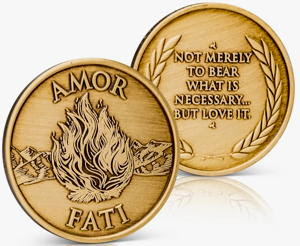
"'Amor fati' was Nietzsche’s famous expression. It is a Latin phrase with connections to the Stoic writings of Epictetus and Marcus Aurelius. Literally translated, it means “love of fate.” It is a white shoe yearning for mud. It is a turkey looking forward to Thanksgiving. Or an investor stoically preparing for a bear market.

We use the term to describe the grace and courage you need to meet a complex, unknowable, and uncontrollable future. You don’t know whether the Earth is warming or cooling… whether it is good or bad… or whether you can do anything about it. You don’t know who’s doing “equal work.” You don’t know what equality is… how to measure it… or what to do about it. You don’t know who the bad guy is. It may even be you. It recognizes that we are all God’s fools, living in a world of ignorance, headed towards we don’t know where. Using our brains, we can make progress in our physical, material world. Technical thinking yields pyramids and Eiffel Towers.

Ignorance Everywhere: But there is another part of life, which has a mind of its own. It does not bend readily to our desires or yield to our intelligence. It is the part of life whose purposes are unknown. The first and most important Commandment, according to Jesus, was not to fight it, but to love it.

But ignorance can be a charm. You just have to take it seriously. And appreciate it. Recognizing your own ignorance will inform your newfound modesty. You will be aware of it. And fiercely proud. Nobody will be humbler than you are! And since you are so chummy with ignorance, you will see it everywhere – in every headline, every public announcement, every speech on the floor of the Senate… and every crackpot comment from every dummy voter in the empire.

In private affairs, you reduce uncertainty by getting as close to the subject as possible. That is, you avoid secondhand “news” and try to find out for yourself. The more you know about a company, for example, the more confident you can be about investing in it. That’s why the insiders always have the inside track, an advantage that is increased by the Securities and Exchange Commission’s phony “level playing field” propaganda. In public affairs – policy discussions, economics, politics – as you get closer, you become less cocksure. That is, the more you know, the more you know you don’t know.

In an interesting university study, people were asked to pick out Ukraine on a map… and whether they approved of military intervention in that country. Curiously, the further off they were on the geography (the average guess was 1,800 miles off), the more they favored forceful intervention. In public affairs, ignorance and confidence vary inversely.

Moral Certainty: When we first moved to Baltimore in the 1980s, we noticed this phenomenon in another context. Baltimore was a disaster. Crime, drugs, poverty, venereal disease, broken homes, unwed mothers, corruption – name a social problem; Baltimore had it. And while its leaders had been noticeably unable to solve any of these problems right in their own back yard, the city’s politically correct politicians were loud and clear on one issue: apartheid had to end… in South Africa. Had they ever visited South Africa? Could they find it on a map? Probably not. But they were sure they knew how to make it a better place.

“Moral certainty is always a sign of cultural inferiority,” wrote Baltimore’s own H.L. Mencken. “The more uncivilized the man, the surer he is that he knows precisely what is right and what is wrong. All human progress, even in morals, has been the work of men who have doubted the current moral values, not of men who have whooped them up and tried to enforce them. The truly civilized man is always skeptical and tolerant, in this field as in all others. His culture is based on ‘I am not too sure.’”

“I am not too sure,” would eliminate many of the world’s myth-driven, self-inflicted ills – pointless wars, dumb arguments, pogroms, persecutions, and lynchings. And reckless spending of other people’s money.

Imagine a wise Hitler entertaining the idea of building Auschwitz as a “final solution” to the “Jewish problem.” “Hmmm… I’m not too sure that would solve it… In fact, I’m not too sure there is a problem!”

Imagine Simon de Montfort readying to attack the town of Albi to exterminate the “heretics.” When told that half the people in the town were good Catholics, de Montfort replied: “Kill them all. God will recognize His own.” Suppose he had thought twice… “Hmmm… Maybe this is not such a good idea… Maybe killing people is not what Christianity is all about… Maybe the heretics aren’t so bad… Maybe I’ll take the afternoon off.”

Unwarranted Confidence: The barroom blowhard… so sure he is right about everything… is generally the dumbest guy in the place. And the most dangerous. He’s the one who will stir up a mob… and get himself elected president. The whole system of modern public policy is built on false knowledge and unwarranted confidence. The elite claims to know what is best for you. That is how every politician can claim his proposals would “benefit the American people.” But the only program that would benefit the American people would be to let them decide for themselves what would benefit them. Give them back their money. Stop bossing them around. End the wars. Stop the empire. But who would suggest such a thing?

A book that appeared in 2018, "Psychology of a Superpower: Security and Dominance in U.S. Foreign Policy", by political scientist Christopher Fettweis, argued that power really does corrupt, and that when a nation or an empire gets too much power, its elite develops new opinions.

Rather than seeing itself as one of many nations that must get along with each other, its elites begin to see that they have a special role to play. They become the one, “indispensable” nation, as former Secretary of State Madeleine Albright put it. They are the world’s only hope in combatting evil, which they do, as then Secretary of State Mike Pompeo elaborated, with “the righteous knowledge that our cause is just, special, and built upon America’s core principles.”

Thus endowed with a special mission and special powers, and subject to the special rules of the only nation with a trillion-dollar-per-year military/empire budget, the elite develop, in Fettweis’s judgment, a fatal combination of unrestrained hubris, unrealistic paranoia, and unrepentant ignorance. They see danger everywhere, without undertaking any serious study (they assume knowledge comes automatically with raw power). And they think they have not only the right, but the means, to do something about it, even if the danger is largely fantasy.

Damned to Hell: But people always come to think what they need to think when they need to think it. “All earthly empires die,” wrote St. Augustine in 413, a few years before the Vandals destroyed his city and finally brought down the Roman Empire in the West.

The elite contribute, by taking up the myths that help it die. Certainty and ignorance vary proportionally, both on the individual and on a national level. The surer a nation is of its myths… its exceptionalism… its manifest destiny… its policies… and its position at the right hand of God… the more it is damned to Hell."

"When That Day Comes..."

"If you had one last breath - what would you say? If you had one hour to use your limbs before you would lose the use of them forever - would you sit there on the coach? If you knew that you wouldn't see tomorrow who would you make amends with? If you knew you had only an hour left on this earth - what would be so pressing that you just had to do it, say it, or see it? Well there is something that I can guarantee - that one day you will have one day, one hour and one breath left. Just make sure that before that day that you have said, done and experienced everything that you dream of doing now. Do it now - that is what today is for. So pick up the phone and call an old friend that you have fallen out of touch with. Get out and run a mile and use your body and sweat. Seek out someone in your life to say you're sorry to. Seek someone In your life that you need to thank. Seek someone in your life that you need to express your feelings of love to. Then when that day comes you will be ok with it all."
- John A. Passaro

"If you were going to die soon and had only one phone call you could make,
who would you call and what would you say?  And why are you waiting?"
~ Stephen Levine

"If, after I depart this vale, you ever remember me and have thought to
 please my ghost, forgive some sinner and wink your eye at some homely girl."
- H. L. Mencken

"What Really Drives the World"

"What Really Drives the World"
by Brian Maher

"O, beware, my lord, of jealousy;
It is the green-eyed monster which doth mock
The meat it feeds on; that cuckold lives in bliss
Who, certain of his fate, loves not his wronger;
But, O, what damned minutes tells he o’er..."
Who dotes, yet doubts, suspects, yet strongly loves!"
- Iago speaks to Othello, William Shakespeare, "Othello

"The world in not driven by greed. It’s driven by envy.” Here is the sage conclusion of Mr. Charles Munger, aged 98 years. Mr. Munger is of course the partner of Warren Buffett and legendary vice chairman of Berkshire Hathaway. What human vice ranks fourth among the seven lethal sins? That is correct - envy. Today we evaluate the acid emotion of envy. We further document how envy can wreck a man’s wealth… as easily it can wreck his soul.

“Hate the Man Who Is Better off Than You Are”: “The whole gospel of Karl Marx can be summed up in a single sentence,” argued economics journalist Henry Hazlitt long ago: “Hate the man who is better off than you are.” Continued Hazlitt: "Never under any circumstances admit that his success may be due to his own efforts, to the productive contribution he has made to the whole community. Always attribute his success to the exploitation, the cheating, the more or less open robbery of others. Never under any circumstances admit that your own failure may be owing to your own weakness, or that the failure of anyone else may be due to his own defects - his laziness, incompetence, improvidence or stupidity."

The History Pages Are Filled With Hatred: “Hate the man who is better off than you are…” History is a detailed diary of this very hatred.

Jealousy: The average man is not jealous of the champion golfer who once shot 60… but the fellow duffer in his weekend foursome who once broke 80. He is not jealous of the Hollywood movie actor who hauls in the unparalleled and unattainable beauty. He is jealous instead of his acquaintance who hauls in the pretty-enough gal he himself set his cap for - the seven out of 10 gal. Is the average man jealous of a Jeff Bezos or Elon Musk with their billions and billions? He is not. Yet he is jealous of the insurance salesman down the street who takes in $10,000 more than himself.

The Sage of Baltimore - H.L. Mencken - once defined a wealthy man as “a fellow who earns $100 more than his wife’s sister’s husband.” Be assured, the wife’s sister… and her husband… feel that $100 keenly.

Envy Is Never Contented: Envy sees only what it lacks. Not what it has. Today’s average fellow lives royally compared with actual royalty of yesteryear. Next to them he wallows in a sort of oriental luxury. Yet the envious man of today does not rank himself against the royalty of yesterday. He ranks himself against the royalty of today, though it wears no crown on its head. Envy gives him a mighty itch he is forever scratching. It is never soothed.

The Never-ending Chase: That is why a man’s eye is forever glued to the next rung of the ladder… the prettier plum just out of reach… the grass on the other side of the fence that is greener. A poor man may tell himself he’d settle for the middle class. But once he finds himself lodged therein, discontentment soon bubbles within him. He lights out for the upper classes. If by grace he attains it, he at once takes notice of the floor above him. And he begins another merry chase up the ladder. There is always another.

Such is man. He focuses not on what he has… but on what he lacks. He is forever chasing rainbows.

It’s Not Always Negative: Here we do not criticize. We merely observe. And your editor, by his own admission, offers no exception. Be assured he has his sights on a thing - or three - beyond his outstretched grasp. Besides, it is this ceaseless striving that accounts for all material progress. A contented civilization does not erect skyscrapers, amass empires or rocket into space. Yet beware of envy’s tempting snares. They surround you on all sides - particularly in the forms of television and social media.The French Revolution. Russia’s Bolshevik Revolution. China’s Cultural Revolution. Perhaps even America’s unfolding cultural revolution of its own.

We cite but some examples. They all set out to fix wrongs. They mostly ended up wrecking rights. The right to life itself was often among them.

Jealousy Isn’t Envy: Yet let us distinguish jealousy from envy. The two are siblings - yet they are not twins. It is said a man is jealous of his betters. Yet it is only partly true. The average man harbors no jealousy for the great man. He is not jealous of the Alexanders… the Caesars… the Napoleons of this world. These are men stamped from a finer metal. And the average man inwardly acknowledges it is not his metal. The sparrow understands its place is not among the soaring eagles. No. The subject of the average man’s jealousy is his peer - the average man.

Envy Poisons Your Investment Decisions" Here you see various “stars” and “influencers” soaring on wings of leisure… rocketing from one good time to the next… enjoying the high life. They appear to have life by the snout. And it may arouse your envy.

Yet this very envy may poison your investments. Mr. Marcelo Perez of Alhambra Investments: "In a day and age where… keeping up with the Joneses (or the Kardashians, or the Windsors) is no longer a silent, Sisyphian struggle but a top-rated TV series or Netflix special, it is only natural for this poison to seep into the investing world…"

YouTube stars dole out “investment strategies” left and right, extolling the benefits of the newest and coolest moneymaking venture, as per views, of course. Message boards are full of posts containing stock and option trades that yielded percent returns in the hundreds and thousands, over the course of no more [than a] few days. Virtually riskless, they say…:And even if we are skeptical, we become befuddled with amazement, consumed by “Why not me?” We are driven by envy as much as we are by greed. We see that our neighbor is excelling, or so we think, so we change our own course, or regret that we didn’t take the plunge."

The Siren Call of Envy: You must instead resist envy’s siren cries. As Odysseus of old, you must chain yourself to the mainmast so that you cannot yield to the false temptations… and crash your vessel against the punishing rocks. As Mr Perez notes: Premier celebrities such as Matt Damon, Kim Kardashian and Tom Brady all promoted cryptocurrencies. Many followed because they yearned “to be covered in that heavenly glitter ourselves and open an account at FTX.”

Mr. Perez: "In investing (and in life), we need to stop constantly peering into the lives of others who appear to have what we want. We must try to avoid the siren song of high returns without taking risk into account. We must try to avoid the fool’s gold and the snake oil that cures all…" Avoiding envy, and its associated pitfalls, is one of the simple secrets to a successful investment portfolio, and life.

The Wisdom of the Ancients: Can you do it? It is not easy. The sirens are extremely enchanting. Yet maybe, perhaps on some distant tomorrow… men will learn to take ease in their own inn, however modest… and wherever they happen to find it. It seems they will find peace nowhere else. We all might recall the ancient Greek philosopher Heraclitus: “Our envy always lasts longer than the happiness of those we envy.”

"How It Really Is"


"It is common to assume that human progress affects everyone - that even the dullest man, in these bright days, knows more than any man of, say, the Eighteenth Century, and is far more civilized. This assumption is quite erroneous. The great masses of men, even in this inspired republic, are precisely where the mob was at the dawn of history. They are ignorant, they are dishonest, they are cowardly, they are ignoble. They know little if anything that is worth knowing, and there is not the slightest sign of a natural desire among them to increase their knowledge."
- H. L. Mencken, 1929

"Attack Rapidly, Ruthlessly, Viciously, Without Rest"

Washington, D.C. Housing
"Attack Rapidly, Ruthlessly, Viciously, Without Rest"
by Martin Armstrong

"Those in Washington have lived a privileged life. During the Mortgaged Backed Security Crisis, when real estate declined, it did not decline by much at all in Washington because the government is like a broken gun without a firing pin – it won’t work, and you can’t fire it. What is most interesting is that since Trump was elected, the median housing price in Washington, DC, has already fallen from about $700,000 to $600,000. This is independent evidence that DOGE is expected to clean the house.
What is taking place reminds me of General Patton, who my father was with from North Africa to Berlin. I grew up with my father, often referring to General Patton, and he explained the strategy. It appears that someone who has advised Trump perhaps had similar knowledge of Patton. What I grew up being told was that achievers have a decided purpose in life, and their goals are driven by determination. My father use to quote Patton to me. One of his favorites was: “Fear kills more people than death.”
I have long suspected that USAID was behind my case, funding the attempted regime change in Russia for the 2000 election. I believe the bankers were lured in with the dream of all the resources of Russia going through the NY trading desks. I believe they were perhaps even funding the scheme to blackmail Yeltsin, and they hate Putin because Yeltsin defeated their regime change, installing Berezovsky by turning to Putin and saying his last words: “Protect Russia.”

I was shown skids of $100 bills being shipped weekly to Russia to fund the takeover of the country. I was told to invest $10 billion in this operation using Hermitage Capital Management, which Edmond Safra partly owned. NY Magazine did a whole story on it, calling it the Money Plane. I was told they had the government and the IMF in their back pocket.

Edmon Safra of Republic National Bank put on a fancy dinner for the IMF. I was invited and it was all about trying to convince me that they had the IMF in their pocket and that would rescue the day. The pitch was Russia had all these nukes, so there was no way the IMF would allow Russia to collapse/default on its debt. This created a serious yet tricky situation for the Russian government. What was going on was that Russia had been running a huge budget deficit to pay for public services. They had borrowed $40 billion by issuing three-month ruble Treasury bills known as GKOs.

This is what the “club” was buying for they were paying 30% interest to attract buyers. Were they bribing the IMF to prevent a default? Or was this all a regime change being run covertly through this USAID slush fund? All the hedge funds and bankers were all on this trade, expecting free money. I refused to join and warned them that my computer projected this would collapse. They did not want to hear that. They were CONVINCED the fix was in which created that perfect GUARANTEED TRADE.

The Russian financial crisis hit Russia on the 17th of August 1998. Our World Economic Conference was held in London that June. Our forecast was then published by the London Financial Times on the front page of the second section.

They did not give up. After they got the Federal Reserve to bail them out, they then focused on setting up Yeltsin and got him to divert $7 billion in IMF loans. Even CNN reported the money was stolen from the IMF. CNN Theft of IMF Money – Sep. 1, 1999

Edmond Safra’s Republic National Bank ran to the Department of Justice and reported that a $7 billion money laundering scheme had just gone through the Bank of New York. They attempted to blackmail Yeltsin to step down and appoint their guy Boris Berezovsky; Yeltsin then turned to Putin. It was the US bankers, with the support of the Deep State, who first tried to interfere in Russian elections. This is why Putin was not friendly to Hilary Clinton and said Russiagate Special Prosecutor Mueller could come to question anyone in Russia he liked, provided Russia could question Americans, including Bill Browder, who was Safra’s partner in Hermitage Capital.

When I was solicited to join this regime change, adding $10 billion with the promise I would make $100 billion, I warned that my computer said they would fail and that Russia’s debt market would collapse. When the London Financial Times on June 27th, 1998, put on the front page of Section 2 our forecast for the collapse of Russia when it did in September, I was blamed for that, and on the one side, we have the CIA wanted that model that could forecast the collapse of empires, nations, and city-states, the saw it as a national security issue.
Of course, since all the big players were on the same trade when the market collapsed, there was NO BID, and they were forced to start selling everything else to raise cash to cover their losses in Russia. This became a significant liquidity crisis as investments worldwide crashed because they needed money to cover losses in Russia. This led to great confusion since local markets collapsed on no domestic news.

With USAID sending tens of millions to Chelsey Clinton, Wuhan Lab, and countless journalists to create fake news, I am waiting with bated breath to see how deep the USAID connections are tied to the NY bankers and this scheme to create regime change in Russia."

Adventures With Danno, "Massive Price Changes at Sam's Club"

Full screen recommended.
Adventures With Danno, 2/8/25
"Massive Price Changes at Sam's Club"
Comments here: