"The aches got louder… but so did my determination. “Pain Ain’t Gonna Stop Me” is a powerful, resilient Delta King’s Blues anthem about pushing forward through hard times, worn-out bones, and every challenge life throws your way. A gritty, determined acoustic guitar drives the groove like boots marching through mud without turning back. The harmonica cries bold and defiant, carrying the spirit of someone who refuses to surrender to the years. The rhythm rolls slow but relentless, built for folks who know that strength isn’t about feeling no pain - it’s about moving anyway. This is blues for fighters. For people who wake up sore, tired, and weathered… yet still get up and face another day. Pain may ride beside me… but it sure ain’t driving."
"History is all too frequently punctuated with tales of tyrants, tormented by their own psychopathic personalities, free of the burden of a troubled consciousness of the suffering they cause. The names are familiar: Mao, Stalin, Hitler, Pol Pot, Genghis Khan, on and on the sordid list goes. But among these infamous characters, one stands out for the sheer magnitude and barbarity of his cruelty. Vlad Tepes - Vlad the Impaler - is a name that causes one to shudder at the level of suffering inflicted not just on opposing troops, but even on women and children. His method of execution was one designed to prolong the most extreme torment for days, at times.
This was the process of impaling the victim on a stake through the rectum or vagina, and letting the weight of the body slowly force the stake up through the torso. It is a torture that inspired extreme fear of being used for any reason Vlad might decide was appropriate. This could include treason, disloyalty or doubted allegiances, in addition to actual combat. But it was applied also to women and even infants, as a way to terrorize through psychological aversion any who might waver in their unconditional support of Vlad, or who dared confront him in war.
This gruesome context is used to set the stage for the real question at hand: how was Vlad able to employ human beings in the non-stop infliction of such mind-bending evil on others of our kind? How was the psychological disassociation of the perpetrators able to mask such monstrous suffering that they beheld literally face to face as they skewered the hapless victims of this methodical savagery?
These were not isolated instances of insanity. They were the routine use of practices that required an industrial-sized level of brutality, sustained over time. As an example, one such massacre involved over 20,000 victims on stakes, collected into a forest of horror that apparently was sufficiently persuasive to repel invading forces. In other words, it worked for Vlad. The impaled were just “collateral damage.”
The answer to the question of how this is possible is not easy to come by. Human psychology is complex. We often do what we do under the influence of herd mentality and a desire to ingratiate ourselves to others we identify with. The Othering of outsiders has also been a clearly understood dynamic of tribal cohesion in most societies. Threats to our tribe are often used as the catalyst for severe repression of the alien elements that seemingly threaten us.
The so-called Strong Man is a figure of human behavior that seems to hold a fascination for a large segment of our species, who look to the Alpha Male types for both inner and outer security. Obviously, the reality of disobedience with someone of Vlad’s temperament likely meant you would be looking at the scene from a vantage point atop your own stake in short order.
Even with all these elements, it still becomes hard to fathom how human beings can lay hands on another under these circumstances, knowing the awful fate that awaits the victim, a fate our involvement makes possible. And to do this not once, not twice, but so often a forest of the tormented grows before our eyes. This requires a level of dehumanization of the victim that seems impossible to comprehend.
Modern warfare has allowed the State to employ stand-off weapons that don’t need to bloody the hands of the perpetrators. Thousands may die, seen only through a sighting screen. A switch is thrown, a bomb is dropped or a missile fired…and the carnage is neatly kept away from those whose sensibilities might object to a more direct experience of the suffering they are causing.
Bird-sized drones with explosive warheads hunt down and dismember the enemy one by one. Civilian infrastructure that supports life in a modern society is destroyed, denying clean water, sanitation or electricity to non-combatants. We are every bit as thorough in our cruelty as our 15th century example, it’s just that we have found ways to torment without having to tax our self-image of decency too strenuously.
We can almost imagine today’s headlines of ordnance shortages in hostilities against civilians being echoed by Vlad’s supply line staff: “Stakes, I need stakes stat, Grigore! You promised me 1,000, I’m looking at, what, 100, I guess. These folks aren’t going to impale themselves!” The macabre and malevolent, clothed in the banality of inventory control.
Over 80,000 have died in Gaza while the world looked on. They are not to be found on stakes set up where they were sacrificed. They are buried under rubble, to be paved over in the name of a statecraft that can justify wholesale death by the promise of luxury redevelopment.
Humanity can never progress beyond its present level of punctuated barbarity and soul-killing lust for money and power until there are enough of the “stakeholders” inflicting the suffering who are willing to turn on the tyrants and destroy the cancer they represent. As has often been said, we are many, they are few. Will we be able to finally escape the nightmare of our species held hostage by the oppression and inhumanity of a relative handful of the worst of our kind?" - https://www.theburningplatform.com/
"Everyone is struggling with the job market, rent, and grocery prices right now, and this video shows the real stories people are sharing online. You'll hear from job seekers facing endless rejections, renters priced out of their apartments, and shoppers stunned by checkout totals. If you've ever wondered why qualified candidates keep getting screened out, or why a sandwich now costs double, these clips put words to what so many people are feeling but not saying out loud.
If any of these moments hit close to home, drop a comment and tell us which one matched your experience this month. Share this video with someone who keeps saying they feel alone in the struggle, and subscribe so you don't miss the next compilation of voices talking about the things everyone is dealing with right now. This compilation covers the job market and resume rejections, rising rent and the housing crisis, grocery prices and the cost of living, working multiple jobs, living paycheck to paycheck, and the wider recession conversation people are having every day."
“Blown by fast winds from a hot, massive star, this cosmic bubble is huge. Cataloged as Sharpless 2-308 it lies some 5,000 light-years away toward the constellation of the Big Dog (Canis Major) and covers slightly more of the sky than a Full Moon. That corresponds to a diameter of 60 light-years at its estimated distance. The massive star that created the bubble, a Wolf-Rayet star, is the bright one near the center of the nebula. Wolf-Rayet stars have over 20 times the mass of the Sun and are thought to be in a brief, pre-supernova phase of massive star evolution.
Fast winds from this Wolf-Rayet star create the bubble-shaped nebula as they sweep up slower moving material from an earlier phase of evolution. The windblown nebula has an age of about 70,000 years. Relatively faint emission captured by narrowband filters in the deep image is dominated by the glow of ionized oxygen atoms mapped to a blue hue. Presenting a mostly harmless outline, SH2-308 is also known as The Dolphin-head Nebula.”
"Some people spend their whole lives trying to sound smart. The wisest people I've ever met did something different. They listened. They asked questions. They stayed curious. They never assumed they already knew everything worth knowing. "The Best People Ask Questions" is a thoughtful Delta blues reflection about humility, curiosity, wisdom, lifelong learning, and the quiet difference between knowledge and understanding. The resonator guitar moves with the patience of an old conversation that never needed to be rushed. The harmonica answers each verse like a thoughtful friend who knows that listening is often more valuable than speaking. The groove stays warm, reflective, deeply human... like a front porch discussion where nobody's trying to win, only understand. This is the blues of curiosity. Not certainty. Curiosity. Wisdom. Lifelong learning. Humility. Listening. Personal growth.Old soul perspective. The smartest person in the room is usually still learning."
"70% of American farmers can no longer afford the fertilizer they need. This isn’t a headline from a war zone. This is happening inside the United States. Right now. During planting season. This comes from an official survey by the American Farm Bureau Federation. 5,700+ farmers. All 50 states. Conducted April 3–11, 2026. Not an estimate. Not a projection. A snapshot of American agriculture in real time. Since Hormuz closed, fertilizer prices collapsed any sense of normalcy:
- Urea: +49%
- UAN: +38%
- NH3: +32%
- Farm diesel: +46%
Farmers don’t set these prices. They just pay them. The South is bleeding the most. 80% of Southern farmers can’t afford full fertilizer applications. Only 19% locked in prices before the season. Compare that to 67% in the Midwest who pre-booked.
Timing saved some. Geography punished others. 94% of farmers say their financial situation has gotten worse or stayed the same vs. last year. Only 6% improved. The farm economy isn’t struggling. It’s breaking.
Hormuz didn’t just close a shipping lane. It closed the margin between profit and loss for millions of American farmers. Less fertilizer = lower yields = less food. The grocery bill shock hasn’t arrived yet. It’s still growing in the field.
Oil has OPEC. Oil has futures markets. Oil has headlines. Food has nothing. No cartel to manage supply. No sovereign fund to absorb the shock. No prime-time coverage. When oil gets expensive, markets panic. When food gets expensive, the poor starve. That’s the difference nobody is talking about."
“In 1906, Alfred Henry Lewis stated, “There are only nine meals between mankind and anarchy.” Since then, his observation has been echoed by people as disparate as Robert Heinlein and Leon Trotsky. The key here is that, unlike all other commodities, food is the one essential that cannot be postponed. If there were a shortage of, say, shoes, we could make do for months or even years. A shortage of gasoline would be worse, but we could survive it, through mass transport, or even walking, if necessary.
But food is different. If there were an interruption in the supply of food, fear would set in immediately. And, if the resumption of the food supply were uncertain, the fear would become pronounced. After only nine missed meals, it’s not unlikely that we’d panic and be prepared to commit a crime to acquire food. If we were to see our neighbor with a loaf of bread, and we owned a gun, we might well say, “I’m sorry, you’re a good neighbor and we’ve been friends for years, but my children haven’t eaten today – I have to have that bread – even if I have to shoot you.”
So, let’s have a closer look at the actual food distribution industry, compare it to the present direction of the economy and see whether there might be reason for concern.
The food industry typically operates on very small margins – often below 2%. Traditionally wholesalers and retailers have relied on a two-week turnaround of supply and anywhere up to a 30-day payment plan. But an increasing tightening of the economic system for the last eight years has resulted in a turnaround time of just three days for both supply and payment for many in the industry. This is a system that’s already under sever pressure, and has no further wiggle room should it take significant further hits.
If there were a month where significant inflation took place (say, 3%), all profits would be lost for the month, for both suppliers and retailers, but goods could still be replaced and sold for a higher price next month. But, if there were three or more consecutive months of inflation, the industry would be unable to bridge the gap, even if better conditions were expected to develop in future months. A failure to pay in full for several months would mean smaller orders by those who could not pay. That would mean fewer goods on the shelves. The longer the inflationary trend continued, the more quickly prices would rise to hopefully offset the inflation. And ever-fewer items on the shelves.
From Germany in 1922, to Argentina in 2000, to Venezuela in 2016, this has been the pattern, whenever inflation has become systemic, rather than sporadic. Each month, some stores close, beginning with those that are the most poorly-capitalized. In good economic times, this would mean more business for those stores that were still solvent, but, in an inflationary situation, they would be in no position to take on more unprofitable business. The result is that the volume of food on offer at retailers would decrease at a pace with the severity of the inflation.
However, the demand for food would not decrease by a single loaf of bread. Store closings would be felt most immediately in inner cities, when one closing would send customers to the next neighborhood, seeking food. The real danger would come when that store had also closed and both neighborhoods descended on a third store in yet another neighborhood. That’s when one loaf of bread for every three potential purchasers would become worth killing over. Virtually no one would long tolerate seeing his children go without food because others had “invaded” his local supermarket.
In addition to retailers, the entire industry would be impacted and, as retailers disappeared, so would suppliers, and so on, up the food chain. This would not occur in an orderly fashion, or in one specific area. The problem would be a national one. Closures would be all over the map, seemingly at random, affecting all areas. Food riots would take place, first in the inner cities, then spread to other communities. Buyers, fearful of shortages, would clean out the shelves.
Importantly, it’s the very unpredictability of food delivery that increases fear, creating panic and violence. And, again, none of the above is speculation; it’s an historical pattern – a reaction based upon human nature whenever systemic inflation occurs.
Then… unfortunately… the cavalry arrives. At that point it would be very likely that the central government would step in and issue controls to the food industry that served political needs, rather than business needs, greatly exacerbating the problem. Suppliers would be ordered to deliver to those neighborhoods where the riots were the worst, even if those retailers were unable to pay. This would increase the number of closings of suppliers. Along the way, truckers would begin to refuse to enter troubled neighborhoods and the military might well be brought in to force deliveries to take place.
So what would it take for the above to occur? Well, historically, it has always begun with excessive debt. We know that the debt level is now the highest it has ever been in world history. In addition, the stock and bond markets are in bubbles of historic proportions. They are most certainly popping.
With a crash in the markets, deflation always follows, as people try to unload assets to cover for their losses. The Federal Reserve (and other central banks) has stated that it will unquestionably print as much money as it takes to counter deflation. Unfortunately, inflation has a far greater effect on the price of commodities than assets. Therefore, the prices of commodities will rise dramatically, further squeezing the purchasing power of the consumer, thereby decreasing the likelihood that he will buy assets, even if they’re bargain-priced. Therefore, asset-holders will drop their prices repeatedly, as they become more desperate. The Fed then prints more to counter the deeper deflation and we enter a period when deflation and inflation are increasing concurrently.
Historically, when this point has been reached, no government has ever done the right thing. They have, instead, done the very opposite – keep printing. Food still exists, but retailers shut down because they cannot pay for goods. Suppliers shut down because they’re not receiving payments from retailers. Producers cut production because sales are plummeting.
In every country that has passed through such a period, the government has eventually gotten out of the way, and the free market has prevailed, re-energizing the industry and creating a return to normal. The question is not whether civilization will come to an end. (It will not.) The question is the liveability of a society that is experiencing a food crisis, as even the best of people are likely to panic and become a potential threat to anyone who is known to store a case of soup in his cellar.
Fear of starvation is fundamentally different from other fears of shortages. Even good people panic. In such times, it’s advantageous to be living in a rural setting, as far from the centre of panic as possible. It’s also advantageous to store food in advance that will last for several months, if necessary. However, even these measures are no guarantee, as, today, modern highways and efficient cars make it easy for anyone to travel quickly to where the goods are. The ideal is to be prepared to sit out the crisis in a country that will be less likely to be impacted by dramatic inflation – where the likelihood of a food crisis is low and basic safety is more assured.”
That The Coming Global Food Crisis Has Now Arrived"
by Michael Snyder
"We have been warned for a long time that a nightmarish global food crisis was coming. We are facing an unprecedented fertilizer shortage, extremely high diesel prices and long-term droughts in many of the most important food producing regions of the world, and now a “Super El Niño” is in the forecast. So a lot of experts have been projecting that we would experience a very serious global food crisis beginning in the second half of this year, but the truth is that it is already here.
In fact, even the mainstream media is openly admitting that it is already here. The following comes from a Telegraph article entitled “The hunger crisis experts warned about is here – and it’s about to get worse”… Pregnant women in Kabul, sheep-herders outside of Modigushi, the urban-poor in Colombo. As the war in Iran passes 100 days, these are the people on the front line of a new hunger crisis.
Months ago, the UN cautioned that a prolonged closure of the Strait of Hormuz would push millions into hunger; now they say their worst fears are materializing. A report produced by the World Food Program (WFP), the UN’s food-assistance branch, found that 45 million additional people now face “critical” levels of food insecurity as a direct result of the war in the Gulf.
Officials with the World Food Program are having an “I told you so” moment. They warned that if the Strait of Hormuz did not get reopened this would happen, and now they are being proven correct… “We told the world the closure of the Strait was going to have a massive impact,” Dr Jean-Martin Bauer, the World Food Program’s director of food security analysis, told The Telegraph. “There have been impacts on energy markets, on trade, on shipping, and all these are combining to create this cost of living crisis affecting millions of people.”
In impoverished nations all over the planet, hunger is rapidly growing. For example, just consider what has been going on in Somalia…"The proportion of Somali households that can no longer afford what the UN calls the “basic food basket” – things like cooking oil and grains – has risen from 47 to 60 per cent in late 2025, according to the WFP’s analysis." It means ultimately an additional 2.5 million people in Somalia could be unable to afford a basic food basket by the end of the year.
Of course this is just the beginning. Globally, a lot less nitrogen fertilizer will be used this year as a result of the crisis in the Middle East, and one UN official is telling us that the effect this is having on food production is becoming “increasingly visible”…"The greatest risk of the Strait of Hormuz closure for the agri-food industry is not an immediate food shortage, but a fertilizer and production shock. This was the opinion of the UN FAO’s director-general, Qu Dongyu, speaking at the 181st Session of the FAO Council (June 8–12). As the crisis hit its 100-day mark, he said the effects of the crisis on farmers globally are “increasingly visible.”
Dongyu gave recommendations for countries to address the impacts of the Strait of Hormuz crisis, particularly “the urgent need for efficient fertilizer use” as global agri-food systems face “unprecedented challenges.” Farmers across Asia, Africa, and Latin America are grappling with higher production costs and “difficult choices regarding fertilizer use and crop decisions,” he said." It really doesn’t matter if the U.S. and Iran can reach some sort of an agreement now or not. The damage that has been done to the spring planting season in the northern hemisphere is irreversible at this stage.
And now a “Super El Niño” is coming. In fact, the beginning of El Niño conditions has been confirmed in the equatorial waters of the Pacific Ocean… A long-anticipated and dramatic global climate shift has arrived, federal forecasters said June 11 as they confirmed the start of El Niño conditions. The announcement also adds to mounting evidence suggesting this El Niño will be unusually strong, potentially supercharging droughts, heavy rainfall events and heat waves. Now we shall wait to see how strong this El Niño will become. Many are forecasting that it will be the strongest El Niño of all time, and if that turns out to be the case global food shortages will almost certainly get a whole lot worse.
Here in the United States, “a drier, warmer summer” is expected for the major food producing areas in our heartland… There is potential for a drier, warmer summer across the Northwest, northern Plains, and the Upper Midwest, prolonging ongoing drought in some areas and increasing wildfire risk, according to AccuWeather. Overall, El Niño increases the chances of above-average temperatures across the northern and western United States.
We are already in the midst of an epic multi-year drought. How much drier can things possibly get? Unfortunately, conditions are expected to be exceedingly dry in other “breadbaskets” around the world too. So brace yourself for much higher prices for wheat, corn, rice and barley in the months ahead.
This will have a dramatic impact in poor countries all over the planet, but it will also significantly affect us here in the United States too. According to a recent report from the Federal Reserve Bank of New York, we have already been witnessing a “remarkable increase in food insecurity” among low income U.S. households…"A new economic report identified a “remarkable” rise in food insecurity, potentially explaining gloomy consumer outlooks despite strong economic fundamentals.
The Federal Reserve Bank of New York released a report on Wednesday identifying uncertain access to adequate food and consumer pessimism on the rise in certain vulnerable groups across the country. The report, which relies on newly collected data from the Survey of Consumer Expectations (SCE), found a “remarkable increase in food insecurity, particularly among lower-educated and lower-income households and households with young children.” It also identified “a contemporaneous increase in pessimism among the same groups, along with a sharp decline in job-finding expectations.”
If food prices continue to soar, what is that going to mean for millions of U.S. households that already struggle to put food on the table? I wish that I could get more people to understand that this is really happening. In this generation, we have never seen as much hunger among low income U.S. households as we are witnessing now, and the truth is that conditions are going to get a whole lot worse. There is no magic button that can be pushed that is going to fix this. The food crisis that we were all warned about has arrived, and the vast majority of the population is completely unprepared for it."
You know what I really love? I love the inflation.”
- Donald Trump
Youghal, Ireland - "MSN reports: "US oil reserves sink to 22-year low as Hormuz crisis deepens. Crude oil inventories in the United States decreased by 8.0 million barrels during the week ending May 29, according to new data from the U.S. Energy Information Administration (EIA) released on Wednesday. The decrease brings commercial stockpiles to 433.7 million barrels, according to government data, which is now 3% below the five-year average for this time of year. The EIA’s data release follows API’s figures that were released a day earlier, which reported that crude oil inventories saw a draw of 6.75 million barrels in the period."
Mr. Trump does not commute to work in a pick-up. Were he a normal working stiff, with an honest income, inflation might not be so agreeable. Nexstar: "Americans are paying, on average, 27 cents more for a gallon of gas since Sunday, data from AAA shows. That increase was partially fueled by a 10-cent jump that happened overnight Monday into Tuesday, the largest single-day rise since Russia invaded Ukraine in 2022.
Taking a longer view, in January of this year, a gallon of gas cost about $2.60. Today, it’s $4.30. That’s $1.70 more. The average commuter logs 37 miles per day, 13,500 per year. At an average of 25 miles per gallon, this means he is paying almost $1,000 more per year. Not a big number, if you’re a Trump. But if you’re an average worker, you earn about $50,000 and, after taxes and health insurance, take home about $40,000.
At $4.30 a gallon, your driving costs you $2,300....not to mention the costs of the vehicle itself. And if you stop for a coffee and a donut, it will be another $1,700 or so, per year...leaving you with only $36,000 to live on.
But Mr. Trump assures us that the war will be over soon. And then gas prices will drop ‘like a rock.’ CBS: “And now we’re in the final throes of what will be a very very good deal that will not allow any way shape or form nuclear weapons,” Mr. Trump told reporters after attending the third game of the NBA Finals at New York’s Madison Square Garden. “And the strait will open up right away. It will open up immediately upon signing, which could be in two or three days.”
By our count, since March 1st, that was the 23rd time he has said the war would soon be over. We have our doubts. The International Energy Agency: "With Hormuz tanker traffic still restricted, cumulative supply losses from Gulf producers already exceed 1 billion barrels with more than 14 mb/d of oil now shut in, an unprecedented supply shock."
Semafor: "The US oil industry has dwindling options to offset losses from the shuttered Strait of Hormuz. …Since the Iran war began, US oil exports have reached a record high and have helped stave off extreme global price spikes. But the precipitous drawdown since March essentially erases the stockpile built up since the 2010s shale boom."
Higher prices, such as they are, cause ‘demand destruction,’ where people simply decide to drive less. That helps to hold down prices too. Informed Comment: "The IEA says that in Q2, ending June 30, world demand for petroleum will be down by 2.45 million barrels a day....People are just using less petroleum because it is more expensive than it was before the US and Israel attacked Iran on February 28. In the US, gasoline is up by 35% to 50%. In Europe, diesel, which runs trucks, was the equivalent of $6.78 a gallon in February, and is now $8.02 per gallon (€1.82 per liter). If you are running a fleet of trucks over thousands of miles, that is a huge loss, and you might consolidate and cut out less remunerative routes."
You can cut the fat, but pretty soon you reach the muscle. Informed Comment describes what happens next: "Airlines have cancelled tens of thousands of flights and ticket prices have risen, so some passengers are cancelling or postponing trips. Trucks deliver goods to retail stores, so prices of commodities have gone up, and some customers have put off buying things they don’t desperately need right now. If the retailer doesn’t sell a product, it doesn’t order more, so the trucks don’t roll as often. And if the goods aren’t selling, the factories scale back production, so they use less petroleum, too."
We don’t want to start a panic, but there’s bound to be some kind of hazard on the road ahead. And this could be it: an oil slick. Even if the Strait of Hormuz were opened tomorrow, it would still take months for oil inventories to recover. The US economy depends on cheap gas…and cheap credit. Both could become much more costly. Stay tuned..."
"I find myself, time and again, beginning work that I know I will never see completed. My time here is finite. That fact sits in the background of everything, the ticking clock. Still, I keep launching projects where the meaningful results, if they arrive at all, will show up long after I am gone. Sometimes the gap stretches into decades or even centuries. The work starts now because the window for starting is now, even when the finish line sits on the other side of my own existence.
An example of that is the oldest written joke that we know, which is a flatulence joke. It’s not even a good joke. Heck, it’s so bad it’s not even Amy Schumer-tier. But we know it. And it was a seed planted, thousands of years ago. A proverb captures the feeling cleanly. It is often traced to ancient Greek sources: a society grows great when old men plant trees in whose shade they shall never sit. The personal version lands just as directly. I am planting metaphorical trees under whose shade I will never metaphorically sit. Or fart. Or whatever.
Having children supplies one clear case where we build that future. Earlier generations treated reproduction as something that largely happened without deliberate long-range planning: a Saturday night and a bottle of wine and, boom, Julius Caesar was born nine months later and was off invading Gaul nine months after that. Biology and circumstance and the Roman Legions carried most of the load. Today the choice sits in the open.
I began a project whose success or failure will play out across lives that extend well past mine. The uncertainties related to having children arrive immediately, and stay. What sort of people will they become? What attitudes will they carry into whatever conditions they meet? How much of what I do now will actually matter when they make their own choices? Will the daily work of guidance and example turn out to have been enough? What sort of impact will they have on the lives of others?
These questions do not come with easy answers. I did it anyway, fully knowing that large parts of the outcome lie outside any direct observation I will ever have. I’m tossing a message in a bottle into the sea, and one day it will drift beyond my sight.
My writing here forms another example. Each idea or observation I write down moves outward like a ripple from a stone dropped in still water. Some ripples weaken quickly and vanish as distance grows from the initial perturbation. Other of my ripples cross paths with ripples started elsewhere and produce new patterns through interference in the brains of people I’ll never meet.
A smaller number may strengthen when surrounding conditions line up: when an idea meets receptive minds or aligns with events already in motion. I have no reliable way to track the final shape any of this takes. Has any portion of it improved the world in any way? I cannot measure that from inside.
What I can control is the attempt to keep what I write aligned with observable reality as closely as possible. The results are not always Beautiful. They are not always Good. They simply aim to stay as True as I can make them. When I’m lucky, they’re two of the three. When I’m very lucky, they’re all three.
Stepping back gives me yet another perspective. A single human life occupies almost no space against the age of the Universe. The cosmos we can observe remains young even by its own standards. Some red dwarfs carry enough fuel supplies to keep them burning for trillions of years, which is slightly longer than The Simpsons has been on TV. Distant descendants, if any exist at that scale, might live under skies lit by those dim red suns and occasionally consider their own origins.
Far more likely, the timescales involved would have erased any specific memory of earlier generations. The thread of continuity will be stretched to the utmost at that great depth of time and only the most basic, the greatest of what is Beautiful, Good and True will remain.
Yet, I keep starting these projects. I keep choosing to begin work whose completion sits beyond my time on Earth. I try to retell stories that are older than any living man, stories of our history, of self-reliance, of bravery, of what is best in being human. The way I tell those stories is imperfect and incomplete, but it’s just another tree planted without expectation of sitting under the finished shade.
Perhaps, at some vastly later point, whatever remains of humanity will retain at least a trace of humor about the whole arrangement and maybe a ripple from this time will impact them. That possibility, however small, supplies its own quiet justification for continuing to drop stones into the water. Besides, farting is intrinsically funny, and if my fart joke survives a trillion years, well, that really would be a blast from the past."
"What does affordable housing in America look like today? For a growing number of people, it looks like the back seat of a sedan, a minivan in a parking lot, or a van parked overnight outside a grocery store. Across the United States, more Americans are turning to vehicle living as rising rent, higher insurance costs, inflation, and wage pressure make traditional housing increasingly difficult to afford. In this video, we break down why the cost of living crisis is pushing working Americans toward living in cars, vans, and SUVs. This is not just about homelessness in the traditional sense. More and more, it involves employed workers, retirees, gig workers, and even people with multiple jobs who are still struggling to maintain stable housing.
We explore the economic forces behind this shift, including housing affordability, rising monthly expenses, and the shrinking financial buffer of middle- and working-class households. We also examine what daily life inside a vehicle actually looks like - from finding safe places to park and sleep, to managing food, hygiene, safety, and the constant mental stress of survival. While some see vehicle living as freedom or financial flexibility, others view it as a warning sign of deeper structural problems in the American housing market. Do you think living in a vehicle is a smart adaptation to a changing economy, or a sign that the housing system is under growing strain? Share your thoughts in the comments."
“Planetary nebula Abell 78 stands out in this colorful telescopic skyscape. In fact the colors of the spiky Milky Way stars depend on their surface temperatures, both cooler (yellowish) and hotter (bluish) than the Sun. But Abell 78 shines by the characteristic emission of ionized atoms in the tenuous shroud of material shrugged off from an intensely hot central star. The atoms are ionized, their electrons stripped away, by the central star's energetic but otherwise invisible ultraviolet light.
The visible blue-green glow of loops and filaments in the nebula's central region corresponds to emission from doubly ionized oxygen atoms, surrounded by strong red emission from electrons recombining with hydrogen atoms. Some 5,000 light-years distant toward the constellation Cygnus, Abell 78 is about three light-years across. A planetary nebula like Abell 78 represents a very brief final phase in stellar evolution that our own Sun will experience... in about 5 billion years.”
"Most people spend their lives asking one question: "What if I fail?" But there's a better question. "What if I give everything I have?" "Give It Your Best Anyway" is an inspiring Delta blues reflection about effort, character, resilience, responsibility, and the quiet truth that success isn't always measured by outcomes. The resonator guitar rolls steadily through the song like a long road traveled with purpose rather than certainty. The harmonica answers with warmth and determination, carrying the spirit of people who keep showing up regardless of the odds. The groove stays hopeful, grounded, deeply human... like advice passed down from one generation to the next. This is the blues of character. Not luck. Not talent. Character. Perseverance. Resilience. Responsibility. Discipline. Personal growth. Old soul wisdom. Success is never fully in your control. Effort always is."
"The line separating good and evil passes not through states, nor between classes, nor between political parties either - but right through every human heart - and through all human hearts." - Aleksandr Solzhenitsyn, "The Gulag Archipelago", 1918–1956
“In keeping silent about evil, in burying it so deep within us that no sign of it appears on the surface, we are implanting it, and it will rise up a thousand fold in the future. When we neither punish nor reproach evildoers, we are not simply protecting their trivial old age, we are thereby ripping the foundations of justice from beneath new generations.”
- Aleksandr Solzhenitsyn, "The Gulag Archipelago," 1973
"Come, I will show you the punishment of the great prostitute, who sits by many waters. With her the kings of the earth committed adultery, and the inhabitants of the earth were intoxicated with the wine of her adulteries. … The woman was dressed in purple and scarlet, and was glittering with gold, precious stones and pearls. She held a golden cup in her hand, filled with abominable things and the filth of her adulteries. The name written on her forehead was a mystery: Babylon the Great, the mother of prostitutes, and of the abominations of the earth." - Revelation 17:1-5
"I had been emotionally involved a few times with women with enough of a record of promiscuity to make me vaguely uneasy. It is difficult to put much value on something the lady has distributed all too generously. I have the feeling there is some mysterious quota, which varies with each woman. And whether she gives herself or sells herself, once she reaches her own number, once X pairs of hungry hands have been clamped rightly upon her rounded undersides, she suffers a sea change wherein her juices alter from honey to acid, her eyes change to glass, her heart becomes a stone, and her mouth a windy cave from whence, with each moisturous gasping, comes a tiny stink of death."
- MacDonald, John D., “Darker Than Amber”
Excerpt: "We live in an age of wizards and whores where souls are sold in the pursuit of material pleasures. Time-honored principles have been traded for profit and power as lawlessness intensifies. The word “mystery” is defined as “something not understood or beyond understanding” or, in a religious sense: “truth that one can know only by revelation and cannot fully understand”. This would imply more than simply not knowing. A mystery can be that which exceeds human understanding.
There is a saying I’ve heard over and over in my life that has… for the most part… been stated by older men with whom I’ve been related and/or acquainted: “The older I get, the less I know”. I can’t recall ever hearing a woman make that statement; perhaps because they know it all already (wink, wink). But, seriously, I speculate that assertion is made by men more often than women, because, when younger, we males tended to consider ourselves as invincible. However, over time, the experience of life engenders humility.
In my youth, I never would have predicted a doomsday scenario where vaccines would be used to simultaneously kill and maim the sheep while rendering the shepherds powerless or, worse, turning them into wolves. The wolves are devouring the weakest of the herd, and they now gather for a final feast. They won’t be bargained with, because they have forfeited their very souls. There is nothing left within them to petition or persuade. Their eyes have turned to glass, their hearts have become stone, and they breathe death. They lurk in the shadows of “good intentions”, “following orders”, and plausible deniability and they are magically controlled by wizards that are safely ensconced high above the pack, out of reach; and behind armed security.
My 81-year-old mother-in-law suffered a stroke after Thanksgiving and my life had been hectic since. Like so many people I know, the wizard’s fearful spell caused her to trust Fauci, the experts, and Trump before she received two Moderna shots. She failed to heed the warnings of my wife and me and… within weeks of her second shot... my wife took her mom to the emergency room on two separate occasions for nosebleeds that wouldn’t stop. I would guess the shots caused her stroke but she had a stroke prior, in 2019. The first one diminished her vocabulary along with moderate memory loss but both afflictions appeared to accelerate after being vaccinated against Covid. Or, maybe it was merely the result of old age. How can one know for sure? I suspect the ever-generated spike protein aggravates and augments the negative consequences of pre-existing conditions, but I can’t prove anything. She remains in skilled care.
My mother-in-law’s mother lived well into her nineties and refused to leave her farm in her dotage. My mother-in-law inherited the same farmwife stubbornness… I mean… independent spirit yet she may not be able to live on her farm, even with abundant family and medical assistance. I always thought my mother-in-law would be an asset during the apocalypse. She has her allegorical “black belt” in all of the old ways: Canning, sewing, gardening, cooking, baking, etc. Although my wife acquired these as well, she is minus the extra decades of experience as a daily practitioner.
Growing old and failing physically can serve as a metaphor for a dying society: Just as aging organs revolt against the body via malfunction and decay, so does civilization descend into decadence and degeneration until the center no longer holds. Moreover, when systems break down, individual autonomy is lost as those in authority prioritize safety over liberty.
Just as my mother-in-law has lost autonomy as her physical body fails, so, too, will once-free people lose their liberty as civilization collapses into Central Bank Digital Currency, digital identity, the WHO Global Pandemic Treaty, and the United Nations’ Agenda 2030 mandates – all for the well-being of humanity, of course. At this point, progress unfolds as a result of math; same as civilizations past. Although I understand the inevitabilities, it’s hard to know exactly what may happen next and when. The older I get, the less I know."
“To hell with them fellas. Buzzards gotta eat, same as worms.”
– Josey Wales
"What Would Josey Wales Do?"
by Jim Quinn
“Now remember, when things look bad and it looks like you’re not gonna make it, then you gotta get mean. I mean plumb, mad-dog mean. ‘Cause if you lose your head and you give up then you neither live nor win. That’s just the way it is.” – Josey Wales
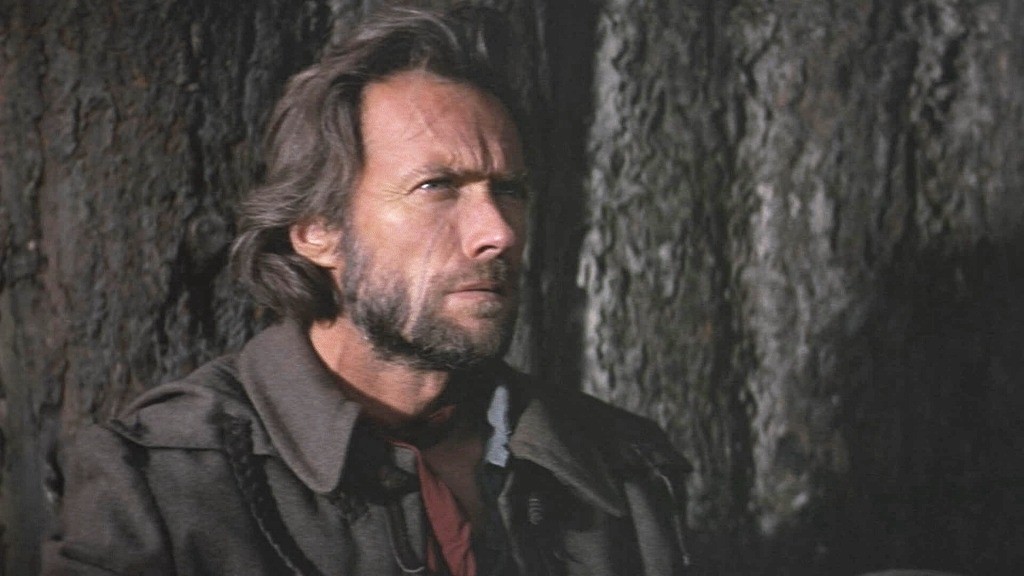
"As our political, economic, civic, and social structures continue to degrade, dissolve, and disintegrate before our very eyes, it is easy to become apathetic and surrender to hopelessness. There are relentless powerful forces actively trying to destroy the fabric of our society and force the masses into economic servitude while caged in an electronic gulag, controlled by an oligarchy of evil totalitarian minded billionaires and their lackeys in key governmental, political, banking, military, media, and corporate positions of power. We are in the same situation as Josey Wales in Clint Eastwood’s epic 1976 film – "The Outlaw Josey Wales."
The film tells the story of Josey Wales, a Missouri farmer, just trying to live his life in peace without interference from the government, uninterested in the violent Civil War between two monolithic forces fighting for their created causes. His wife and son are brutally murdered by Union Redleg militants, led by the despicable Captain Terrill, while he was away from his homestead. After burying his family, his mind naturally turns towards seeking revenge against the perpetrators, and he begins to practice shooting. He joins a group of pro-Confederate bushwackers who become the scourge of Union forces until the war’s conclusion.
At the conclusion of the war, Josey’s friend and superior, Captain Fletcher, persuades the guerrillas to surrender, having been promised by Senator Lane that they will be granted amnesty if they hand over their weapons. Josey refuses to surrender because he knows you can never trust the government or the politicians who make promises they never keep. They have been pissing down our backs since the last Civil War, while telling us it’s just raining, so everyone can relate to this scene in the movie.
Senator: "The war’s over. Our side won the war. Now we must busy ourselves winning the peace. And Fletcher, there’s an old saying: To the victors belong the spoils."
Fletcher: "There’s another old saying, Senator: Don’t piss down my back and tell me it’s raining."
Wales having refused to surrender, along with a young guerrilla named Jamie, are the only survivors when Terrill’s Redlegs massacre the surrendering men. Wales intervenes and wipes out many of the Redlegs with a Gatling gun before fleeing with Jamie, who dies from a bullet wound sustained in the massacre after helping Josey kill two pursuing bounty hunters.
Fletcher learns the lesson that you can never trust the government, or the lackeys carrying out their mandates. They will lie and murder to accomplish their goals. Anyone who does not bow to their authority will be treated as an outlaw, with no acquiescence to the Constitution, decency, or simple human dignity. Once decent men are pushed too far, they will push back in a more violent manner than the authorities will expect. Violence begets violence, and will create more Josey Wales type characters who will not surrender or ever bow down to governmental authority.
Fletcher: "Damn you, Senator. You promised me those men would be decently treated."
Senator Lane: They were decently treated. They were decently fed and then they were decently shot. Those men are common outlaws, nothing more."
The remainder of the movie entails Union soldiers and bounty hunters trying to track and kill Josey, while he accumulates a rag-tag group of companions, including Indians, foul mouthed grannies, and a slew of other settlers trying to live their lives unhindered by the government. Clint Eastwood’s character maintains a stoic meanness throughout the film towards his government enabled enemies, but has empathy and kindheartedness towards the downtrodden people who represent the vast majority of citizens in this country.
I found it interesting the film was based on the novel "Gone to Texas," written with a virulent anti-government slant by a former George Wallace speechwriter. When the script writer/director tried to tone down the anti-government aspects, Eastwood told him no and eventually fired him, taking over as director for the remainder of the film. Eastwood’s refusal to bow to Hollywood pressure and soften the dialogue and story line is a tribute to his resolute dislike and mistrust of governmental authorities. He has essentially gone his own way and made his films his way, never letting the Hollywood elite dictate his path.
Released in 1976 when anti-war sentiment was at its peak, following the government created Vietnam war debacle, which slaughtered over 50,000 American boys, Eastwood later referred to it as an anti-war film. And we all know it is governments and those Deep State operatives who control the levers of power, and start wars to increase their wealth, power and control. War never ends because it is extremely profitable for those waging it, while the youth doing the fighting are just cannon fodder for corporate interests. Eastwood was dead on, as we have waged wars in Iraq, Afghanistan, Syria, Libya, and now Ukraine and Palestine, benefiting the military industrial complex at the expense of you and me.
“As for Josey Wales, I saw the parallels to the modern day at that time. Everybody gets tired of it, but it never ends. A war is a horrible thing.” – Clint Eastwood
Eastwood equates the plight of the Confederacy with the plight of the American Indian, as both groups were bullied, bloodied and crushed under the weight of the Federal government, which began its unfettered growth during the Civil War and has now reached its zenith of incompetence, arrogance, lawlessness, and hatred towards the citizens it is supposed to serve. Most people just want to be left alone, like Josey Wales, to live their lives in peace and harmony with their fellow community members. But the federal government makes that impossible, with their rules, regulations, taxes, fees, and enforcement thugs harassing the public on a daily basis.
In Eastwood’s movie they murder his family, murder his comrades, and are hell-bent on murdering him. The song remains the same. Our government murdered people minding their own business at Ruby Ridge. They murdered women and children at Waco. They murdered a rancher at Bundy Ranch. They send young men to war for bankers and corporations. They have been unlawfully imprisoning protestors in dungeons for a fake insurrection fomented and initiated by government agents. They rigged the presidential election and have convicted the leading political candidate of fake crimes he did not commit in order to maintain control over the political system.
The list could go on for pages, as the totalitarian methods and abuse of power against the citizens of this country accelerate at a breakneck pace. Fear of seeing their wealth and power slip away has created an almost psychotic spasm of unhindered chaotic flailing about, in an ultimately fruitless effort to retain control. They are fearful of the masses wakening from their technology induced slumber and realizing the enemy is not the groups they have been programmed to hate, but the very government pulling the strings of this clownshow.
The government needs a sedated, dumbed down populace who fear what they are told to fear and obey the instructions of their overlords. But the covid scamdemic and continuing death of loved ones from the toxic jabs, has opened the eyes of millions. The debt death spiral induced by Biden’s handlers, supercharged by the coordinated and financed invasion of our southern border by third world mutts, and resulting in raging inflation for average American families, has angered and infuriated the masses. We are approaching our moment of truth.
The government is in the midst of creating millions of vengeful Josey Wales characters. As political chaos increases in the coming months, the threat of global conflagration escalates and the economic plight of the masses deteriorates, revenge against politicians, government drones, and the globalist financial elite for creating this madness will expand rapidly. We know what Josey Wales would do. The question is what will we do.
Eastwood made his final Western masterpiece, sixteen years after Josey Wales, with the release of the Academy Award winning "Unforgiven." He paid tribute to Josey Wales in the climactic scene in the saloon when confronting Little Bill. In "The Outlaw Josey" Wales Grandma Sarah’s initial reaction to meeting Josey Wales was: “This Mr. Wales is a cold-blooded killer. He’s from Missouri, where they’re all known to be killers of innocent men, women and children.”
He closes the loop with Will Munny, out of Missouri, with the same false accusation that he killed women and children, as he also seeks retribution on government authoritarians who murdered an innocent man. Both Josey Wales and Will Munny tried to live out their lives as peaceful farmers, but were forced to revert to violence because the government would not allow them to live in peace.
Little Bill Daggett : “You’d be William Munny out of Missouri. Killer of women and children.”
Will Munny : “That’s right. I’ve killed women and children. I’ve killed just about everything that walks or crawled at one time or another. And I’m here to kill you, Little Bill, for what you did to Ned.”
Eastwood’s first and last epic Westerns both examined the harsh reality of violence and retribution as the logical consequence for crimes committed against innocent people just trying to lives their lives. His meditations on the concepts of age, repute, courage, and the cloudy definition of heroism, make for far deeper and complex examinations of the old West than other western films. Eastwood distinguishes between the brutal reality of a world controlled and run by tyrannical psychopaths acting as government agents, and people living peacefully, with no government intervention.
Eastwood’s ideal vision of America as a pluralist society of individualists of all races and backgrounds who put aside the past and their difference to live in harmony, contrasts with the reality of a society controlled and manipulated by those referred to as the “invisible government” by Edward Bernays. The ruling elite do not want people to live peaceably in a self reliant manner. The climactic scene in Outlaw Josey Wales between Josey Wales and Ten Bears captures the nature of our world and the difference between governments and the people.
Josie Wales : “I came here to die with you. Or to live with you. Dying ain’t so hard for men like you and me. It’s living that’s hard when all you’ve ever cared about has been butchered or raped. Governments don’t live together – people live together. With governments, you don’t always get a fair word or a fair fight. Well, I’ve come here to give you either one or get either one from you. I came here like this so you’ll know my word of death is true, and my word of life is then true. The bear lives here, the wolf, the antelope, the Comanche. And so will we. Now we’ll only hunt what we need to live on, same as the Comanche does. And every spring, when the grass turns green, and the Comanche moves north, you can rest here in peace, butcher some of our cattle, and jerk beef for the journey. The sign of the Comanche, that will be on our lodge. That’s my word of life.”
Ten Bears : “It’s sad that governments are chiefed by the double tongues. There is iron in your words of death for all Comanche to see, and so there is iron in your words of life. No signed paper can hold the iron. It must come from men. The words of Ten Bears carries the same iron of life and death. It is good that warriors such as we meet in the struggle of life… or death. It shall be life.”
I had previously used Josey Wales as the basis for Part Four of my five part series based on Clint Eastwood movies in 2012, documenting how the Federal Reserve, under the control of the Wall Street banking cabal, had destroyed the middle class and set in motion the ultimate destruction of the American economic system. Here we are twelve years later and that destruction is approaching its climax. As the powers that be are flailing about in a final destructive apocalyptic spasm of hate, greed, and war, the average American needs to channel their inner Josey Wales.
We can either give up and allow those running this shitshow for their own benefit to enslave us in perpetual debt, culling us with their toxic “vaccines”, making us eat meatless meat and bugs, forcing us into their digital currencies, 15 minute cities (aka electronic gulags), electric cars, and social credit system, or we can get plumb, mad-dog mean and man up. In order to reverse our totalitarian spiral, being executed by powerful mega-wealthy men and their highly compensated double tongued lackey politicians, bankers, media moguls, and corporate chiefs, those 300 million guns will need to be put to use.
If we want to live together peacefully, unhindered by an overbearing, corrupt government behemoth, controlled by evil men with evil intentions, then we will have to fight. That’s just the way it is. Ask yourself, “What would Josey Wales do?”, and act accordingly."