StatCounter

Tuesday, March 24, 2026

Adventures With Danno, "Stocking Up At Walmart Before Prices Go Up!"

Full screen recommended.
Adventures With Danno, 3/24/26
"Stocking Up At Walmart Before Prices Go Up!"
Comments here:

Monday, March 23, 2026

"Alert! Iran Threatens Armageddon! Russia Is Burning, Major Escalation Incoming!"

Full screen recommended.
Canadian Prepper, 3/23/26
"Alert! Iran Threatens Armageddon! 
Russia Is Burning, Major Escalation Incoming!"
Comments here:

"Watch This Before You Shop At Costco Again"

Full screen recommended.
Epic Economist, 3/23/26
"Watch This Before You Shop At Costco Again"
"Costco was supposed to be the one place you could still count on. So why are people leaving with $589 grocery bills and having panic attacks in the grocery store? Millions of Americans are waking up to something bigger than just price hikes. Shrinkflation, dynamic pricing, gas at $5 a gallon even at Costco, and pricing tactics that don't add up at the register. This isn't bad luck. This is strategy. In this video, we break down what real shoppers across the country are experiencing right now and why the gap between corporate profits and everyday Americans has never felt wider. Drop a comment below, are prices still climbing where you live? Have you noticed any of these tactics yourself?"
Comments here:

"Did Trump Win The War Or is This Fake News? The Markets Are Celebrating For Now"

Jeremiah Babe, 3/23/26
"Did Trump Win The War Or is This Fake News?
 The Markets Are Celebrating For Now"
Comments here:

Musical Interlude: Liquid Mind: "Slow World"

Liquid Mind: "Slow World"

"A Look to the Heavens"

“Planetary nebula Abell 78 stands out in this colorful telescopic skyscape. In fact the colors of the spiky Milky Way stars depend on their surface temperatures, both cooler (yellowish) and hotter (bluish) than the Sun. But Abell 78 shines by the characteristic emission of ionized atoms in the tenuous shroud of material shrugged off from an intensely hot central star. The atoms are ionized, their electrons stripped away, by the central star's energetic but otherwise invisible ultraviolet light.
The visible blue-green glow of loops and filaments in the nebula's central region corresponds to emission from doubly ionized oxygen atoms, surrounded by strong red emission from electrons recombining with hydrogen atoms. Some 5,000 light-years distant toward the constellation Cygnus, Abell 78 is about three light-years across. A planetary nebula like Abell 78 represents a very brief final phase in stellar evolution that our own Sun will experience... in about 5 billion years.”

"When We Have Time..."

“How small a portion of our life it is that we really enjoy. In youth we are looking forward to things that are to come; in old age, we are looking backwards to things that are gone past; in manhood, although we appear indeed to be more occupied in things that are present, yet even that is too often absorbed in vague determinations to be vastly happy on some future day, when we have time.”
- Charles Caleb Colton, “Lacon”
“The problem is, you believe you have time.”
- Buddha

"A Hammer Blow..."

"Do as little harm to others as you can; make any sacrifice for your true friends; be responsible for yourself and ask nothing of others; and grab all the fun you can. Don't give much thought to yesterday, don't worry about tomorrow, live in the moment, and trust that your existence has meaning even when the world seems to be all blind chance and chaos. When life lands a hammer blow in your face, do your best to respond to the hammer as if it had been a cream pie."
- Dean Koontz

"The Lighter Side Of Dating, Mating, And Civilizational Collapse'

"The Lighter Side Of Dating,
Mating, And Civilizational Collapse'
by John Wilder

"Even thirty years ago, finding a spouse was as easy as grabbing a beer at a kegger. You met. Maybe at school, maybe at church, maybe at work, maybe some friends introduced you. Hell, maybe at the kegger. It was a straightforward and reliable process, and it was also often sweaty and fun.

Even before my time, though, it was even easier. Take it back to the 1800s, and men brought home the bacon, women kept the hearth warm, and together they built a life, maybe a farm, maybe a picket fence. Often, people would meet and spend their whole lives in the same location. The process wasn’t perfect, but it worked for thousands of years.

Fast-forward to 2026, and the mating market is a dumpster fire. A constant source of conversation is the baby bust, describing how women aren’t reproducing enough children to keep society going. Part of the reason for that is that cultural shifts and technological disruptions have turned love from carnal creativity in the backseat of a Camaro™ to the swipe of a finger on the smooth glass of a screen protector. The result? A generation of lonely hearts, spinsters, and guys who’ve decided sweatpants and beer are a better deal than chasing women who don’t even see them as people. Culture and tech crashed the human mating economy, and why it’s tearing the family, the atom of society, to shreds.

For thousands of years, societies kept a lid on female promiscuity, not because of some patriarchal conspiracy (okay maybe it was, we’re still meeting Thursday night, right guys?), but because it worked.

People who tear down traditions often don’t realize exactly what they’re destroying until it’s gone, and then it’s too late because the fragile fabric that it was supporting has collapsed. It’s sort of like playing Jenga™ with retarded monkeys on crack, but I won’t speak any more about how I know that.

Tradition knew what science later confirmed: high rates of female promiscuity correlate with lower marriage rates and higher divorce rates. Skanky women are horrible for society. A 2020 study from the Institute for Family Studies found that women with more sexual partners before marriage are less likely to stay married. They graph waivers after the big increase in marrying a woman who has had more than one sex partner to a big drop at around four sex partners (for some reason). If you can’t get a virgin, four seems to be the lucky number. But if you’re the 167th guy to tap into that action?

The chances of you being “the one” are nearly zero, yet in 2026 she still wants a ring worth six months of blood, sweat and tears and a house and she brings...you being number 167. Back when shame was a thing, women faced social pressure to be selective, and men had a reason to step up for a low-mileage woman. Now? Shame is as outdated as a Marvel™ movie. Women are free to “explore” and “find themselves” and “live their best life” all while banging a never ending stream of potential Prince Charmings.

Then there’s money. Historically, men were the breadwinners, or at least the leaders in the grind in the family business or farm, with Ma raising the kids and churning the butter while Pa tamed the back 40. Women relied on men for financial stability, and men relied on women to keep the home and raise the children.

Enter the modern workforce: women now make up nearly half of U.S. workers and 90% of the human resources department everywhere. That leads to the dilemma of the Stunning and Brave woman: she wants a man who makes more than her, yet demands equal pay. A 2023 Pew Research study found 55% of women prefer a partner with higher income (and 45% of women are liars). That’s fine, but men’s wages have stagnated since the 1970s while women’s have risen. The math doesn’t add up.

Worse, the government has stepped in as Husband 2.0. Welfare programs, from food stamps to housing subsidies, act like a sugar daddy for single women, especially mothers. In 2022, over 40% of single-mother households received some form of public assistance. Why marry a man when Uncle Sugar’s got your back and they can still bang all the men they want and don’t have to listen to any man?

Women on welfare aren’t wives anymore; they’re concubines of the state, trading solemn vows for EBT and government cheese. The family, once the bedrock of civilization, is now a casualty of games and prizes fueled by promiscuity and feminism. But I repeat myself.

And that’s not even factoring in divorce-rape where unhaaaaapppy or bored women can hit the eject button and blow up the marriage with no real consequences except getting to keep the house, kids, cash and getting a free ticket to ride on the Chad carousel.

That’s bad enough. It’s actually worse than Madonna’s herpes. If culture cracked the mating market, technology crushed it like a python on a peanut. Enter Tinder®, Bumble®, and the swipe-right revolution. Women, all women, are hypergamous. They want the very best mate they can find. Society used to keep them in check through societal pressure. Oh, and soon enough they would have run out of random men to pleasure. Now the apps give them a digital buffet of Chads, Brads, and Thads. Is anyone named Thaddeus nowadays? I digress.

A 2021 study showed women on dating apps rate 80% of men as “below average” in attractiveness, while men rate women more realistically on a bell curve. The result? A 5 or 6 woman swipes right on a 10. Call him Prince Charming the Senator’s son, complete with abs and a hedge fund, who might bang her once but won’t stick around for breakfast or be seen in public with her, let alone hang a ring on her.

She walks away thinking, “He was the one, I could get him to marry me,” and now every guy who doesn’t match up to Prince Charming is... settling. Yes. Settling, even though Prince Charming doesn’t remember her and only picked her up because it was a Tuesday, and was just taking his father’s deathbed advice: “go ugly, early” and picked her up just for amusement. Spinsterhood beckons, with a side of cat and wine memes.

Men aren’t entirely innocent bystanders here, either. Faced with an endless parade of women chasing the top 10% of guys, many men have thrown in the towel. Why grind for a better job, hit the gym, or learn to dress like you didn’t just roll out of a laundry basket?

A 2024 survey found 30% of men aged 18-29 have given up on dating entirely, opting for porn, video games, or “monk mode.” They’re not wrong to notice the game is rigged against traditional one-for-one sorting. Now, Chad gets his choice, and, if they’re lucky, he might get the attention of a slagged-out woman who is still pining for Chad – a widow for a man that was only in her life for a night.

This isn’t just about lonely Friday nights. This is about the death of the family. Men want decent looks, monogamy, and a partner who’s kind - basic stuff. “She can’t read but she’s faithful and hasn’t had sex with Baltimore” has become a passing grade for many. Women want the whole package: money, status, looks, protection, and a guy who’s basically a football star with a corner office. Wait. Tom Brady didn’t work out for his wife. Neil Armstrong’s wife became unhaaaapppy. What chance does the average guy have?

Marriage rates are at historic lows, being down 60% since 1960. Divorce rates hover around 40%. Kids grow up in fractured homes or none at all, with single-parent households now at 30% nationwide and rising. The family, the core unit, the atom that glues society together, is being eroded by individualism on steroids. I could write a book about this topic, but you get the idea.

So how do we dig out of this mess? Start with culture. Bring back shame. The scarlet-letter kind. Encourage women to value loyalty over chasing Chad, and men to step up instead of checking out. That starts with incentives, because I don’t think anyone has any shame left.

Let’s rethink current incentives. Have a kid and no husband? Tough luck. No child support, no state support. Same thing with divorce. No fun and prizes for that, and if you’re at-fault, you lose the kids. Sure, tax breaks for married couples or policies that don’t make Uncle Sugar a better bet than a husband are nice, but we don’t need a nudge, we need a nuke.

Will the norm come back? It has to. Two more generations of this, and civilization will cease to exist. Perhaps G. Michael Hopf (LINK) got the old quote wrong and it should go more like this:

Bad times create strong men,
Strong men create good times,
Good times make women skanky,
Skanky women create bad times.

Don’t worry, nothing’s depending on this. I mean, nothing other than the fate of civilization."

"Carl Jung: The Desire Not to Exist & The Void After Awakening"

Full screen recommended.
Fractal Wisdom,
"Carl Jung: The Desire Not to Exist &
 The Void After Awakening"
"What happens after ego death? Why does spiritual awakening sometimes lead to a quiet desire not to exist - not as a wish to die, but as exhaustion with identity itself? There is a phase after spiritual awakening that almost no one talks about. The ego dissolves. Meaning collapses. Motivation fades. And instead of bliss, you feel neutral, detached, or strangely disconnected from life. You’re not suicidal. You’re not necessarily depressed. You may simply no longer identify with the version of yourself that once chased goals, approval, or survival. Through Carl Jung’s depth psychology, existential psychology, and grounded spiritual. But this is not about escaping life. It’s about losing identification with a false structure before a deeper self stabilizes.

Jung described individuation as a process of psychological reconstruction. After ego death, the old mask (persona) falls away. But the new architecture of the self takes time to emerge. That gap can feel like emptiness, neutrality, or even a desire not to exist as a defined identity. If these feelings feel overwhelming, isolating, or unsafe, please reach out to someone you trust or a qualified mental health professional. Psychological transformation should never be navigated alone.frameworks, we unpack what happens when the ego dissolves faster than a new identity can form."
Comments here:

The Poet: Mary Oliver, "One"


"One"

"The mosquito is so small
it takes almost nothing to ruin it.
Each leaf, the same.
And the black ant, hurrying.
So many lives, so many fortunes!
Every morning, I walk softly and with forward glances
down to the ponds and through the pinewoods.
Mushrooms, even, have but a brief hour
before the slug creeps to the feast,
before the pine needles hustle down
under the bundles of harsh, beneficent rain.
How many, how many, how many
make up a world!
And then I think of that old idea: the singular
and the eternal.
One cup, in which everything is swirled
back to the color of the sea and sky.
Imagine it!
A shining cup, surely!
In the moment in which there is no wind
over your shoulder,
you stare down into it,
and there you are,
your own darling face, your own eyes.
And then the wind, not thinking of you, just passes by,
touching the ant, the mosquito, the leaf,
and you know what else!
How blue is the sea, how blue is the sky,
how blue and tiny and redeemable everything is, even you,
even your eyes, even your imagination."

~ Mary Oliver

The Daily "Near You?"

Lynn, Massachusetts, USA. Thanks for stopping by!

"The Heart of Humanity"

"The Heart of Humanity"
by Madisyn Taylor, The DailyOM

"Sitting with our sadness takes the courage to believe that we can bear the pain and we will come out the other side. The last thing most of us want to hear or think about when we are dealing with profound feelings of sadness is that deep learning can be found in this place. In the midst of our pain, we often feel picked on by life, or overwhelmed by the enormity of some loss, or simply too exhausted to try and examine the situation. We may feel far too disappointed and angry to look for anything resembling a bright side to our suffering. Still, somewhere in our hearts, we know that we will eventually emerge from the depths into the light of greater awareness. Remembering this truth, no matter how elusive it seems, can help.

The other thing we often would rather not hear when we are dealing with intense sadness is that the only way out of it is through it. Sitting with our sadness takes the courage to believe that we can bear the pain and the faith that we will come out the other side. With courage, we can allow ourselves to cycle through the grieving process with full inner permission to experience it. This is a powerful teaching that sadness has to offer us. - the ability to surrender and the acceptance of change go hand in hand.

Another teaching of sadness is compassion for others who are in pain, because it is only in feeling our own pain that we can really understand and allow for someone else’s. Sadness is something we all go through, and we all learn from it and are deepened by its presence in our lives. While our own individual experiences of sadness carry with them unique lessons, the implications of what we learn are universal. The wisdom we gain from going through the process of feeling loss, heartbreak, or deep disappointment gives us access to the heart of humanity."

"Looking for a Reason to Believe: The Benefit of the Doubt Is Cracking"

"Looking for a Reason to Believe: 
The Benefit of the Doubt Is Cracking"
by Paul Rosenberg

"Those of us who pursue positive change are very often frustrated. We see the necessity of change all too clearly, and we can explain how it should come about, but it never seems to happen. The truth, however, is that change does come; it just comes more slowly than we’d like, and in ways that differ from those we imagined.

One real change I like to point out is the passing of blind trust in politicians. In the 1950s and ‘60s, most people spoke of politicians with respect and even with reverence. Now it’s almost standard for people to agree that they’re liars and thieves. That’s a very significant change, even if it did take several decades to unfold. So, a significant change has occurred in our time, and over a very broad base. Still, most people are hanging on, and often desperately, to old ways that should really be abandoned.

The Automatic Benefit of the Doubt: It’s a bit troubling to see how blindly, and for how long, people give the benefit of the doubt to hierarchy and its operators. They can know that a system is abusing them, and they can complain about it at length, but still they grasp at reasons to keep believing in it.

Here’s what I mean: During the bad spots of the Middle Ages, people would be abused by the clergy but say, “If only His Holiness knew!” During the reign of the USSR, people in the Gulag would often say, “If only Stalin knew!” In our time, people hold Political Party A or Political Party B as grave evils, while pretending that the combination of A + B is good and noble.

Still, such blind biases do eventually break. Stalin, after all, is gone, along with his USSR. The Protestant reformation broke the domination of the Church. And the delusions of our time will die as well.

“Still, I look to Find a Reason to Believe”: If there were such a competition, I’d nominate Rod Stewart’s song, "Reason To Believe," as the Anthem of the Age. Regardless of how badly they are abused, people have a very hard time letting go of their hierarchies; they’ve taken emotional refuge in them, after all. Even when sharp pain forces them to examine the hierarchy that constantly tells them, “Obey or we’ll hurt you,” the impulse to maintain belief erupts. Here’s how the song expresses it:

"If I listened long enough to you,
I’d find a way to believe that it’s all true.
Knowing that you lied,
straight-faced while I cried.
Still I look to find a reason to believe."

Humans have a real problem with that last line: looking for reasons to believe. It flies in the face of both logic and honesty, but people not only do it, but vigorously defend it. As for specific reasons to believe, they’re endless. Seldom are humans quicker and cleverer than when justifying their previous actions.

Why This Is a Good Sign: When people are desperately grasping for reasons to believe, it’s because the benefit of the doubt is cracking beneath them. Otherwise, why would they fight so wildly? The circumstances of our modern world are propelling people toward this break. Every time a ruling system tells gigantic lies, censors the public square, surveils their own people and frightens the masses for their own benefit, belief in their system cracks a little.

More and more people are conceding that it’s not just “one bad actor” here or there, but that Joe Stalin really is evil, that the clergy really is corrupt, and that hierarchies are abusive by nature. The whirlwind of distractions and slogans arrayed against moral clarity are losing their effectiveness. Little by little, humanity’s blind devotion to authority is cracking. Someday, it will break."
o
Rod Stewart, "Reason To Believe"

"Distractions, Pascal, And Postman"

"Distractions, Pascal, And Postman"
by John Wilder

“This is your life, and it’s ending one minute at a time.”
– Fight Club

"Distractions. Blaise Pascal wrote about them in his book "Pensées," which is French and means “reflections” and is pronounced “Hamwich” because the French never properly figured out that sounds in words should be connected in some fashion to the letters used.

Pascal was a mathematician, a physicist, and invented the laptop computer, which was initially a plank of wood. In reality, he did some of the foundational work that showed that atmospheric pressure varied with altitude, even has a unit named after him. Pascal was also a philosopher, and thought a whole bunch about Christianity. This was back before the “let’s get a cappuccino and listen to Pastor Dave talk about why God wants lesbian ministers” type of church, and instead when there were debates on how salvation occurred and if free will was a thing.

Pascal wrote: “Distraction is the only thing that consoles us for our miseries. Yet, it is, itself, the greatest of our miseries.” And, although he’s dead, Pascal was entirely correct. We see it all around us right now.

Distraction is seductive. I remember we were on a family vacation and stopped at a Denny’s® to get breakfast. There was a line, and about 30 people (mainly families) were waiting. As I looked, every eye was focused on a phone – 30 people sitting next to each other, yet distracted by whatever it was that they were looking at. They had escaped reality, and also escaped talking to each other, almost as if they were addicted to the distractions coming to them over their iPhones®.

In reality, many of them probably are technically addicted to those phones. Much of the internet, even back then, was built on the premise of stimulating dopamine to create engagement with the phone, and not with the world surrounding us. Were those people worried about their bills, their jobs, or their immortal soul? Nah. They were distracted by flappy bird games or Faceborg™ or InstaChat©. They were allowing the moments of their lives to drain away into that sea of distraction rather than confront reality.

They did have bills. Their jobs sucked. Their immortal soul was in peril. But that’s difficult to think about, so it’s much easier to look at pretty colors and cat videos for ten seconds before flipping to the next infotainment bite. The distraction was total.

Is it any wonder that coping skills have been drastically impacted in the generation raised on the distraction of phones? Kids can’t cope because they’re never forced to confront themselves until the stakes are high. This creates a group of victims. I hate victims. A lot. They’re whiney and they suck every bit of energy out of the room, like psychic vampires. Oh, wait, I just described "The View."  Huh.

Absolutely, there are people who are in situations that are far beyond their control. And, absolutely there are people who don’t deserve what fate has given them. However, when I look at people who have self-control, who have looked fate in the eye and said, “Yeah, so what? I’m still standing here, chump,” I feel admiration.

Neil Postman was a professor and writer, but then he died. Perhaps his best-known work is "Amusing Ourselves to Death," written in 1985. The Mrs. introduced me to it not long after we met, and I knew she was a keeper. In it, Postman talks about the impact of amusement. Amusement is close enough to distraction for our purposes and both Postman and Pascal are dead, so they can’t put up too much of a fight.

Again, Postman wrote about this in 1985, well before the every distraction, every place, all at once monster of the smartphone appeared. In it, Postman identified television as a drug. If so, it’s a gateway drug like aspirin, and the Internet is heroin.

Part of distraction is that it discourages the formation of complete thoughts. I think at least partially that’s part of the inspiration for this place, since I want to create and bring forth ideas that people might not think about, or might have forgotten in all frenzy of flashing lights, free porn, and distractions of Instabook© and Facegram™.

It’s a world where, “Excuse me, I’m talking” becomes a replacement for actual thought and people thinking deeply about issues like old Pascal becomes rarer and rarer. A side effect is that the information we get becomes information we can’t take action on. Want to complain to your congressman? How would you even contact them? How would you get their attention? Hell, getting the attention of an HOA is nearly impossible in some subdivisions. Instead, you’ll complain to your neighbor.

Worse, though, is the impact that’s happening to our youth. The lesson that bad crap is going to happen to them so they need to learn deal with it simply isn’t taught because they just distract themselves away from the Truth they don’t want to consider. It’s not their fault – their brain is optimized to live in villages, and we distract them with the hardest hitting drug in history: the smartphone.

Failure is an option. And failure is a teacher, but when the teacher is fired and replaced with social media? The lesson is muted or ignored. How did Pascal manage to deal with being a religious philosopher, a mathematician, and a physicist? I guess Pascal was good at avoiding distraction and dealing with pressure."

And so we have this...
"The Millennial Job Interview"

"How It Really Is"

"If only"... you don't stop because you can't stop.
If you do it's all over. It's all over anyway, you're just buying time.
Tell me I'm wrong...

"From Zimbabwe to Washington: The Farce of "Independent" Central Banks

"From Zimbabwe to Washington: 
The Farce of "Independent" Central Banks
by Nick Giambruno

"When Zimbabwe makes the news, it’s rarely for good reasons. There’s a good reason for that. The country has spent years in a state of perpetual crisis. Hyperinflation obliterated its currency and decimated the economy. Yet beneath the surface lies extraordinary wealth. Zimbabwe is rich in natural resources: gold, platinum, diamonds, and some of the most fertile farmland on Earth. That’s what led me to organize a research trip there about 10 years ago alongside legendary investor Doug Casey. We also sat down with Gideon Gono, the former head of the central bank, who made everyone "trillionaires."
From left to right: Nick Giambruno, Doug Casey, Gideon Gono

Gideon Gono was Zimbabwe’s central bank chief during the infamous hyperinflation of 2008–2009. His signature appears on the now-iconic 100-trillion-dollar Zimbabwe note—the highest denomination of any currency ever printed.
Today, that bill is completely worthless… except as a novelty or collector’s item. During our meeting, Gono recounted his impossible position as Zimbabwe’s central banker in the 2000s. The country was flat broke - and it needed to pay the army. In any country, failing to pay the military spells trouble. But in Africa, it almost guarantees a coup. So when the Zimbabwean government ordered Gono to print money to pay the army and its other bills, he obeyed. There was no alternative. He described it as "being in a car without gas," yet being ordered to drive from point A to point B. Everyone - Gono included - knew exactly where this was headed. You didn’t need to be a financial genius to understand that printing currency to fund soaring deficits would end in hyperinflation. And that’s exactly what happened.

The Gono episode lays bare the uncomfortable truth about central banks. Central banks were never truly "independent." It was always an illusion - a societal myth. They exist to siphon wealth from the public through inflation and funnel it to the politically connected. What Gono did is no different from what the Federal Reserve is doing right now. Just as the Zimbabwean central bank’s independence was always a sham, so too is the Federal Reserve’s. It’s a mirage - and it’s now fast disappearing.

Even establishment stalwarts like the Bank of England have explicitly recognized this. Here’s what they recently wrote: "Central bank operational independence underpins monetary and financial stability. A sudden or significant change in perceptions of Federal Reserve credibility could result in a sharp repricing of dollar assets, including US sovereign debt markets, with the potential for increased volatility, risk premia and global spillovers."

The Federal Reserve maintained its mirage of independence for over 110 years. But that’s changing as an increasingly imminent debt crisis forces the US government to fund itself more explicitly through the Fed’s printing presses. Trump is simply doing what any leader in his position would do. No one believes China’s central bank is independent of Xi. If any nation faced a similar situation, its central bank would fall in line with government demands for easy money.

What is happening in the US is not that different from what happened in Zimbabwe—or in any other country where government finances became desperate. They always turn to the central bank to print currency to help finance their spending. As the issuer of the world’s reserve currency and the most powerful government in the world, the US can extend the charade of solvency longer than any other entity on the planet. However, even the mightiest empires in human history couldn’t do so indefinitely - especially once they begin to struggle to service their debt.

One of the most potent and underappreciated forces responsible for the downfall of the most powerful empires throughout history has been debt. While military defeats, political upheavals, and external invasions often dominate historical accounts of the fall of great powers, excessive debt - the "Empire Killer" - has quietly but relentlessly eroded the foundations of empires across the centuries. From Rome to the Soviet Union, the over-extension of resources, poor financial management, and the inability to service massive debts have led to economic collapse, social unrest, and, ultimately, the demise of these once-mighty empires. The same pattern is playing out in the US right now.

In short, the US government cannot stop spending, which means deficits cannot stop growing, which means more debt must be issued, which means the government leans on the central bank to help ease the debt burden, which means the illusion of central bank independence evaporates. And once that happens, ever-increasing currency debasement becomes unstoppable. That’s where we are today. But it won’t end with just higher prices. Capital controls, people controls, price controls, tax hikes, wealth confiscations, and countless other destructive government interventions are all on the menu.

The Gideon Gono story isn’t just a Zimbabwean cautionary tale - it’s a clean, unvarnished look at what happens when a government hits the point of no return and the central bank’s "independence" gives way to political necessity. That same endgame is now advancing in the US, and when the "reset" phase arrives, the biggest losses will hit those who wait for official confirmation."

"Apocalypse Rising: We Have Reached A Moment In Human History That Could Change Everything"

by Michael Snyder

"After this week is over, there may be no turning back. President Trump is literally threatening to “obliterate” Iran’s power grid, and the Iranians cannot do a thing to prevent that from happening. But in response, the Iranians are threatening to destroy oil and gas infrastructure all over the Persian Gulf. The Iranians have already destroyed 17 percent of Qatar’s Ras Laffan natural gas complex, and if they destroy the remaining 83 percent of that facility it will immediately plunge us into the greatest natural gas crisis in human history by a very wide margin. There would be widespread natural gas shortages, fertilizer plants all over the world would be forced to shut down, and hunger would run rampant. Approximately 20 percent of the world’s entire supply of liquified natural gas comes from Ras Laffan, and it will take 3 to 5 years to rebuild the portions of the complex that have already been destroyed. If the rest of the complex gets destroyed by Iran, it will be a cataclysmic event. When I say that, I am not exaggerating one bit. We really have reached a moment in human history that could change everything.

It all depends on what Donald Trump does next. On Saturday, Trump gave the Iranians an ominous ultimatum. Either they fully open the Strait of Hormuz within 48 hours, or the U.S. military will destroy their power grid
For reasons that I have discussed in previous articles, the Iranians are not going to give Donald Trump what he wants. It just isn’t going to happen.

Instead of giving in to Trump’s demands, the Iranians are threatening to attack energy infrastructure throughout the Persian Gulf, and they are pledging to completely close the Strait of Hormuz…"In a response to Trump’s statements, the Khatam al-Anbiya Central Headquarters, which is the central headquarters of the Iranian armed forces, said that it will fully close the Strait of Hormuz if “America’s threats regarding Iran’s power plants are implemented.” Iran also warned that it would start targeting “all power plants, energy infrastructure, and information technology,” while any company in the region with American shareholders would also become a target. Finally, Iran threatened to attack the power plants of any country in the region hosting American military bases.

“Everything is ready for a great jihad with the aim of completely destroying all economic interests of America in the Middle East,” the statement said. So what happens if the Iranians wipe out Qatar’s Ras Laffan natural gas complex and other extremely critical energy production facilities in other Gulf countries? What would Trump’s next move be then? Would he send in U.S. ground troops? CBS News is already reporting that U.S. officials have “made detailed preparations for deploying U.S. ground forces into Iran”…"Pentagon officials have made detailed preparations for deploying U.S. ground forces into Iran, multiple sources briefed on the discussions told CBS News. Senior military commanders have submitted specific requests aimed at preparing for such an option as President Trump weighs moves in the U.S.-Israel-led conflict with Iran, the sources said."

The most likely target for U.S. ground troops would be Kharg Island, and the Iranians are promising that we will “suffer losses that are unprecedented since World War II” if Trump tries to do that…"An Iranian military source warned that new U.S. strikes or an invasion of Kharg Island, a key Iranian oil export hub, could prompt Tehran to escalate by threatening nearby waterways, including the Red Sea and the Bab al-Mandab Strait, telling the Islamic Revolutionary Guard Corps (IRGC)-affiliated Tasnim News Agency the United States would face an “unprecedented” response. On a potential U.S. invasion of the island, the official warned that American troops would struggle to defend it and would “suffer losses that are unprecedented since World War II.”

How far up the escalation ladder are we willing to go? It sounds like Israel is ready to raise the stakes as well. The Iranians have been hitting Israeli population centers with cluster munitions, and Israeli Defense Minister Israel Katz is warning that if this continues his nation will “hit Iran so hard it will be sent back decades”…"Israeli Defense Minister Israel Katz said Israel would send Iran “back decades” if it continues targeting cities, accusing Tehran of deliberately firing on civilian population centers. “If this continues, we’ll be sure to hit Iran so hard it will be sent back decades,” Katz said while visiting the site of a missile strike in Arad that injured scores.

If the U.S. and Israel push Iran to the wall, will the Iranians unleash any unconventional weapons that they have been holding in reserve? In such a scenario, how would the U.S. and Israel react? We are only a couple of steps away from an apocalyptic scenario. Already, the damage that this war has done has set the global economy back for years.

The price of oil is causing major problems all over the globe, and experts are warning that we could eventually see it reach $200 a barrel…"Vandana Hari, founder of oil market analysis firm Vanda Insights, warned: “Benchmark Middle Eastern crudes like Oman and Dubai have already crossed the $150 threshold, so $200 is already within sight, even if not for Brent and West Texas Intermediate.” Analysts at consultancy Wood Mackenzie have also said Brent could soon hit $150 and that $200 oil is not “outside the realms of possibility” in 2026."

If this war stretches on for an extended period of time, the pain that we will experience is going to be immense. I am already hearing of diesel shortages in some parts of the world, and United Airlines has already canceled approximately 5 percent of this year’s planned flights…"United Airlines (UAL) CEO Scott ‌Kirby said on ‌Friday the airline will cancel ​about 5% of this year’s planned flights in the short ‌term, as ⁠jet fuel prices surge due to ⁠the Middle East conflict. “If prices stayed ​at this ​level, ​it would mean ‌an extra $11 billion in annual expense just for jet fuel,” Kirby said in a ‌message to ​employees posted ​on ​its website.

Of course the natural gas crisis that we are facing could potentially be even worse. If this war lasts for a number of months, we could literally have to deal with “a full-blown economic emergency across Europe, the UK and large parts of Asia”…"Bank of America has warned European gas prices could surge from around €29 to as high as €500 this winter if the strait stays shut for an extended period, far exceeding levels seen after Russia’s invasion of Ukraine. Such a spike would trigger what analysts describe as a full-blown economic emergency across Europe, the UK and large parts of Asia, with energy costs spiralling and industries forced to cut back, The Telegraph reports."

Needless to say, natural gas is also a primary raw material that is used in the production of nitrogen fertilizer. Normally, close to a third of all fertilizer that is traded globally travels through the Strait of Hormuz…"About a third of all fertilizer shipped globally goes through the Strait of Hormuz, the narrow passage between the Persian Gulf and the Gulf of Oman. Now, shipping traffic has been reduced to a trickle because of the U.S.-Israeli war with Iran, and the prices of goods like oil, natural gas, and fertilizer have been rising. “Fertilizer prices are way up. They’re up around 30 percent more in some parts of the world, and that’s significant,” says Noah Gordon, fellow at the Carnegie Endowment for International Peace."

Gulf countries like Saudi Arabia, the United Arab Emirates, Kuwait and Iran are big global producers of fertilizer, and they export the raw ingredients other countries use to make their own fertilizers, like natural gas and minerals. But that is only part of the story. Because they are not able to get liquified natural gas from the Persian Gulf right now, fertilizer plants in other parts of the globe are being forced to close down…"The Carnegie Endowment noted fertilizer production in India, Bangladesh and Pakistan has shut down because those countries cannot get natural gas from Qatar, and Egypt, another producer, has had to turn to the more expensive LNG market because its supplies from Israel have been disrupted."

This is planting season for farmers all over the northern hemisphere. In many poorer countries, there simply won’t be enough fertilizer this year. In wealthier countries, fertilizer will be available, but it will cost far more than it usually does…"Tennessee farmer Todd Littleton expects to pay $100,000 more for fertilizer this season, a 40% spike from his bill last year thanks to the war in Iran - and he is scrambling to cover that extra cost.

“The problem is, is we’re so strained financially coming into this issue,” said Littleton, a third-generation farmer from Gibson County in the state’s northwest corner. “We have had a couple of record losses the last couple years, so everyone’s kind of grabbing at straws anyway, and then to have input prices increase yet again, it just really couldn’t happen at a worse time.”

Littleton, who grows corn, soybeans and wheat, is among thousands of farmers across the country who will pay far more this spring than they expected for fertilizer that is essential to their crops. Nitrogen-based fertilizer is especially vital for corn, usually the largest crop in the U.S. - and one that feeds the nation’s livestock and is converted into fuel that helps power most U.S. cars and trucks."

The crops that will be primarily affected by this fertilizer crisis will be those that are planted annually. This is such an important point. For example, nitrogen fertilizer is widely used by wheat farmers to maximize yield, improve grain quality, and promote healthy growth. A lack of fertilizer will mean that less wheat will be grown around the world in 2026 and prices will soar. Barley is another example of an annual crop that is heavily dependent on nitrogen fertilizer because it promotes leaf and stem development, significantly affecting both yield and crop quality. By the end of this year, barley prices are likely to be far higher than they are now.

On the other hand, crops that do not have to be planted annually will fare much better. Grape vines can live for 50 to 100 years, and they will just keep producing year after year. Olive trees commonly live for hundreds of years, and some can even survive for more than 1,000 years. Incredibly, there are examples of olive trees that have been around for more than a millennium that are still bearing fruit.

What I am saying is that annual crops like wheat and barley could be absolutely devastated by this current crisis, while crops that do not have to be planted annually such as grapes and olives will not experience much disruption. So much is going to depend on what happens this week. Decisions that are being made right now are going to deeply affect every single one of us, and so let us hope that our leaders make their decisions wisely."
o

"US-Israel-Iran War, 3/23/26"

Full screen recommended.
OPTM, 3/23/26
"Trump Panics As Iran Closes All Doors To 
Negotiation And Ceasefire; Trump Backs Down"
Comments here:
o
Full screen recommended.
Danny Haiphong, 3/23/26
"Iran’s Hypersonic Missiles Smash Israel, 
Trump Caves on Plant Strikes"
"Iran’s Operation True Promise 4 continues with ferocity as Israel pays a heavy price for its leadership role in the US’s war as Trump’s ultimatum threatens to send the Gulf States into a crisis of epic proportions. Danny Haiphong breaks down Day 24 of the war on Iran changing the world."
Comments here:
o
Dialogue Works, 3/23/26
Prof. Ted Postol:
 Israel’s Air Defense in Total Collapse"
Comments here:

Michael Bordenaro, "How the System Keeps People Stuck in Poverty"

Full screen recommended.
Michael Bordenaro, 3/23/26
"How the System Keeps People Stuck in Poverty"
Comments here:

"This Will Cripple the Economy - And It’s Happening Right Now!"

Full screen recommended.
Dan, I Allegedly, 3/23/26
"This Will Cripple the Economy - 
And It’s Happening Right Now!"
"Diesel fuel prices are surging at an alarming rate, and this could have a devastating impact on the entire economy. In this breaking news update, we break down how rising diesel costs are affecting small businesses, supply chains, food prices, and everyday consumers. While many people focus on gas prices, diesel is the backbone of transportation, logistics, and production - meaning every product you buy is directly impacted. As inflation pressures return and budgets get tighter, this could be the beginning of a much larger financial crisis. Main Street America is already feeling the effects, with small business owners struggling to absorb rising costs and being forced to raise prices or shut down. From grocery stores to restaurants to shipping and manufacturing, the ripple effect of higher fuel costs is spreading fast. If diesel prices continue to climb, consumers can expect higher food prices, increased living expenses, and renewed inflation across the board. This is a critical economic warning sign that could impact your finances, your budget, and the overall stability of the U.S. economy."
Comments here:

Sunday, March 22, 2026

"Gas Prices About to Skyrocket – Here's What's Coming"

Full screen recommended.
Snyder Reports, 3/22/26
"Gas Prices About to Skyrocket – 
Here's What's Coming"
Comments here:

"Israel is Over, 20,000 IDF Wiped Out As US Turns On Netanyahu"

Full screen recommended.
Alastair Crooke, 3/22/26
"Israel is Over, 20,000 IDF Wiped
 Out As US Turns On Netanyahu"
Comments here:

"Iran's Fattah-2: Twelve US Officers Killed in One Strike"

AlertSyncro, 3/22/26
"Iran's Fattah-2: 
Twelve US Officers Killed in One Strike"
"An Iranian Fattah-2 hypersonic missile struck a classified American command post in Kuwait. Twelve senior US military officers killed instantly. Two generals, four colonels, three lieutenant colonels, three majors. All dead in one strike. And the weapon that killed them cannot be stopped by any defense system America has deployed."
Comments here:

"The Harsh Reality Of Going Broke - People Will Work Until They Die"

Jeremiah Babe, 3/22/26
"The Harsh Reality Of Going Broke -
 People Will Work Until They Die"
Comments here:

"The Insane Cost of Living Is Crushing People"

Full screen recommended.
Epic Economist, 3/22/26
"The Insane Cost of Living Is Crushing People"

"The cost of living in America has reached a breaking point - and the numbers prove it. In this video, real Americans share what financial stress actually looks like in 2026. A household earning nearly $30,000 a month that still feels broke. An ER doctor making $2,600 every two weeks whose rent alone costs $2,200. People who are not buying luxuries. People who are just trying to survive.

Grocery prices are out of control. A family of four is spending $200 a week just to keep the fridge stocked. One woman walked out of CVS having spent $72 on four items - shampoo, conditioner, toilet paper, and a birthday card. Another spent nearly $70 at Walgreens on basic children's medication: Advil, Zyrtec, and vapor rub.

Here is what the data actually shows. A single American needs $4,686 a month just to cover basic necessities - rent, utilities, health insurance, transportation, and food. To earn that, you need to make $60,000 to $70,000 a year. The median income in the United States is $53,000. That gap is not shrinking. For millions living paycheck to paycheck, it is growing every single month.

Then there is gas. Prices have jumped nearly a dollar in just a few days, tied to the war threatening the Strait of Hormuz - the single passage through which roughly 20% of the world's oil supply moves. When that route is disrupted, oil prices rise. When oil prices rise, trucking costs rise, food distribution costs rise, and grocery prices follow. Americans are already panic buying fuel, which will push prices even higher. By summer, analysts are warning gas could hit $6 to $8 a gallon. This is the American financial crisis happening right now. Drop a comment and tell us how you are feeling it where you live."
Comments here:

Musical Interlude: Neil H, "Spellbound"

Neil H, "Spellbound"

"A Look to the Heavens"

"What created Devils Tower? The origin of this extraordinary rock monolith in Wyoming, USA is still debated, with a leading hypothesis holding that it is a hardened lava plume that never reached the surface to become a volcano. In this theory, the lighter rock that once surrounded the dense volcanic neck has now eroded away, leaving the dramatic tower.
Click image for larger size.
Known by Native Americans by names including Bear's Lodge and Great Gray Horn, the dense rock includes the longest hexagonal columns known, some over 180-meters tall. High above, the central band of the Milky Way galaxy arches across the sky. Many notable sky objects are visible, including dark strands of the Pipe Nebula and the reddish Lagoon Nebula to the tower's right. Green grass and trees line the foreground, while clouds appear near the horizon to the tower's left. Unlike many other international landmarks, mountaineers are permitted to climb Devils Tower."

"The Rules"


"We've All Heard..."

"The early bird catches the worm. A stitch in time saves nine. He who hesitates is lost. We can’t pretend we haven’t been told. We’ve all heard the proverbs, heard the philosophers, heard our grandparents warning us about wasted time, heard the damn poets urging us to seize the day. Still, sometimes, we have to see for ourselves. We have to make our own mistakes. We have to learn our own lessons. We have to sweep today’s possibility under tomorrow’s rug, until we can’t anymore, until we finally understand for ourselves what Benjamin Franklin meant: That knowing is better than wondering. That waking is better than sleeping. And that even the biggest failure, even the worst, most intractable mistake, beats the hell out of never trying.”
- “Meredith”, “Grey’s Anatomy”

Freely Download Or Read Online: Rainer Maria Rilke, "Letters to a Young Poet"

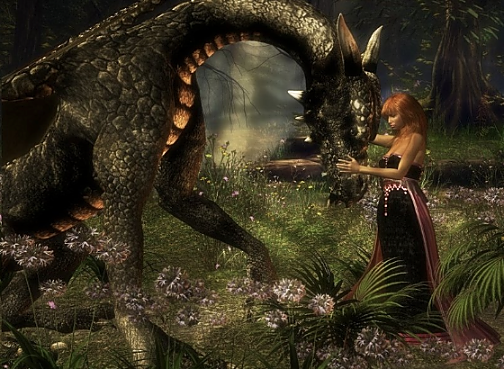
"Perhaps all the dragons in our lives are princesses who are 
only waiting to see us act, just once, with beauty and courage.
Perhaps everything that frightens us is, in its deepest essence,
something helpless that wants our love."
- Rainer Maria Rilke, "Letters to a Young Poet"
"The Restless Heart" 
by Chet Raymo

"In "Letters to a Young Poet", Rainer Maria Rilke writes: "We should try to love the questions themselves, like locked rooms and like books that are written in a very foreign tongue." To which I would add, let us trust the gifts that nature has given us- curiosity, attention, reason- and if our personal lives are destined for oblivion, then know that we have made of ordinary things something grander and more enduring. We are the transformers. We are bestowers of praise. "Don't search for the answers, which could not be given to you now, because you would not be able to live them," Rilke advises the restless young poet, echoing the great Catholic mystics: "And the point is, to live everything. Live the questions now. Perhaps then, someday far in the future, you will gradually, without even noticing it, live your way into the answer."

Is it enough? In the long history of humanity, no hope has been so enduring as personal immortality. At every time and in every place men and women have assumed they will live forever. It is our solace, our balm for the restless heart. Even Neanderthals, it seems, placed flowers in the graves of their dead, presumably to grace the afterlife.

But the lesson of modern biology is clear: Death is final. Do we lapse then into morbidity? Do we rage, rage against the dying of the light? We have art. We have science. Even a rhyme can thumb its nose at death, says Seamus Heaney. We can each of us try to live our lives as poetry, to add to the world an element of graciousness that is not strictly necessary, to leave behind a spoor of rhymes that marks our passage on the Earth.

Yes, the spirit is flesh, but the spirit is more than flesh. The spirit is flesh in interaction with a universe of almost unimaginable grandeur and complexity. The windows of the flesh are thrown open to the world. The spirit is a wind of awareness, a pool stirred by angels."

Some part of the spirit will linger after the flesh is gone, as memories in other flesh, as words, music, science, rhymes- as a world nudged slightly in its pell-mell course towards good or bad. But the self is mortal: This is the existential fact that agitates the restless heart. "We are biological and our souls cannot fly free," writes Harvard biologist E. O. Wilson, summarizing what science has taught us about ourselves. He adds: "This is the essential first hypothesis for any consideration of the human condition."
Freely read online or download "Letters to a Young Poet",
 by Rainer Maria Rilke, here: